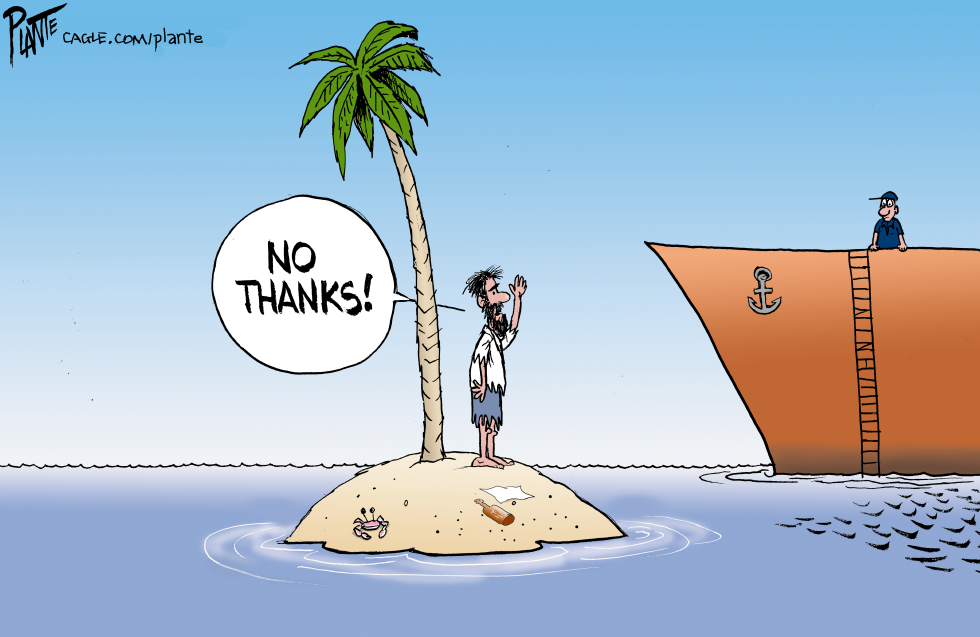
A castaway on a remote island faces an unexpected chance at rescue from a passing vessel. The situation highlights ongoing human tensions between solitude and reintegration into society. The piece takes the position that some individuals genuinely prefer isolation over returning to the outside world.
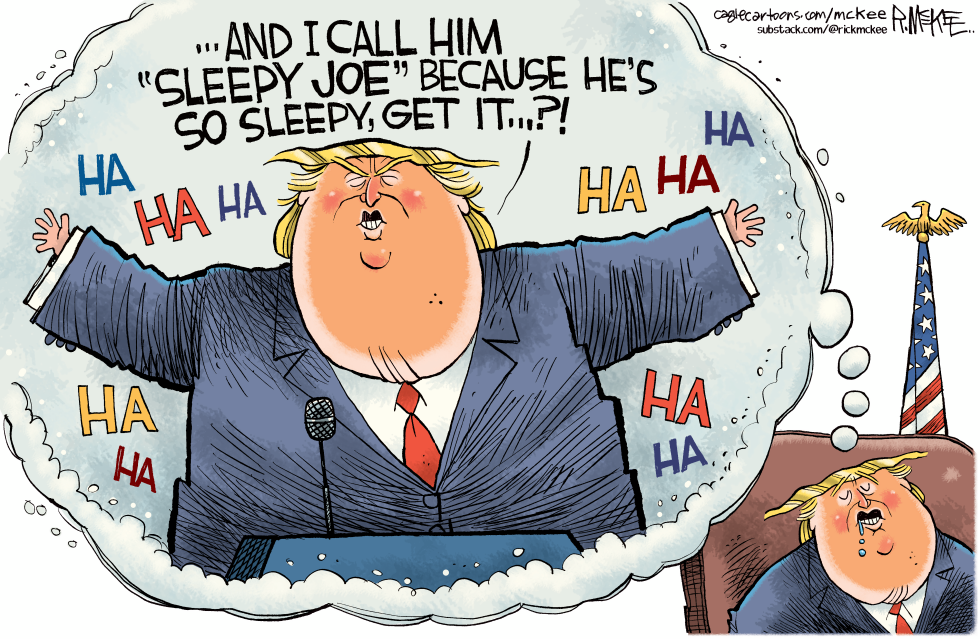
Donald Trump repeatedly labeled Joe Biden 'Sleepy Joe' during the 2024 campaign and beyond. The nickname stuck as a critique of Biden's energy and age. The cartoon responds by showing Trump himself unable to stay awake at the podium, underscoring perceived hypocrisy in the attack.
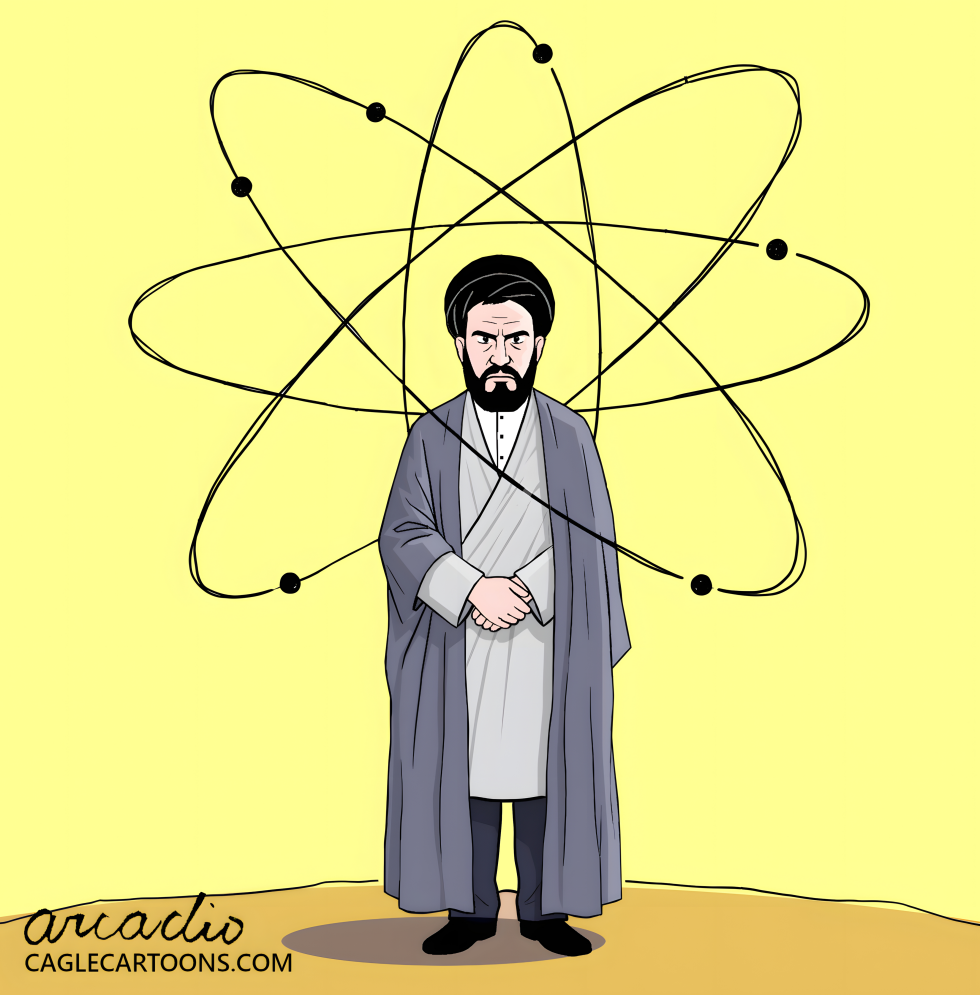
The cartoon shows Iran's supreme leader positioned in front of a large atom symbol. It responds to persistent international concerns over Tehran's nuclear activities as of mid-2026. The visual places the figure directly under the orbiting electrons, underscoring the central role of the nuclear issue in global discussions about the country.
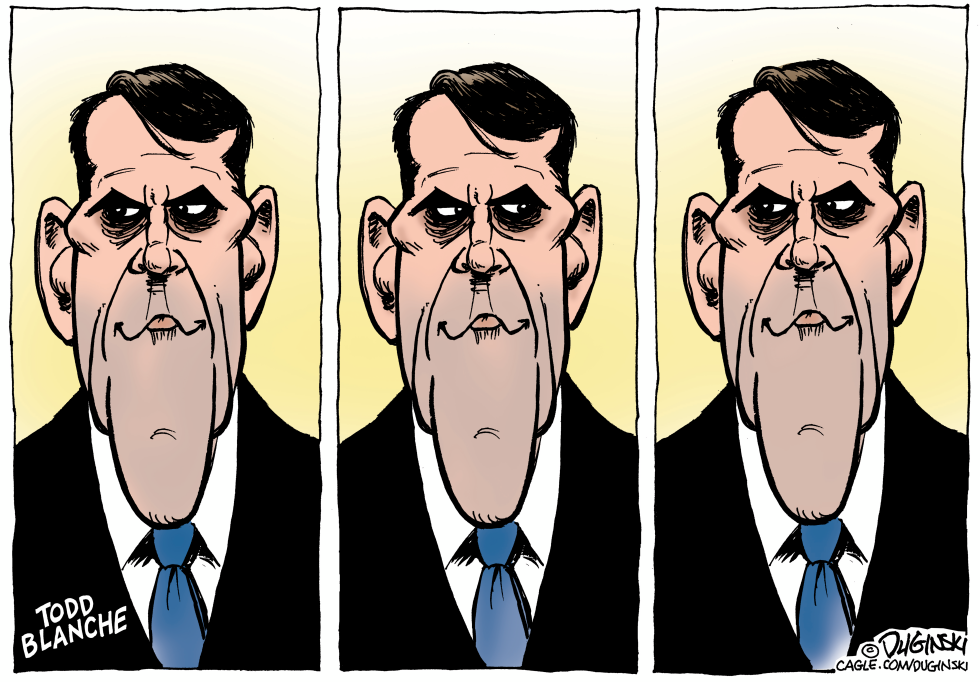
Todd Blanche is shown in three adjacent panels. Each panel presents a close view of the same man wearing a dark suit, white shirt and blue tie. The expressions feature narrowed eyes, furrowed brows and a downturned mouth. Slight variations appear in head angle and eye direction between the panels. The left panel includes the name Todd Blanche in capital letters at the bottom. The right panel includes a copyright notice at the bottom. All three images share a light yellow gradient background and black borders.
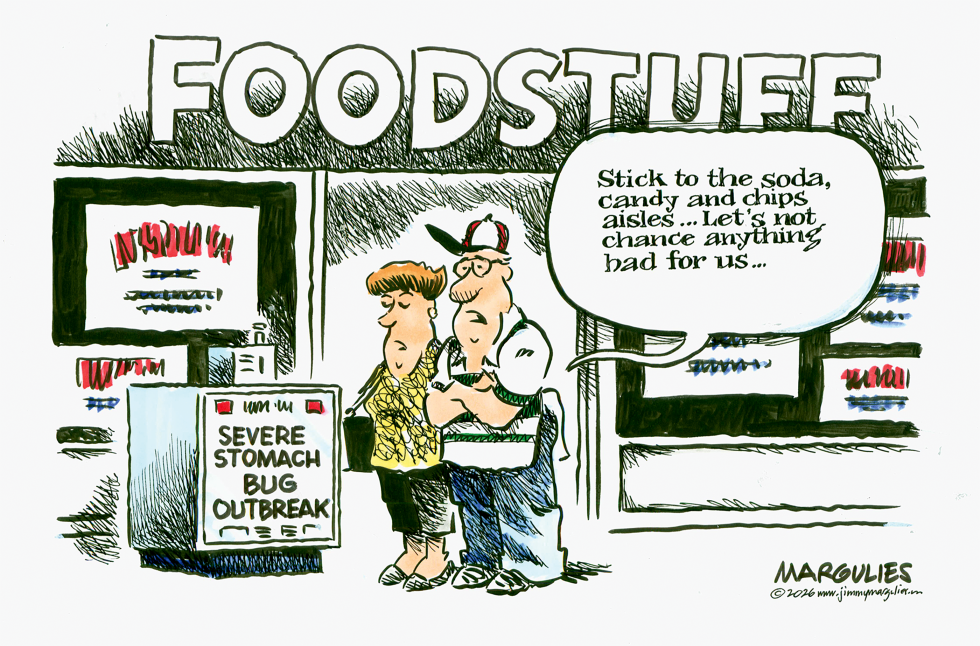
A grocery store scene shows two men reacting to a severe stomach bug outbreak sign by vowing to shop only in the soda, candy and chips aisles. The July 2026 cartoon captures consumer caution during a public health scare affecting produce purchases.
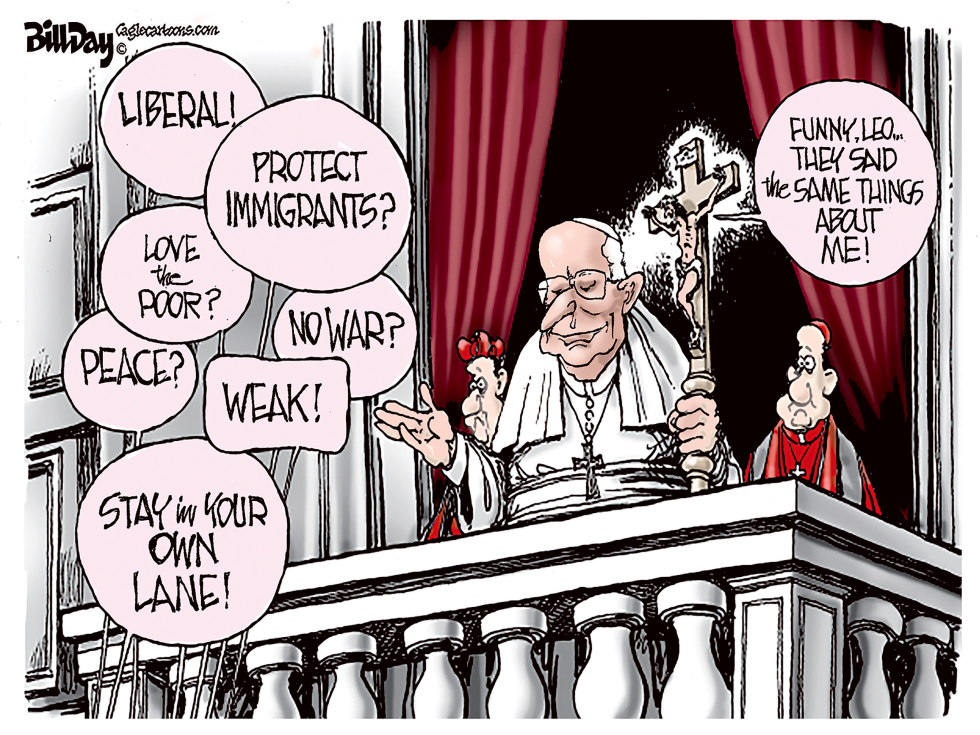
Bill Day's political cartoon shows a central pope figure on a balcony, holding a cross staff, surrounded by speech bubbles accusing liberal views like protect immigrants, love the poor, peace, no war, weak. A side figure remarks on funny Leo saying the same things about me, drawing a clear visual parallel. The composition uses red curtains and clerical attire for a Vatican setting, emphasizing satire on church politics. Tags include political cartoon pope francis, bill day cartoon, pope leo comparison, conservative backlash pope, anti-war pope, catholic church politics.
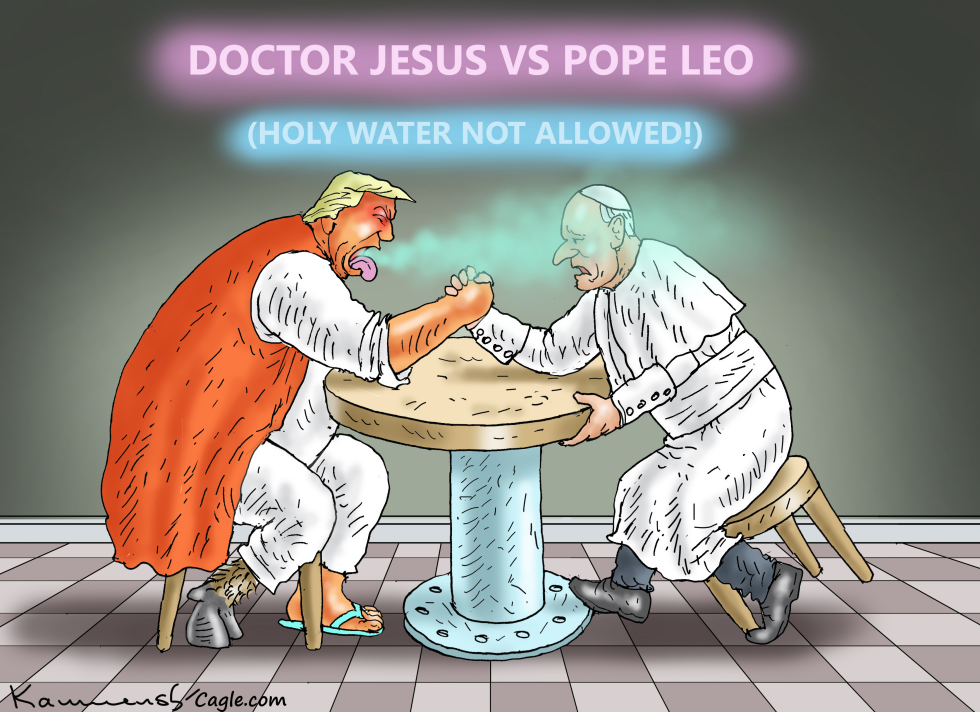
The image shows two figures engaged in arm wrestling, labeled as Doctor Jesus and Pope Leo, with a neon sign overhead stating 'DOCTOR JESUS VS POPE LEO' and a note that holy water is not allowed. Doctor Jesus appears with blonde hair, an orange cape, white robe, and sandals, while Pope Leo wears traditional white papal attire and shoes. A small elephant figure peeks from under Doctor Jesus's robe, and mist surrounds Pope Leo's head. The scene unfolds on a checkered floor with stools and a round table. This setup captures a direct, humorous confrontation between the caricatured holy figures, emphasizing the ban on holy water in their matchup. The artist's signature, Kamensky/Cagle.com, appears at the bottom.
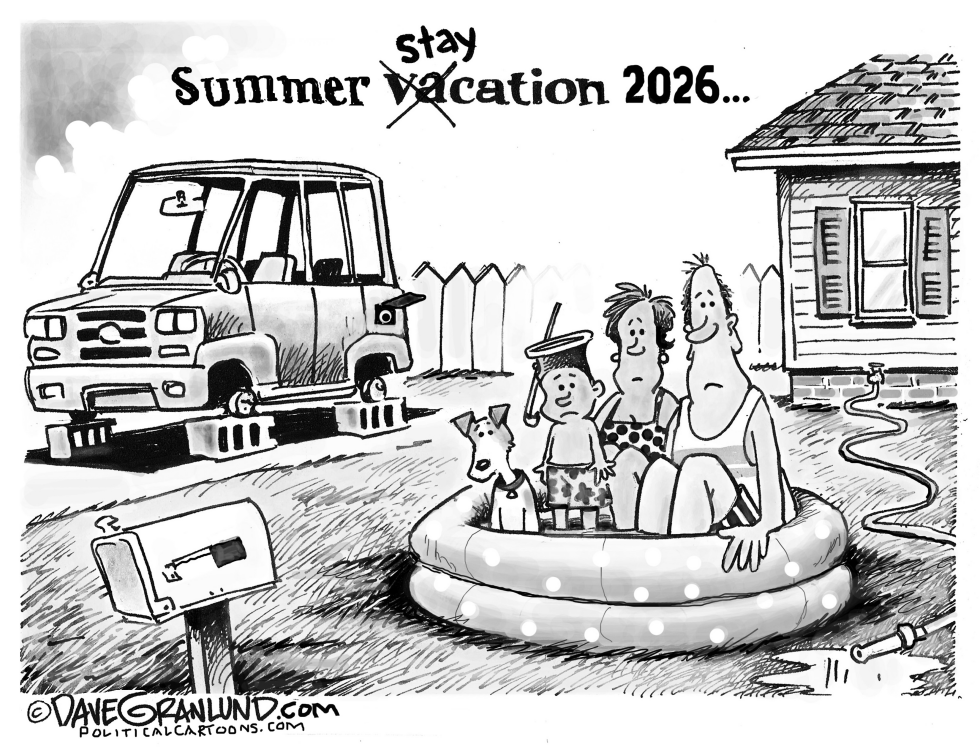
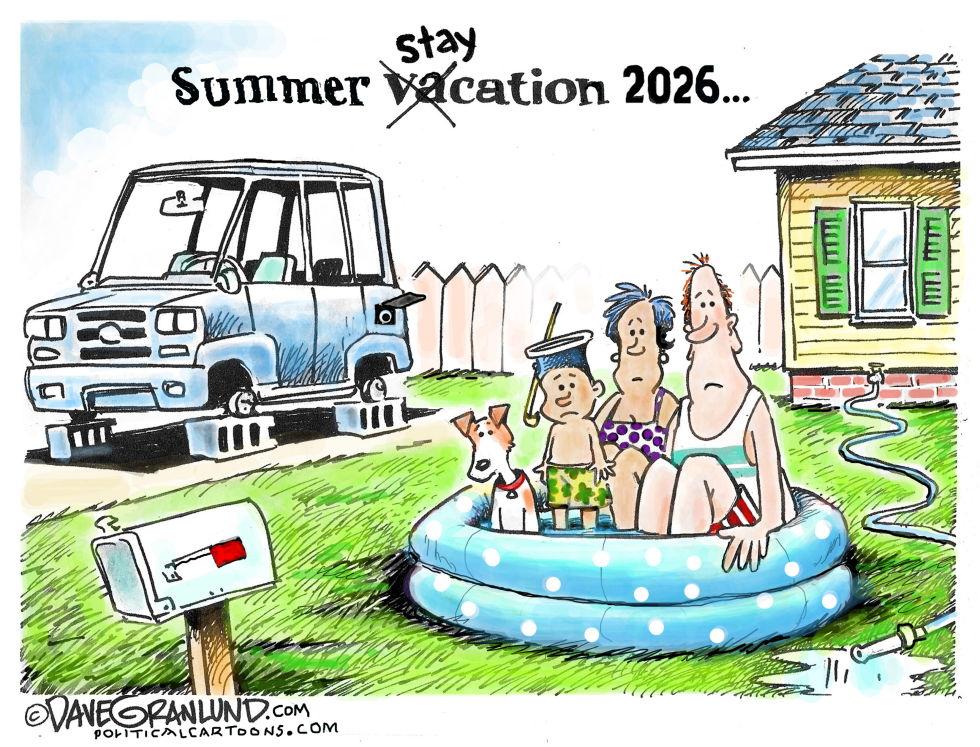
Dave Granlund's cartoon nails the frustration of high gasoline prices derailing summer road trips for families on limited budgets. Instead of hitting the highway in their autos, this crew opts for a stay home vacation, splashing in a backyard kiddie pool with the dog. The jacked-up minivan on blocks screams grounded plans, while the crossed-out 'Va' in vacation turns it into 'Staycation 2026.' It's a sharp poke at how fuel costs force folks to tighten belts, swapping grand adventures for hose-filled pools and mailbox views. Tags like gasoline prices, high cost, and stay home highlight the economic squeeze, making this a relatable jab at everyday belt-tightening.
John Darkow's cartoon captures the Artemis II crew gazing through their spacecraft window at the far side of the moon, where craters frame an unexpected sight: the Midvale School for the Gifted from Gary Larson's The Far Side, complete with a striped-shirted figure fumbling at a 'pull' door on stairs. Tagged with artemis ii, moon flyby, far side, gary larson, nasa, space, and science, the image blends real space exploration with absurd humor. One crew member exclaims excitement, labeled with Artemis II Crew and NASA markings. This satire highlights the blend of high-stakes missions and pop culture whimsy, poking fun at what astronauts might hope to find beyond the visible lunar surface. The dry wit underscores how science fiction tropes collide with actual programs like Artemis II.
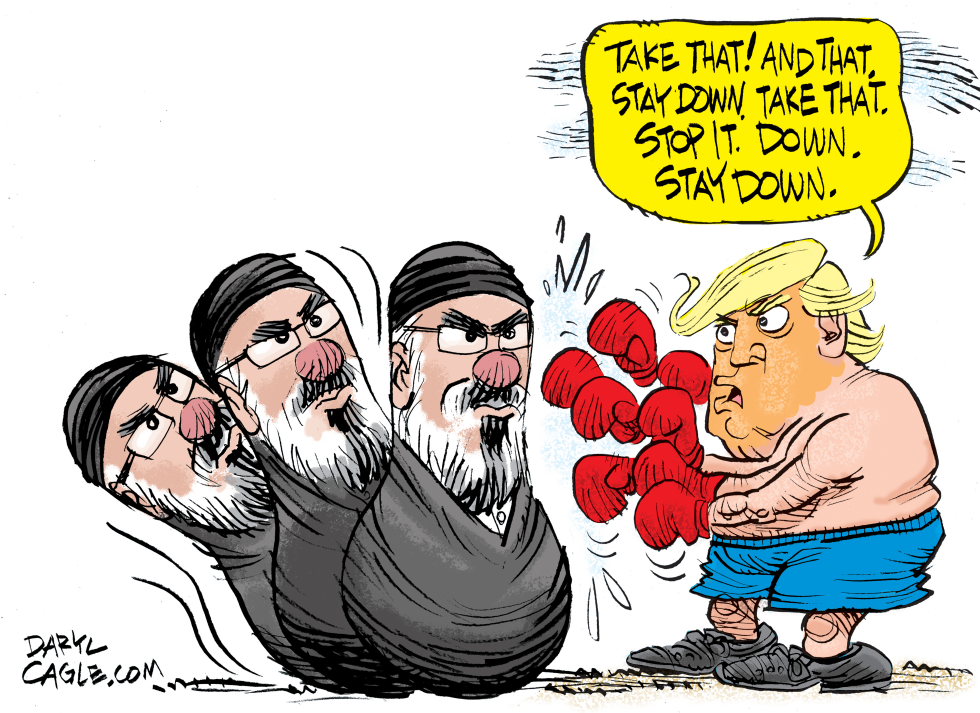
The cartoon shows Donald Trump, shirtless and wearing boxing gloves, repeatedly striking a large bop bag shaped like an Iranian cleric. Multiple faces of bearded men in turbans appear on the bag, which rebounds after each punch. A speech bubble captures Trump's frustrated commands for the figure to stay down. The image responds to reports of a new Iranian supreme leader and U.S. efforts against the regime in early 2026. It highlights the perceived futility of direct confrontations with Iran's leadership structure.
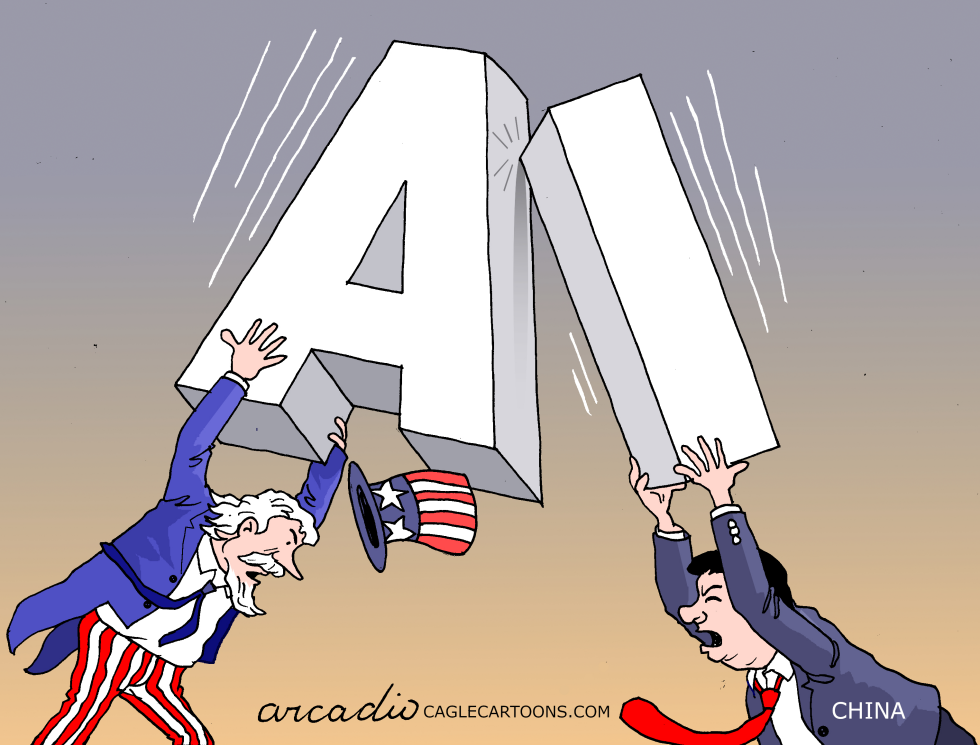
The image depicts Uncle Sam and a representative from China both attempting to support a large AI structure. The scene illustrates the ongoing competition between the United States and China for leadership in artificial intelligence. Published on February 18 2026 the cartoon captures the physical and strategic strain of this technological contest. Both figures appear determined yet challenged by the size of the letters they hold. The rivalry remains a central focus in global technology discussions at the time.
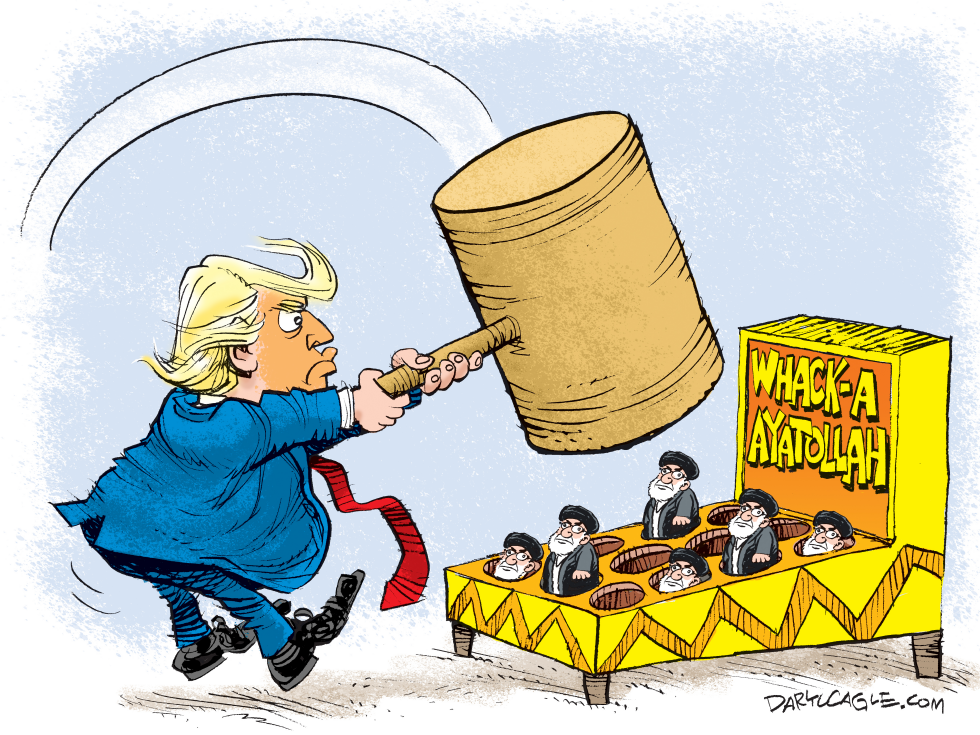
The cartoon shows Donald Trump in a blue suit swinging a massive wooden mallet at figures resembling Iranian Ayatollahs emerging from holes in a yellow arcade machine labeled Whack-A Ayatollah. The president appears mid-swing with motion lines indicating effort. The image comments on US policy toward Iran by framing the conflict as a repetitive carnival game where targets keep reappearing. Publication occurs during a period of heightened US-Iran tensions over nuclear issues and regional influence. The visual metaphor suggests difficulty in permanently resolving the challenge despite repeated attempts.