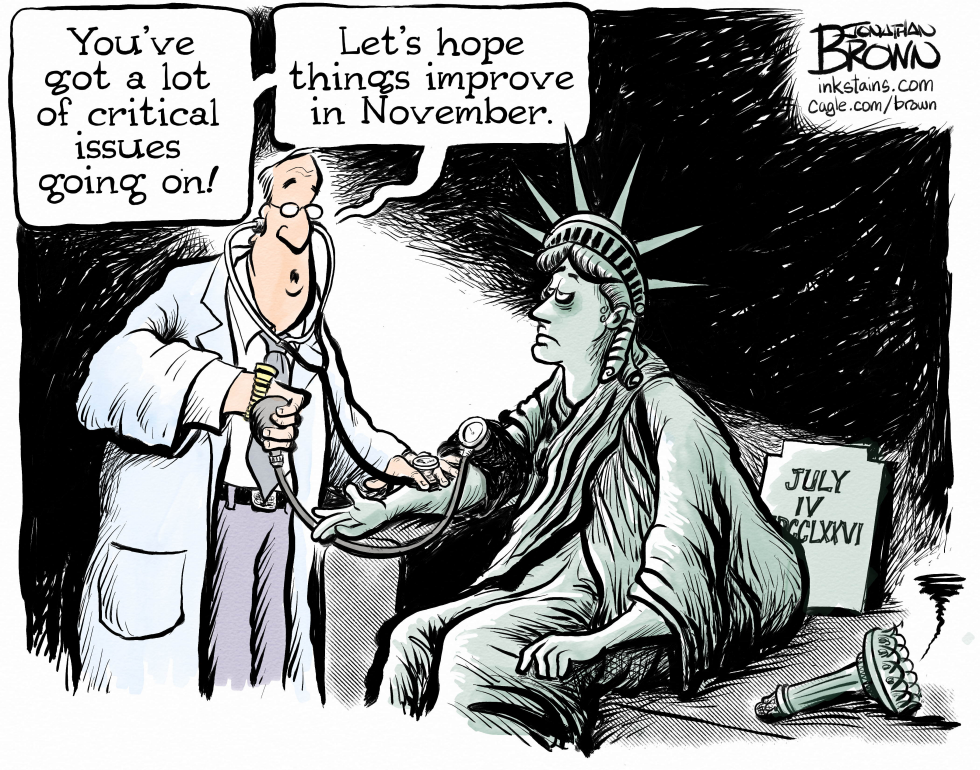
The cartoon depicts a doctor examining the Statue of Liberty's blood pressure and noting numerous critical issues. The Statue responds with hope that things will improve in November. A sign references July 4, 1776, and a broken torch rests on the ground. Published on September 15, 2026, the image uses the iconic figure to comment on the state of the nation ahead of upcoming elections. The visual metaphor highlights concerns about American institutions and public sentiment.
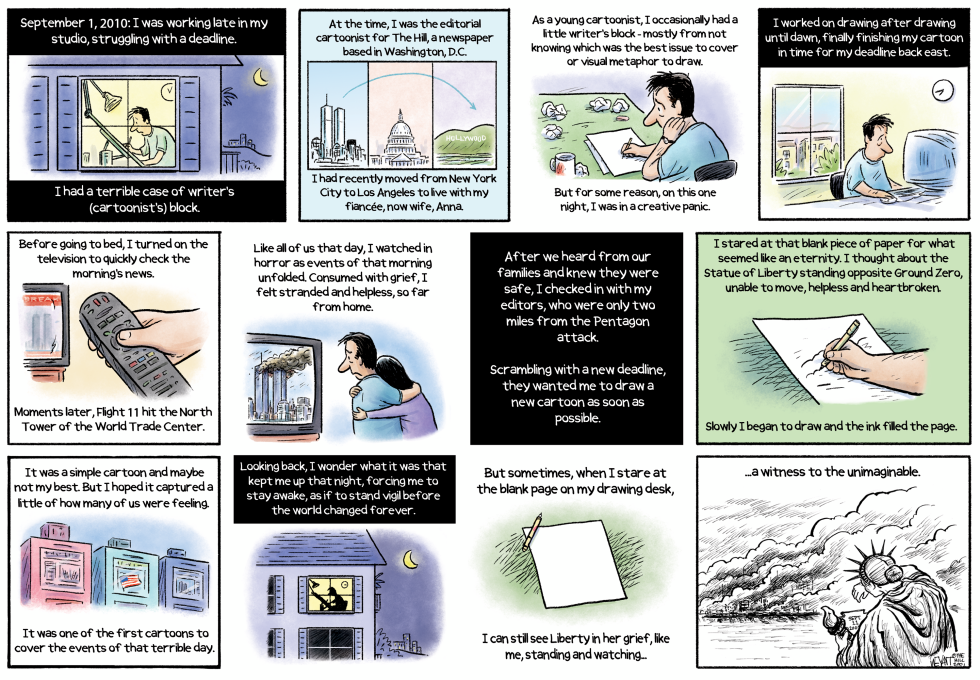
On September 11, 2001, editorial cartoonist Christopher Weyant faced a sudden deadline shift after the attacks on the World Trade Center and Pentagon. Working from Washington, D.C., he checked on family and editors before creating one of the earliest cartoons responding to the events. The piece shows his personal struggle with a blank page that night and the resulting image of the Statue of Liberty standing vigil opposite Ground Zero. The cartoon marks the 25th anniversary by revisiting how the attacks altered the nation and the artist's own sense of purpose.
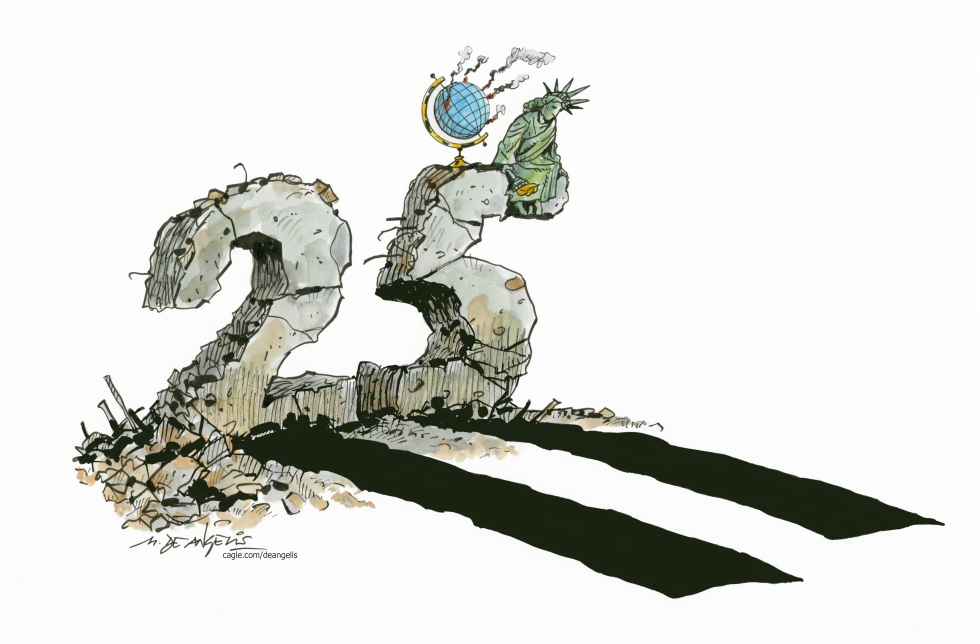
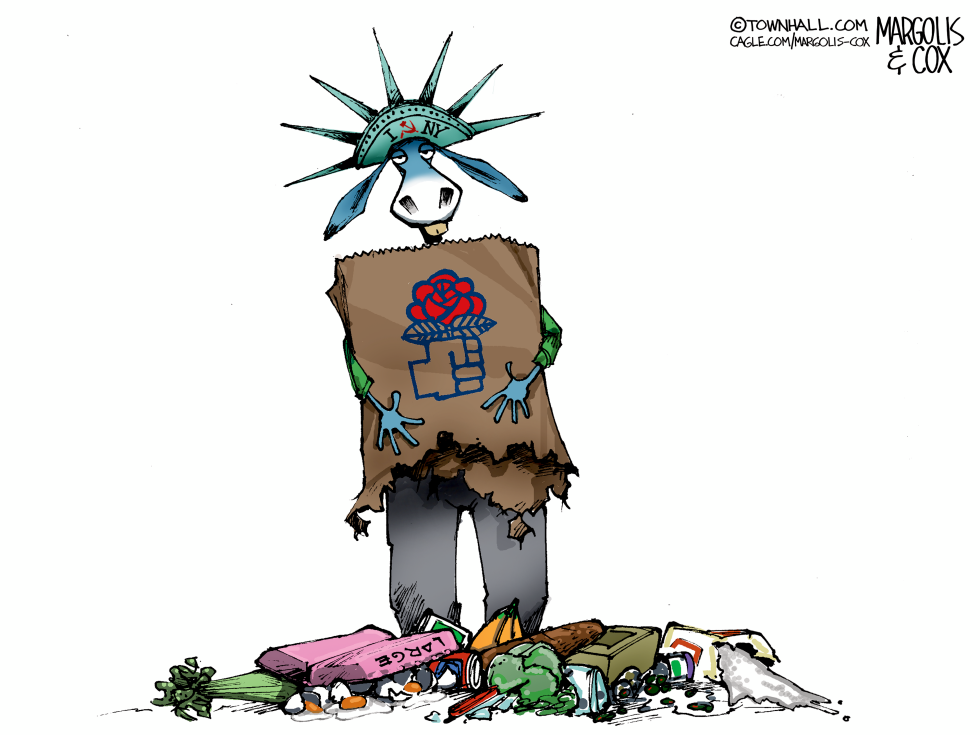
September 11, 2026 marks the 25th anniversary of the attacks that reshaped U.S. foreign policy and domestic security. The milestone arrives amid ongoing global conflicts, eroded alliances, and questions about whether the post-9/11 era delivered promised security. The cartoon frames the anniversary as a moment of visible strain on core American symbols and the broader international order they once anchored.
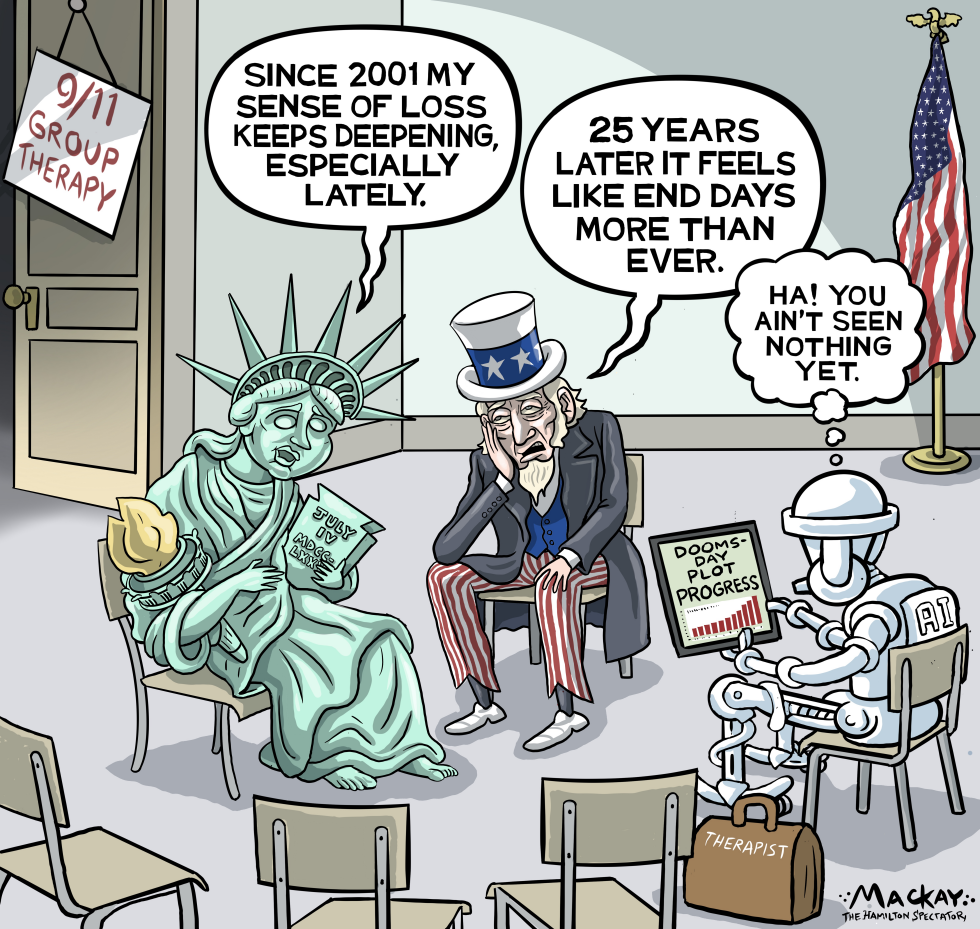
The cartoon depicts the Statue of Liberty, Uncle Sam and an AI robot seated in a 9/11 group therapy session on the 25th anniversary of the attacks. The Statue of Liberty holds a book marked July IV MDCCLXXVI and speaks of deepening loss since 2001. Uncle Sam echoes the sentiment of end days. The AI figure, labeled with a rising doomsday plot progress chart, retorts that the others have seen nothing yet. The scene uses national symbols to reflect persistent national trauma and emerging technological threats two and a half decades after the September 11 attacks.
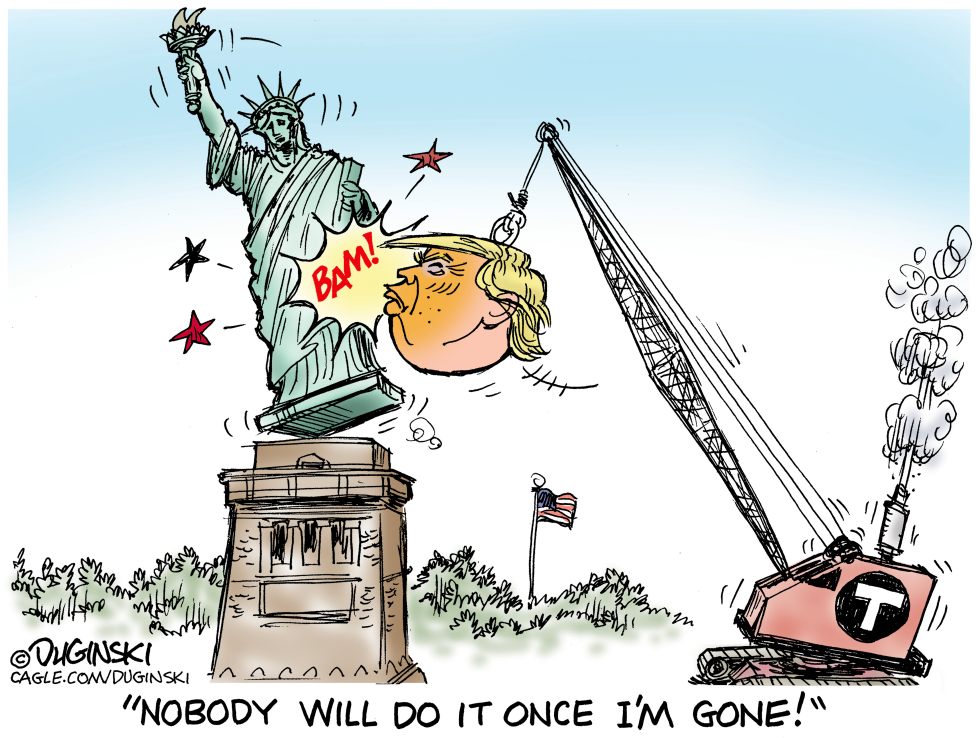
Donald Trump has repeatedly positioned his administration as the primary force reshaping or challenging long-standing U.S. institutions and norms. Critics argue this approach risks permanent erosion of democratic safeguards and public trust. The cartoon presents Trump's own words as an admission that the damage stops only when he leaves office.
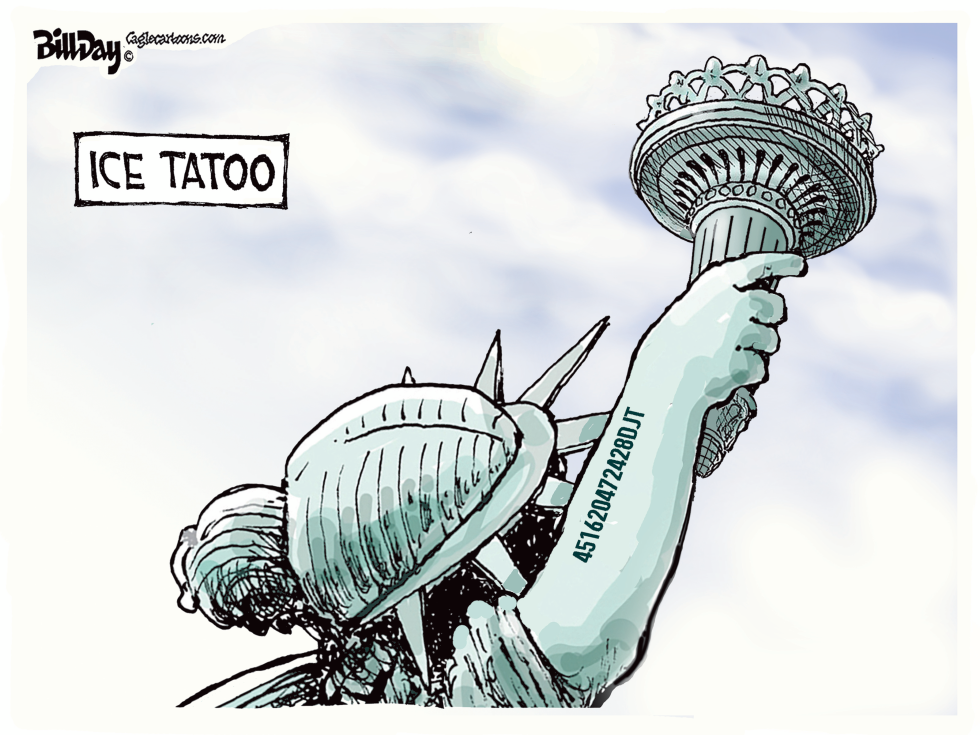
ICE enforcement actions continue to expand in 2026 with new detention and removal priorities. The Statue of Liberty appears marked with a numeric tattoo resembling prisoner identification. The image responds to ongoing border and interior enforcement operations. Critics argue the approach treats immigrants as criminals by default. The piece highlights how such policies clash with traditional symbols of welcome and liberty.
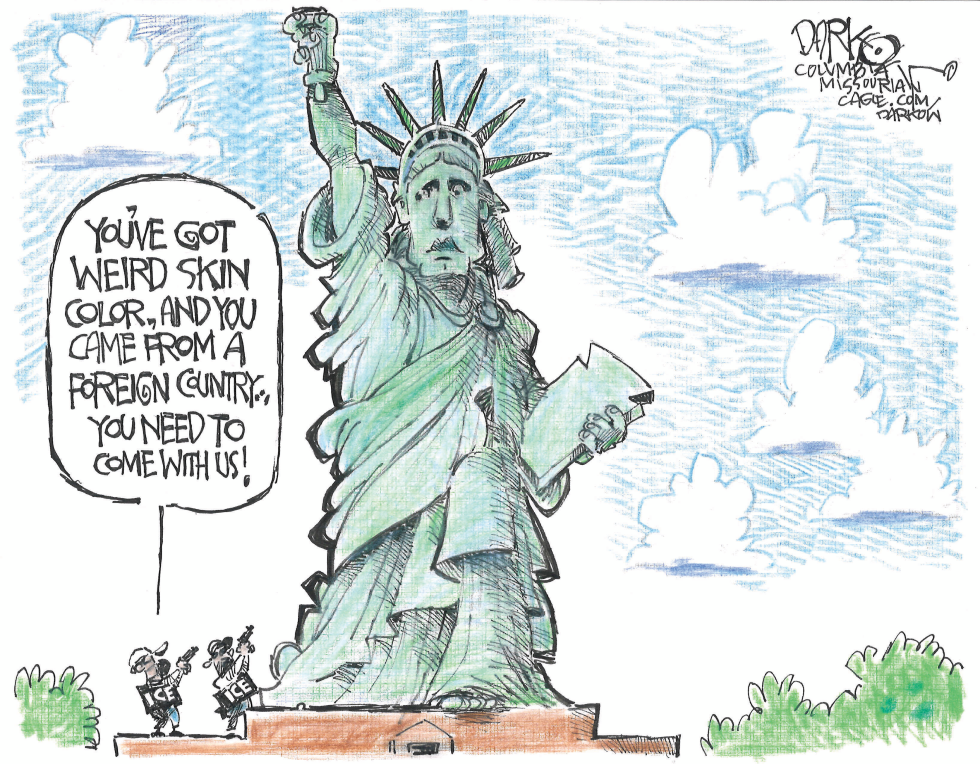
ICE agents have been depicted confronting the Statue of Liberty at its base while citing the monument's skin color and foreign origin as grounds for removal. The action highlights ongoing debates over immigration enforcement priorities and the use of appearance-based criteria in federal operations. The editorial position frames such tactics as inconsistent with the monument's historic role welcoming immigrants.
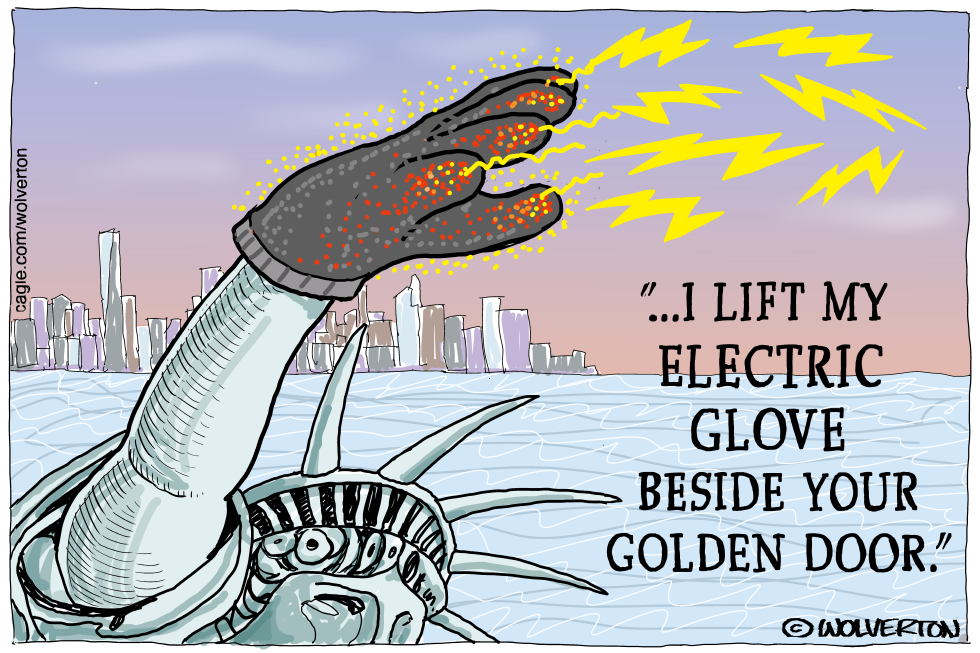
The cartoon depicts the Statue of Liberty with a dark electric glove on its raised arm, emitting yellow lightning bolts and sparks over New York Harbor. The accompanying text alters the Emma Lazarus poem to read I lift my electric glove beside your golden door. The image uses the familiar monument and skyline to present a visual pun on the original lamp reference. Publication occurred on August 17 2026 amid ongoing national debates over border policy and energy infrastructure. The composition places the modified arm against a dusk sky and rippling water to emphasize the glowing effect.
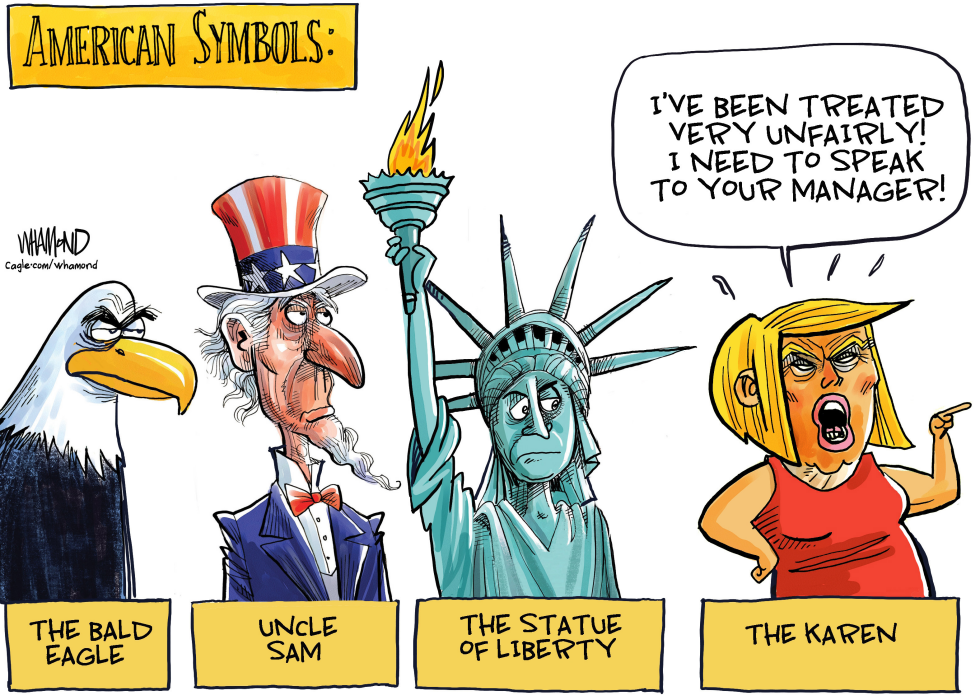
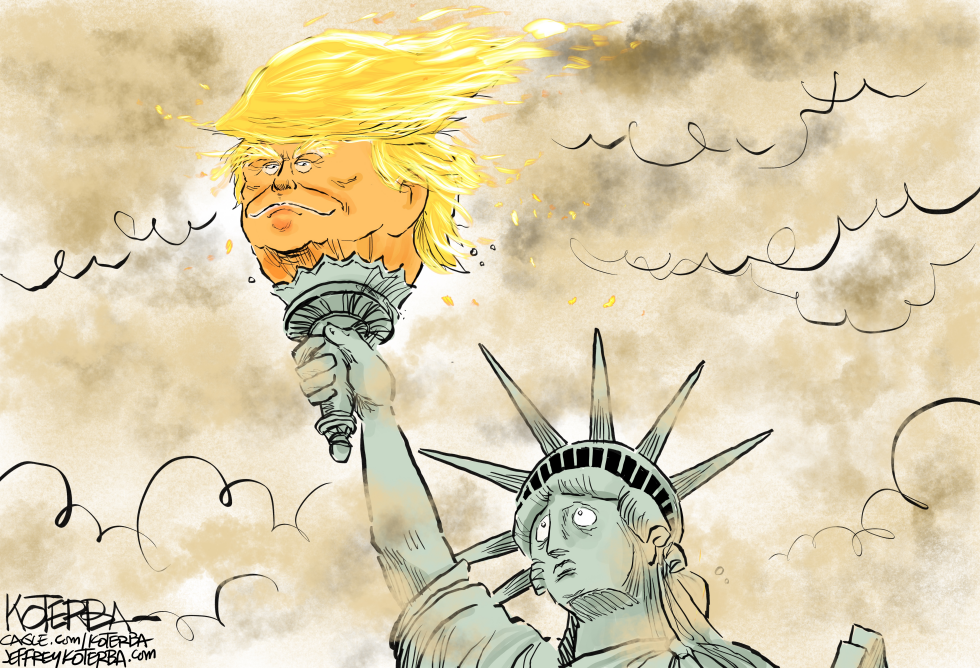
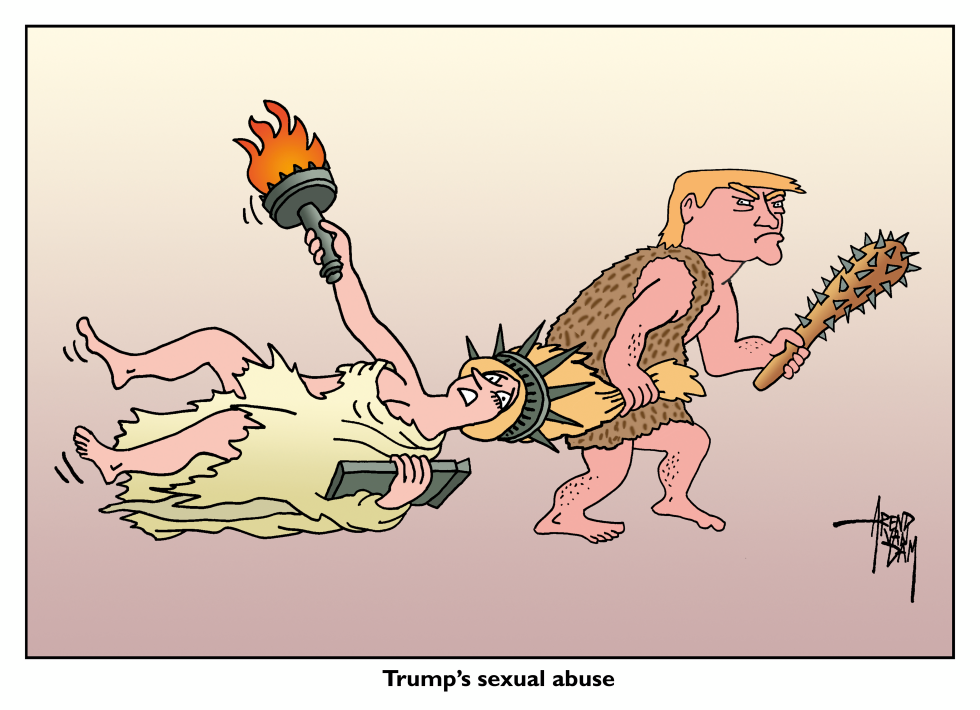
Donald Trump remains a dominant force in American politics in 2026. His continued prominence raises questions about the impact on national institutions and symbols. The editorial takes the position that this influence distorts core American ideals represented by the Statue of Liberty.
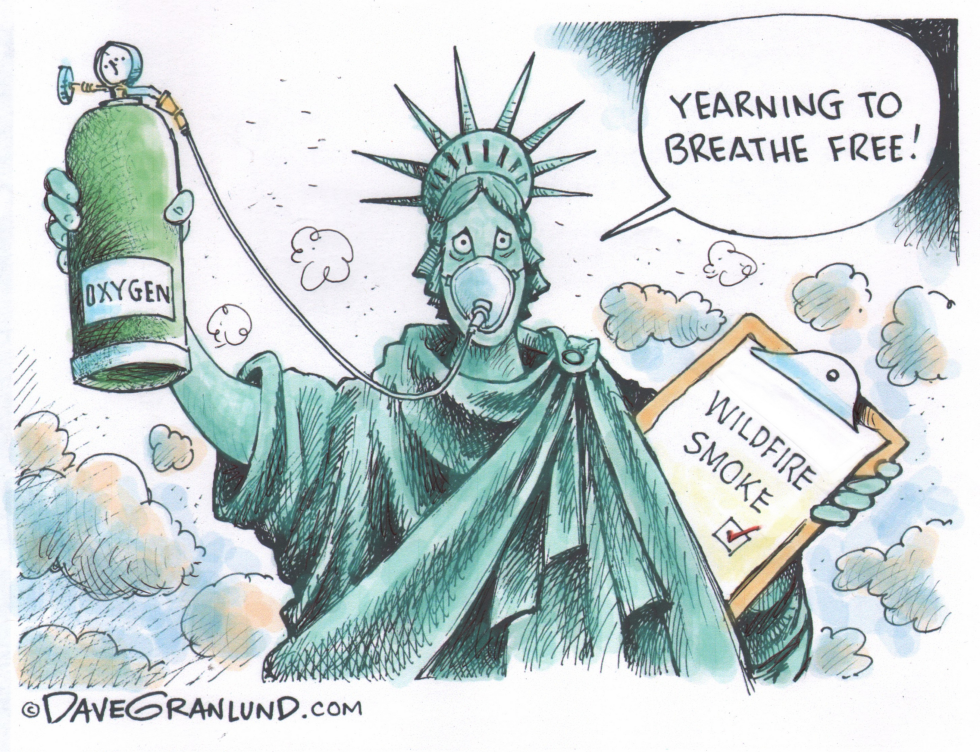
The cartoon shows the Statue of Liberty wearing a gas mask and holding an oxygen tank labeled OXYGEN while clutching a clipboard marked WILDFIRE SMOKE. A speech bubble reads YEARNING TO BREATHE FREE. The image responds to ongoing wildfire activity and resulting air quality issues tied to climate patterns. The visual places the national symbol in protective gear to illustrate how smoke from distant fires reaches major population centers. Publication occurs during a period of elevated wildfire risk in western regions with smoke drifting eastward.
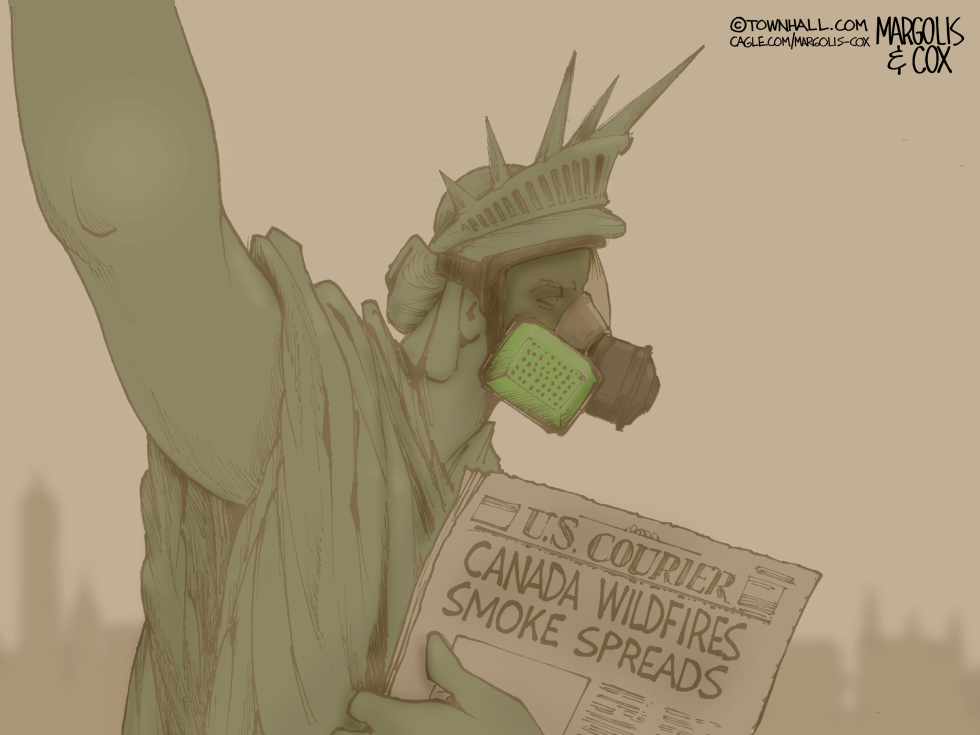
Canadian wildfires in mid-July 2026 sent dense smoke plumes southward, degrading air quality across the northern United States and prompting health alerts in multiple states. The recurring seasonal event underscores how climate-driven fire seasons now affect populations far from the burn zones. The cartoon depicts the Statue of Liberty wearing a gas mask while clutching a newspaper headlined on the spreading smoke, signaling that even national symbols of openness now require protection from environmental fallout.
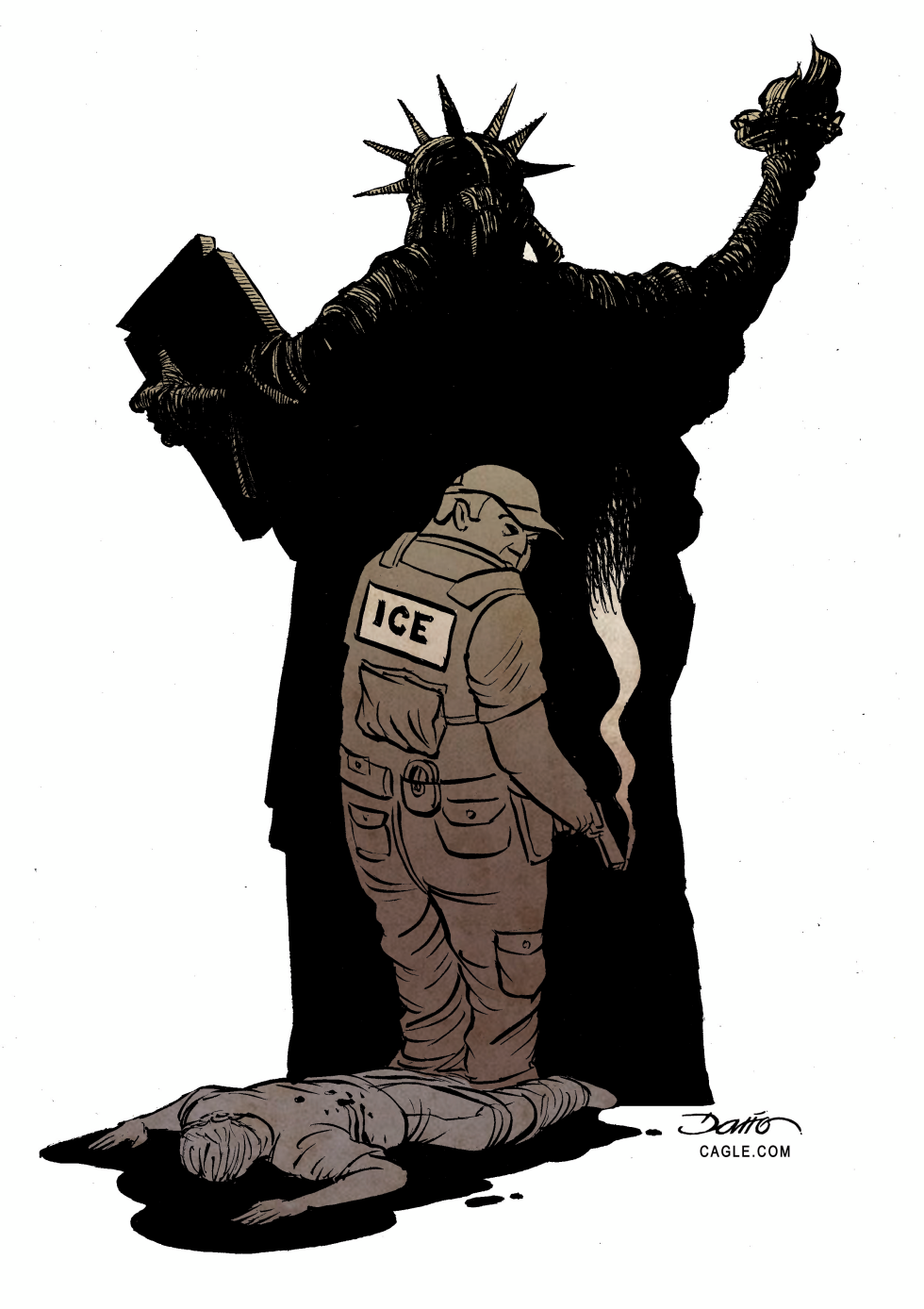
ICE continues targeted enforcement operations at the border and interior sites amid ongoing debates over detention practices and use of force. The agency reports increased arrests tied to recent policy directives on removals. Critics argue the approach undermines America's historic welcome to newcomers. The cartoon frames the tension between security duties and foundational ideals of freedom.