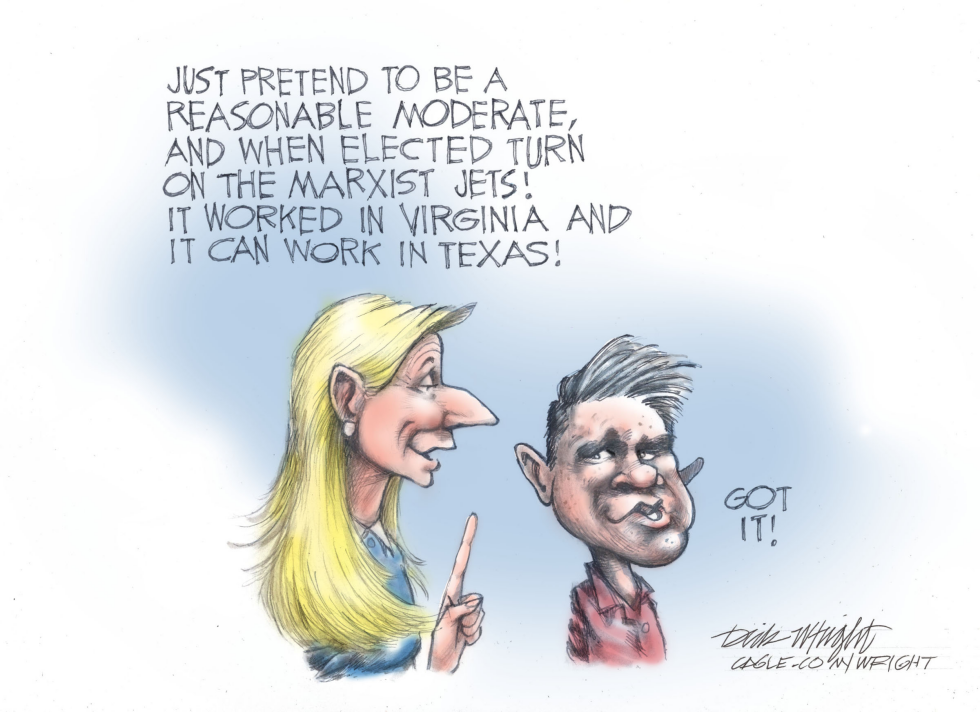
A Texas political candidate is depicted receiving advice to campaign as a moderate before revealing a more radical agenda after election, modeled on Abigail Spanberger's Virginia approach. The cartoon highlights concerns over deceptive campaign strategies in the 2026 cycle and questions the authenticity of centrist positioning by progressive candidates.
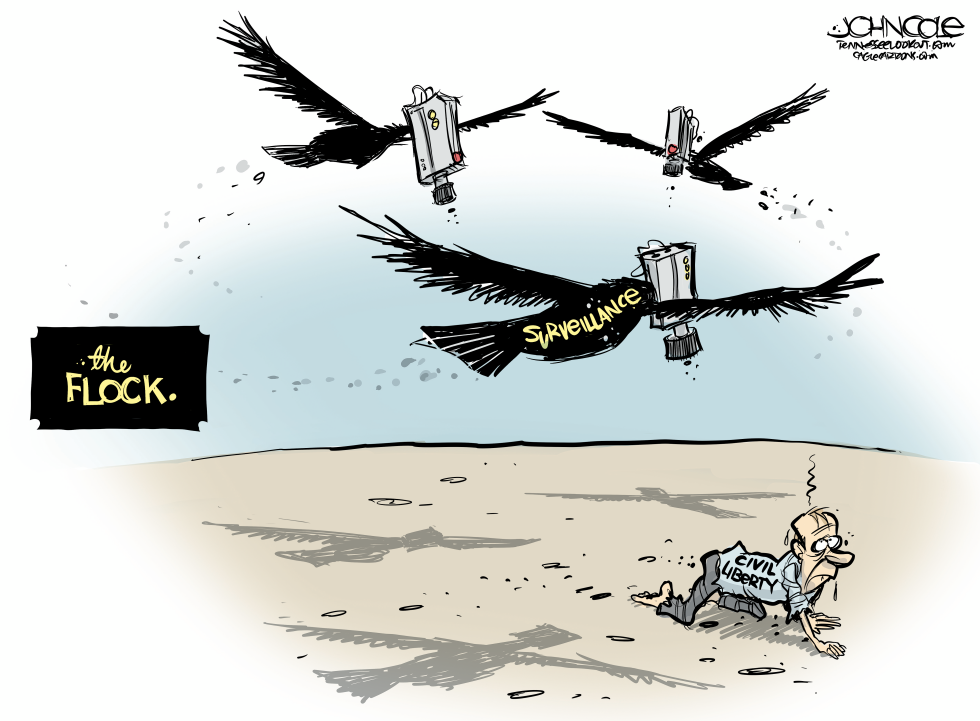
Police departments across the country have rapidly adopted Flock Safety automated license plate readers, creating vast networks that track vehicle movements in real time. The technology promises faster crime solving but raises alarms over data retention, sharing with federal agencies, and minimal judicial oversight. The cartoon argues that these systems are eroding civil liberties with little public accountability.
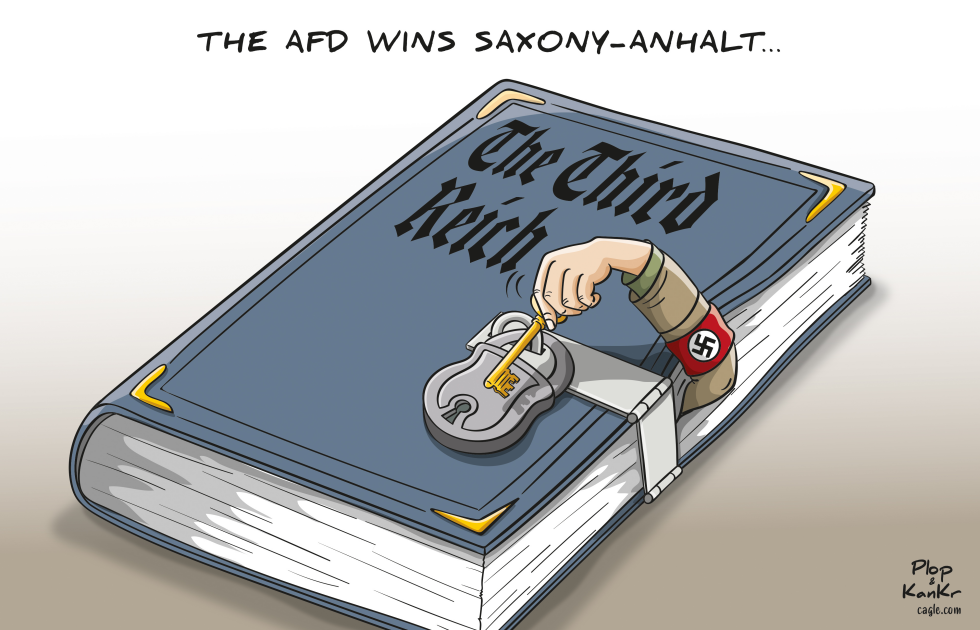
The cartoon responds to the AfD's reported victory in the Saxony-Anhalt state election by showing a hand in a Nazi armband using a key to unlock a large book titled The Third Reich. The image suggests the win revives dangerous historical precedents from Germany's past. It uses the visual metaphor of opening a locked volume to imply that far-right electoral gains could restore authoritarian elements associated with the Nazi era. The publication date places the piece in the context of ongoing debates about the AfD's rising influence in eastern German states.
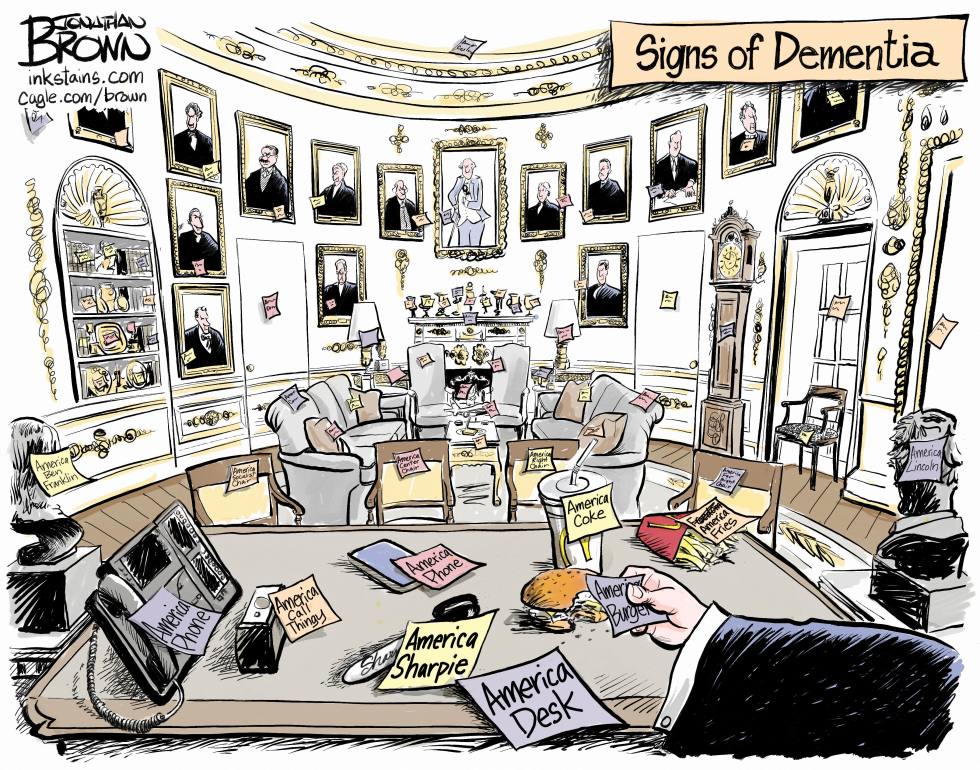
A new editorial cartoon depicts the Oval Office overrun with sticky notes labeling everyday items as America. The scene highlights signs of dementia through repeated branding on phones, desks, food and furniture. Published on September 9, 2026, the work comments on ongoing concerns about cognitive fitness in the presidency. The visual uses the familiar setting of the White House to underscore confusion and memory issues. Observers note the cartoon captures public debate over leadership capacity without naming specific individuals.
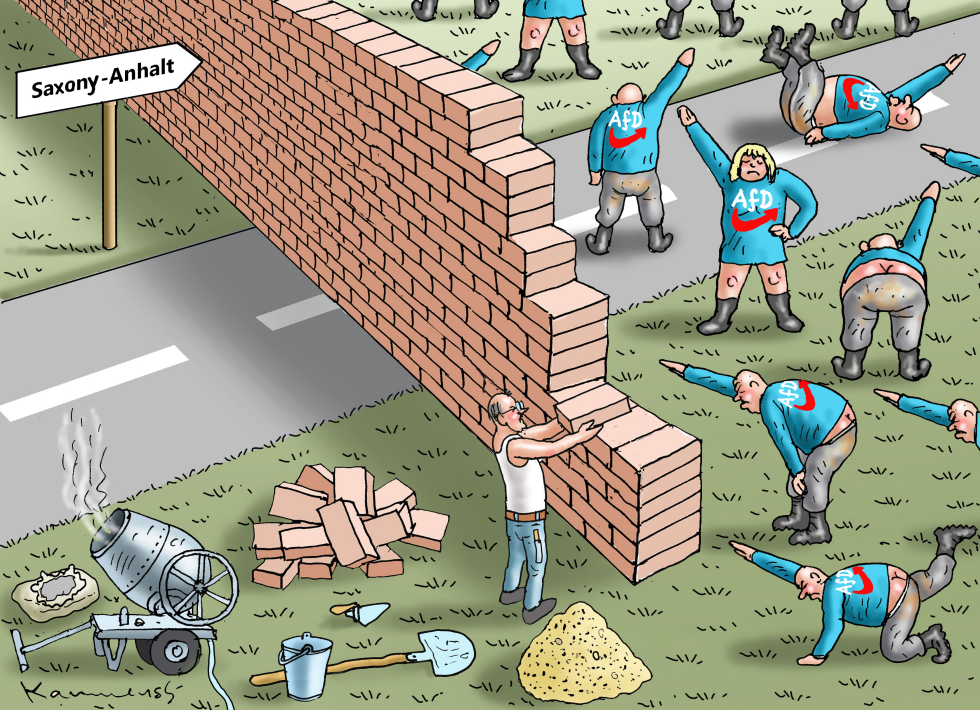
Friedrich Merz has positioned himself as a bulwark against Alternative for Germany advances ahead of state elections in Saxony-Anhalt. The cartoon depicts Merz personally laying bricks for a wall labeled for the eastern state while AfD figures in branded shirts struggle to cross it. The image underscores the CDU leader's strategy of containment rather than engagement with the far-right party. It reflects ongoing debates within German center-right circles about how to address AfD electoral strength without legitimizing its platform. The editorial stance presents the wall-building as a necessary, if blunt, defensive measure.
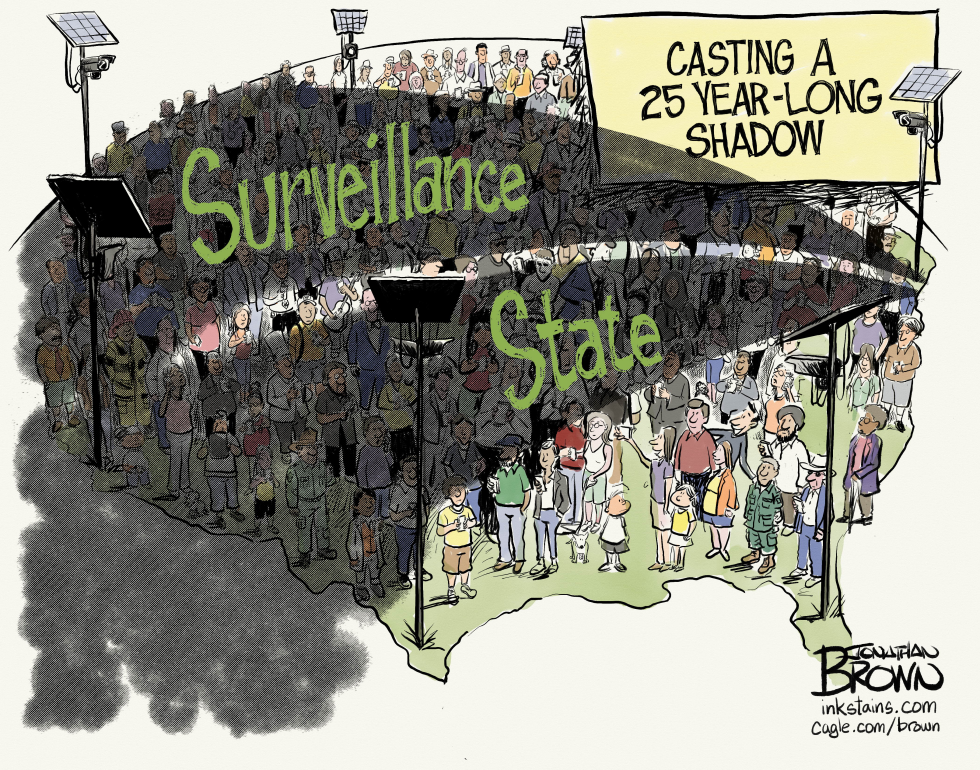
The cartoon depicts a dense crowd of Americans standing on a map of the United States, partially obscured by a large dark shadow cast by surveillance cameras mounted on poles. The words 'Surveillance State' appear prominently in green lettering across the scene, while a sign in the upper right reads 'CASTING A 25 YEAR-LONG SHADOW.' The image comments on the lasting effects of expanded government surveillance programs that began after the September 11 attacks, now spanning a quarter century. It illustrates how these measures continue to influence daily life and public spaces in 2026.
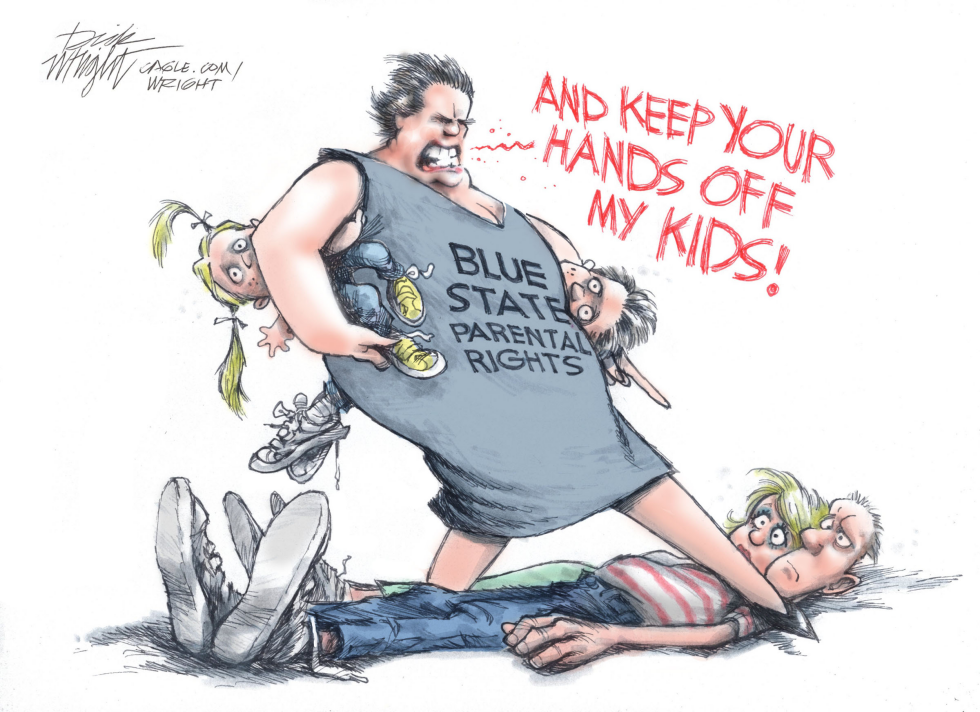
Blue state governments have expanded authority over child welfare and education decisions in recent years, often overriding parental objections on issues like curriculum and medical choices. This has sparked lawsuits and protests from families arguing loss of rights. The cartoon portrays these policies as aggressive state takeover rather than protection, criticizing the shift of power from parents to officials.
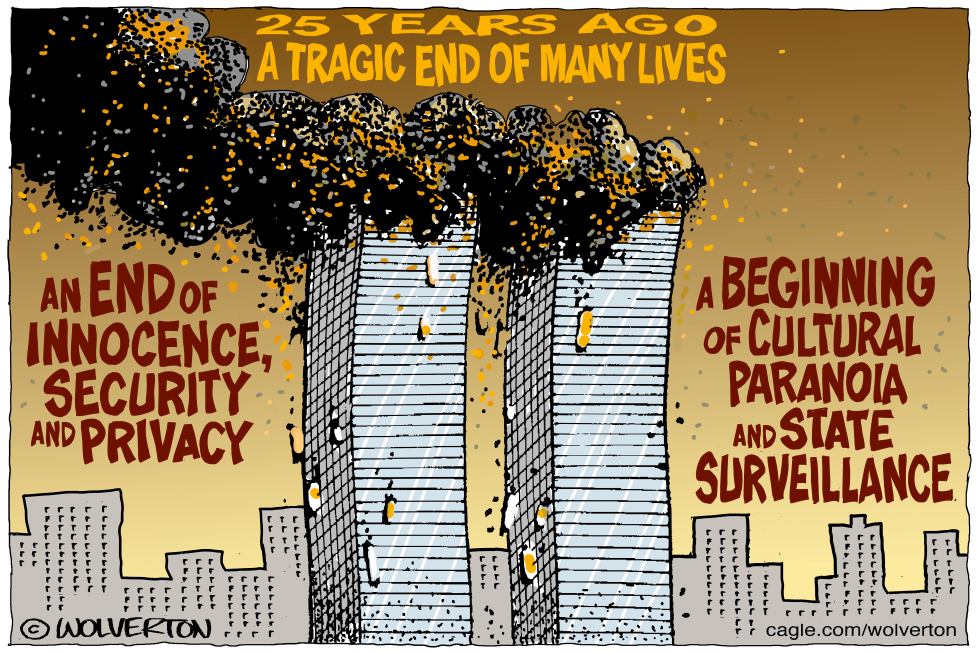
On the 25th anniversary of the September 11 attacks, the cartoon highlights the human tragedy while pointing to the subsequent expansion of state surveillance and erosion of privacy. The editorial position frames the attacks as both an end to national innocence and the start of heightened monitoring.
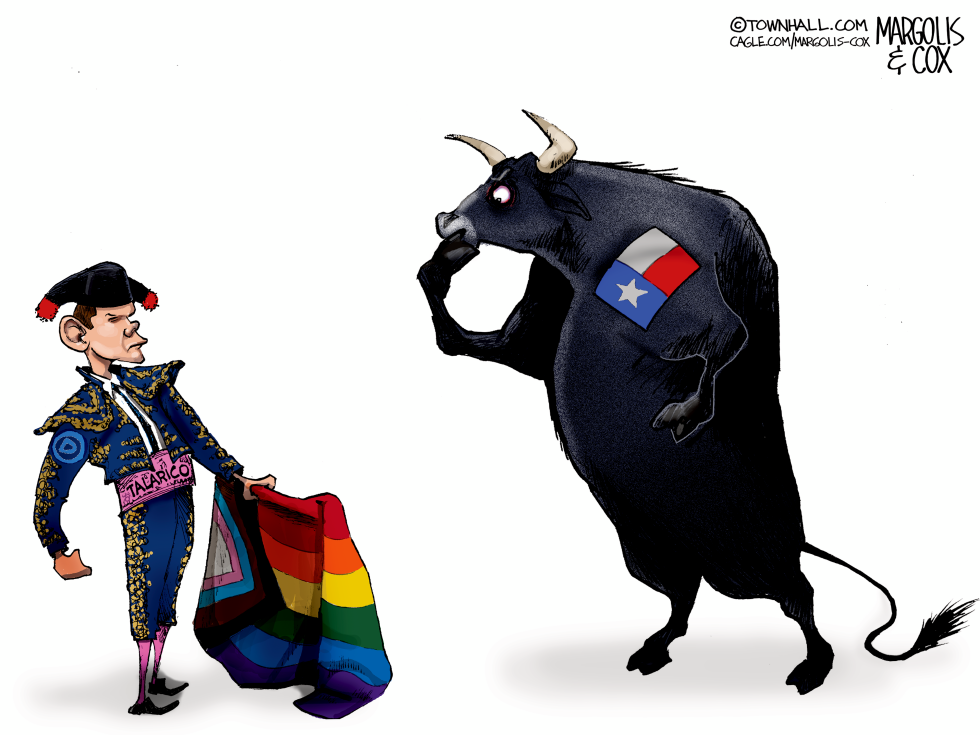
State Rep. James Talarico has drawn attention for defending LGBTQ rights amid Texas legislative pushes to limit pride symbols in public settings. The standoff highlights ongoing partisan divides in the state capitol. The piece portrays Talarico as a lone figure holding the line against institutional resistance.
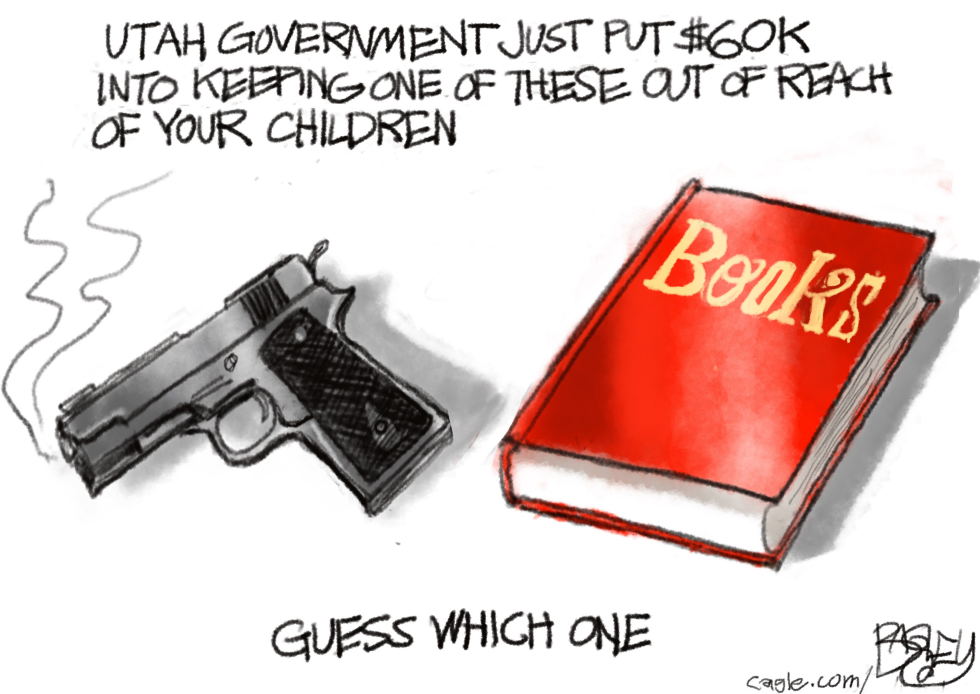
Utah officials directed $60,000 toward measures keeping certain books from children. Firearms remain readily available in the state. The decision highlights priorities in public safety and education policy. The piece criticizes the allocation as misplaced emphasis on censorship instead of addressing gun risks.
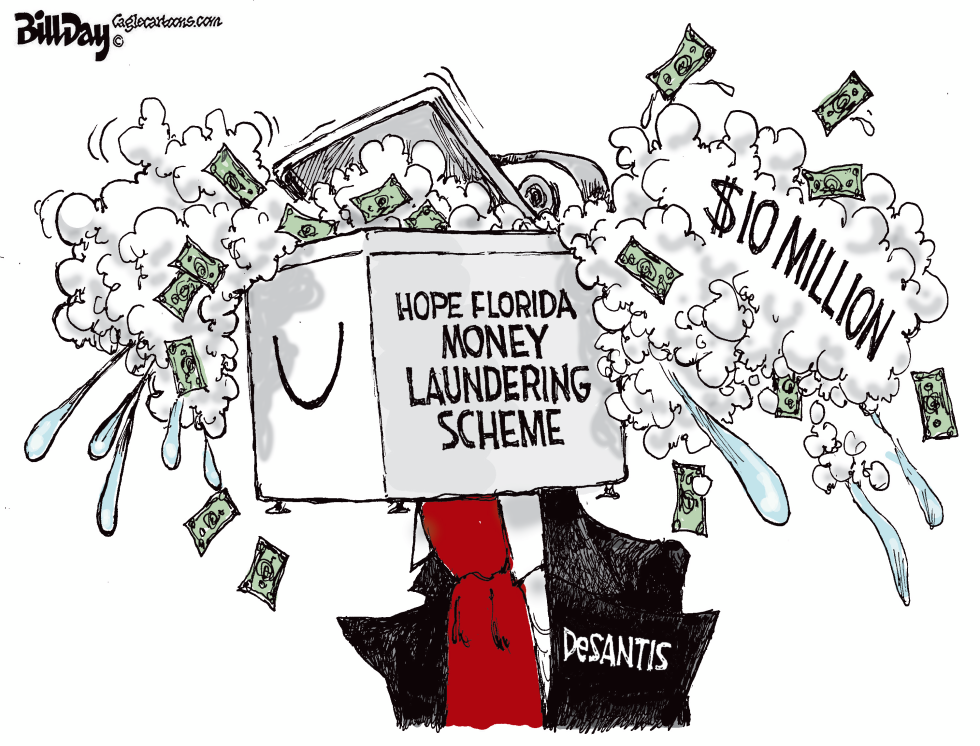
Florida Governor Ron DeSantis faces questions over the Hope Florida initiative after reports surfaced of a $10 million money laundering scheme tied to state funds. The allegations center on how program money was handled and distributed. Critics argue the episode raises serious questions about oversight and accountability in state government. The cartoon portrays DeSantis directly linked to the scheme through the labeled washing machine. It takes the position that the governor bears responsibility for the alleged misuse of public resources.
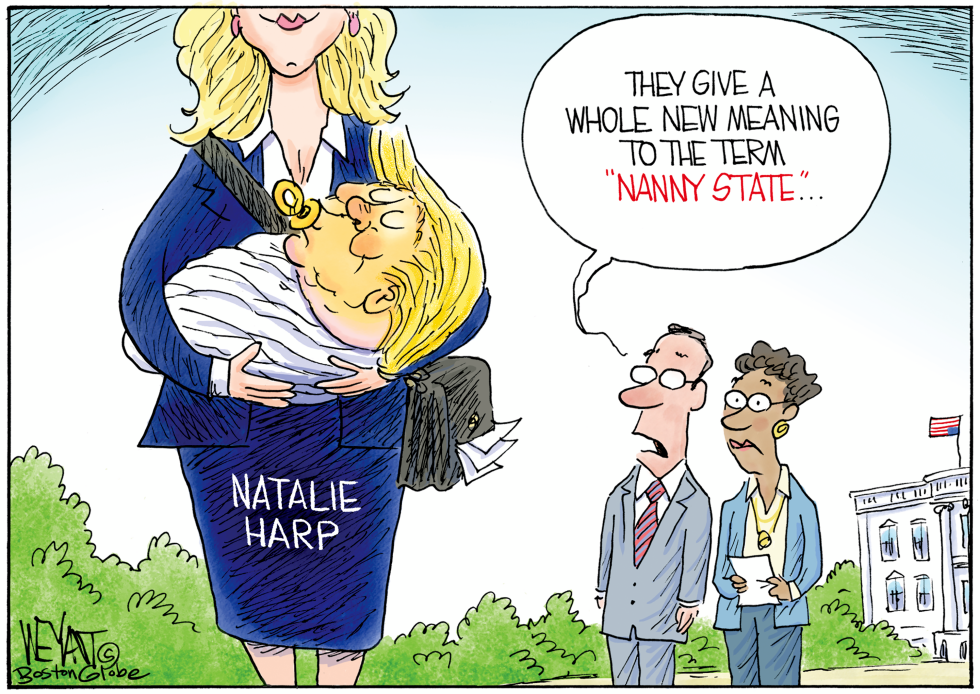
Natalie Harp, a Trump aide, appears in a Boston Globe cartoon holding an infant version of the former president. The image plays on the term nanny state as Harp carries Trump in a carrier. The piece comments on the close personal dynamic between the two figures amid ongoing political developments in 2026.
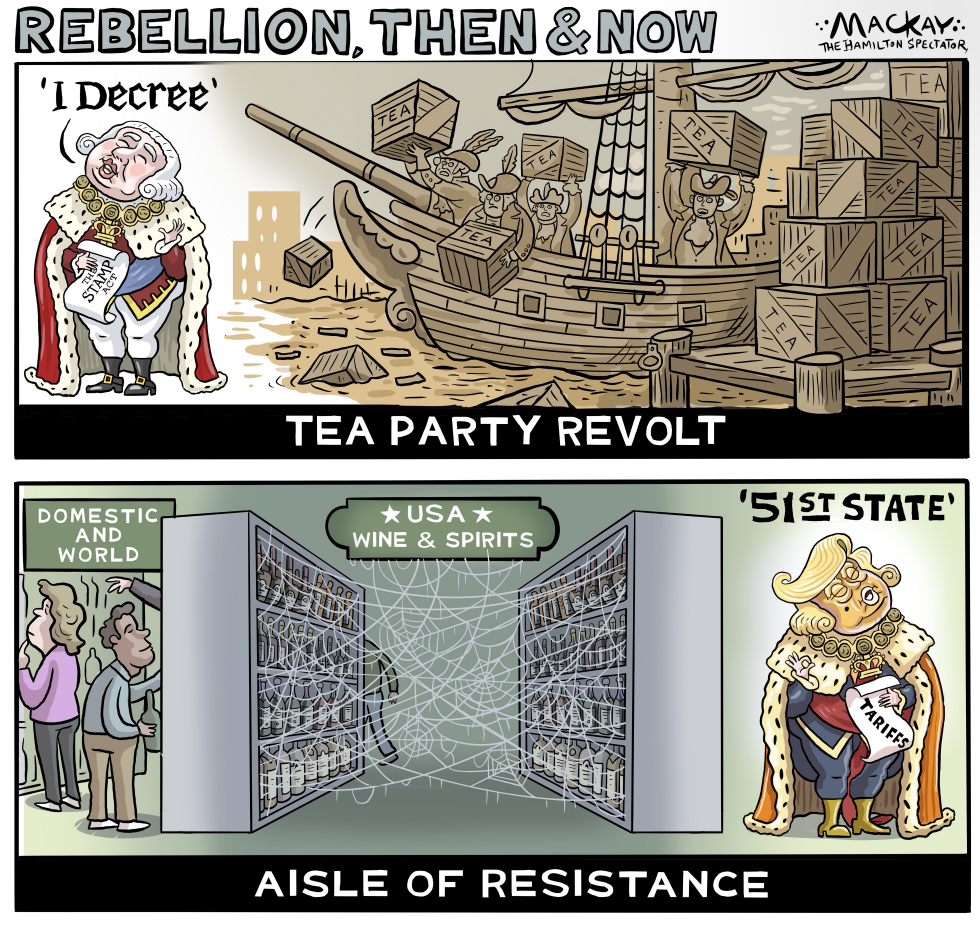
President Trump renewed tariff threats against Canada while floating the idea of the country becoming the 51st state. Canadian consumers responded with a boycott of American wine and spirits, leaving store shelves empty. The cartoon draws a parallel to the Boston Tea Party, casting the tariff policy as a modern decree provoking resistance.
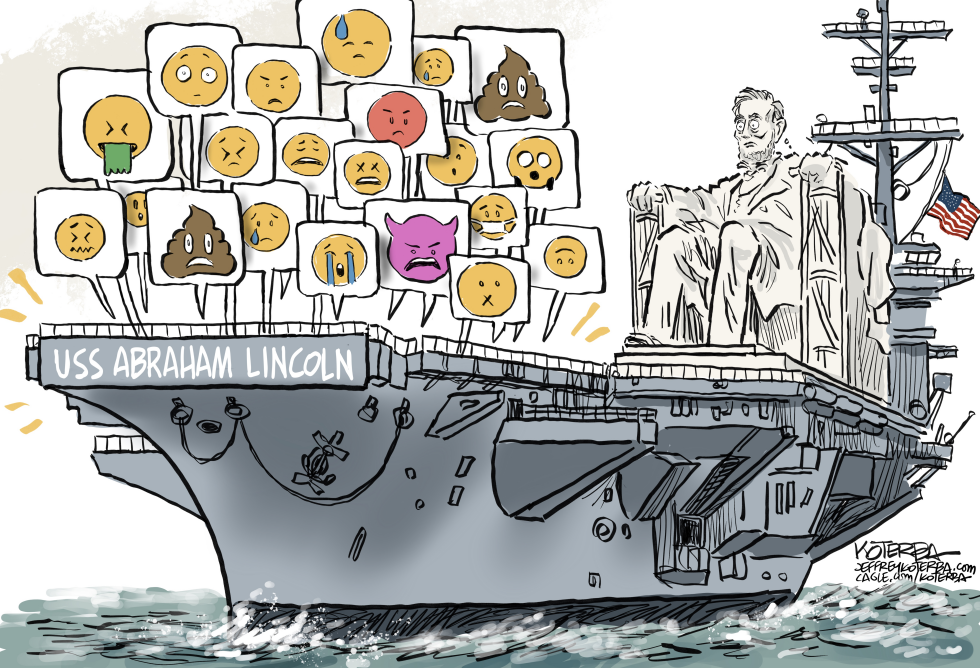
Public reaction to US naval deployments has intensified through social media platforms in recent weeks. Online users have flooded discussions with critical emojis targeting military assets like the USS Abraham Lincoln. The piece portrays this digital deluge as an overwhelming force on longstanding symbols of American leadership and naval power.
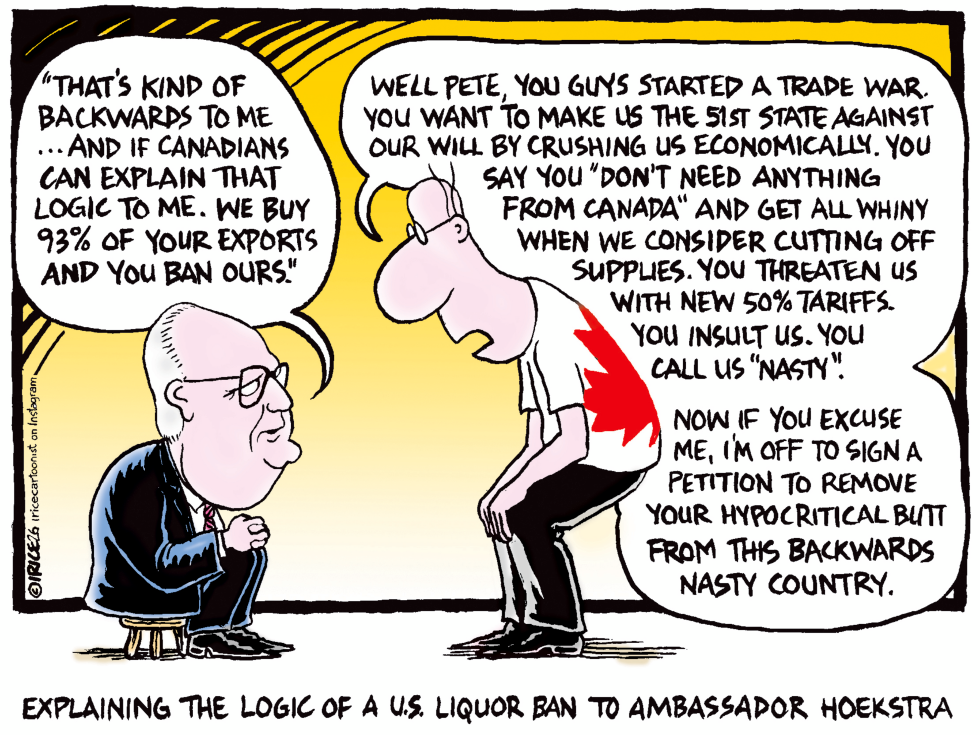
The United States has enacted a liquor ban targeting Canadian products as part of broader trade measures. Ambassador Hoekstra receives direct criticism over the policy's economic impact and perceived hypocrisy. The response underscores Canada's role as a major buyer of U.S. exports and its readiness to retaliate with supply cuts and petitions.