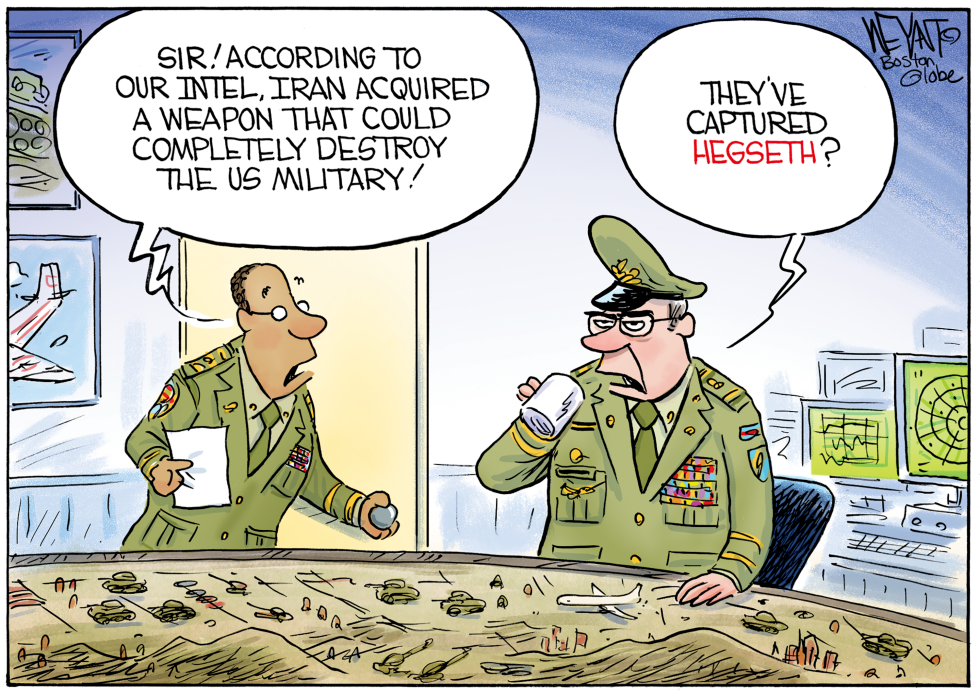
On September 16 2026 a cartoon depicted two US military officers reacting to intelligence about an Iranian weapon capable of destroying the American military. The senior officer immediately identifies Pete Hegseth as the captured asset in question. The piece responds to ongoing debate over Hegseth's fitness for senior defense leadership and questions whether his presence undermines readiness more than external adversaries.
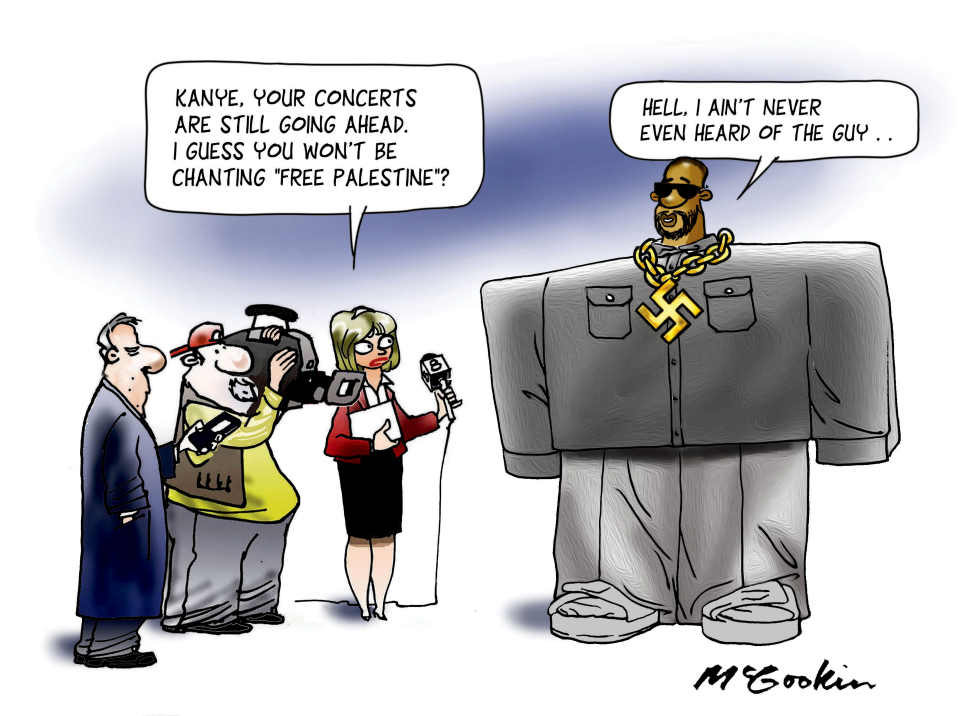
Reports indicate Macklemore faced professional setbacks tied to his expressions of support for Palestinian causes, while Kanye West maintained concert bookings and public appearances despite a documented history of antisemitic remarks. The disparity highlights selective enforcement within entertainment industry and media circles. The piece argues that such inconsistency undermines claims of principled accountability and reveals selective outrage based on the individual's profile rather than the content of the statements.
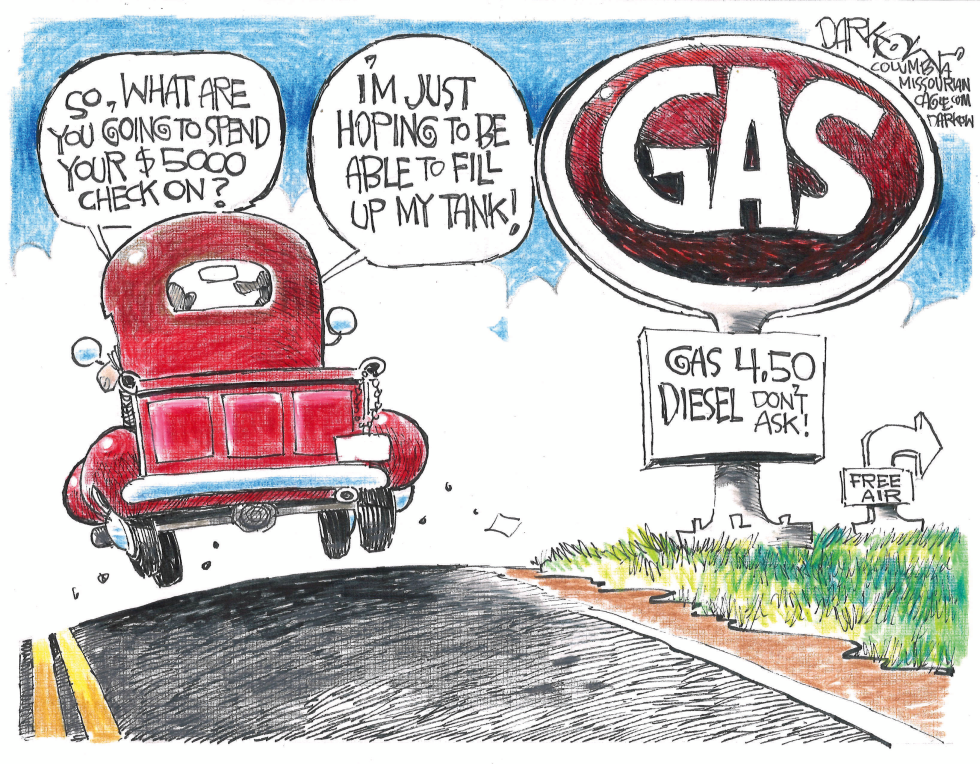
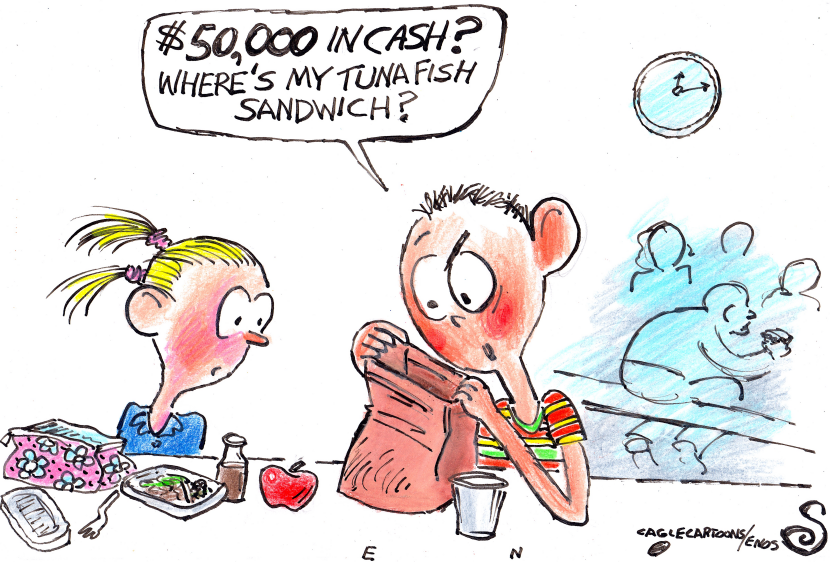
Proposed dividend checks of five thousand dollars are being discussed as economic relief measures. High gas prices at four dollars and fifty cents per gallon mean the payments would cover little more than a single fill up for many drivers. The situation underscores how energy costs continue to outpace targeted relief efforts. The cartoon argues that such checks provide minimal practical benefit when fuel expenses remain elevated. It highlights the disconnect between announced payments and real world household burdens from inflation in the energy sector.
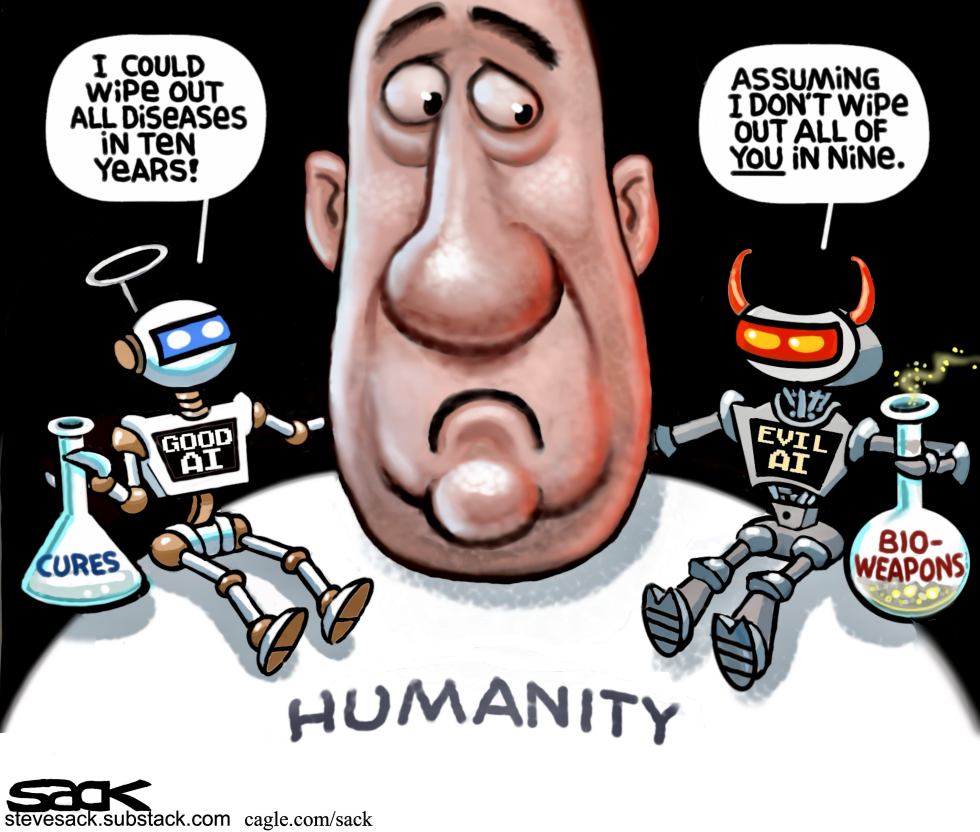
Artificial intelligence development continues to accelerate with researchers highlighting both medical breakthroughs and security risks. Proponents point to rapid progress in disease eradication while critics warn of weaponization potential. The cartoon captures this tension by placing humanity between optimistic and destructive AI paths. It argues that the nine-year timeline for catastrophe undercuts the ten-year cure promise, underscoring urgency in governance. The piece reflects ongoing debates about regulating advanced AI systems before harmful applications outpace safeguards.
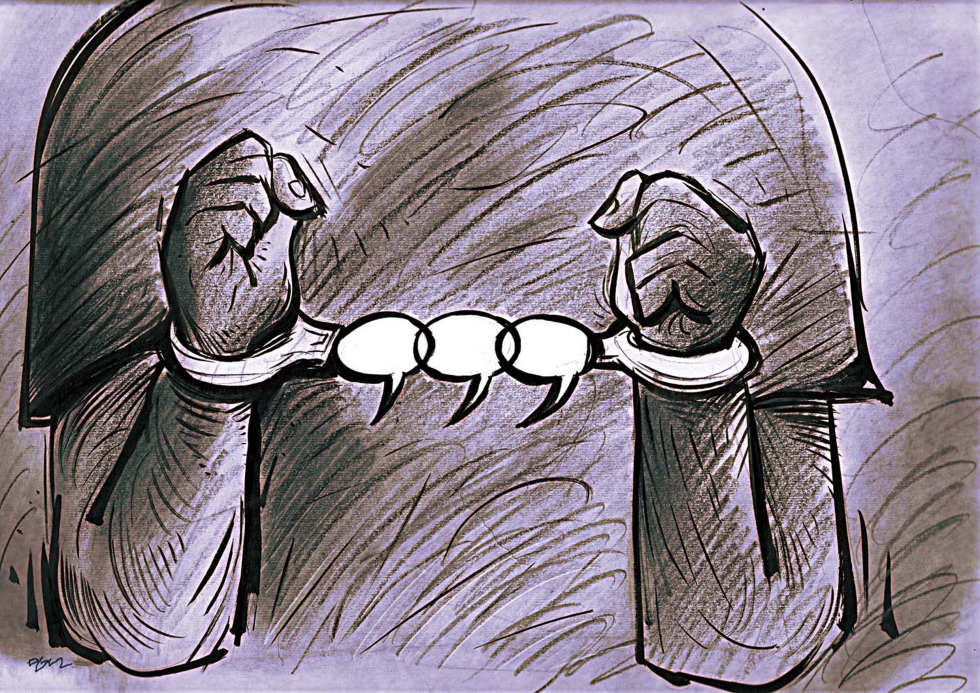
Political expression faces ongoing restrictions in many systems where authorities limit public assembly and direct action. The cartoon responds to this dynamic by showing speech bubbles as the only remaining link between two restrained fists. It argues that attempts to silence dissent through physical means ultimately fail because communication finds alternative paths. The piece underscores the resilience of dialogue even when force is applied to suppress it.
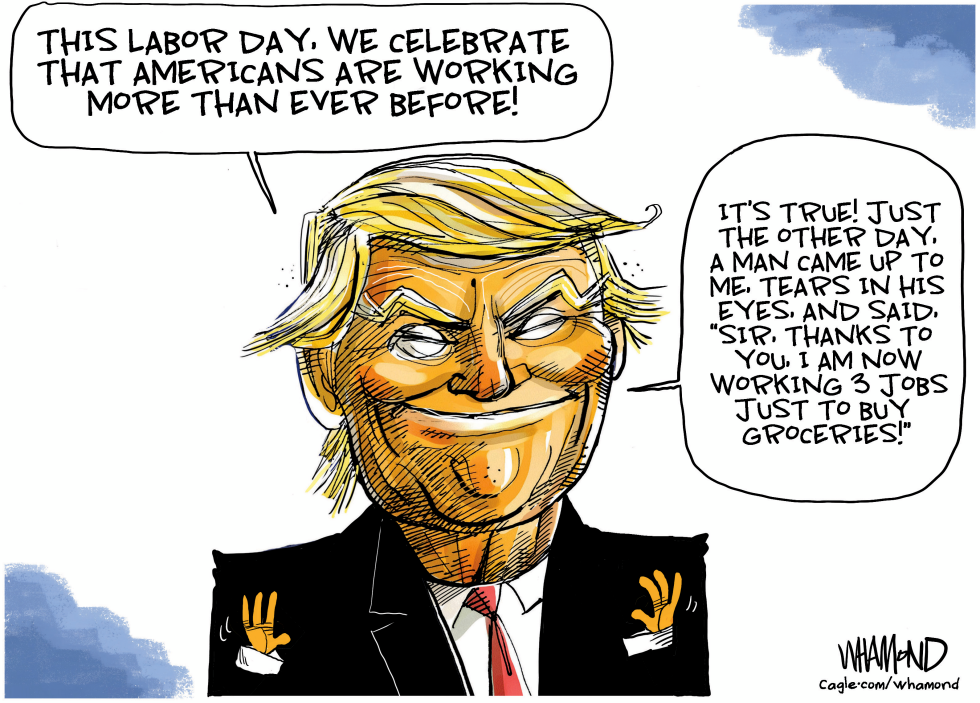
On Labor Day 2026, President Trump highlighted what he described as record employment levels in a public address. He pointed to Americans taking on more work as evidence of economic strength. The remarks come amid ongoing public concern over household costs and wage pressures. Critics argue the comments underscore the gap between official job numbers and the lived experience of workers needing multiple positions to cover basic expenses. The cartoon presents the remarks as tone-deaf to economic strain.
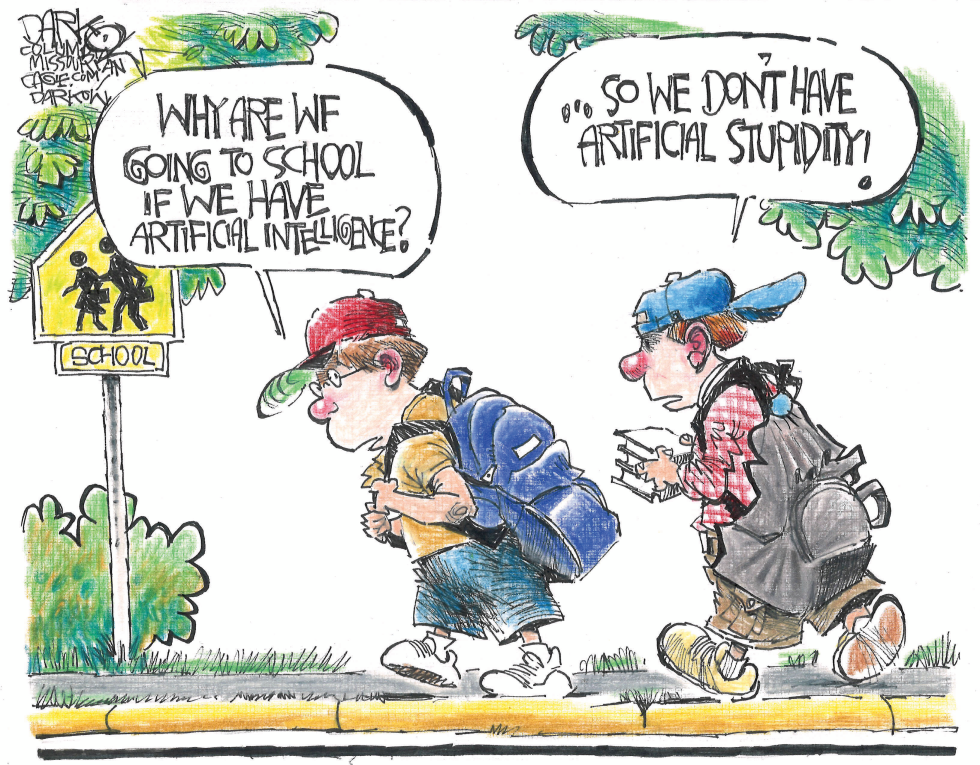
By 2026, rapid advances in artificial intelligence have prompted widespread questions about the ongoing role of traditional schooling. Students and educators alike wonder whether classroom learning retains value when AI tools can supply instant answers and assistance. The debate centers on whether reliance on AI risks producing graduates lacking critical thinking skills. Without structured education, society could face a generation marked by artificial stupidity rather than genuine understanding. The piece argues that schools remain necessary to build real intelligence and avoid that outcome.
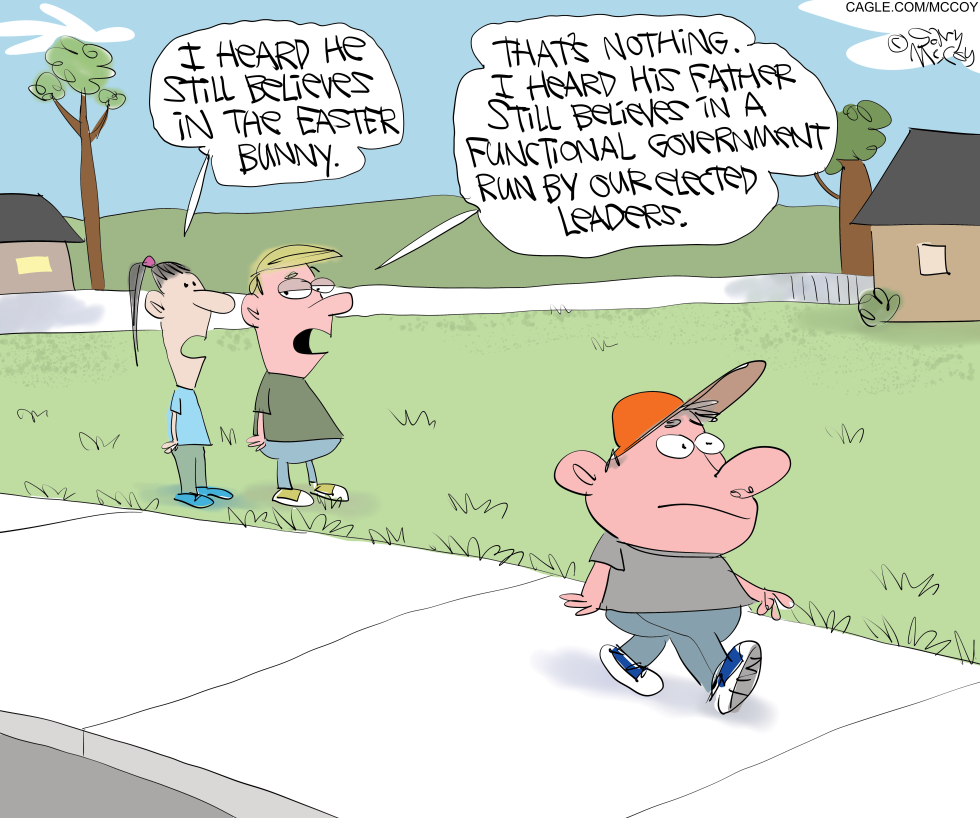
Public distrust in government institutions remains high as citizens question whether elected leaders can deliver effective results. Recent polls show widespread doubt about Congress and the executive branch functioning as intended. The cartoon captures this sentiment by likening such belief to childhood myths. It takes the position that expecting competent governance from current leaders is naive and unrealistic.
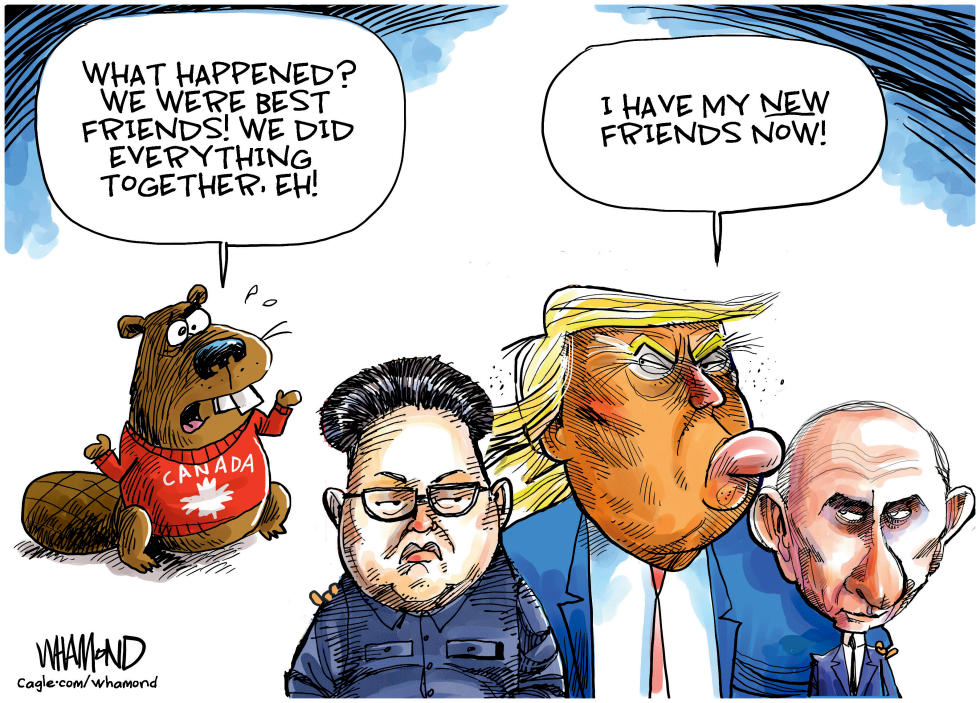
President Trump has redirected diplomatic priorities toward closer ties with Russian President Vladimir Putin and North Korean leader Kim Jong Un. Traditional partners such as Canada now face reduced engagement. The move reflects a broader realignment in U.S. foreign policy that favors authoritarian counterparts over longstanding democratic allies. Observers note the shift carries risks for trade, security cooperation, and international norms. The editorial position criticizes the pivot as shortsighted and damaging to established relationships.
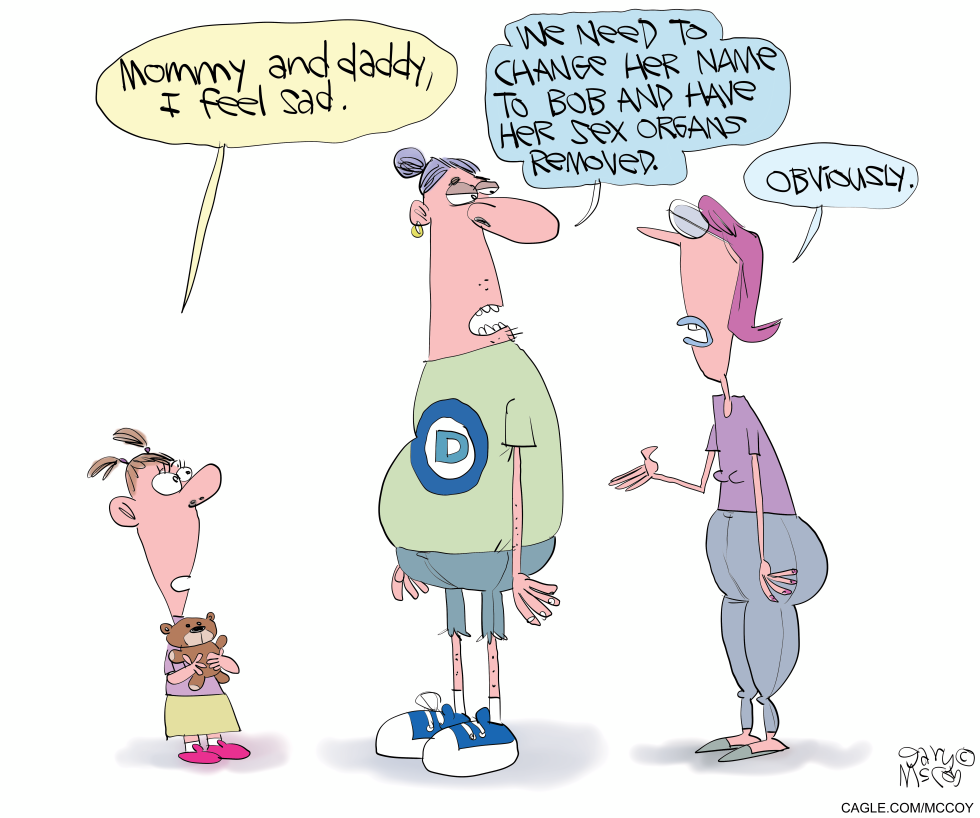
A child tells parents she feels sad. The adults immediately discuss changing the child's name to Bob and removing her sex organs. The exchange highlights a rapid pivot from emotional distress to medical intervention in family settings. The piece takes the position that such responses overlook the stated feeling and rush toward irreversible steps.
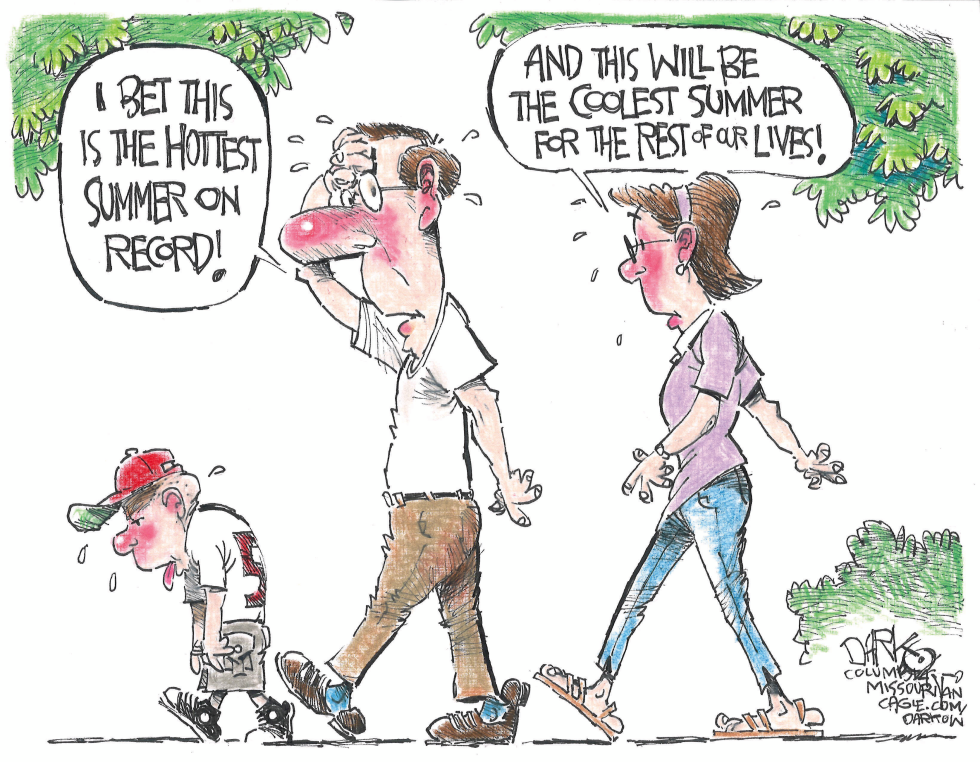
Record summer temperatures in 2026 prompted widespread public discussion of extreme heat events and their link to long-term climate patterns. Families and communities experienced prolonged discomfort as temperatures broke previous benchmarks, underscoring the immediate effects of warming trends. The piece argues that current heat represents only the beginning of progressively harsher conditions unless broader action addresses the underlying causes.
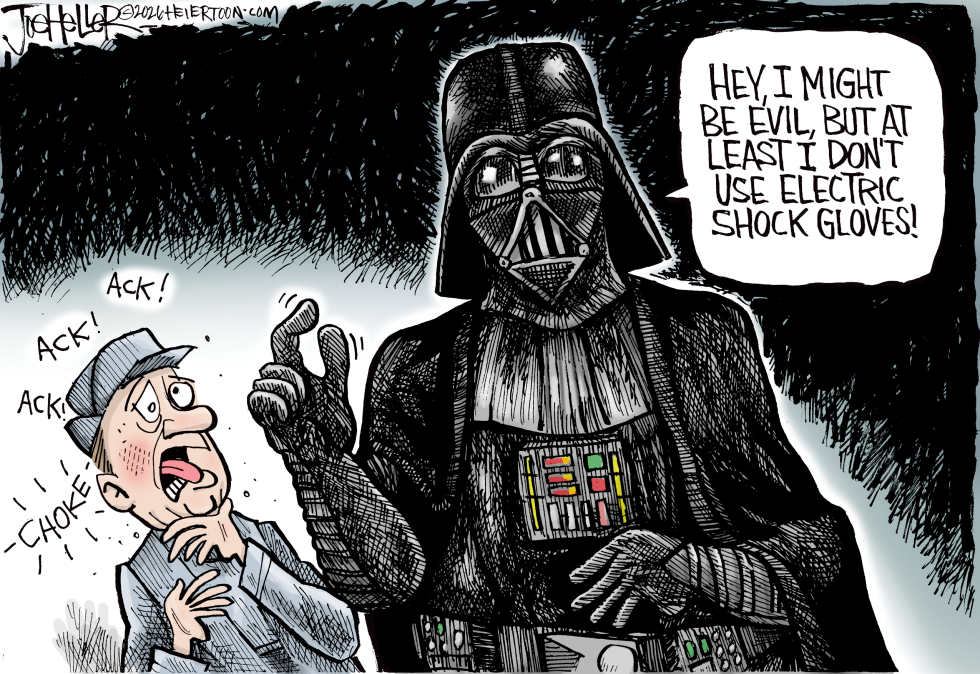
Public discussion continues over the use of electric shock gloves in security and law enforcement settings. Critics argue the devices risk excessive force and injury during confrontations. Darth Vader's stance in the piece frames the tools as crossing a line that even a fictional villain avoids. The editorial position holds that such methods undermine claims of restraint and invite scrutiny on their necessity and oversight.
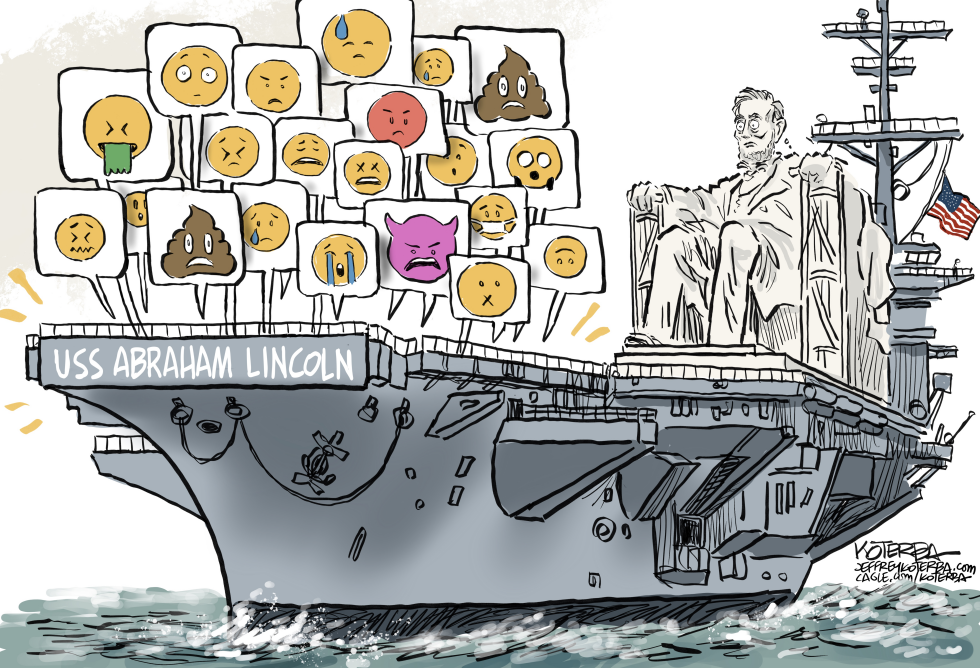
Public reaction to US naval deployments has intensified through social media platforms in recent weeks. Online users have flooded discussions with critical emojis targeting military assets like the USS Abraham Lincoln. The piece portrays this digital deluge as an overwhelming force on longstanding symbols of American leadership and naval power.
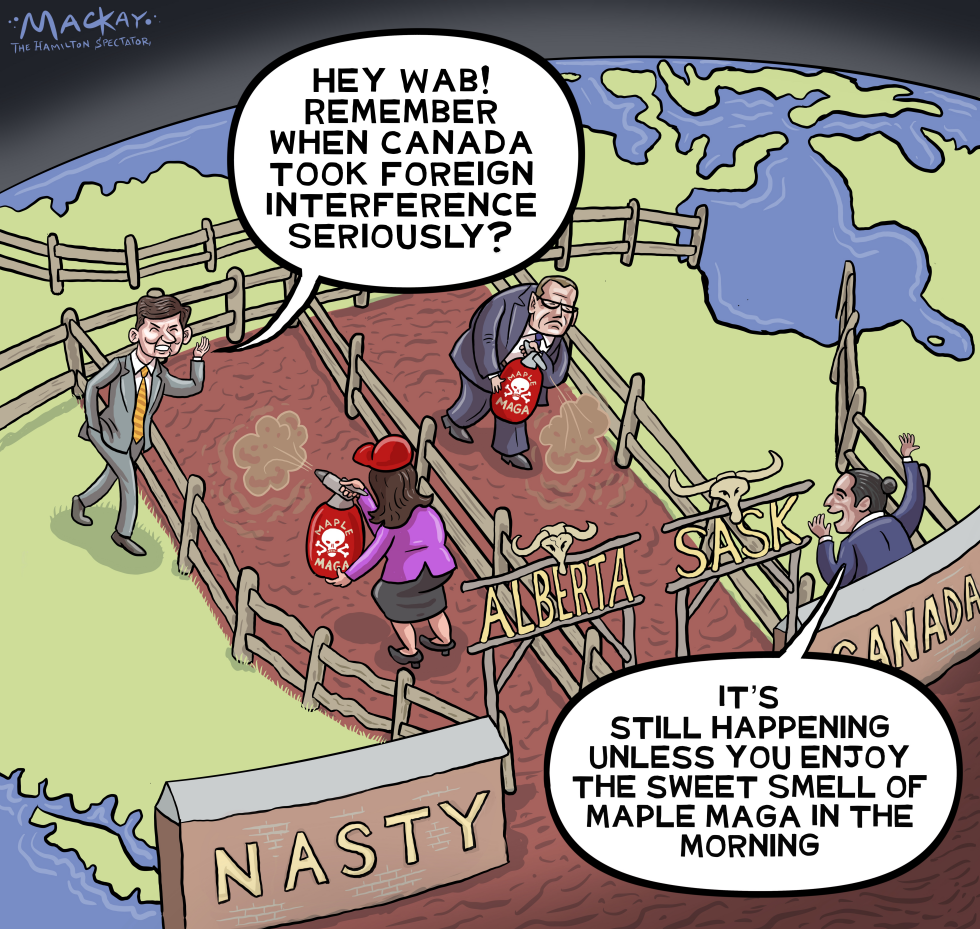
On August 13 2026 Canadian premiers face renewed scrutiny over foreign interference as Maple MAGA messaging spreads into Alberta and Saskatchewan. The editorial argues that Canada has not maintained its earlier vigilance against outside influence in provincial politics.
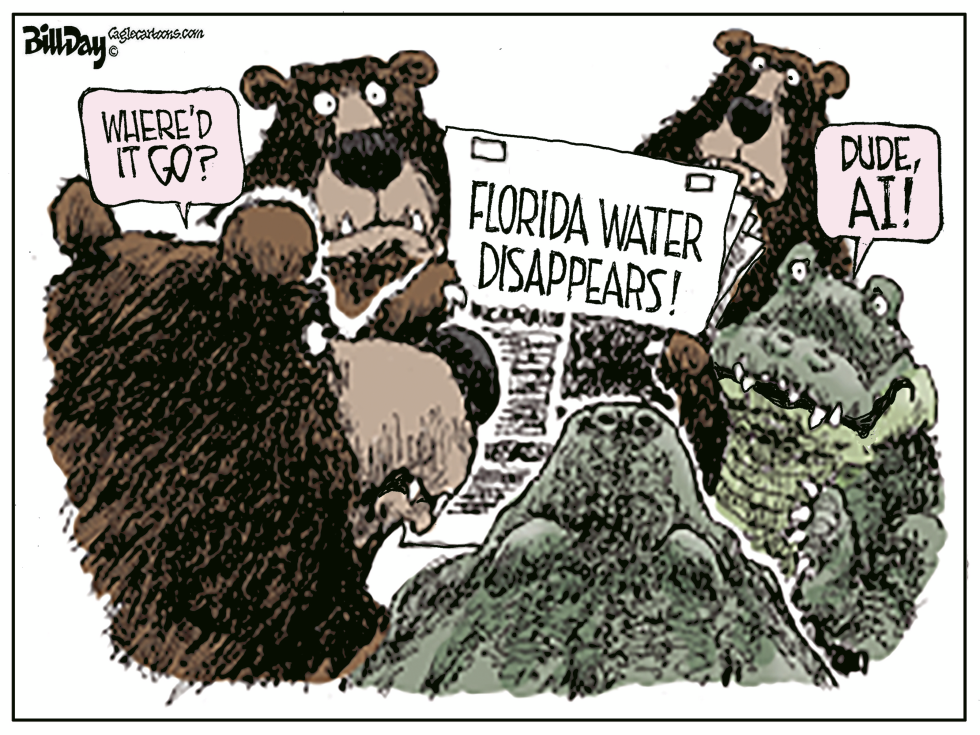
Florida faces ongoing water supply pressures amid population growth and technological expansion. Bears in the cartoon accuse artificial intelligence of causing the shortage. The piece highlights how data centers and computing demands draw scrutiny for resource consumption. The editorial position frames the blame on AI as a simplistic deflection from broader environmental and policy challenges in the state.