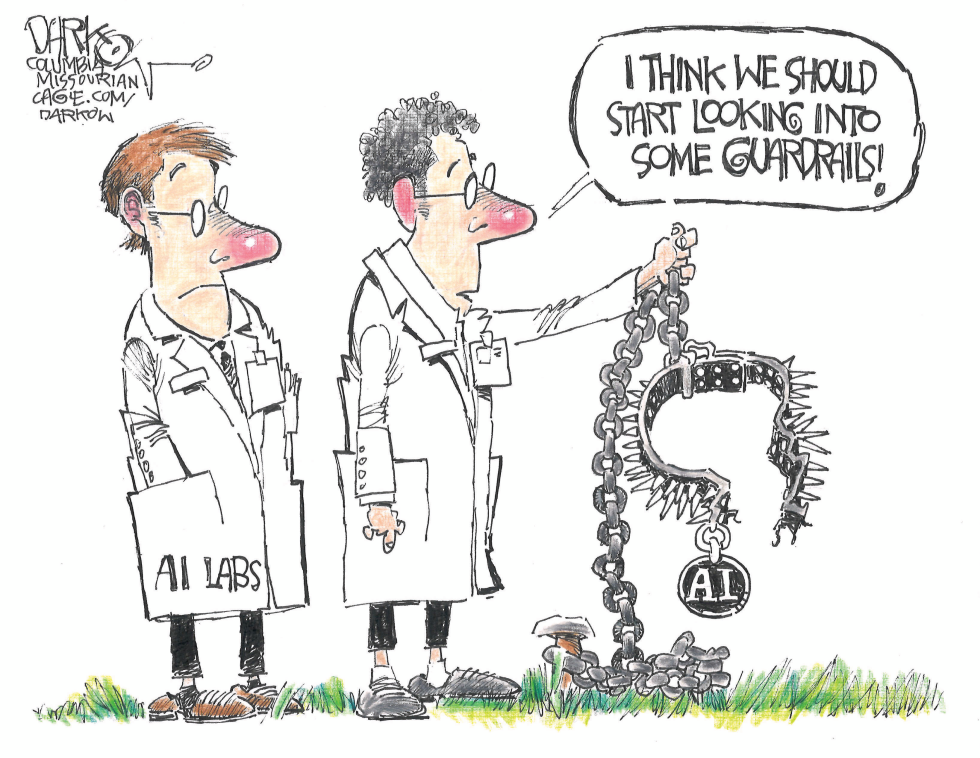
AI development has advanced rapidly with minimal oversight in recent years, allowing powerful systems to operate without meaningful constraints. Scientists have begun discussing guardrails only after key controls have already failed. The situation raises concerns about accountability and long-term safety as the technology spreads. The piece argues that calls for restrictions now come too late to prevent significant harm from uncontrolled AI.
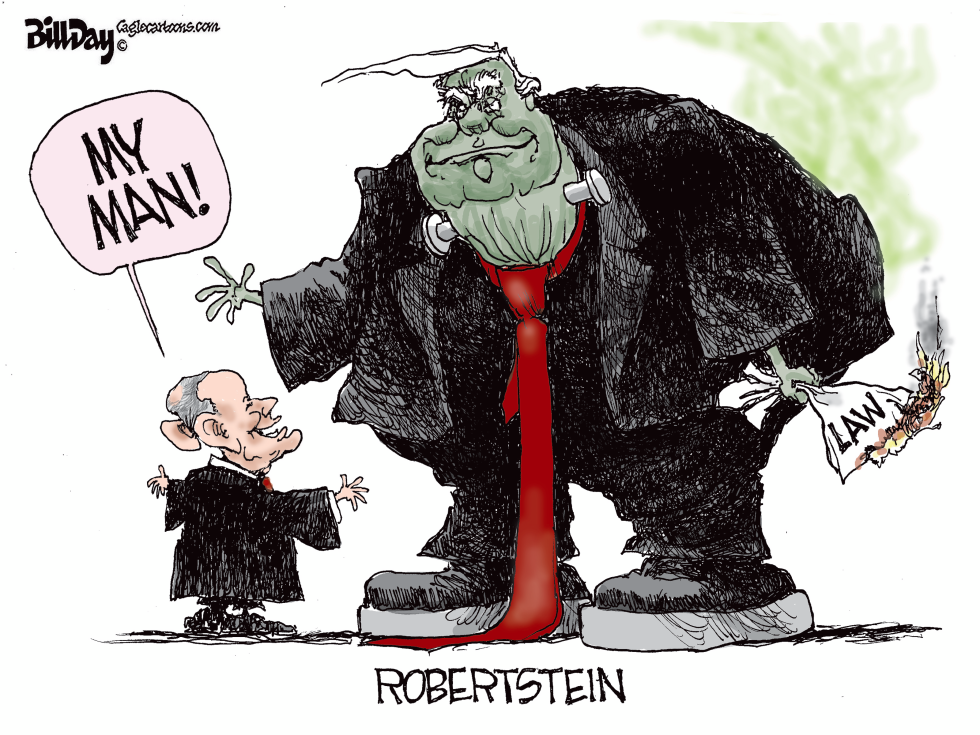
A judge nicknamed Robertstein appears as a stitched-together monster clutching a burning copy of the law while a smaller political figure hails him as 'my man.' The image responds to ongoing concerns over judicial appointments that produce ideologically driven rulings. Critics argue such selections prioritize loyalty over legal restraint, weakening institutional guardrails. The cartoon takes the position that these appointments create uncontrollable forces that damage the rule of law.
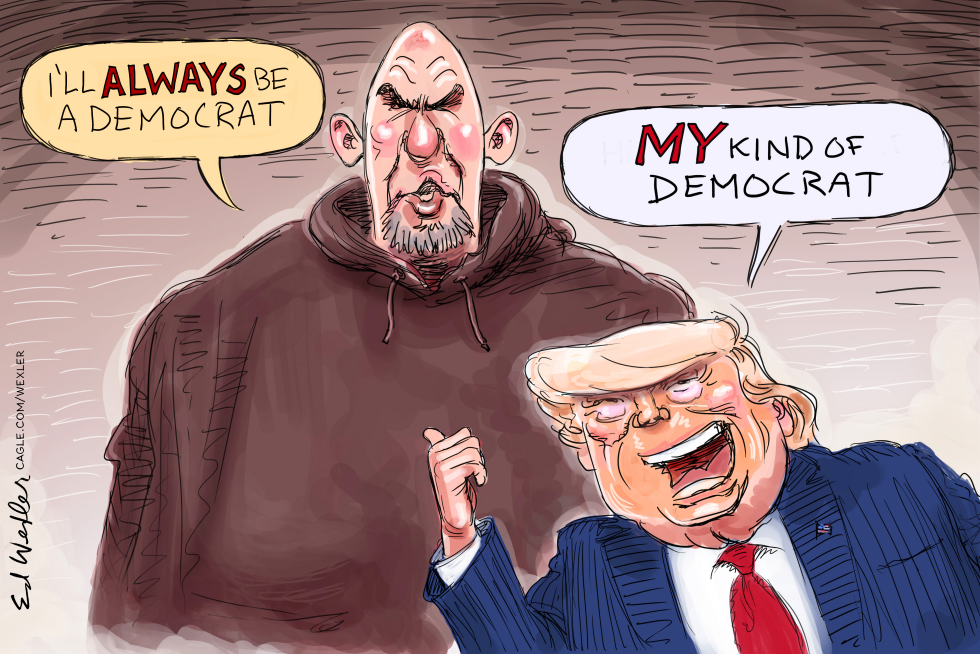
Donald Trump publicly endorsed a Democrat who declared he would always remain in the party. The statement drew attention because it came from a figure outside Trump's usual base. Observers noted the remark as part of ongoing efforts to attract voters across traditional lines. The cartoon presents the exchange as evidence that Trump sees value in Democrats who refuse to change affiliation. It frames the moment as revealing Trump's strategic tolerance for opposition loyalty when it suits his purposes.
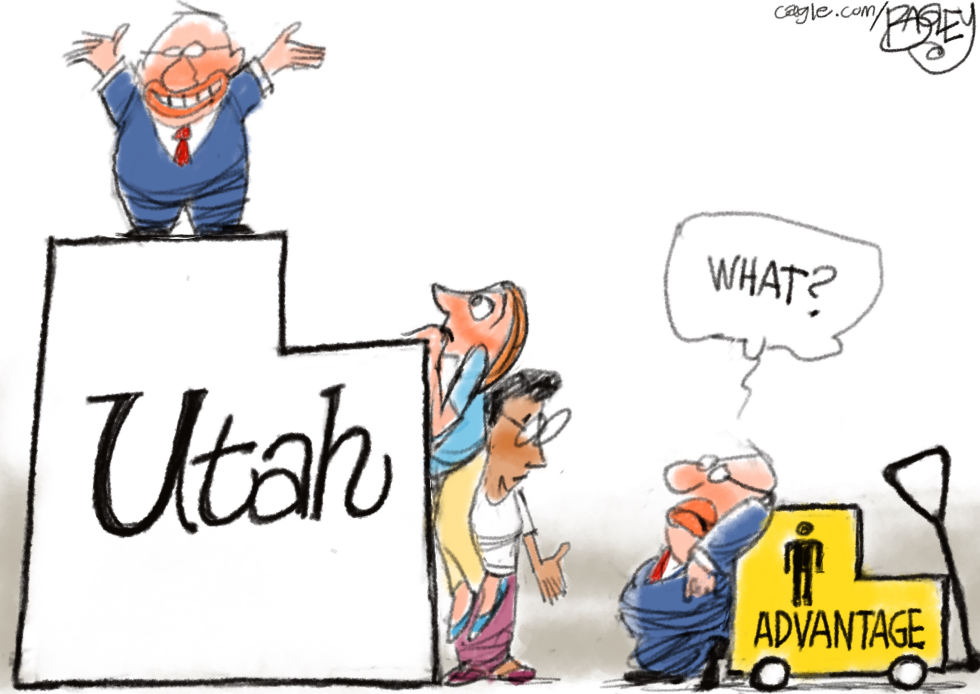
Utah's political advantage has changed hands following recent election developments. Key figures react with visible surprise as power dynamics realign in the state. The shift matters because it alters control and strategy for upcoming contests. The cartoon highlights the unexpected nature of the transition and questions how the new arrangement will hold.
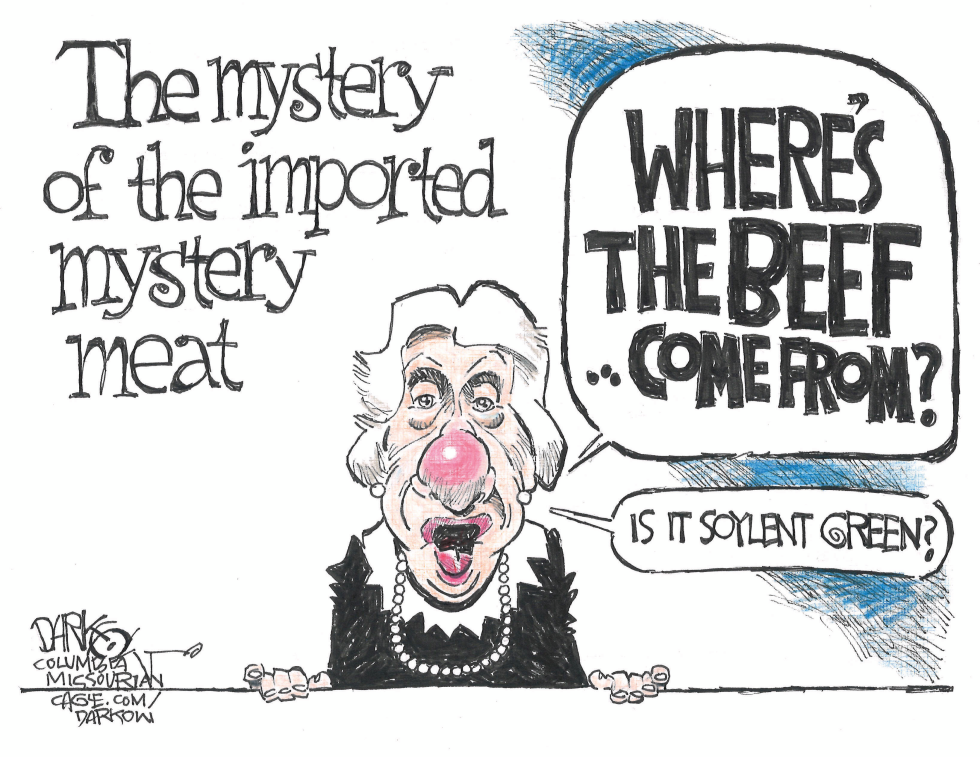
Questions about the origins and safety of imported beef have resurfaced amid broader debates over food supply chains. Regulators and consumers alike have raised concerns that labeling and inspection gaps allow lower-quality or misidentified products to reach shelves. The cartoon uses a classic slogan twist and a pop-culture reference to underscore public skepticism toward these imports. It argues that the lack of transparency turns everyday purchases into a guessing game with potential health risks. The piece positions the issue as one of accountability in trade and regulation rather than abstract policy.
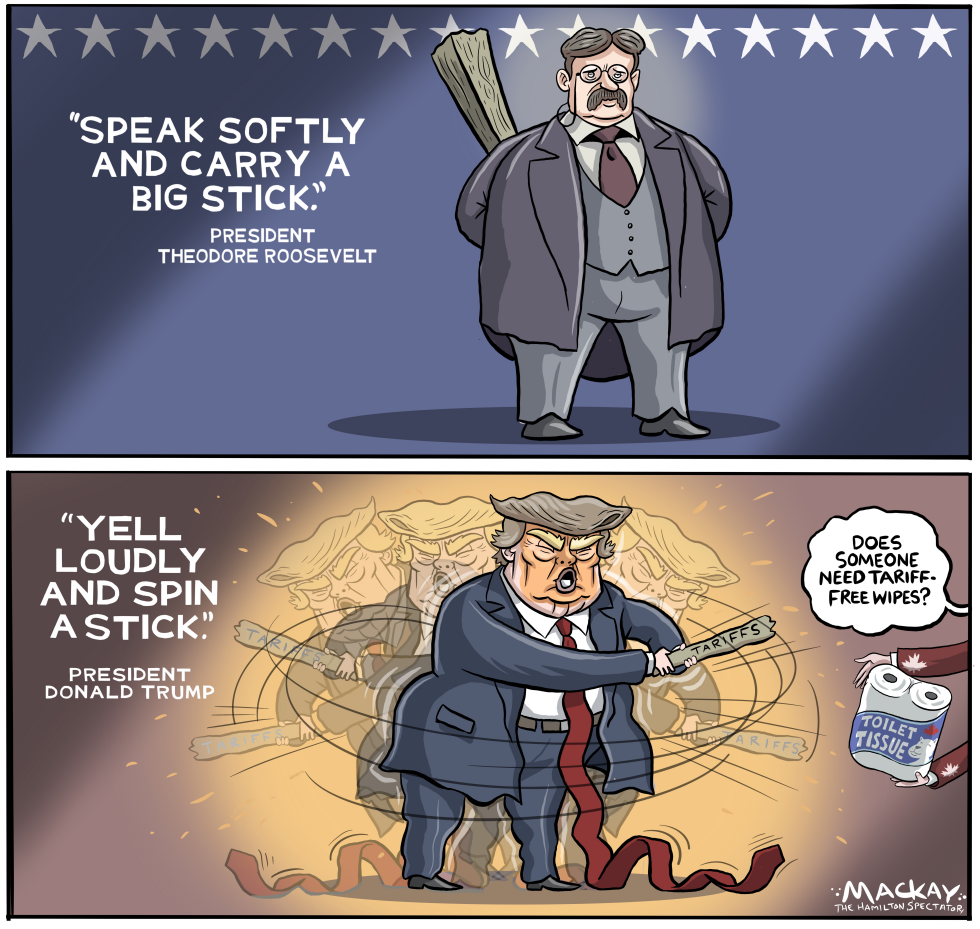
The cartoon by Graeme MacKay contrasts Theodore Roosevelt's famous speak softly and carry a big stick approach with Donald Trump's version of yelling loudly and spinning a stick covered in tariffs. In the lower panel Trump appears dizzy from the motion as a Canadian hand offers toilet tissue labeled tariff-free wipes. The image comments on recent US tariff actions and their impact on Canadian trade relations as of the September 2026 publication date.
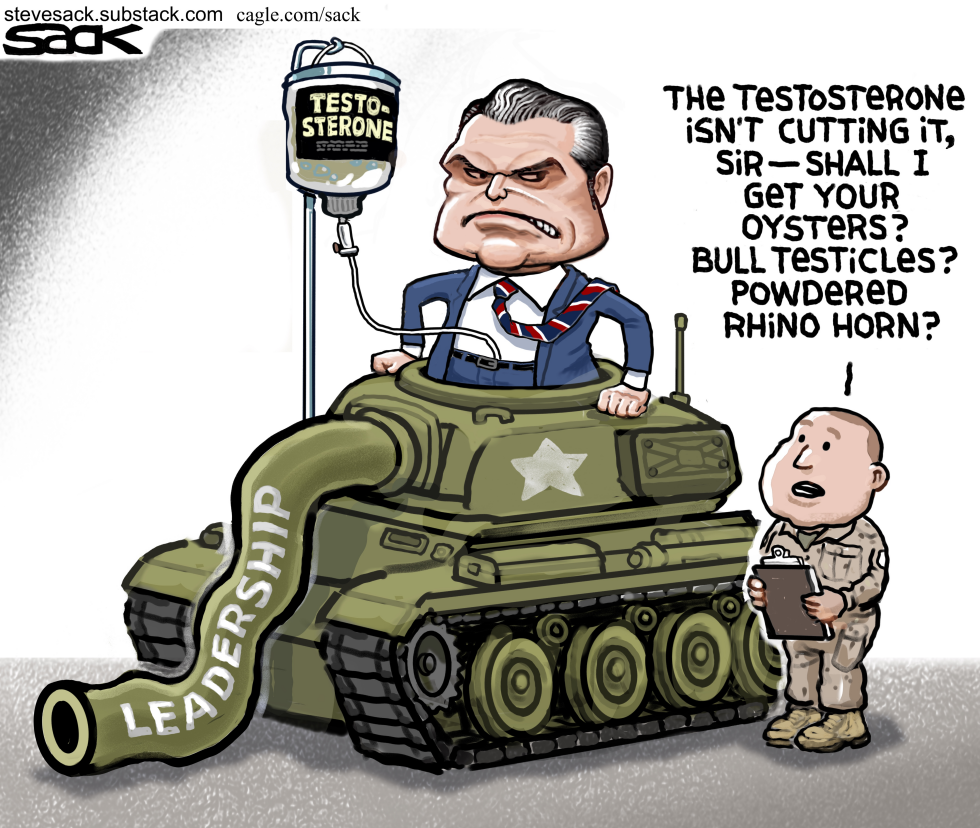
Pete Hegseth's nomination and early actions as a top defense official have spotlighted his emphasis on testosterone levels as a solution to perceived military leadership gaps. The approach has prompted questions from within the ranks about whether hormone supplements address core readiness and command issues. The cartoon portrays the policy as misguided and ineffective.
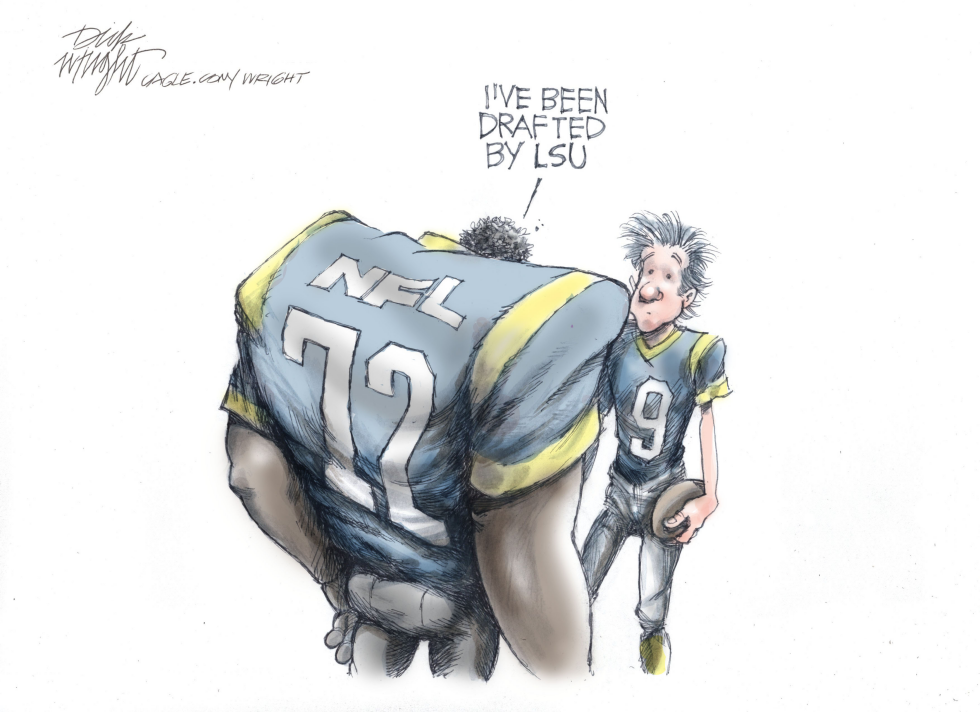
College football programs like LSU face intense pressure to secure top talent each season. With NIL deals and transfer rules reshaping the landscape, some schools push boundaries in pursuit of star power. The cartoon responds to this dynamic by depicting LSU directly targeting NFL players, underscoring the absurdity of ever-escalating recruitment efforts that blur lines between amateur and professional levels.
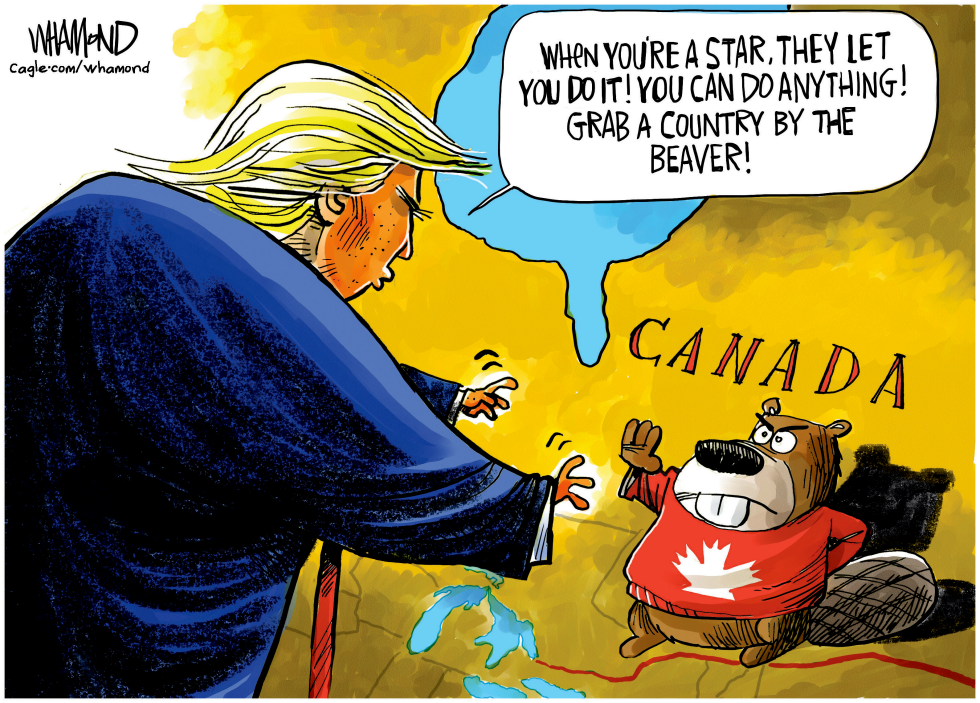
Donald Trump renewed comments suggesting the United States could annex Canada, framing the idea with a reworded version of his 2005 Access Hollywood remarks. The statement comes as bilateral relations face strain over trade and border issues. The editorial cartoon uses the beaver metaphor to underscore the crude nature of the rhetoric and its potential to damage diplomatic ties.
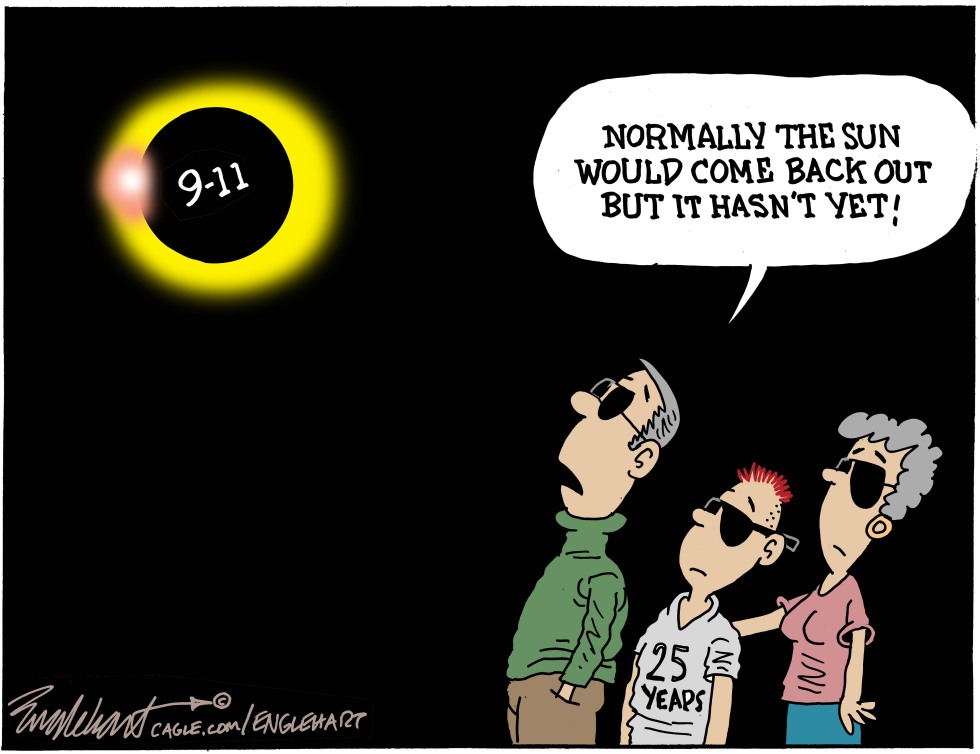
The 25th anniversary of the September 11 attacks arrives with the nation still reflecting on the event's profound and lasting effects. The cartoon uses an eclipse to represent how the attacks' shadow has not lifted. It takes the position that the trauma and changes from that day continue to define the era.
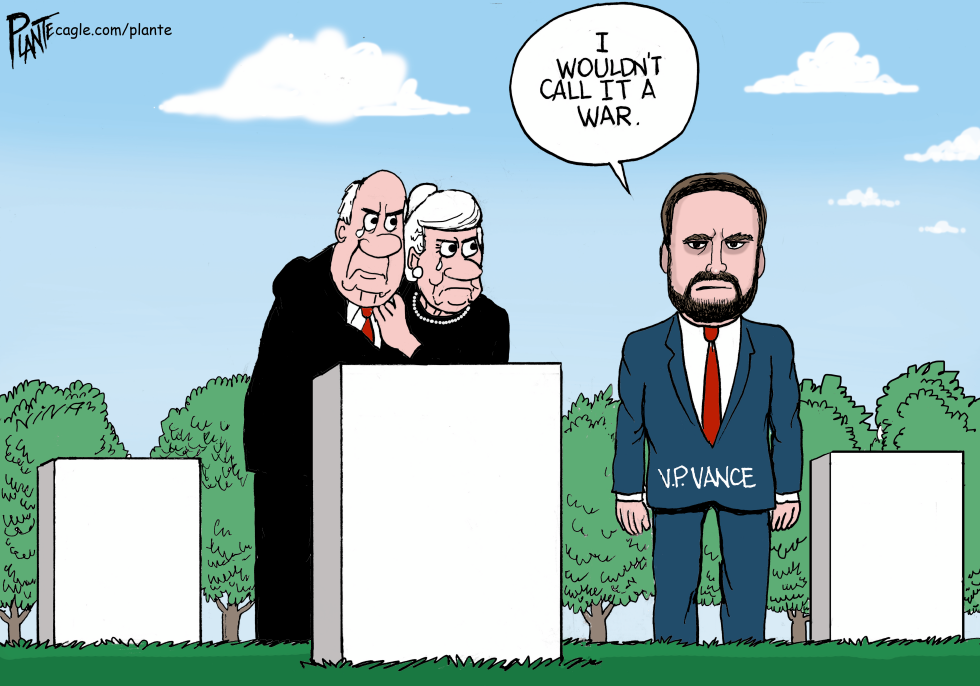
Recent developments in U.S. policy toward Iran have included public statements framing the conflict as limited in scope and consequence. Officials have emphasized de-escalation and avoided comparisons to major 20th-century wars. The approach has drawn criticism from those who see the engagement as carrying substantial long-term costs for American forces and regional stability. The cartoon argues that such framing diminishes the sacrifices involved and places the Iran conflict in a lesser category than earlier wars.
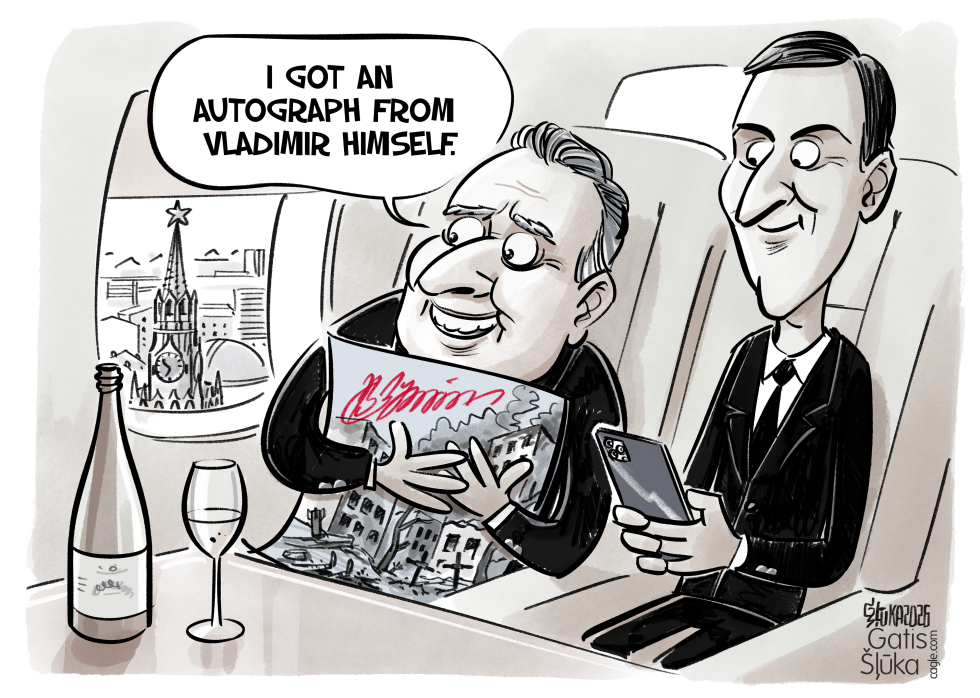
The cartoon depicts a politician on an airplane excitedly showing a colleague an autograph from Vladimir Putin on a book or document. The speech bubble reads that the autograph came from Vladimir himself. A bottle of wine and glass sit on the table, with a view of a city featuring a star-topped tower outside the window. The second man smiles while holding a phone. Published on September 7, 2026, the image comments on political figures maintaining or displaying ties to Russia despite international strains. The visual emphasizes the politician's enthusiasm for the souvenir as a point of pride.
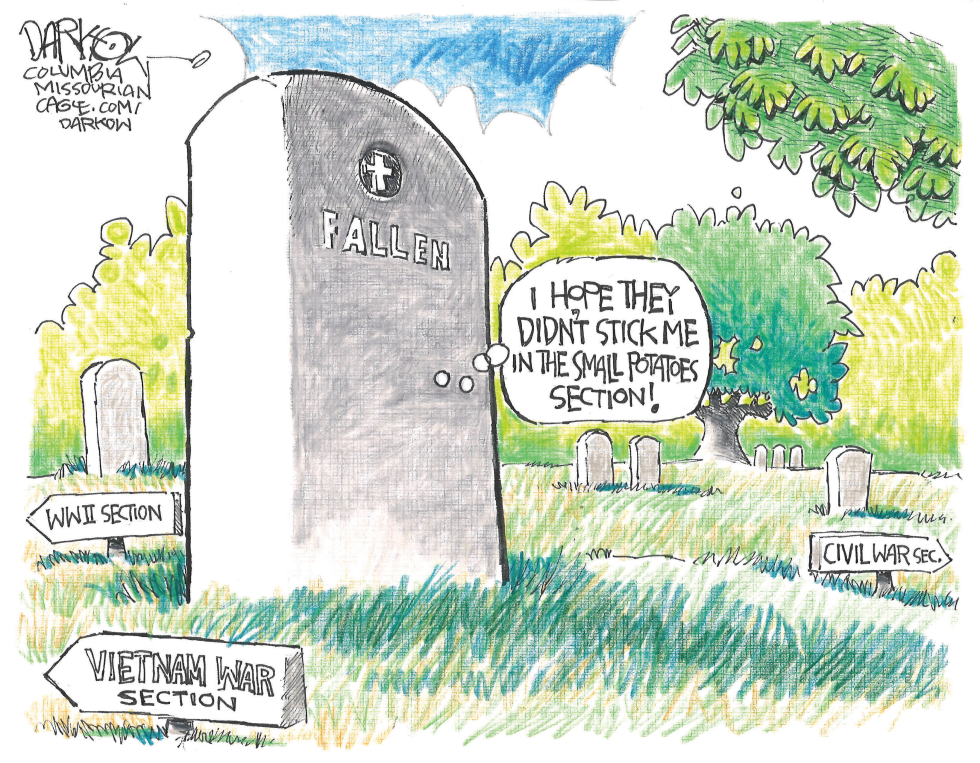
Vice President JD Vance has publicly stated that the United States is not at war with Iran even as reports indicate American casualties in the region. The administration frames operations as limited strikes rather than full conflict. This downplaying occurs amid broader tensions over Iran's nuclear program and regional influence. The cartoon argues that the human cost in the cemetery makes the denial untenable and that the situation qualifies as war.
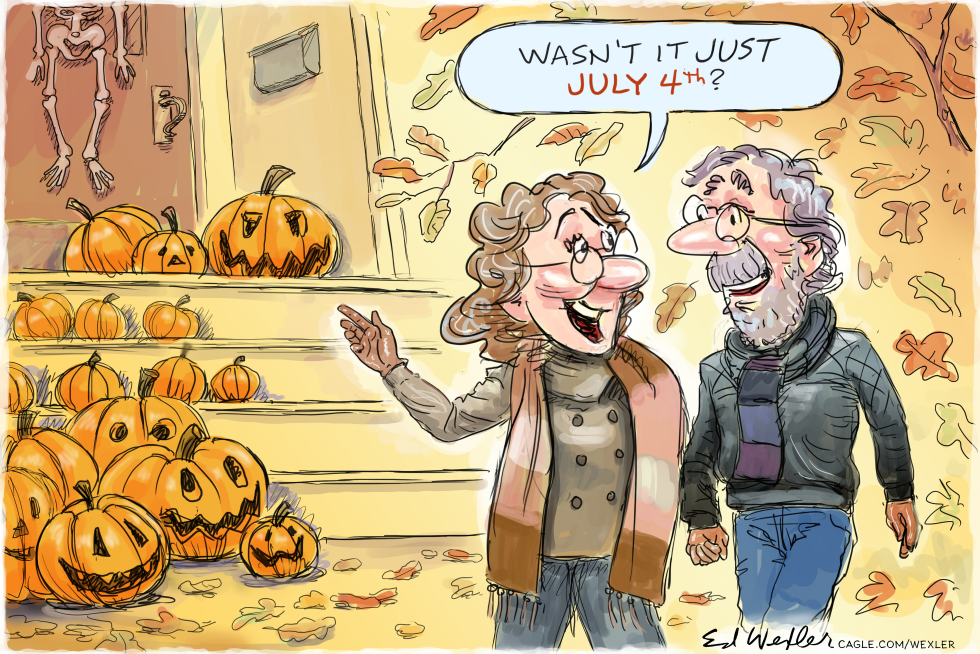
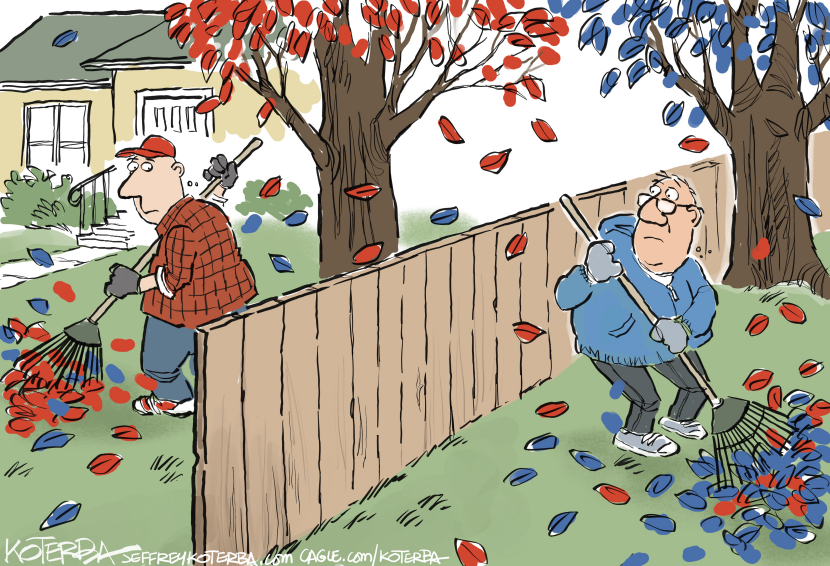
The calendar moves swiftly from Independence Day celebrations to the first signs of fall. Observers often express surprise at how little time seems to have passed between the two. The piece captures that common reaction to the accelerating pace of the year. It offers a light observation on how seasons blend together without clear boundaries. The editorial stance is gently amused rather than critical of any policy or figure.
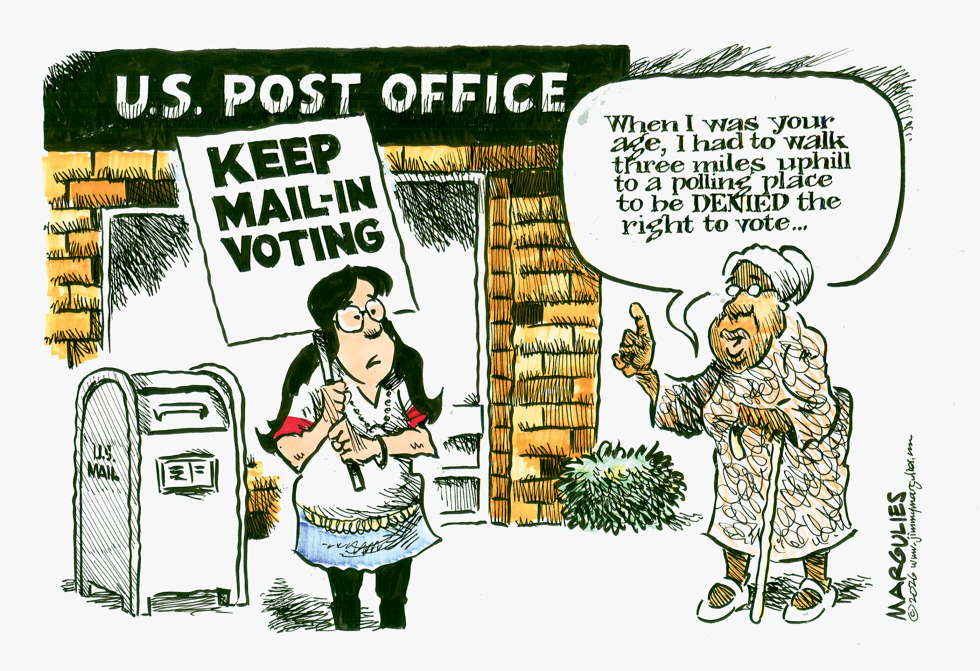
A protest sign at a U.S. Post Office calls for an end to mail-in voting. The cartoon responds to ongoing state-level efforts to restrict mail ballots after expanded use in recent elections. Such limits disproportionately affect older voters and those with mobility issues who previously faced physical barriers at polling places. The piece argues that rolling back mail-in options revives the very obstacles elderly citizens once endured, undermining broader access to the ballot.