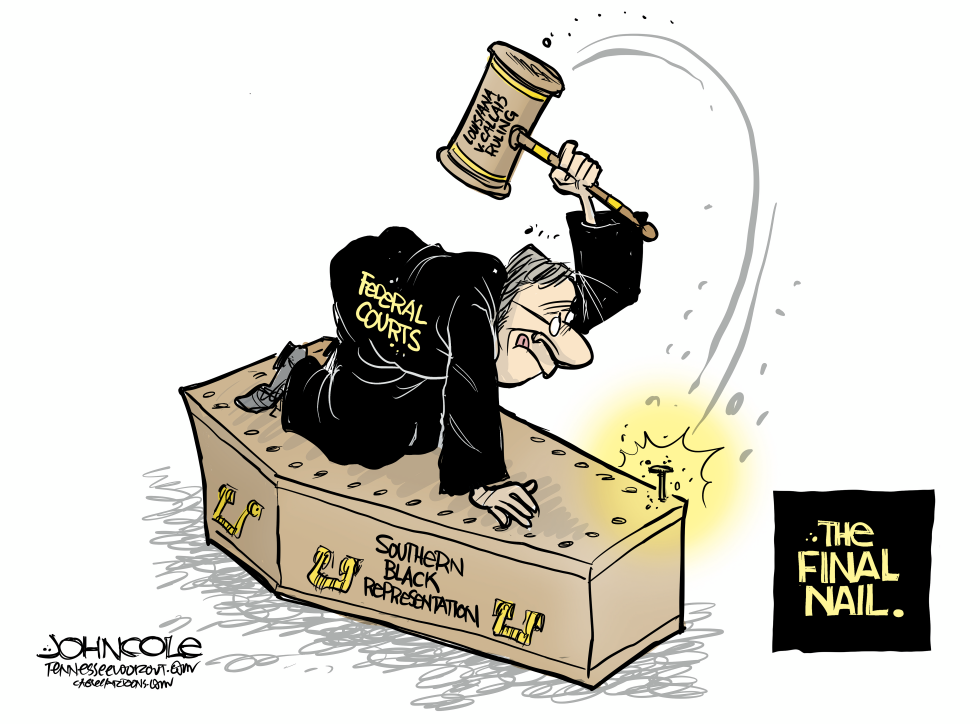
A federal court ruling on Louisiana redistricting has reduced black congressional representation across southern states. The decision follows ongoing litigation over district maps and voting access. It matters because it alters the number of majority-minority seats available in Congress. The piece argues the ruling delivers a decisive setback to those representation gains.
southern states
Sep
13
2019
Sep
27
2017
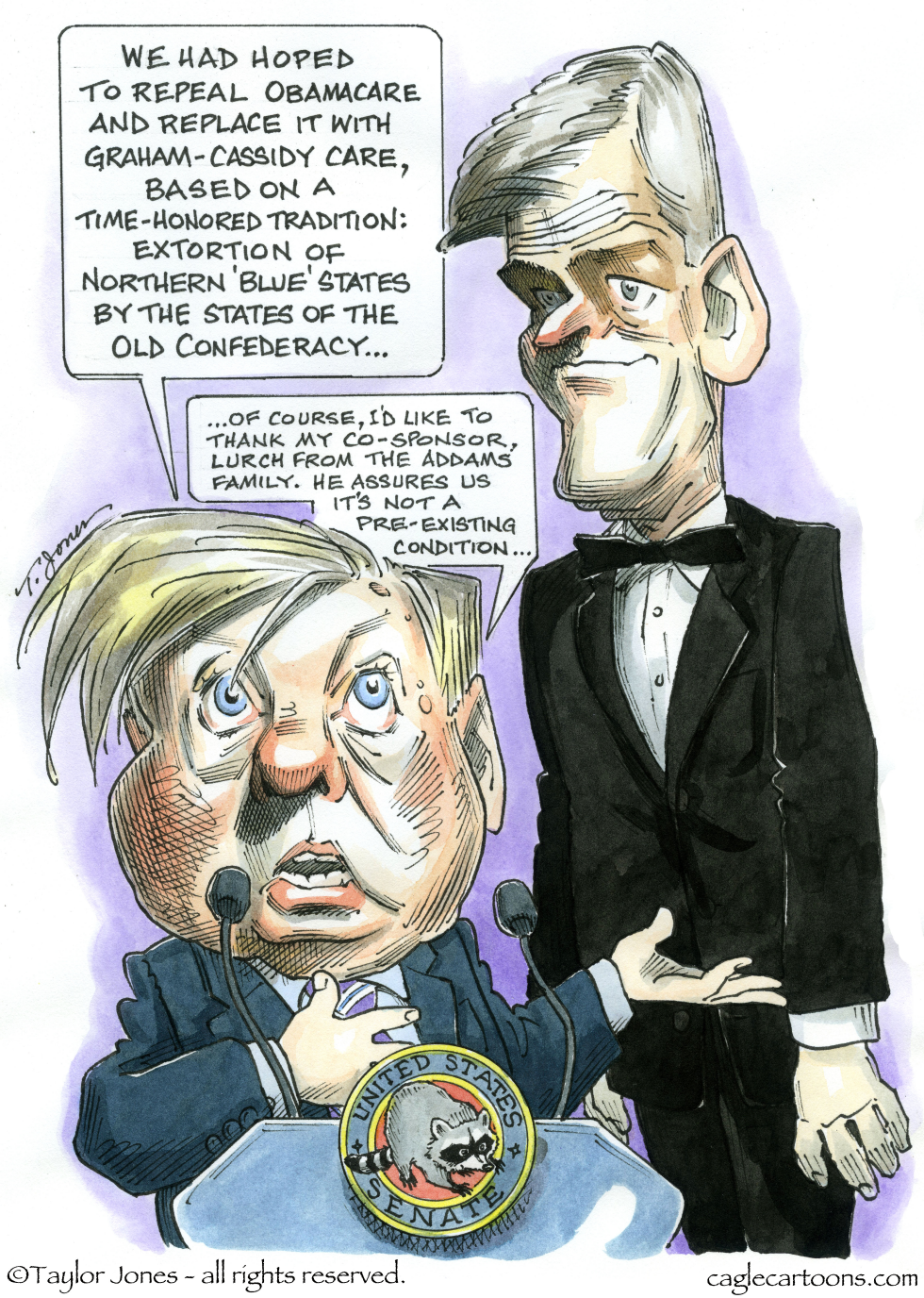
On September 27, 2017, a political cartoon by Taylor Jones depicts Sen. Lindsey Graham and President Donald Trump discussing the Graham-Cassidy healthcare bill. The image shows Graham in a tuxedo beside a podium where Trump speaks, with speech bubbles referencing repeal of Obamacare and block grants favoring former Confederate states. The cartoon responds to the Senate's September 2017 effort to pass the Graham-Cassidy legislation as an alternative to the Affordable Care Act. The bill proposed converting Medicaid funding into state block grants and allowing states to waive certain insurance protections including coverage for pre-existing conditions.
Jun
26
2013
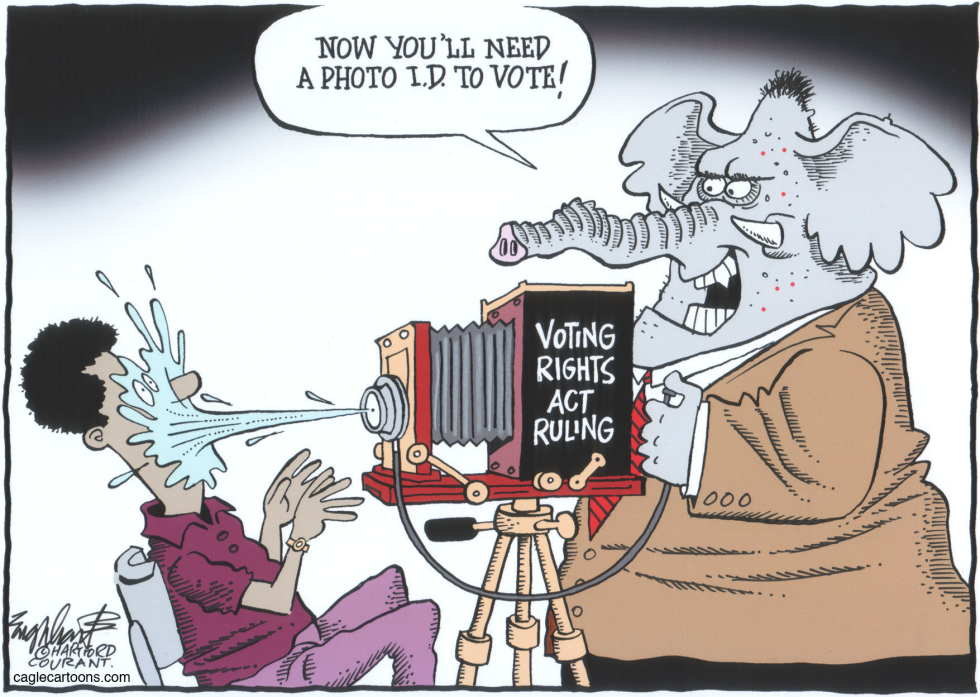
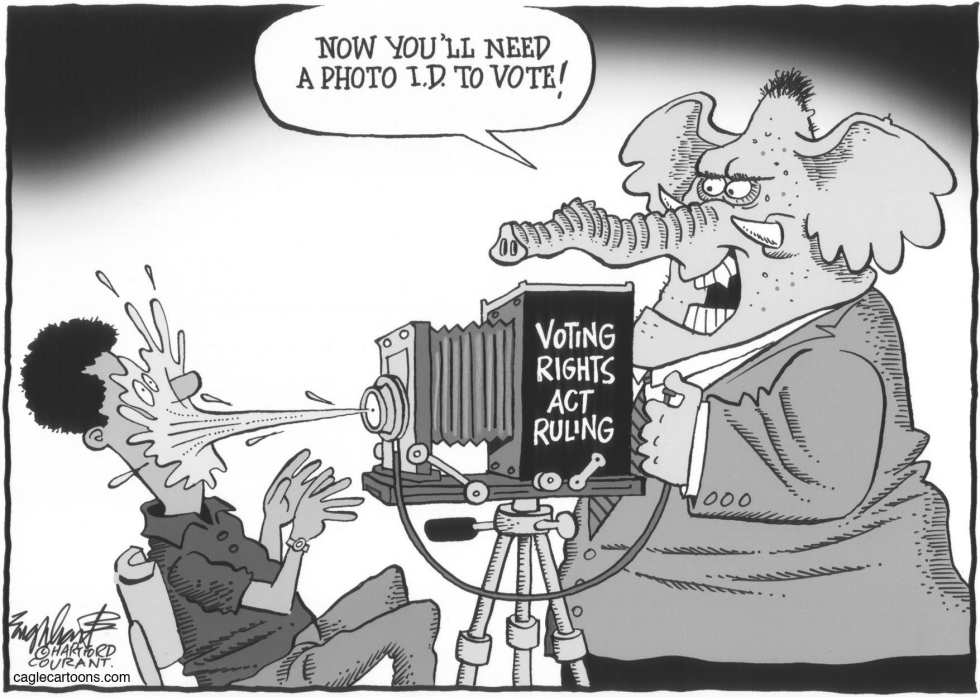
The cartoon shows a Republican elephant operating a large camera marked Voting Rights Act Ruling and directing it at a man who recoils from a spray of liquid. A speech bubble from the elephant states that a photo ID will now be needed to vote. The image responds to the Supreme Court decision in Shelby County v. Holder issued the day before publication. That ruling struck down key provisions of the 1965 Voting Rights Act that required certain states to obtain federal preclearance before changing election procedures. The cartoon links the decision to subsequent efforts by some states to implement stricter voter identification rules.
Jun
25
2013
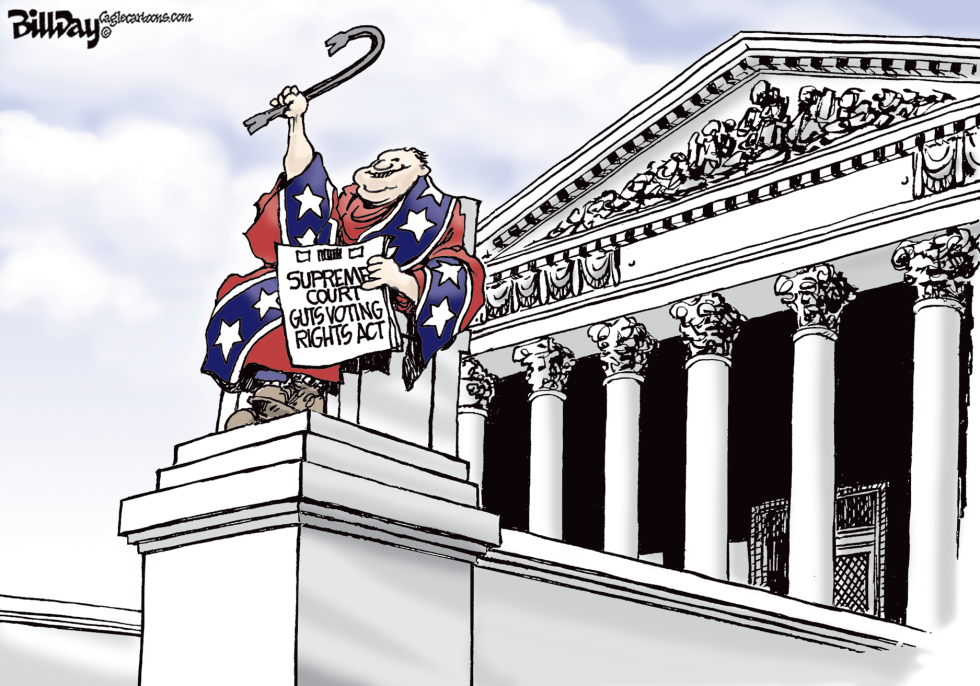
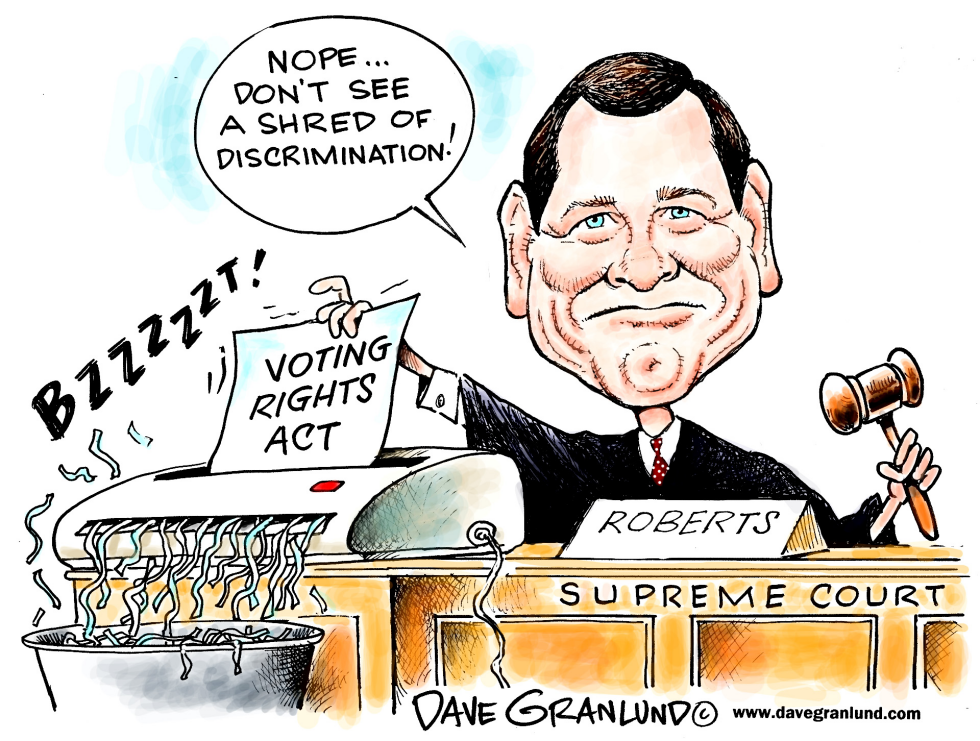
On June 25 2013 the Supreme Court issued a ruling in Shelby County v Holder that struck down the coverage formula used to determine which jurisdictions required federal preclearance for voting changes under the Voting Rights Act. The decision ended the requirement for certain states mostly in the South to obtain approval before altering election laws. Critics argued the move opened the door to new restrictions on voting access while supporters said it reflected updated conditions and equal treatment of states.