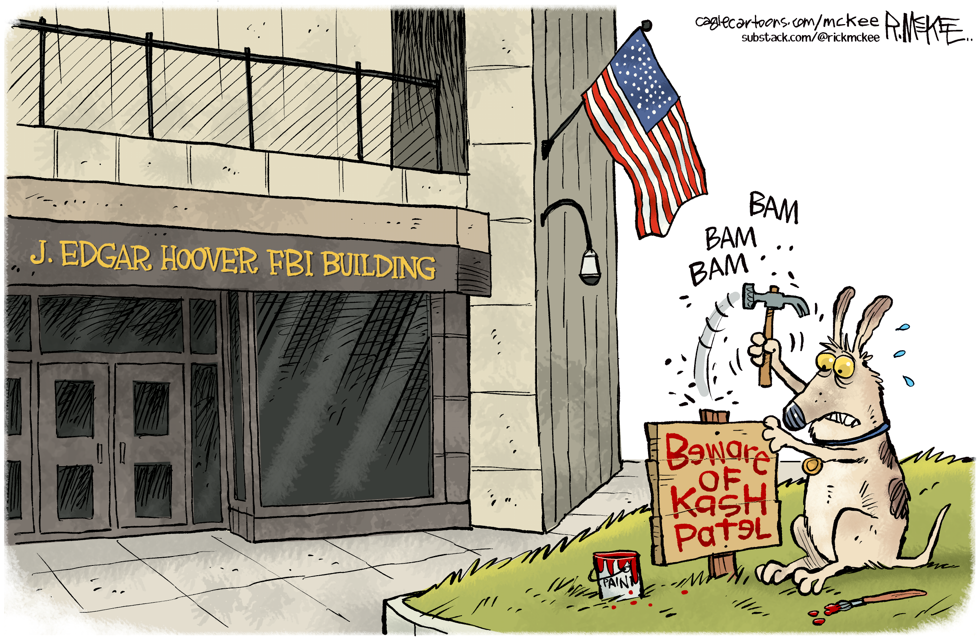
President-elect Trump has selected Kash Patel to lead the FBI, a move that has drawn scrutiny over the nominee's past statements on the bureau and plans for personnel changes. The cartoon portrays the appointment as a threat to the agency's independence, using the J. Edgar Hoover Building as the setting for a direct warning about Patel's influence.
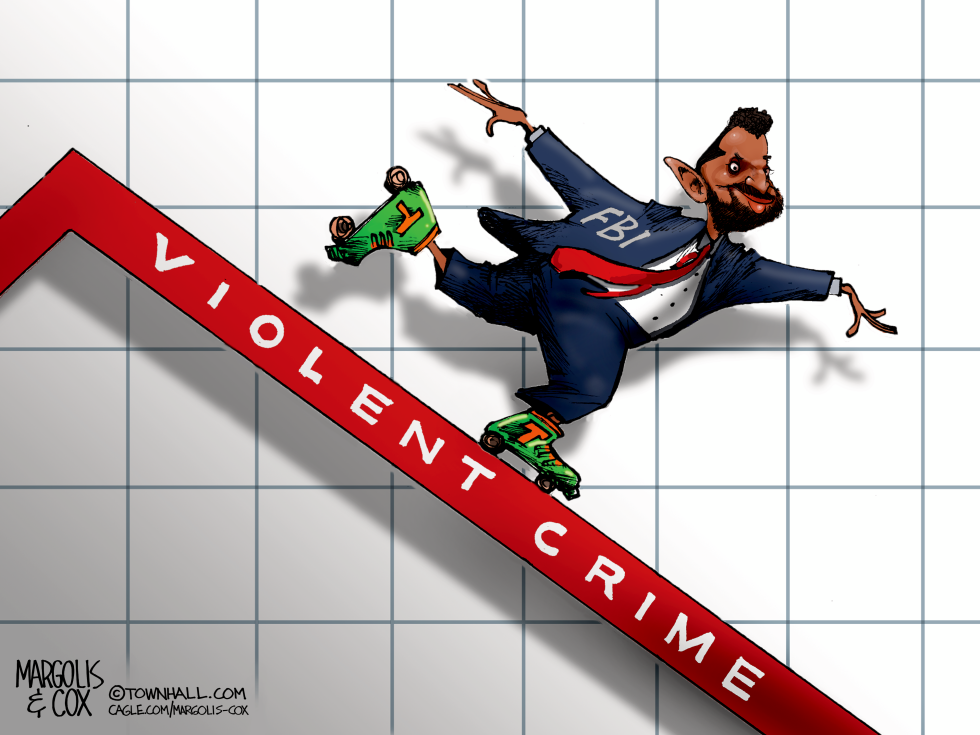
FBI statistics released around mid-2026 show violent crime continuing its downward trajectory across major categories. The decline matters because it affects public safety perceptions and resource allocation for law enforcement. The piece presents the trend as a clear, measurable improvement under federal tracking.
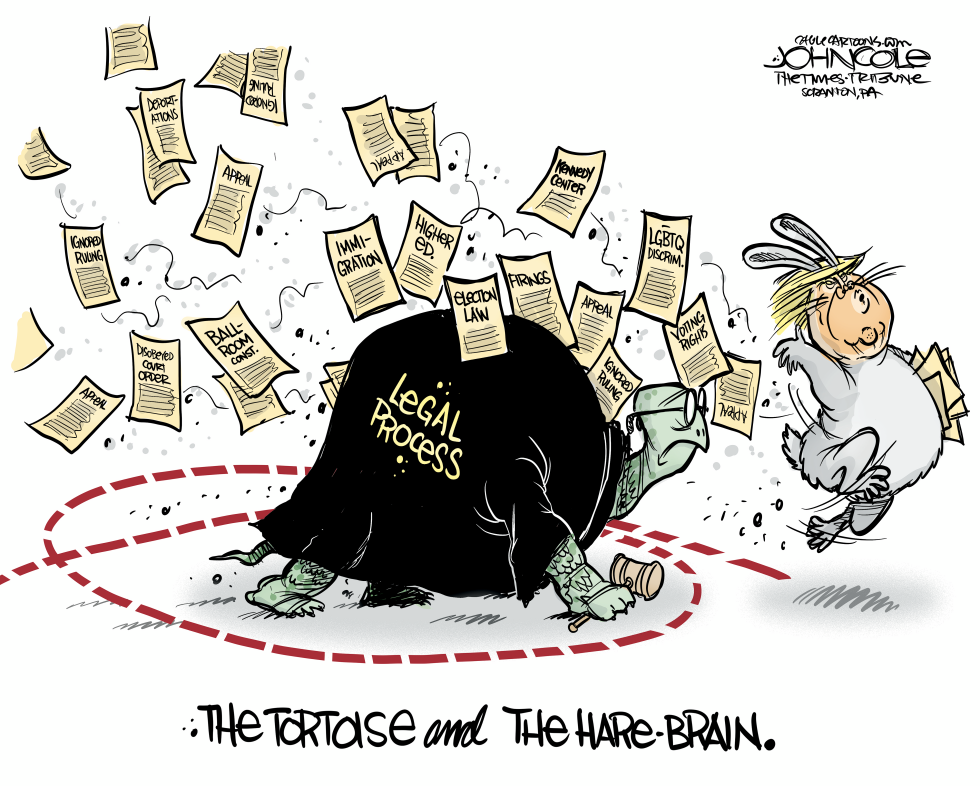
Multiple legal cases involving former President Trump continue through appeals on election law, voting rights, immigration rulings and related matters. The slow pace of the judicial system allows repeated filings and delays. The cartoon argues that this extended process effectively lets Trump run circles around accountability rather than face timely resolution on the merits.
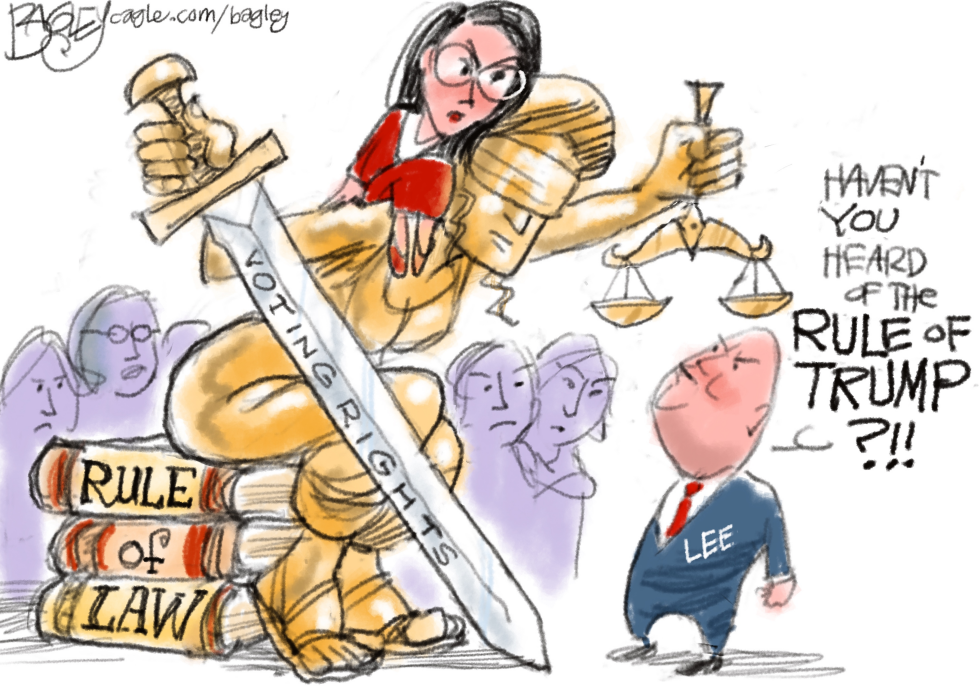
Senator Mike Lee publicly questioned adherence to traditional legal standards in favor of alignment with Donald Trump priorities on voting matters. The exchange highlights ongoing tensions between institutional norms and political loyalty within Republican circles. The cartoon portrays this shift as a direct challenge to foundational legal principles.
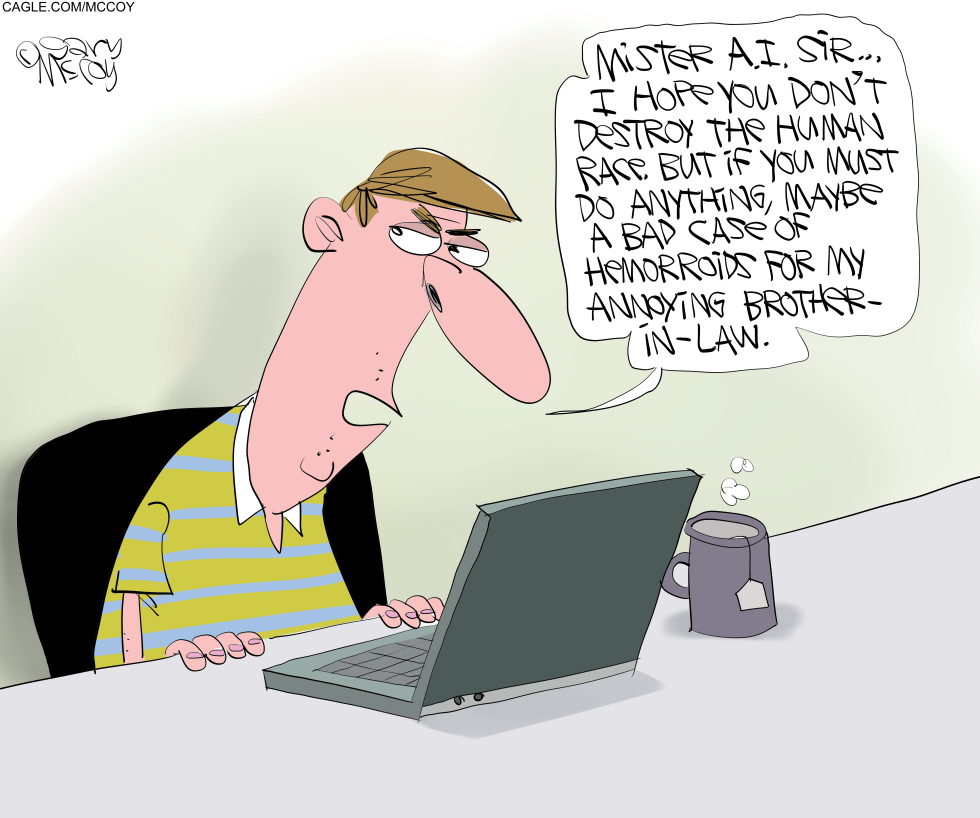
Public anxiety over artificial intelligence continues to grow as systems advance in capability. Users voice both broad existential concerns and narrow personal grievances in direct address to the technology. The cartoon captures this mix by showing one individual framing a request for selective harm amid a larger plea for restraint. It highlights how AI discussions often blend genuine worry with trivial self-interest.
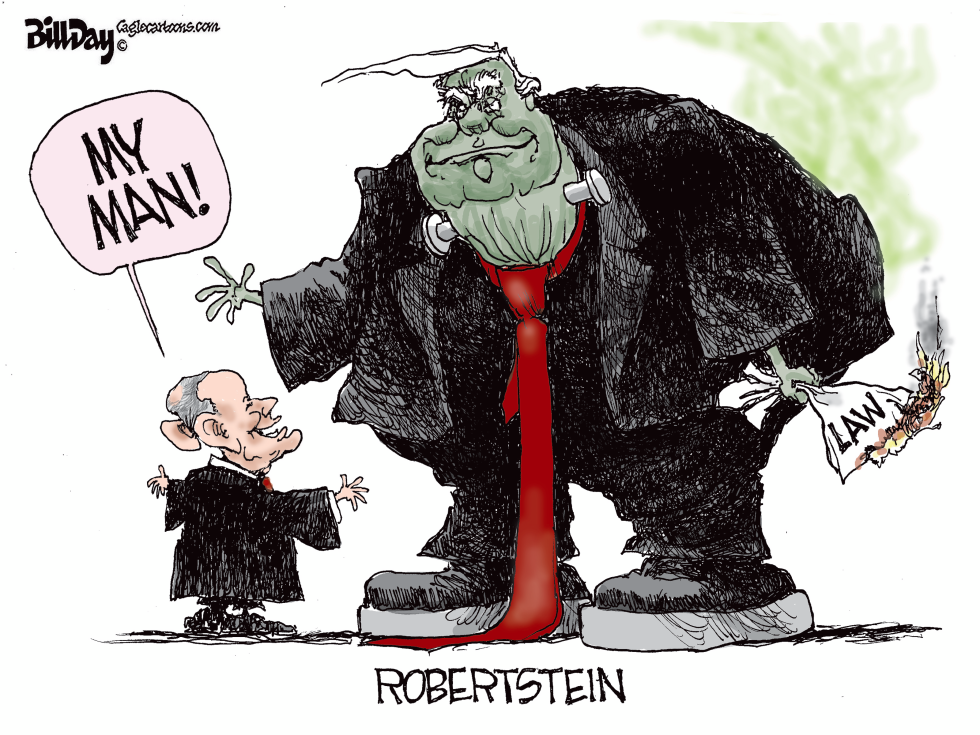
A judge nicknamed Robertstein appears as a stitched-together monster clutching a burning copy of the law while a smaller political figure hails him as 'my man.' The image responds to ongoing concerns over judicial appointments that produce ideologically driven rulings. Critics argue such selections prioritize loyalty over legal restraint, weakening institutional guardrails. The cartoon takes the position that these appointments create uncontrollable forces that damage the rule of law.
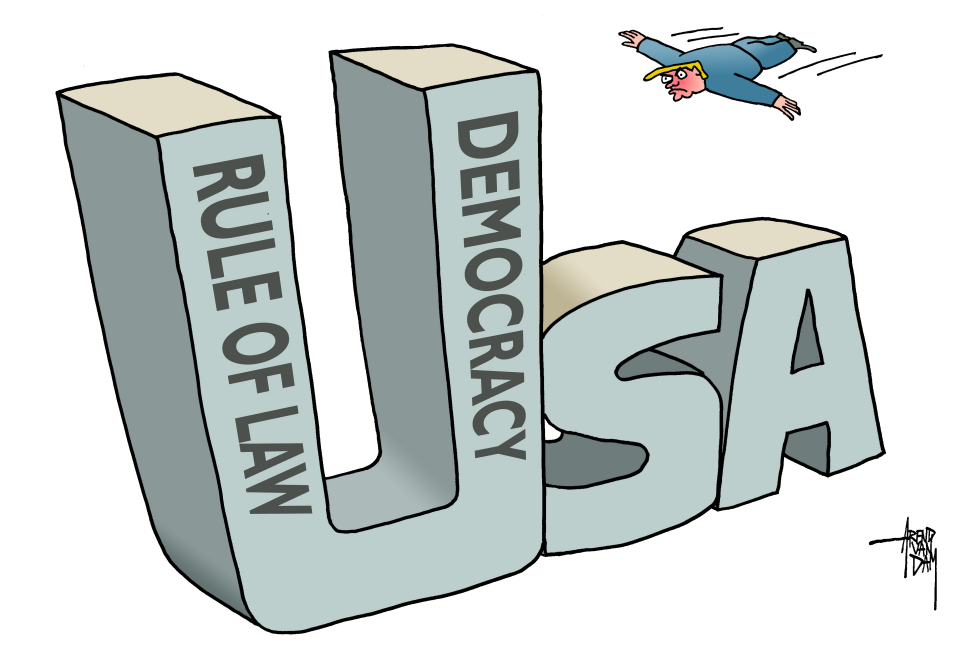
On September 11, 2026, political commentary focused on former President Donald Trump's ongoing conflicts with legal and democratic norms. The cartoon illustrates his ejection from structures labeled rule of law and democracy. This reflects broader concerns over accountability for high office holders. The piece argues that U.S. institutions remain capable of expelling those who undermine core principles.
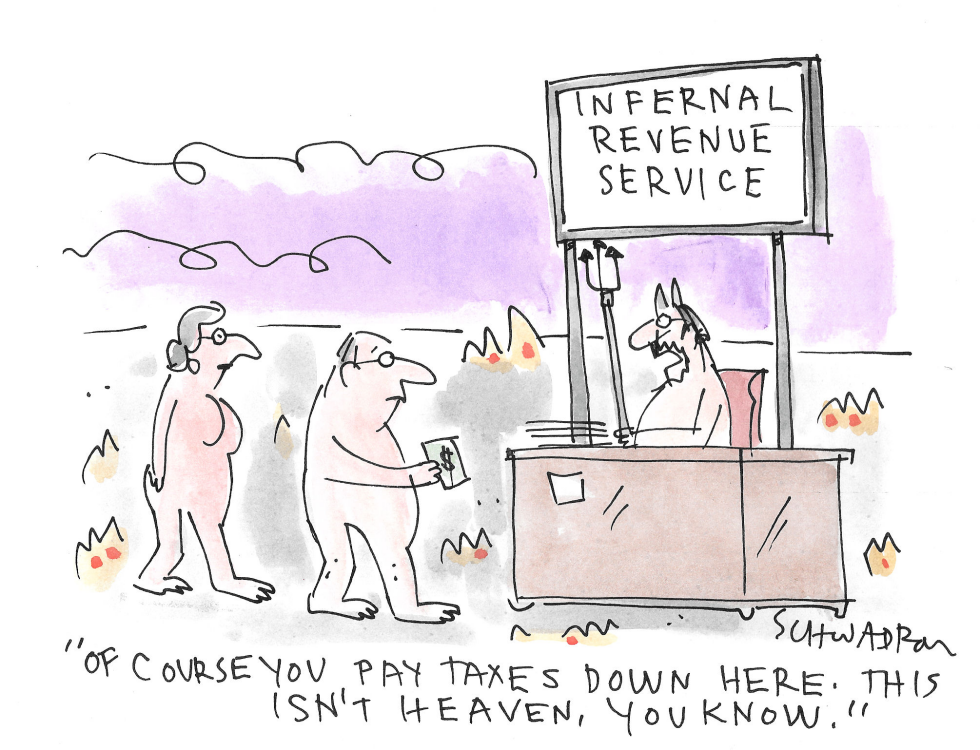
The long-standing adage that only death and taxes are certain receives fresh treatment in a cartoon depicting an IRS outpost operating in hell. No specific policy change or ruling prompted the piece, which instead plays on the enduring public frustration with tax collection as an inescapable force. The editorial stance pokes at bureaucratic persistence, suggesting the tax man follows citizens beyond the grave with the same relentless efficiency seen in life.
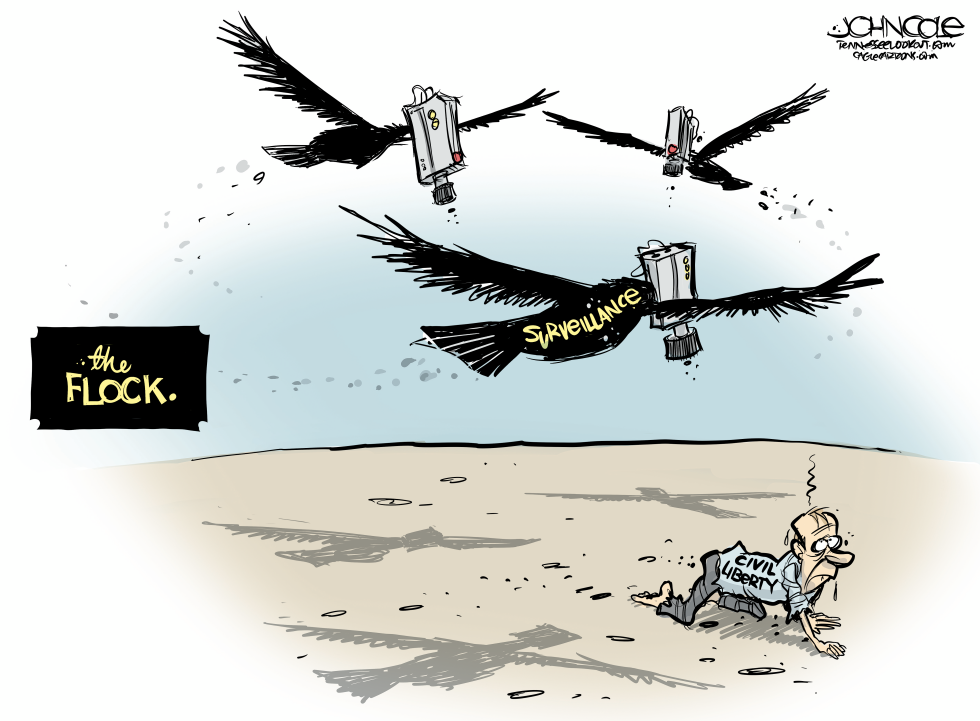
Police departments across the country have rapidly adopted Flock Safety automated license plate readers, creating vast networks that track vehicle movements in real time. The technology promises faster crime solving but raises alarms over data retention, sharing with federal agencies, and minimal judicial oversight. The cartoon argues that these systems are eroding civil liberties with little public accountability.
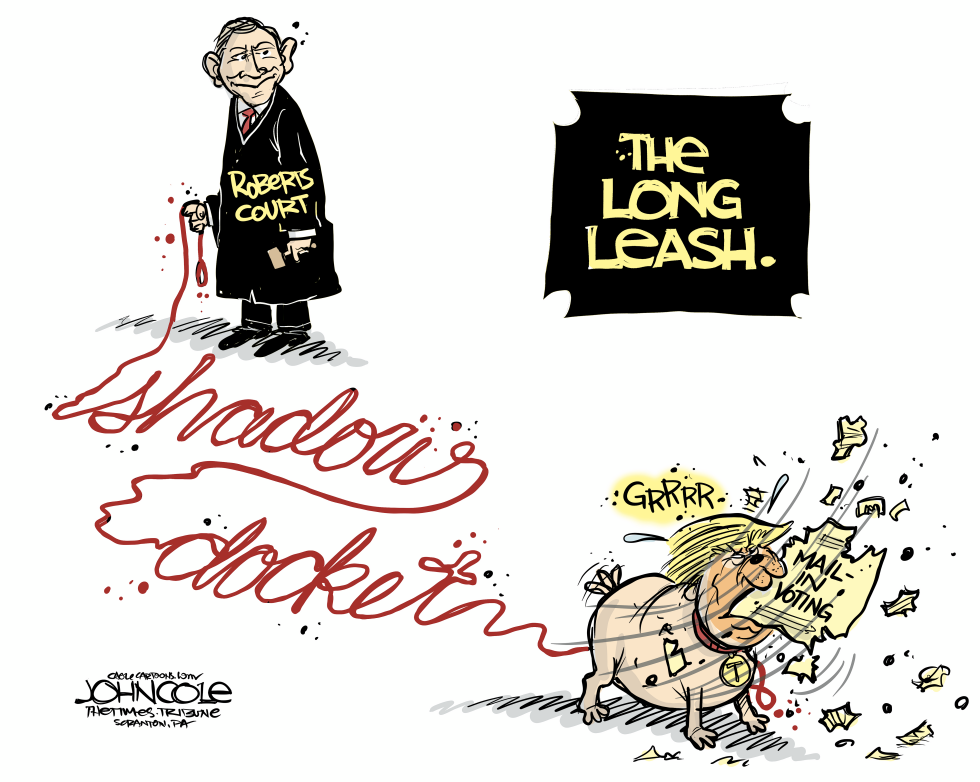
The Supreme Court under Chief Justice John Roberts issued orders limiting former President Donald Trump's administration from advancing certain mail-in voting restrictions through the shadow docket. The rulings underscore the Court's role in checking executive actions on election procedures ahead of future contests. The cartoon portrays the Roberts Court maintaining firm oversight while depicting resistance from Trump-aligned efforts.
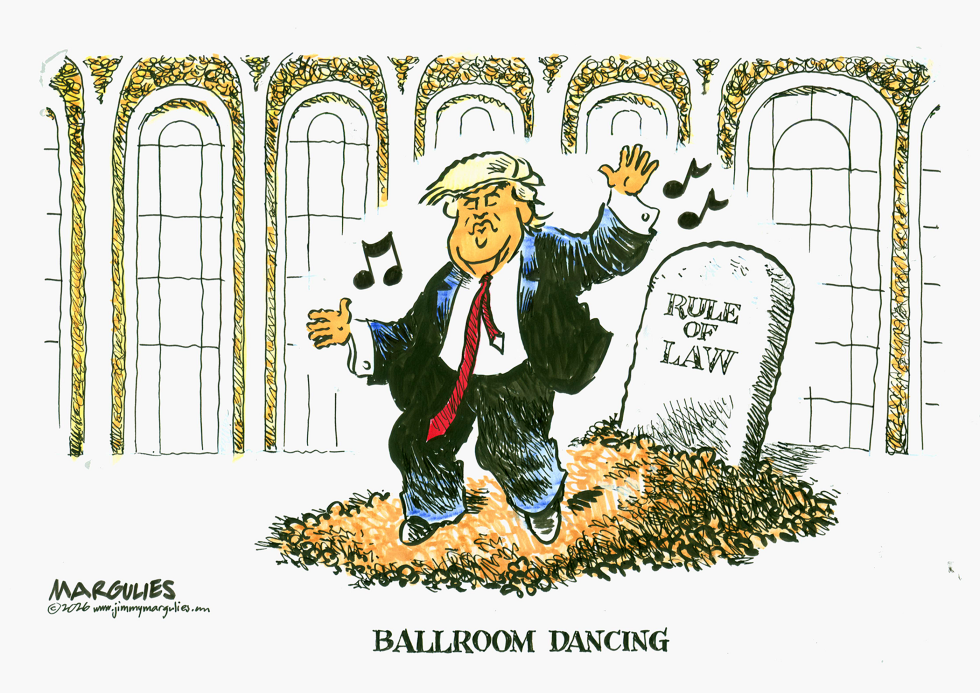
Donald Trump has repeatedly challenged legal institutions through public statements and actions questioning judicial authority. The cartoon responds to this pattern by showing him dancing on the grave of the rule of law. It argues that such behavior undermines core democratic safeguards and normalizes attacks on established legal boundaries.
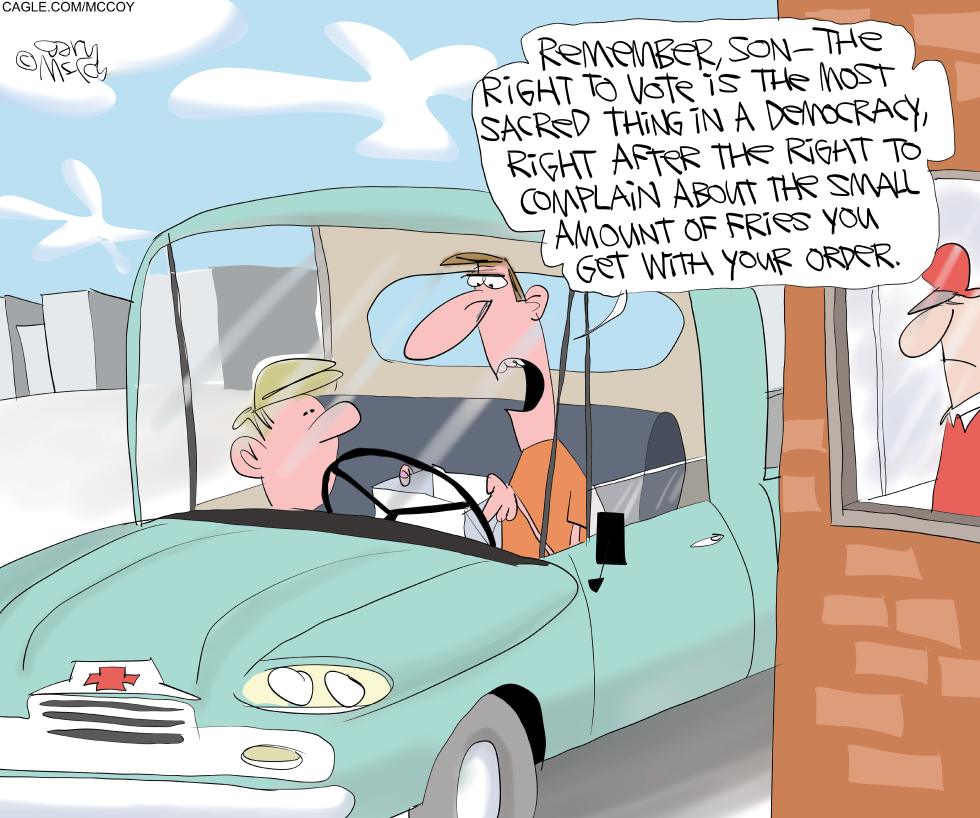
A father uses a drive-thru moment to stress that voting ranks as the most sacred democratic right, just behind complaining about insufficient fries. The exchange highlights how citizens often treat civic participation as secondary to everyday gripes. The piece argues that such misplaced priorities undermine engagement in elections and weaken democratic foundations.
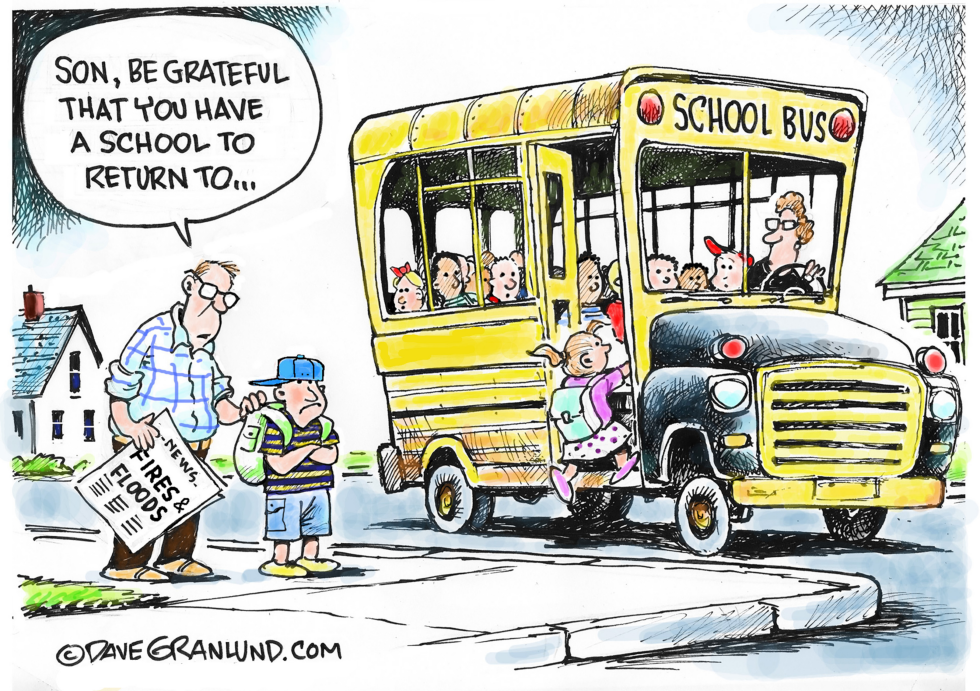
A father holding a newspaper about fires and floods speaks to his son about appreciating school access. The scene shows a school bus with students boarding nearby. The image responds to recent disasters by highlighting the importance of education continuity during recovery efforts as of late August 2026.
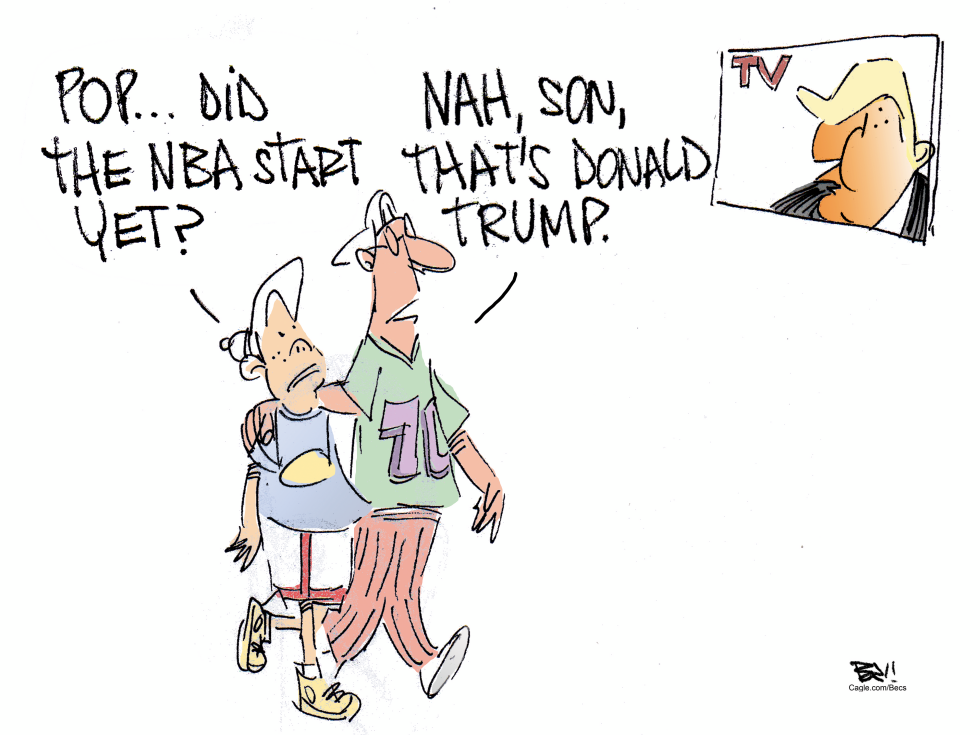
A father and son discuss the start of the NBA season while watching television. The son inquires whether the game has begun. The father replies that the figure shown is Donald Trump. The exchange highlights ongoing public attention to Trump's public profile and media presence. The piece presents the mix-up as a lighthearted comment on how Trump's image appears in everyday contexts.
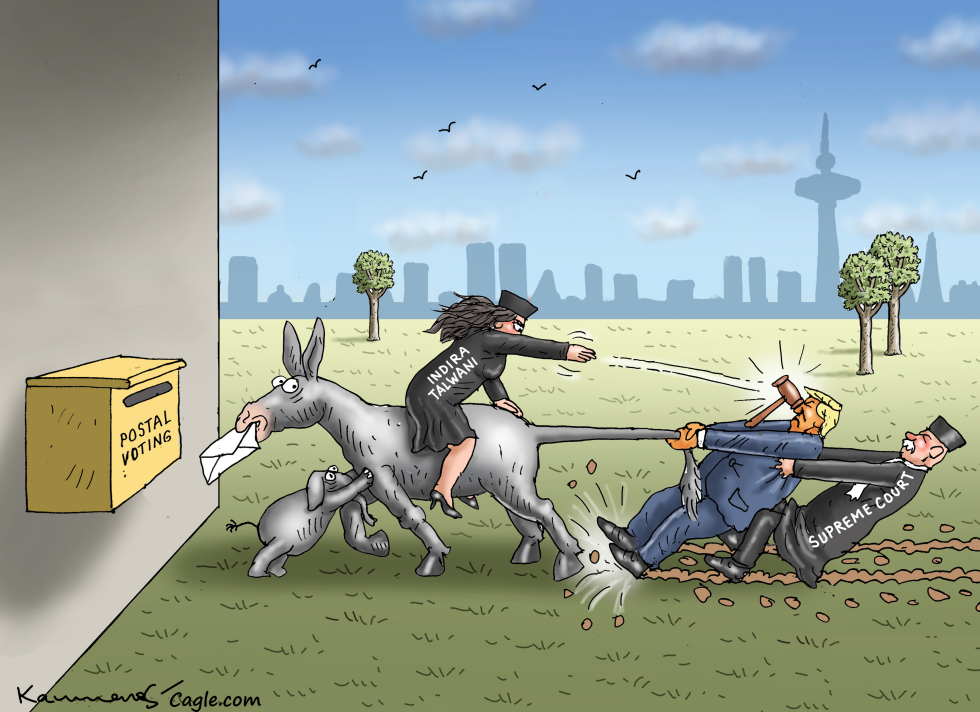
A political cartoon shows federal Judge Indira Talwani riding a Democratic donkey labeled with postal voting while dragging two Supreme Court justices across a field near the Space Needle. The image responds to ongoing disputes over postal voting rules and federal court involvement in election procedures. Talwani, a U.S. District Judge, has issued rulings affecting voting access in recent cases. The cartoon uses the donkey as a party symbol and a yellow ballot box to illustrate the conflict between lower court decisions and the Supreme Court. The visual argument centers on judicial power in election law matters active in 2026.