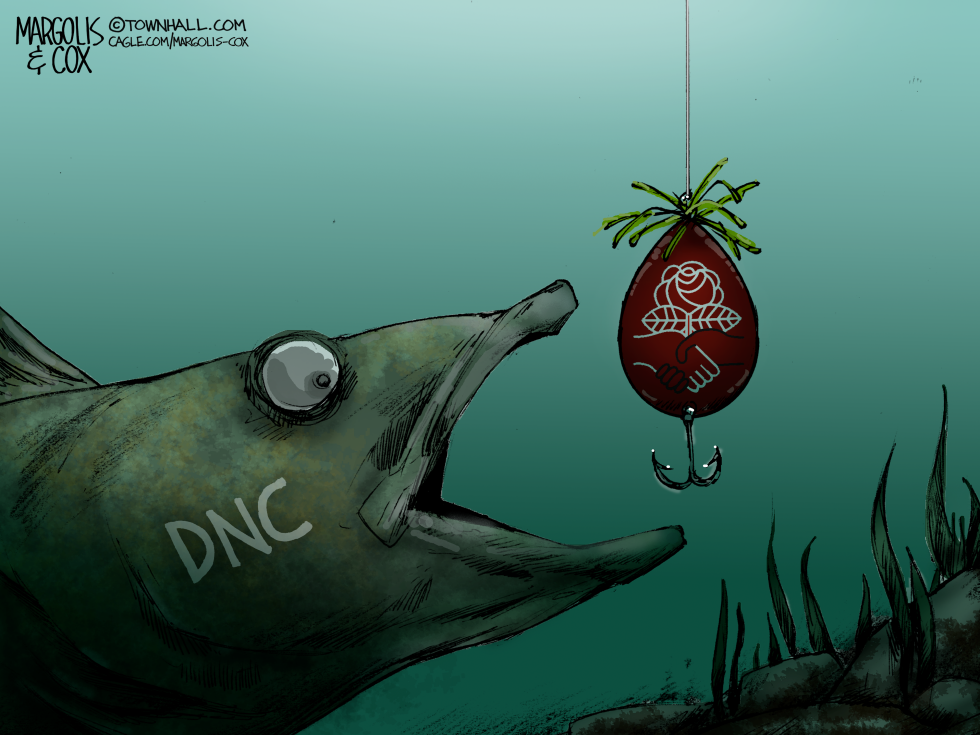
The Democratic National Committee faces growing influence from the Democratic Socialists of America. The cartoon depicts the DNC as a fish drawn to a lure bearing the DSA rose and handshake symbol. This reflects ongoing efforts by the socialist faction to shape Democratic priorities on economic policy and party direction. The piece suggests the DNC risks being pulled toward more radical positions. It highlights internal party dynamics where progressive activists seek greater control over the broader Democratic apparatus.
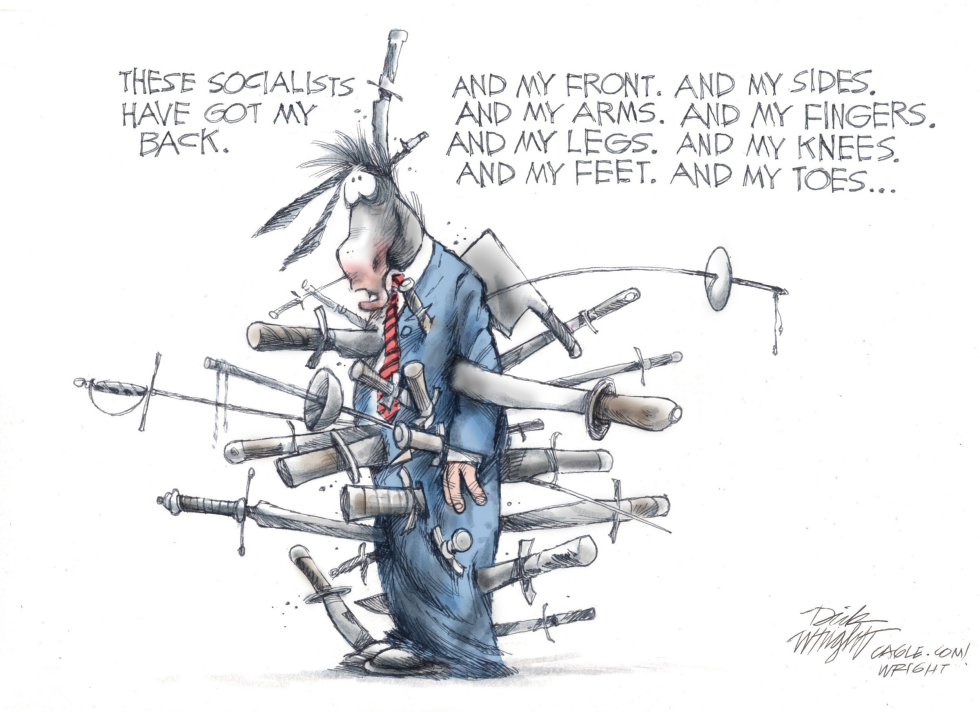
Tensions between socialist factions and mainstream Democrats continue to strain party cohesion ahead of future elections. The cartoon depicts socialists as actively harming the Democratic brand through relentless internal attacks. It argues that such infighting weakens the party's ability to govern effectively and appeal to broader voters.
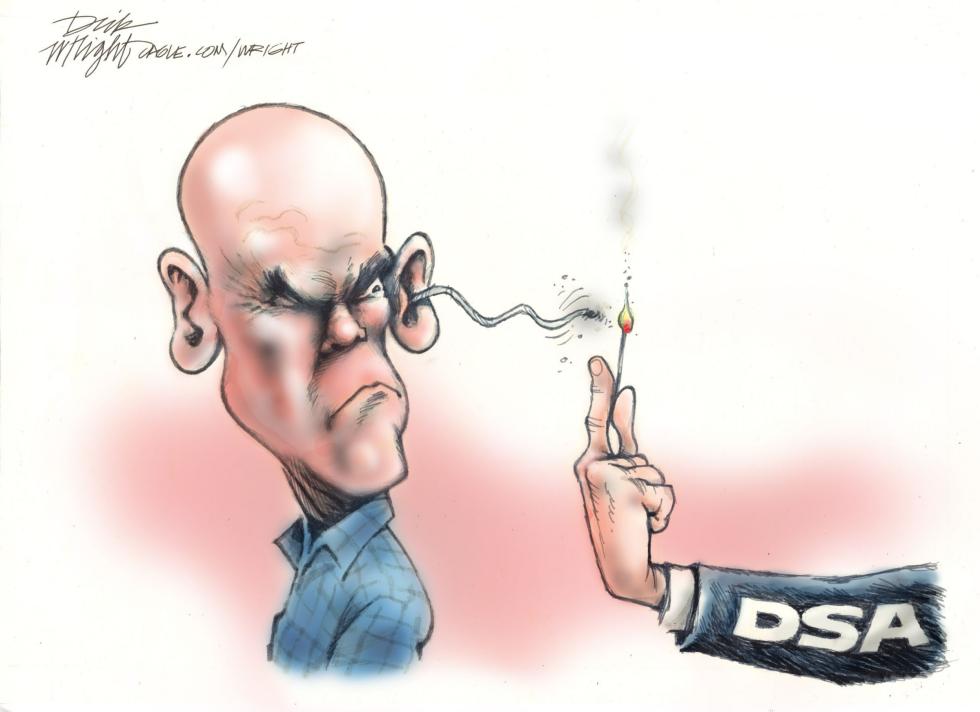
James Carville faces provocation from the Democratic Socialists of America in an ongoing internal party dynamic. The piece portrays DSA actions as directly inflaming tensions with established Democratic figures.
A grocery store cashier tells a customer he lacks enough bread to buy her bread and asks if she has an installment plan. The scene shows a woman with two children at the checkout counter surrounded by tomatoes. The cartoon addresses ongoing inflation and affordability challenges in food prices as of late July 2026. It uses wordplay on bread to illustrate how rising costs strain household budgets. The visual emphasizes everyday shopping struggles without specifying particular policies or events.
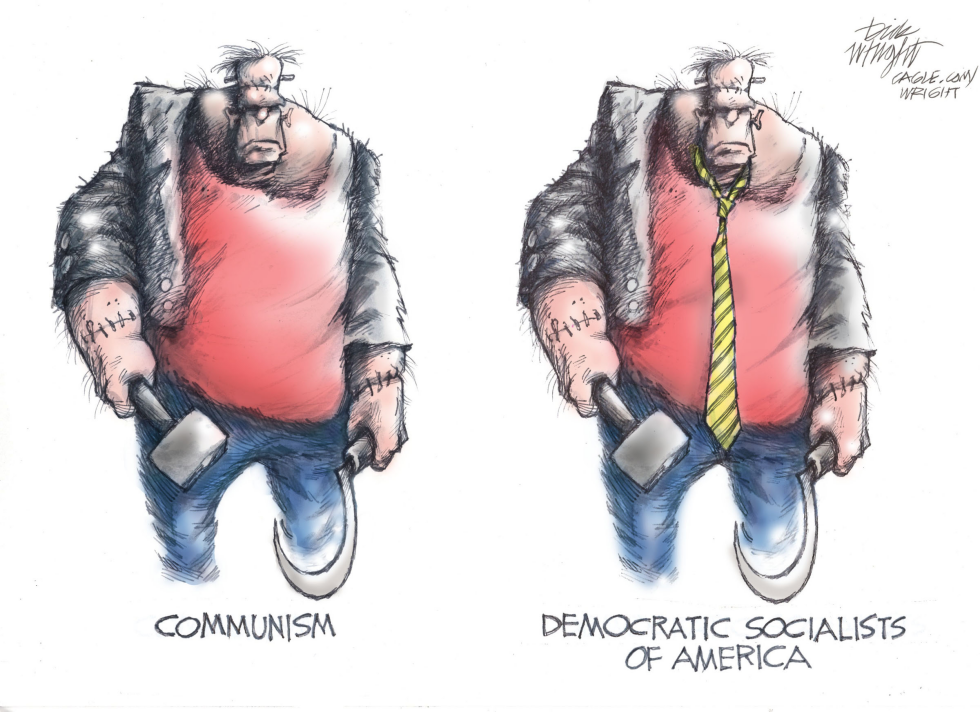
The image contrasts Communism and the Democratic Socialists of America through parallel figures. Both hold the hammer and sickle while dressed in similar red shirts and work pants. The piece presents the two as interchangeable in their foundational symbols and methods.
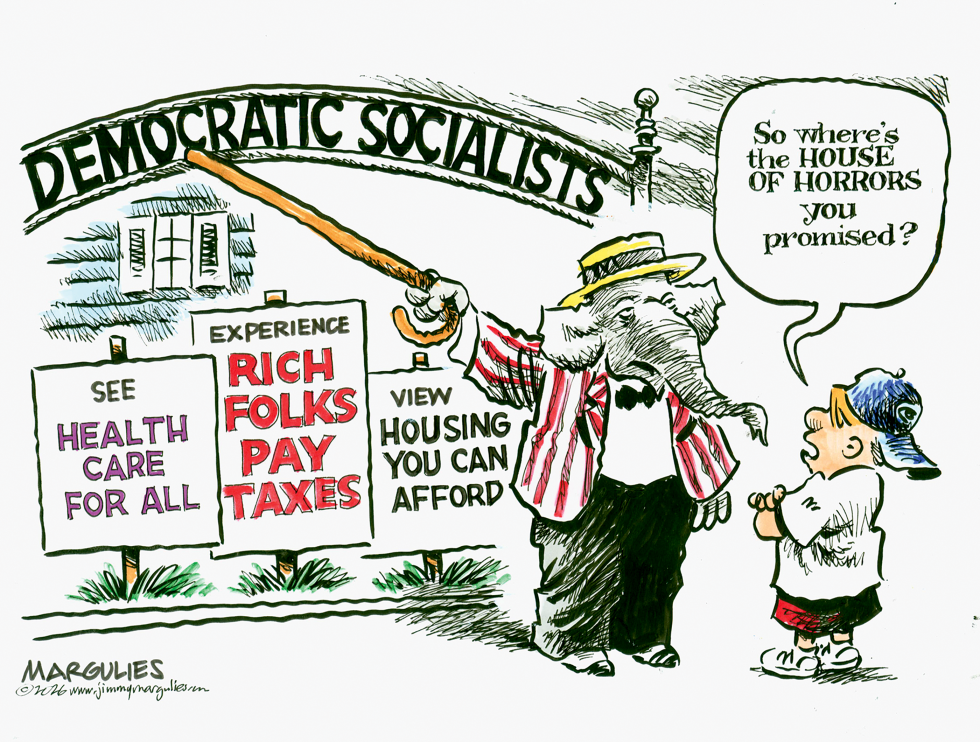
An elephant representing Republicans conducts a tour of attractions labeled Democratic Socialists on July 1 2026. Three signs advertise health care for all, taxes paid by the rich and housing that average people can afford. A young visitor in a cap asks where the house of horrors is that was promised. The scene uses the classic elephant symbol to frame policy offerings as ordinary exhibits rather than frightening outcomes.
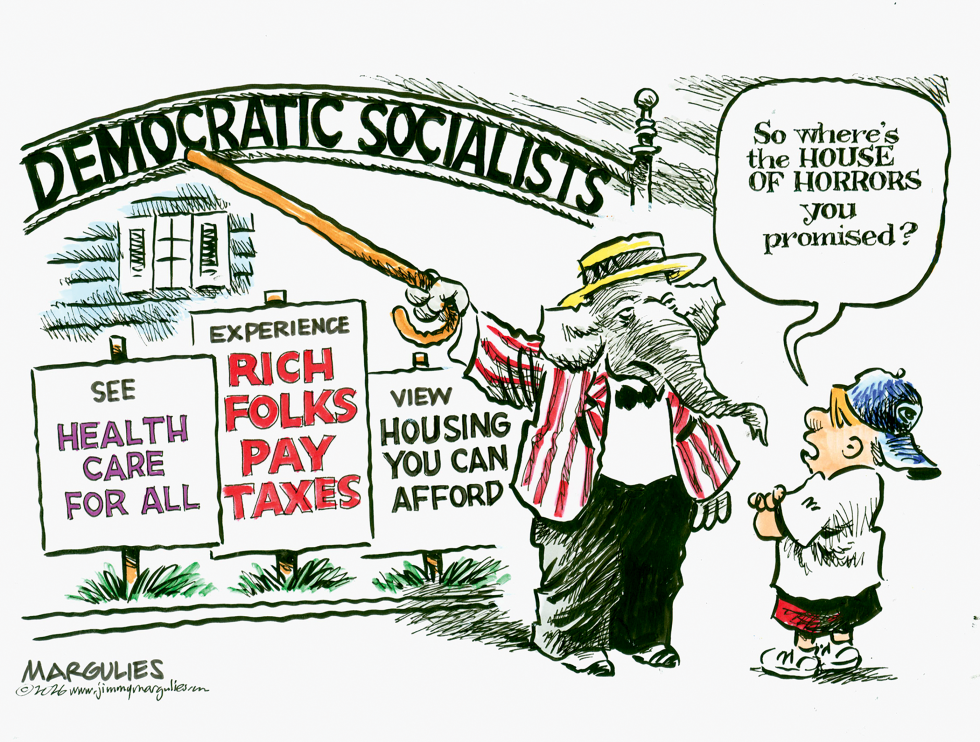
An elephant dressed as a barker stands at a Democratic Socialists booth displaying signs for health care for all, rich folks paying taxes, and housing you can afford. The figure holds a pointer toward the arch and addresses a child visitor. The child asks where the house of horrors is located. The scene is set outdoors with a building facade visible behind the signs. Publication occurred on July 1 2026.