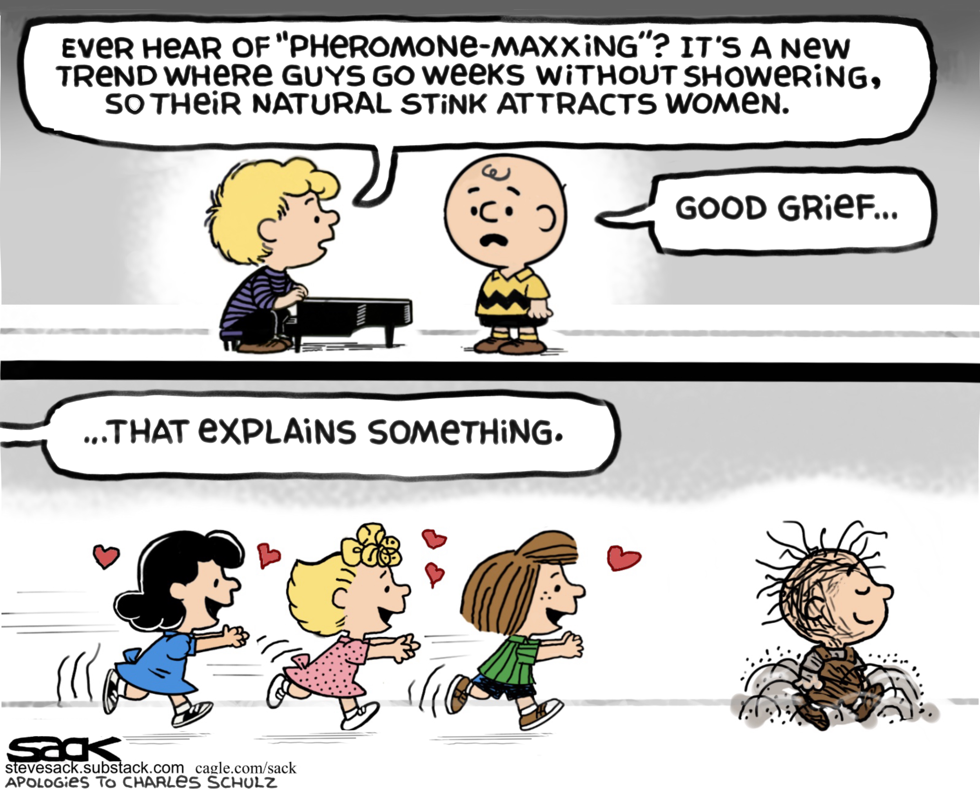
The pheromone-maxxing trend encourages men to skip showers for weeks in hopes that natural body odor will attract partners. Social media has amplified the idea as a supposed evolutionary hack. The cartoon uses a Peanuts-style setup to poke fun at the notion, with Charlie Brown reacting in classic fashion and Pig-Pen suddenly surrounded by admirers. The piece underscores how easily questionable hygiene advice circulates and gains traction among those seeking shortcuts in dating. It suggests the fad is less science than wishful thinking dressed up as biology.
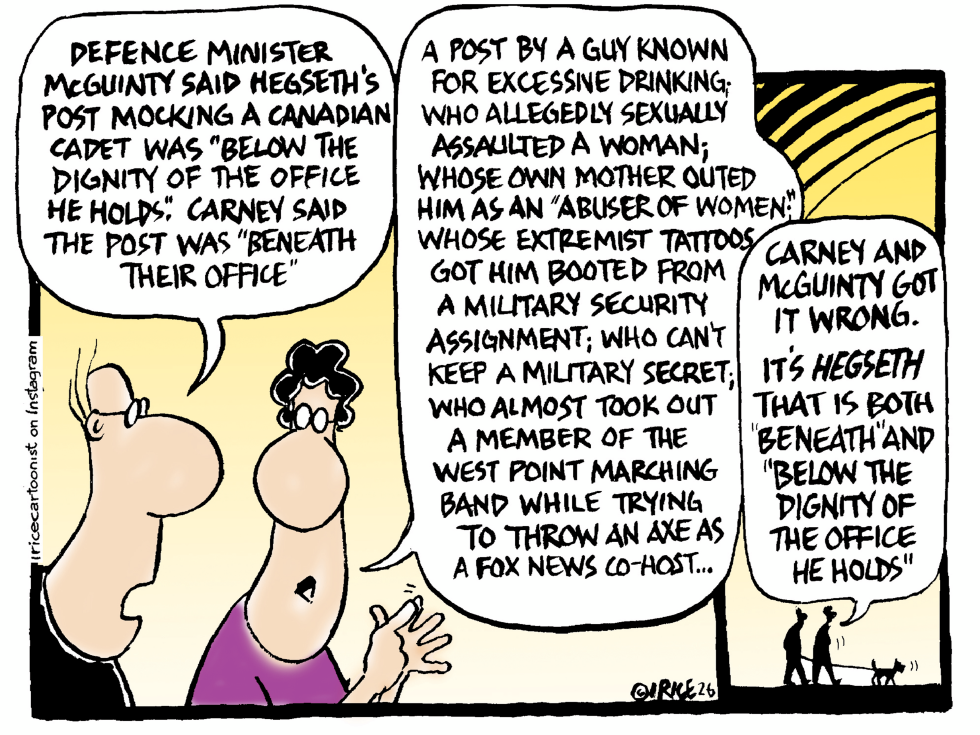
Canadian Defence Minister David McGuinty and Mark Carney publicly condemned a social media post by Pete Hegseth mocking a Canadian cadet, calling it beneath the dignity of the office. The remarks came amid Hegseth's nomination process for a senior U.S. defense position. The cartoon argues the ministers have the assessment backward, pointing instead to Hegseth's history of alleged misconduct, security clearance problems, and public incidents as the true disqualifiers. This reflects ongoing debate over nominee vetting standards and cross-border political commentary on U.S. appointments.
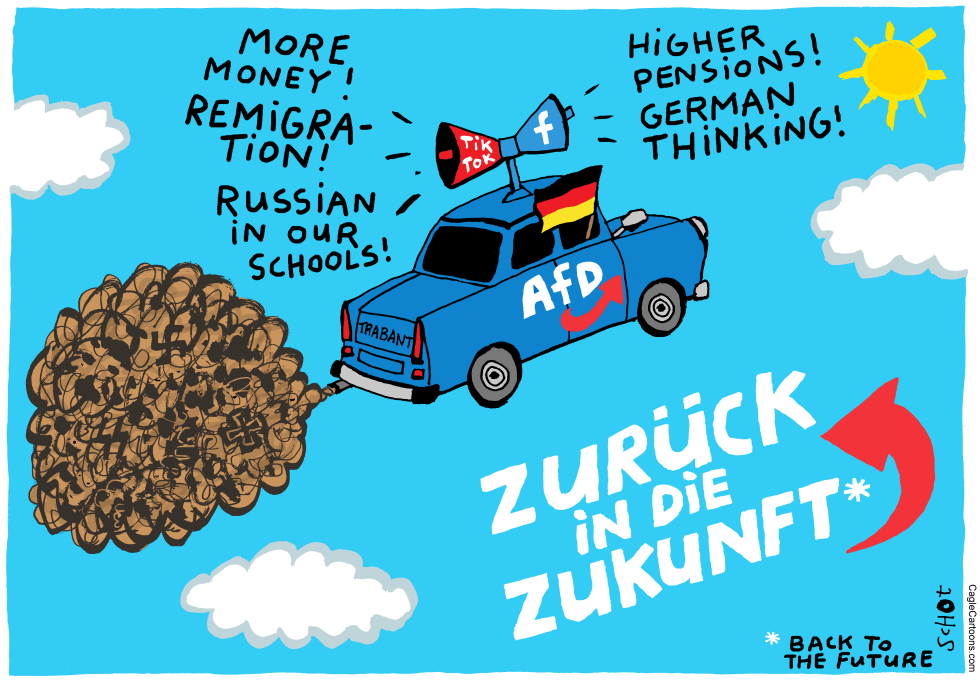
Germany's AfD secured major election gains in 2026 on pledges of remigration, higher pensions and anti-foreign rhetoric. The result raises alarms over the party's tolerance for extremist elements. The cartoon frames the victory as a dangerous retreat into past ideologies rather than genuine progress.
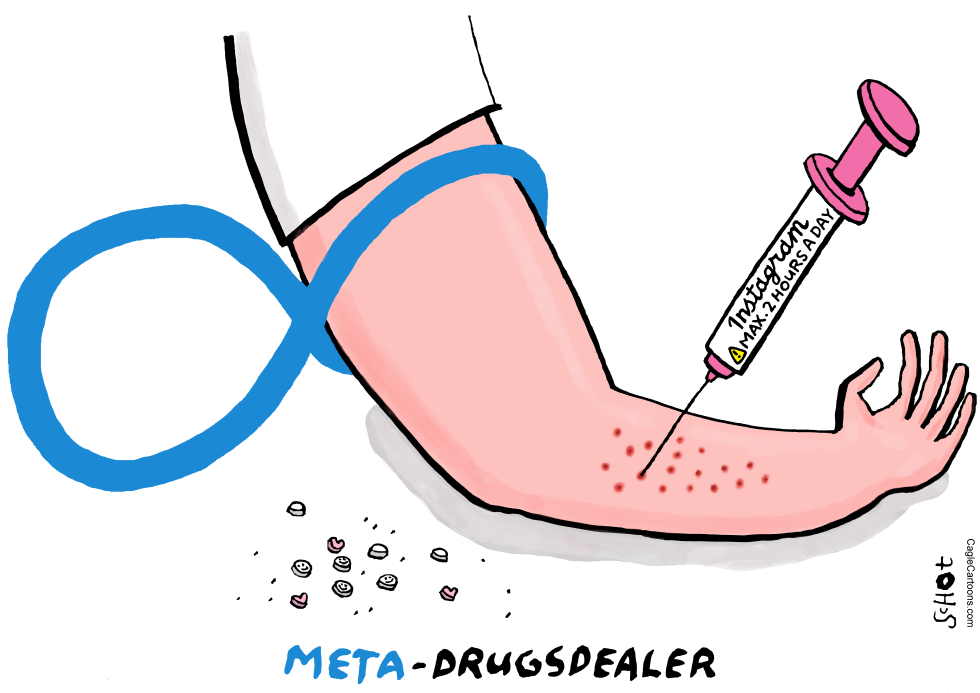
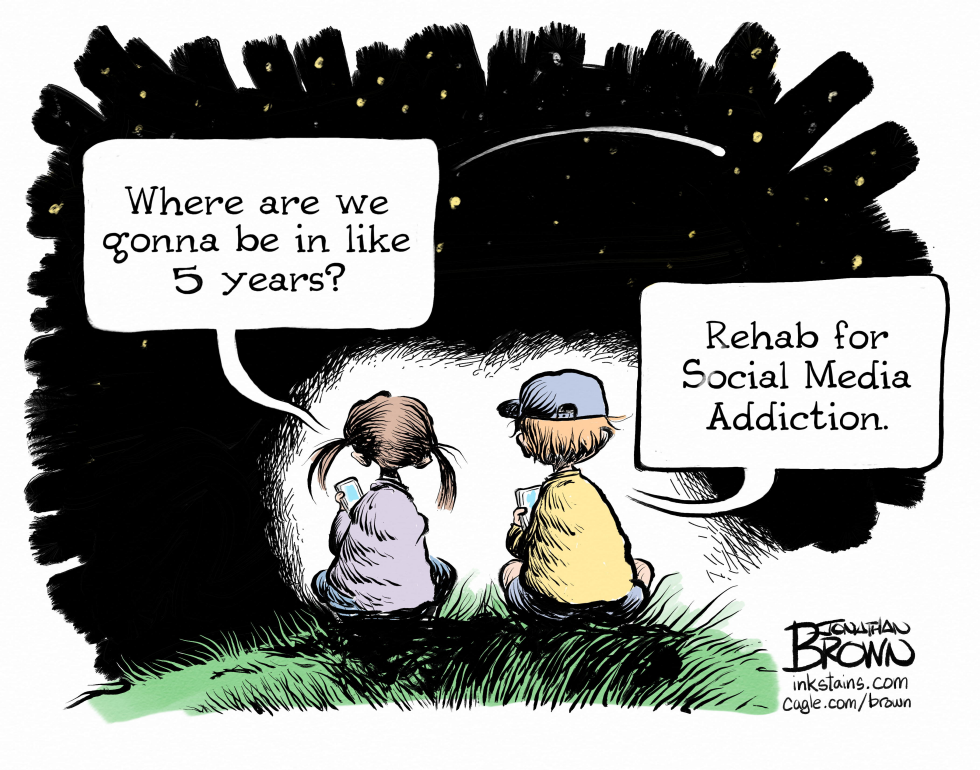
Meta continues to face scrutiny over Instagram's role in fostering user addiction through algorithmic engagement and minimal usage safeguards. Critics argue the platform prioritizes time spent over user well-being, with features that encourage repeated checks and extended sessions. The editorial position holds that Meta acts as a supplier of digital dependency, profiting from habits that mirror substance issues without meaningful intervention.
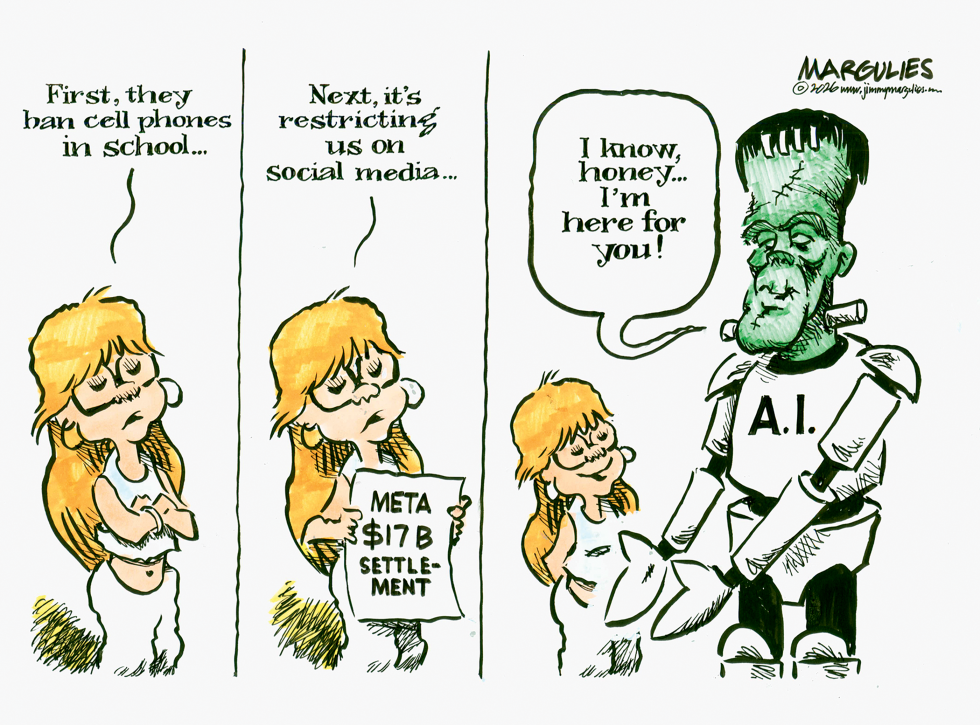
A $17 billion Meta settlement and expanding school cell phone bans have accelerated restrictions on teen social media use. The developments raise questions about how young users will fill the gap left by reduced platform access. The cartoon frames artificial intelligence as the unexpected beneficiary, positioning an AI Frankenstein figure as a comforting presence for a disappointed girl. This visual argument suggests that limits on social media may simply shift reliance toward unregulated AI tools rather than solving underlying concerns about youth screen time.
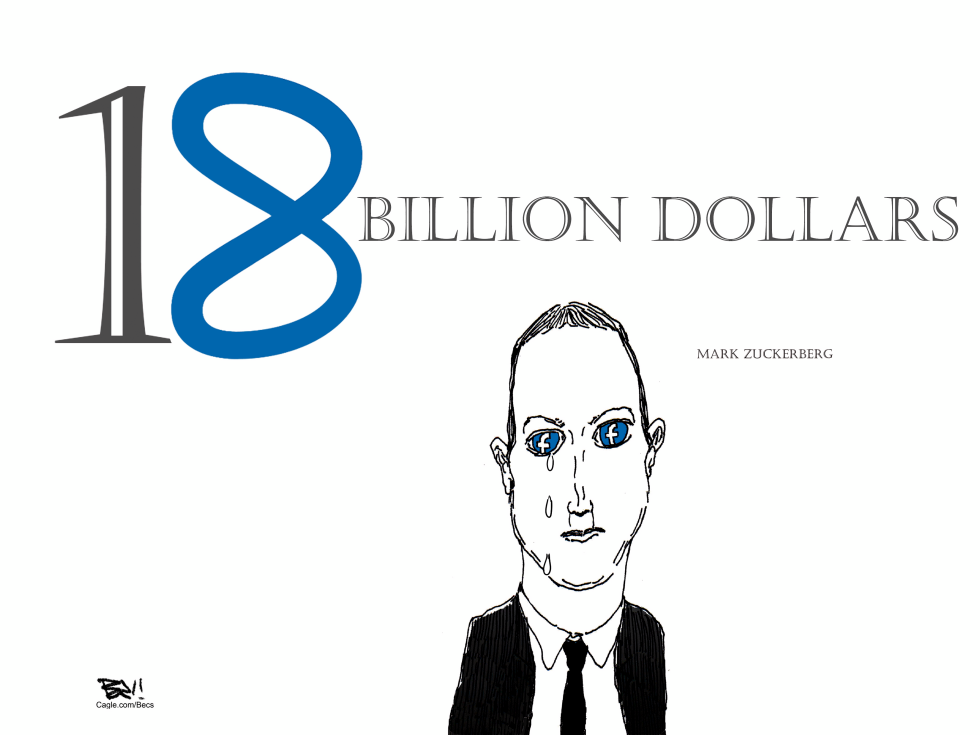
Meta Platforms reported a significant valuation drop that erased 18 billion dollars from Mark Zuckerberg's holdings. The loss reflects broader volatility in social media stocks and investor concerns over advertising revenue. Zuckerberg's public profile makes the personal financial impact a focal point for discussions on tech wealth. The piece portrays the event as a moment of visible distress for the executive. It underscores how quickly billionaire fortunes tied to public companies can shift with market sentiment.
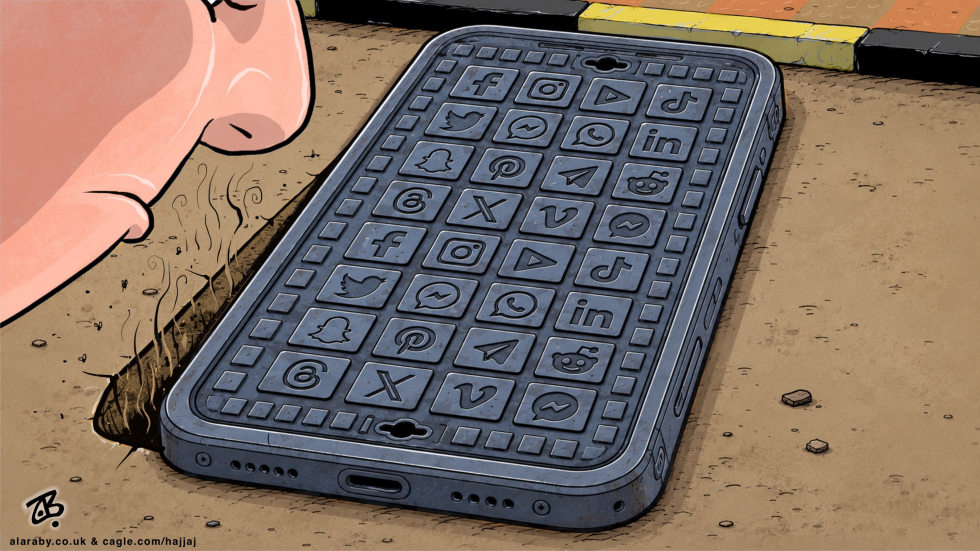
Social media platforms continue to dominate daily life through smartphones, prompting calls for users to disconnect from constant notifications and scrolling. The image depicts a hand actively burying such a device in dirt, underscoring the desire to escape digital overload. The editorial position favors deliberate disconnection from these apps as a necessary step toward healthier routines.
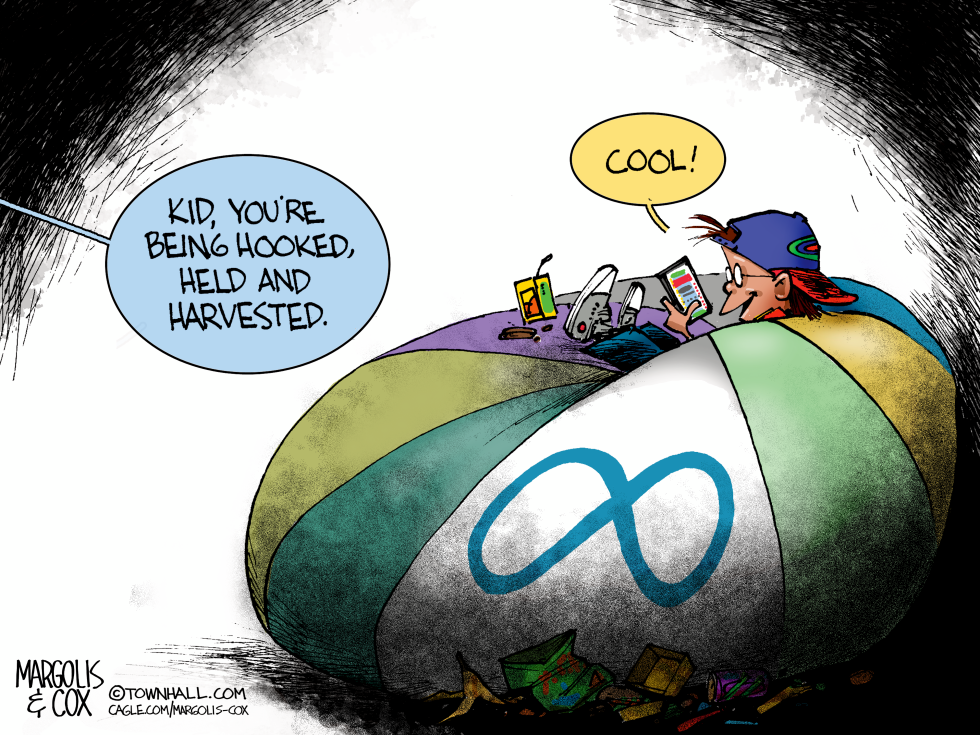
Meta faces ongoing scrutiny for social media features that prioritize engagement over child safety. Critics argue the company's algorithms and design choices deliberately hook young users for data collection. The piece portrays this dynamic as predatory, with the platform's infinity symbol serving as the central lure.
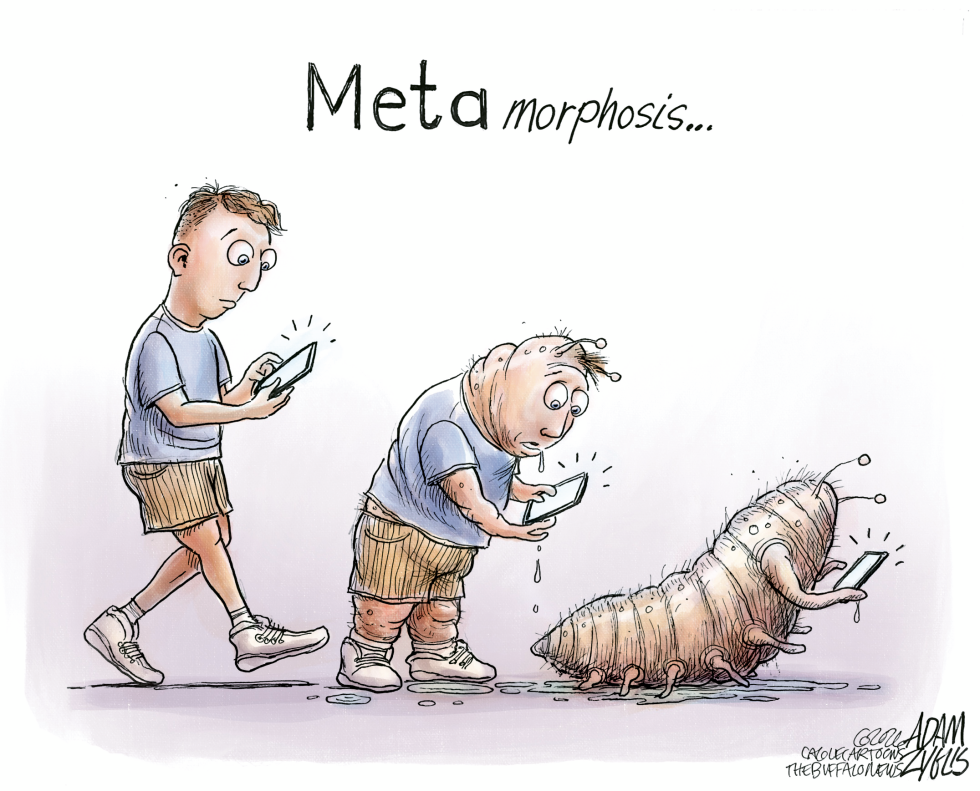
The cartoon titled Meta morphosis depicts three sequential figures of a boy using a smartphone. The first stands upright absorbed in the screen. The second hunches with sweat drops. The third has fully transformed into a large caterpillar still holding the device. Published on August 18 2026 the image comments on smartphone addiction linked to Meta platforms. It uses visual progression to show physical and behavioral decline from constant phone use. The work appears in The Buffalo News via Cagle Cartoons.
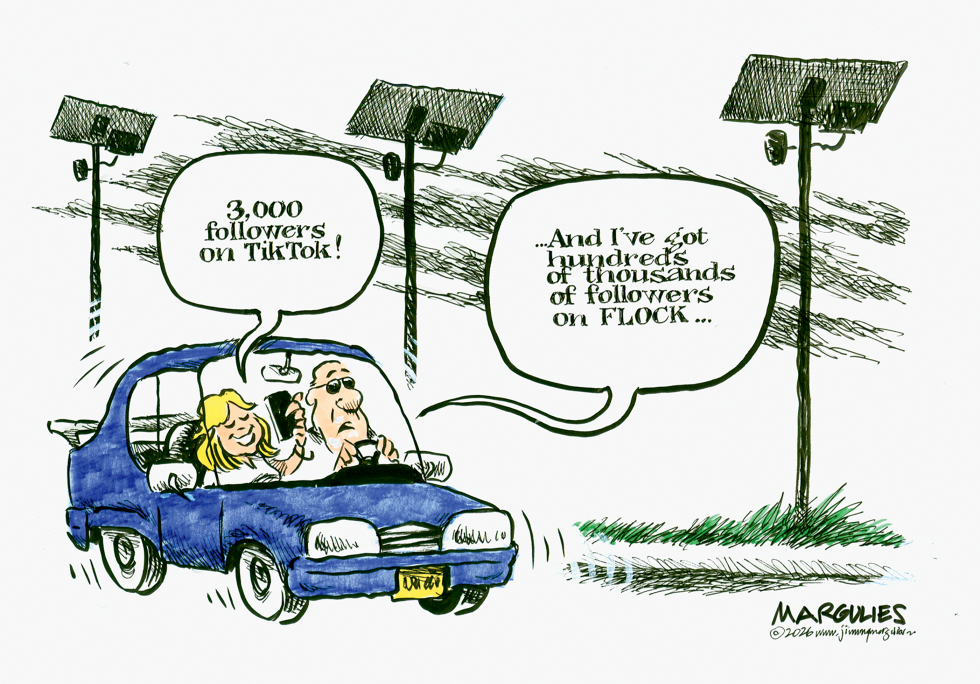
Drivers on public roads increasingly encounter networks of automated license plate readers operated by companies such as Flock Safety. The cartoon highlights the contrast between voluntary social media sharing on platforms like TikTok and involuntary data collection by surveillance systems. It underscores how both forms of attention now shape modern life, with the editorial noting the irony of competing over follower numbers in either realm.
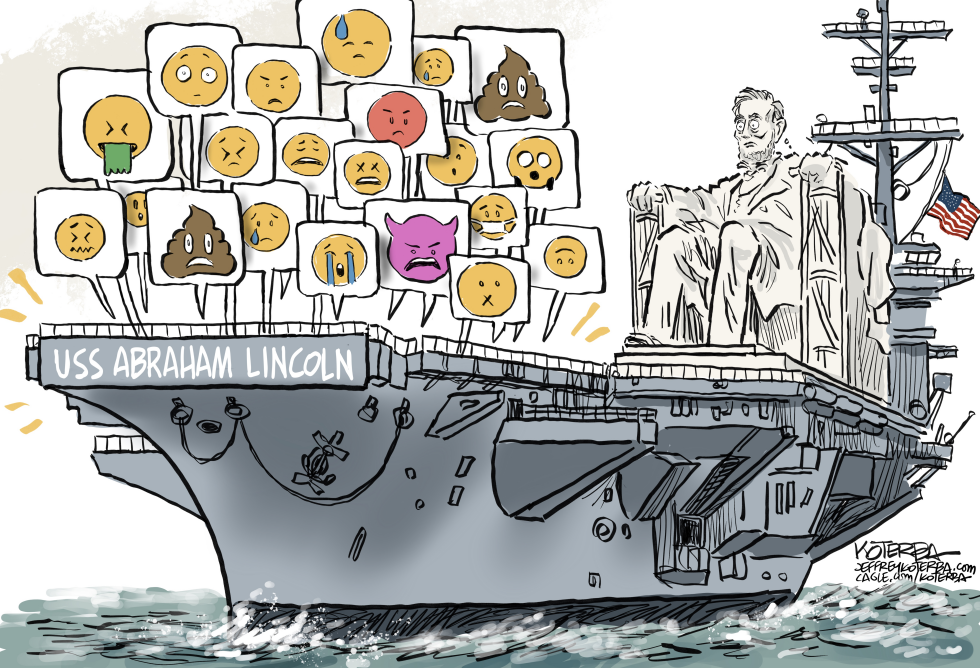
Public reaction to US naval deployments has intensified through social media platforms in recent weeks. Online users have flooded discussions with critical emojis targeting military assets like the USS Abraham Lincoln. The piece portrays this digital deluge as an overwhelming force on longstanding symbols of American leadership and naval power.
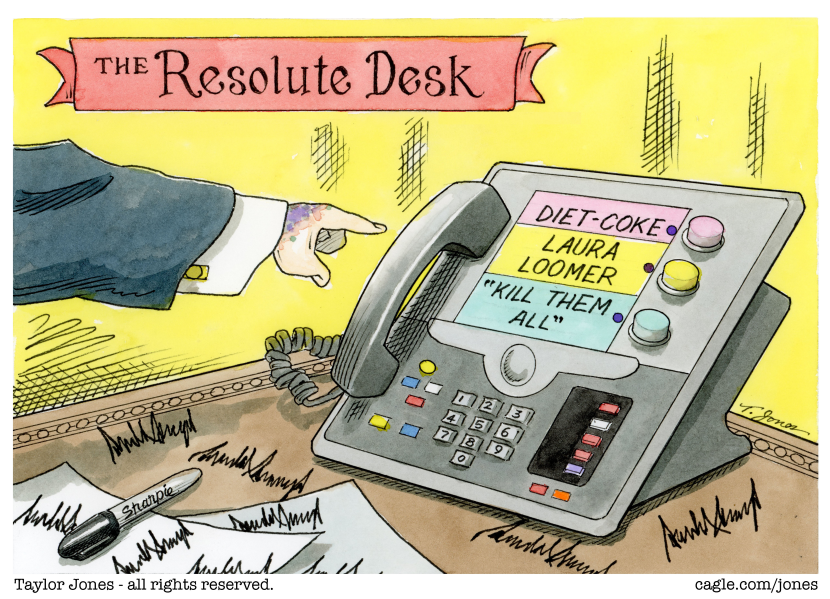
Donald Trump faces renewed public attention over the release of Epstein files detailing past connections. The documents have drawn fresh examination from investigators and media outlets. The editorial takes the position that attempts to downplay or obscure the material only intensify questions about accountability.
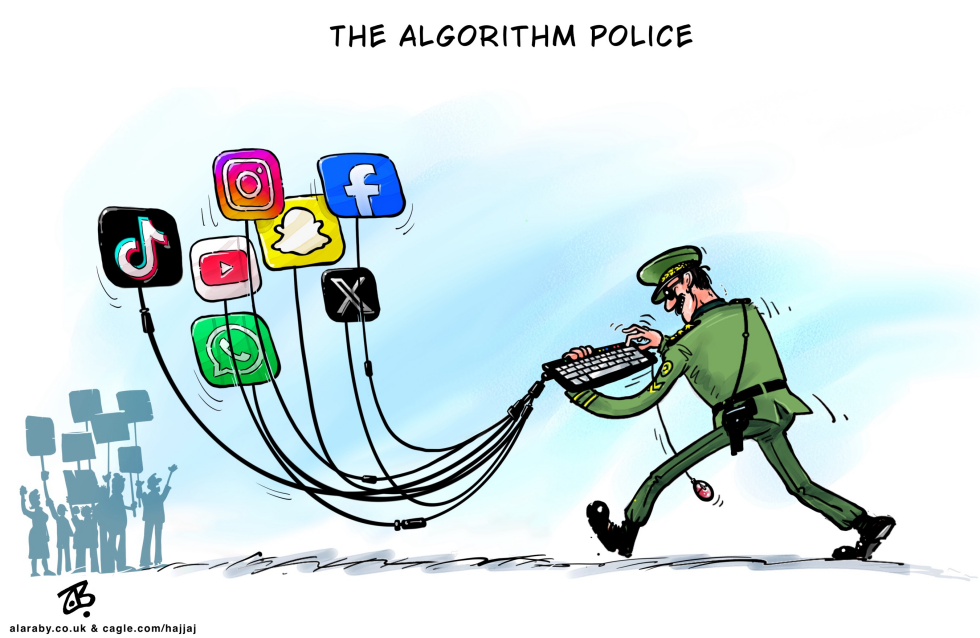
Authorities worldwide continue expanding oversight of social media platforms through algorithmic tools and regulatory pressure to curb misinformation and dissent. This approach affects major apps including TikTok, Instagram, Facebook, and X by prioritizing content moderation at scale. The development matters because it shapes public discourse and information access for billions of users. The piece portrays such controls as heavy-handed policing that provokes public resistance.