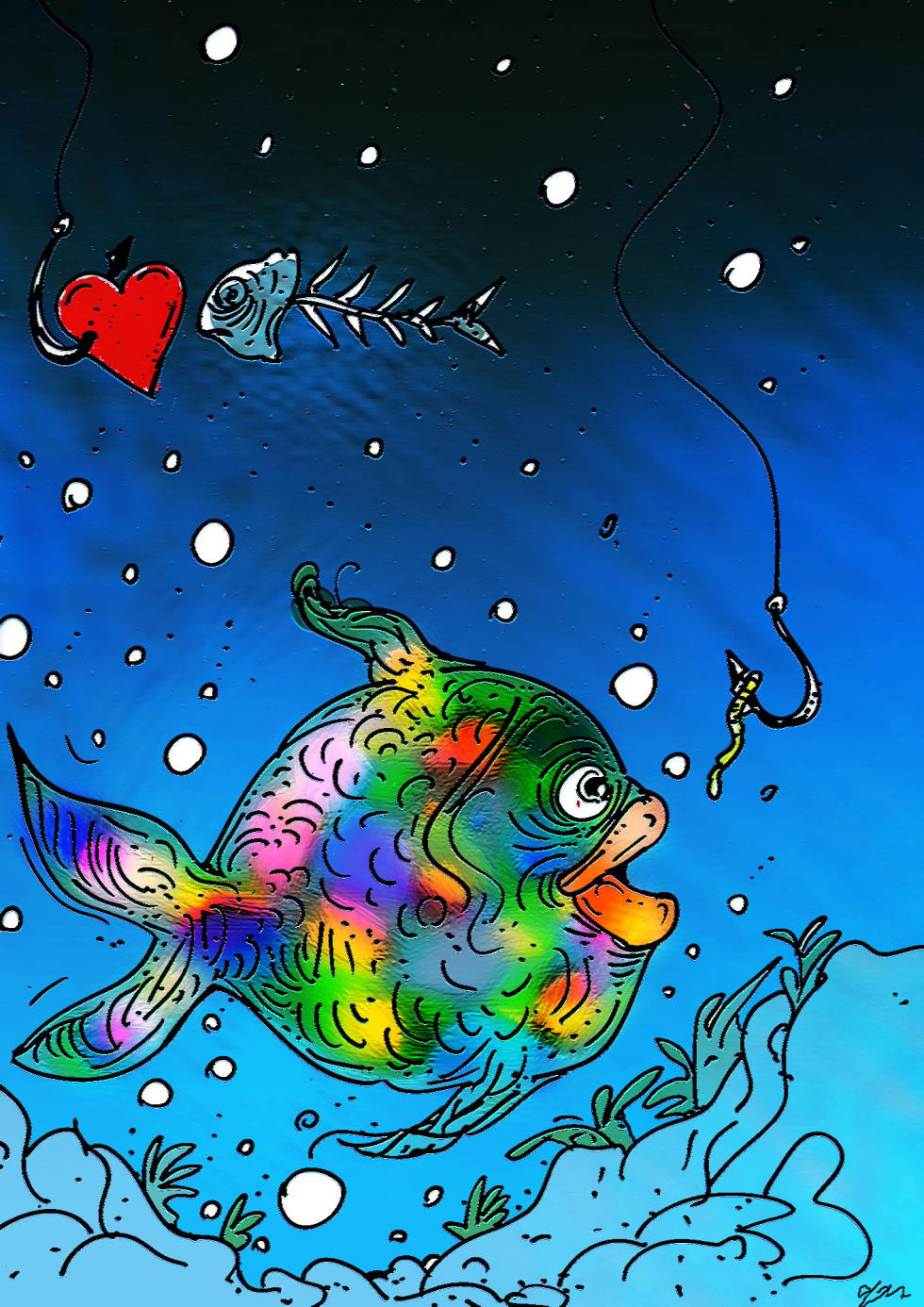
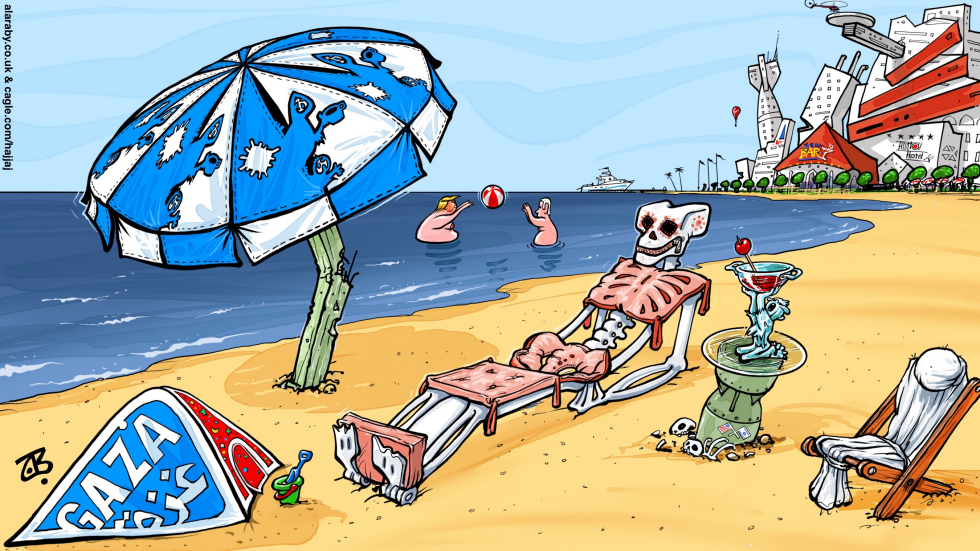
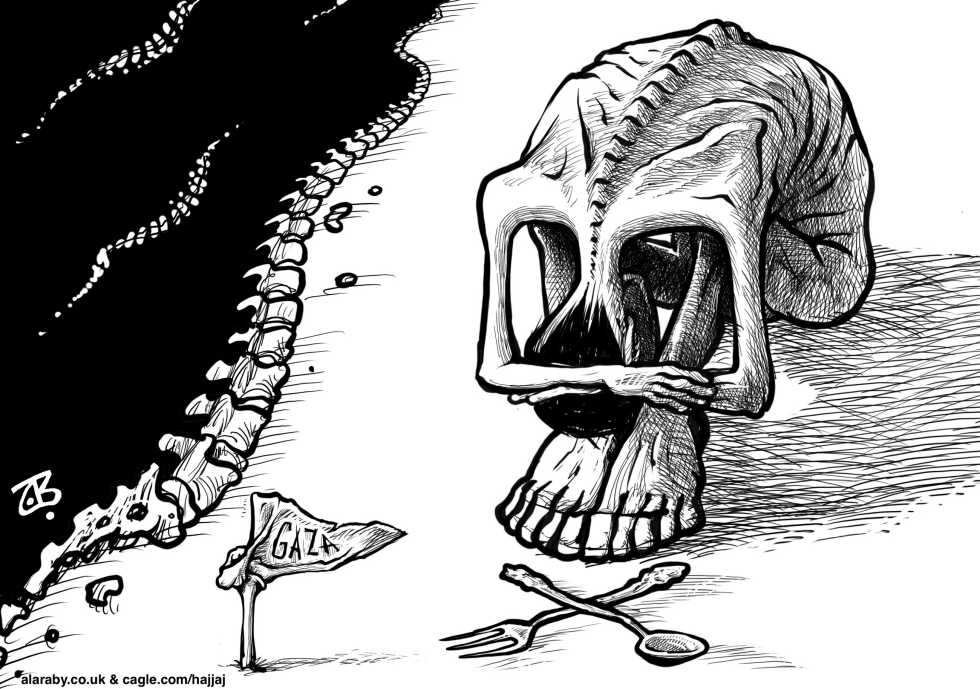
The cartoon captures the recurring human tendency to overlook evident dangers when drawn by temptation. A previous victim serves as stark evidence, yet the lure remains compelling. The piece underscores how easily judgment fails under the pull of immediate gratification. It argues that such lapses carry predictable and severe costs.
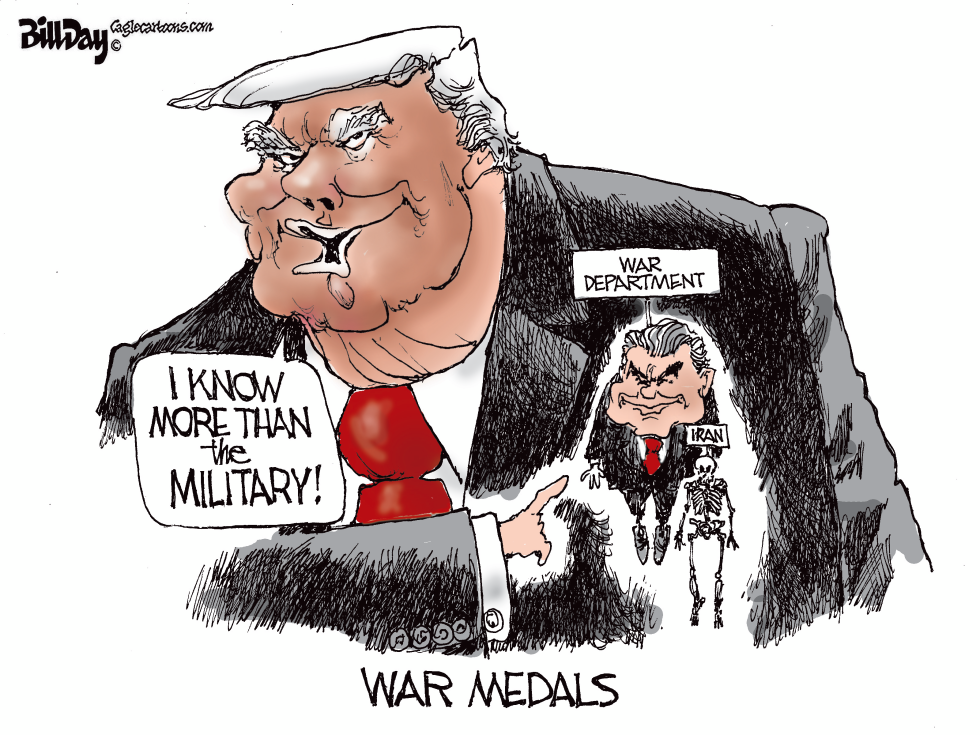
Donald Trump publicly stated he knows more than the military on defense matters as tensions with Iran persisted into late summer 2026. The remark revived questions about civilian oversight of the armed forces and the administration's approach to potential conflict. Critics argued the comment undermined professional military advice at a sensitive time. Supporters viewed it as decisive leadership. The cartoon frames the statement as hollow by linking it to a depleted war department and Iran references, suggesting the boast lacks substance and risks escalation without real expertise.
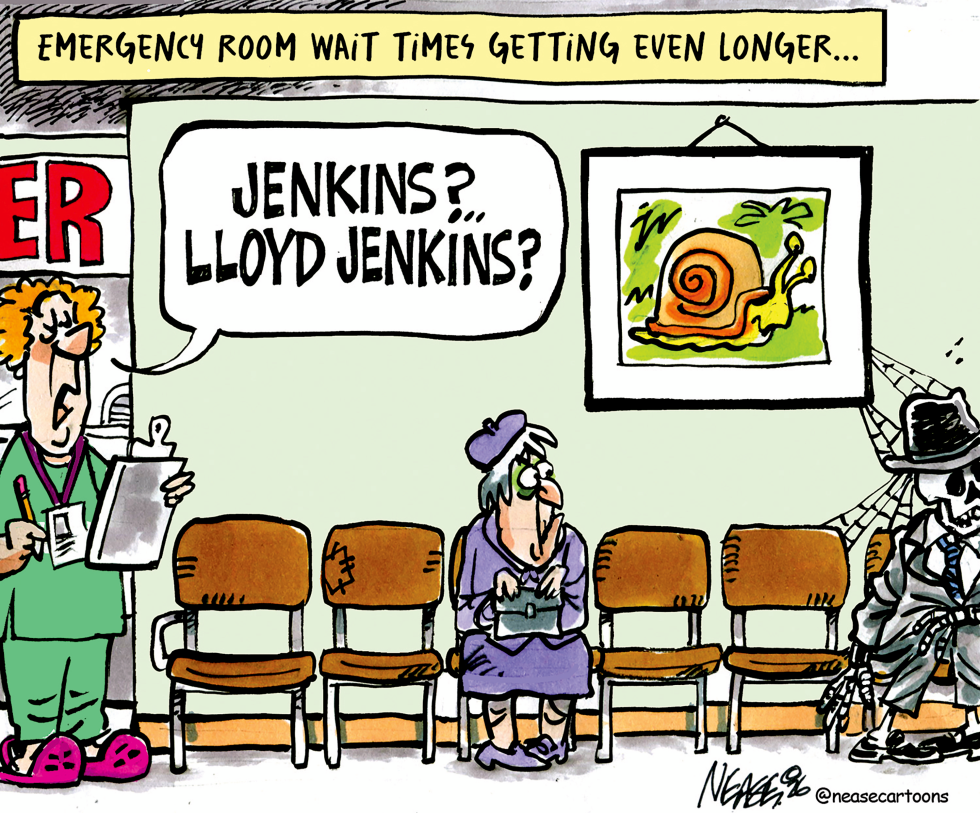
Hospital emergency departments across the country continue to report extended patient wait times driven by staffing shortages and rising demand. The situation has prompted renewed calls for policy interventions to improve throughput and reduce overcrowding. The piece highlights the human cost of these systemic delays through its central visual metaphor.
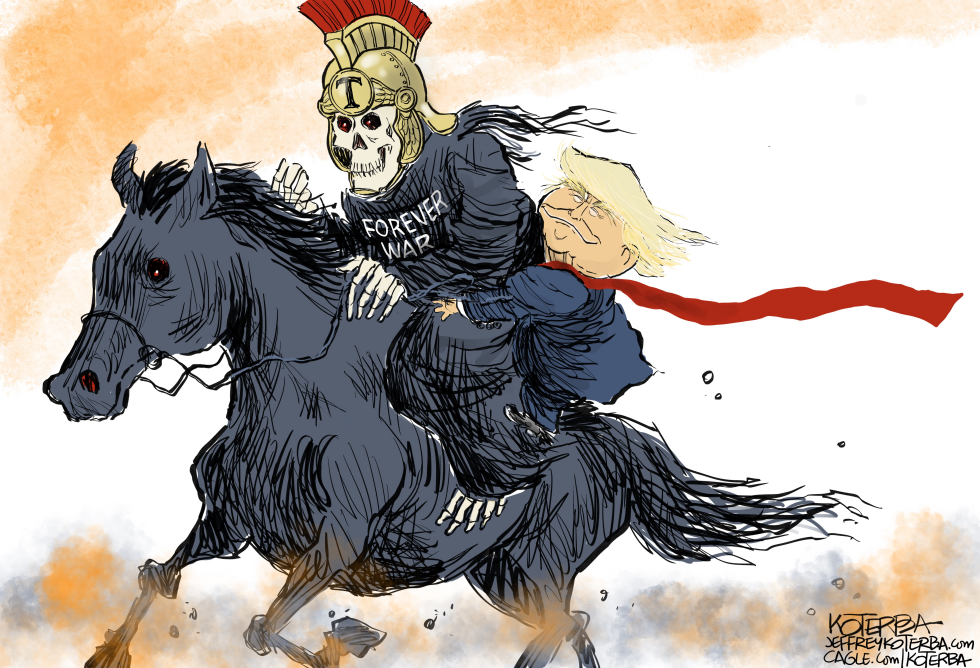
Donald Trump appears locked in embrace with a skeletal figure representing endless military engagement. The image captures the former president holding fast to the armored warrior as both ride forward on a dark horse. This visual arrives amid ongoing debates over U.S. military commitments abroad and the difficulty of disengaging from prolonged conflicts. The piece underscores how political figures can become tethered to policies of sustained warfare despite public fatigue. It takes the position that such attachment persists even as costs mount and alternatives remain unexplored.
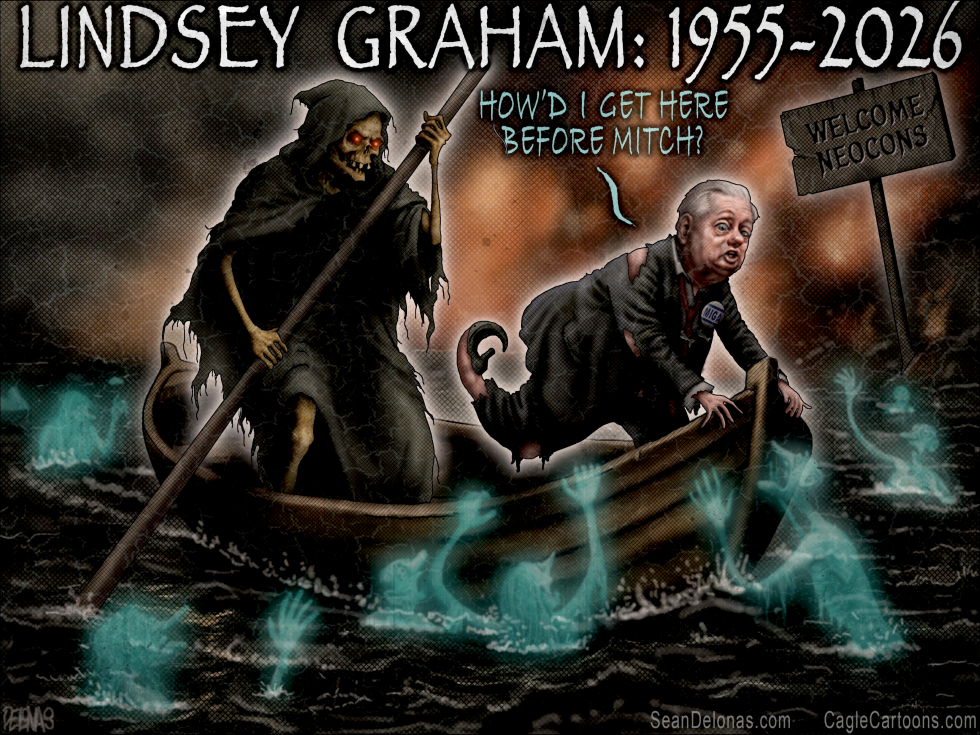
The cartoon responds to the imagined 2026 death of longtime Republican Senator Lindsey Graham. It places him in an afterlife reserved for neoconservatives, where he wonders why he arrived before Senate Minority Leader Mitch McConnell. The piece uses the scenario to comment on the enduring influence and eventual passing of prominent Republican foreign-policy figures.
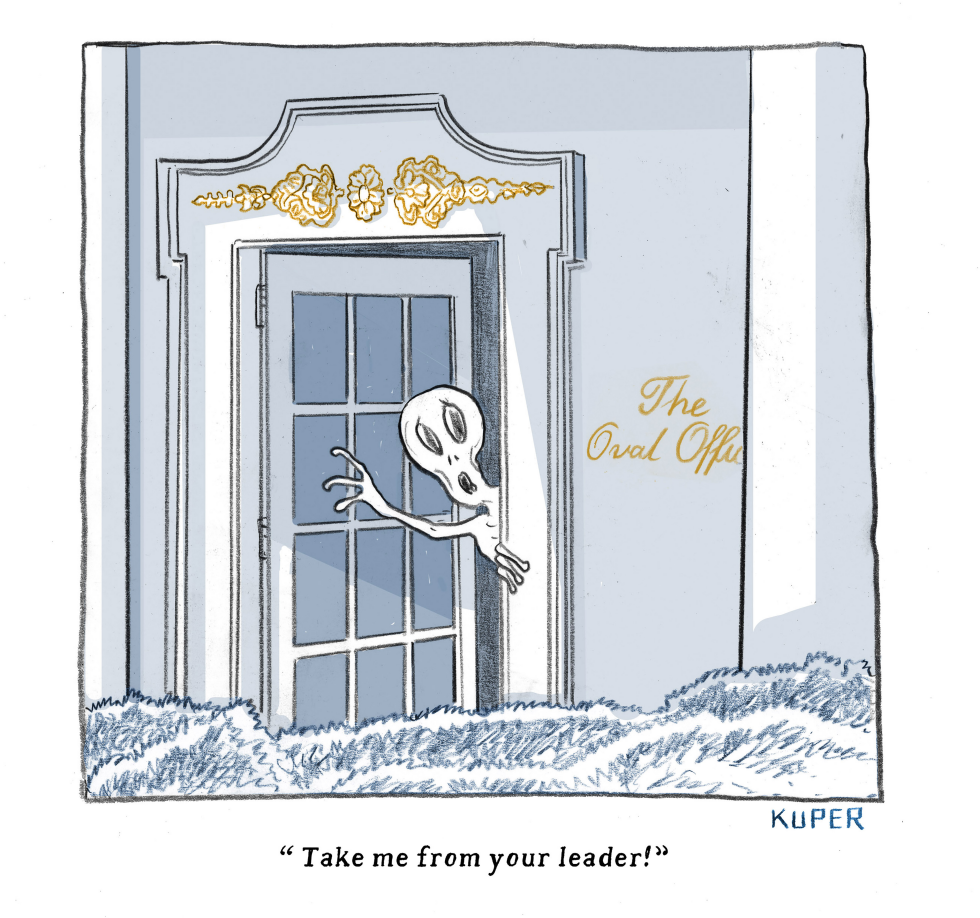
Peter Kuper's cartoon depicts a door with ornate gold trim labeled 'The Oval Offi,' partially obscured by a skeletal alien figure extending bony arms outward arms outward, one hand clawing at the glass panes. The figure's skull-like head with large eyes peers out, and below, a speech bubble reads 'Take me from your leader?!' Grass or shrubbery lines the bottom, with the signature 'KUPER' at the lower right. This setup twists the classic alien phrase into a plea for rescue, fitting presidency satire, Oval Office humor, extraterrestrial parody, skeletal cartoon, White House illustration, and political leader commentary in a straightforward line drawing style.