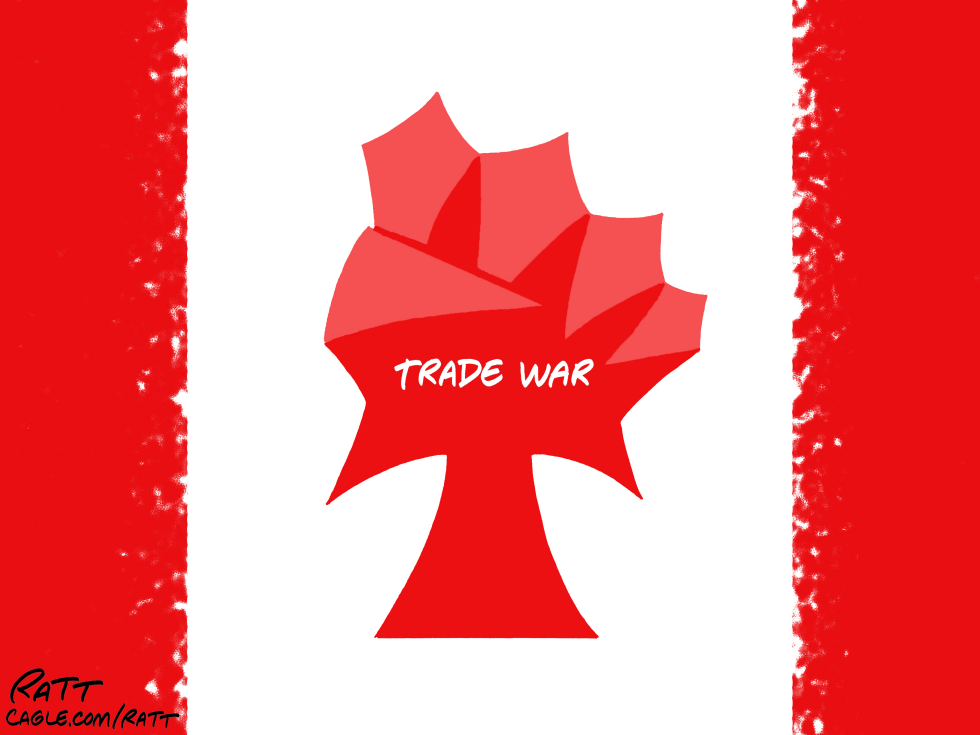
Ongoing US-Canada trade tensions escalated in 2026 with new tariff threats targeting Canadian exports. The dispute threatens key sectors including autos, lumber and agriculture, raising costs for consumers on both sides of the border. Canada has signaled plans to diversify markets and strengthen domestic industry. The cartoon frames the conflict as a direct assault on Canadian sovereignty and economic stability. It portrays the trade war as fracturing national symbols while urging a stronger northern response.
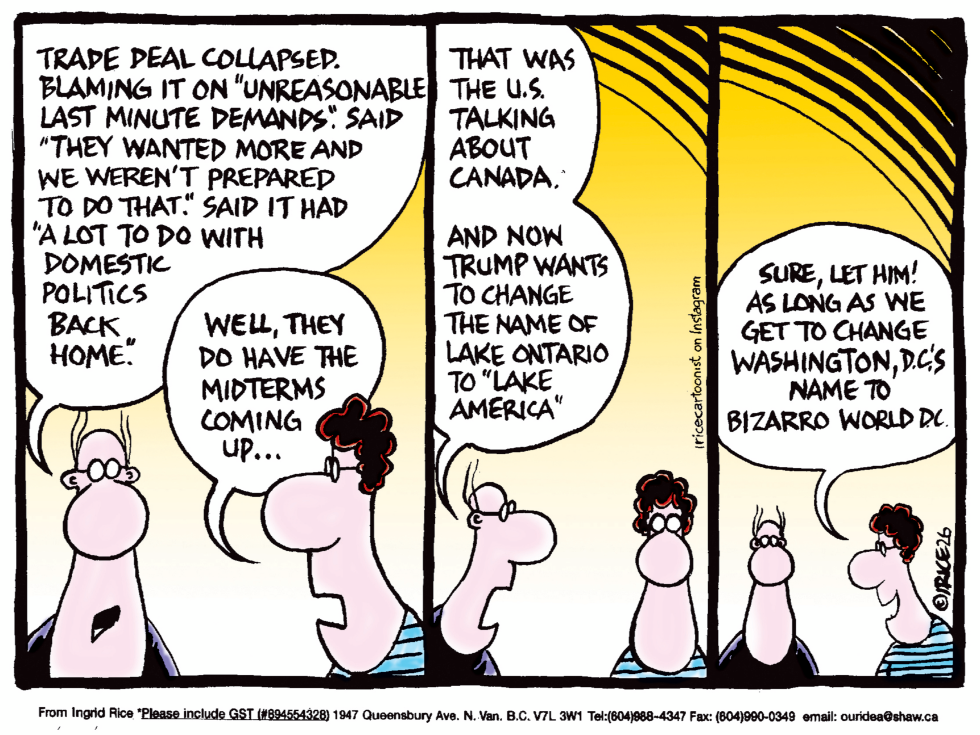
A Canada-U.S. trade deal collapsed after U.S. negotiators cited unreasonable last-minute demands and linked the failure to domestic politics ahead of midterms. President Trump then proposed renaming Lake Ontario to Lake America. Canadian officials responded by offering to rename Washington D.C. to Bizarro World DC if the change proceeds. The exchange highlights how trade tensions and political posturing are escalating between the two countries. The cartoon mocks the name-change idea as emblematic of broader dysfunction in bilateral relations.
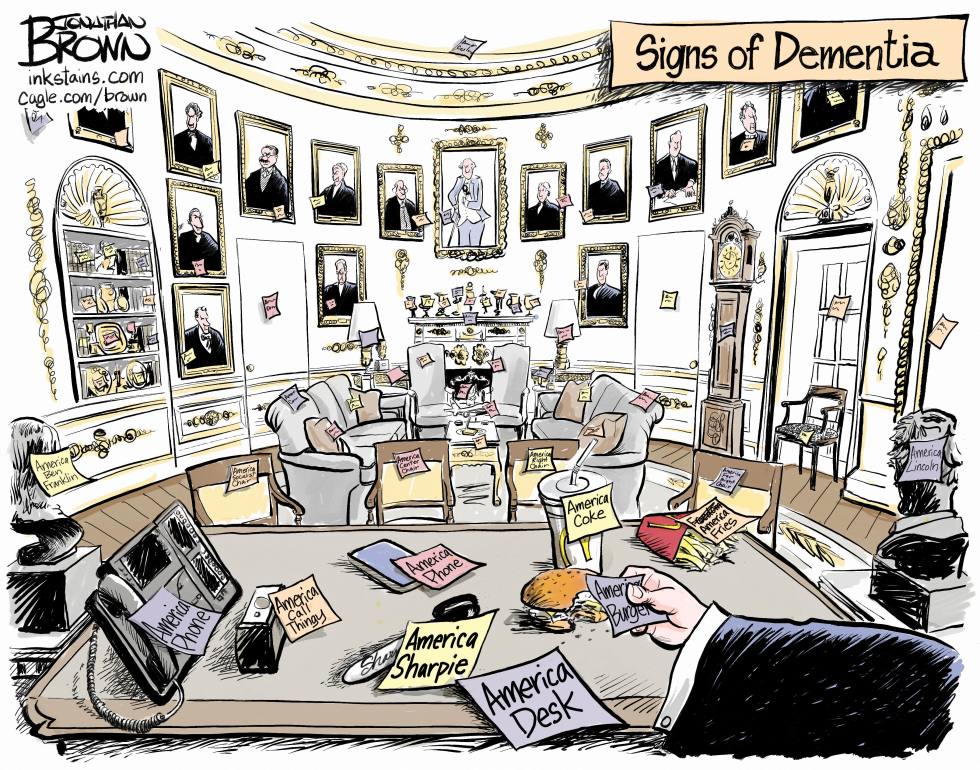
A new editorial cartoon depicts the Oval Office overrun with sticky notes labeling everyday items as America. The scene highlights signs of dementia through repeated branding on phones, desks, food and furniture. Published on September 9, 2026, the work comments on ongoing concerns about cognitive fitness in the presidency. The visual uses the familiar setting of the White House to underscore confusion and memory issues. Observers note the cartoon captures public debate over leadership capacity without naming specific individuals.
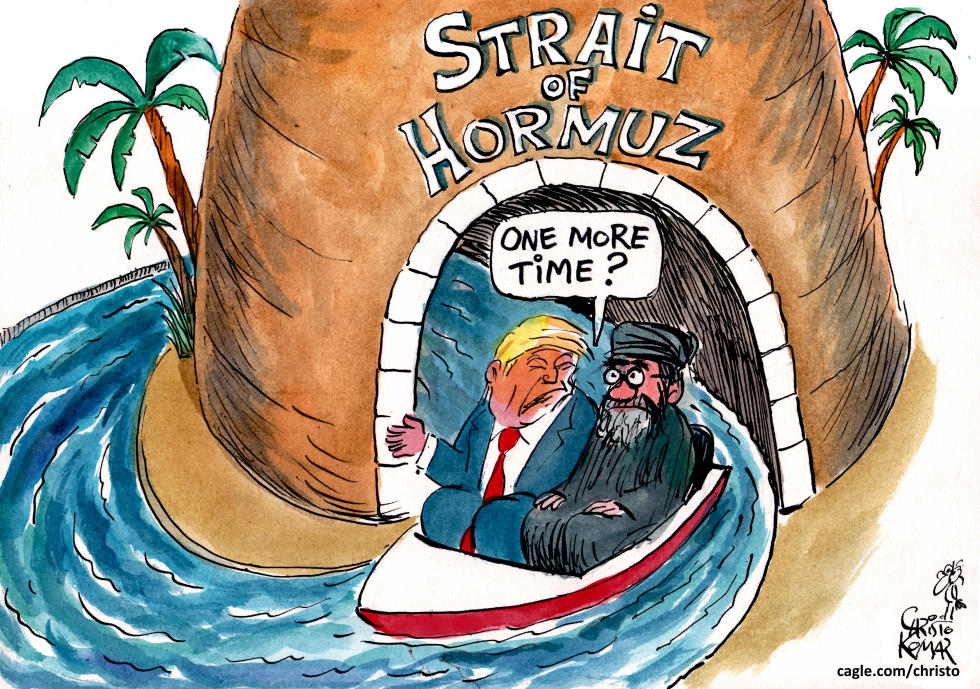
On August 5 2026 renewed friction over shipping lanes in the Strait of Hormuz draws attention as former President Donald Trump appears alongside Iran's Supreme Leader in a symbolic return to the chokepoint. The episode underscores ongoing US-Iran friction over energy exports and naval presence. The piece portrays the pair repeating a risky transit that highlights persistent strategic vulnerabilities in the Persian Gulf.
Donald Trump announced he had called off a major military strike on Iran in favor of a pending nuclear deal. The move drew immediate skepticism from Iranian officials who questioned both the threat and the agreement. The cartoon highlights the disconnect between the announcement and Tehran\'s response.
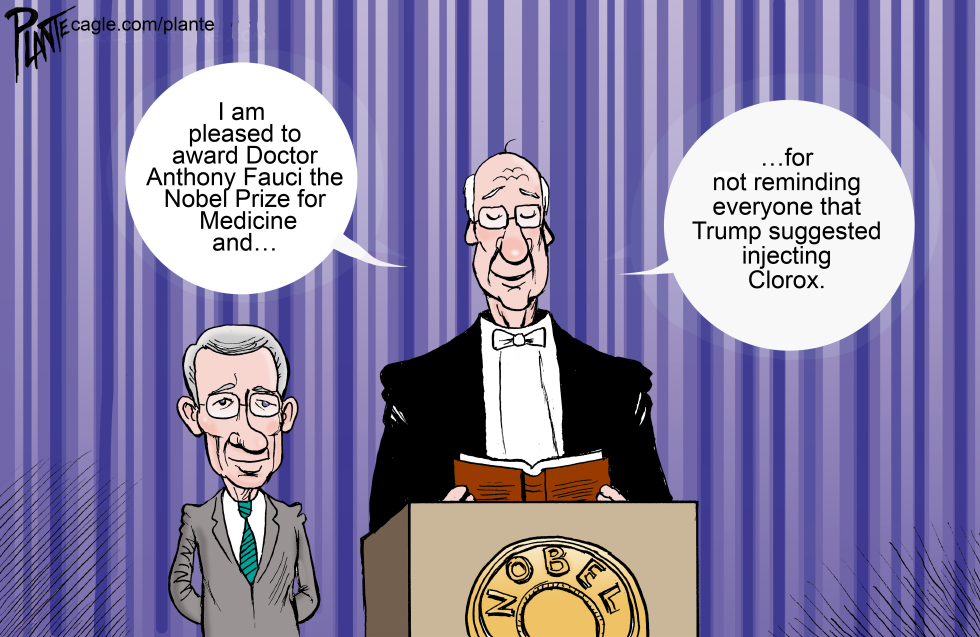
A Nobel Prize presentation for Dr. Anthony Fauci highlights his public health role during the COVID-19 period. The ceremony focuses on his contributions to medicine while avoiding reference to earlier statements from former President Trump about potential treatments. The moment underscores ongoing public debate over pandemic messaging and leadership accountability. The editorial position frames the award as recognition tied to selective memory rather than solely scientific achievement.
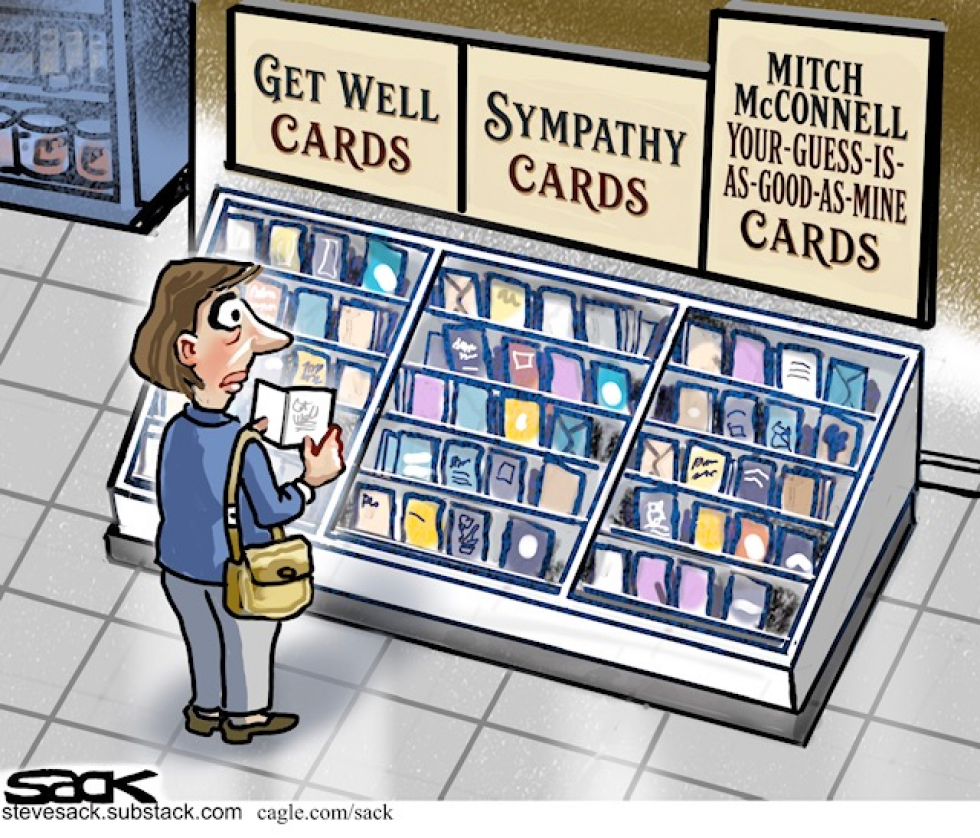
Questions about Mitch McConnell's health and future in Senate leadership have persisted into mid-2026. The Kentucky Republican has faced repeated absences and public episodes that fuel speculation about his capacity to continue. Colleagues in both parties watch closely because his position influences committee assignments and floor strategy. The uncertainty affects legislative timelines on appropriations and judicial matters. The piece argues that the situation leaves observers with little reliable information and treats the ambiguity itself as the central story.
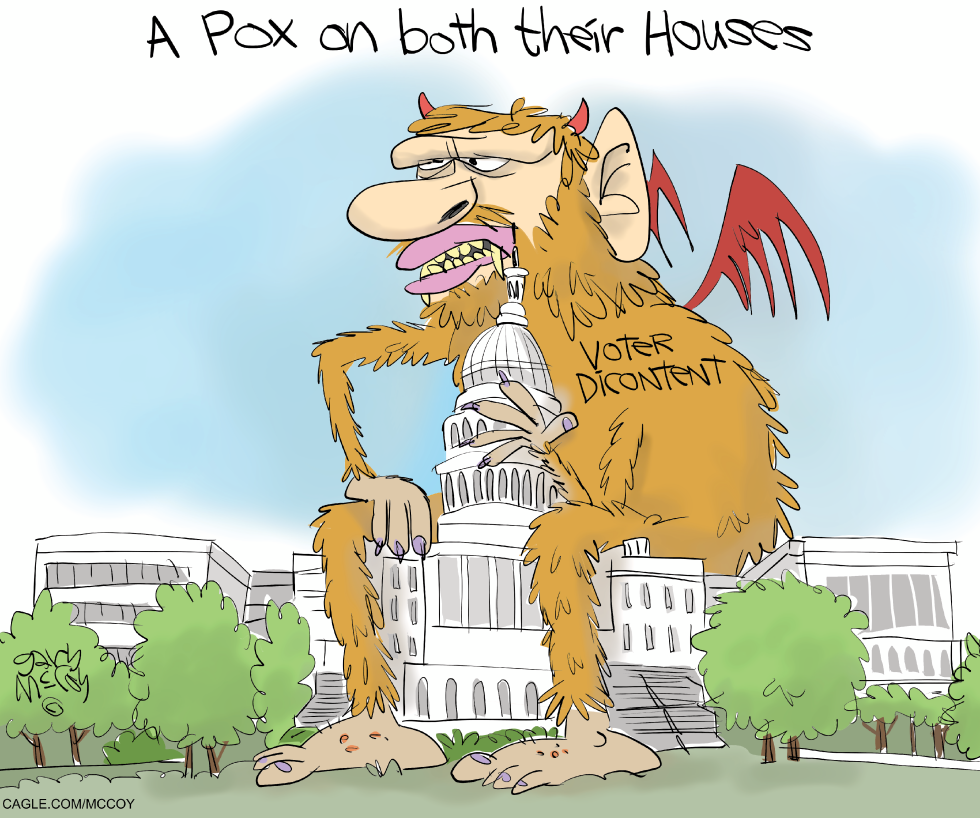
Voter frustration with Congress has grown amid stalled legislation and partisan gridlock on Capitol Hill. The piece portrays this sentiment as a towering monstrous force looming over the legislative branch. It argues that public anger targets both parties equally for failing to address key issues.
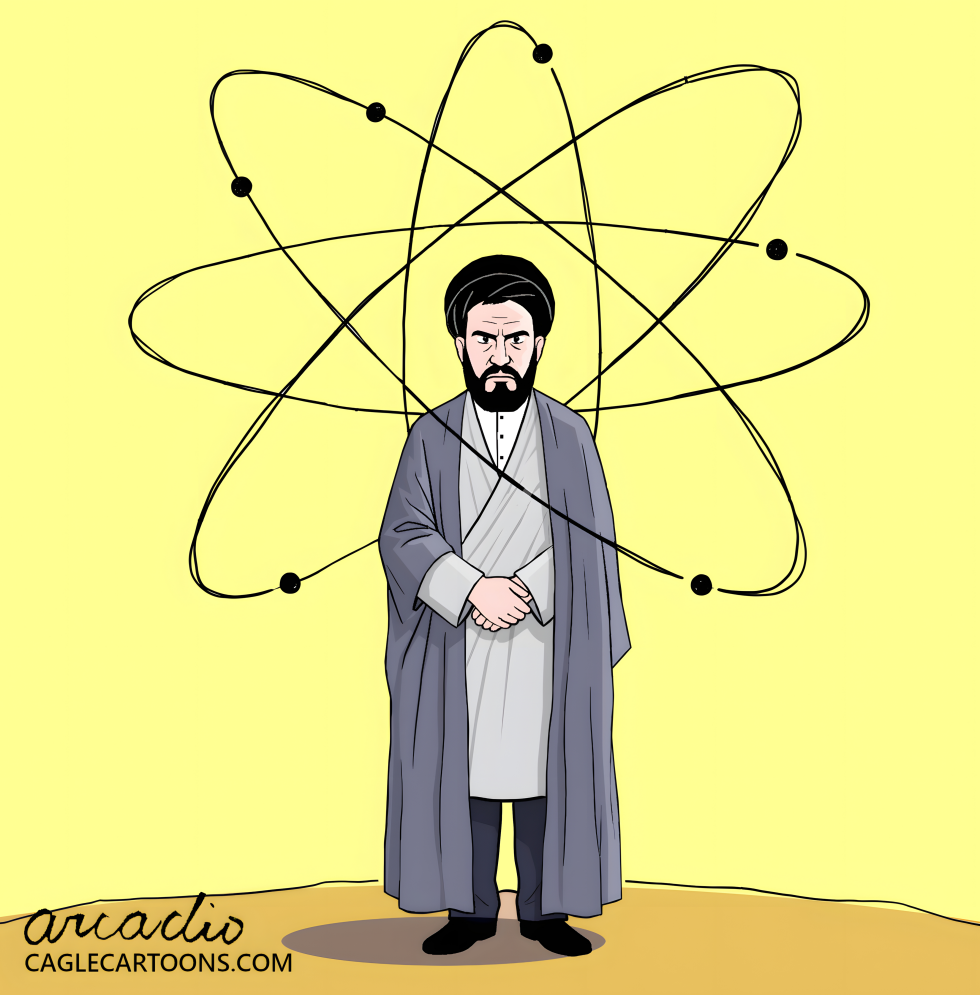
The cartoon shows Iran's supreme leader positioned in front of a large atom symbol. It responds to persistent international concerns over Tehran's nuclear activities as of mid-2026. The visual places the figure directly under the orbiting electrons, underscoring the central role of the nuclear issue in global discussions about the country.
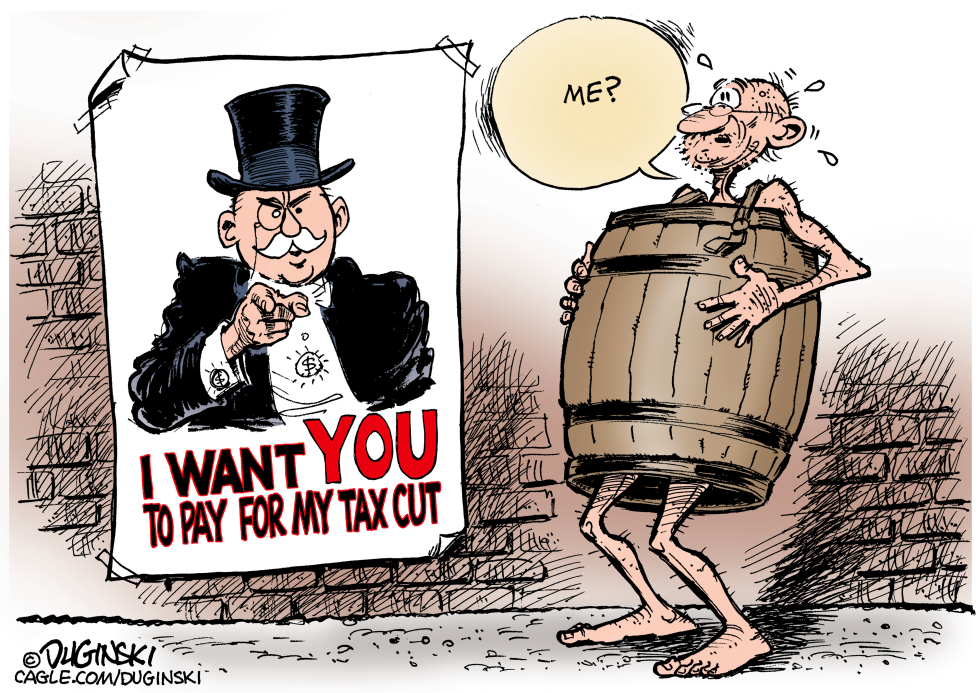
A poster of Uncle Sam points directly at a thin man trapped in a barrel, with bold text demanding that the man pay for the tax cut. The barefoot figure reacts with surprise in a speech bubble. The scene unfolds against brick walls, highlighting tension between authority and the economically disadvantaged.
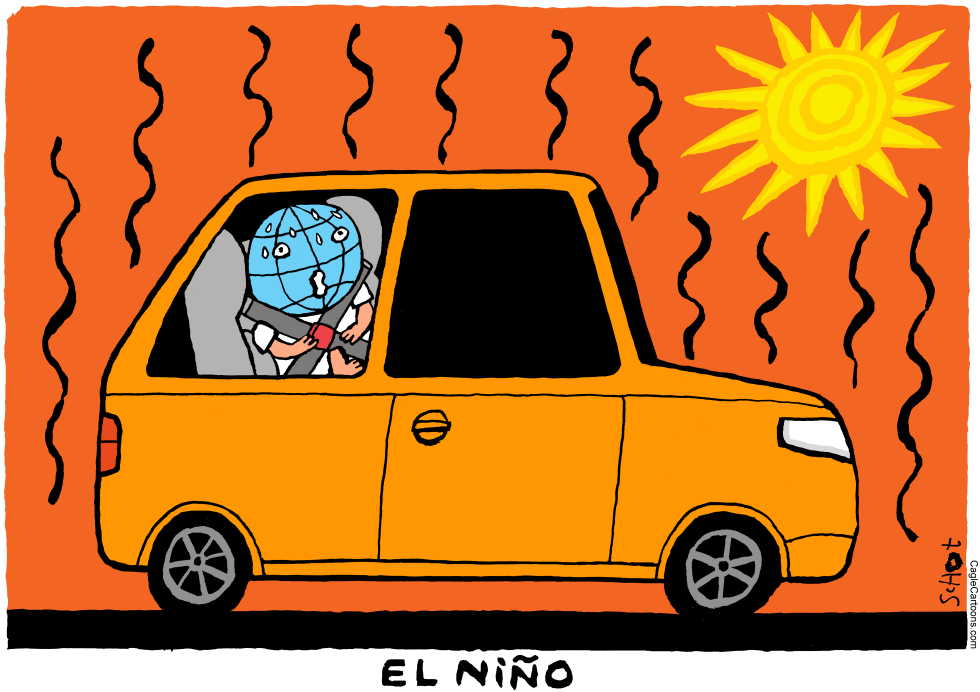
A yellow car sits under a bright sun with heat waves rising on an orange background. Inside the car a globe figure wearing a seatbelt sweats in the driver's seat. Large text at the bottom reads EL NIÑO.
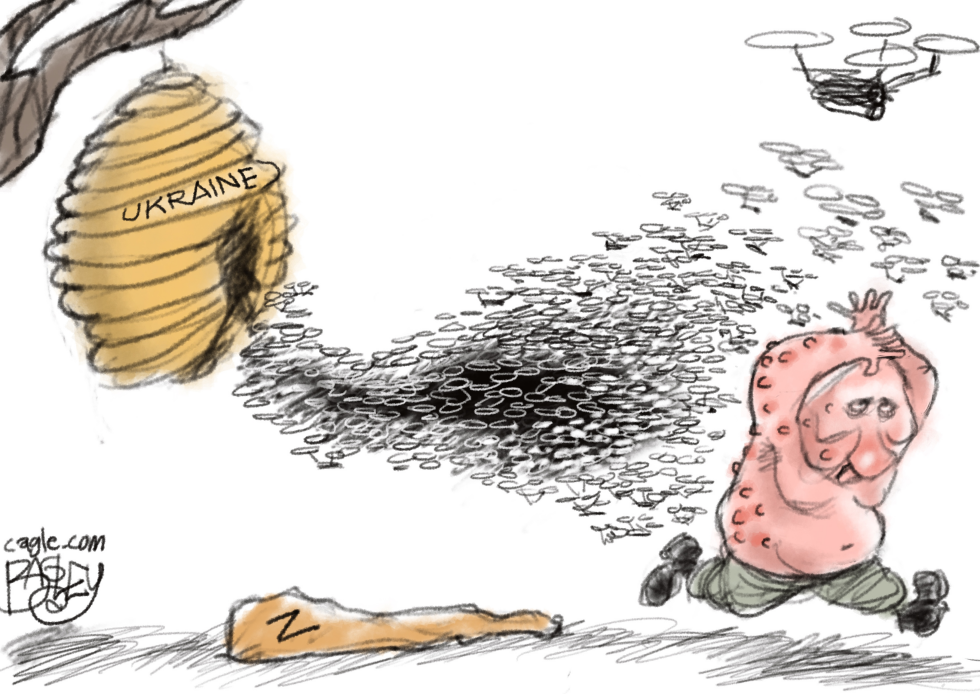
A beehive labeled Ukraine releases a dense swarm of bees that engulfs a distressed shirtless figure marked with red spots. The figure raises hands to its head as a drone hovers nearby and a broken object bearing a Z rests on the ground. The scene responds to ongoing Ukraine-Russia tensions active in early July 2026.
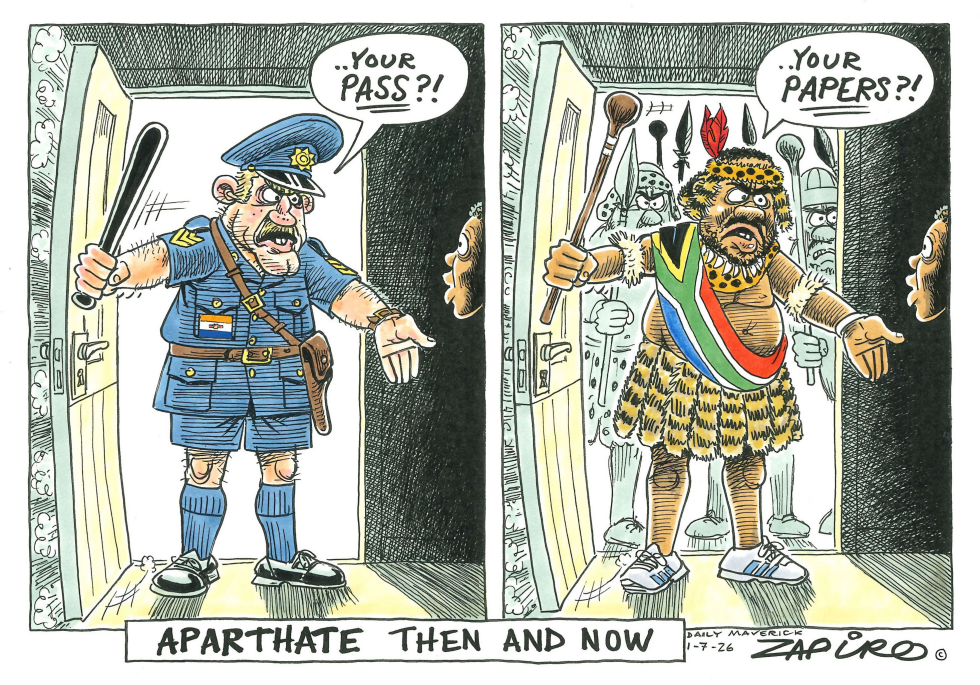
A two-panel cartoon contrasts a South African police officer in uniform demanding a pass during apartheid with a figure in traditional attire and South African flag sash making a similar demand in a modern setting. The bottom banner labels the comparison 'Apartheid Then and Now.' The work appears in the Daily Maverick dated 1-7-26 and is signed by Zapiro.
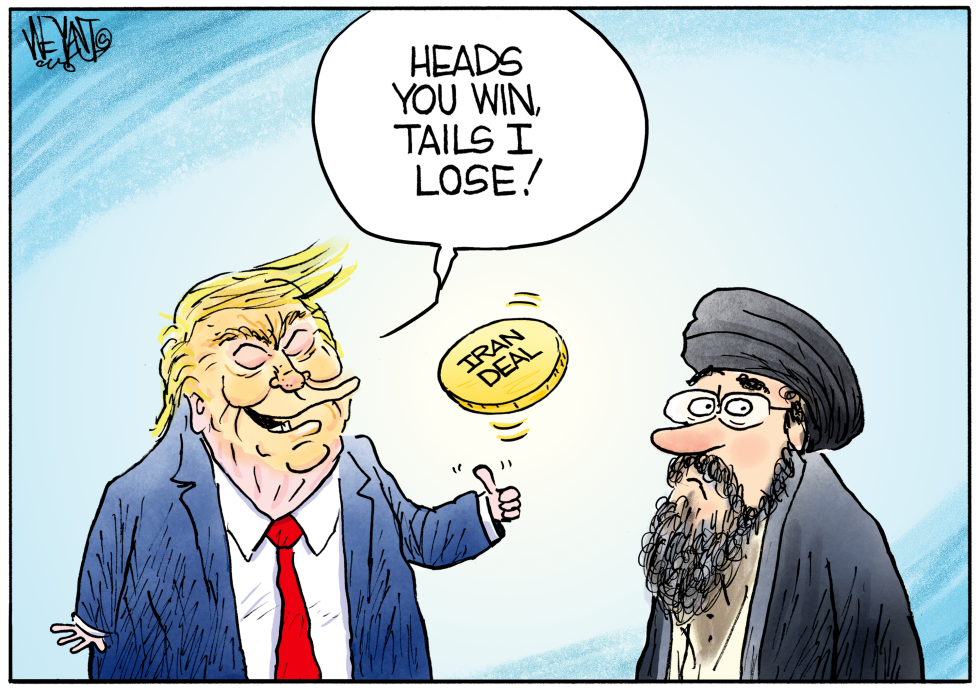
Weyant depicts Donald Trump flipping a coin to determine whether to uphold or abandon the Iran nuclear agreement, satirizing the randomness of his foreign policy decision-making. The coin toss metaphor suggests Trump treats major diplomatic decisions as matters of chance. The cartoon captures diplomatic anxiety about Trump's unpredictability.
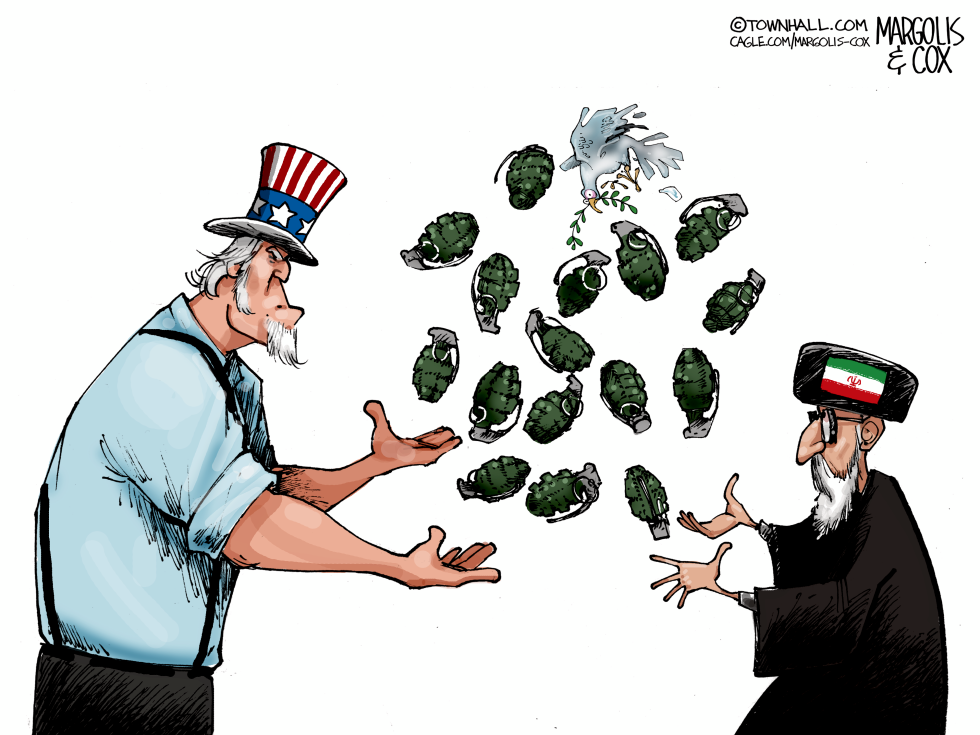
On June 16, 2026, the Margolis & Cox cartoon depicts Uncle Sam and an Iranian leader juggling grenades while a peace dove is struck mid-flight. The image responds to ongoing US-Iran tensions over nuclear issues and regional conflicts in the Middle East. The visual shows the two figures facing each other with outstretched hands as explosives arc between them. A wounded dove drops its olive branch above the scene. The cartoon highlights the precarious nature of diplomacy between Washington and Tehran at that moment.