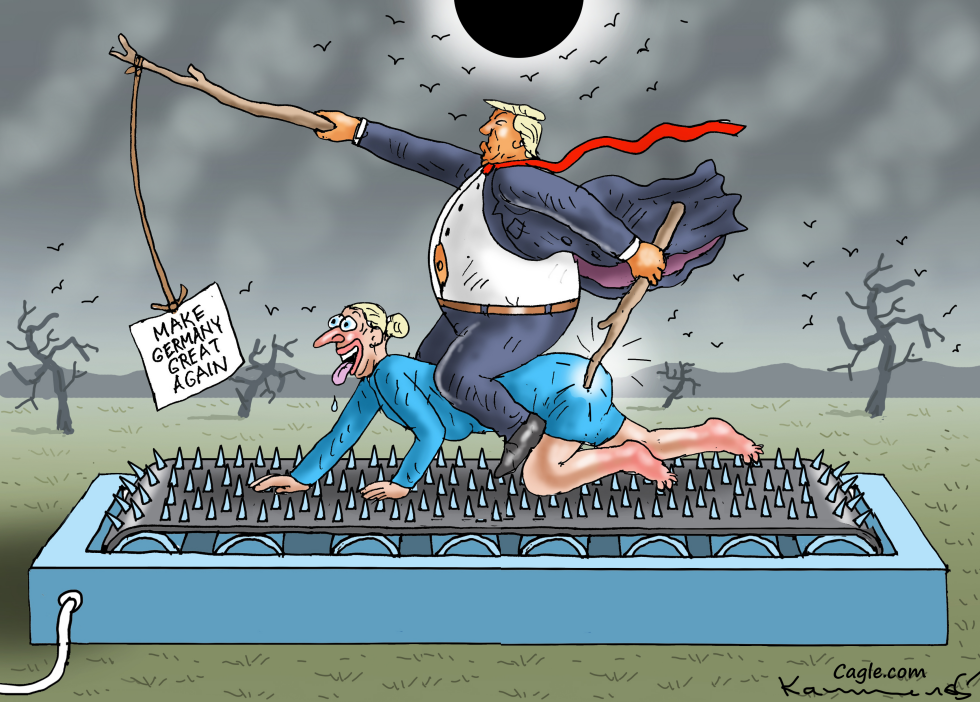
Donald Trump promotes a revival slogan aimed at Germany while Angela Merkel faces the consequences. The effort highlights ongoing tensions in transatlantic relations and questions about external influence on European domestic policy. The piece argues that such interventions impose unnecessary hardship without delivering benefits.
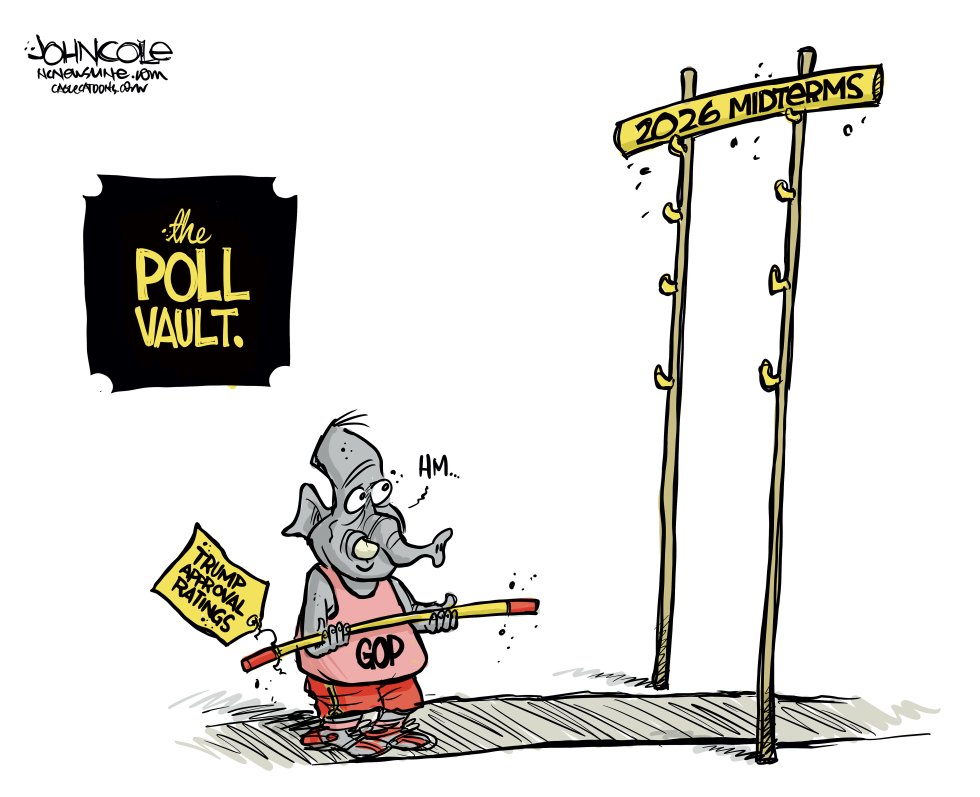
Republicans face the 2026 midterm elections with Donald Trump as a central figure whose approval ratings remain a key variable. Party strategists must decide how heavily to tie their candidates to the former president amid ongoing voter sentiment. The piece portrays the GOP as an athlete preparing to clear the midterm bar but questioning whether the available pole will suffice.
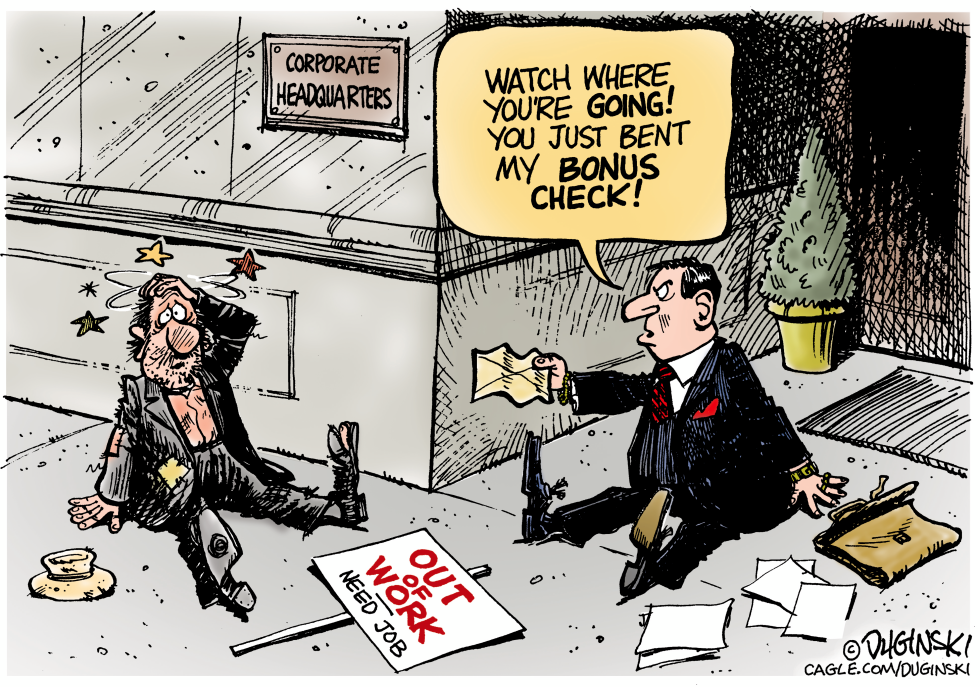
Corporate executives continue to receive large bonuses even as layoffs persist across sectors. The piece responds to ongoing debates over executive compensation packages during periods of workforce reduction. It takes the position that such bonuses appear disconnected from the realities facing displaced employees.
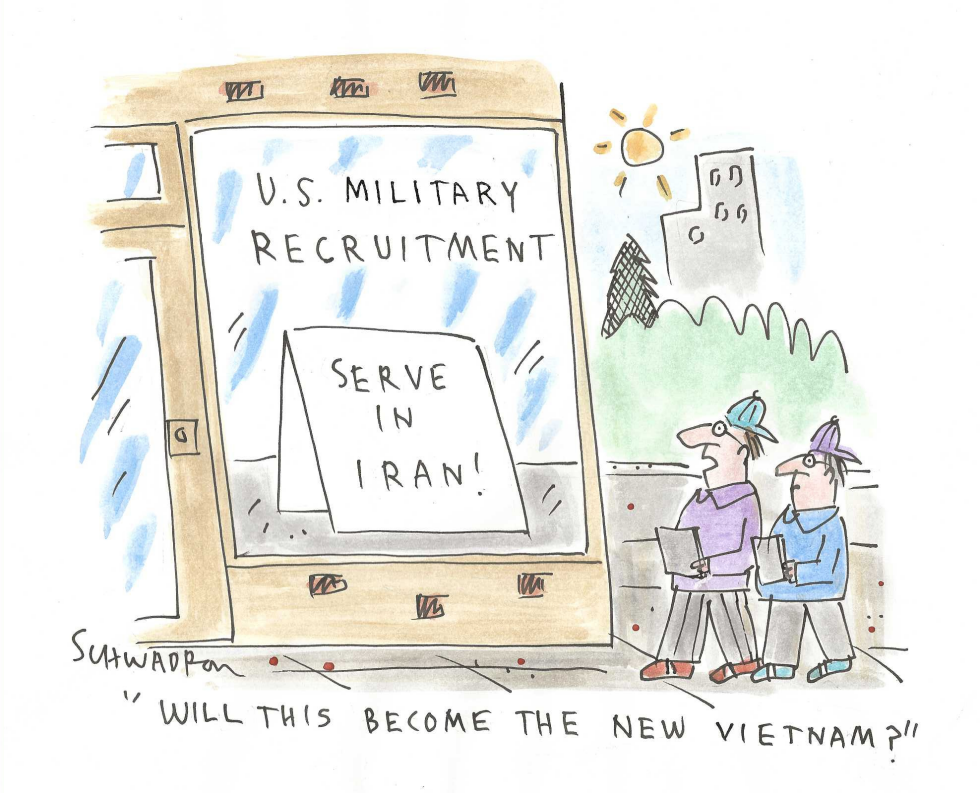
U.S. military recruitment efforts have begun highlighting opportunities to serve in Iran, prompting public questions about potential escalation. The move comes amid ongoing regional tensions and draws direct comparisons to the Vietnam War era. Observers worry the campaign signals a shift toward deeper U.S. military commitments overseas. The editorial takes the position that such recruitment tactics risk repeating past mistakes by underestimating public resistance to prolonged conflicts.
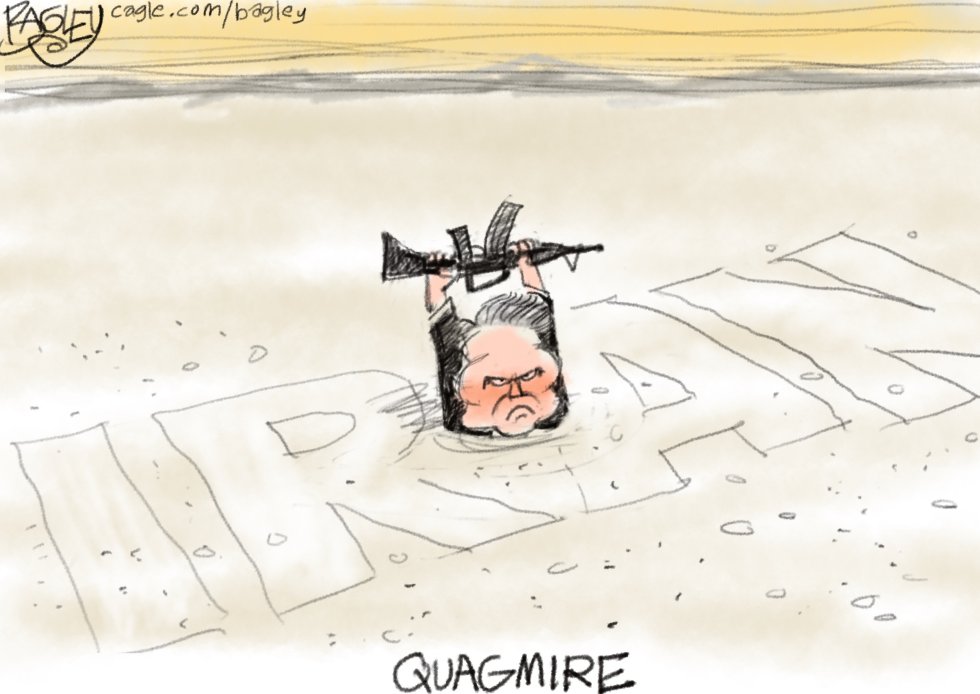
Donald Trump faces mounting difficulties tied to military engagements as of late July 2026. The situation underscores risks of prolonged involvement abroad. The piece portrays these events as a self-inflicted trap that threatens broader stability.
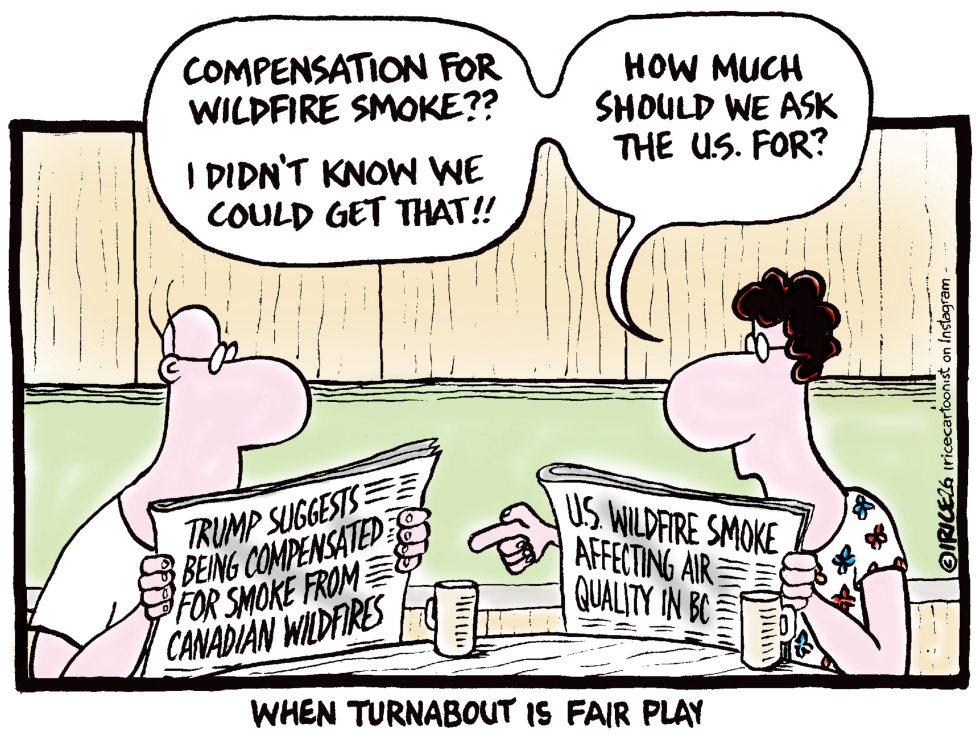
Donald Trump suggested the U.S. should receive compensation for smoke from Canadian wildfires. The cartoon responds by showing Canadians considering a reciprocal claim for smoke from U.S. wildfires affecting British Columbia air quality. It underscores the political dynamic of mutual environmental grievances between the two nations.
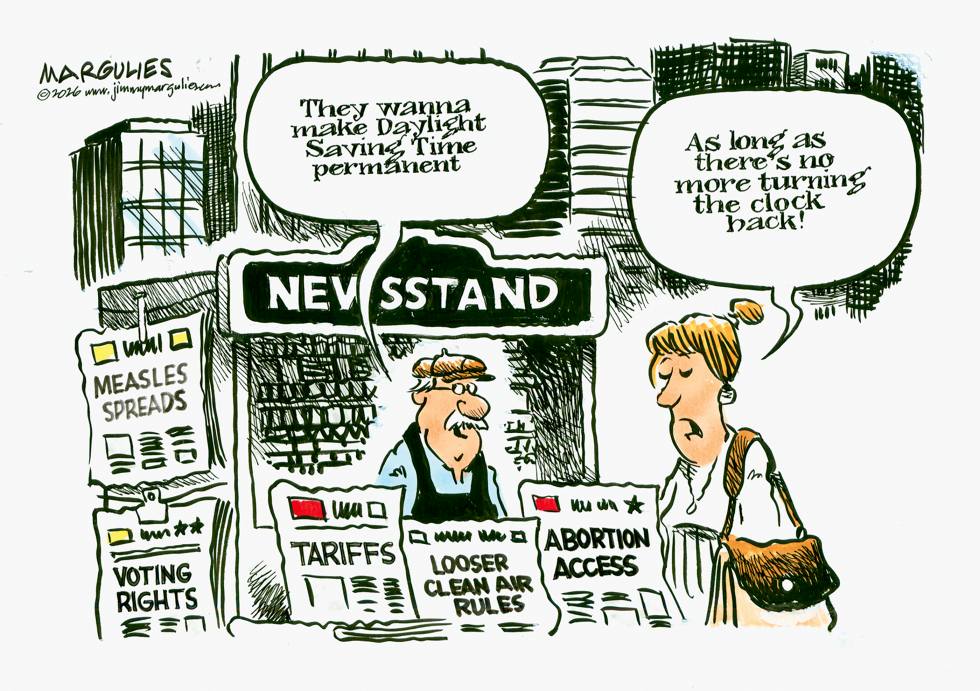
Proposals to make daylight saving time permanent coincide with debates over tariffs, abortion access, voting rights and environmental rules. The cartoon frames these as part of a broader pattern of policy shifts that some view as steps backward.
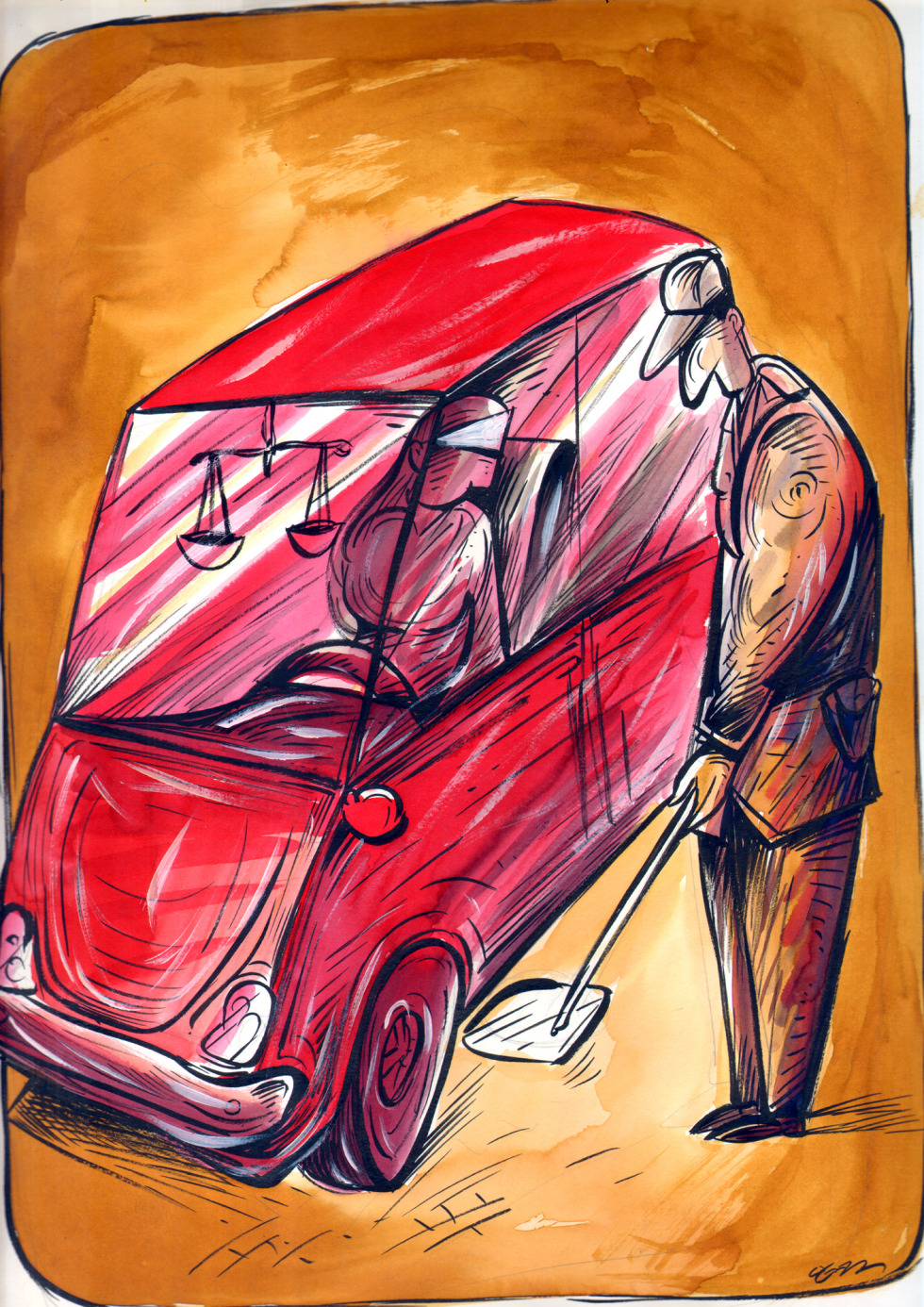
A symbolic image depicts Lady Justice seated inside a red vehicle holding the scales of justice while a uniformed official stands outside gripping a shovel. The scene suggests tension between institutional authority and judicial independence. The editorial position frames the interaction as external pressure on the justice system.
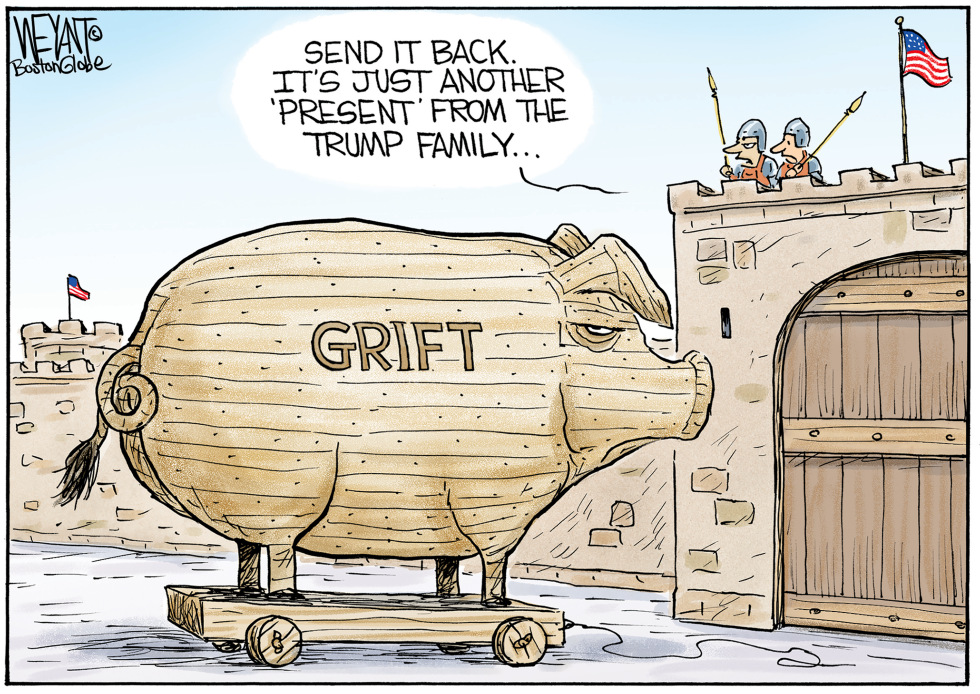
The Trump family faces renewed scrutiny over business dealings and influence peddling. Guards at a symbolic fortress receive a large wooden pig marked grift and immediately demand its return. The episode highlights ongoing concerns about gifts and favors tied to the family name.
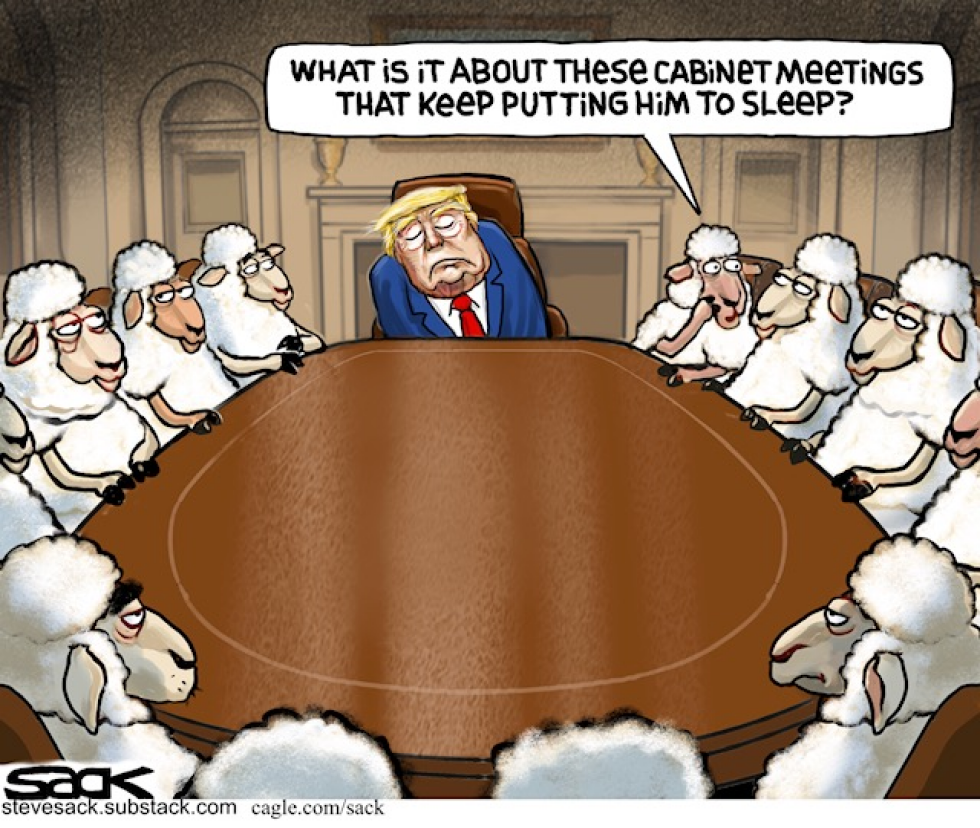
Donald Trump appears asleep at the head of a long conference table while sheep dressed in business attire occupy the surrounding seats. A speech bubble above the scene asks what about cabinet meetings keeps putting him to sleep. The July 2026 image from Steve Sack depicts the president in a blue suit and red tie with eyes closed and head tilted. The setting shows a formal room with arched doorways and a large wooden table. Text at the bottom includes the artist's signature and website links.
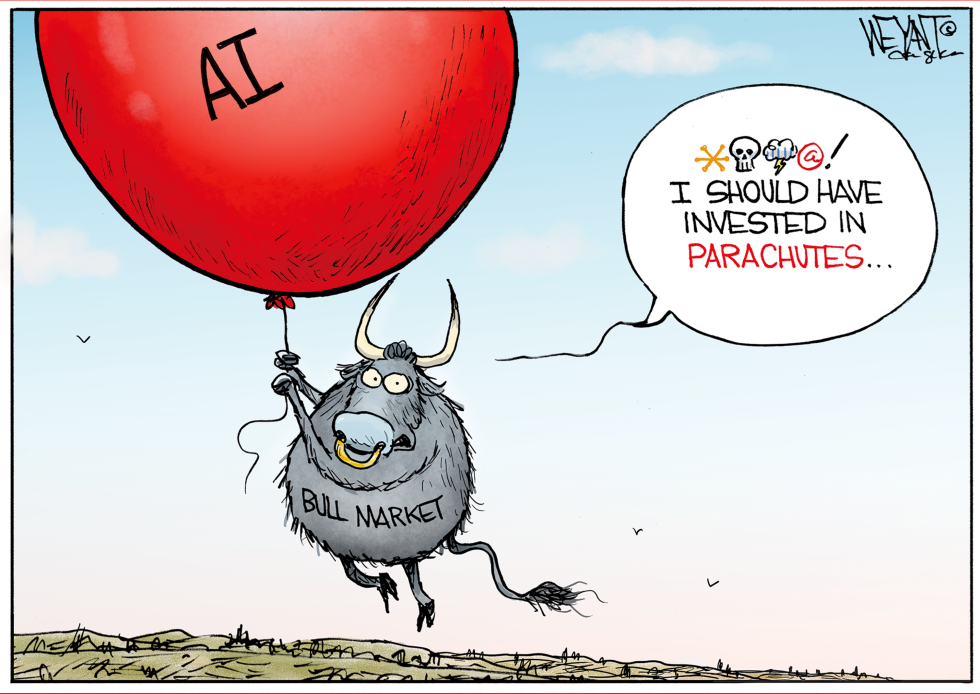
A bull labeled as the market hangs from a large red balloon marked AI. The figure speaks of wishing for parachutes instead. The scene appears on June 30 2026 and shows the bull suspended high with symbols of trouble in the speech area.
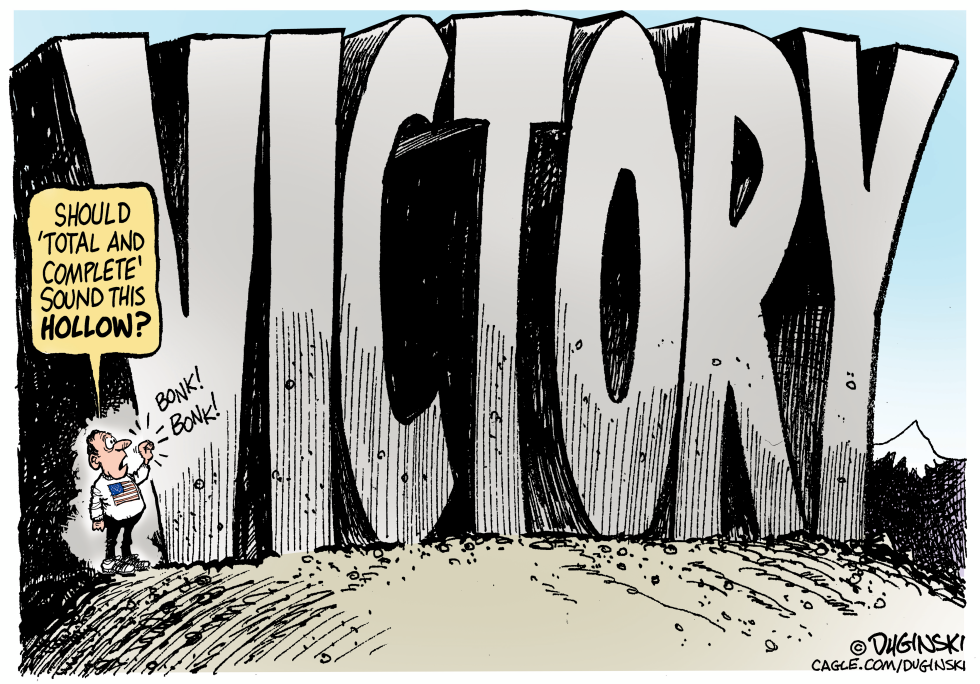
The cartoon presents large block letters spelling VICTORY with internal voids. A small figure identified as Trump stands at the base knocking and asking if total and complete victory should sound hollow. The composition places the figure left of the structure against a landscape background. Publication occurred on June 16 2026 amid references to Iran agreements and military outcomes.
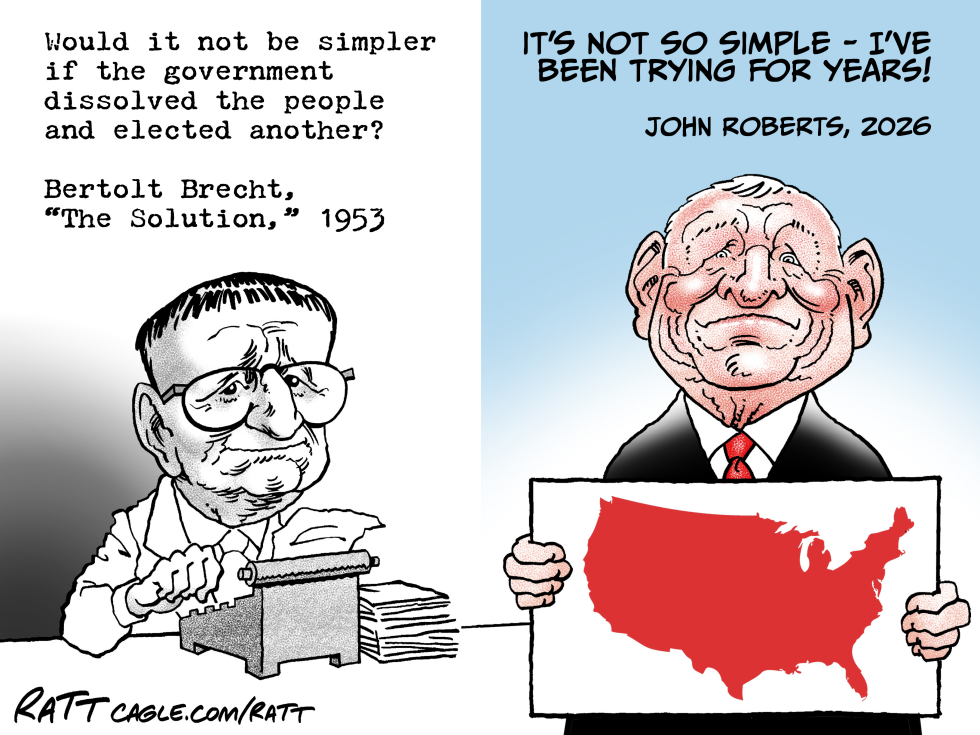
The May 2026 cartoon pairs a 1953 Bertolt Brecht quote with Chief Justice John Roberts holding a solid red United States map. It references ongoing disputes over the Voting Rights Act, gerrymandering, and the Louisiana v. Callais case ahead of the midterms.
Arend van Dam's cartoon shows a gray battleship marked USA, complete with guns and missiles, driven by a figure in a suit at the wheel, as it goes over a waterfall between rocky cliffs under a blue sky. The image captures the essence of strategy failure in the Strait of Hormuz, tying into themes of Iran, ayatollahs, war, battleship mishaps, Middle East conflicts, oil, gas, energy, and economy. Such visuals often poke at misguided military moves, where the ship's plunge represents a dramatic downfall in strategic planning. The dry humor lies in the absurdity of a warship treating a strait like a river rapid, underscoring potential economic fallout from regional tensions. Cartoons like this thrive on clear, exaggerated metaphors that resonate with readers familiar with global news.