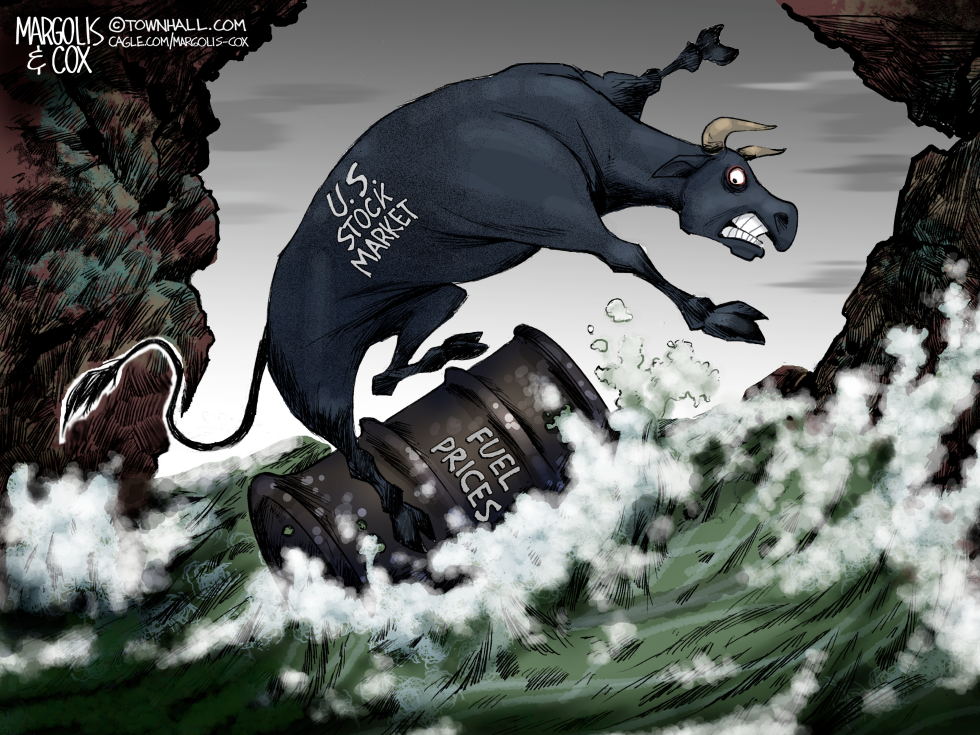
The cartoon shows a fierce black bull, emblazoned with 'U.S. Stock Market,' plummeting off jagged cliffs into a turbulent green sea where an oil barrel labeled 'Fuel Prices' tips over amid white foam. This visual packs a punch on how rising fuel prices can drag down the bull market, touching on economy, stocks, oil, prices, portfolio, and market tags. It's a classic setup: the bull charges ahead but hits the wall of energy costs, splashing into chaos. Editors see these often, where financial optimism meets harsh commodity realities, making it relatable for readers watching their investments swirl in the currents.
Bruce Plante's cartoon depicts a typical American driver at a gas station, his purple car parked under the canopy, as he reacts with censored profanity to a coin-operated viewer. The sign reads 'TO SEE GAS PRICES DEPOSIT 25¢,' cleverly satirizing how #HighGasPrices have soared beyond easy visibility, like distant sights needing magnification. The man's USA shirt and coffee cup add a relatable everyman touch, emphasizing consumer shock. This piece fits into ongoing #FuelCosts debates, blending #InflationHumor with #EconomicSatire. Plante's style, straightforward and punchy, targets #EnergyPrices and their impact on daily life, making it shareable for #PoliticalCartoons enthusiasts. The dry humor underscores the absurdity without overstatement, a hallmark of syndicated work.
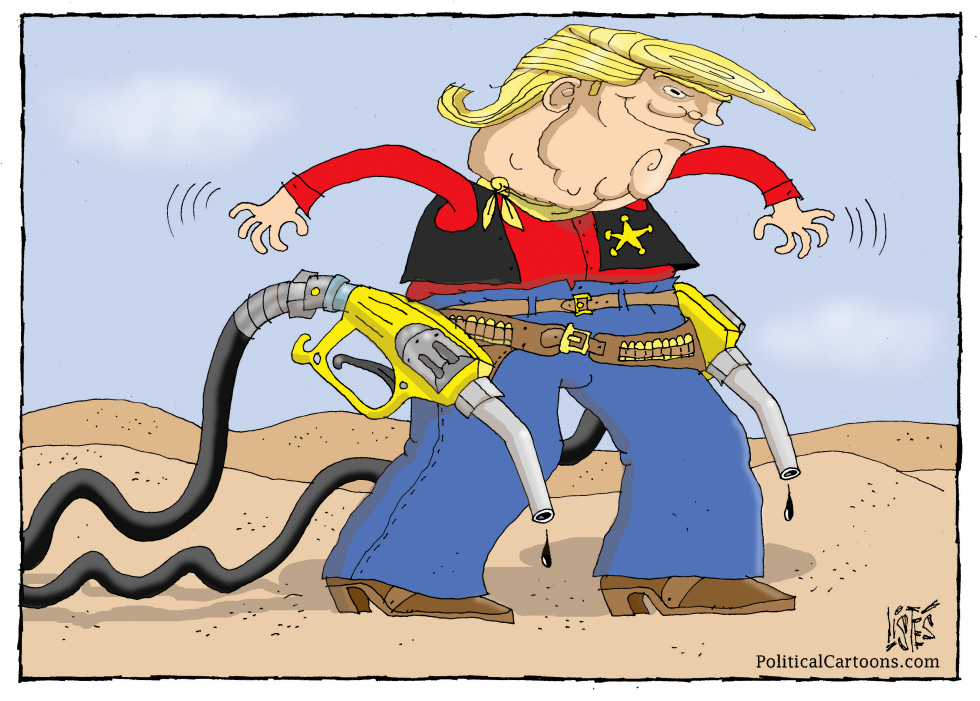
The March 2026 cartoon depicts President Trump as a sheriff in a desert landscape with a gas pump hose attached to his body. Fuel drips from the nozzle onto the sand while the long hose trails behind. The image responds to ongoing concerns over global oil supplies and potential disruptions tied to Iran. Publication occurs during heightened attention to energy markets and U.S. foreign policy in the Middle East.
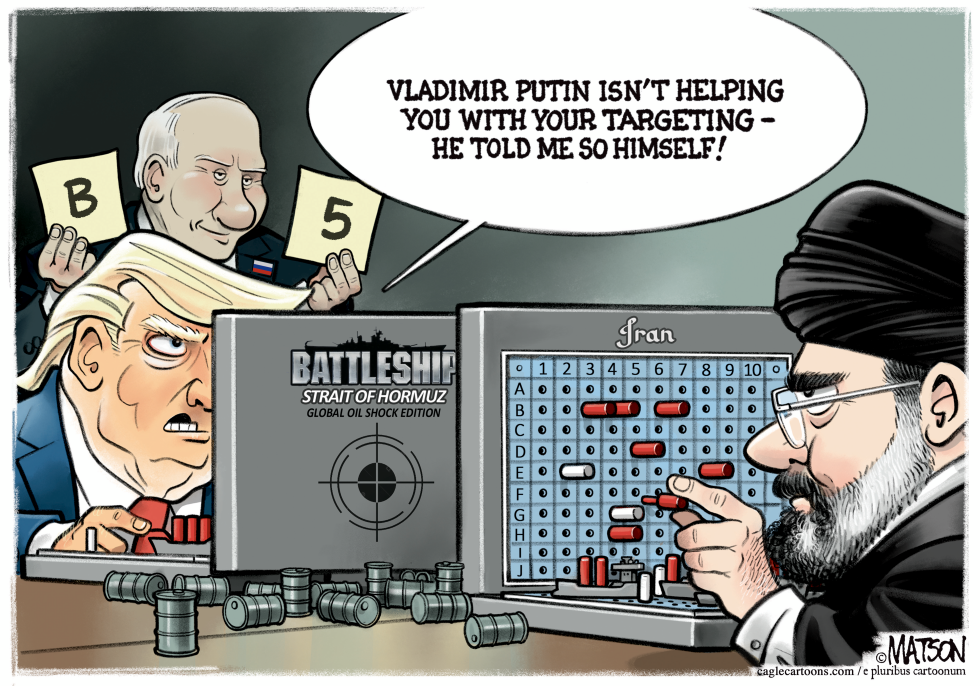
The cartoon shows Donald Trump, Vladimir Putin and Iran's Ayatollah Khamenei engaged in a Battleship match themed around the Strait of Hormuz and global oil shock. Putin holds B5 cards while denying help to Iran on targeting US assets, reflecting recent reports of Russian-Iranian military coordination and risks to international shipping and energy markets as of March 2026.
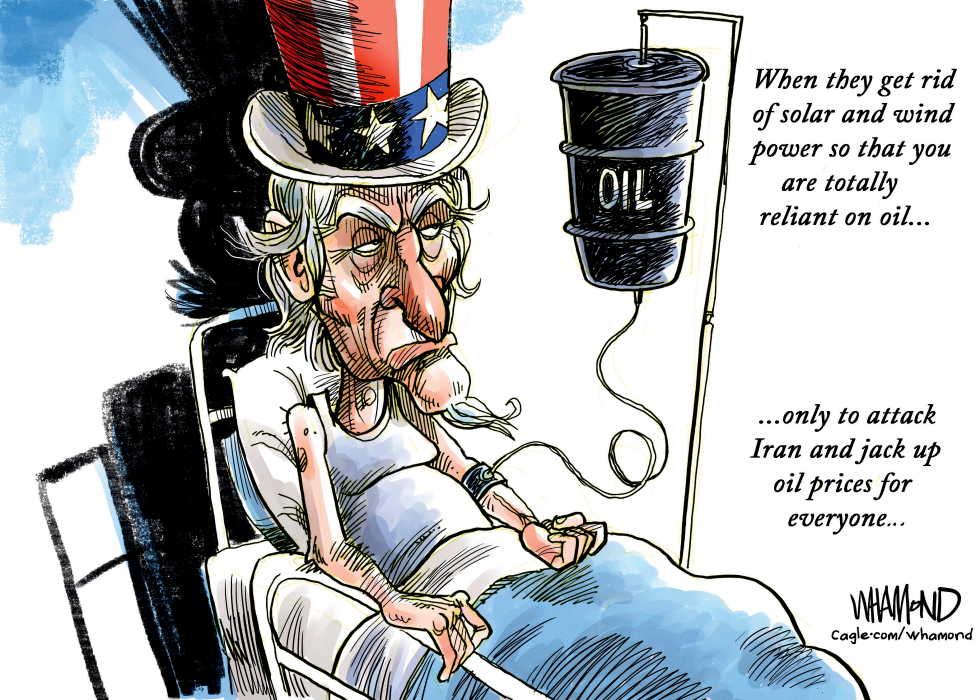
The cartoon depicts Uncle Sam as an elderly patient in a hospital bed receiving an intravenous drip from an oil barrel. Text on the right panel criticizes the decision to eliminate solar and wind power initiatives, leaving the country reliant on oil, only for an attack on Iran to drive up prices for everyone.
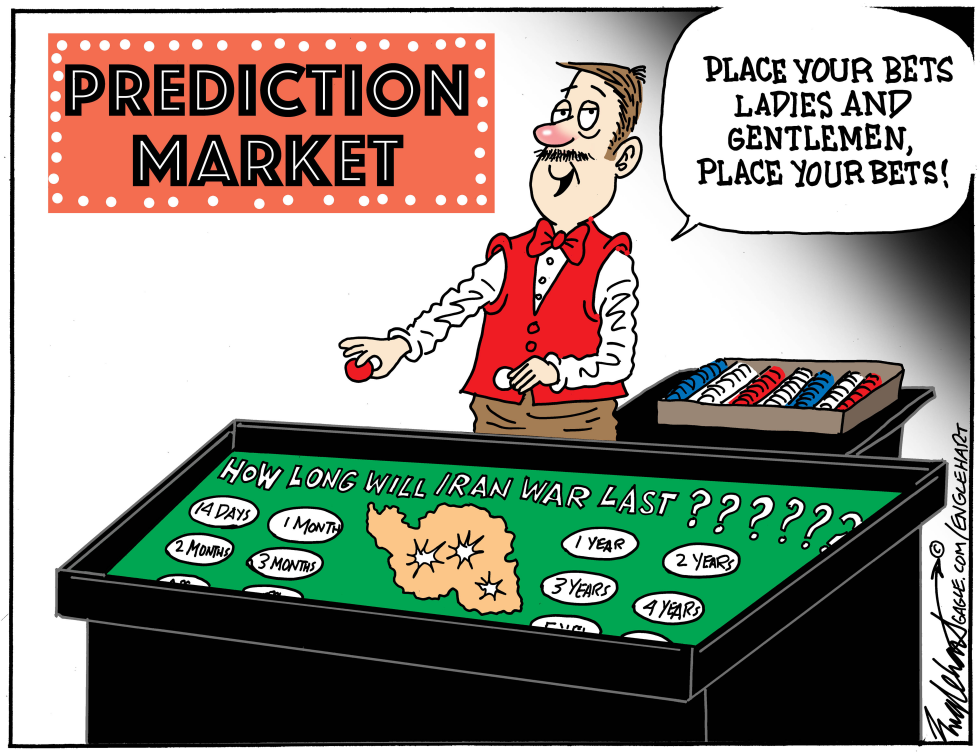
In a biting political cartoon, a smirking croupier oversees a prediction market table shaped like Iran, complete with explosion graphics, where punters can wager on war duration options ranging from 14 days to 5 years. This satirical take skewers the commodification of geopolitical betting, turning grave matters like Iran war into casino-style gambles. By blending elements of gambling on war with Middle East conflict, the artwork highlights the absurdity of prediction markets applied to real-world crises, offering humorous yet insightful commentary on how society speculates on political humor and potential catastrophes. The irreverent style underscores the folly of treating war length wager as just another market fluctuation.
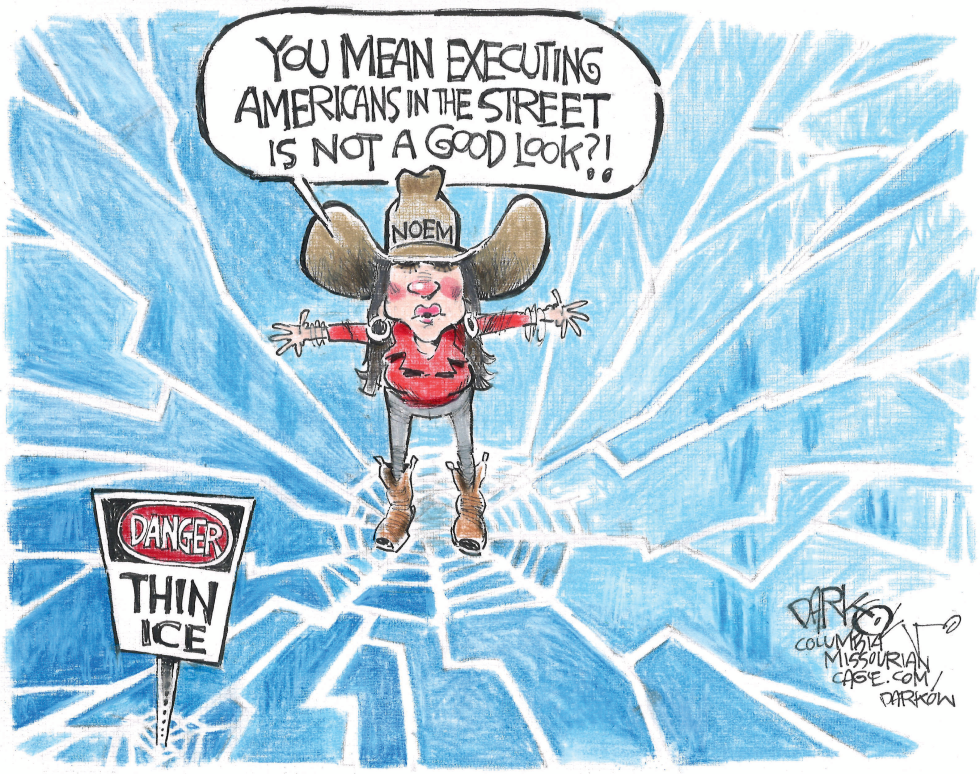
This Kristi Noem cartoon captures the South Dakota governor in a precarious position on thin ice, her hat emblazoned with 'NOEM' as she incredulously asks if executing Americans in the street isn't a good look. The image, a sharp political satire, alludes to the ongoing presidential immunity debates surrounding Donald Trump, where his allies like Noem find themselves on shaky ground. With the 'DANGER THIN ICE' sign prominently featured, the artwork highlights the risks of endorsing extreme views on executive power. Amid Noem's own memoir backlash involving her dog-killing anecdote, this thin ice metaphor amplifies the GOP backlash she's facing. The humorous political art style underscores the absurdity, making it a viral cartoon potential hit. Overall, it's a biting commentary on conservative politics satire in American discourse.
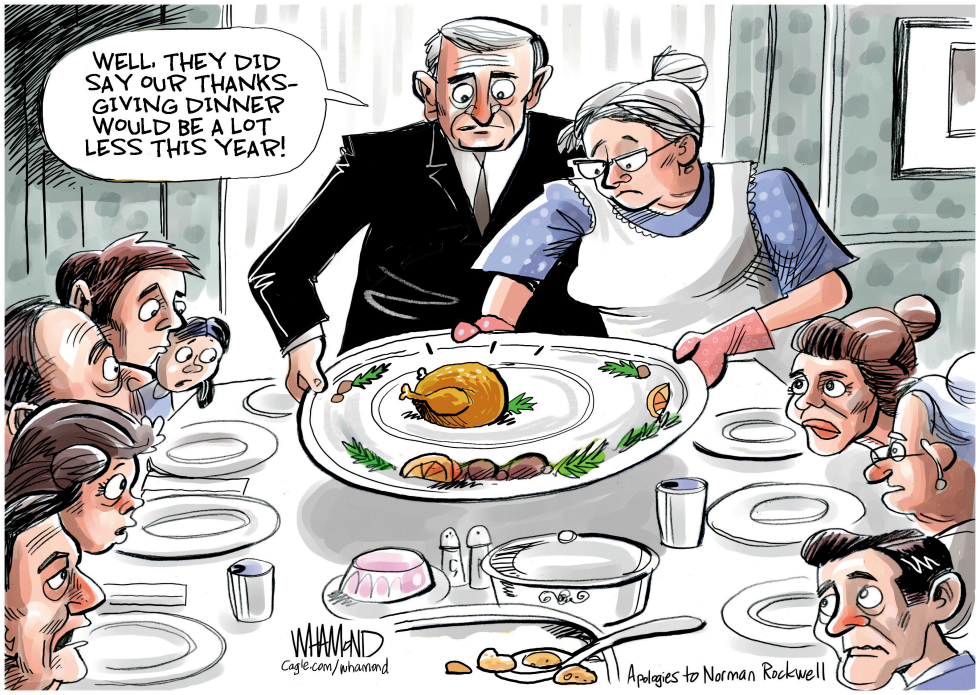
A political cartoon depicts a family Thanksgiving dinner where an elderly couple presents a tiny turkey on a large platter to surprised relatives. The scene parodies a classic Norman Rockwell painting. A speech bubble notes that the meal would be a lot less this year. The image addresses concerns over high grocery prices, inflation and proposed tariffs on food imports. It reflects ongoing debates about affordability and consumer costs as of November 2025.