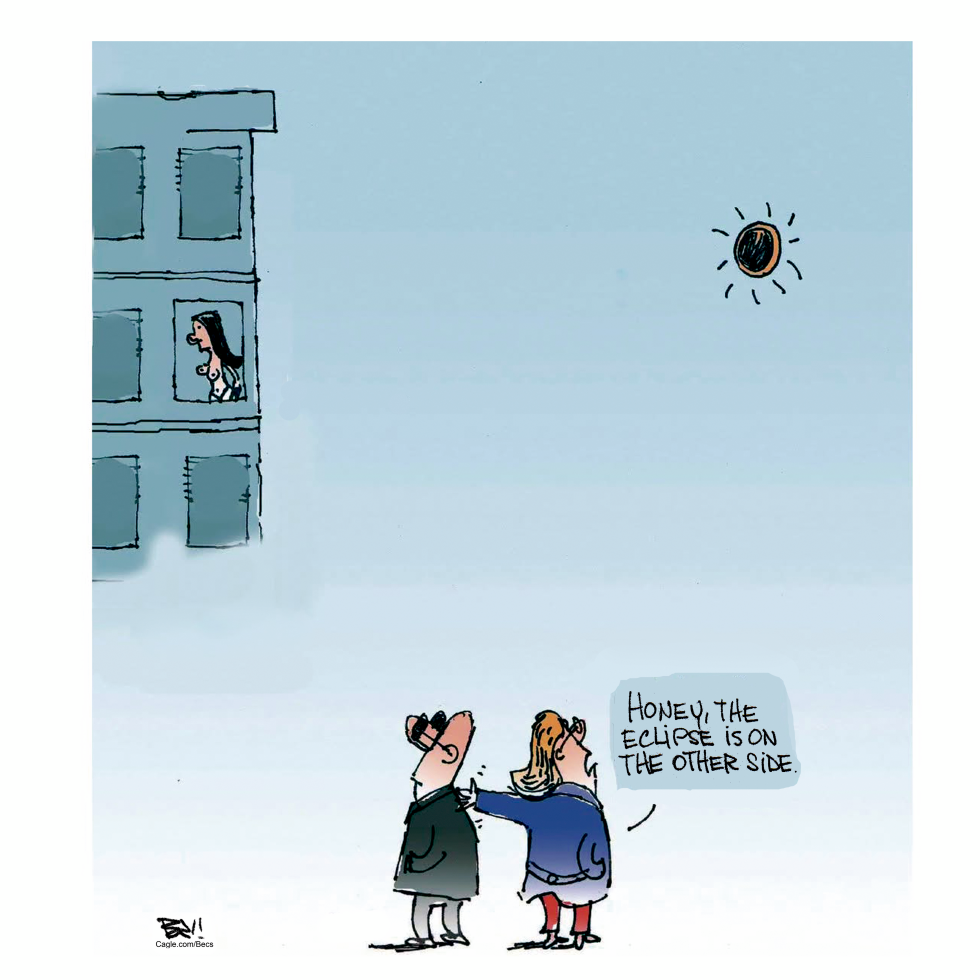
A domestic scene plays out around a simple pun on eclipses and visible marks. The exchange highlights everyday relationship dynamics where one party redirects attention from an apparent injury. The piece presents the interaction without broader political framing.
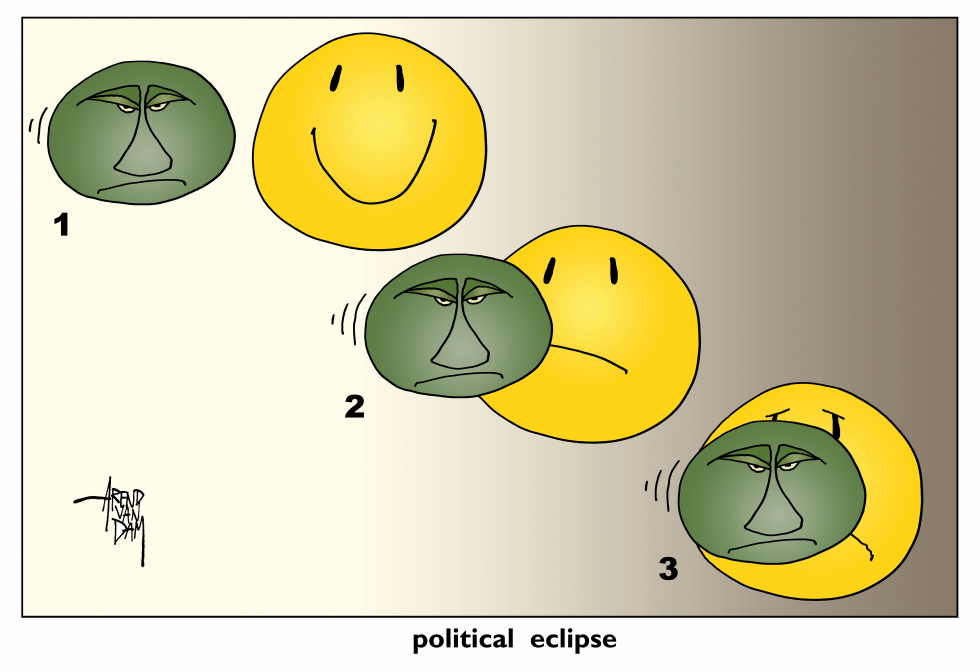
A political figure represented by a green frowning face progressively covers a yellow smiling face across three labeled stages. The interaction illustrates one presence gaining dominance while diminishing the other. The piece comments on the dynamics of political competition and shifting influence between rivals.
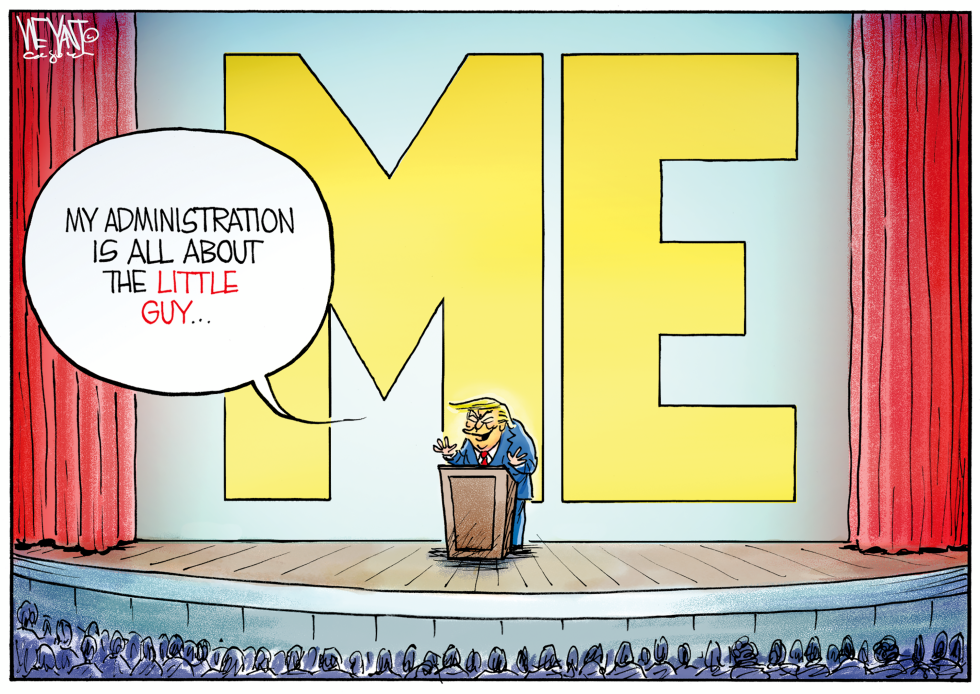
Donald Trump has repeatedly positioned his administration as champion of ordinary Americans during public addresses. The claim comes amid ongoing debates over policy priorities and personal branding in the White House. The piece portrays the rhetoric as centered on the speaker rather than the public.
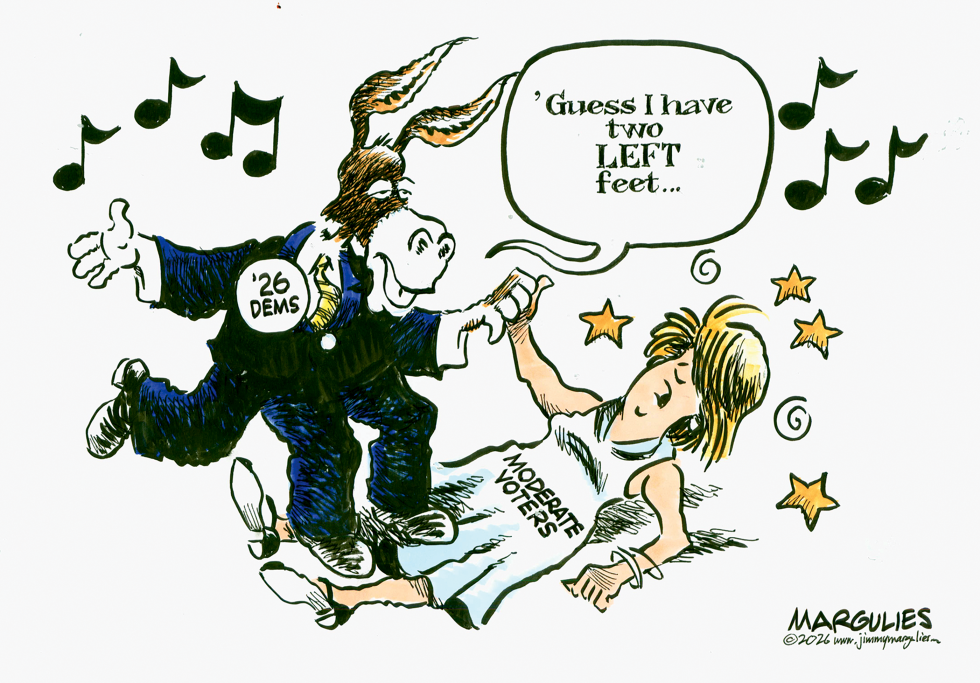
Democrats heading into the 2026 midterms face internal pressure to energize their base with progressive policies, yet this risks further distancing moderate voters essential for broader electoral success. The party has advanced left-leaning positions on issues like spending and social policy in recent cycles. Critics argue this approach prioritizes ideological purity over coalition building. The piece portrays the Democratic donkey as stepping on moderates while acknowledging its own missteps, highlighting the tension between base mobilization and centrist appeal.
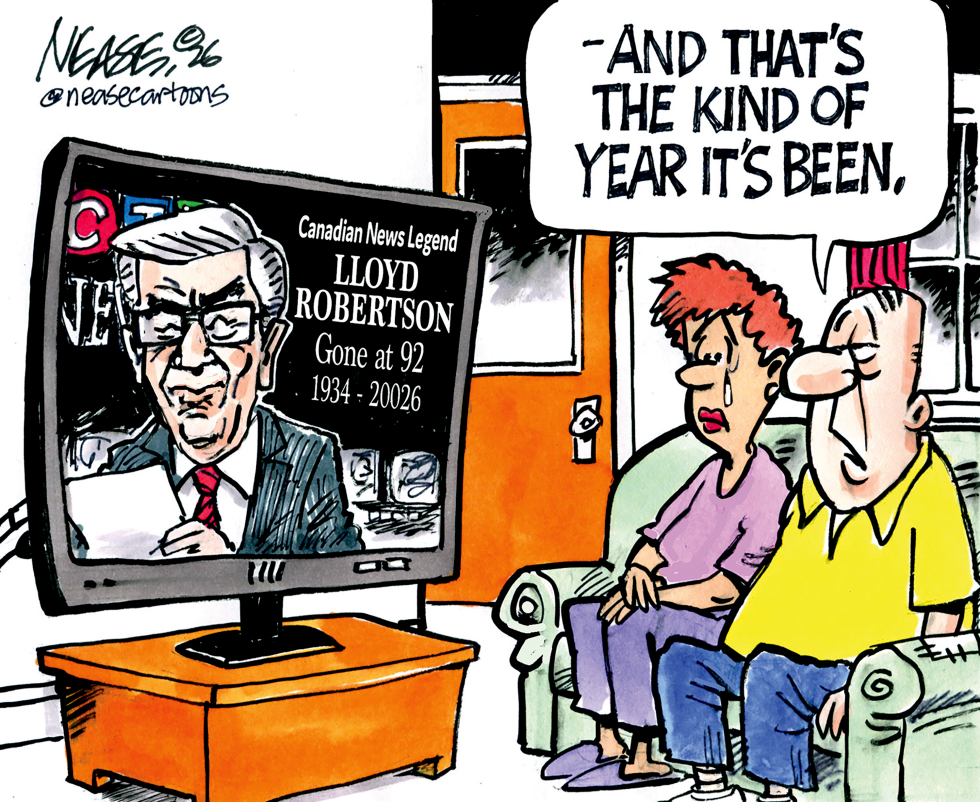
Canadian broadcasting icon Lloyd Robertson died in 2026 at age 92 after a long career as a news anchor. The announcement prompted widespread reflection on a year filled with notable passings and challenges. The editorial takes the position that such losses underscore the cumulative weight of difficult events.
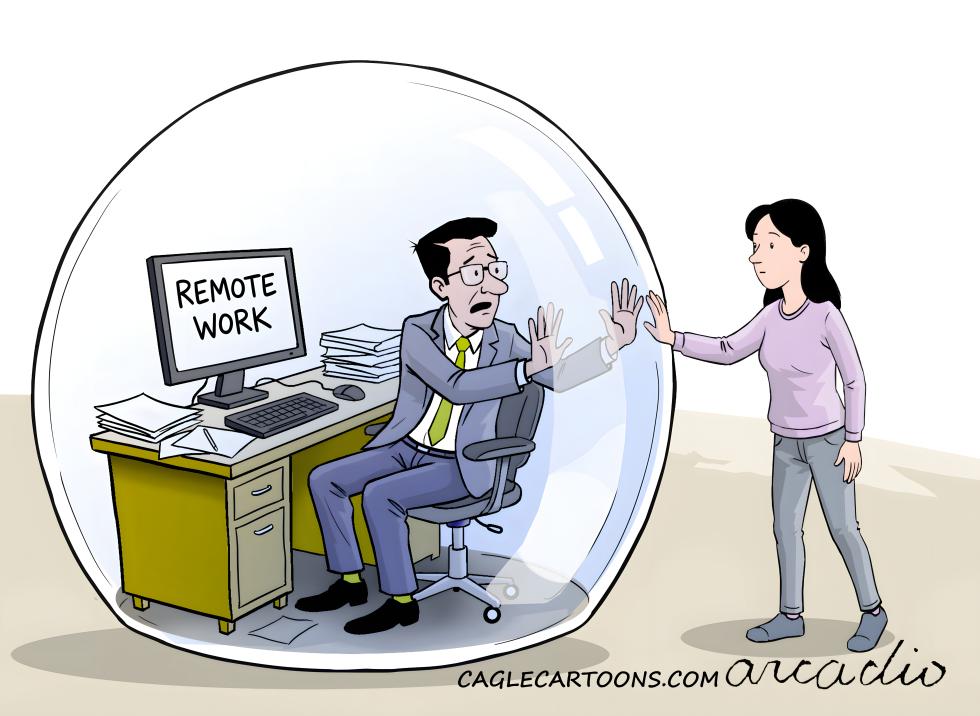
Remote work arrangements have expanded rapidly since the pandemic, allowing employees to perform duties from home but raising concerns about reduced collaboration and social connection in offices. The piece responds to ongoing debates over hybrid schedules and their impact on workplace culture. It takes the position that remote setups create artificial barriers that separate workers from direct human interaction and shared reality.
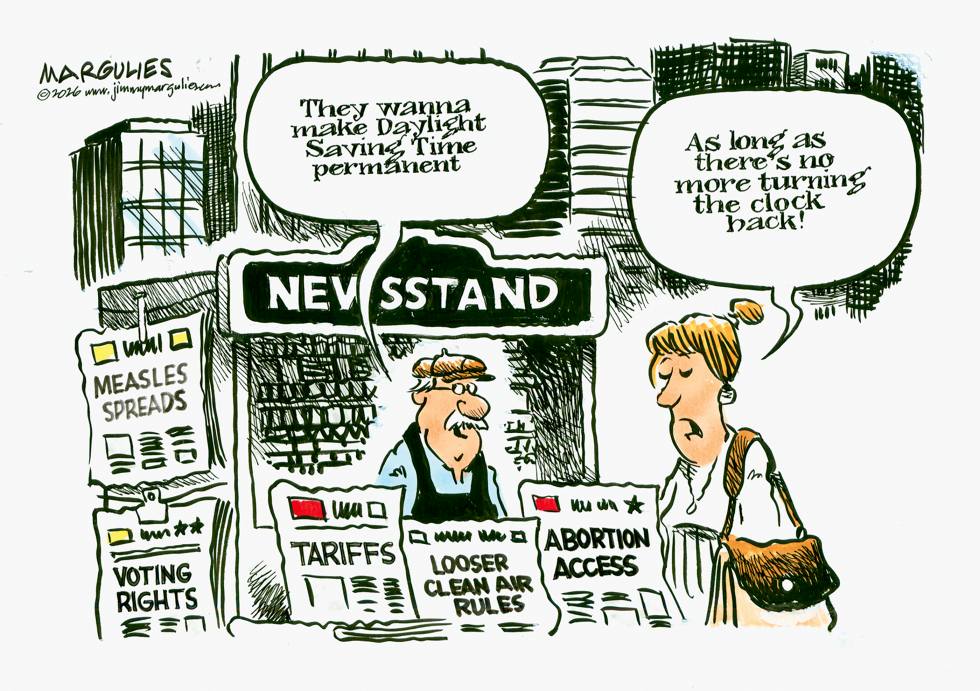
Proposals to make daylight saving time permanent coincide with debates over tariffs, abortion access, voting rights and environmental rules. The cartoon frames these as part of a broader pattern of policy shifts that some view as steps backward.
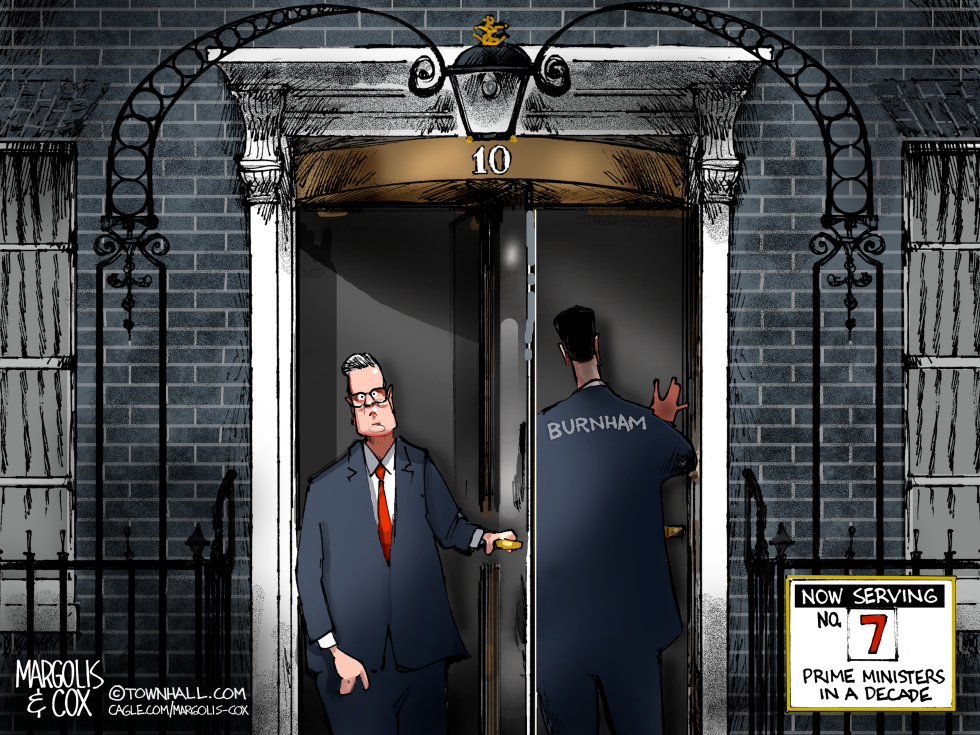
Keir Starmer exits the revolving door at 10 Downing Street while Andy Burnham enters from the opposite side. Starmer wears a dark suit with a red tie and glasses. Burnham has his name printed on the back of his jacket. A sign in the corner reads now serving number seven prime ministers in a decade. The image shows rapid leadership turnover at the United Kingdom government headquarters. It responds to ongoing political instability marked by multiple changes in the prime minister position over the past ten years, with the latest transition from Starmer to Burnham continuing the pattern of short tenures in the role.
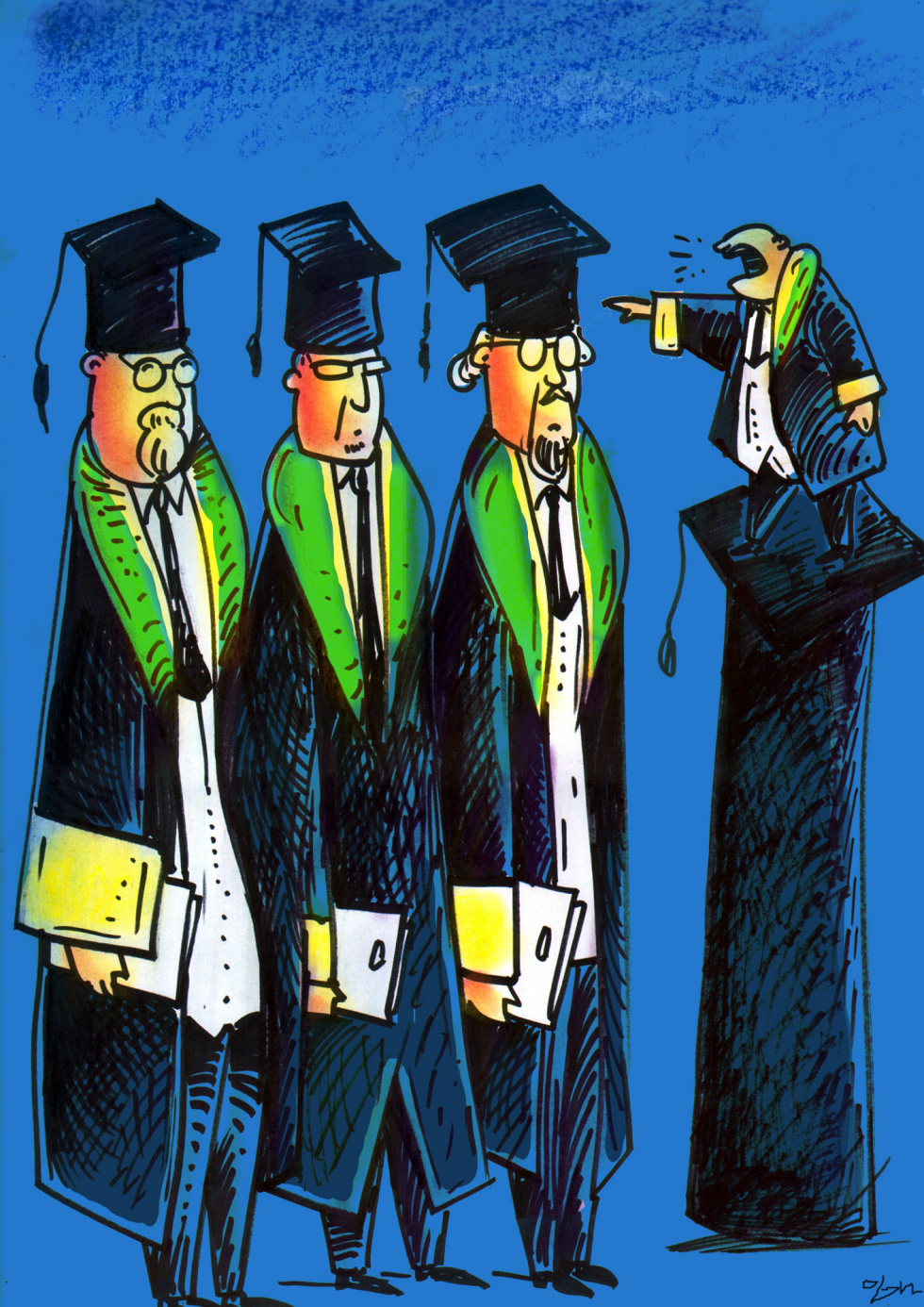
A university ceremony draws attention as an official delivers pointed remarks to administrators in academic attire. The exchange highlights ongoing tensions over leadership accountability and campus governance. The piece portrays the speaker as assertive in pressing the group on their responsibilities.
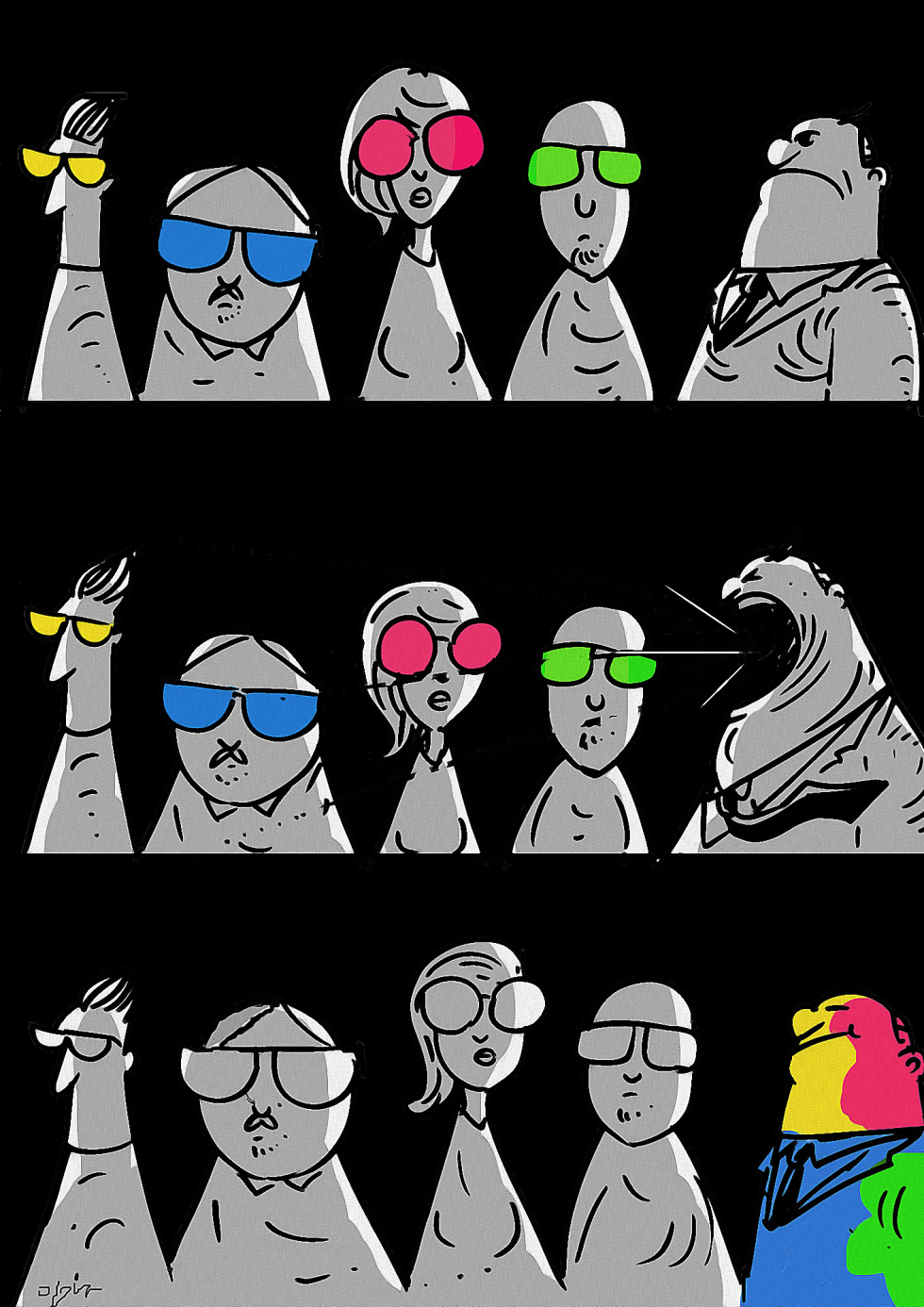
A series of panels depicts rows of figures wearing sunglasses in varying hues. The images suggest that personal filters shape what people see and react to. The final panel introduces a multicolored figure that stands apart from the rest. The work comments on how individual perspectives diverge even within similar groups. It highlights the contrast between uniform appearances and sudden breaks in pattern.
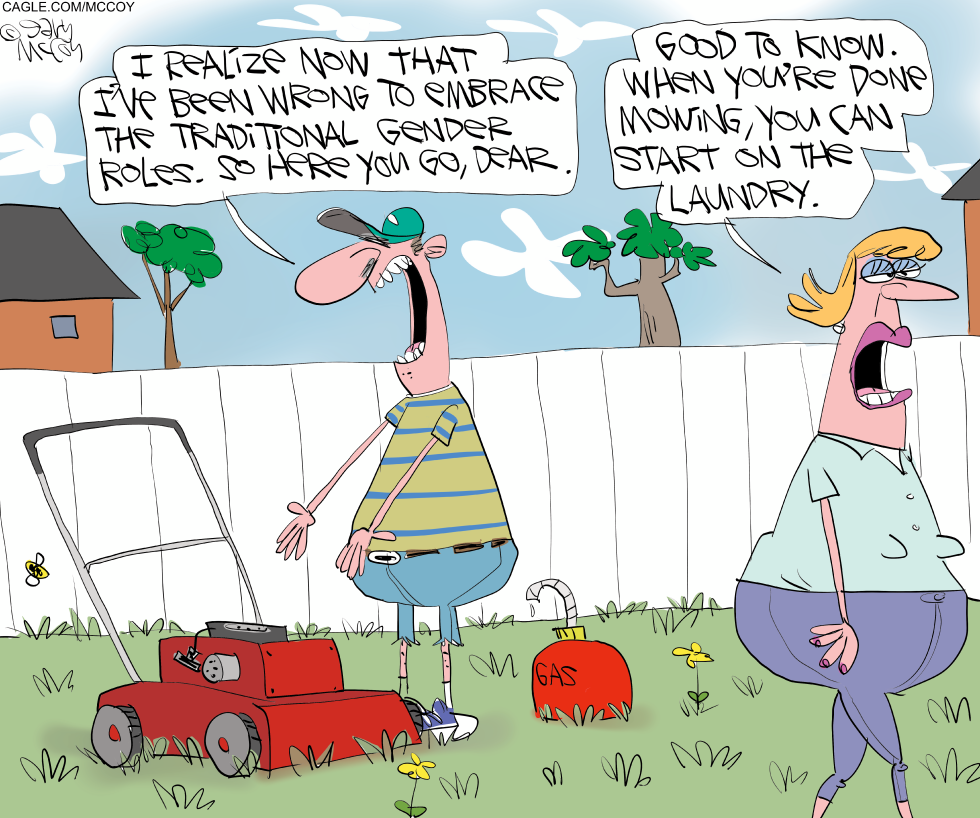
A man publicly rejects traditional gender roles and hands over the lawn mower in a suburban backyard. The woman responds by directing him to laundry afterward. The piece highlights ongoing cultural friction over household task divisions and expectations around gender.
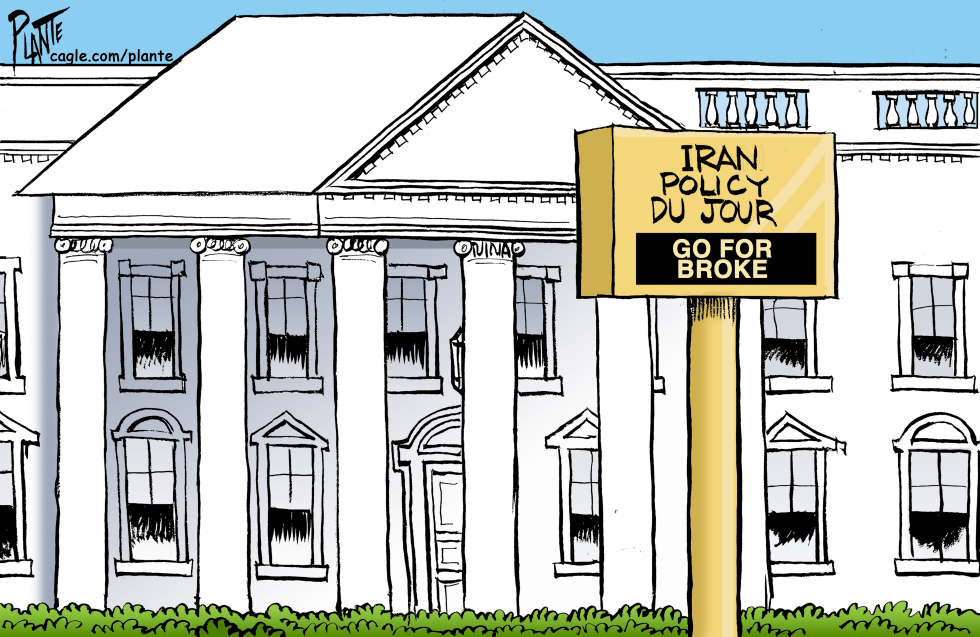
The White House has signaled a more aggressive posture toward Iran through public messaging that emphasizes risk-taking. The move comes amid persistent tensions over nuclear issues and regional influence. The editorial takes the position that such an approach lacks consistency and invites unnecessary escalation.
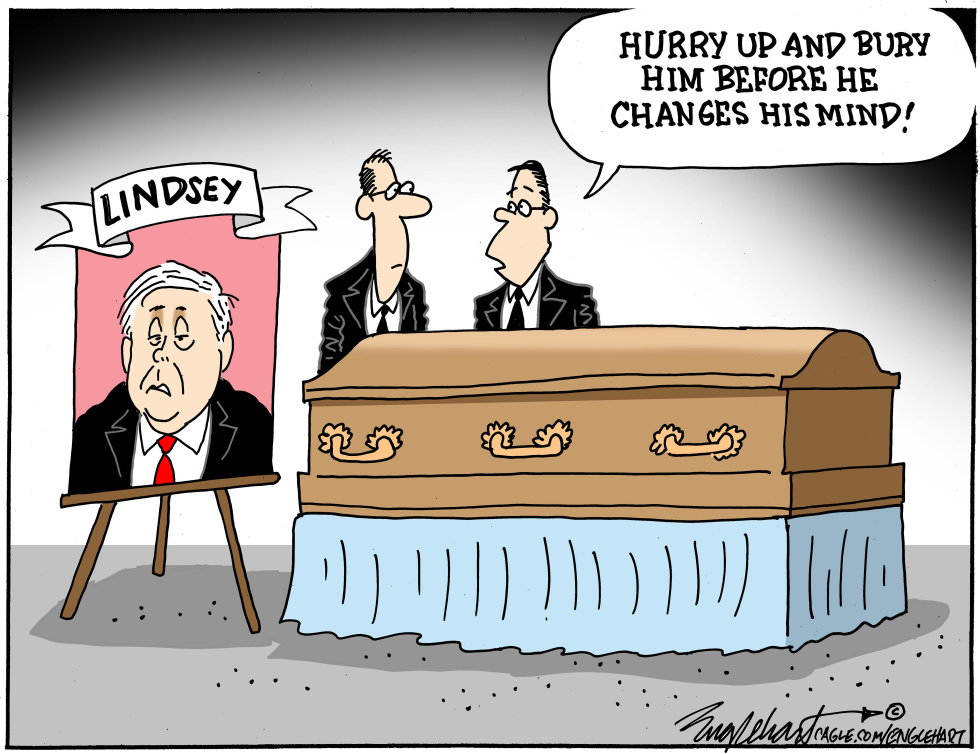
A portrait labeled Lindsey sits on an easel beside a casket while two men in dark suits stand behind it. One delivers a speech bubble line calling for a quick burial before the deceased can change his mind. The July 2026 image uses the funeral setting to comment on political indecision.
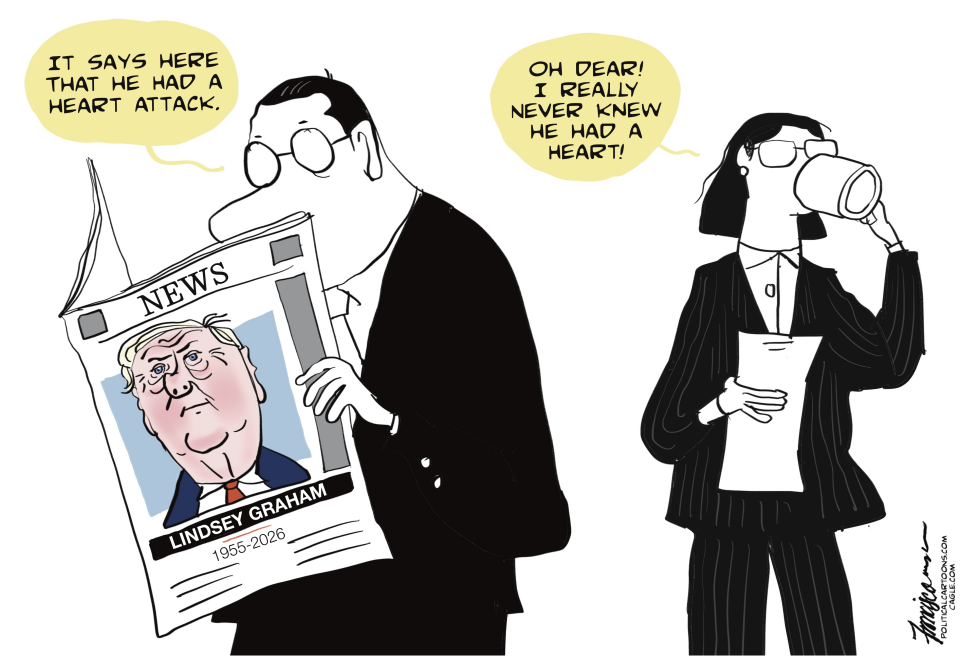
A political cartoon depicts a man reading a newspaper announcing the death of Sen. Lindsey Graham from a heart attack in 2026. A woman standing nearby responds with a pun, stating she never knew he had a heart. The image uses the obituary format and the double meaning of the word heart to highlight perceptions of the senator's demeanor.
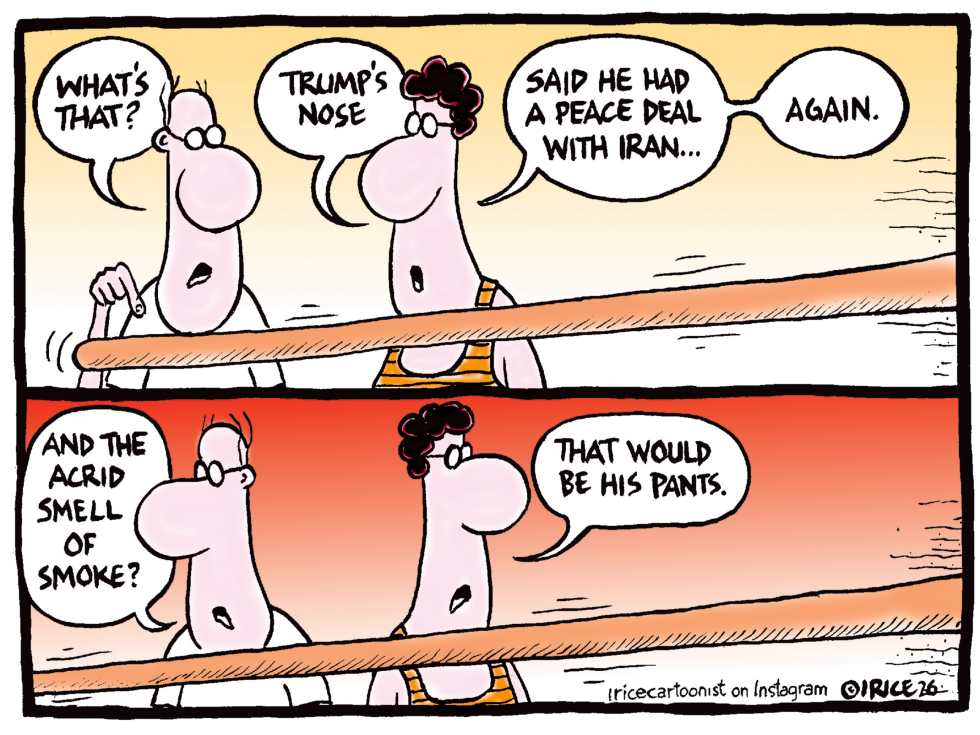
Two figures stand at a railing and react to news of a Trump peace deal with Iran. The first points out an odd smell while the second attributes it to burning pants. The exchange occurs in two stacked panels with speech bubbles capturing the dialogue. The scene responds to recent claims about negotiations involving Iran. Publication occurred on June 26 2026.