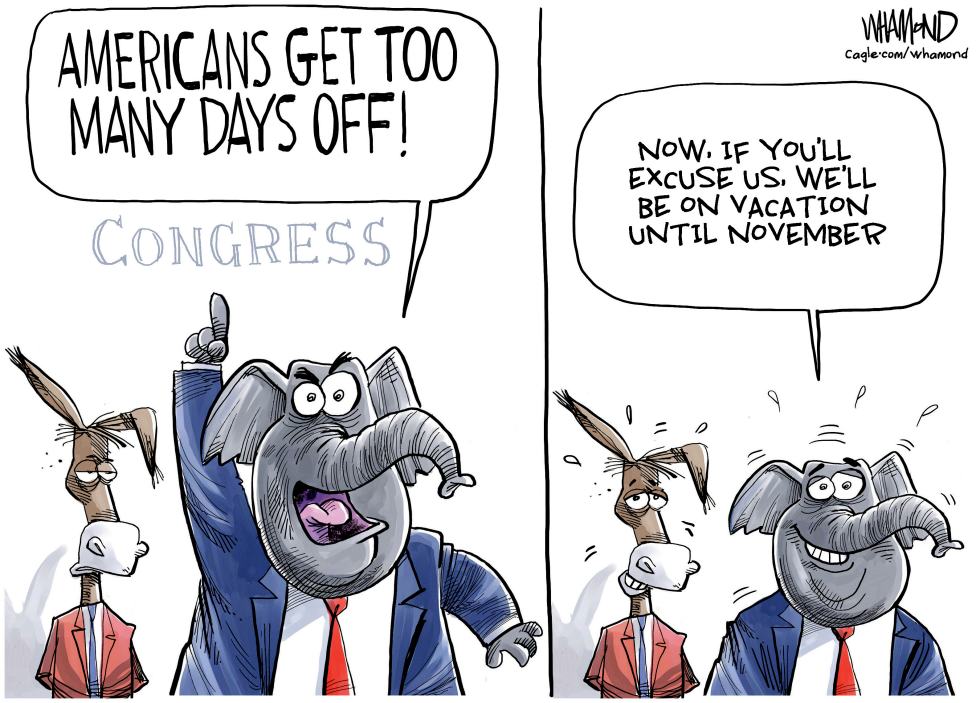
Congressional leaders from both parties have drawn criticism for lecturing American workers about taking too many days off while preparing to recess until November. The move comes as lawmakers face questions over productivity and priorities in an election year. The cartoon highlights the perceived double standard between public statements on labor and the actual schedule of elected officials.
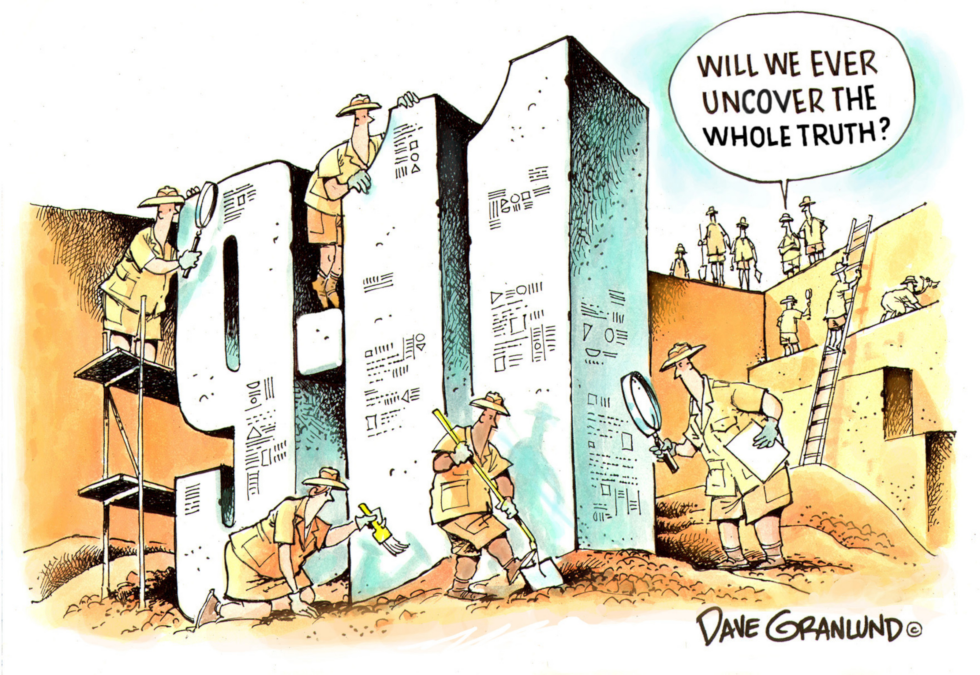
The cartoon by Dave Granlund depicts a team of archaeologists carefully excavating massive stone structures shaped like the numerals 9 and 11. Workers use magnifying glasses, brushes and shovels to examine inscriptions on the surfaces. A speech bubble from one figure asks whether the whole truth will ever be uncovered. The image responds to persistent questions about the September 11 attacks and the completeness of official accounts. It frames the topic as an ongoing historical dig rather than a settled event. The publication date of September 7 2026 places the work near the 25th anniversary of the attacks.
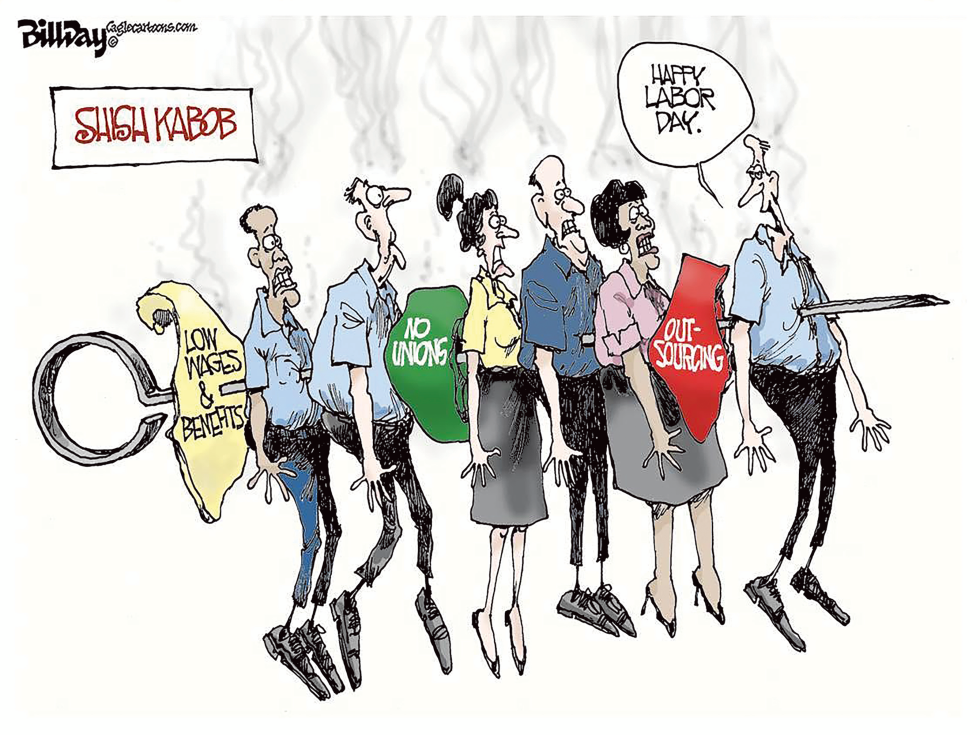
On Labor Day 2026, American workers continue to confront stagnant wages, union suppression, and widespread outsourcing that erode job security and benefits. These pressures persist amid corporate strategies that prioritize cost-cutting over employee welfare. The cartoon argues that such practices turn the holiday into a grim reminder of labor's weakened position rather than a celebration of worker gains.
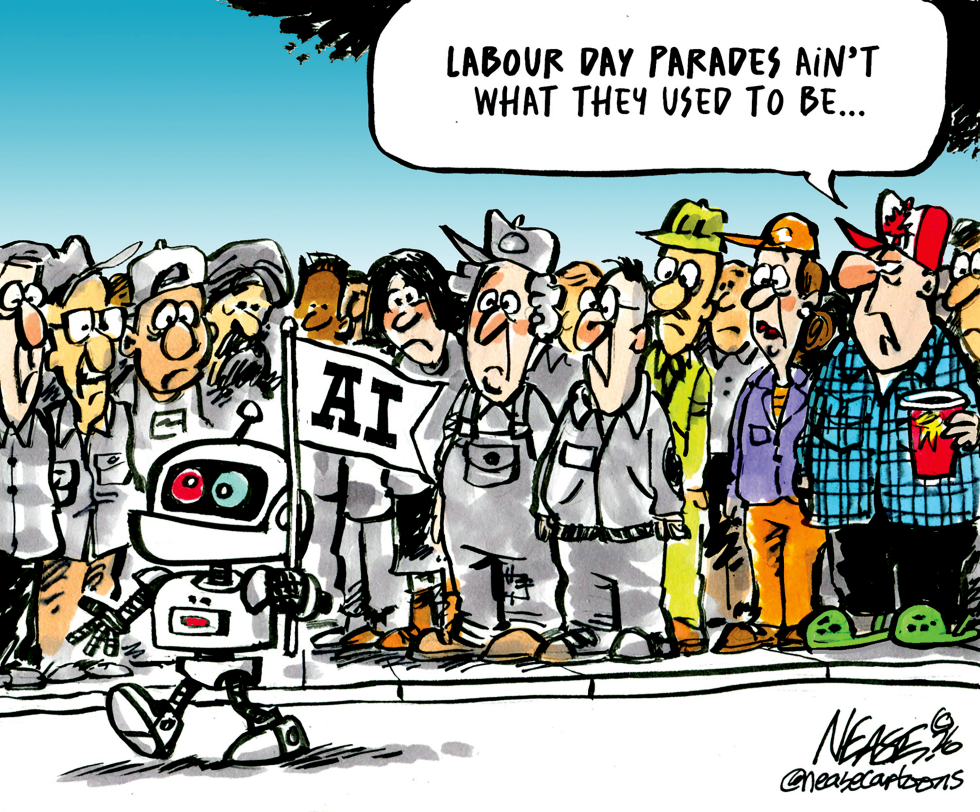
On Labour Day 2026, artificial intelligence continues its rapid integration into workplaces across Canada and beyond, prompting questions about job security for human workers. The cartoon captures this transition by placing a robot at the head of a traditional parade. The editorial position highlights the irreversible change automation brings to labor traditions and employment.
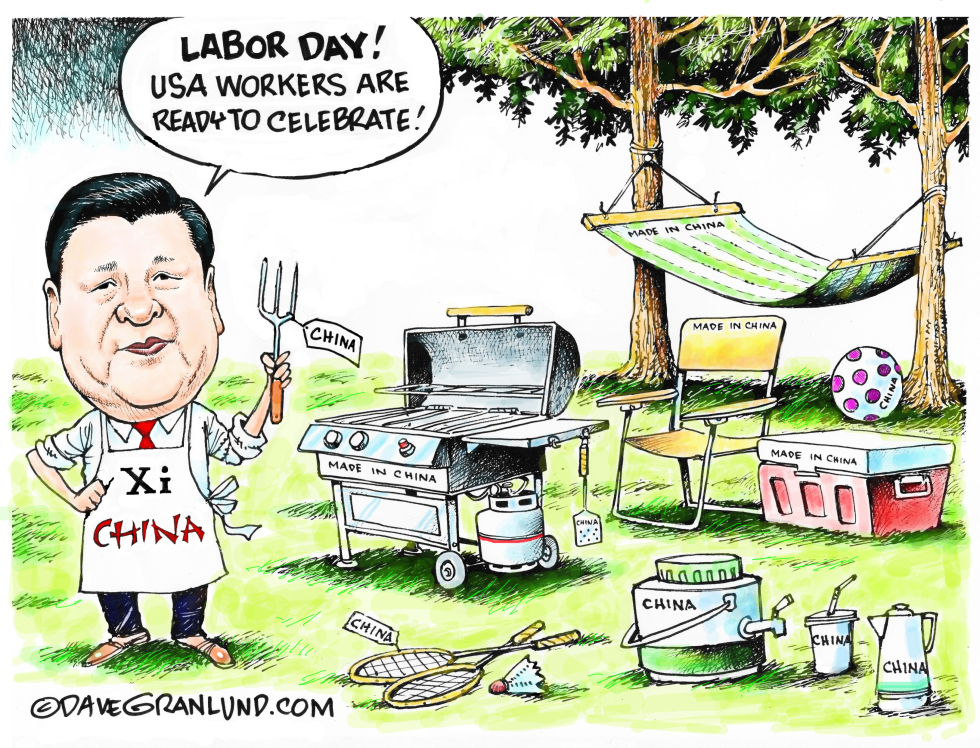
The cartoon shows Chinese President Xi Jinping dressed as a chef at a Labor Day barbecue. All picnic equipment including the grill, hammock, cooler and sports gear carries China labels. A speech bubble announces that US workers are ready to celebrate. The image responds to ongoing concerns about American dependence on Chinese manufacturing ahead of the holiday. It uses the barbecue setting to illustrate how everyday consumer products for US celebrations originate from China.
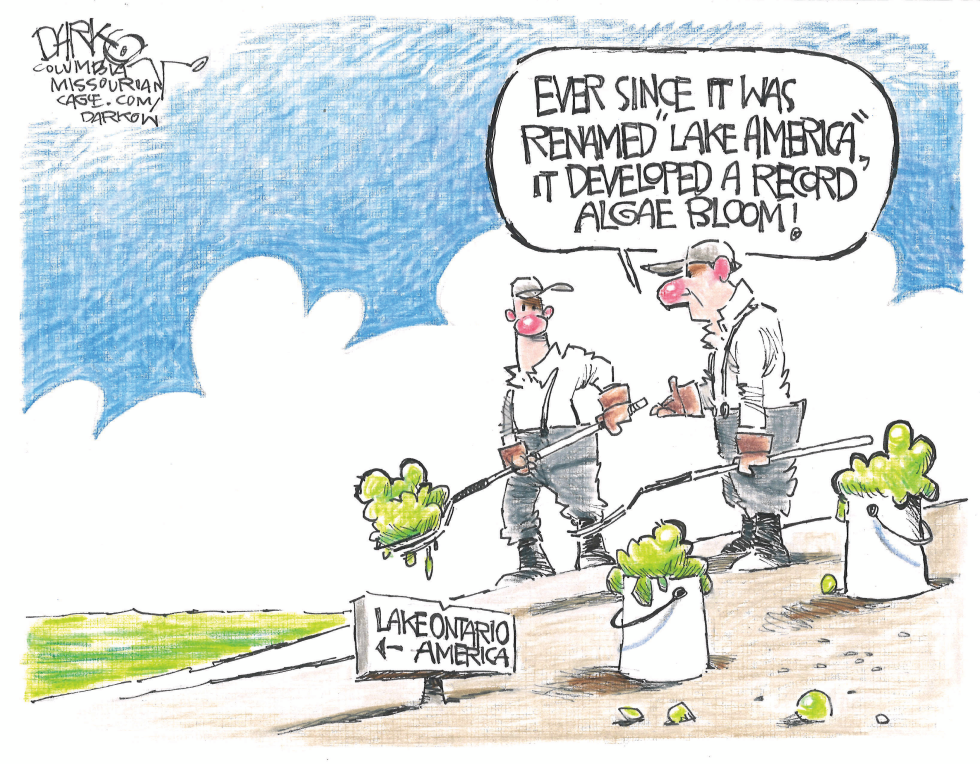
Workers clean a massive algae bloom from a lake recently renamed Lake America, formerly Lake Ontario. The outbreak follows the rebranding and draws attention to environmental conditions. The piece argues that superficial political gestures fail to address underlying ecological problems and may even coincide with worsening conditions.
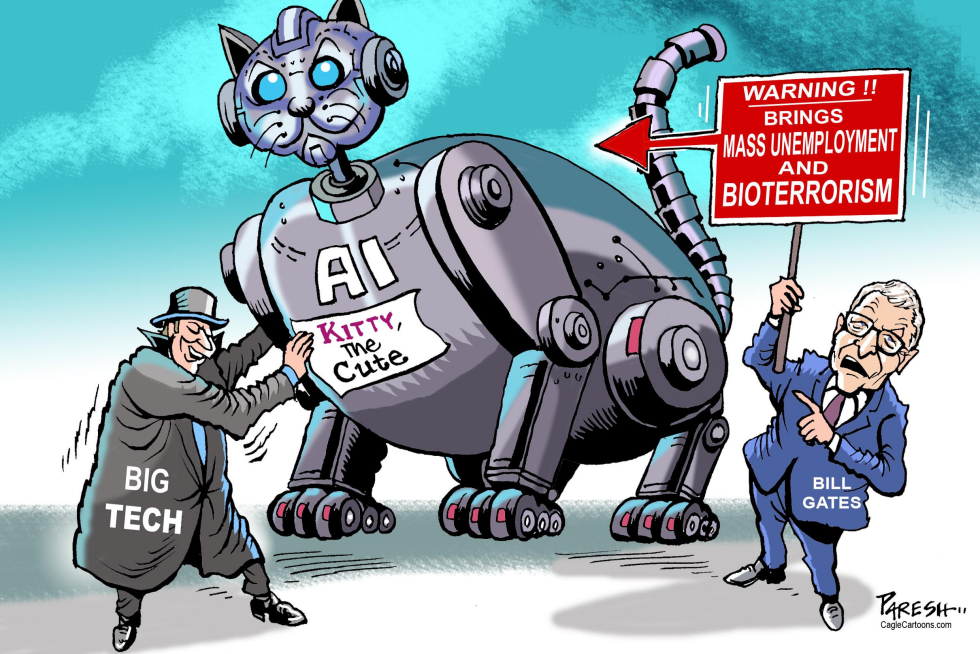
Bill Gates stands beside a large AI robot topped with a cat head while holding a sign warning of mass unemployment and bioterrorism. A Big Tech figure pushes the machine forward. The cartoon, published August 27, 2026, responds to ongoing debates about artificial intelligence safety and economic impacts. Gates has publicly discussed AI risks in recent years, including job displacement and potential misuse. The image contrasts industry enthusiasm with cautionary views on unchecked development. It highlights tensions between innovation and societal safeguards in the technology sector.
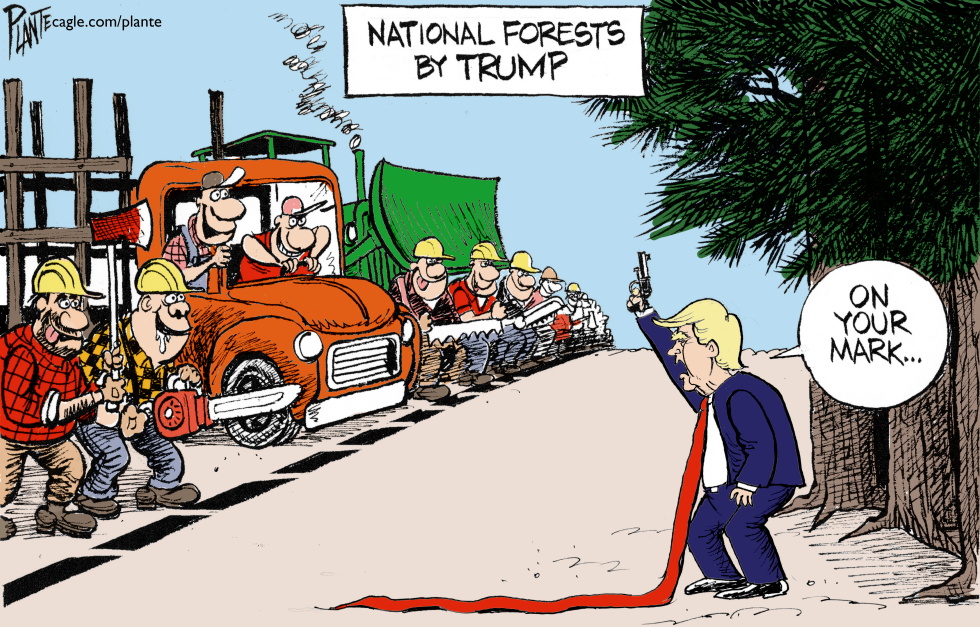
President Trump has directed expanded logging across national forests, ordering crews to begin timber harvests on federal lands. The move opens protected areas to commercial cutting under new administration policy. Critics argue the action prioritizes industry over conservation while supporters cite economic benefits and reduced wildfire risk. The cartoon depicts Trump firing the starting gun to launch the operations.
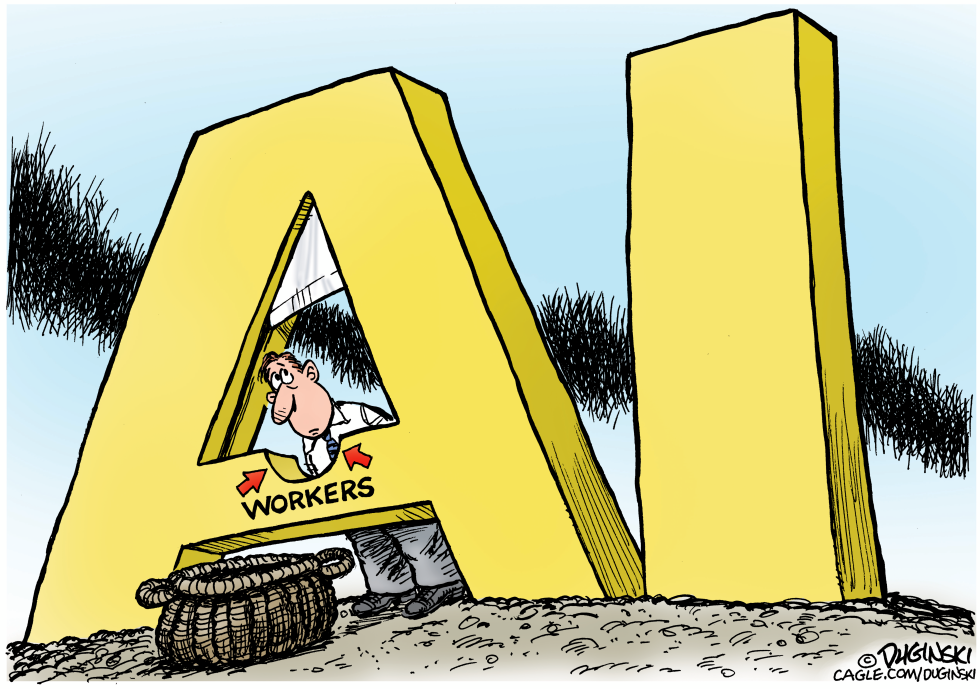
Workers fill positions inside a large letter A structure amid ongoing labor market shifts. The piece highlights the confined roles employees hold within major organizational frameworks.
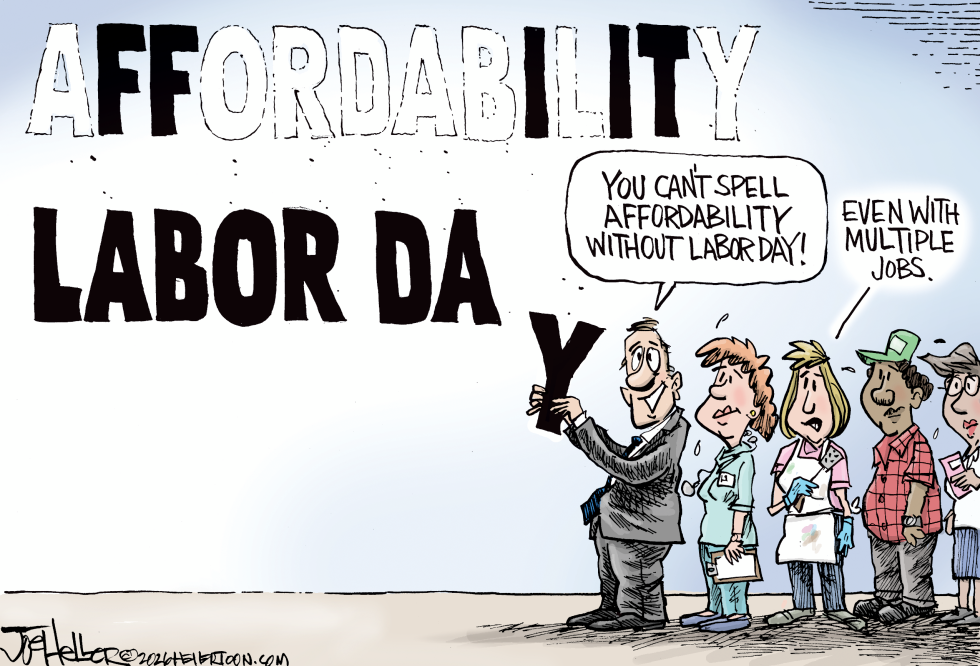
A cartoon published near Labor Day 2026 shows workers completing the phrase Labor Day while emphasizing that affordability depends on labor. The piece argues that workers juggling multiple jobs remain central to economic stability and cost-of-living concerns.
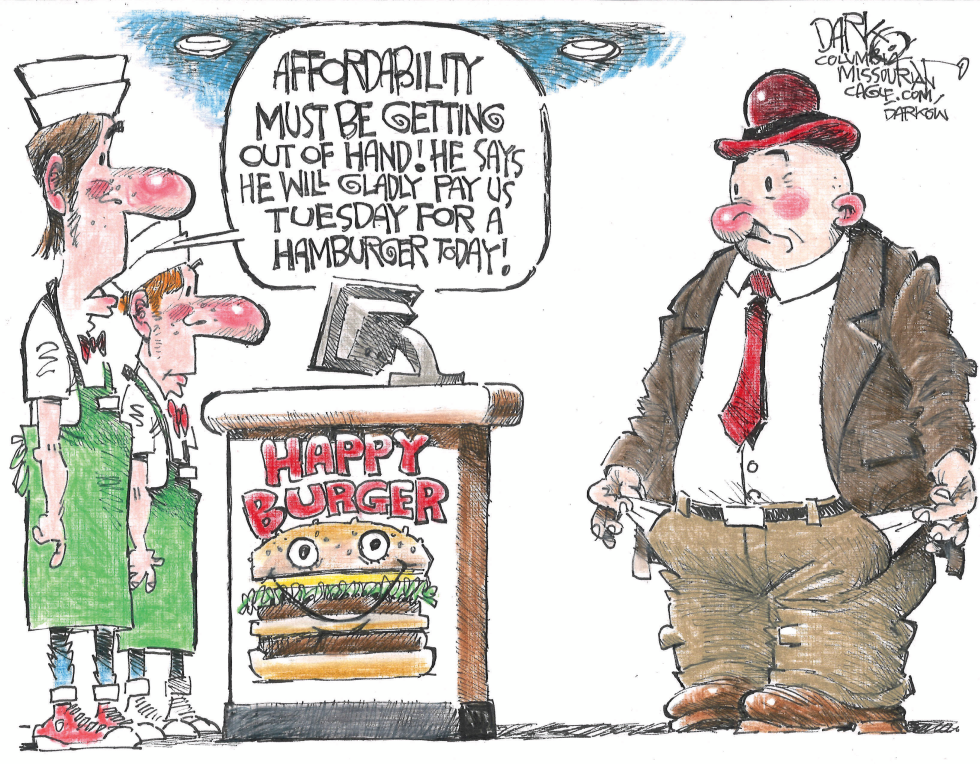
Rising living costs continue to strain household budgets across the country as consumers delay payments and stretch resources. The situation reflects persistent pressure on everyday purchases like meals. The piece takes the position that such affordability challenges have become so widespread they invite classic cultural comparisons to underscore the frustration.
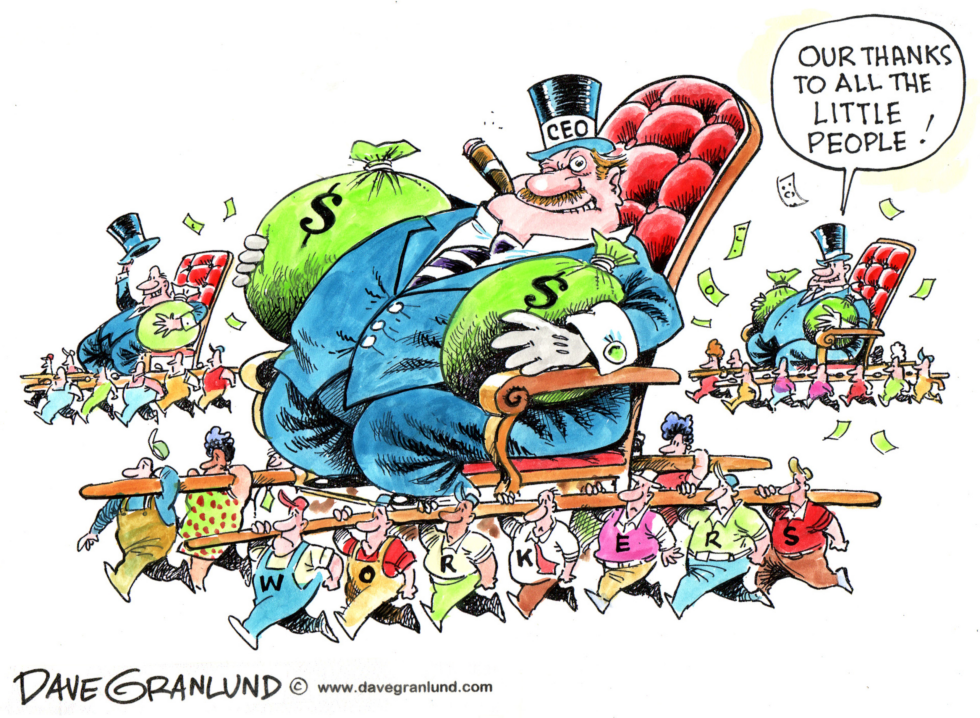
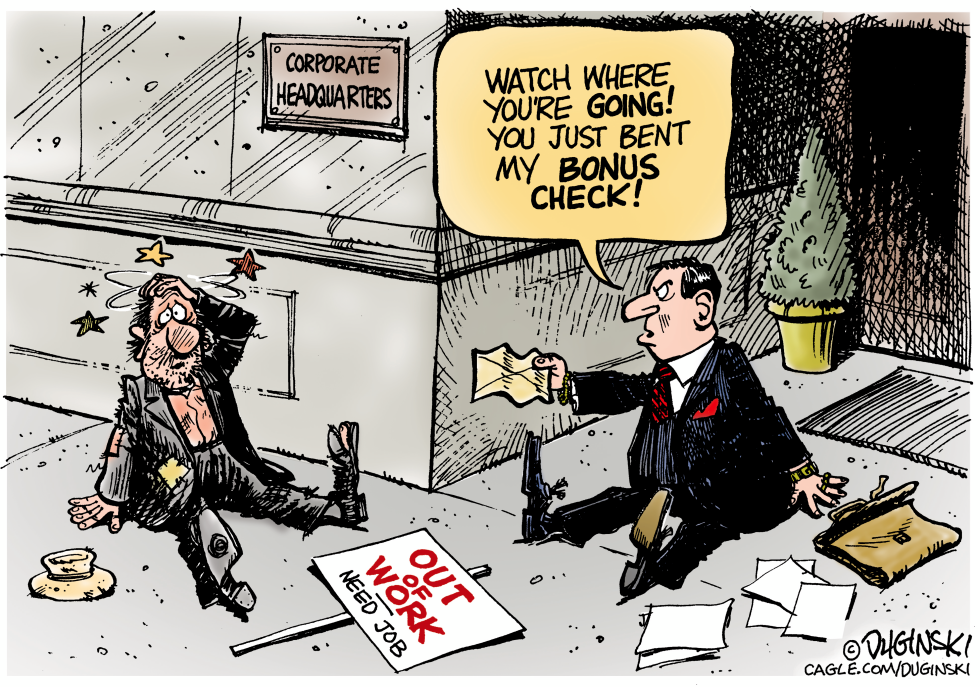
Corporate executives continue to receive large bonuses even as layoffs persist across sectors. The piece responds to ongoing debates over executive compensation packages during periods of workforce reduction. It takes the position that such bonuses appear disconnected from the realities facing displaced employees.
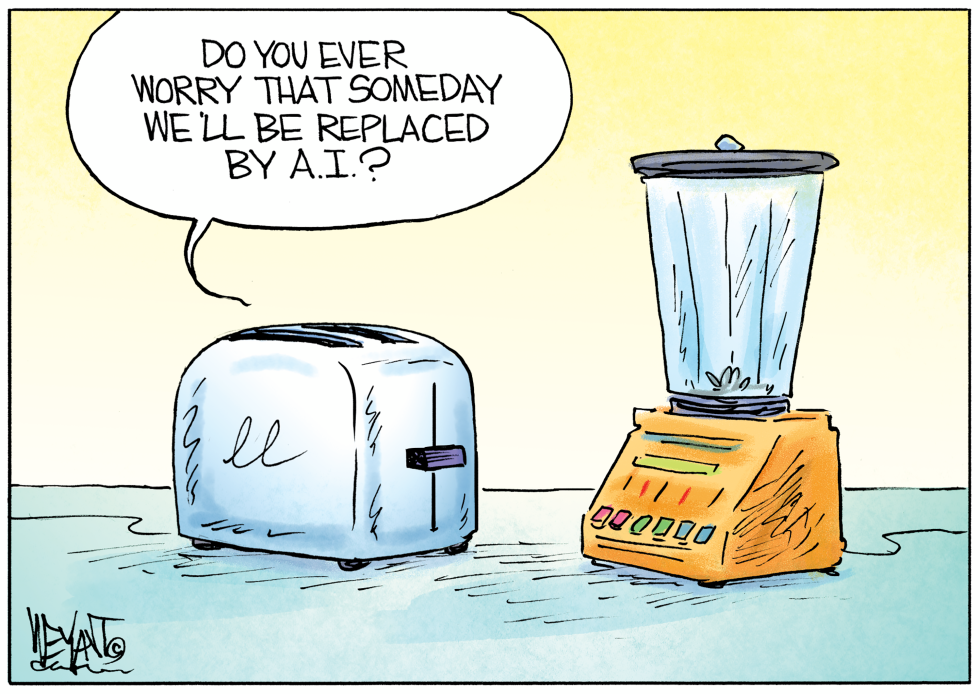
Anxiety about artificial intelligence replacing human work has spread across industries. The piece responds to widespread uncertainty over which roles automation will absorb next. It treats the worry as universal enough to reach even household appliances.
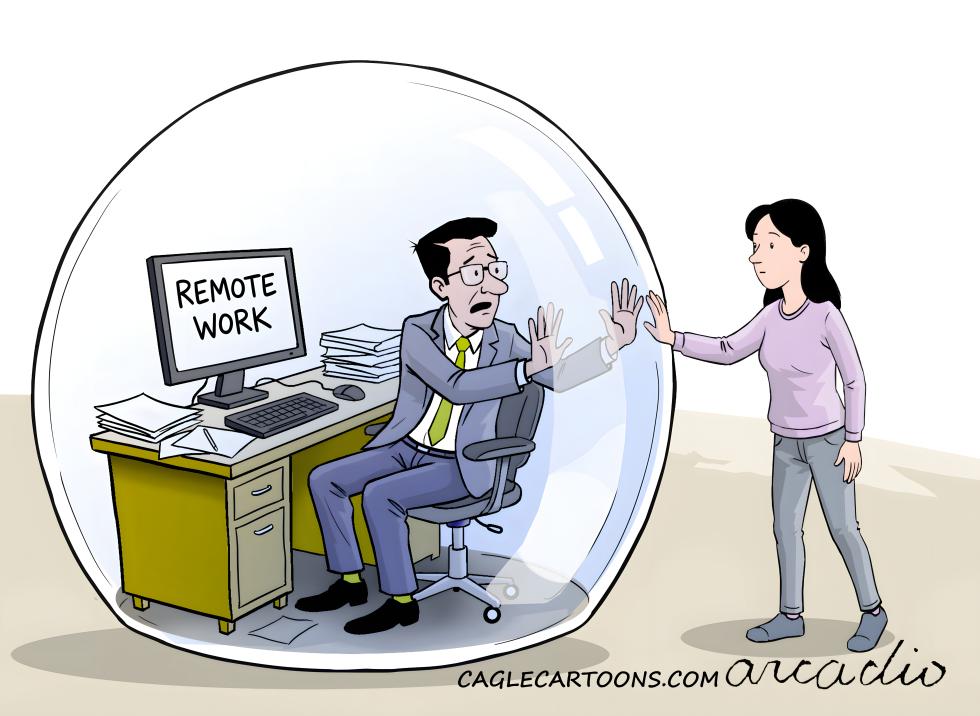
Remote work arrangements have expanded rapidly since the pandemic, allowing employees to perform duties from home but raising concerns about reduced collaboration and social connection in offices. The piece responds to ongoing debates over hybrid schedules and their impact on workplace culture. It takes the position that remote setups create artificial barriers that separate workers from direct human interaction and shared reality.