Ed Sheeran has removed Macklemore from his tour lineup. The cartoon frames the replacement as the Pink & Ginger Genocide Tour. The piece criticizes the decision as prioritizing commercial interests over artists who speak out on Gaza.
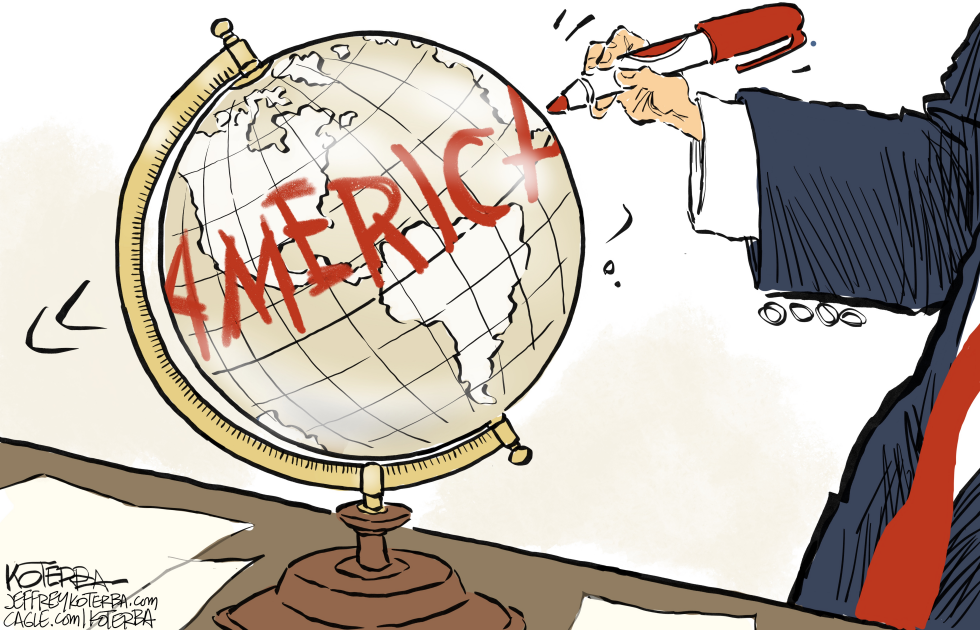
On September 14, 2026, President Trump was depicted altering a globe by crossing out America and writing 4merica. The move reflects ongoing efforts to center his personal brand on national symbols. The cartoon criticizes the action as an exercise in self-promotion that distorts global perspective.
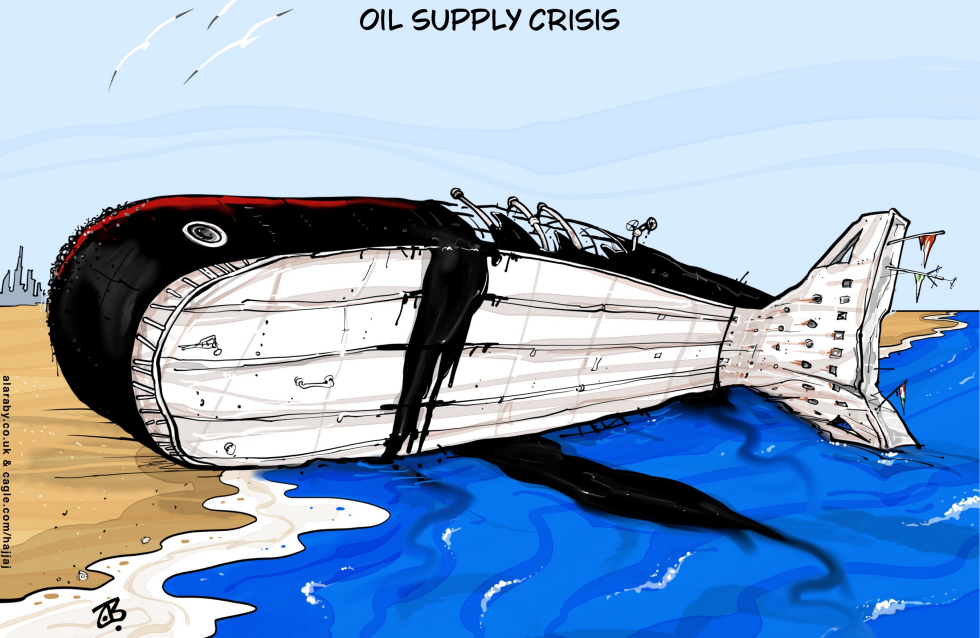
A major oil tanker has run aground, disrupting supply routes and releasing crude into coastal waters. The incident underscores vulnerabilities in global energy transport networks that rely on aging or poorly maintained vessels. Such events can spike fuel prices and trigger immediate cleanup costs for affected regions. The cartoon frames the grounding as a direct cause of the broader supply crisis rather than an isolated accident. It points to systemic weaknesses in oversight and infrastructure that allow one failure to cascade into wider shortages and ecological harm.
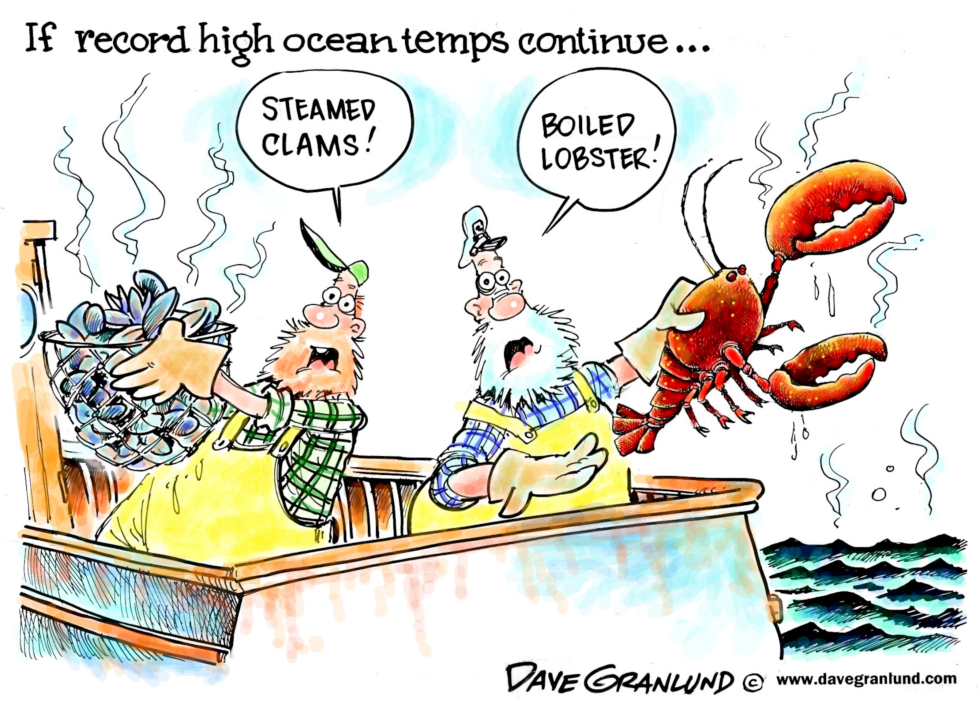
The cartoon depicts two fishermen on a boat reacting with surprise as clams and a lobster appear cooked by the surrounding seawater. Speech bubbles label the catch as steamed clams and boiled lobster. The title references record high ocean temperatures. This visual ties directly to ongoing concerns about marine heatwaves driven by climate change. Such conditions have been documented in recent years along the Northeast coast, affecting lobster and clam populations. The image highlights potential economic strain on fishing communities if trends continue.
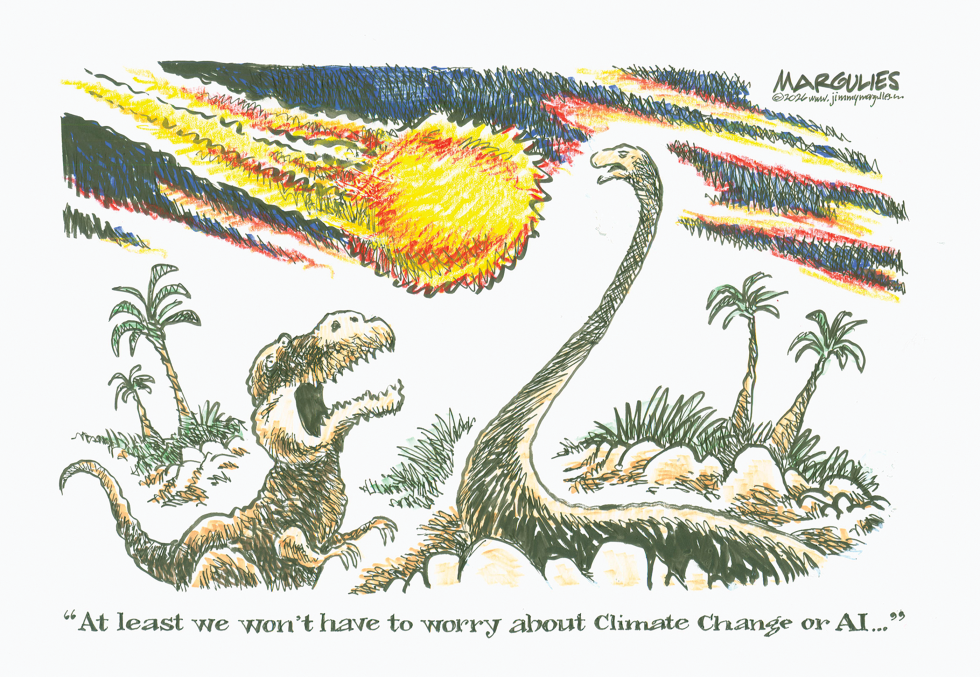
Public discourse continues to weigh the long-term dangers of climate change against emerging risks from artificial intelligence. The cartoon uses the dinosaur extinction event as a metaphor to highlight how current debates may pale against sudden catastrophic threats. It suggests that fixation on policy disputes over climate and technology overlooks the potential for abrupt, uncontrollable disasters that render such arguments moot.
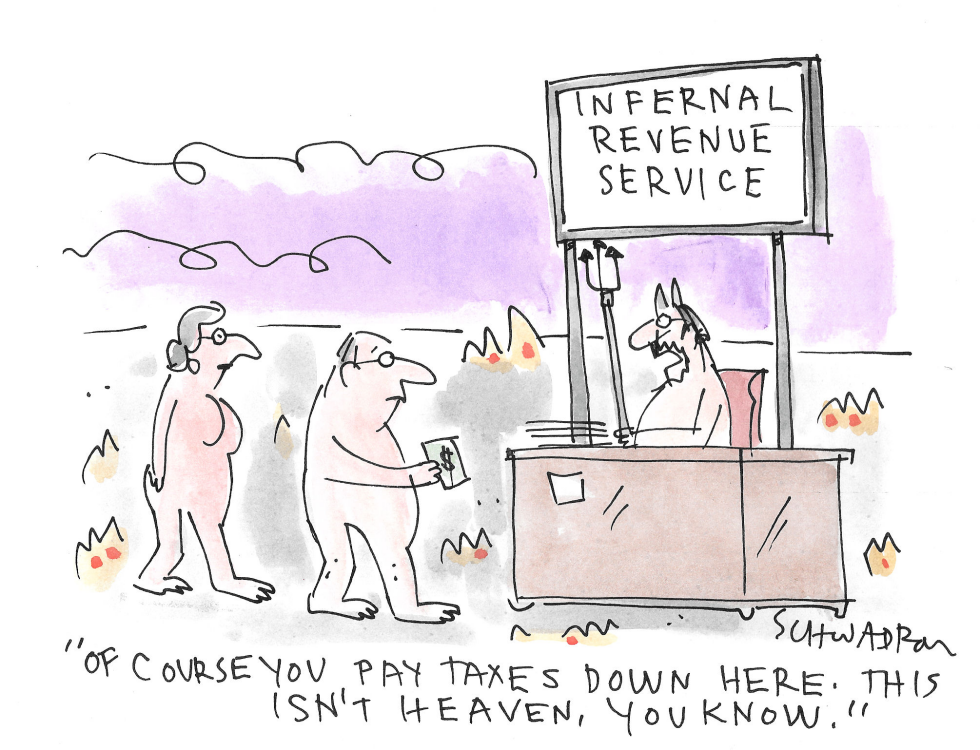
The long-standing adage that only death and taxes are certain receives fresh treatment in a cartoon depicting an IRS outpost operating in hell. No specific policy change or ruling prompted the piece, which instead plays on the enduring public frustration with tax collection as an inescapable force. The editorial stance pokes at bureaucratic persistence, suggesting the tax man follows citizens beyond the grave with the same relentless efficiency seen in life.
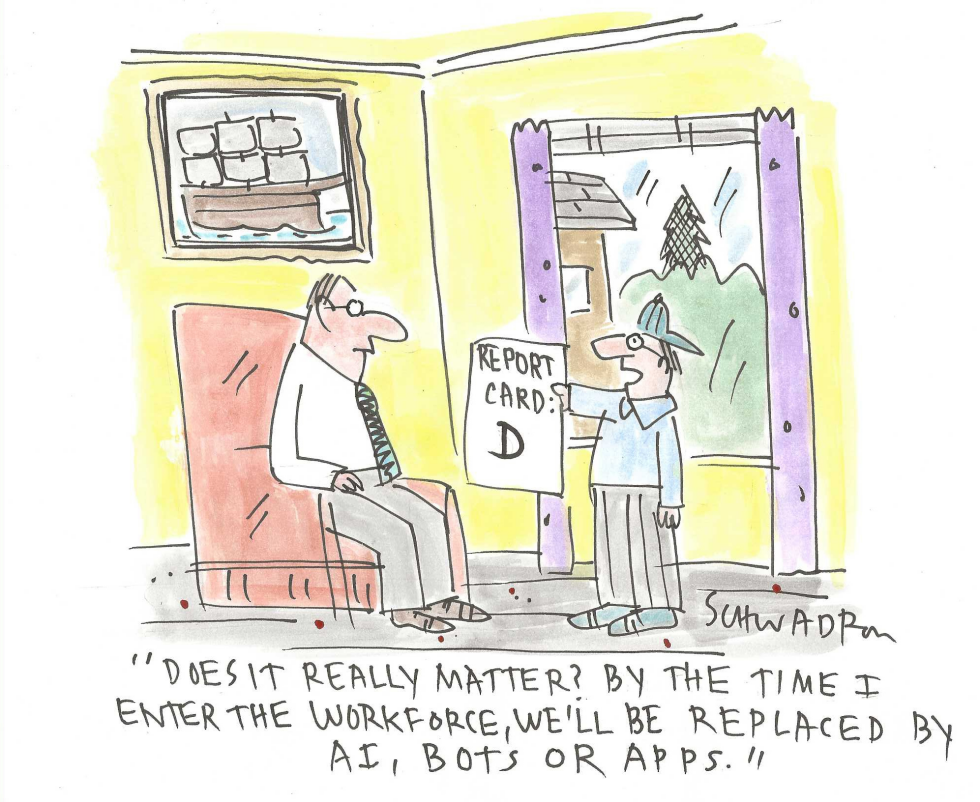
Rising student skepticism about academic effort stems from widespread predictions that AI and automation will eliminate many jobs before today's students graduate. The cartoon responds to this dynamic by showing a student using those forecasts to shrug off a poor grade. It highlights how fears of technological displacement may undermine motivation in schools. The piece suggests such excuses reflect a broader cultural shift where traditional education credentials appear less relevant. The editorial stance questions whether this mindset accelerates the very problems it cites.
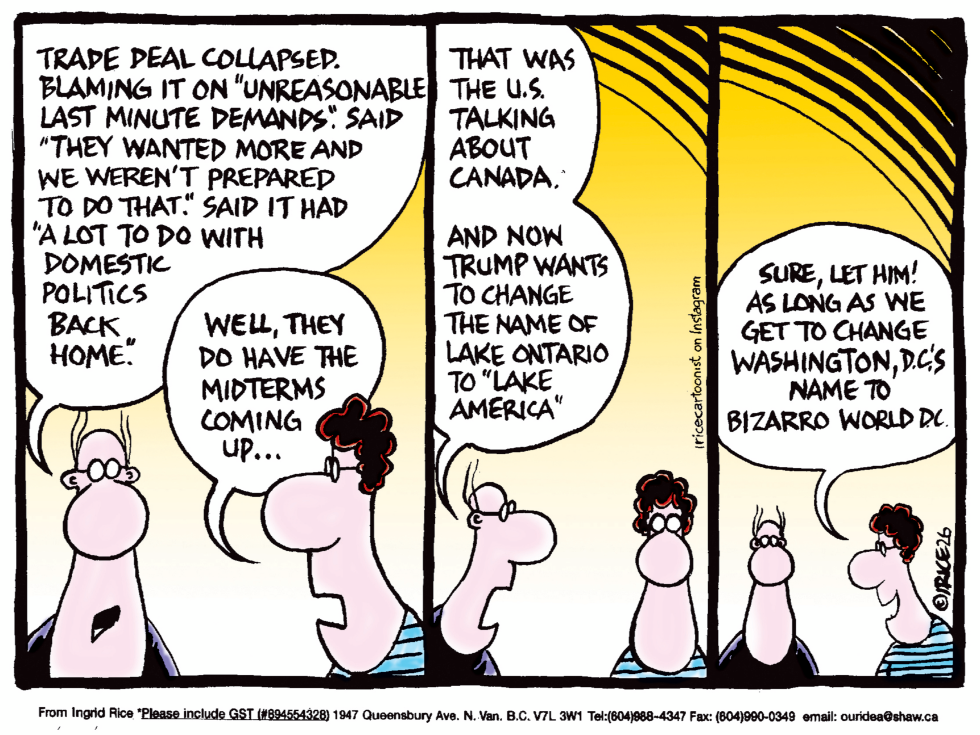
A Canada-U.S. trade deal collapsed after U.S. negotiators cited unreasonable last-minute demands and linked the failure to domestic politics ahead of midterms. President Trump then proposed renaming Lake Ontario to Lake America. Canadian officials responded by offering to rename Washington D.C. to Bizarro World DC if the change proceeds. The exchange highlights how trade tensions and political posturing are escalating between the two countries. The cartoon mocks the name-change idea as emblematic of broader dysfunction in bilateral relations.
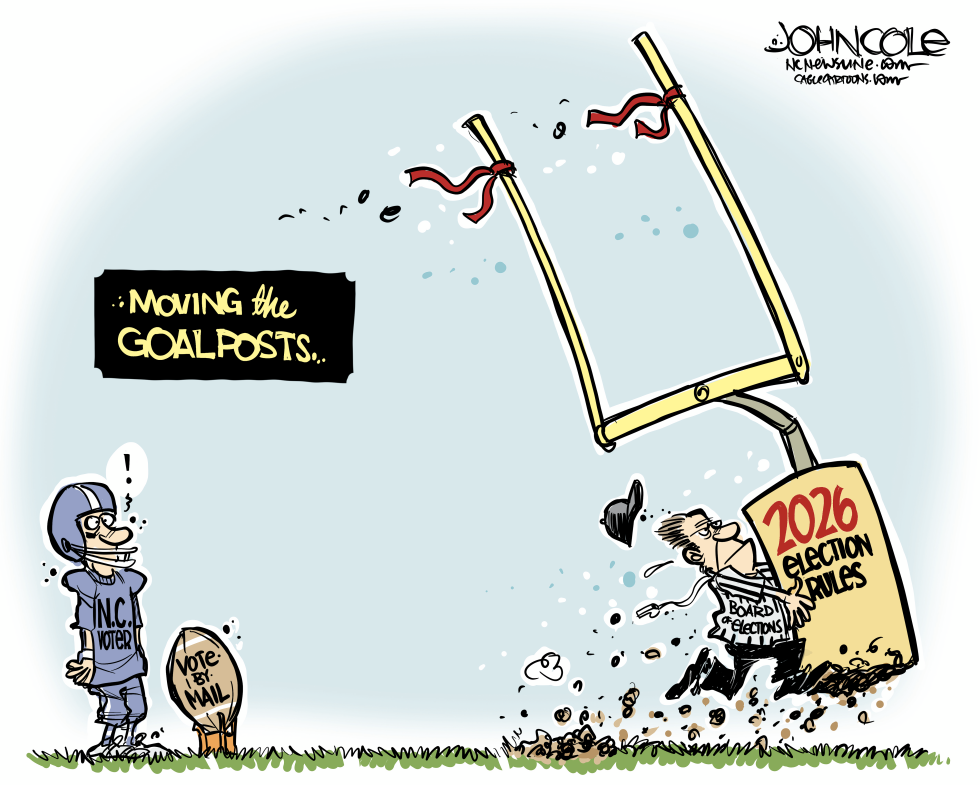
The North Carolina Board of Elections has updated rules governing mail ballots for the 2026 elections, introducing stricter verification and deadline requirements. The changes affect how voters submit ballots and have drawn criticism for complicating access. The move comes amid ongoing debates over election security and participation. Critics argue the adjustments disproportionately impact certain voter groups. The cartoon portrays the board as actively shifting standards to the disadvantage of mail voters.
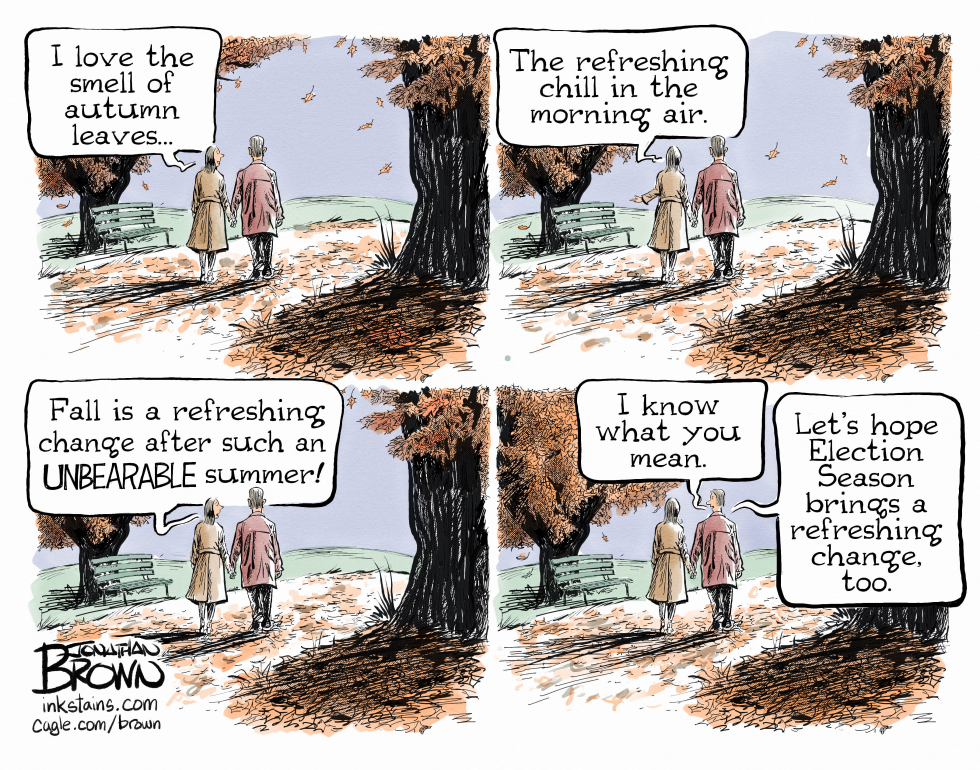
The cartoon depicts a couple strolling through an autumn park and commenting on the season's appeal. Their conversation turns to the election cycle as another potential source of renewal. The work uses the familiar transition from summer to fall to express a common voter sentiment ahead of the 2026 midterms. No specific candidates or policies are named, keeping the focus on the general wish for improvement. The four-panel format builds the parallel gradually before delivering the final line about election season.
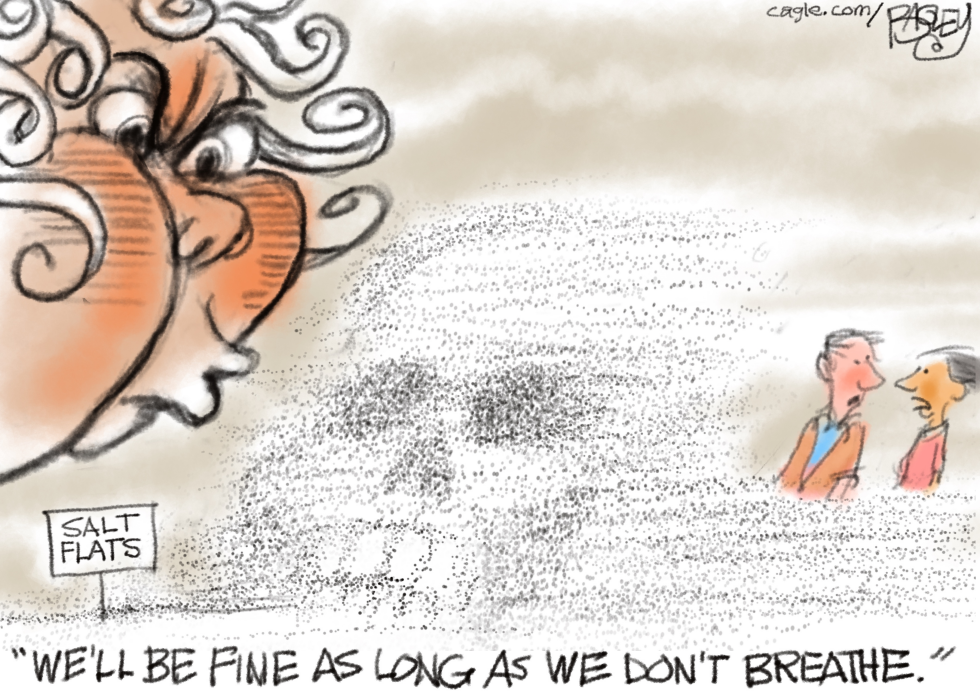
Air quality at the Salt Flats has deteriorated due to persistent dust storms, creating hazardous conditions for nearby residents and visitors. The situation underscores ongoing environmental degradation in the region and the urgent need for mitigation efforts to protect public health.
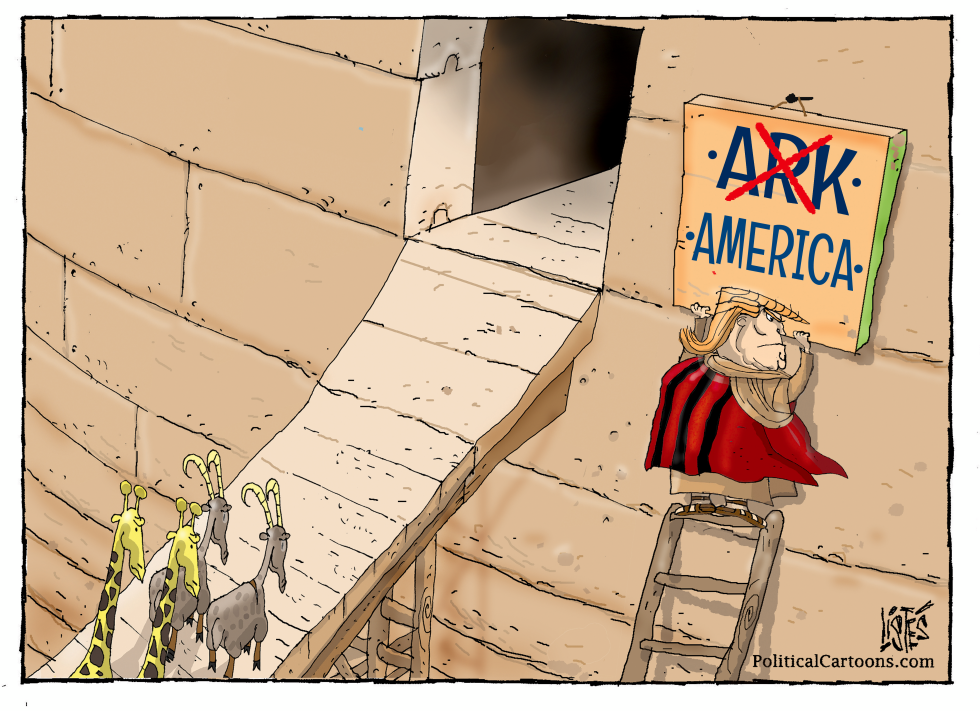
Donald Trump has long inserted his personal branding into public institutions and language. The cartoon responds to this pattern by showing him literally striking through a biblical reference to force an America-first substitution. It argues the impulse reveals unchecked ego rather than policy substance.
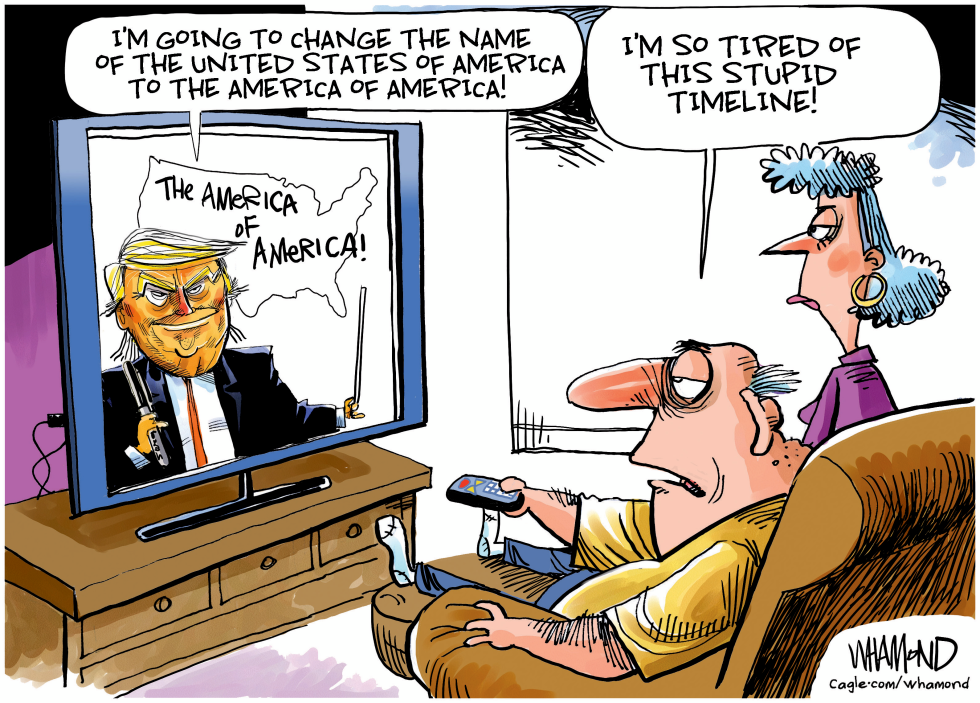
Donald Trump proposed renaming the United States to the America of America during a televised appearance. The suggestion fits a pattern of attention-grabbing rebrands that dominate headlines and fuel public cynicism. Critics argue such moves distract from substantive governance while supporters see them as bold assertions of national identity. The cartoon captures widespread viewer exhaustion with the constant stream of provocative statements. It highlights how repeated name games erode trust in political discourse and amplify perceptions of a chaotic timeline.
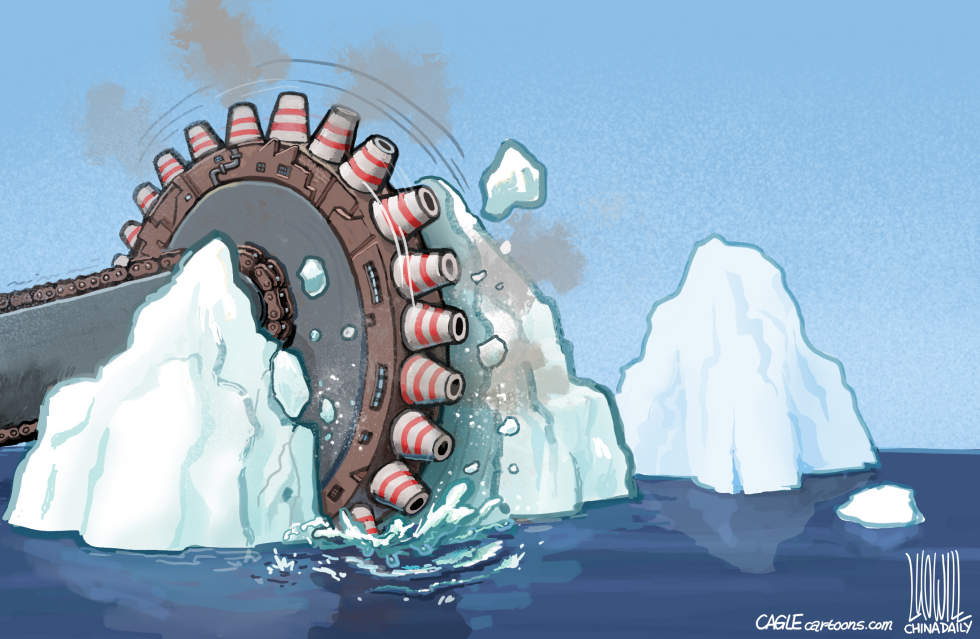
The cartoon depicts a large industrial drilling machine actively breaking through Arctic ice floes in open water. The machine features multiple red-and-white striped cylindrical components and emits dark exhaust. Icebergs float nearby under a clear sky. Published by China Daily, the image addresses ongoing concerns over resource extraction in polar regions and its contribution to ice loss.
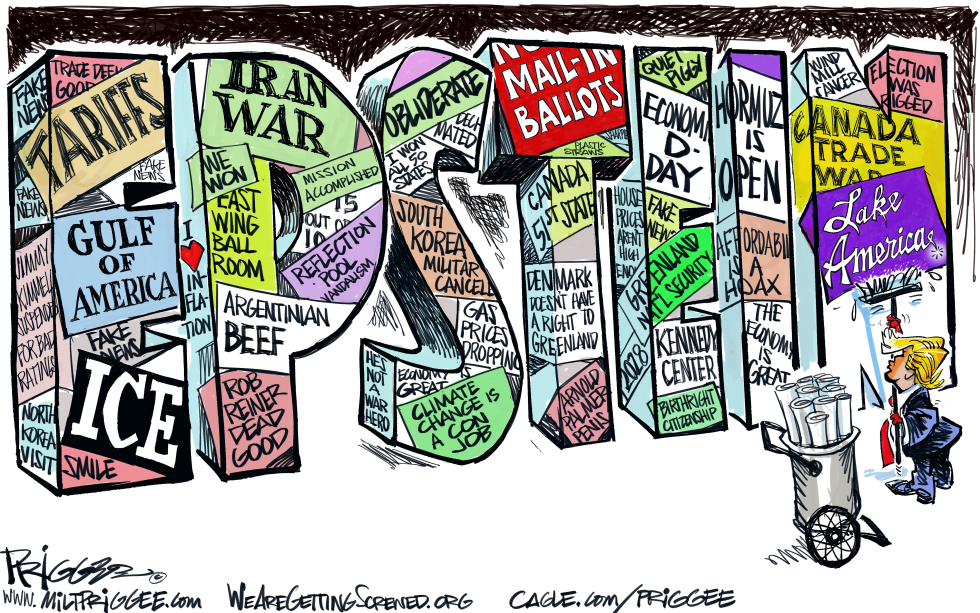
Donald Trump appears in a September 2026 cartoon pushing a cart stacked with signs promoting tariffs, questioning mail-in ballots, and asserting claims about Iran, Canada trade, and domestic issues. The image captures a pattern of public messaging that blends economic nationalism with repeated challenges to established processes. The editorial position frames these statements as a deliberate strategy to keep multiple controversies in motion at once.