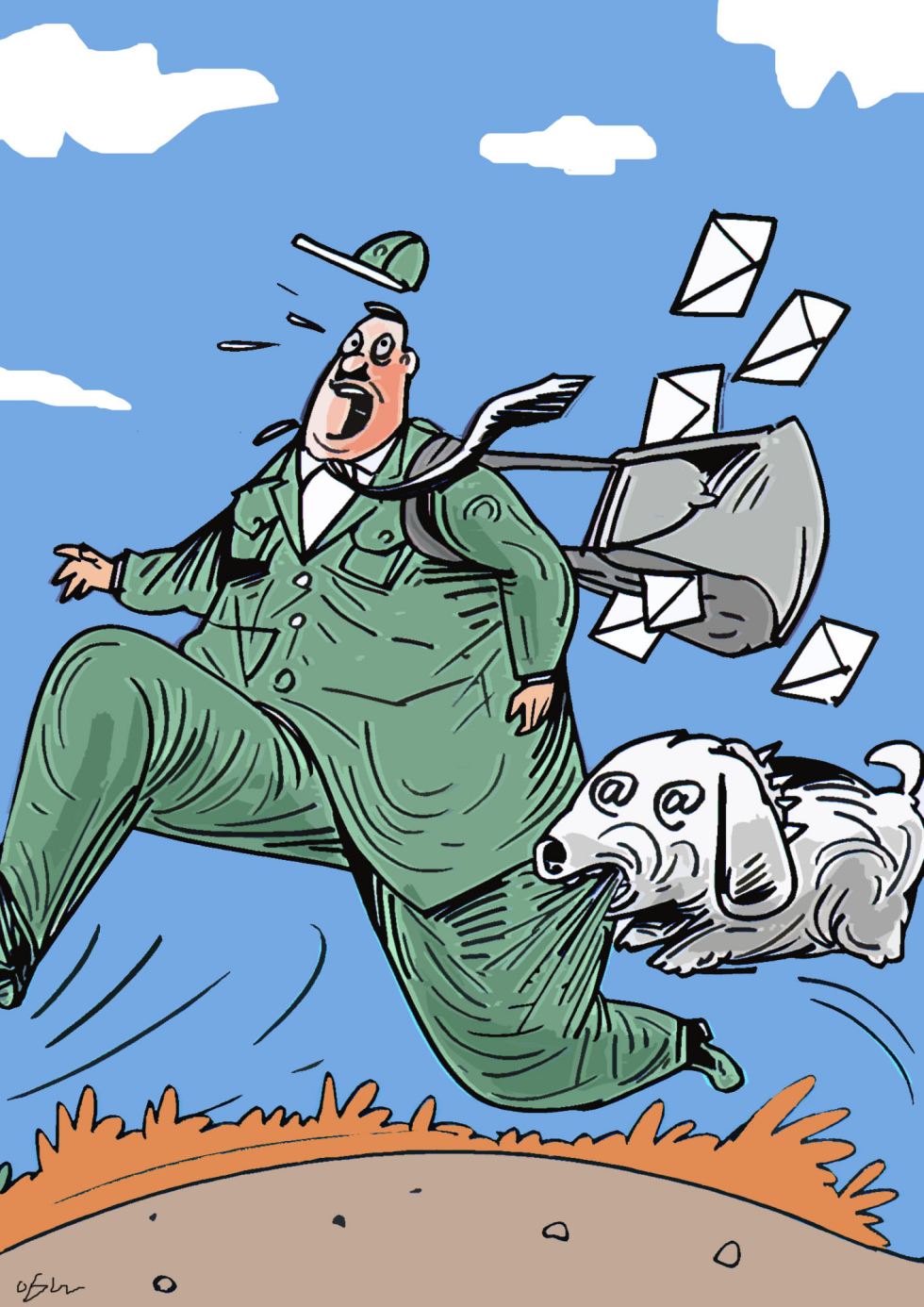
Postal workers routinely face hazards from aggressive dogs during deliveries. The incident highlights ongoing safety concerns for mail carriers who must navigate unpredictable animals on their routes. The piece takes the position that such attacks disrupt service and endanger staff.
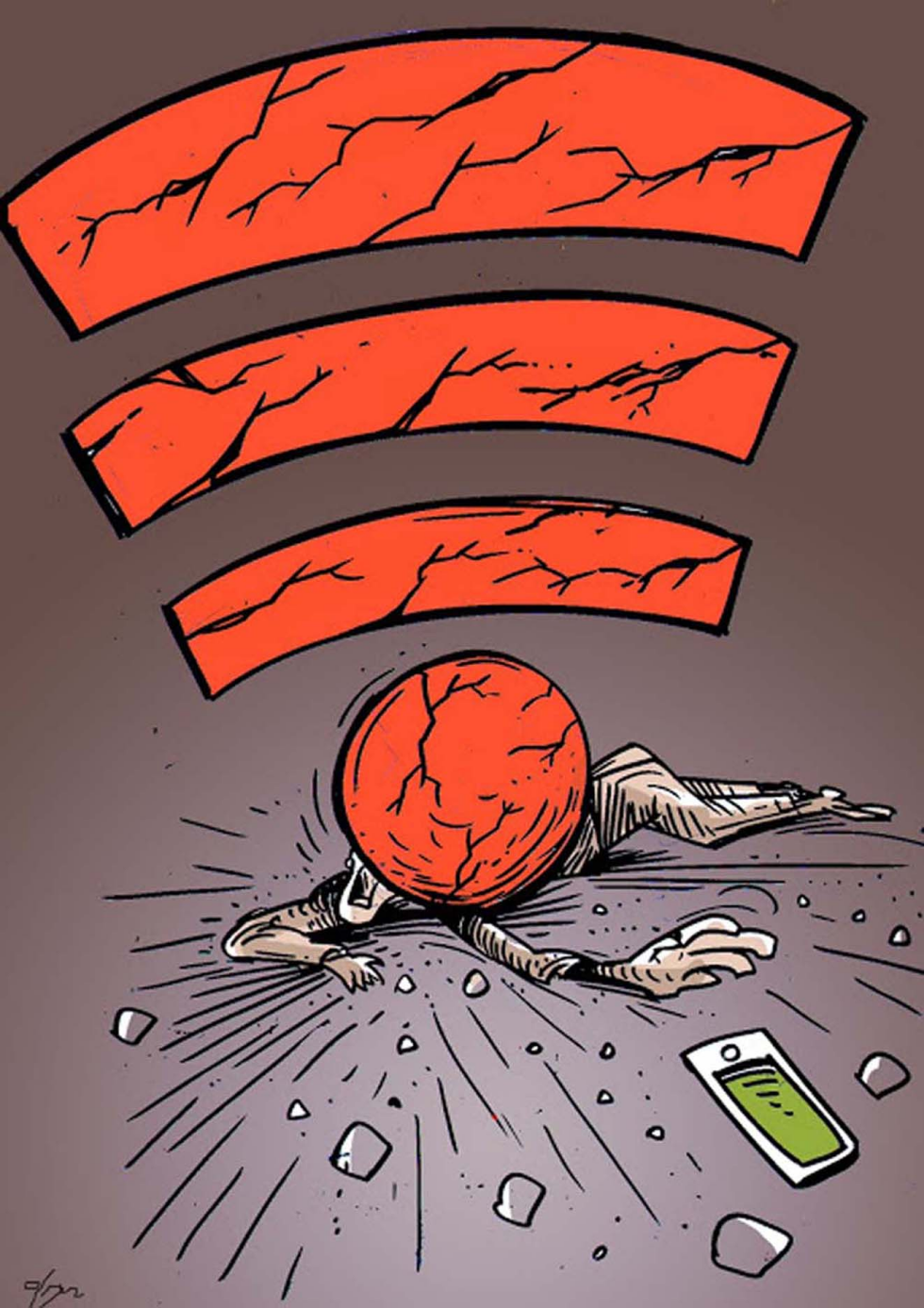
Wireless networks face mounting pressure from rising demand and aging infrastructure, leaving users stranded when signals falter. A dead phone battery compounds the isolation during outages. The piece frames this as a cautionary view of overreliance on fragile digital systems that can collapse without warning.
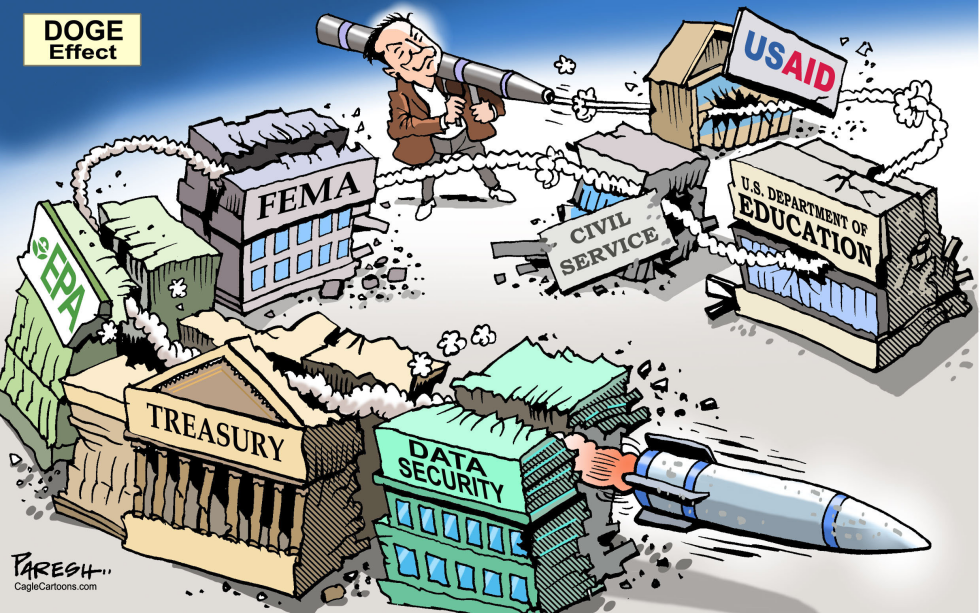
The cartoon published February 27, 2025, shows Elon Musk firing a bazooka at federal buildings labeled USAID, U.S. Department of Education, FEMA, EPA, Treasury, Civil Service and Data Security. Debris and missile trails illustrate widespread damage. The image responds to the launch of the Department of Government Efficiency initiative under the second Trump administration, which targets reductions in federal workforce and agency operations.
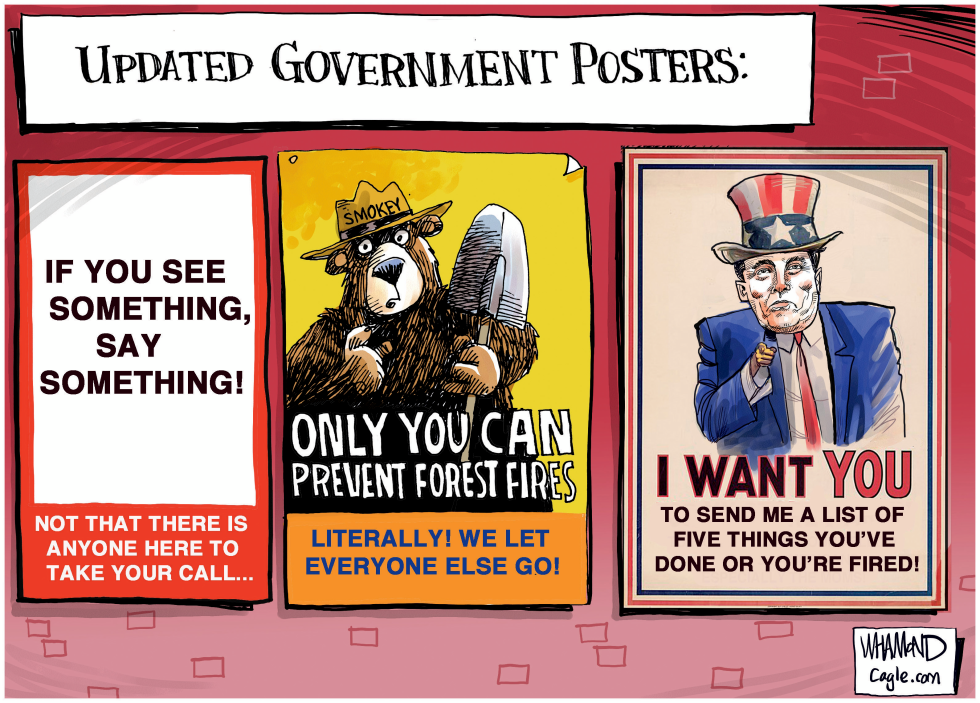
The cartoon displays three altered government posters under the heading Updated Government Posters. The left panel shows the familiar see something say something message above a note that no one remains to answer calls. The center panel depicts Smokey Bear gripping a chainsaw with text stating only you can prevent forest fires and literally we let everyone else go. The right panel shows Uncle Sam pointing forward while instructing viewers to submit lists of five accomplishments or face termination. These images respond to the February 2025 DOGE initiative led by Elon Musk and the Trump administration that directed agencies including the FBI, CDC, FDA, National Park Service, and USAID to reduce staff and submit productivity reports.
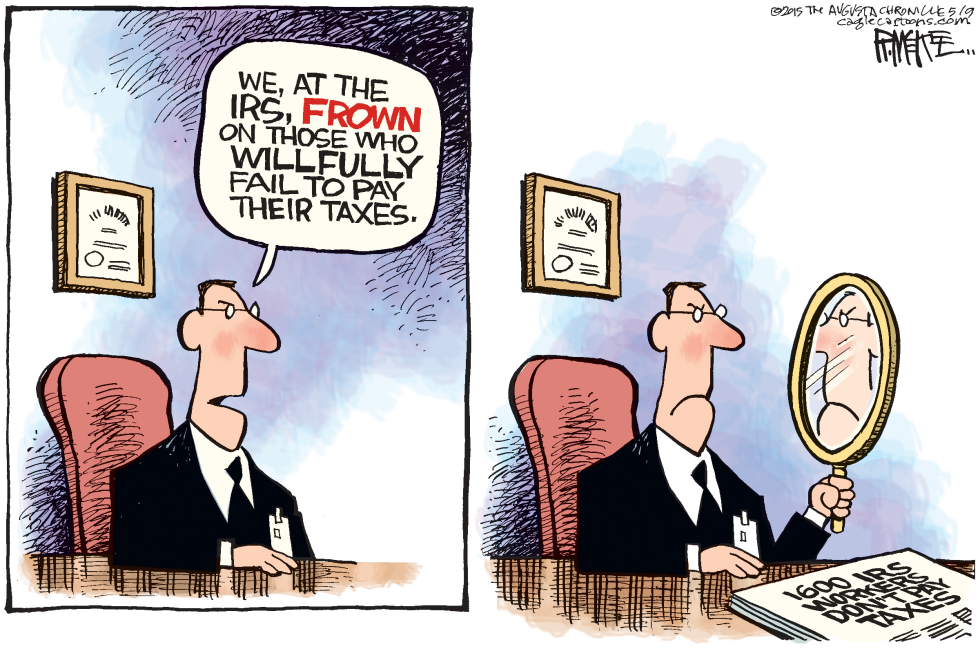
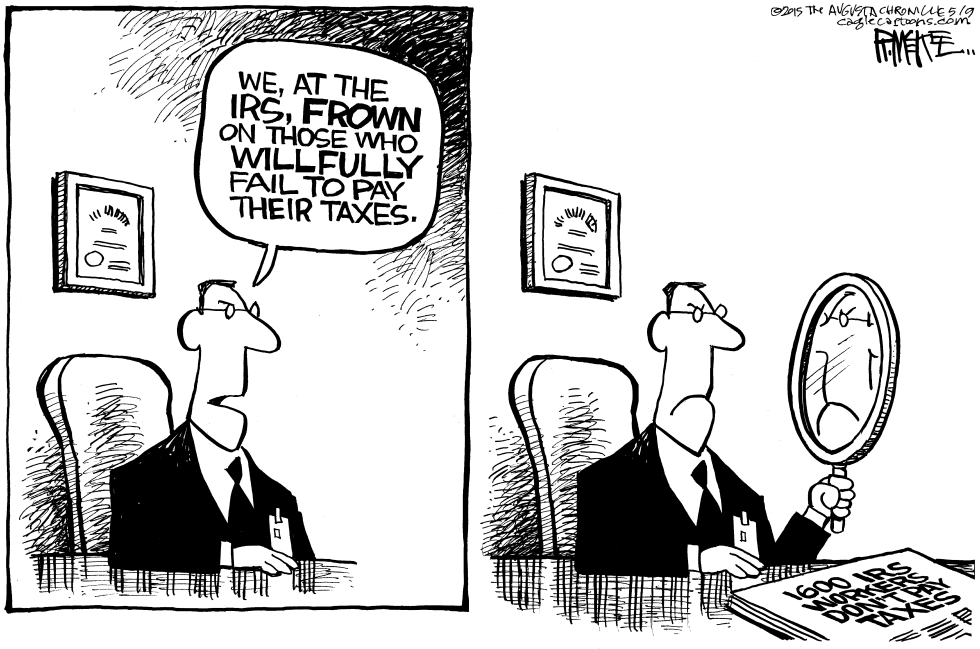
Rick McKee's 2015 cartoon captures IRS hypocrisy cartoon through two panels: an agent at his desk declares that the IRS frowns on those who willfully fail to pay taxes, surrounded by office certificates. In the next panel, the same agent holds a magnifying glass to a thick book titled '1600 IRS Workers Don't Pay Taxes,' underscoring tax evasion satire and government tax failure humor. The artwork uses simple lines and colors to emphasize the ironic contrast between official stance and internal reality, making it a classic political cartoon IRS workers example of satirical take on IRS policy and bureaucratic irony illustration. This piece highlights federal agency double standards in a straightforward, humorous way that resonates with viewers frustrated by government inconsistencies.