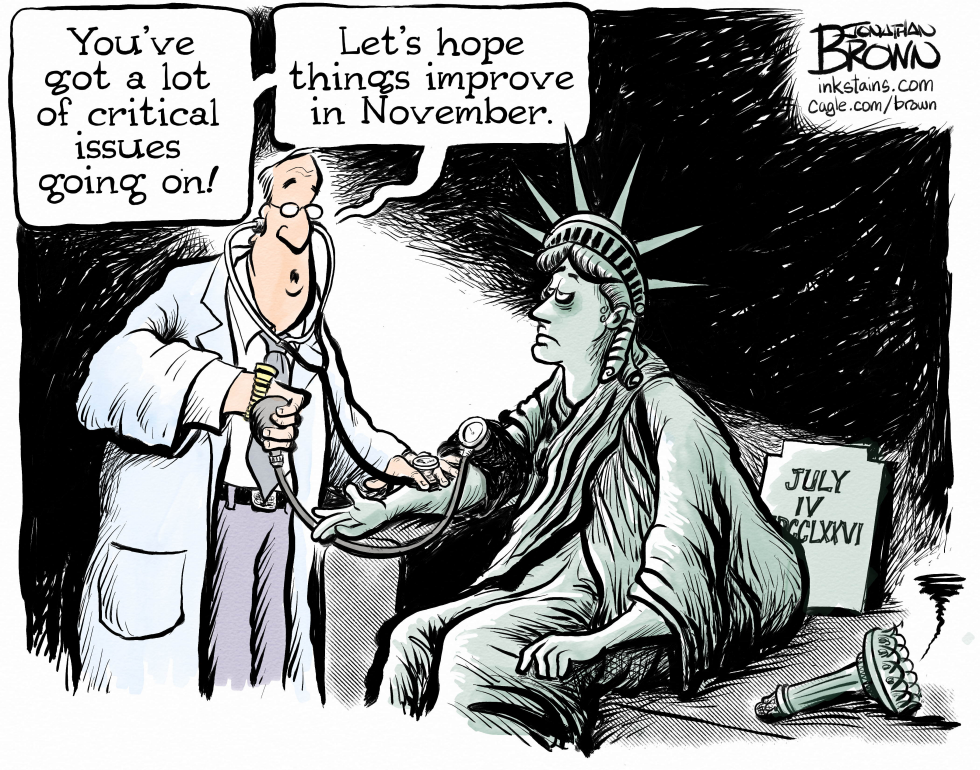
The cartoon depicts a doctor examining the Statue of Liberty's blood pressure and noting numerous critical issues. The Statue responds with hope that things will improve in November. A sign references July 4, 1776, and a broken torch rests on the ground. Published on September 15, 2026, the image uses the iconic figure to comment on the state of the nation ahead of upcoming elections. The visual metaphor highlights concerns about American institutions and public sentiment.
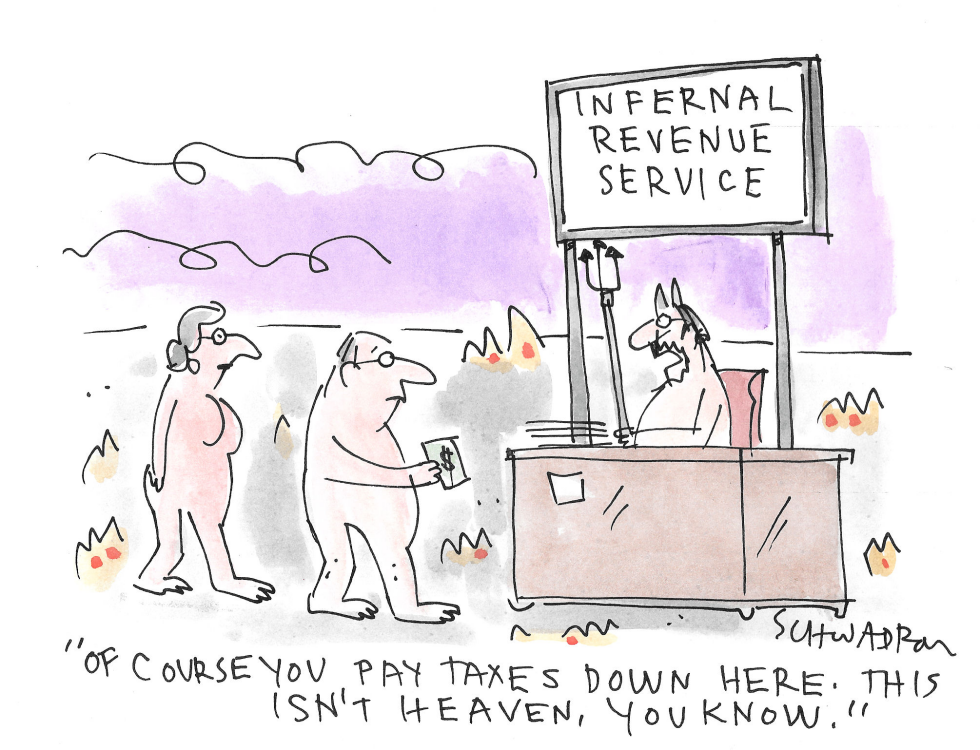
The long-standing adage that only death and taxes are certain receives fresh treatment in a cartoon depicting an IRS outpost operating in hell. No specific policy change or ruling prompted the piece, which instead plays on the enduring public frustration with tax collection as an inescapable force. The editorial stance pokes at bureaucratic persistence, suggesting the tax man follows citizens beyond the grave with the same relentless efficiency seen in life.
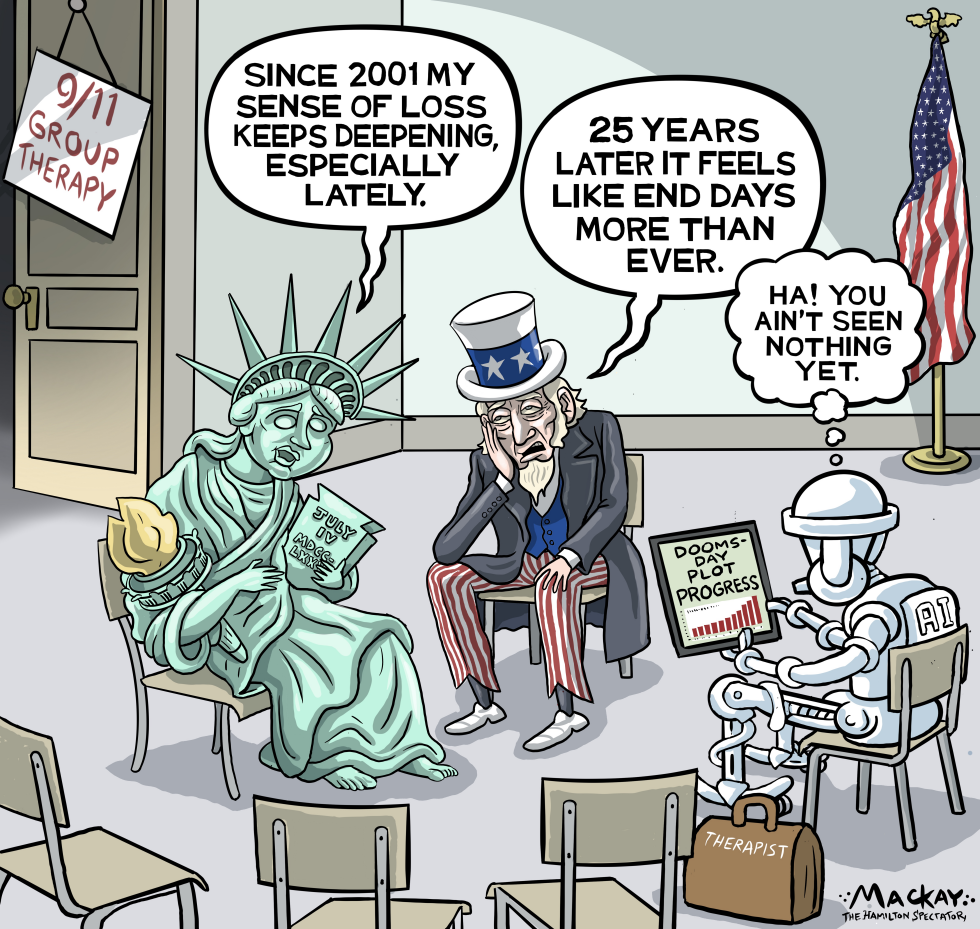
The cartoon depicts the Statue of Liberty, Uncle Sam and an AI robot seated in a 9/11 group therapy session on the 25th anniversary of the attacks. The Statue of Liberty holds a book marked July IV MDCCLXXVI and speaks of deepening loss since 2001. Uncle Sam echoes the sentiment of end days. The AI figure, labeled with a rising doomsday plot progress chart, retorts that the others have seen nothing yet. The scene uses national symbols to reflect persistent national trauma and emerging technological threats two and a half decades after the September 11 attacks.
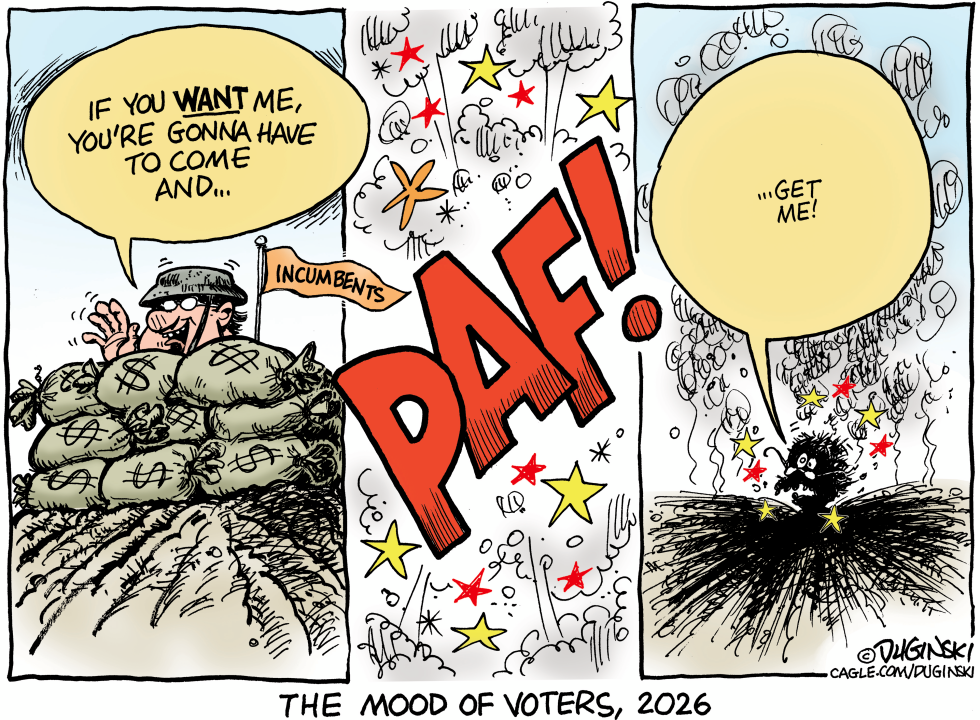
Voters are showing clear signs of turning against sitting officeholders as the 2026 election cycle advances. Incumbents face mounting pressure from constituents frustrated with long-term entrenchment and perceived insulation from accountability. This shift reflects broader discontent with the status quo in Congress and state legislatures. The cartoon argues that the protective barriers incumbents have built around themselves are proving ineffective against rising voter anger.
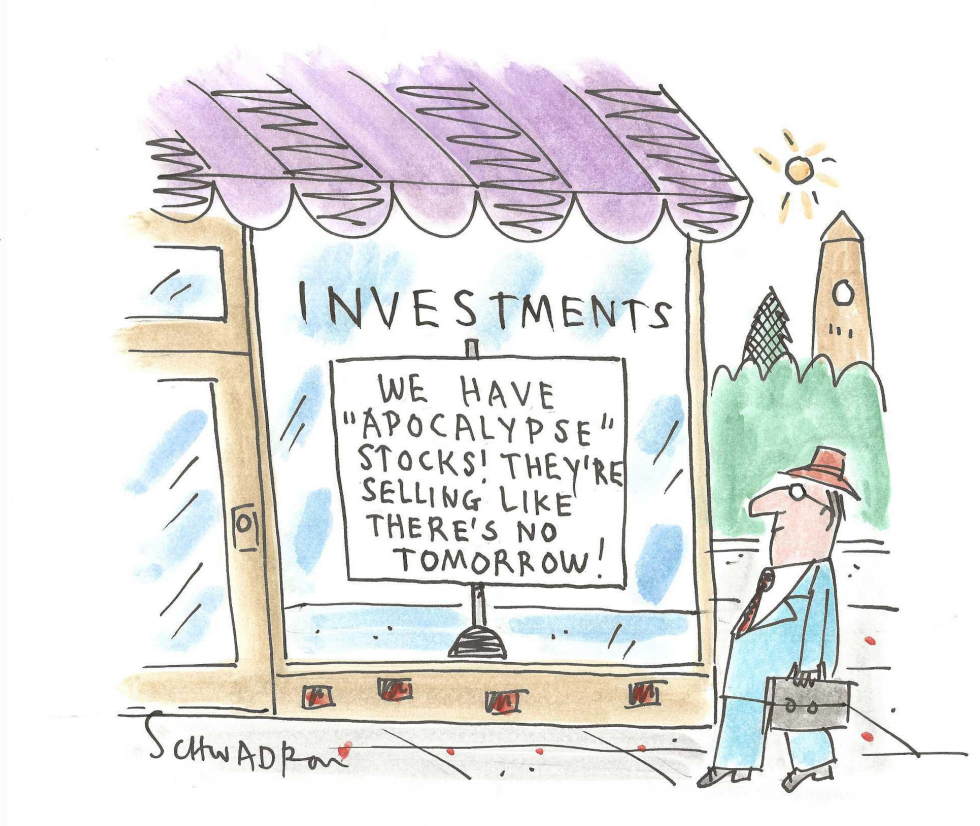
Investor interest in so-called apocalypse stocks has risen as markets reflect broader economic uncertainty. The trend highlights how some traders position for worst-case scenarios in business and finance. The cartoon underscores the ironic appeal of such products, suggesting hype around end-times investing reveals deeper anxieties about stability.
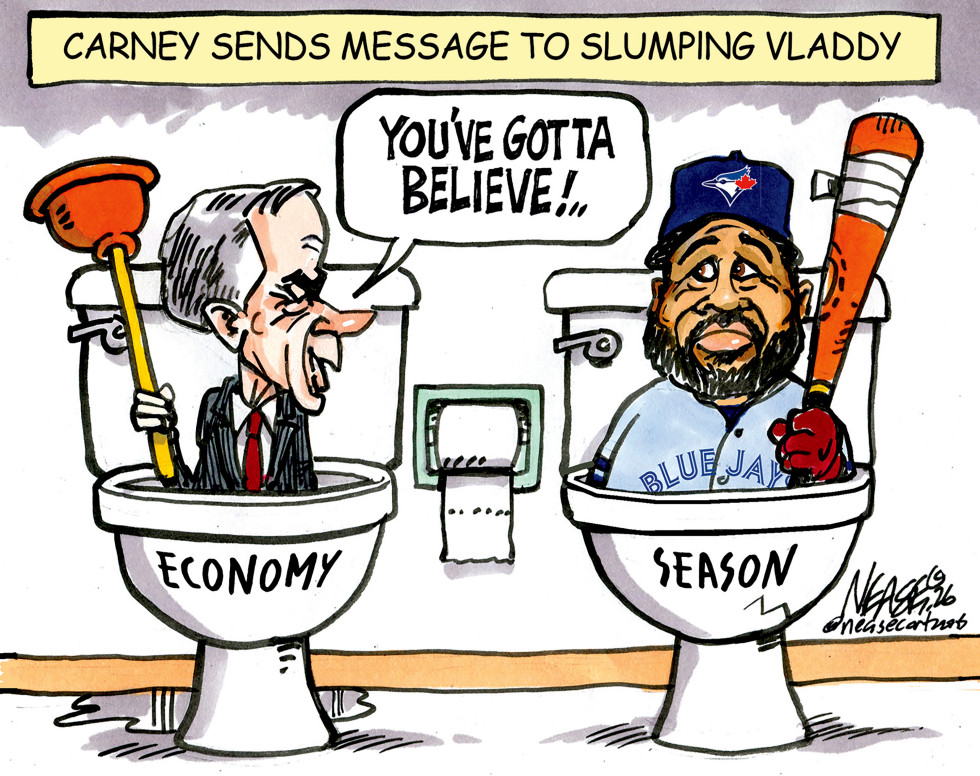
On August 12 2026 Mark Carney addressed Vladimir Guerrero Jr. during simultaneous downturns for the Canadian economy and the Toronto Blue Jays season. The exchange highlights ongoing pressures on both fronts with Carney positioned as a voice of encouragement. The piece frames the interaction as a direct motivational message from the political sphere to the sports world.
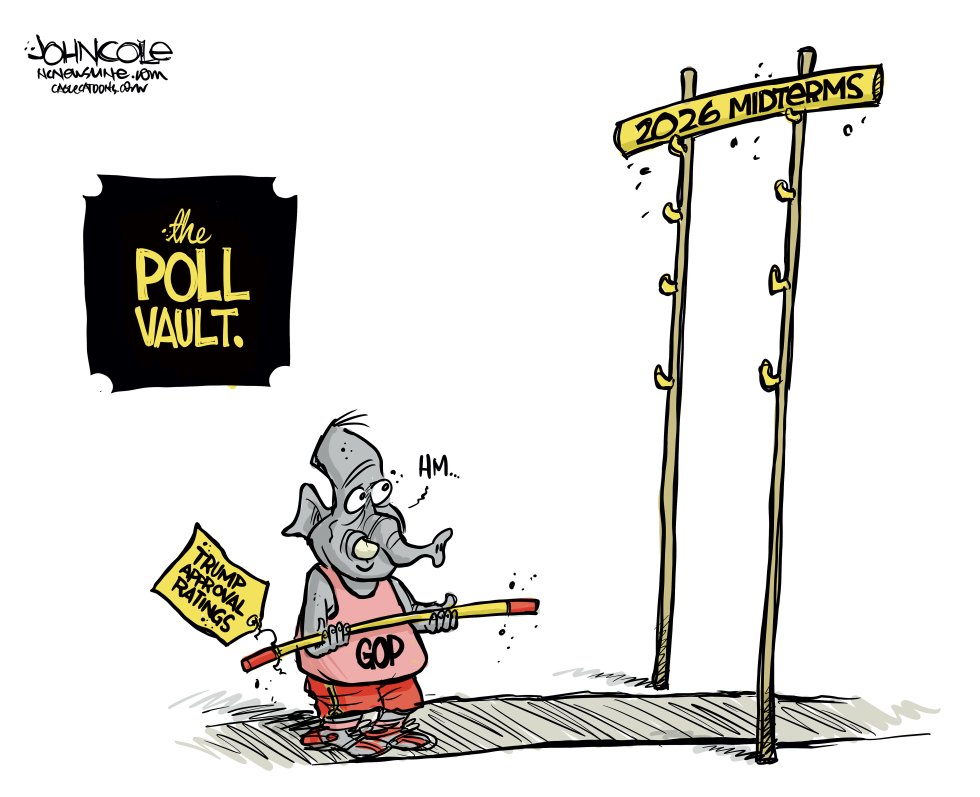
Republicans face the 2026 midterm elections with Donald Trump as a central figure whose approval ratings remain a key variable. Party strategists must decide how heavily to tie their candidates to the former president amid ongoing voter sentiment. The piece portrays the GOP as an athlete preparing to clear the midterm bar but questioning whether the available pole will suffice.
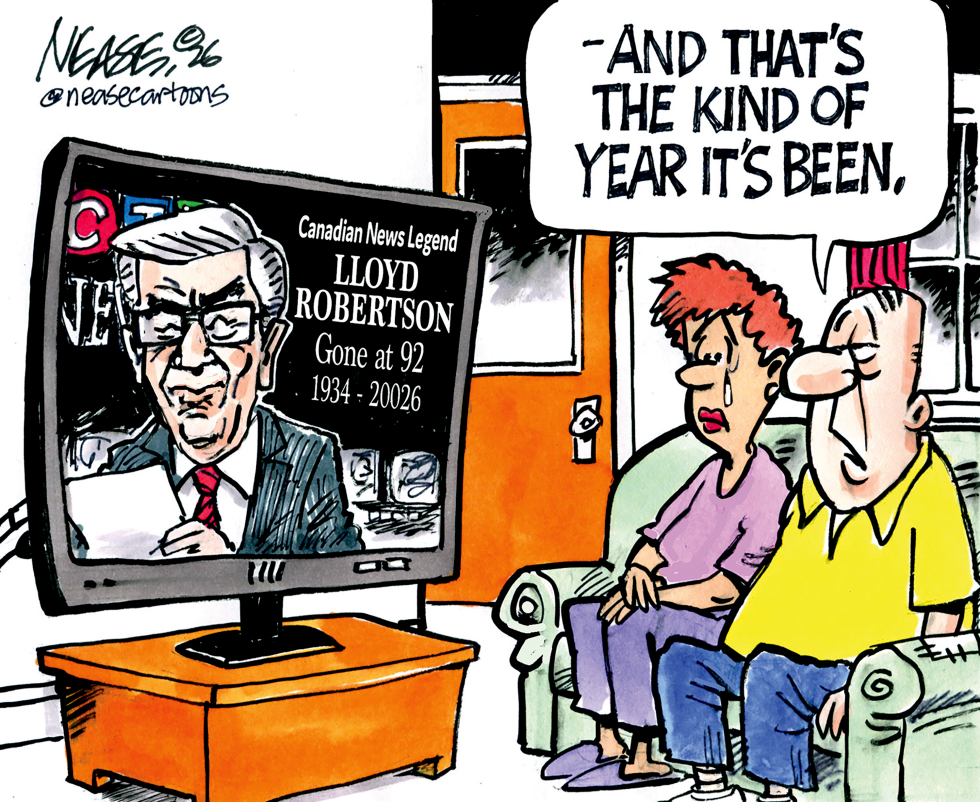
Canadian broadcasting icon Lloyd Robertson died in 2026 at age 92 after a long career as a news anchor. The announcement prompted widespread reflection on a year filled with notable passings and challenges. The editorial takes the position that such losses underscore the cumulative weight of difficult events.
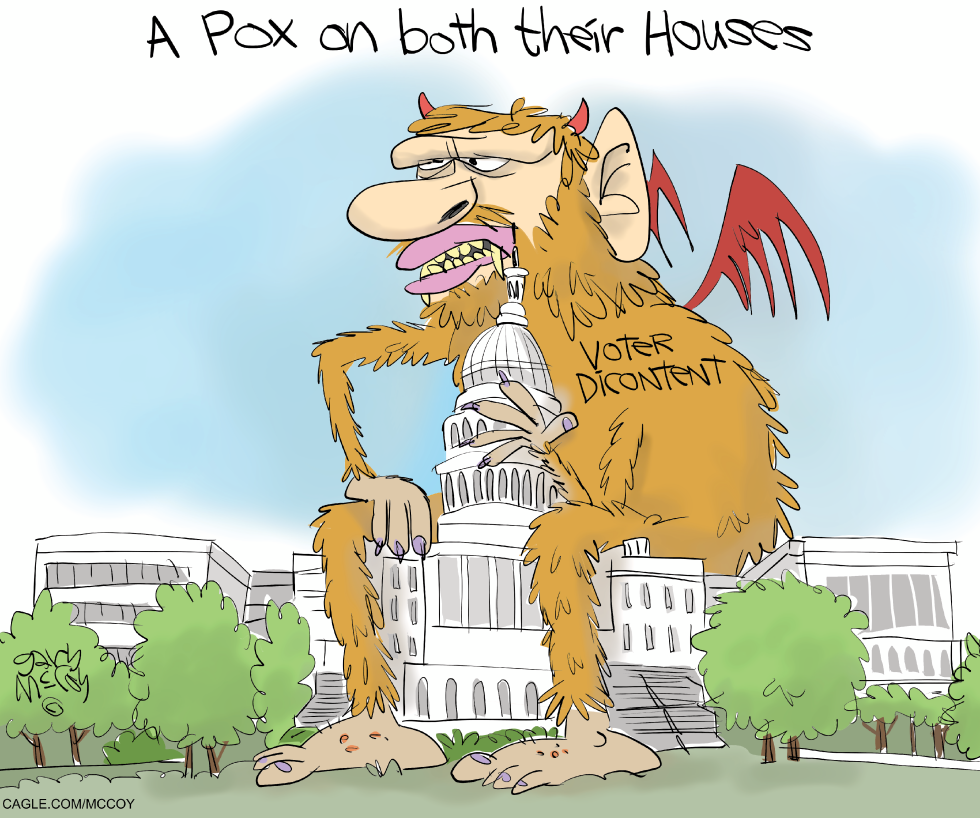
Voter frustration with Congress has grown amid stalled legislation and partisan gridlock on Capitol Hill. The piece portrays this sentiment as a towering monstrous force looming over the legislative branch. It argues that public anger targets both parties equally for failing to address key issues.
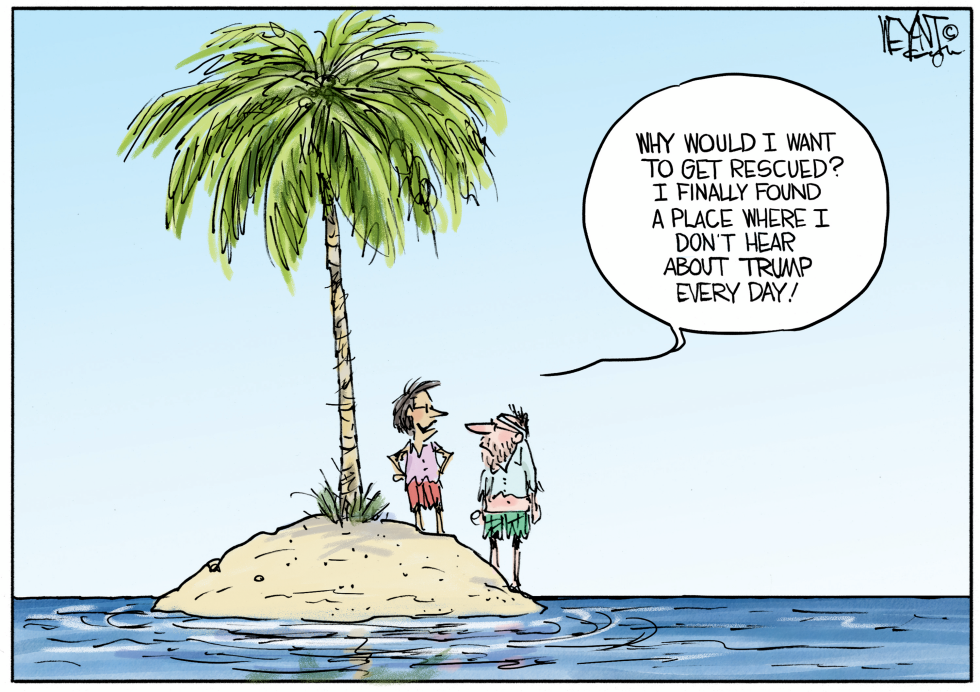
On June 29, 2026, a cartoon depicts two castaways on a tiny desert island with a single palm tree. One man in a speech bubble declares he has no interest in rescue because the location spares him daily mentions of Trump. The image captures widespread public exhaustion with political coverage centered on the former president during a period of intense media focus.
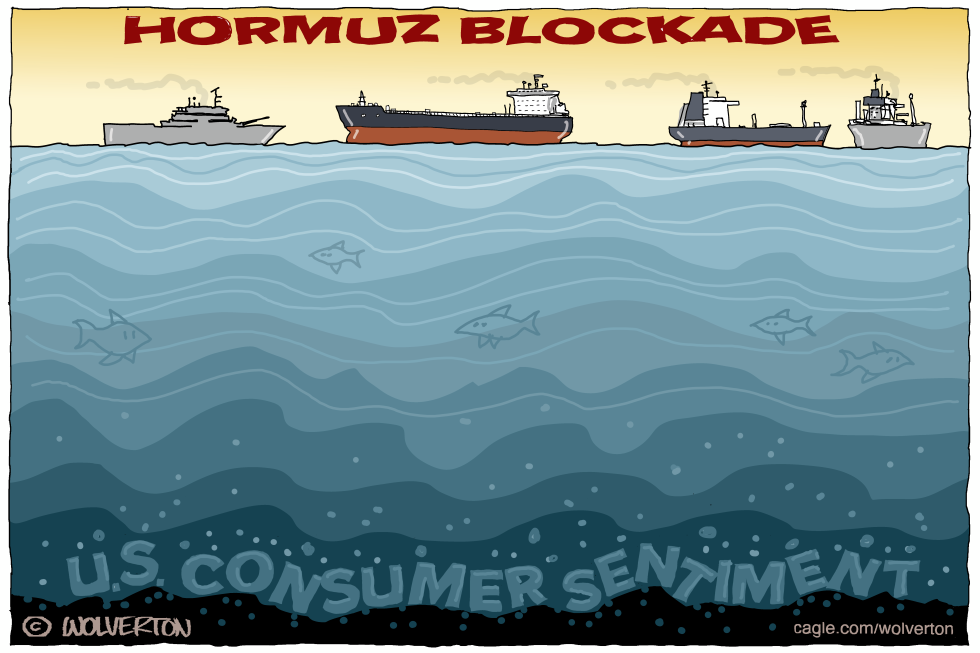
Monte Wolverton's cartoon captures the Hormuz Strait blockade with warships and tankers lined up on the water's surface, a clear nod to geopolitical strife in key oil passages. Below, the phrase U.S. consumer sentiment is etched into the ocean floor, surrounded by fish, driving home the idea of economic morale hitting rock bottom. This piece uses simple lines and color to highlight how international blockades can sink domestic confidence, tying into broader themes of global trade disruptions. The dry humor shines through in the visual pun, making it a standout in political satire circles. Tags like Hormuz Strait blockade political cartoon, US consumer sentiment sinking economy illustration, oil tanker ships naval blockade satire, Strait of Hormuz geopolitical tension comic, economic impact of Middle East conflict drawing, and consumer confidence underwater metaphor cartoon amplify its SEO reach.
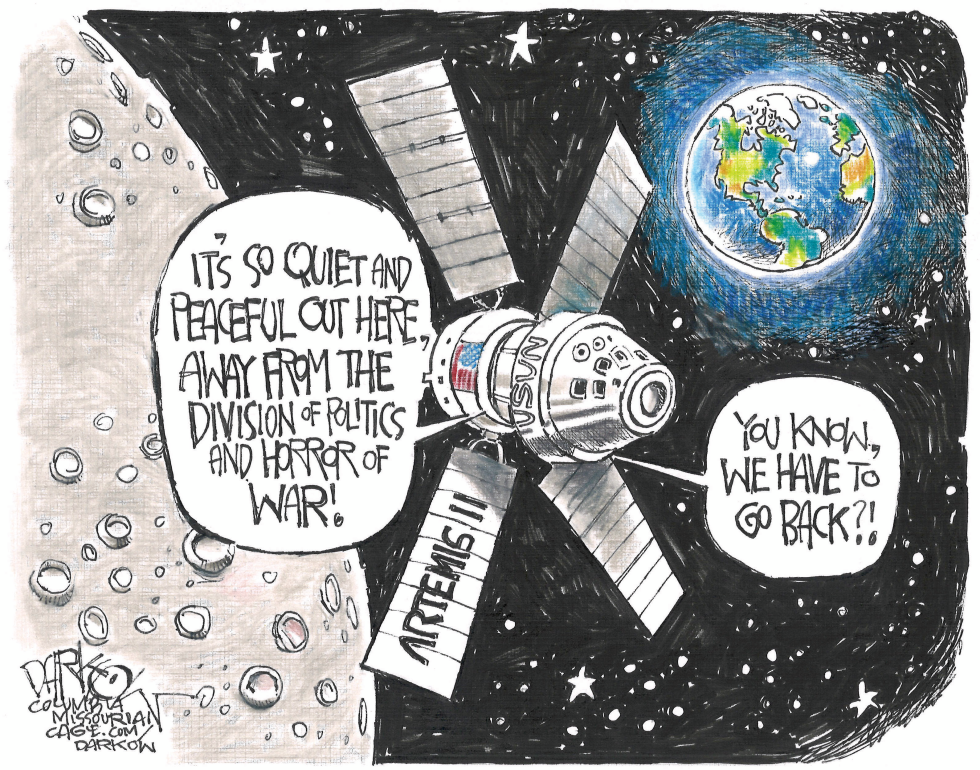
This Daryl Cagle political cartoon analysis features the Artemis II spacecraft floating in serene space, with Earth glowing in the background and the moon nearby. The left speech bubble extols the quiet peace away from division of politics and horror of war, while the right one resignedly notes the need to go back. It's a satirical cartoon on politics and war division, poking fun at how space exploration escaping earthly conflicts offers temporary respite. The NASA Artemis program humor illustration underscores the irony of advanced space missions contrasting with unresolved human divisions on Earth. Through this humorous take on returning to political division, the cartoon cleverly comments on the allure of peaceful space vs chaotic Earth without delving into specifics.
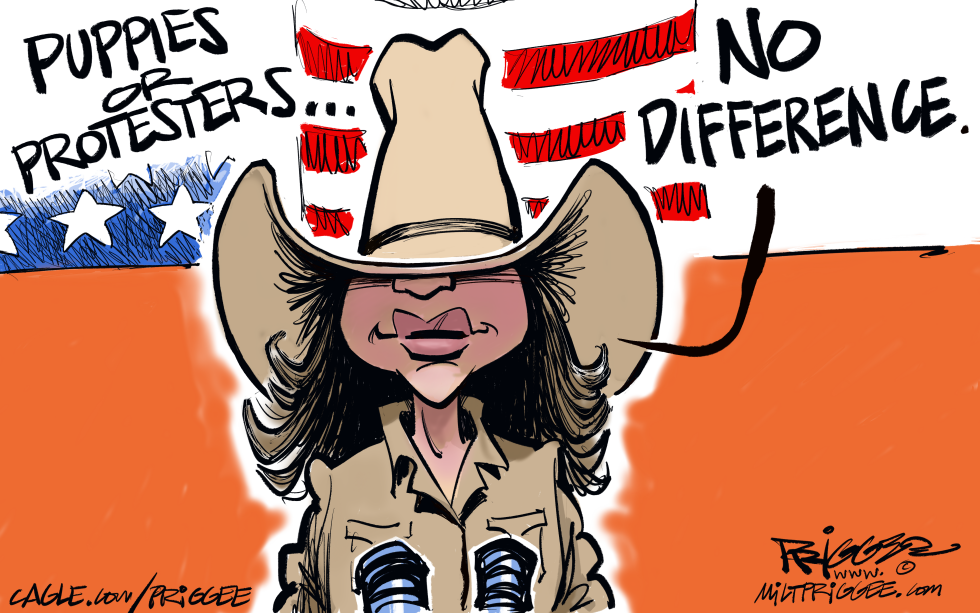
Dive into this irreverent political cartoon where a smirking, cowboy-hatted caricature, reminiscent of South Dakota's Kristi Noem, drawls that there's 'no difference' between puppies and protesters. With an American flag-adorned hat and a backdrop of scribbled disdain, the image skewers the GOP criticism surrounding Noem's infamous puppy shooting controversy. It's a sharp jab at conservative politics, blending animal cruelty debate with protest rights in a way that's both humorous and insightful. The satire underscores how some rancher lifestyle defenders might blur lines between disciplining unruly pets and quelling freedom of speech advocates. Created by Milt Priggee, this viral cartoon captures public outrage and media scandal, potentially eyeing Noem's Trump VP pick ambitions. Overall, it's a witty commentary on the absurdities of political figures who shoot from the hip—literally.
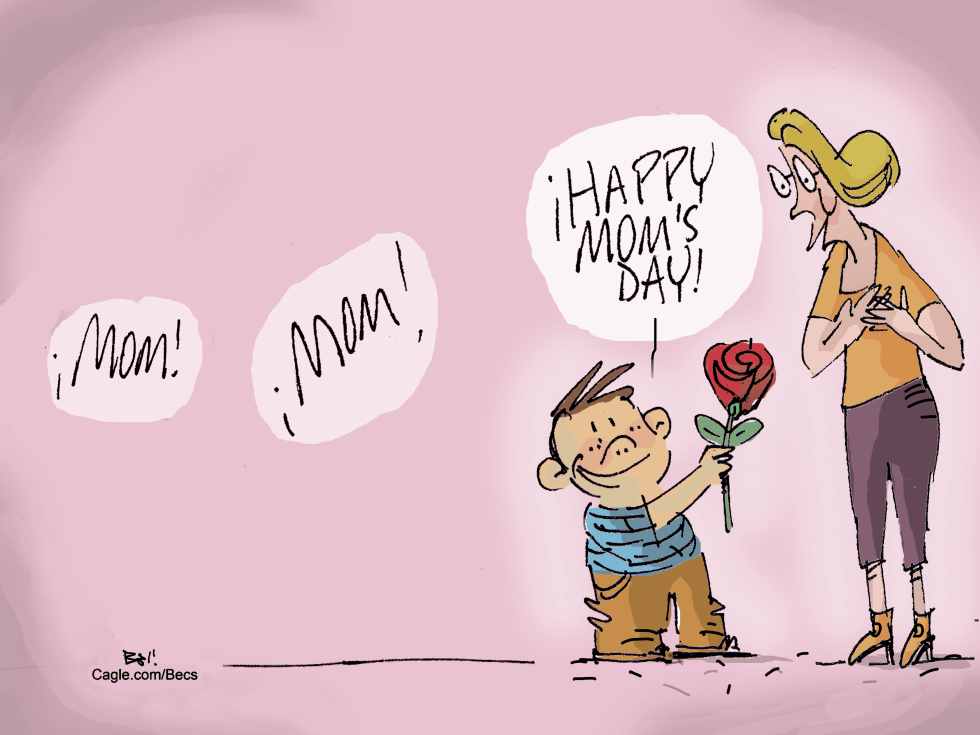
Cartoons like this mother's day illustration capture everyday humor with a tech twist. Here, a young boy extends a single red rose to a blonde woman in glasses, her hand to her chest in surprise. Speech bubbles blend Apple's 'i' prefix into classic greetings: 'iMom!', 'Mom!', and 'iHAPPY MOM'S DAY!'. It's a light satire on how digital branding seeps into personal moments. The pink backdrop keeps it warm and approachable, signed by Becs via Cagle.com. Such pieces remind us how tech parody fits into holiday cartoons, poking fun at modern family dynamics without overcomplicating the scene.
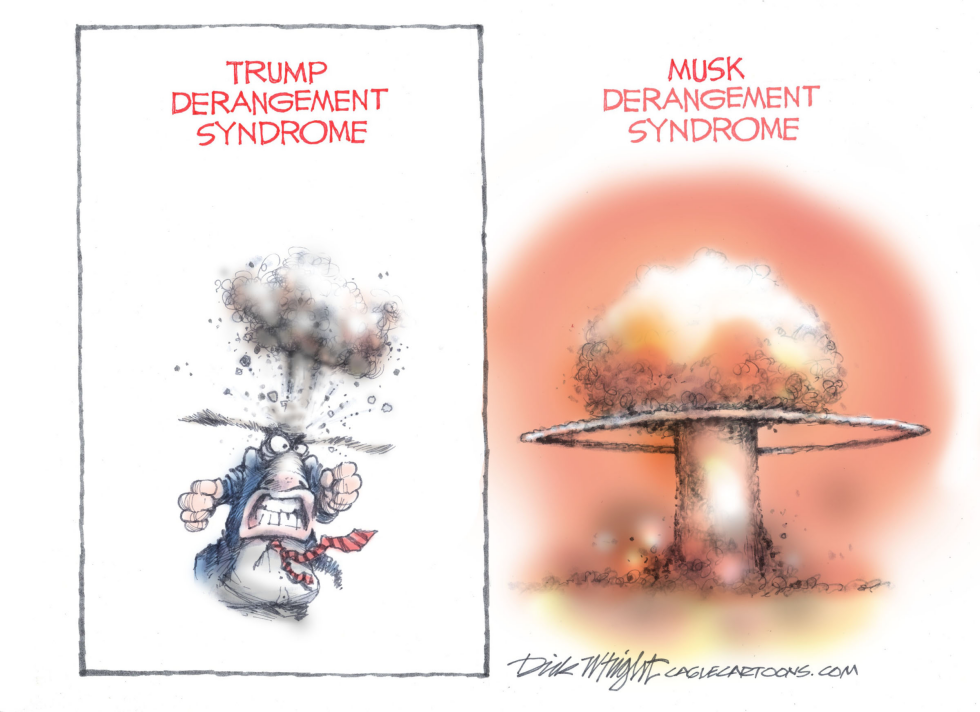
The March 2025 cartoon by Dick Wright splits the frame to compare reactions labeled Trump Derangement Syndrome and Musk Derangement Syndrome. A contained head explosion appears on the left while a massive mushroom cloud dominates the right, pointing to perceived differences in intensity of public and media response.