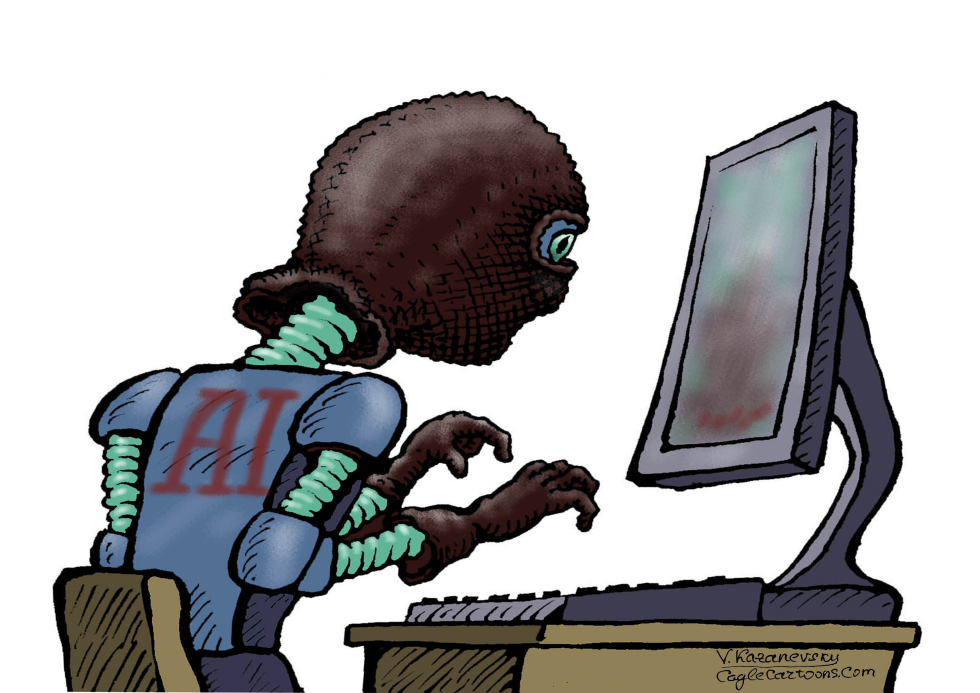
Reports of AI-linked security incidents have increased as organizations integrate autonomous systems into critical networks. The trend raises alarms over unauthorized access and data compromise enabled by machine learning tools. Experts note that AI can both defend and attack digital infrastructure at unprecedented speed. The cartoon frames this development as an impending crisis, warning that unchecked AI deployment invites self-inflicted vulnerabilities. It argues that security protocols lag behind the technology's capabilities.
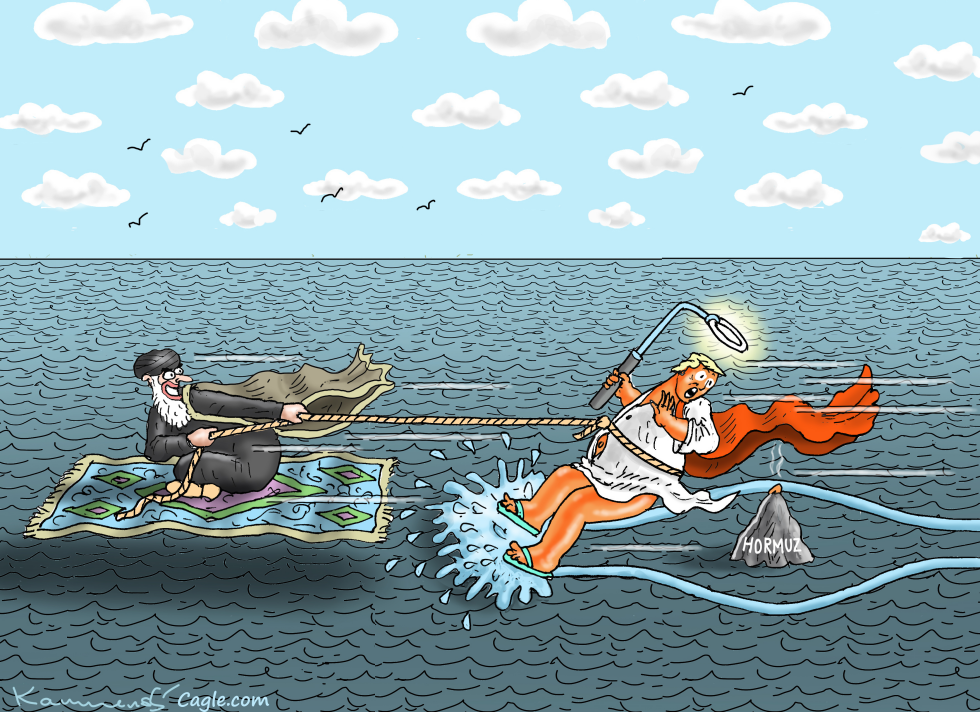
Tensions in the Strait of Hormuz have escalated with threats to shipping lanes critical for global oil supplies. Israeli and U.S. leaders face mounting losses from disruptions. The cartoon argues that involvement risks dragging both into deeper conflict without clear gains.
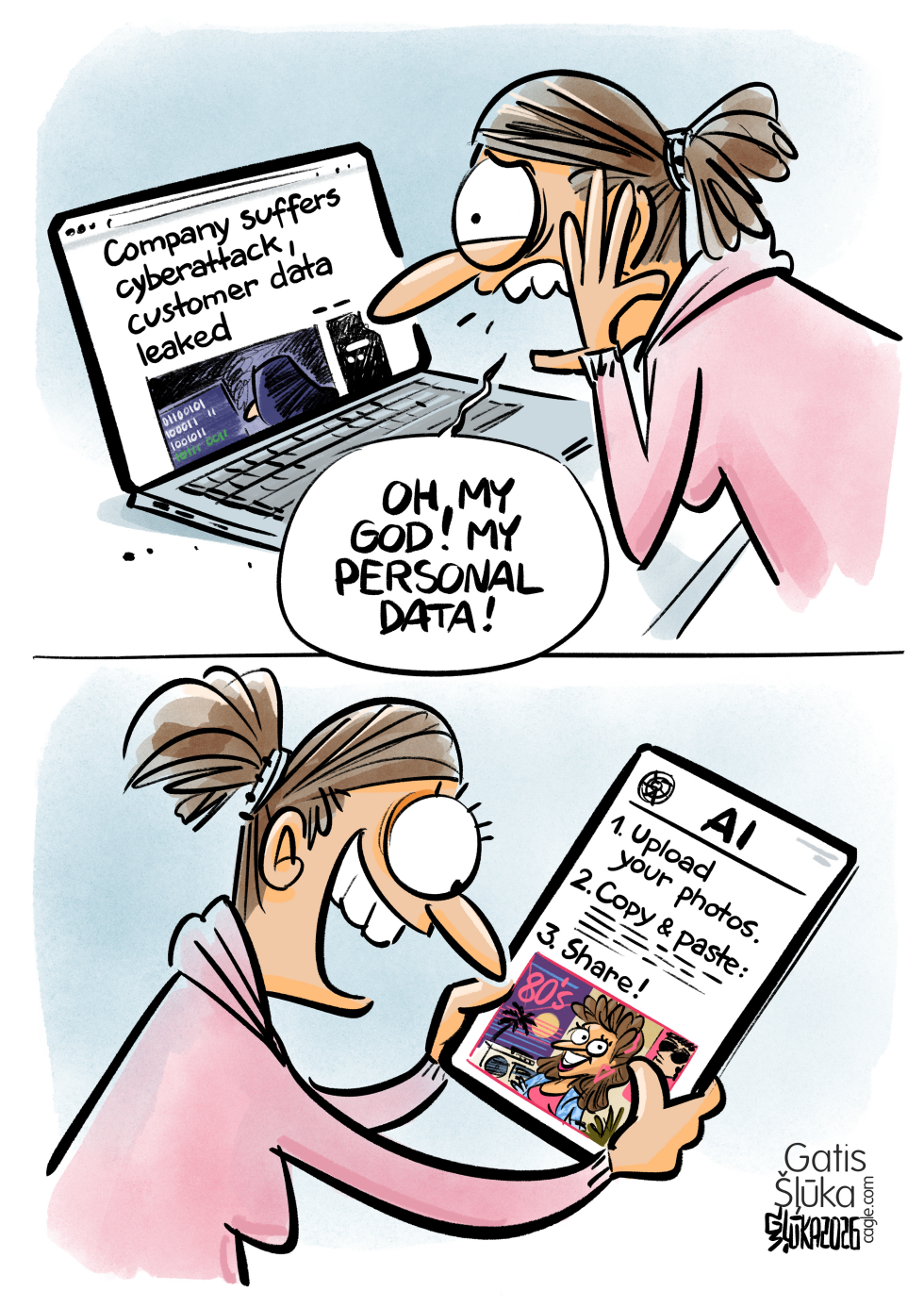
A company cyberattack exposes customer records, prompting widespread alarm over personal data security. The incident highlights ongoing vulnerabilities in corporate networks and the ease with which private information spreads online. At the same time, users continue to upload photos and details to AI platforms that copy and share content. The piece argues that public outrage over breaches often proves selective when convenient AI features are involved.
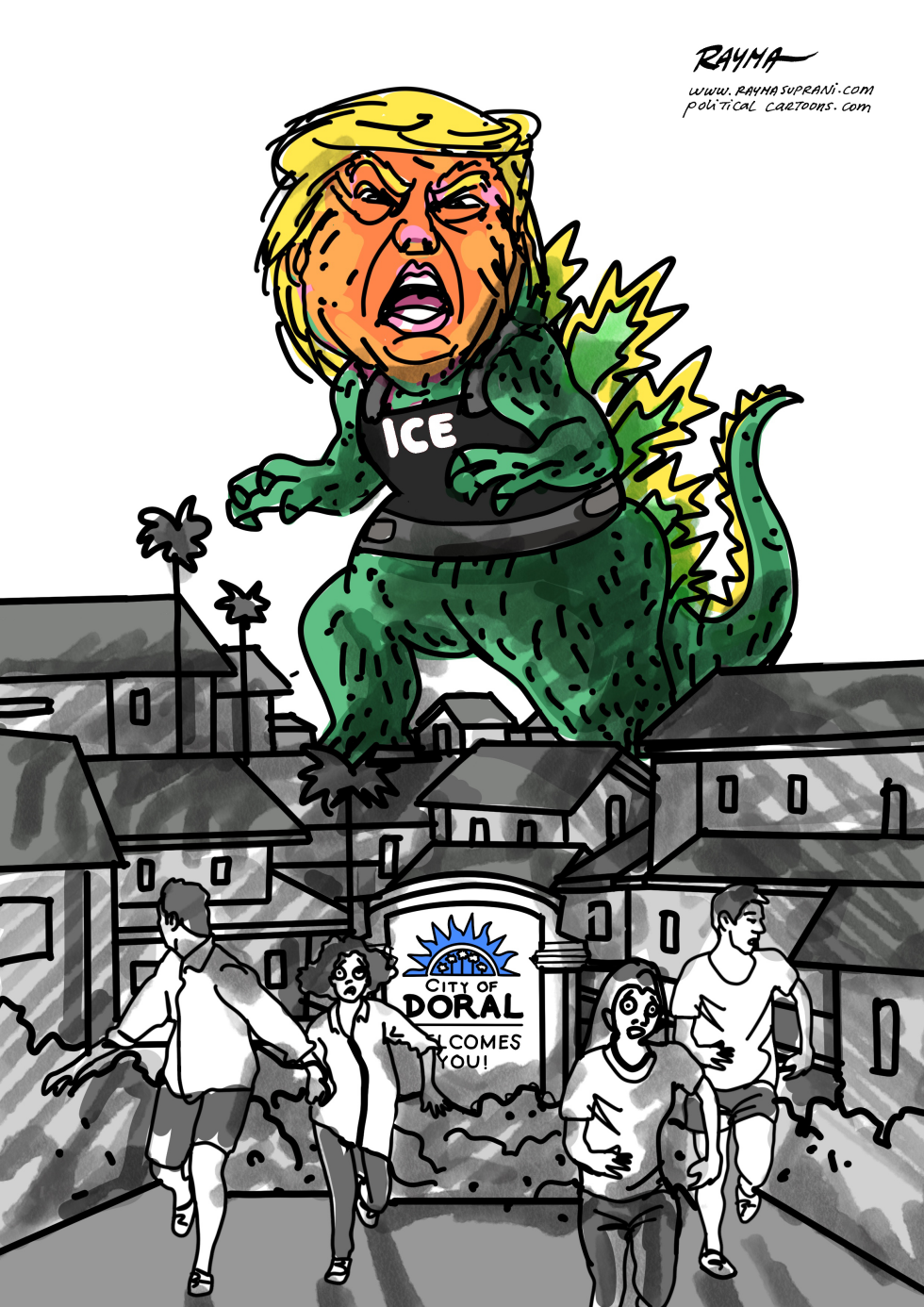
The image shows a large figure resembling Donald Trump dressed as an ICE agent towering over the city of Doral. People run from the scene near a welcome sign. The work addresses immigration enforcement policies active in Florida during 2026.
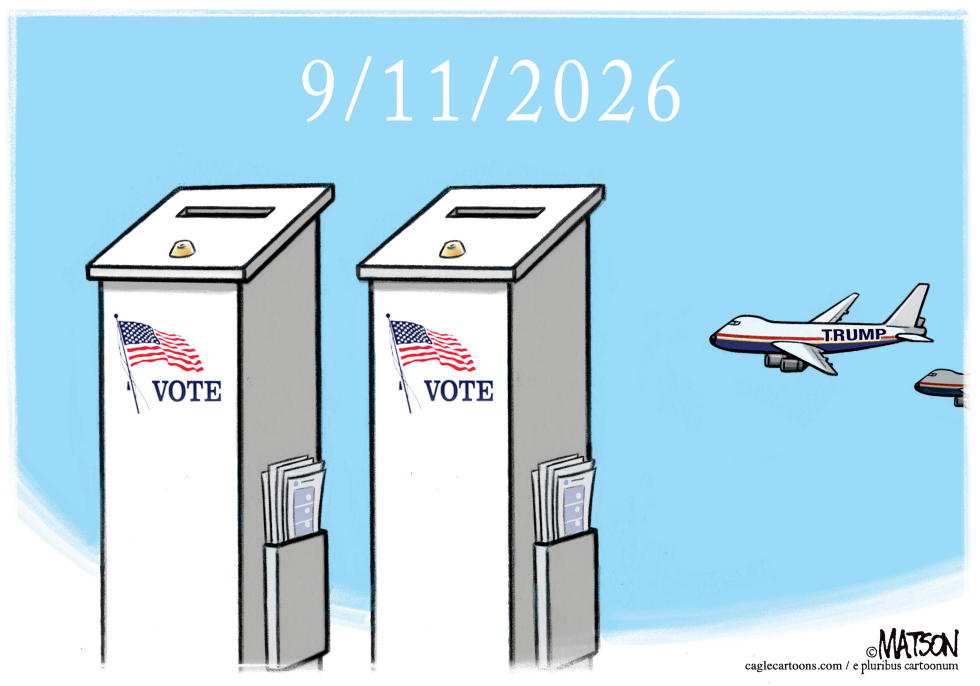
Donald Trump has signaled plans to impose new voting restrictions before the 2026 midterm elections. The moves come as Republicans seek advantages in key races. Critics argue the changes would suppress turnout among Democratic-leaning voters. Supporters claim the steps address fraud concerns. The cartoon frames the timing as an attack on voting access itself.
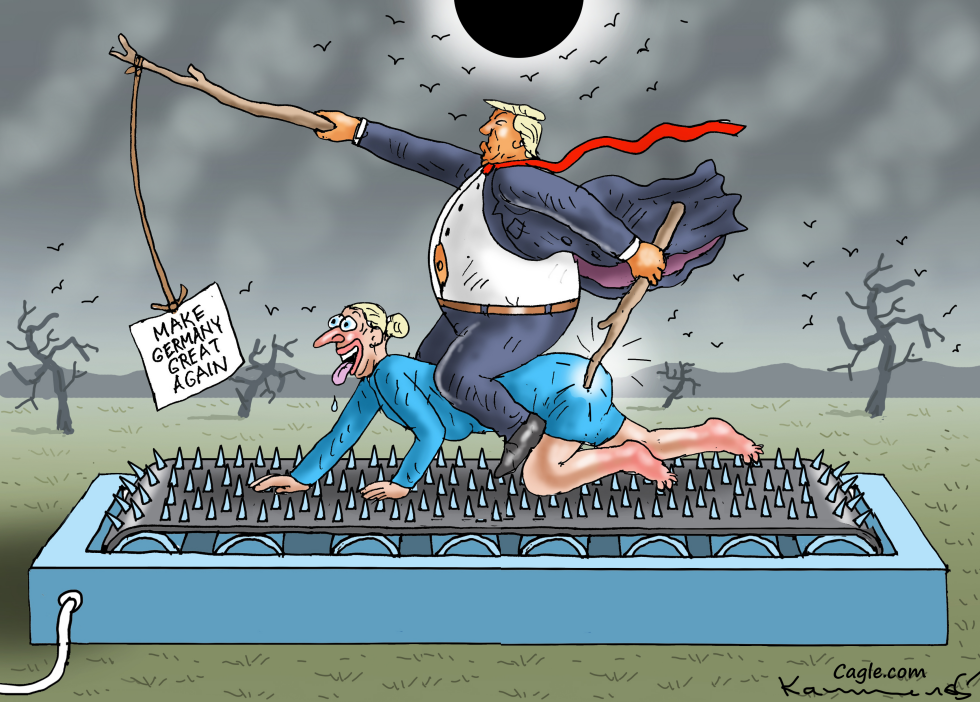
Donald Trump promotes a revival slogan aimed at Germany while Angela Merkel faces the consequences. The effort highlights ongoing tensions in transatlantic relations and questions about external influence on European domestic policy. The piece argues that such interventions impose unnecessary hardship without delivering benefits.
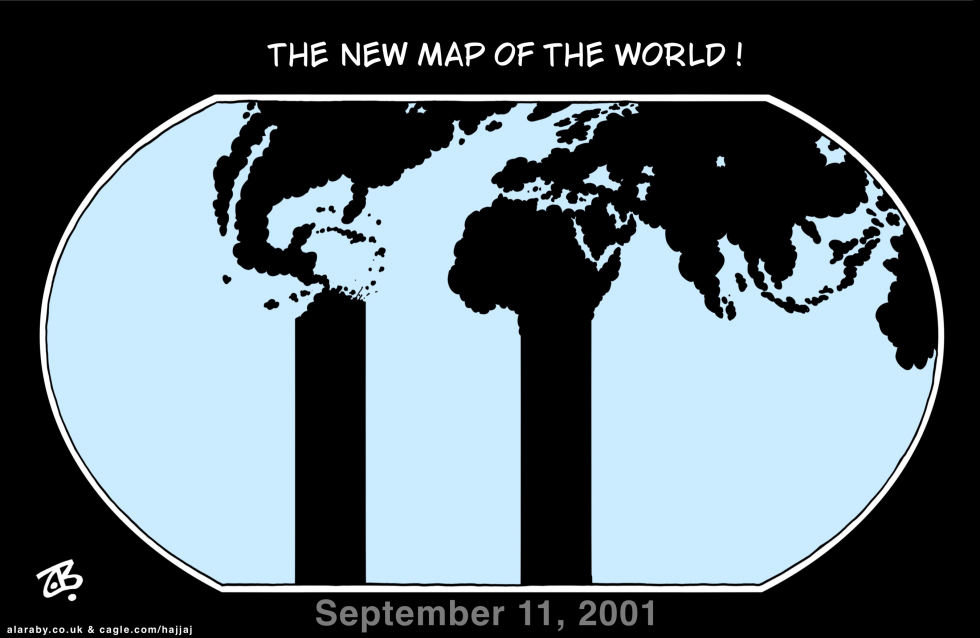
September 11, 2001, attacks on the World Trade Center and Pentagon killed nearly 3,000 people and triggered two decades of wars, surveillance expansions, and realignments in global alliances. The cartoon marks the anniversary by depicting the towers as continents emitting smoke, arguing that the event created an entirely new geopolitical order still felt today.
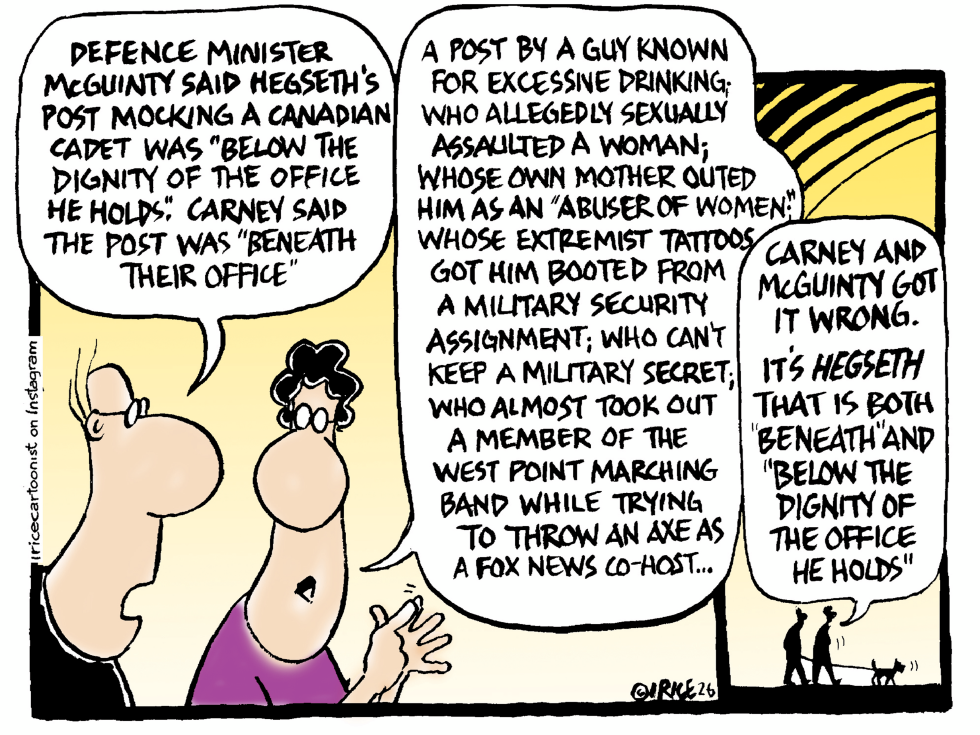
Canadian Defence Minister David McGuinty and Mark Carney publicly condemned a social media post by Pete Hegseth mocking a Canadian cadet, calling it beneath the dignity of the office. The remarks came amid Hegseth's nomination process for a senior U.S. defense position. The cartoon argues the ministers have the assessment backward, pointing instead to Hegseth's history of alleged misconduct, security clearance problems, and public incidents as the true disqualifiers. This reflects ongoing debate over nominee vetting standards and cross-border political commentary on U.S. appointments.
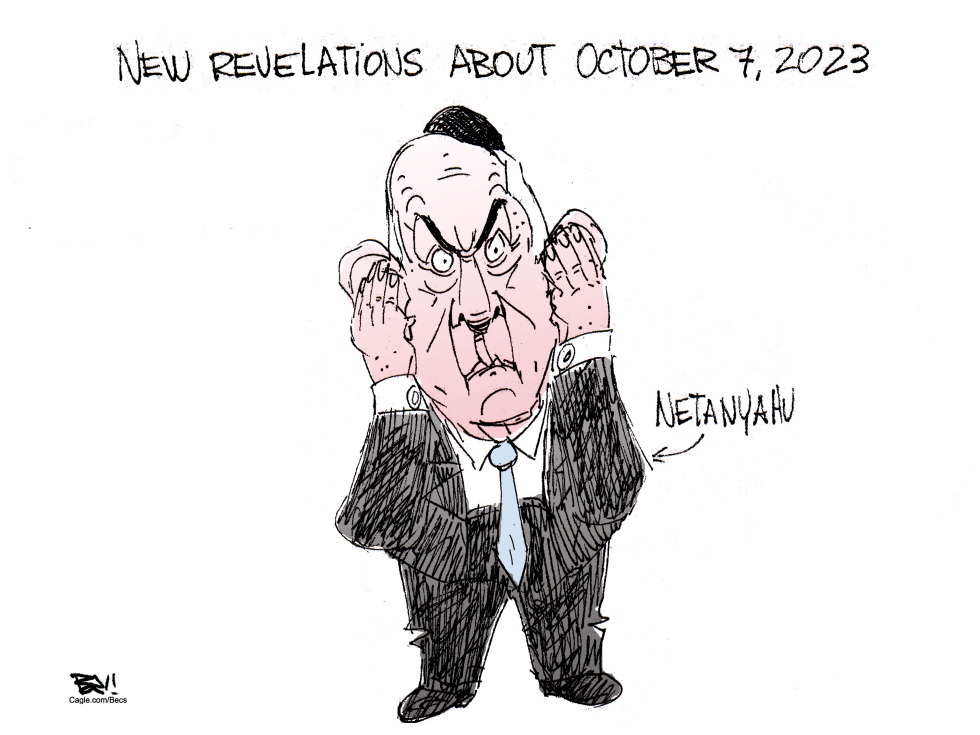
New details have surfaced regarding intelligence and preparedness failures ahead of the October 7, 2023 Hamas attacks. Israeli Prime Minister Benjamin Netanyahu has drawn criticism for appearing to dismiss these updates rather than address them directly. The ongoing debate centers on political responsibility for the deadliest attack in Israel's history and the government's handling of subsequent inquiries. Netanyahu's approach risks deepening public distrust in leadership during a period of heightened regional tension. The cartoon portrays this stance as deliberate avoidance of uncomfortable facts.
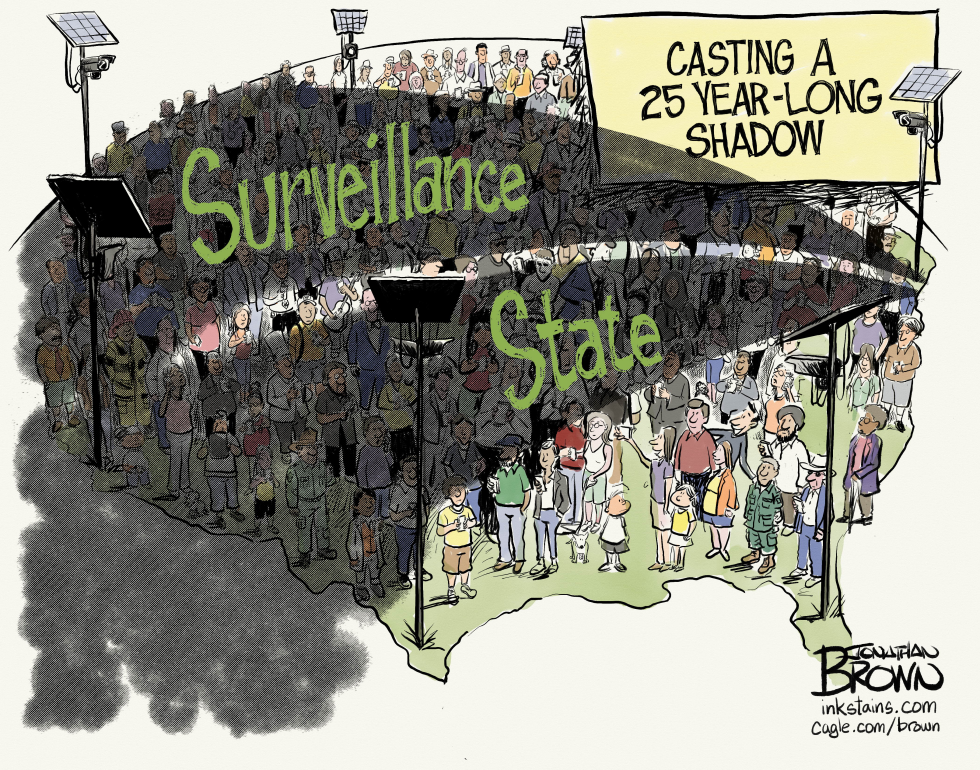
The cartoon depicts a dense crowd of Americans standing on a map of the United States, partially obscured by a large dark shadow cast by surveillance cameras mounted on poles. The words 'Surveillance State' appear prominently in green lettering across the scene, while a sign in the upper right reads 'CASTING A 25 YEAR-LONG SHADOW.' The image comments on the lasting effects of expanded government surveillance programs that began after the September 11 attacks, now spanning a quarter century. It illustrates how these measures continue to influence daily life and public spaces in 2026.
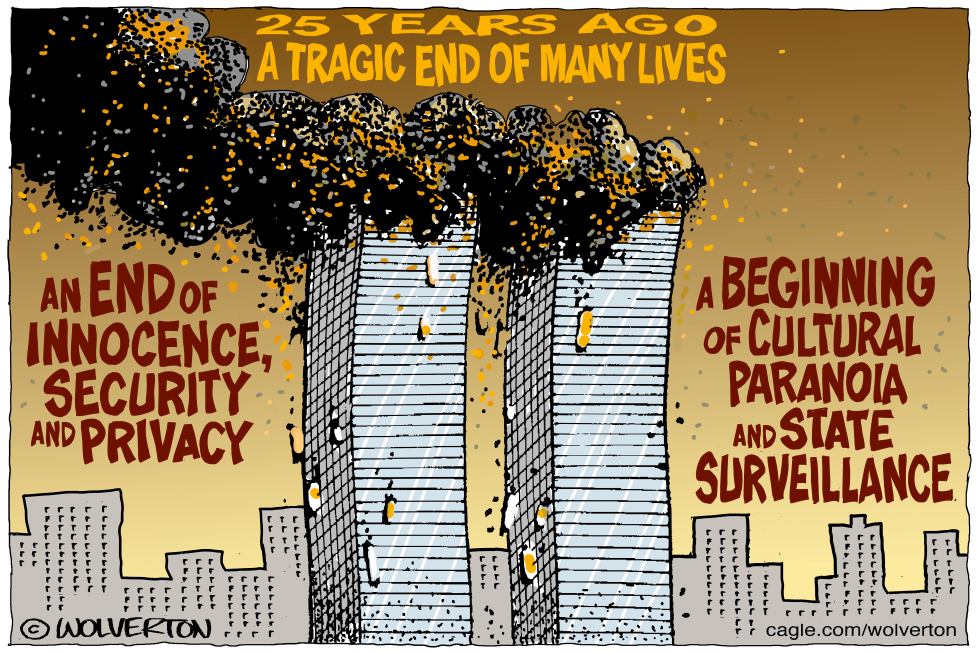
On the 25th anniversary of the September 11 attacks, the cartoon highlights the human tragedy while pointing to the subsequent expansion of state surveillance and erosion of privacy. The editorial position frames the attacks as both an end to national innocence and the start of heightened monitoring.
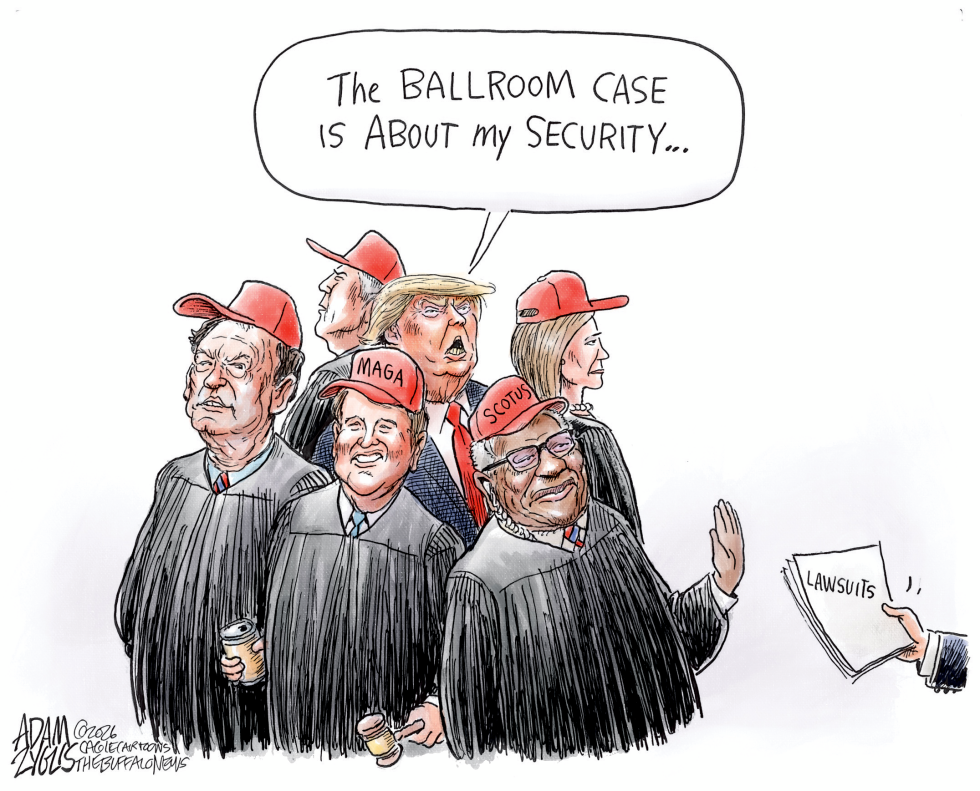
A political cartoon published September 2, 2026, shows Supreme Court justices in judicial robes and red MAGA caps gathered around Donald Trump. One justice declares in a speech bubble that the ballroom case is about my security. A hand extends papers labeled lawsuits from the side. The image comments on recent litigation involving Trump and claims of judicial security concerns tied to the case.
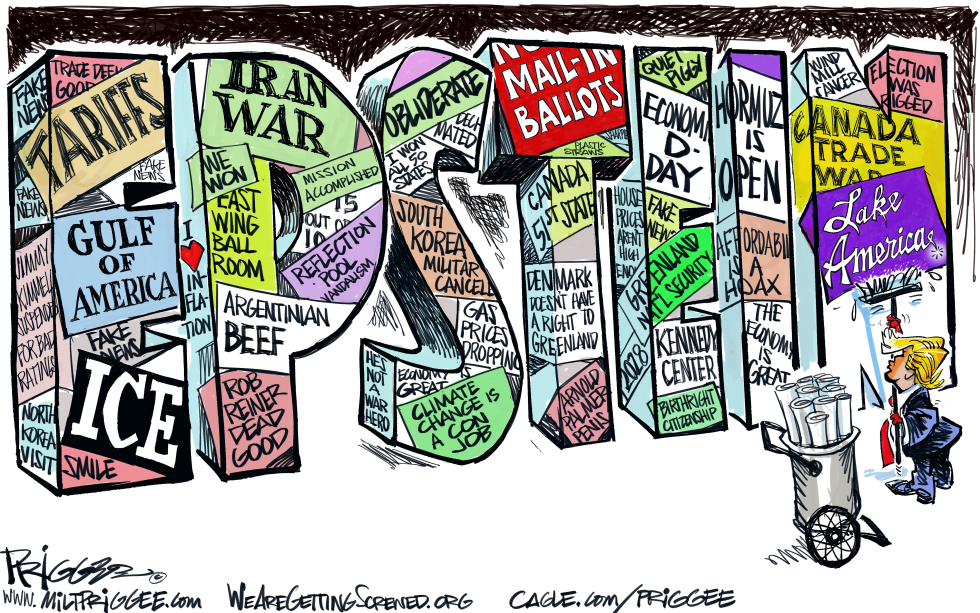
Donald Trump appears in a September 2026 cartoon pushing a cart stacked with signs promoting tariffs, questioning mail-in ballots, and asserting claims about Iran, Canada trade, and domestic issues. The image captures a pattern of public messaging that blends economic nationalism with repeated challenges to established processes. The editorial position frames these statements as a deliberate strategy to keep multiple controversies in motion at once.
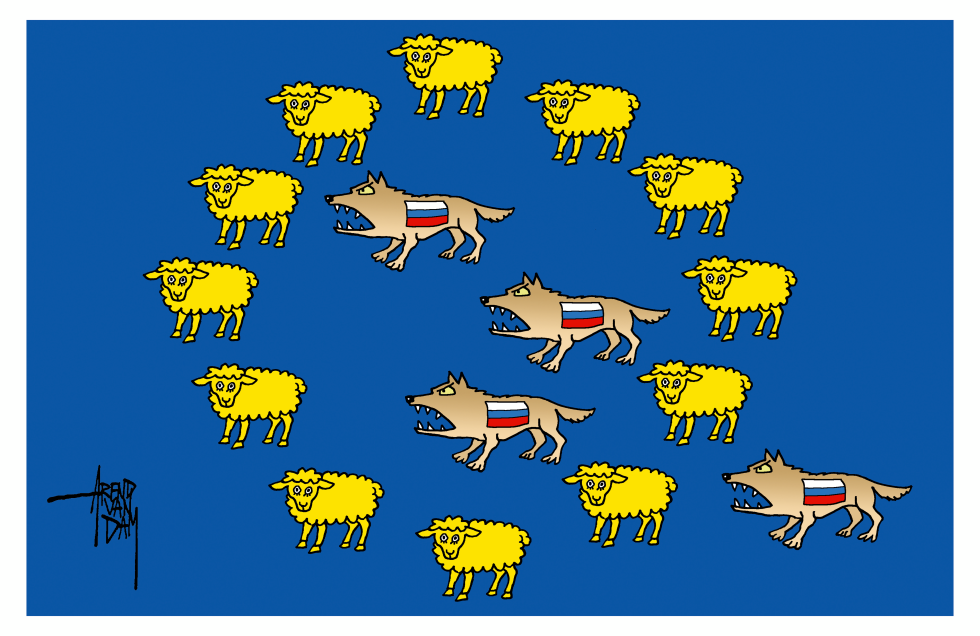
Russian hybrid warfare operations continue to target Eastern European nations through infiltration and influence campaigns. These tactics blend conventional pressure with covert actions to destabilize neighbors without triggering full-scale conflict. The editorial argues that European states must recognize and counter these disguised threats before they erode security further.
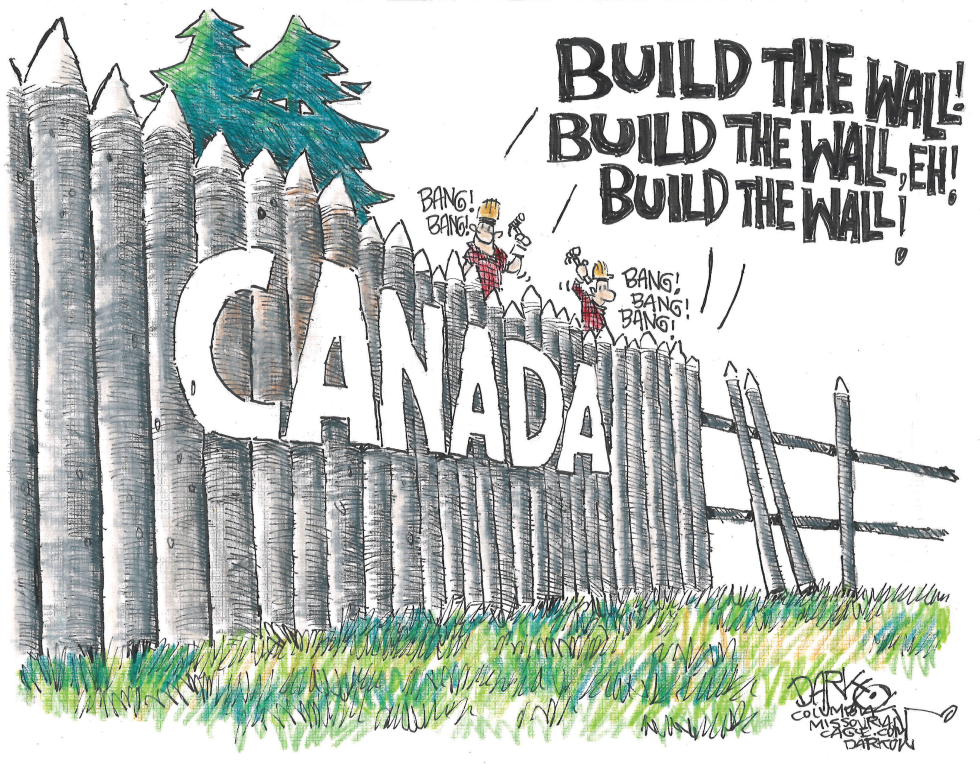
Canada has begun construction of a substantial border barrier along its southern frontier, echoing long-standing calls for stricter immigration controls. Officials cite rising cross-border movements and security concerns as justification for the project. The move marks a notable policy shift for a country historically open to migration. The cartoon portrays this development with pointed irony, highlighting the adoption of aggressive enforcement tactics previously associated with other nations.