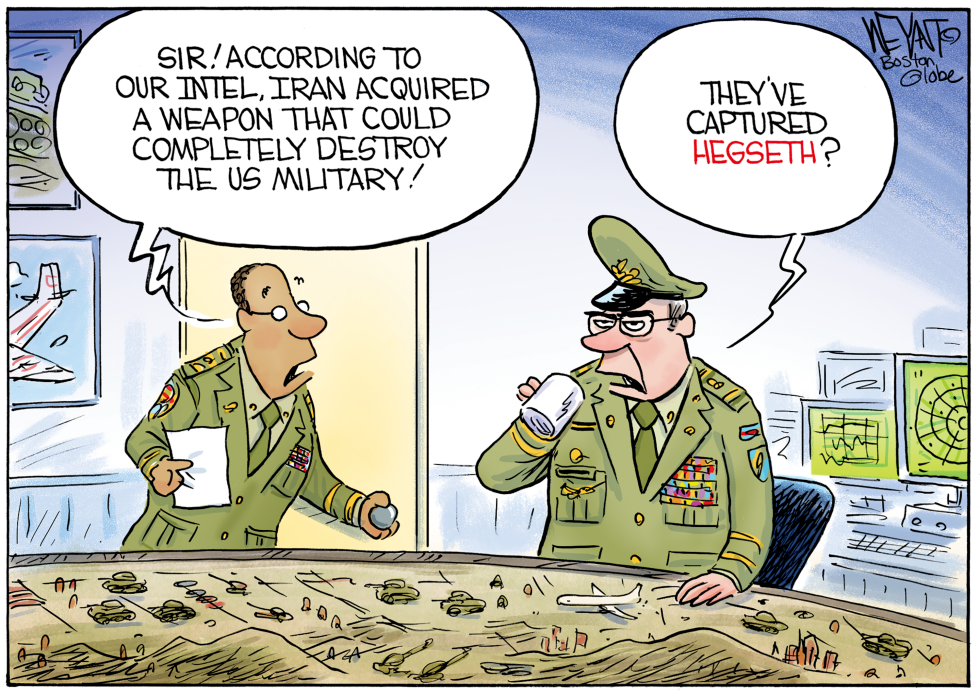
On September 16 2026 a cartoon depicted two US military officers reacting to intelligence about an Iranian weapon capable of destroying the American military. The senior officer immediately identifies Pete Hegseth as the captured asset in question. The piece responds to ongoing debate over Hegseth's fitness for senior defense leadership and questions whether his presence undermines readiness more than external adversaries.
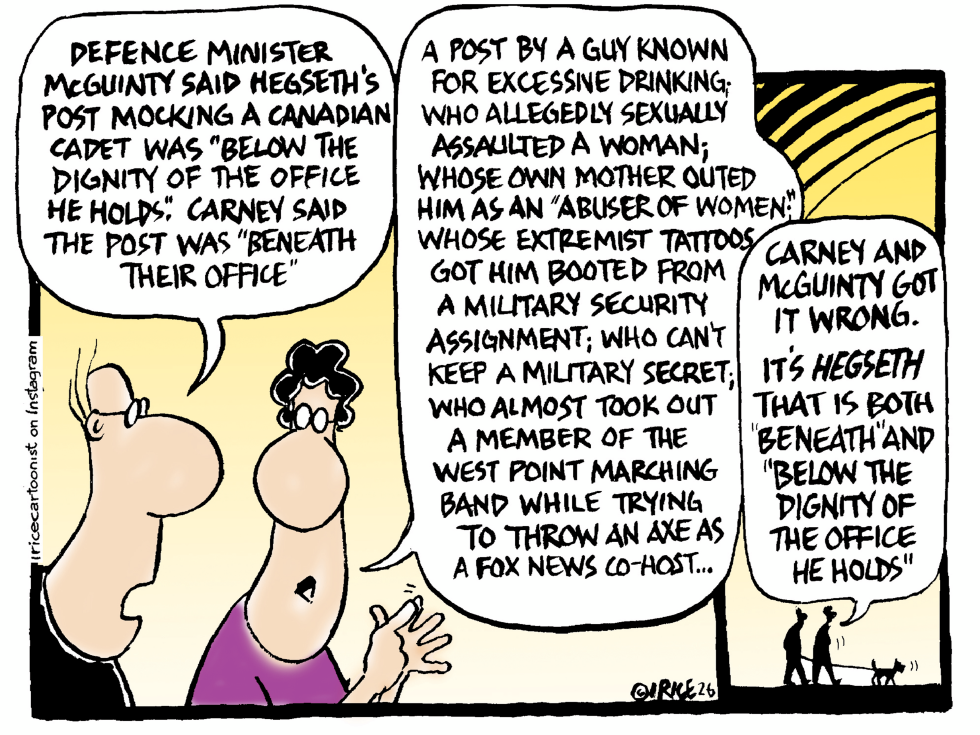
Canadian Defence Minister David McGuinty and Mark Carney publicly condemned a social media post by Pete Hegseth mocking a Canadian cadet, calling it beneath the dignity of the office. The remarks came amid Hegseth's nomination process for a senior U.S. defense position. The cartoon argues the ministers have the assessment backward, pointing instead to Hegseth's history of alleged misconduct, security clearance problems, and public incidents as the true disqualifiers. This reflects ongoing debate over nominee vetting standards and cross-border political commentary on U.S. appointments.
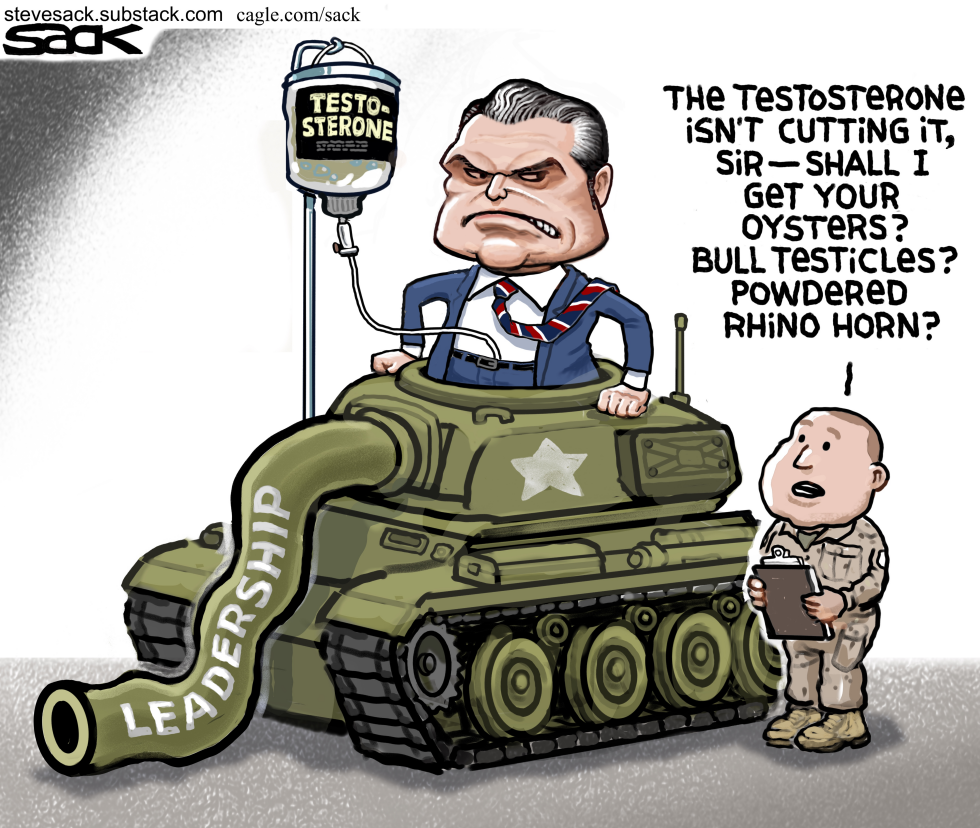
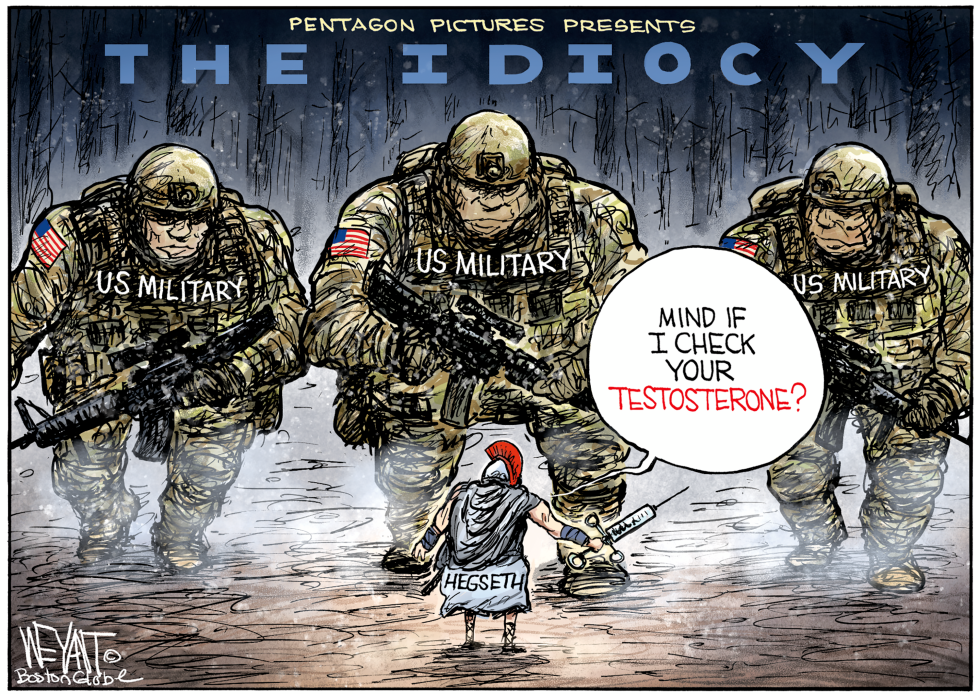
Pete Hegseth's nomination and early actions as a top defense official have spotlighted his emphasis on testosterone levels as a solution to perceived military leadership gaps. The approach has prompted questions from within the ranks about whether hormone supplements address core readiness and command issues. The cartoon portrays the policy as misguided and ineffective.
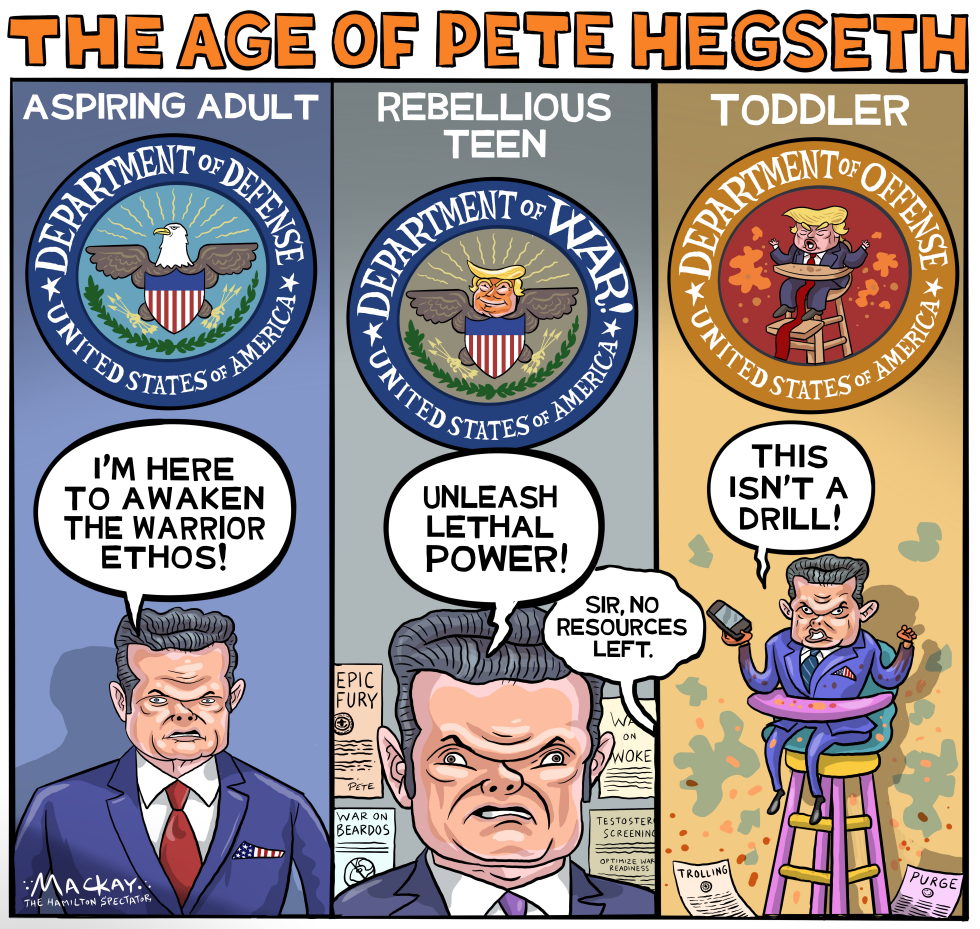
The cartoon by Graeme MacKay portrays Pete Hegseth's progression through three stages at the Pentagon under President Trump. In the first panel Hegseth pledges to awaken the warrior ethos at the Department of Defense. The middle panel shows him calling to unleash lethal power while an aide reports no resources remain. The final panel depicts a toddler Trump at the Department of Offense with Hegseth as a frantic aide amid papers about testosterone screening and purges. The work comments on the Trump administration's approach to military leadership and policy priorities as of September 2026.
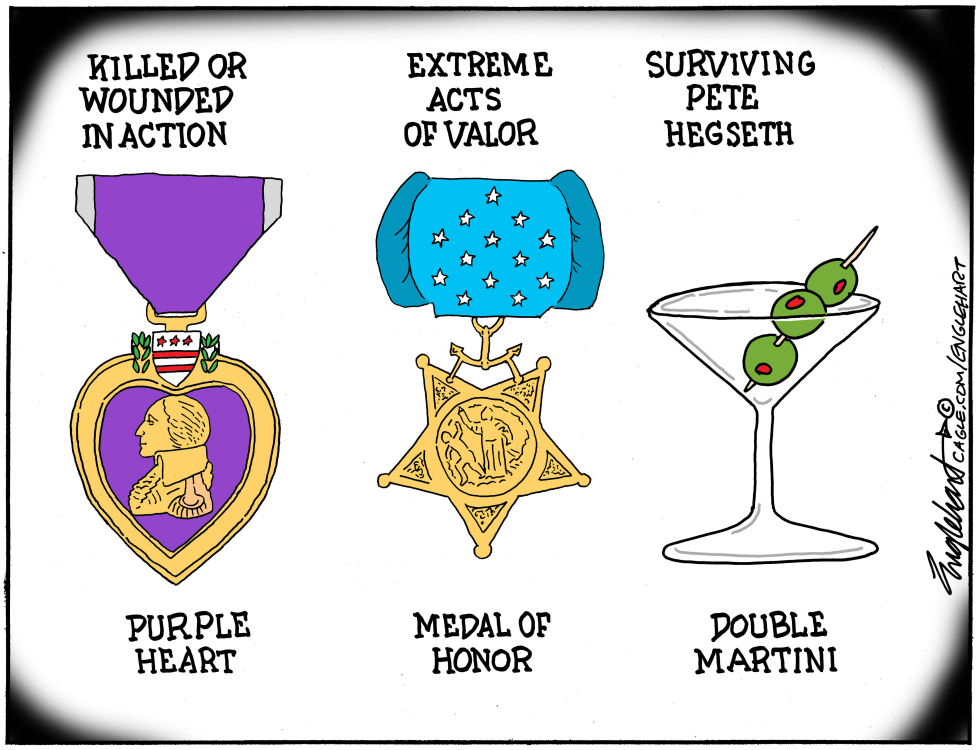
Pete Hegseth's nomination for a senior defense post in 2026 revived questions about his military service record and personal conduct. Critics highlighted past statements and behavior that some viewed as disqualifying for oversight of the armed forces. The cartoon responds by equating endurance under Hegseth with a dubious achievement on par with battlefield valor awards.
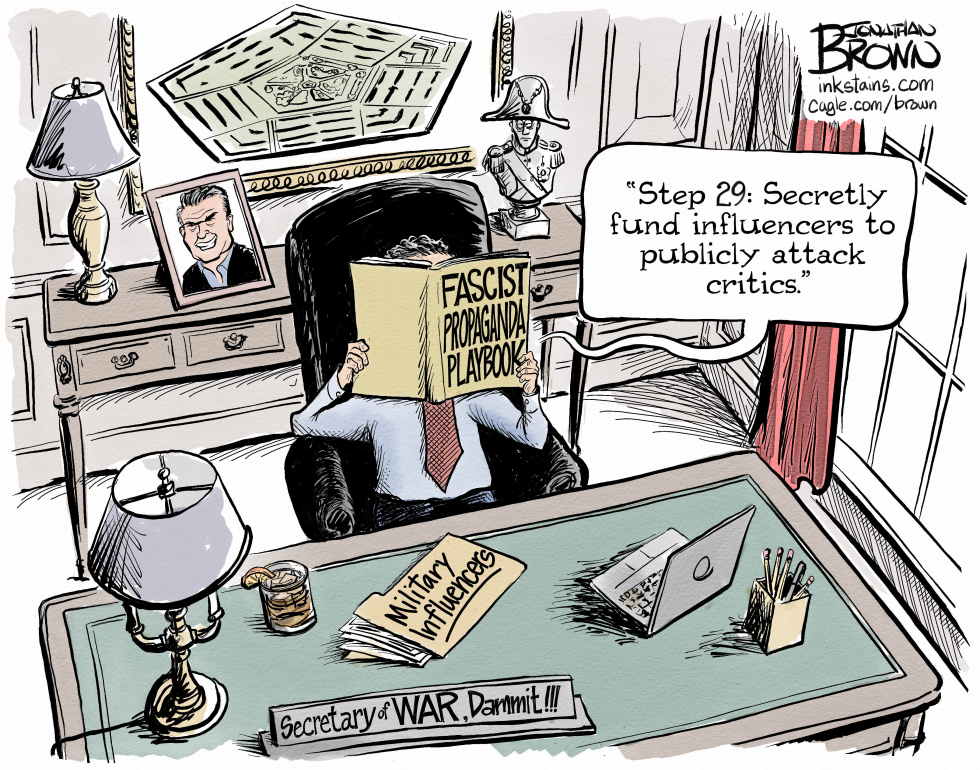
The cartoon shows a government official identified as the Secretary of War seated at a desk while holding open a book labeled Fascist Propaganda Playbook. A speech bubble lists Step 29 about secretly funding influencers to attack critics. Papers on the desk are labeled Military Influencers and a nameplate reads Secretary of WAR, Dammit. The scene includes office items such as lamps, a laptop, and a framed photo. The image responds to concerns over use of military-related influence operations in domestic political disputes.
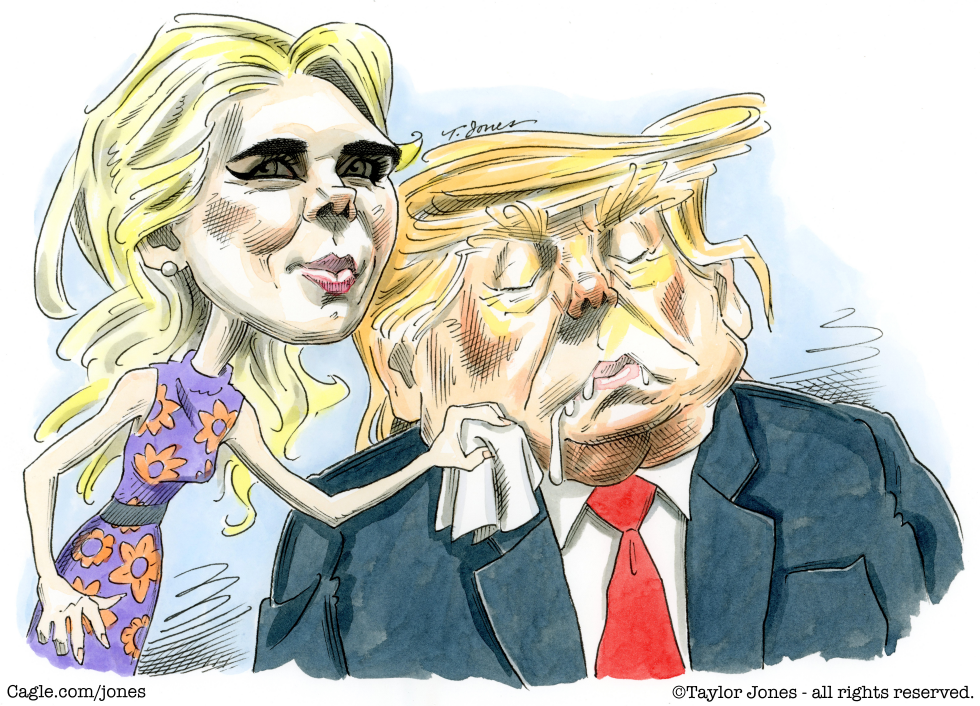
Donald Trump appears in a vulnerable state during a public or staff interaction in 2026. Natalie Harp, a known associate, tends to him by wiping drool from his face. The moment highlights ongoing scrutiny of the former president's health and stamina. Observers note the personal nature of the assistance amid continued political activity. The piece presents the scene as evidence of reliance on close aides.
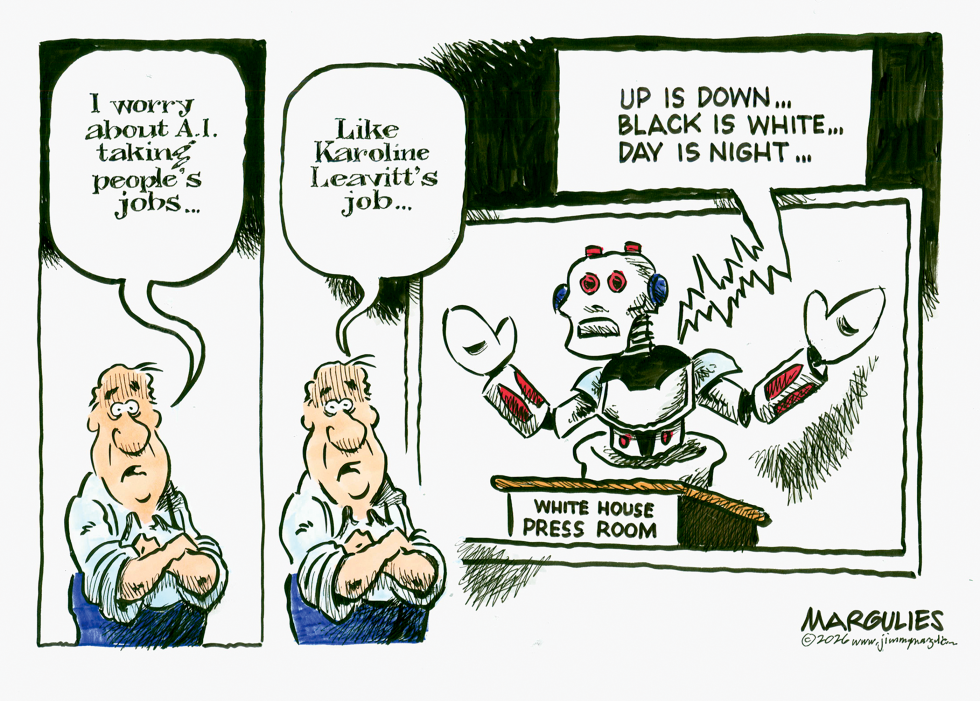
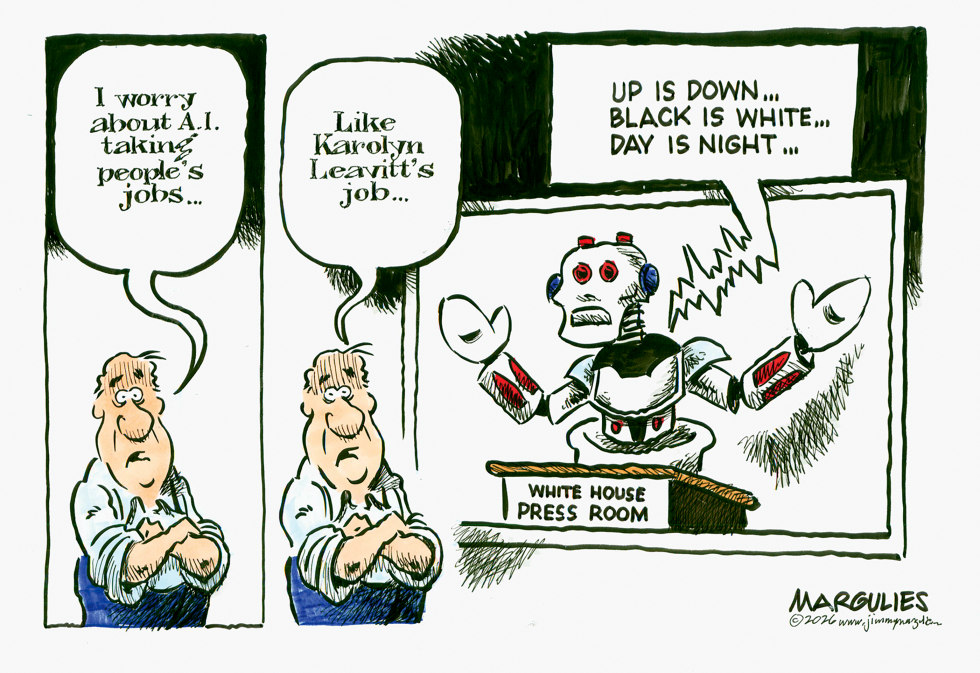
As artificial intelligence advances into government communications roles, concerns grow over job displacement for human staff including White House press secretary Karoline Leavitt. The piece responds to this development by depicting an AI robot assuming the podium and issuing contradictory statements. It takes the position that such automation risks eroding clarity and accountability in official messaging.
An AI robot has assumed duties as White House press secretary amid ongoing debates over automation displacing human roles in government communications. The development highlights tensions between technological efficiency and traditional staffing in high-profile federal positions. The piece portrays the shift as enabling scripted, contradictory messaging from the briefing room.
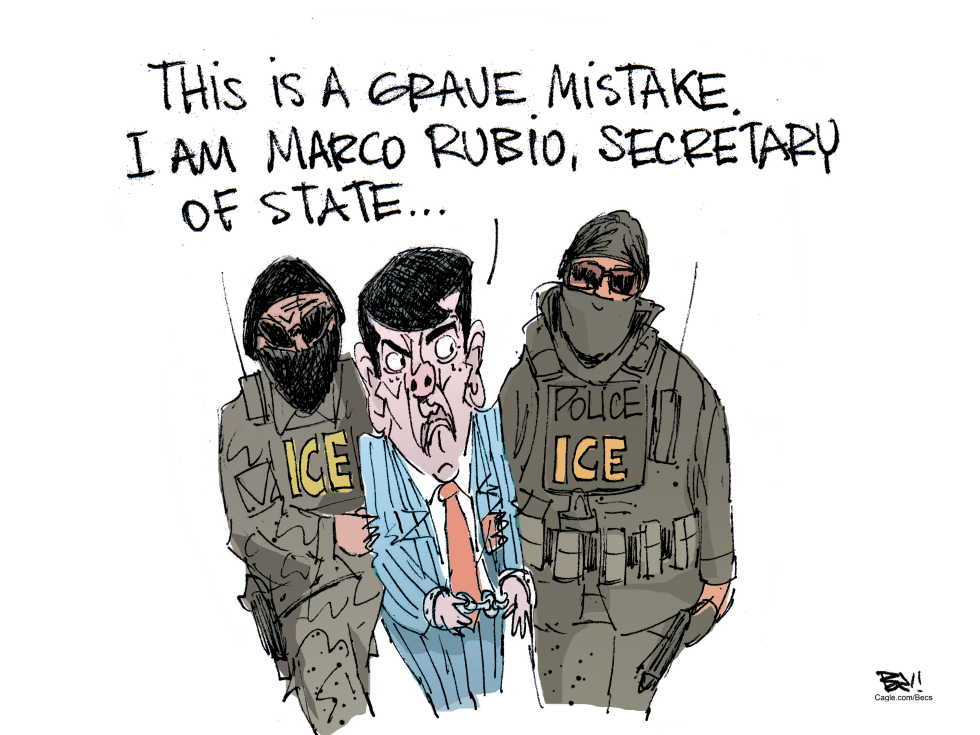
ICE agents detain a high-ranking official who identifies himself as Marco Rubio, Secretary of State, during what appears to be a mistaken arrest. The incident highlights ongoing tensions around immigration enforcement practices and the risk of errors in high-profile cases. The piece takes the position that such detentions reflect broader overreach in agency operations.
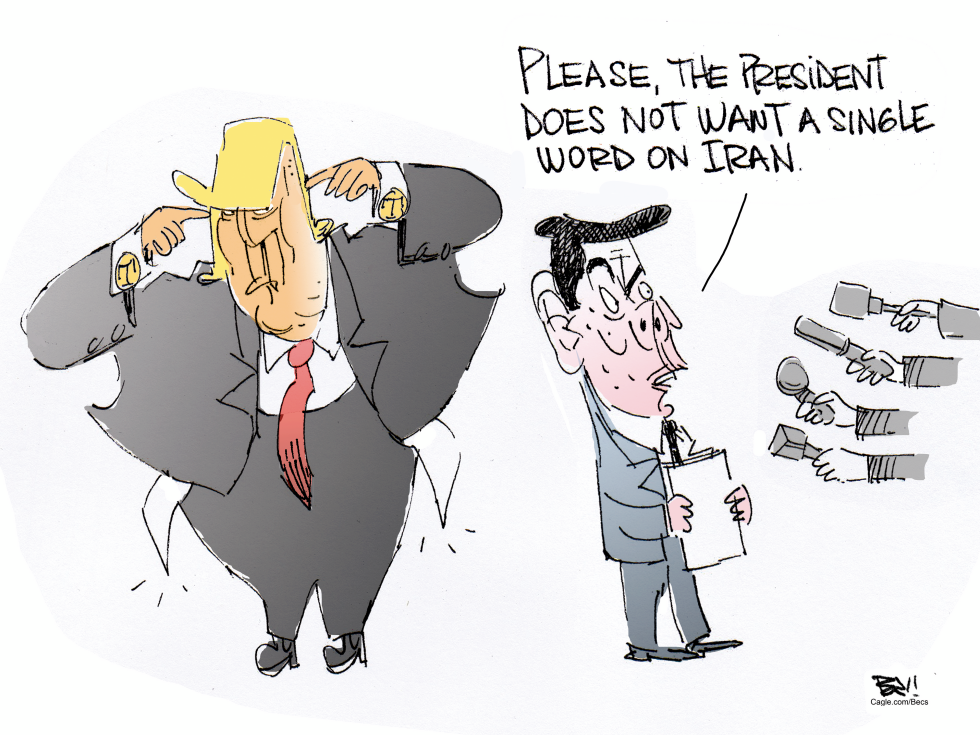
President Trump directed staff to avoid any public discussion of Iran policy. The move drew immediate pushback from reporters seeking clarification on administration plans. The editorial takes the position that the order reflects an effort to avoid accountability on a key foreign policy issue.
Defense Secretary Pete Hegseth has directed new scrutiny of testosterone levels across US military units. The move comes as the Pentagon reviews physical readiness standards for combat roles. Critics argue the focus distracts from broader readiness issues while supporters say it enforces accountability. The editorial takes the position that such micromanagement undermines troop morale and operational effectiveness.
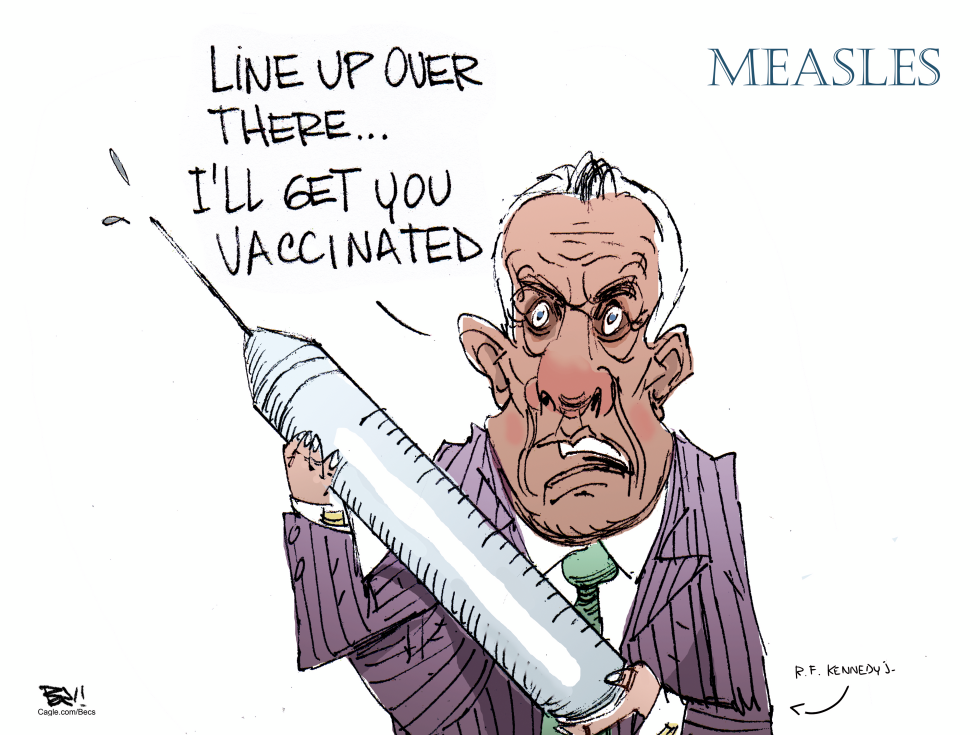
Robert F. Kennedy Jr., serving as a top health official in 2026, faces scrutiny over a sudden push for measles vaccinations. The move comes as cases rise and public skepticism lingers from prior stances. The editorial argues the policy reversal exposes inconsistent leadership on immunization.
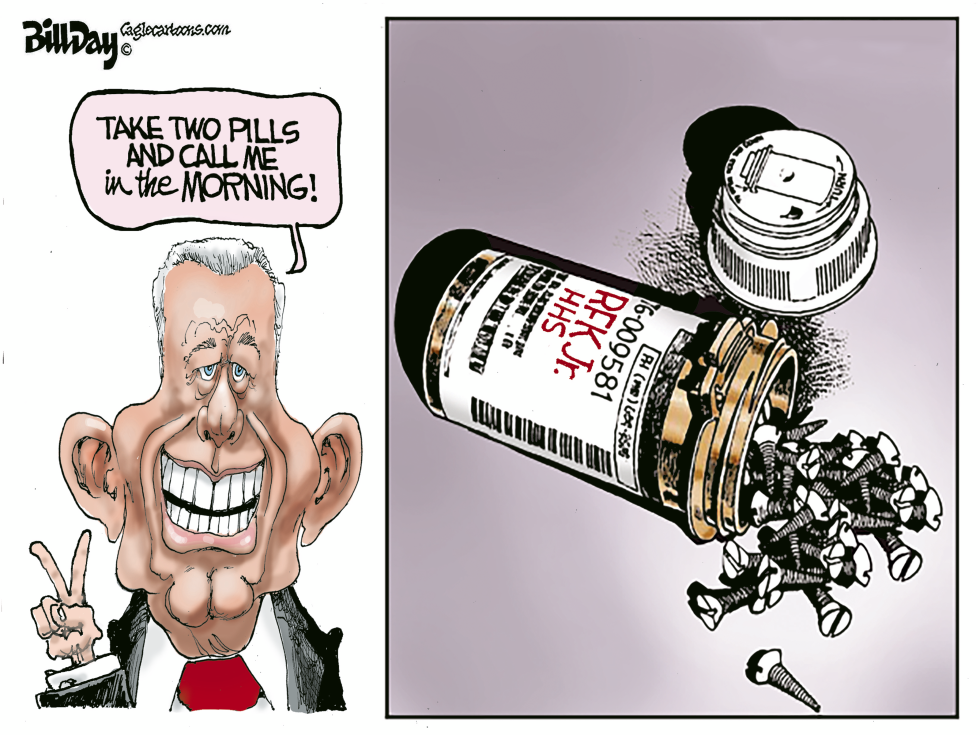
President Biden floated Robert F. Kennedy Jr. for the HHS post amid ongoing debates over health leadership. The move drew attention for its unconventional choice. The piece portrays the suggestion as a flawed remedy likely to cause more problems than it solves.
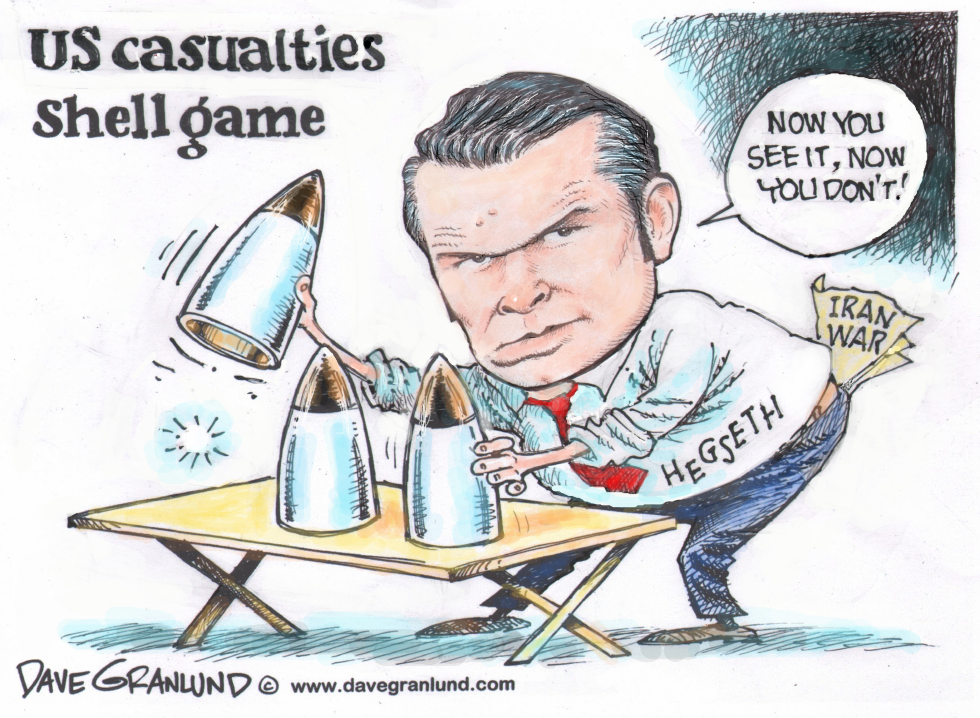
The cartoon shows Defense Secretary Pete Hegseth performing a shell game with three large missile casings on a folding table. One casing is lifted to reveal nothing underneath while a speech bubble declares the classic misdirection line. A paper labeled Iran War protrudes from his pocket. The title references US casualties. Published amid reports of American losses in Middle East strikes, the image suggests official efforts to downplay or conceal the human cost of the conflict through selective presentation of information.