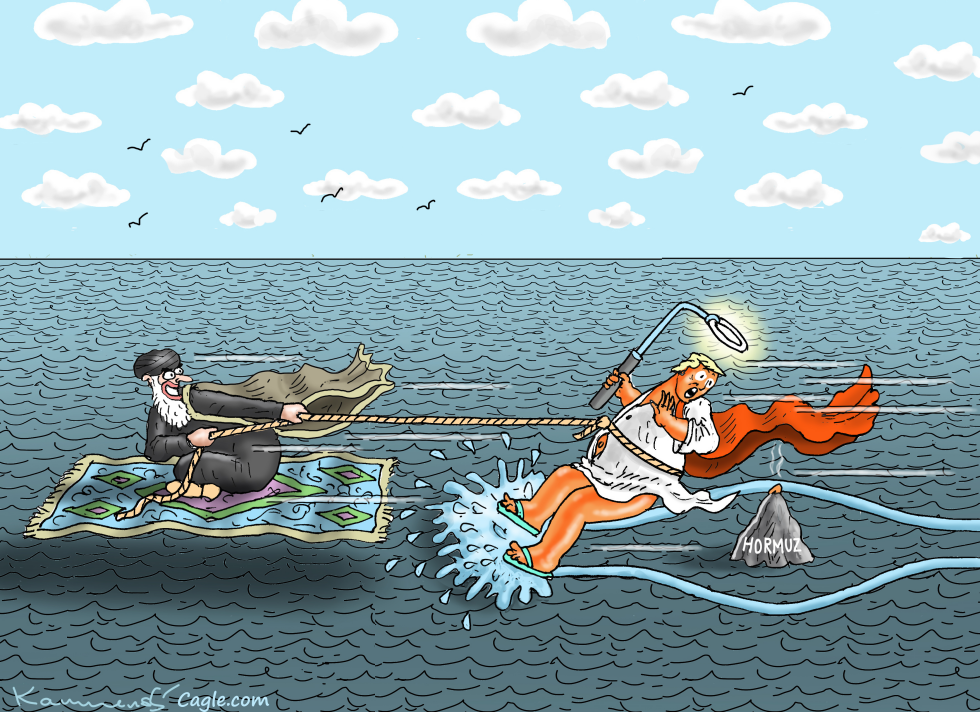
Tensions in the Strait of Hormuz have escalated with threats to shipping lanes critical for global oil supplies. Israeli and U.S. leaders face mounting losses from disruptions. The cartoon argues that involvement risks dragging both into deeper conflict without clear gains.
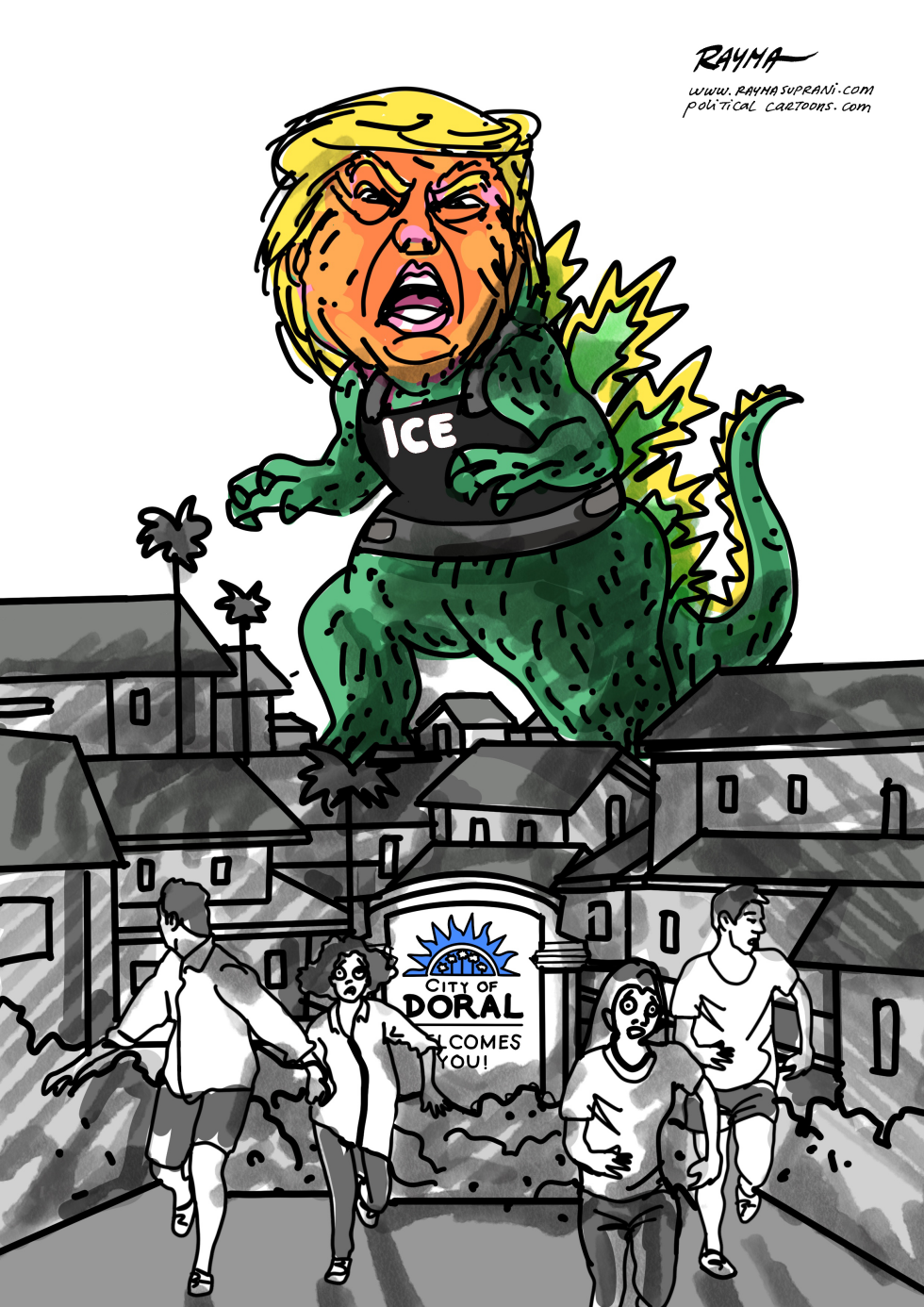
The image shows a large figure resembling Donald Trump dressed as an ICE agent towering over the city of Doral. People run from the scene near a welcome sign. The work addresses immigration enforcement policies active in Florida during 2026.
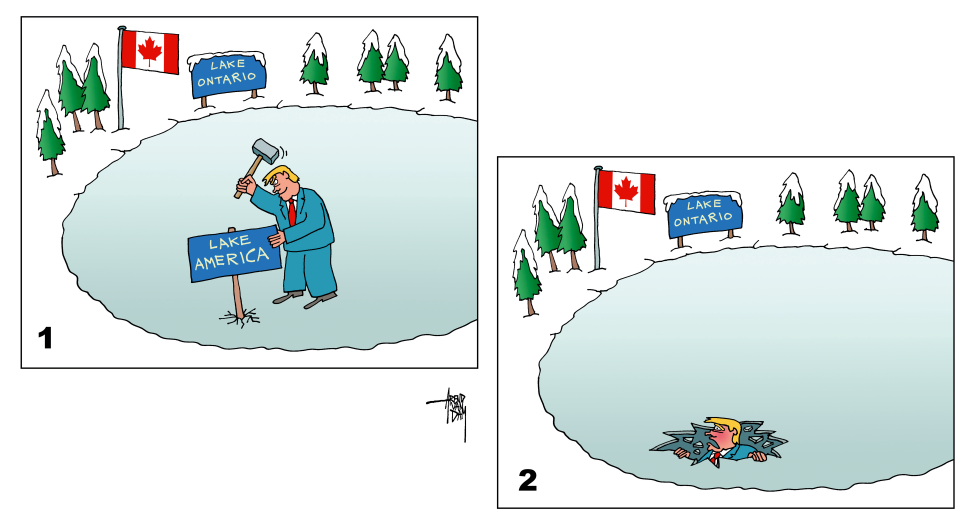
Donald Trump directed an aide to plant a Lake America sign on the frozen surface of Lake Ontario in a symbolic claim on Canadian waters. The move was part of ongoing US-Canada friction over shared resources and border definitions. The ice broke, sending the figure through the surface. The episode underscores the practical limits of unilateral US assertions against a close neighbor whose cooperation remains essential on trade, security, and environmental issues. The cartoon presents the effort as self-defeating and poorly timed.
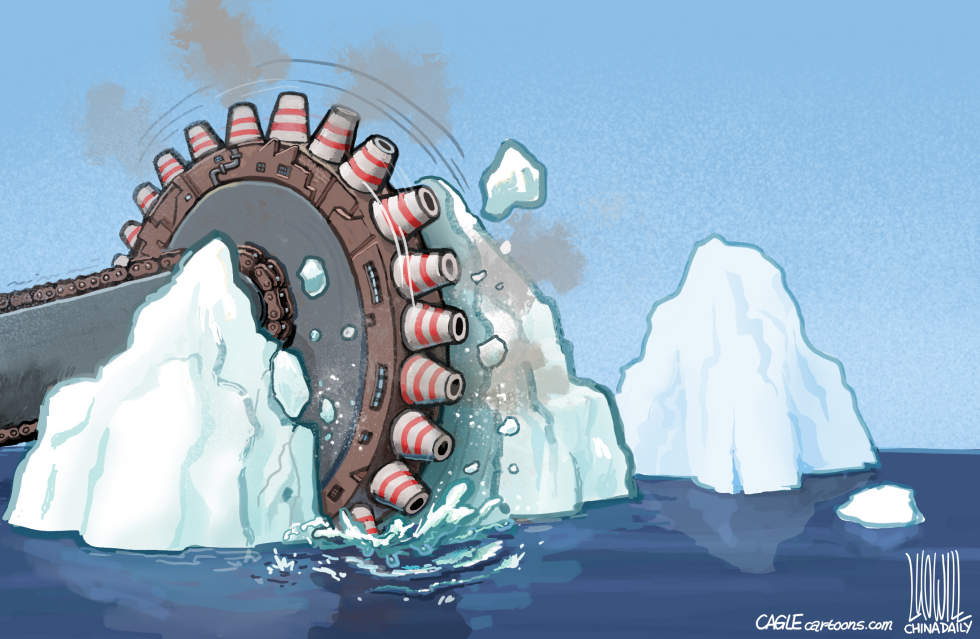
The cartoon depicts a large industrial drilling machine actively breaking through Arctic ice floes in open water. The machine features multiple red-and-white striped cylindrical components and emits dark exhaust. Icebergs float nearby under a clear sky. Published by China Daily, the image addresses ongoing concerns over resource extraction in polar regions and its contribution to ice loss.
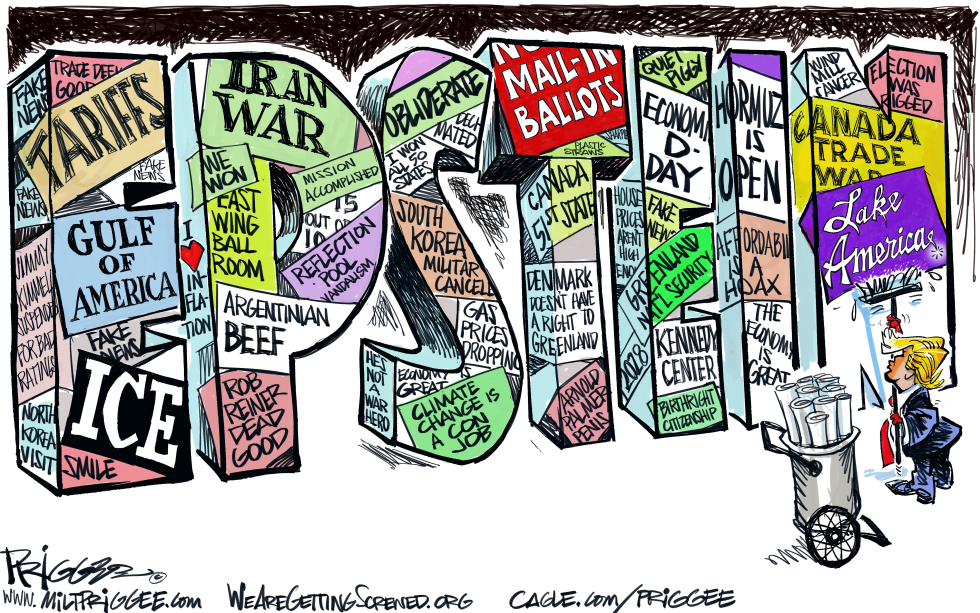
Donald Trump appears in a September 2026 cartoon pushing a cart stacked with signs promoting tariffs, questioning mail-in ballots, and asserting claims about Iran, Canada trade, and domestic issues. The image captures a pattern of public messaging that blends economic nationalism with repeated challenges to established processes. The editorial position frames these statements as a deliberate strategy to keep multiple controversies in motion at once.
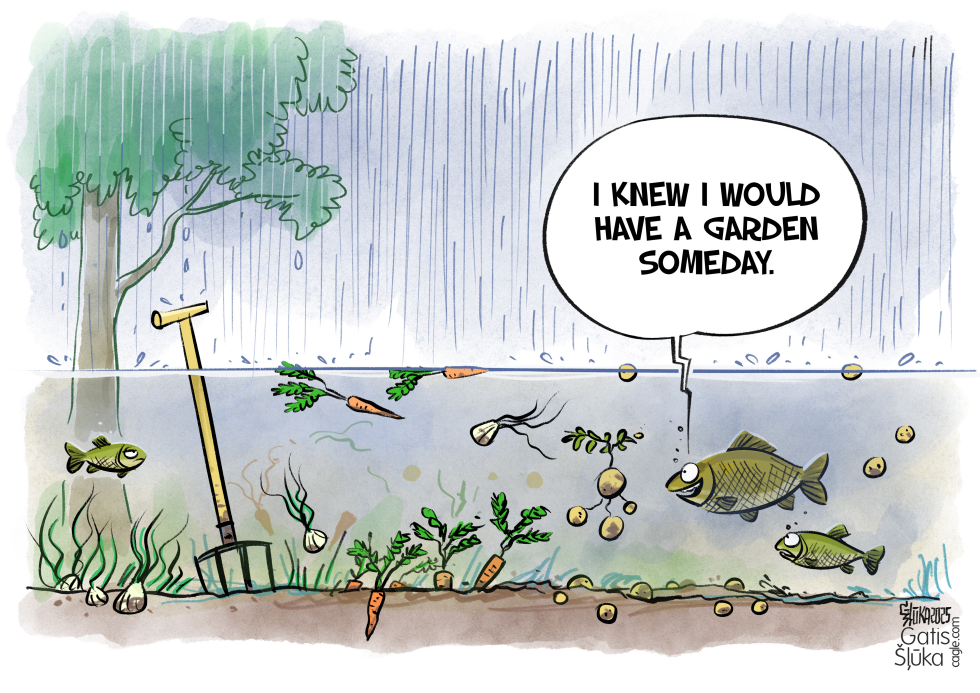
The cartoon shows fish swimming among carrots and other vegetables in a garden submerged by floodwaters, with one fish stating it always knew it would have a garden someday. A shovel stands upright in the soil below the waterline while rain pours down. The image responds to ongoing concerns about extreme weather events and their effects on farming. Heavy rainfall has become more frequent in many regions, turning fields into temporary ponds. The visual uses the fish's unexpected claim to underscore how flooding alters traditional land use and creates new, if temporary, aquatic environments.
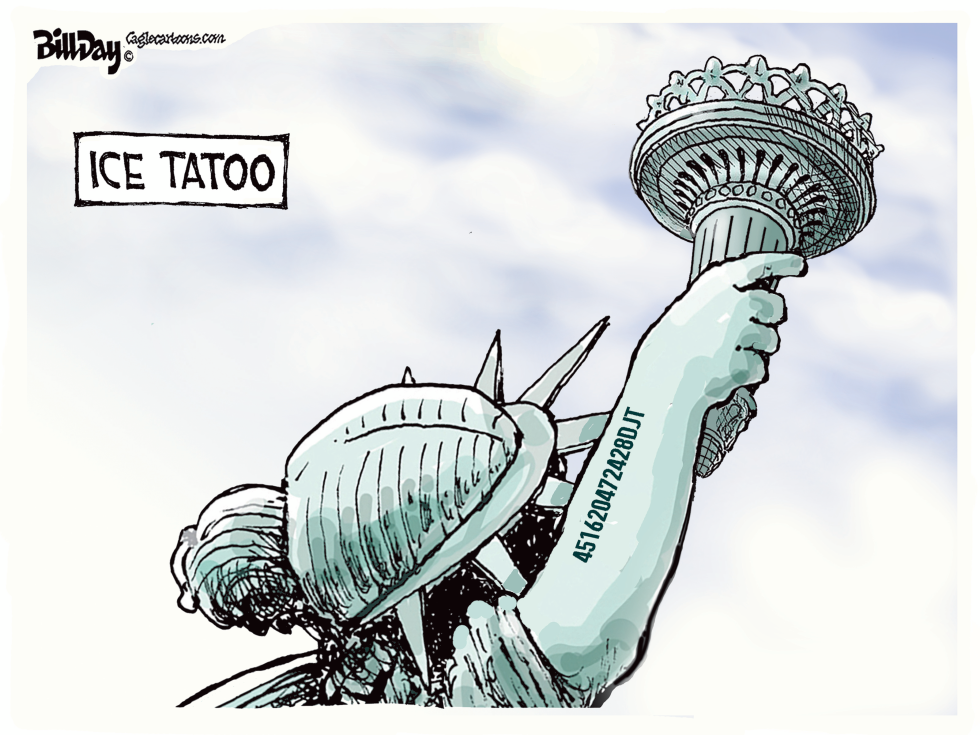
ICE enforcement actions continue to expand in 2026 with new detention and removal priorities. The Statue of Liberty appears marked with a numeric tattoo resembling prisoner identification. The image responds to ongoing border and interior enforcement operations. Critics argue the approach treats immigrants as criminals by default. The piece highlights how such policies clash with traditional symbols of welcome and liberty.
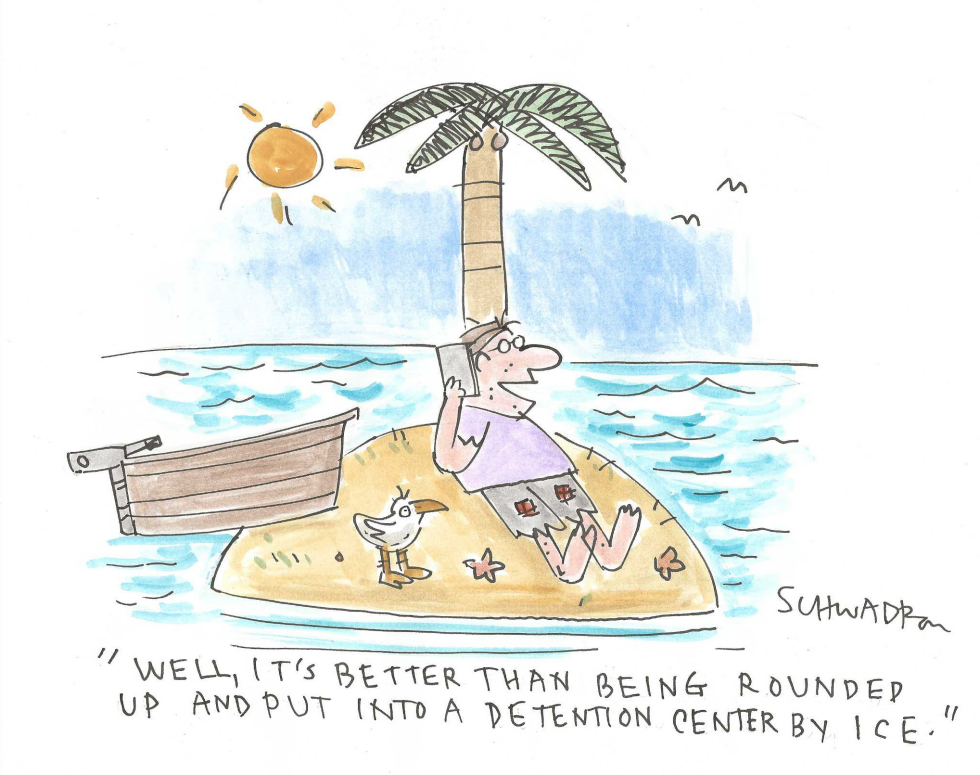
Immigration enforcement through ICE detention centers continues as a central policy tool amid ongoing border security debates. The approach draws criticism for its impact on individuals facing removal proceedings. The piece presents the view that extreme isolation can appear preferable to such facilities.
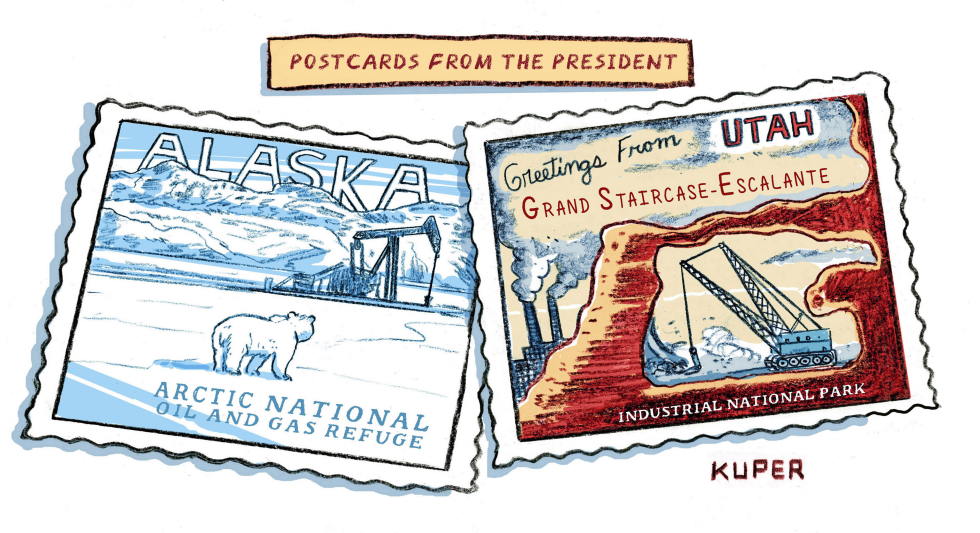
The president has advanced policies opening Arctic National Wildlife Refuge and Grand Staircase-Escalante to expanded oil and gas development. These moves prioritize domestic energy production over prior conservation designations. The editorial uses postcard imagery to critique the transformation of protected lands into industrial zones, arguing that short-term extraction gains undermine long-term environmental protections and public lands legacy.
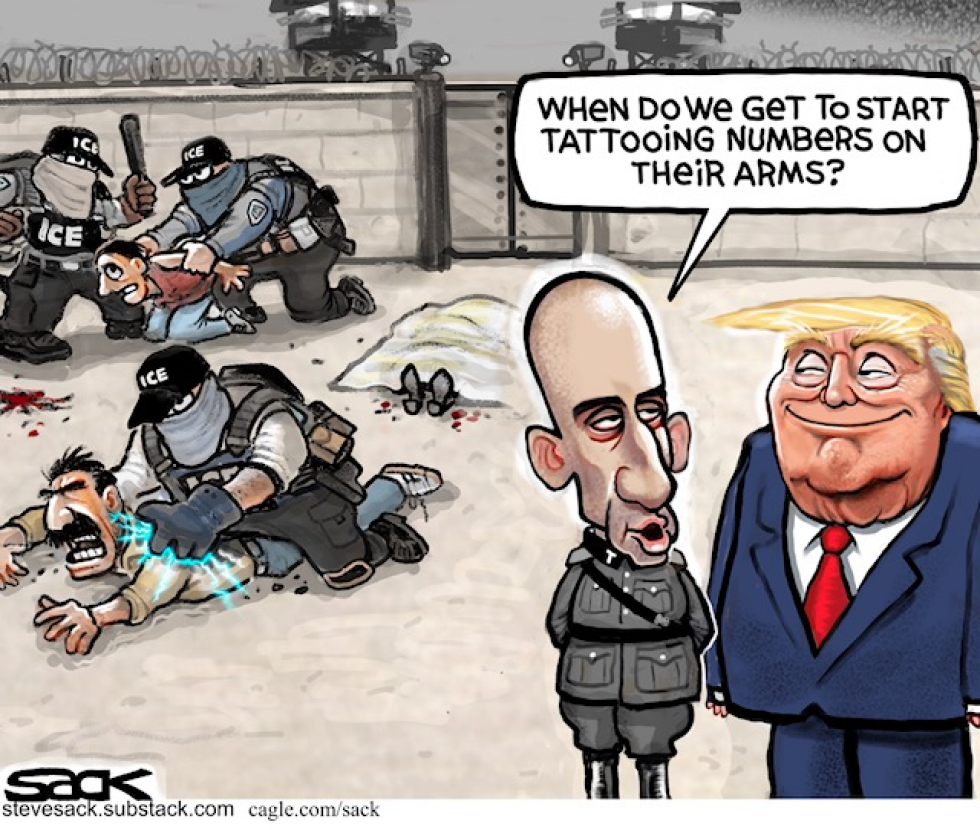
Donald Trump has publicly discussed aggressive measures in immigration detention facilities amid ongoing enforcement operations. The remarks come as ICE conducts arrests and holds individuals at secure sites. Critics argue the approach echoes past abuses. The piece portrays the comments as crossing into prohibited territory by invoking forced numbering.
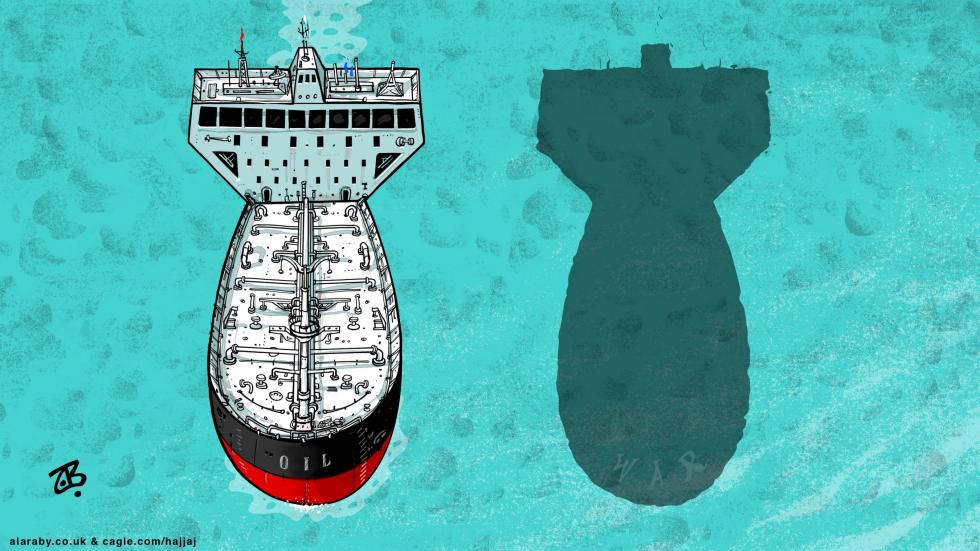
An oil tanker depicted in bomb form with a matching shadow labeled war underscores ongoing links between energy resources and armed conflict. The image responds to persistent tensions in oil-producing regions where shipping routes and resource control intersect with military actions. Such portrayals emphasize how fossil fuel transport remains entangled in geopolitical disputes. The editorial stance critiques the weaponization of energy supplies and the persistent threat of escalation tied to oil interests.
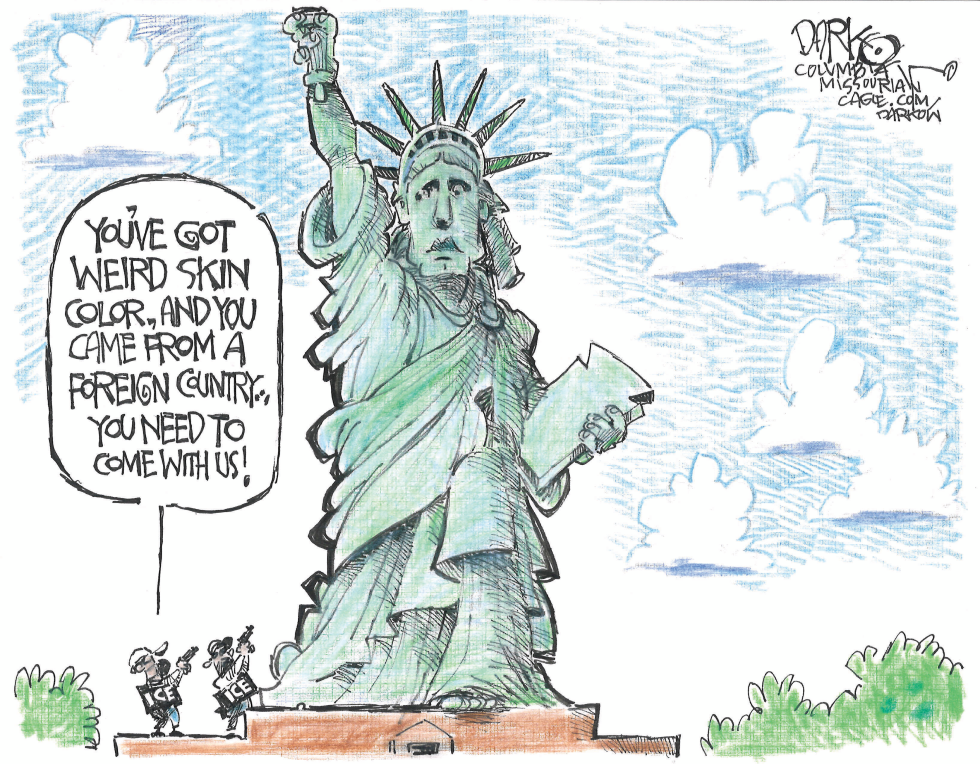
ICE agents have been depicted confronting the Statue of Liberty at its base while citing the monument's skin color and foreign origin as grounds for removal. The action highlights ongoing debates over immigration enforcement priorities and the use of appearance-based criteria in federal operations. The editorial position frames such tactics as inconsistent with the monument's historic role welcoming immigrants.
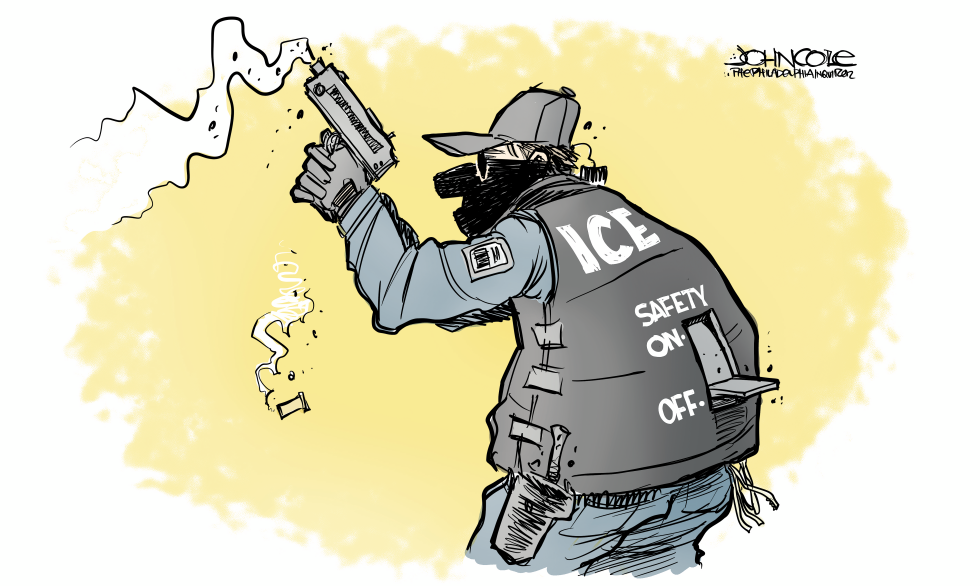
An ICE agent is shown firing a handgun during what appears to be an enforcement action. The vest safety toggle sits in the off position while smoke and a bullet exit the barrel. The image highlights concerns over firearm handling protocols within immigration enforcement operations and questions whether basic safety measures are being followed in the field.
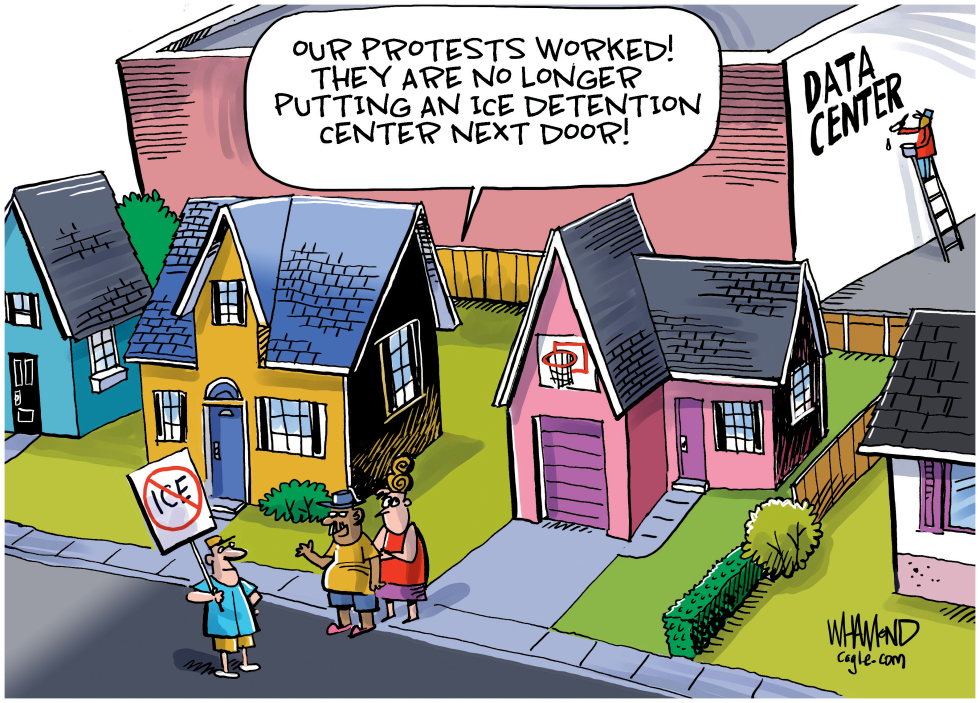
Residents in a suburban neighborhood protested plans for an ICE detention center near their homes. The facility was replaced by a data center, prompting cheers from locals who had opposed the detention site. The editorial highlights community pushback against immigration enforcement infrastructure and the unexpected outcome favoring commercial development instead.
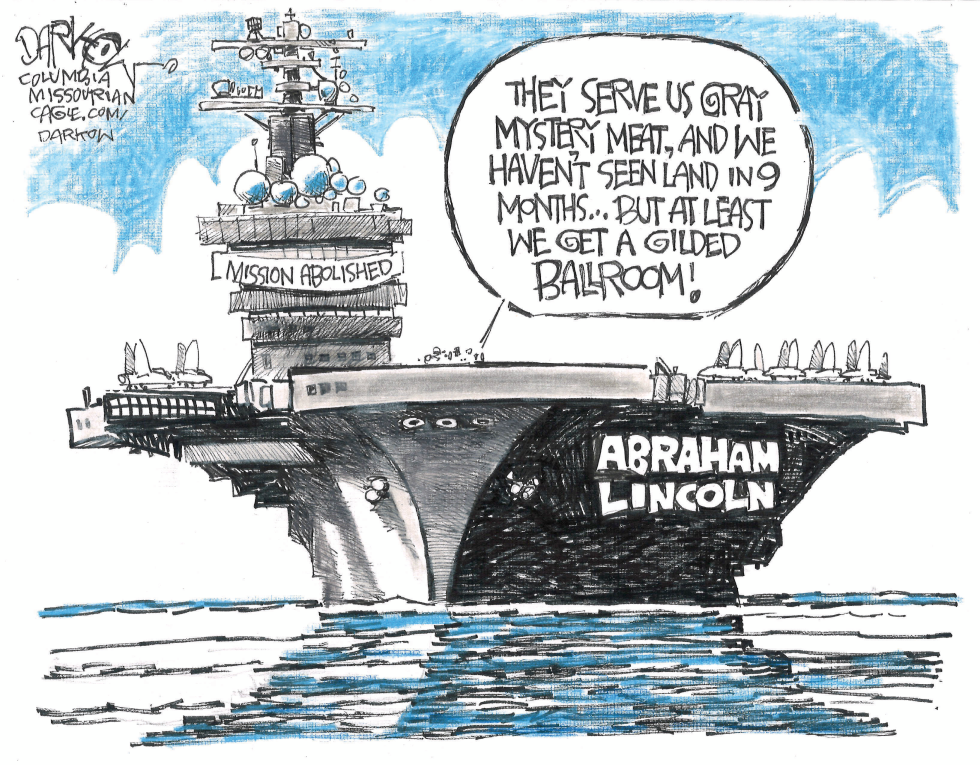
The USS Abraham Lincoln remains on extended deployment with sailors citing ongoing issues with food quality and time at sea. The addition of a gilded ballroom has drawn attention to priorities in naval operations. The piece highlights crew discontent with conditions despite the upgrade.