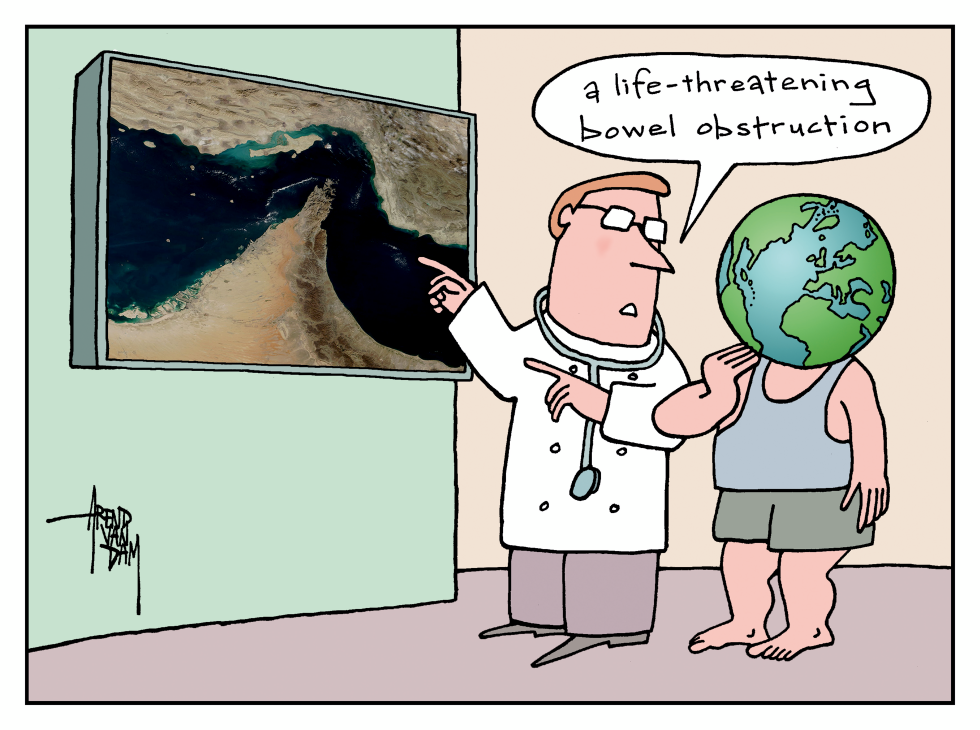
Arend van Dam\'s cartoon depicts a doctor diagnosing a child-like figure with a globe for a head, pointing to a screen showing the Strait of Hormuz as a life-threatening bowel obstruction. This visual metaphor ties into tags such as economy, world, oil, gas, obstruction, and war, illustrating how blockages in key trade routes threaten global stability. The barefoot patient in casual attire underscores vulnerability, while the doctor\'s serious demeanor adds dry humor to the geopolitical satire. Negotiations with ayatollahs and regime sanctions loom in the background, making the image a pointed commentary on how such conflicts create economic chokepoints. The overall composition blends medical analogy with international affairs for sharable impact.
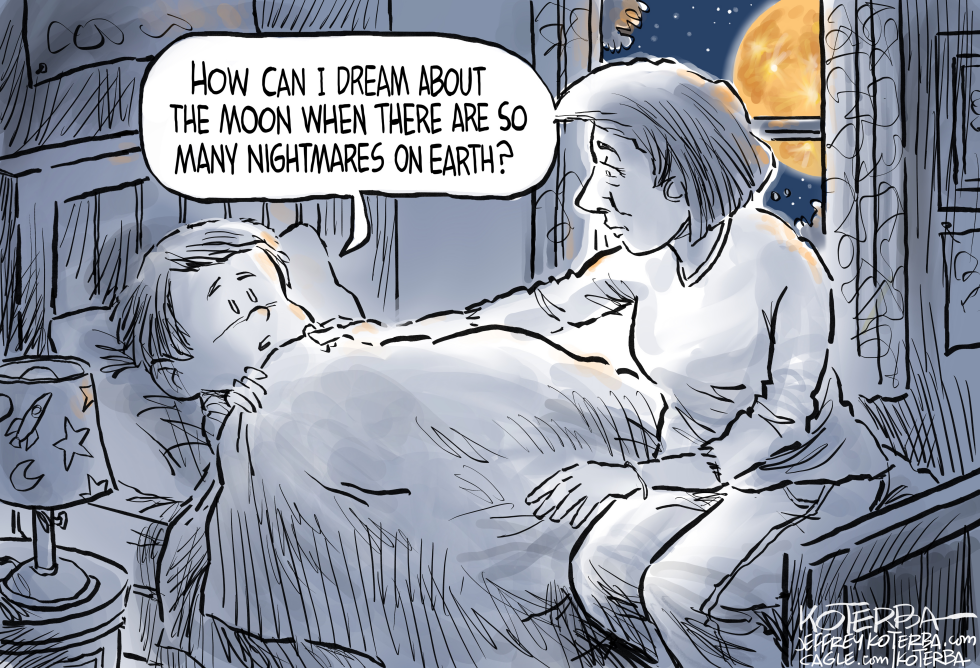
This poignant political cartoon depicts a child in bed, gazing toward a window framing a massive orange moon against a starry night sky, while confiding in a seated adult figure. The child's speech bubble reads: 'How Can I Dream About The Moon When There Are So Many Nightmares On Earth?' A bedside lamp with a star design illuminates the scene. Through this setup, the artwork satirizes how youth anxiety from global issues—like wars, climate woes, and social upheavals—stifles big dreams and aspirations. It's a clever commentary on how earthly nightmares eclipse celestial hopes, blending humor with insight into modern parenthood and childhood innocence lost. Tags: political cartoon, child nightmares, moon dreams, earth troubles, satirical illustration, youth anxiety, global chaos.
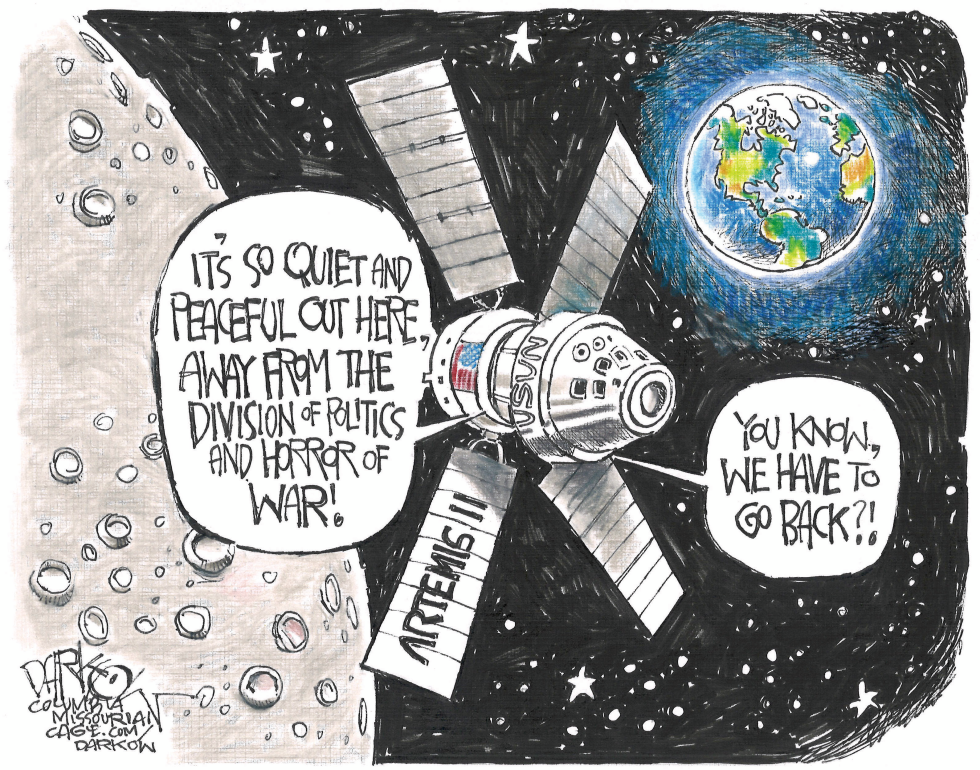
This Daryl Cagle political cartoon analysis features the Artemis II spacecraft floating in serene space, with Earth glowing in the background and the moon nearby. The left speech bubble extols the quiet peace away from division of politics and horror of war, while the right one resignedly notes the need to go back. It's a satirical cartoon on politics and war division, poking fun at how space exploration escaping earthly conflicts offers temporary respite. The NASA Artemis program humor illustration underscores the irony of advanced space missions contrasting with unresolved human divisions on Earth. Through this humorous take on returning to political division, the cartoon cleverly comments on the allure of peaceful space vs chaotic Earth without delving into specifics.
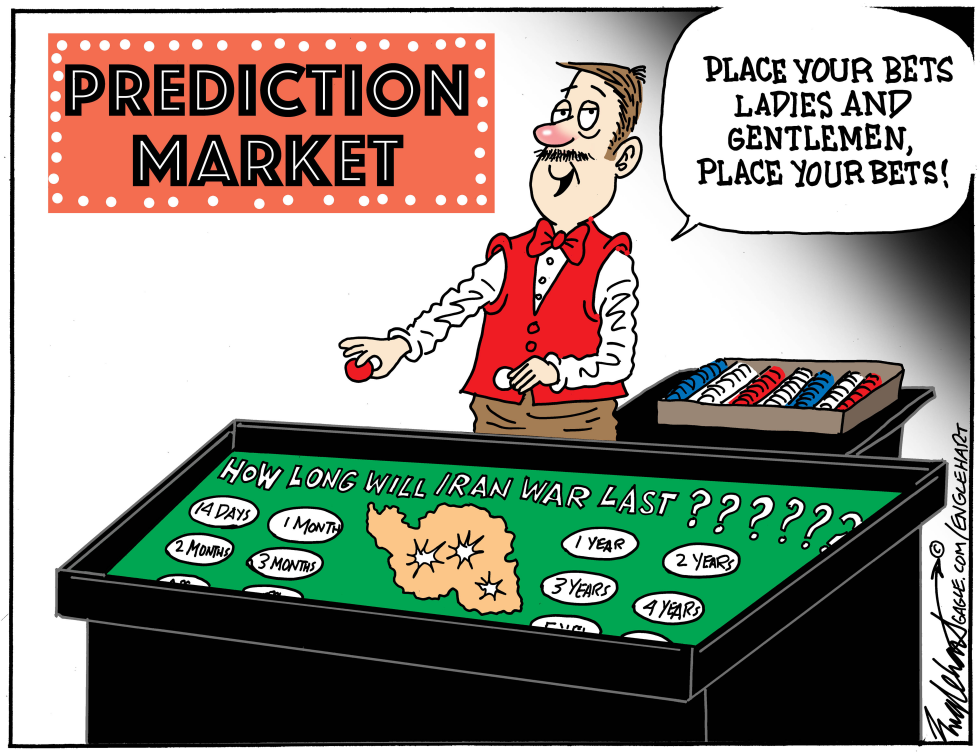
In a biting political cartoon, a smirking croupier oversees a prediction market table shaped like Iran, complete with explosion graphics, where punters can wager on war duration options ranging from 14 days to 5 years. This satirical take skewers the commodification of geopolitical betting, turning grave matters like Iran war into casino-style gambles. By blending elements of gambling on war with Middle East conflict, the artwork highlights the absurdity of prediction markets applied to real-world crises, offering humorous yet insightful commentary on how society speculates on political humor and potential catastrophes. The irreverent style underscores the folly of treating war length wager as just another market fluctuation.
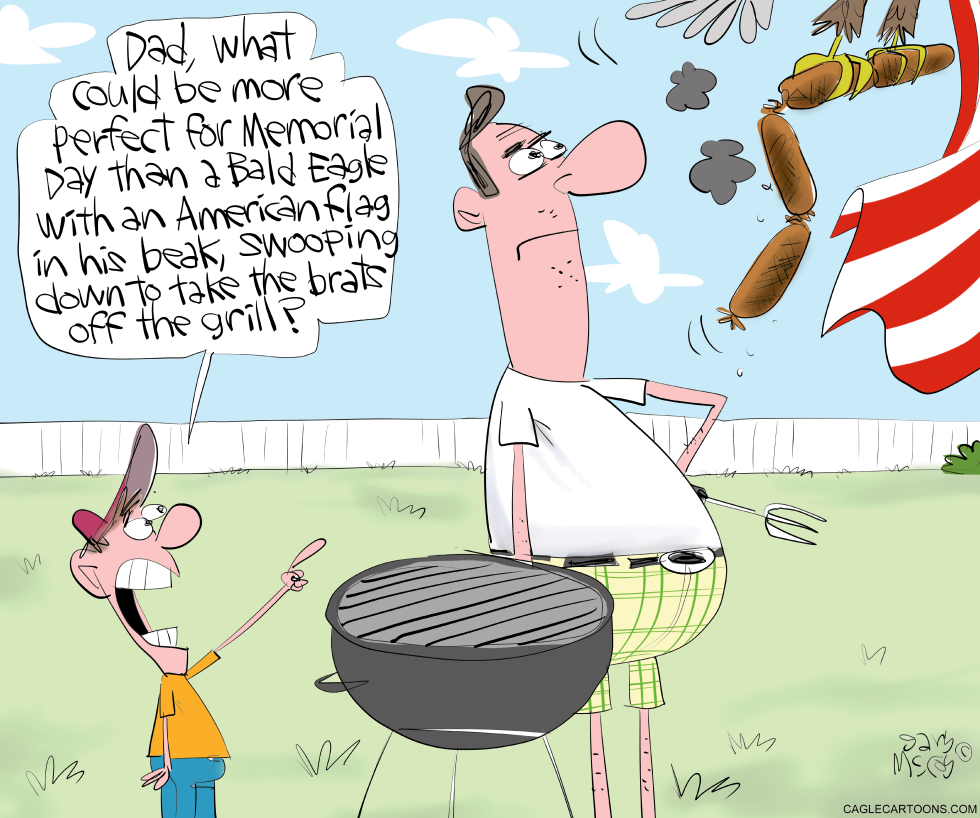
Gary McCoy's cartoon captures a quintessential Memorial Day scene with a patriotic bald eagle, American flag in beak, swooping down on a family barbeque to grab bratwurst from the grill. The father, holding a fork, looks annoyed while the son points excitedly, embodying celebration and American spirit. Tags like patriotic, bald eagle, barbeque, family, and bratwurst highlight the lighthearted take on holiday traditions. The backyard setting with a white fence and green grass adds to the idyllic, humorous portrayal of Memorial Day festivities, blending national symbols with everyday fun in a way that's relatable and shareable.