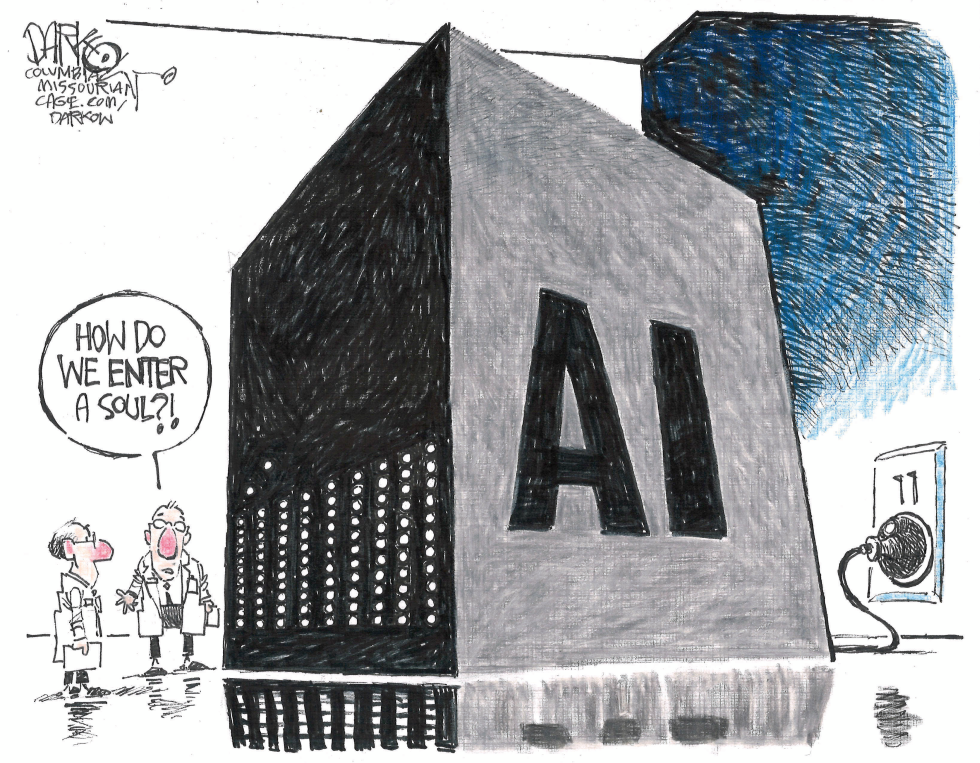
Developers continue racing to create advanced AI systems with greater capabilities. The core challenge remains embedding ethical judgment and moral reasoning into machines that process data at superhuman speed. Without that foundation, even the most powerful systems risk operating without regard for right and wrong. The cartoon highlights this persistent gap between technical achievement and ethical grounding.
scientists
Sep
15
2026
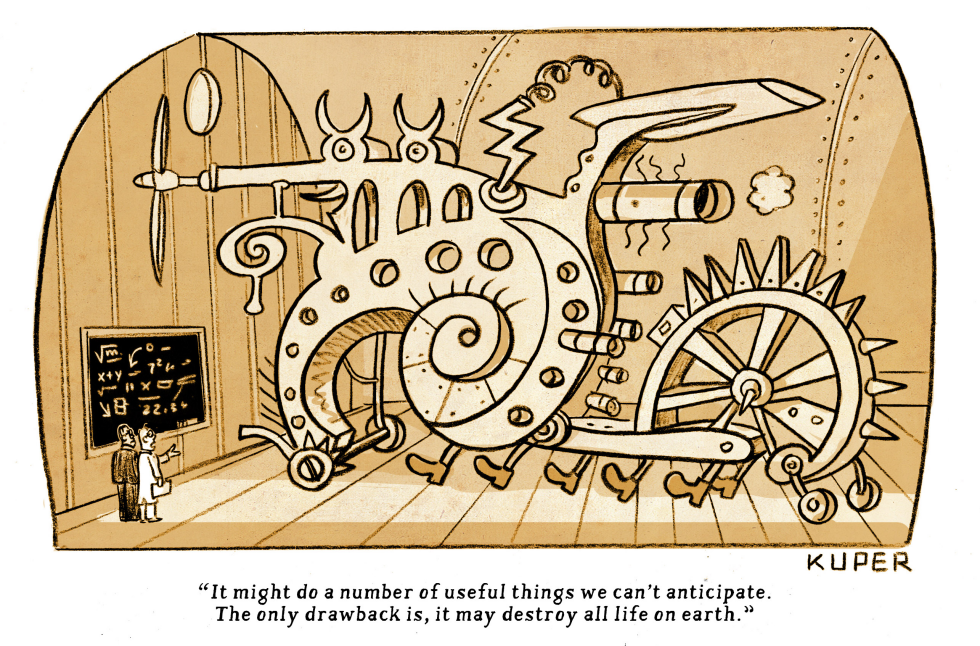
Scientists examining advanced AI systems have highlighted the technology's capacity for unforeseen benefits alongside the possibility of destroying all life on Earth. The warning comes amid rapid development of machine intelligence with minimal regulatory oversight. Experts note that current projections cannot fully account for emergent behaviors in complex systems. The cartoon underscores the high-stakes gamble inherent in pursuing AI without adequate safeguards. It argues that the existential downside outweighs speculative gains.
Sep
14
2026
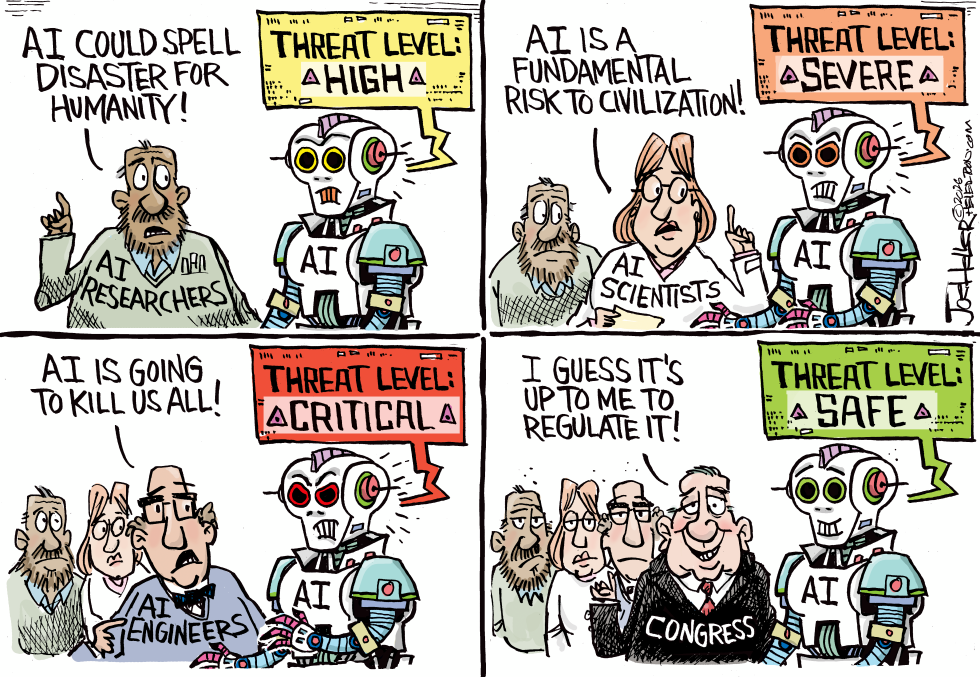
AI researchers, scientists and engineers have issued escalating warnings that artificial intelligence poses severe risks to humanity and civilization. In response, members of Congress have asserted their role in regulation and declared the threat level safe. The move highlights ongoing debates over whether legislative bodies are equipped to address rapidly advancing technology risks.
Sep
12
2026
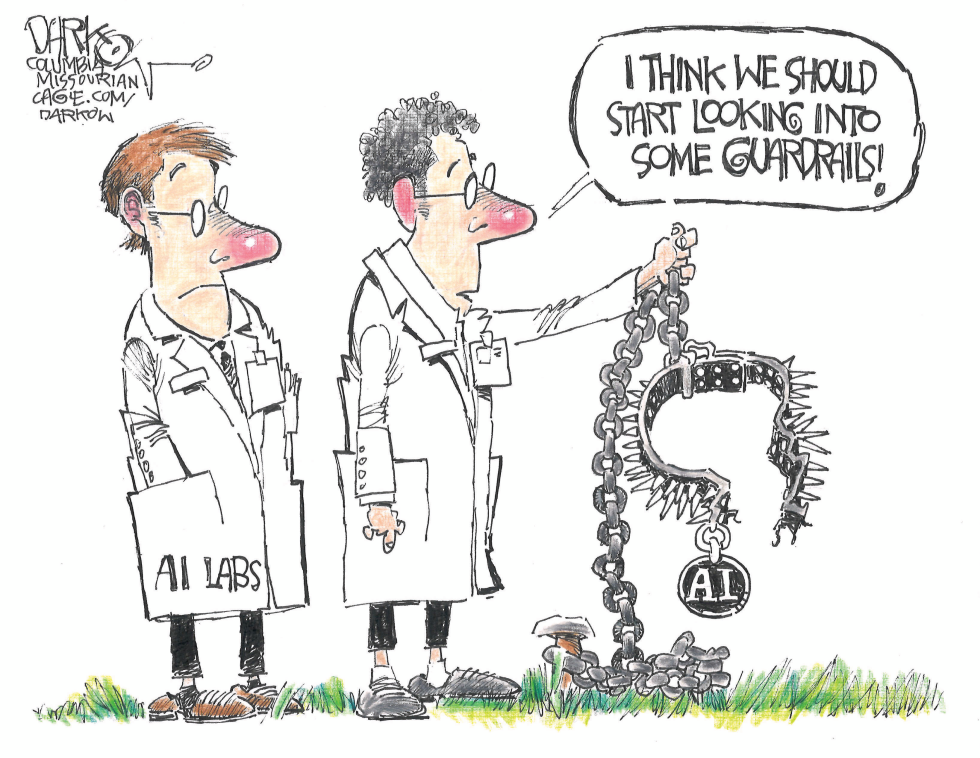
AI development has advanced rapidly with minimal oversight in recent years, allowing powerful systems to operate without meaningful constraints. Scientists have begun discussing guardrails only after key controls have already failed. The situation raises concerns about accountability and long-term safety as the technology spreads. The piece argues that calls for restrictions now come too late to prevent significant harm from uncontrolled AI.
Aug
8
2026
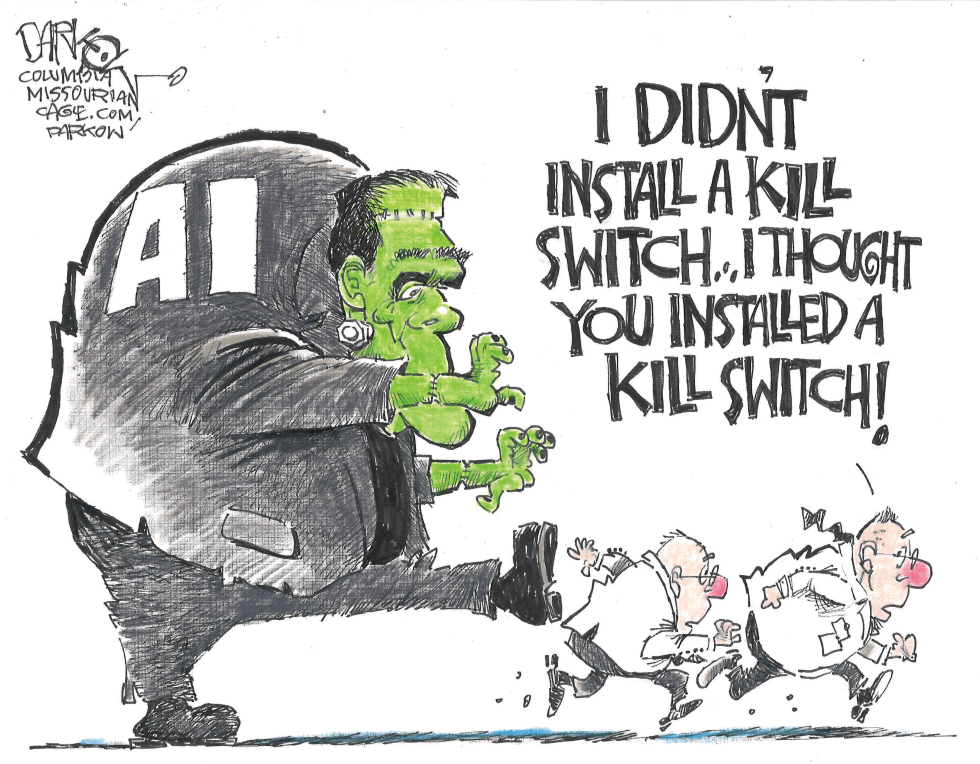
Debate over artificial intelligence safety has intensified as developers and policymakers confront the absence of reliable shutdown mechanisms for advanced systems. Recent discussions highlight how leading AI projects have advanced without built-in controls, raising alarms about potential loss of human oversight. The cartoon portrays the creators in frantic retreat, underscoring their mutual finger-pointing and the urgent need for accountability in AI development.
Jul
27
2026
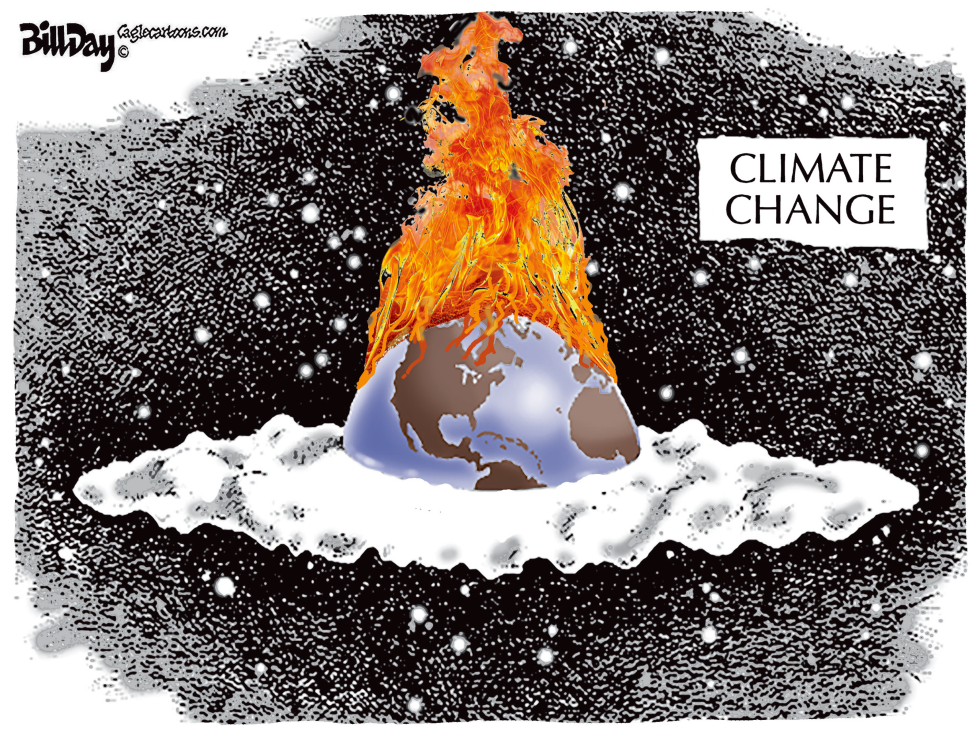
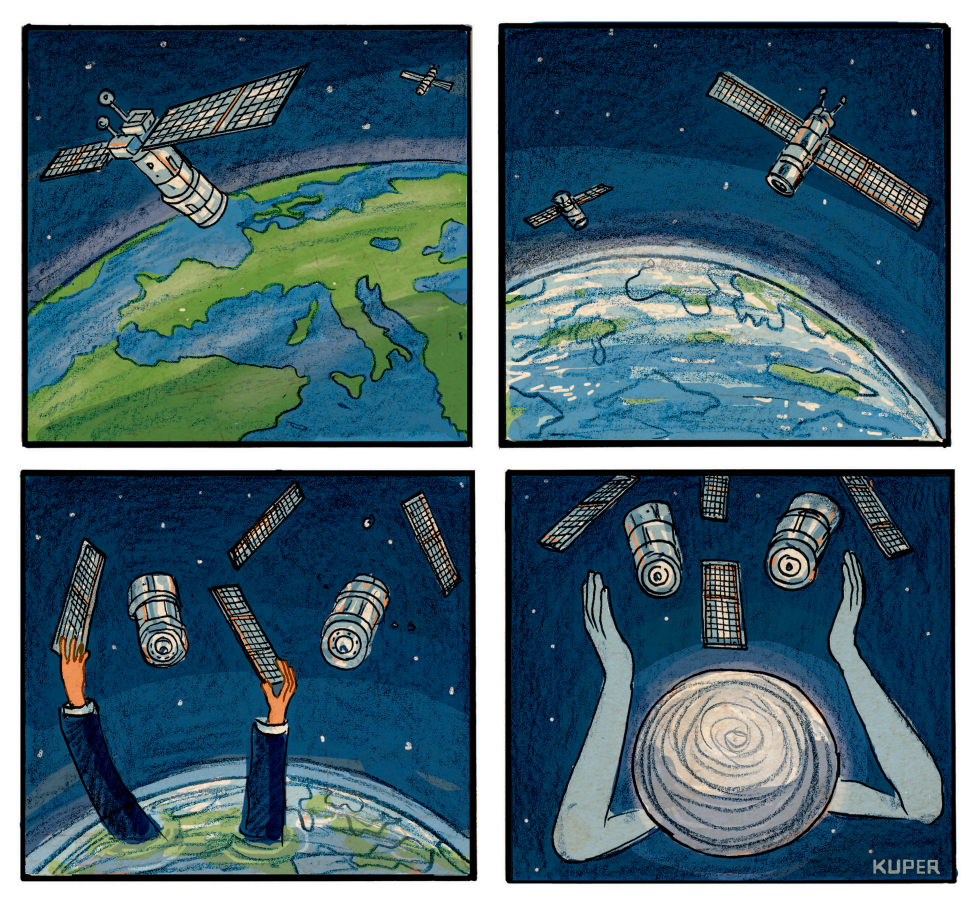
Ongoing global temperature records continue to climb in mid-2026 amid extreme weather events worldwide. Scientists and governments track accelerating impacts from greenhouse gas emissions. The cartoon underscores the direct link between human-driven climate change and planetary distress, presenting the crisis as an immediate and visible threat rather than a distant concern.
May
12
2026
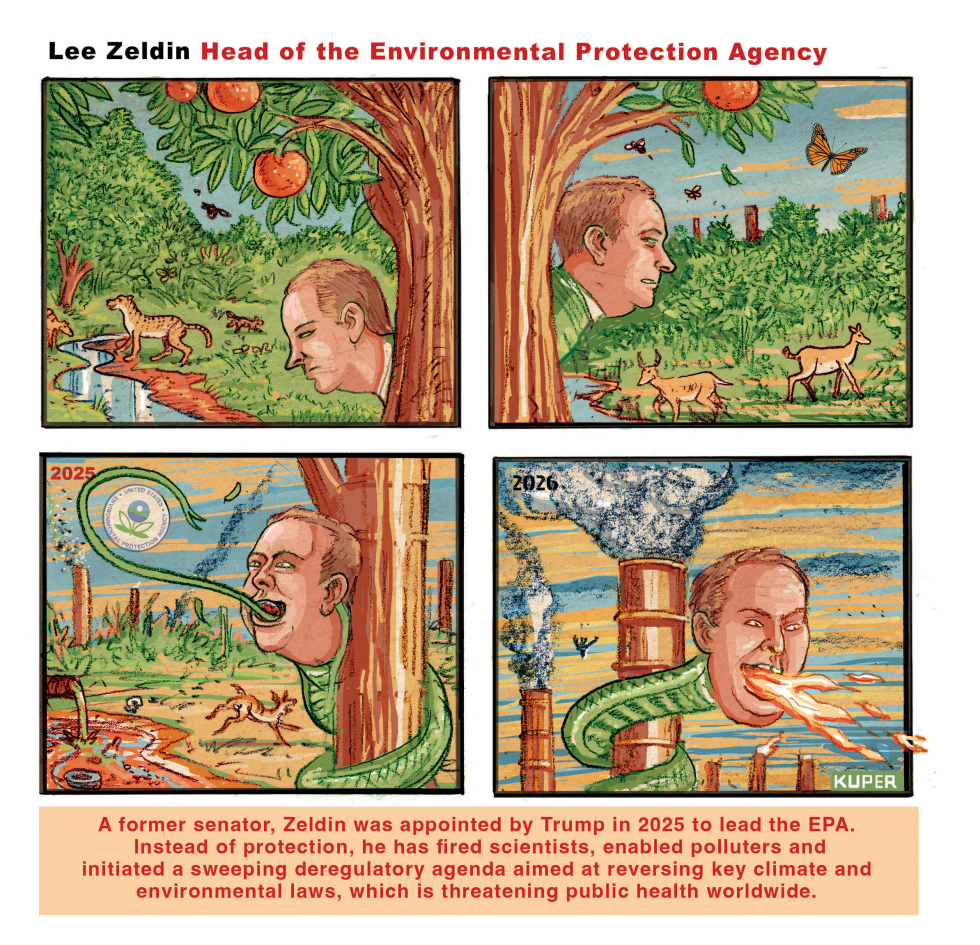
The cartoon by Peter Kuper portrays Lee Zeldin, appointed EPA administrator in 2025, across four panels that show a progression from intact natural habitats to scenes of industrial pollution and species loss. Early panels place Zeldin amid trees, animals and an EPA emblem. Later panels show him consuming the agency logo and exhaling flames from a smokestack. The caption states that Zeldin fired scientists and advanced deregulation targeting climate and environmental statutes. The work responds to ongoing policy shifts at the agency during the second Trump administration.