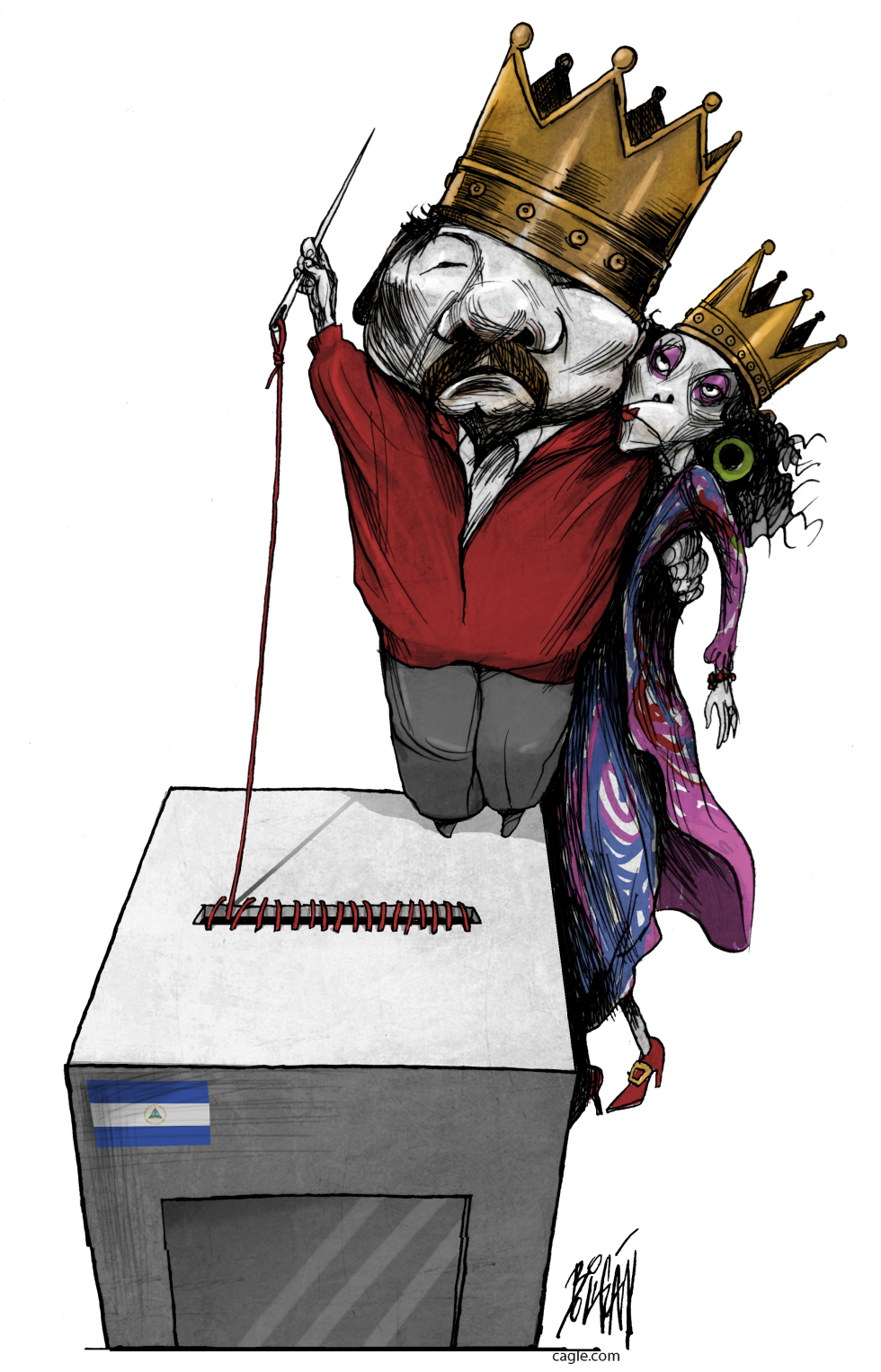
Nicaragua's Daniel Ortega and Rosario Murillo have consolidated power by sidelining elections and installing family rule. The move entrenches their long hold on government and eliminates meaningful opposition. The piece portrays them as self-crowned monarchs who treat the ballot box as their throne.
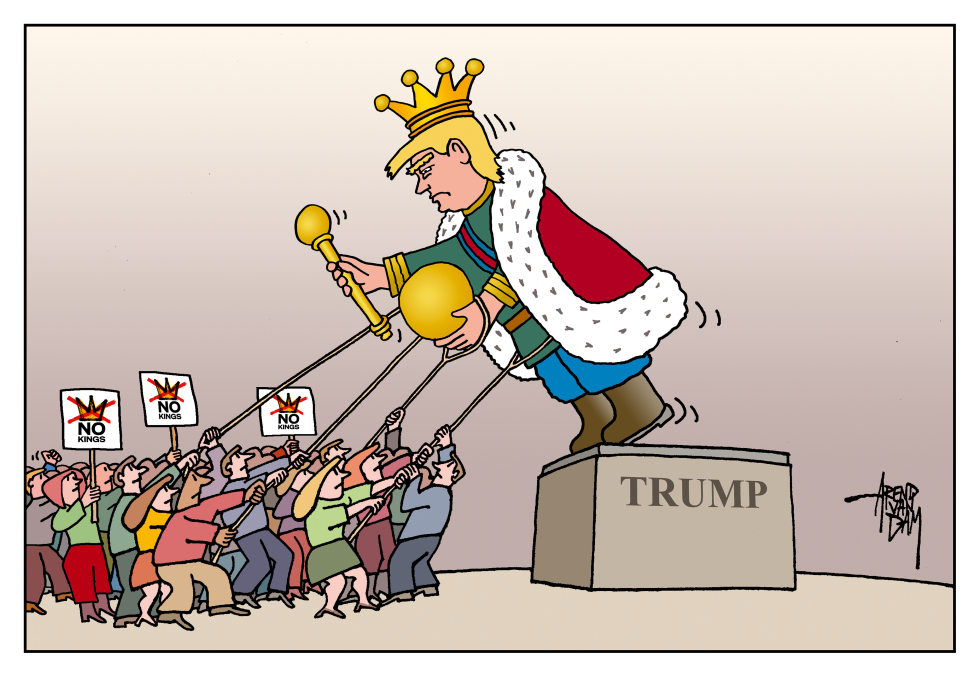
Arend van Dam's cartoon depicts a massive figure resembling Donald Trump, adorned with a crown and royal robe, perched atop a pedestal marked 'TRUMP.' A diverse group of protesters, holding signs reading 'NO KINGS,' 'NO,' and another 'NO,' tug on ropes attached to the figure's scepter, causing it to tilt as if being toppled in an act of resistance. The scene evokes themes of USA democracy clashing with autocracy, portraying a symbolic revolution against a would-be king or dictator. Protests and demonstrations fill the foreground, highlighting public outcry against unchecked power. Dated 2026, the artwork underscores ongoing concerns about authoritarian tendencies in politics.
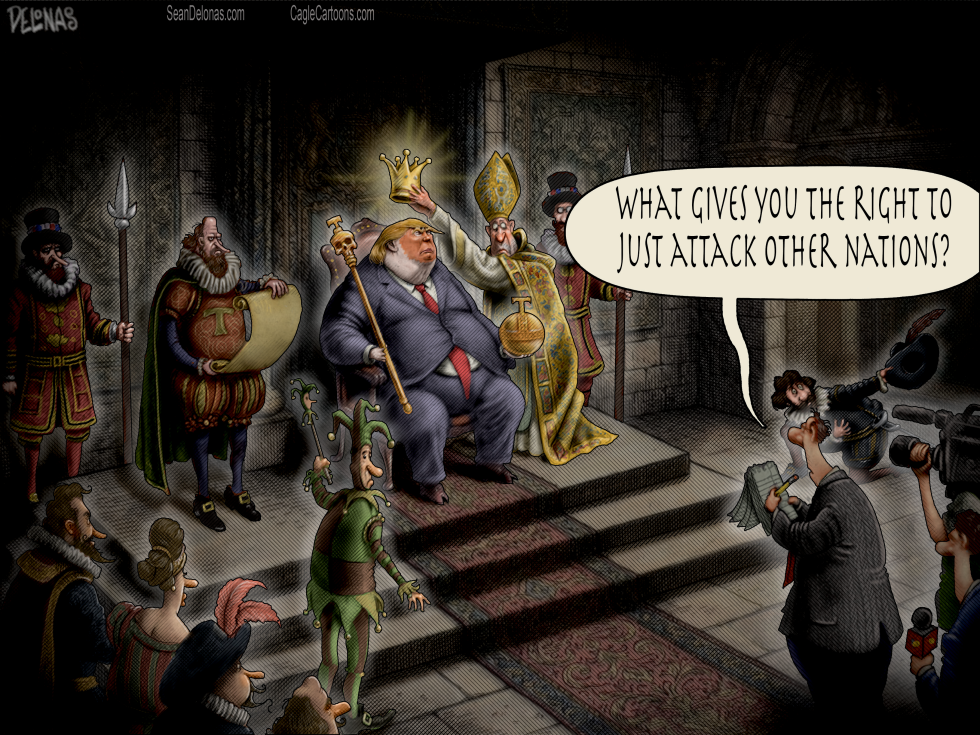
Sean Delonas captures Donald Trump as a rotund king lounging on a throne in a dimly lit castle hall, complete with a bishop crowning him with a glowing crown and a scepter in hand. Surrounded by medieval figures like guards, a jester, and courtiers, Trump faces a modern reporter wielding a microphone and notes, demanding to know what gives him the right to just attack other nations. The cartoon blends historical pomp with contemporary critique, tagging into Trump, wars, Iran, Venezuela, press, king, media, counterterrorism, military, policy, and president themes. The dry humor underscores the absurdity of unchecked power, with the artist's signature style emphasizing exaggerated features and satirical edge.
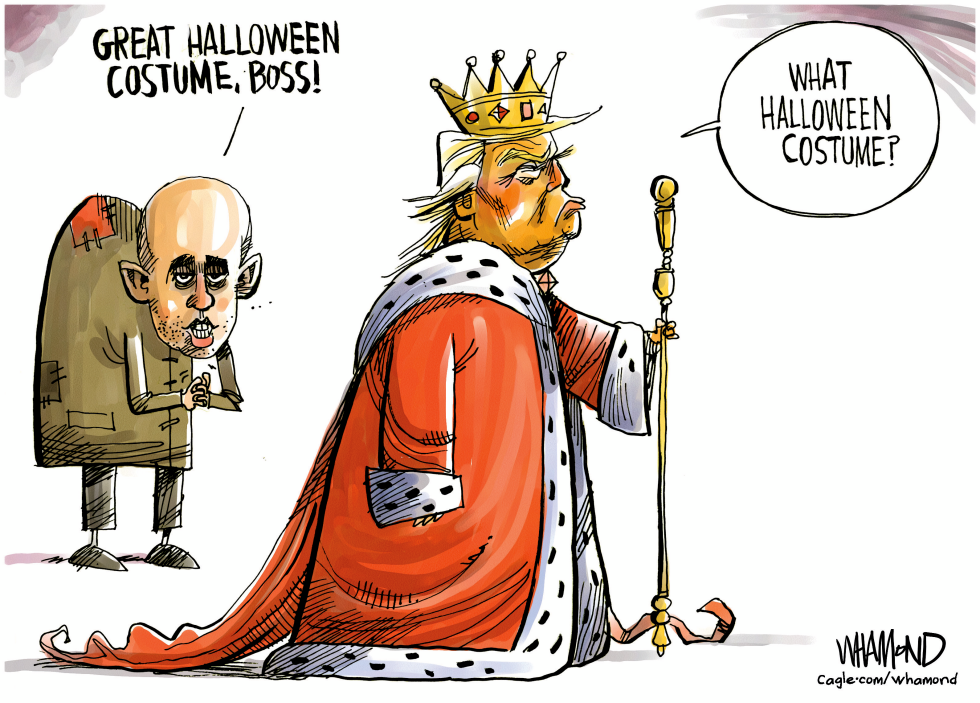
Dave Whamond's cartoon titled 'The Man who would be king' captures a caricatured Donald Trump donned in regal themes, complete with crown and red robe, wielding a scepter. A subservient, bald figure with pointy ears bows and praises the 'Great Halloween Costume, Boss!' while Trump retorts 'What Halloween Costume?' The image tags highlight themes of No Kings, Trump wants kinglike powers, and concerns over constitution and democracy. It satirizes ideas of president transitioning government into a monarchy, with elements of shutdown, taking control, and totalitarian state. The humor lies in Trump playing dress up yet denying it's a costume, symbolizing real aspirations for kinglike authority.
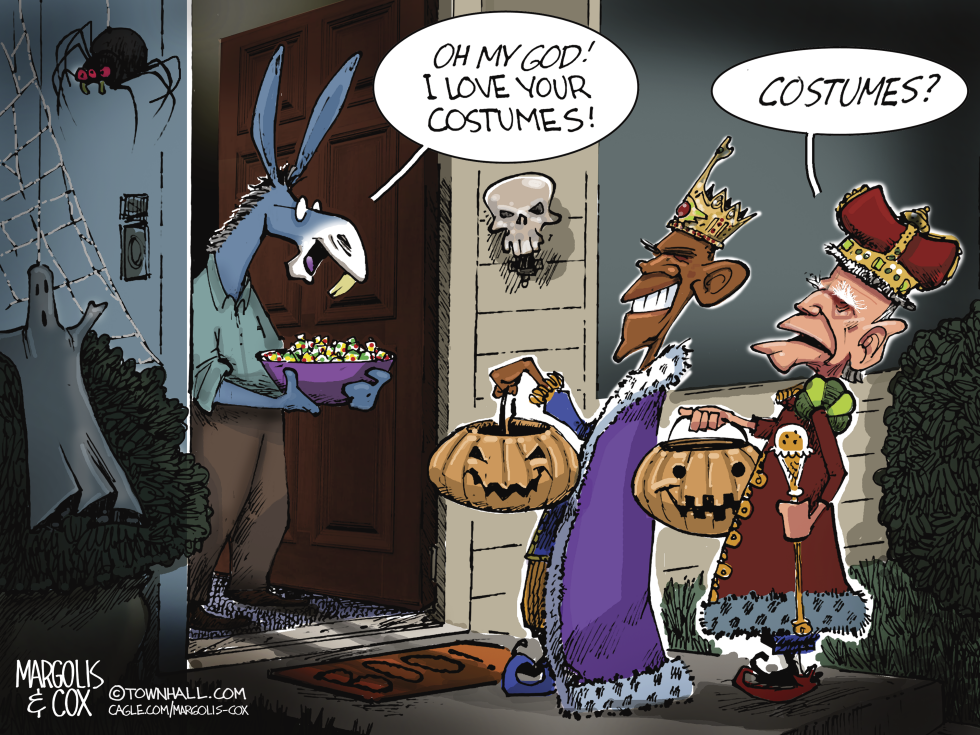
On October 21 2025 a political cartoon by Margolis and Cox depicts a Democratic donkey at a doorstep offering candy to figures resembling Barack Obama and Joe Biden dressed as kings for Halloween. The donkey exclaims approval of the costumes while one king questions the term. The image references the No Kings theme and critiques Democratic support for prominent leaders amid ongoing political debates.
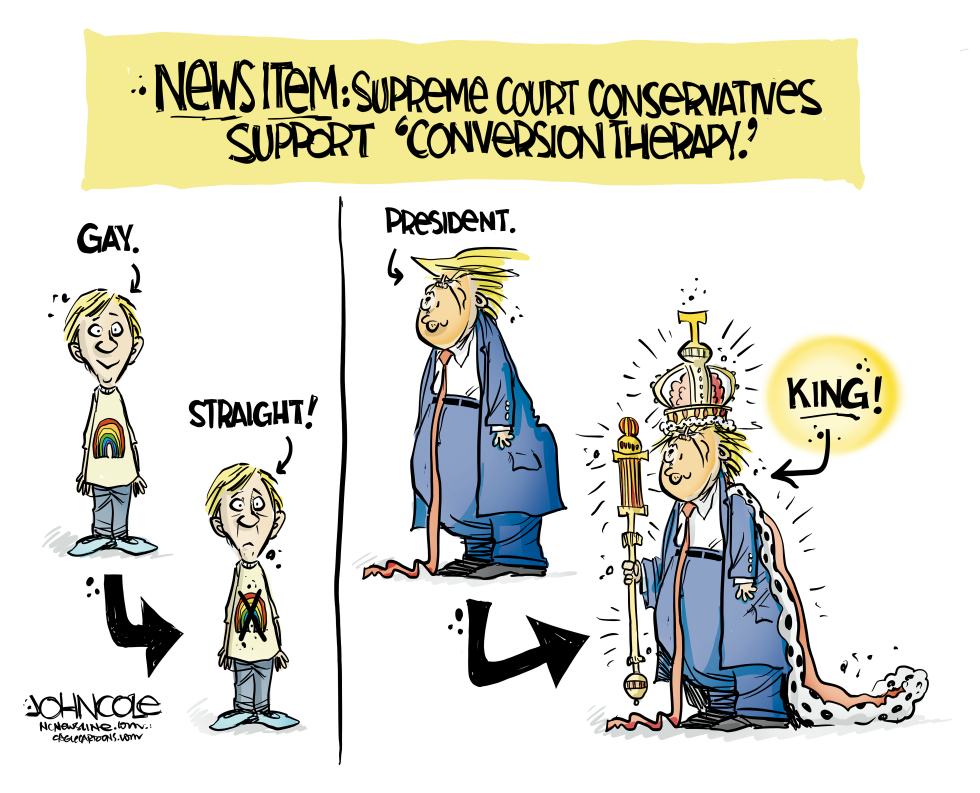
On October 14 2025 John Cole's cartoon depicts Supreme Court conservatives endorsing conversion therapy. The left panel shows a boy labeled gay transformed into straight. The right panel shows a president figure transformed into a robed and crowned king. The visual equates the therapy with an unconstitutional expansion of presidential power. The piece criticizes the court's conservative majority for enabling such shifts.
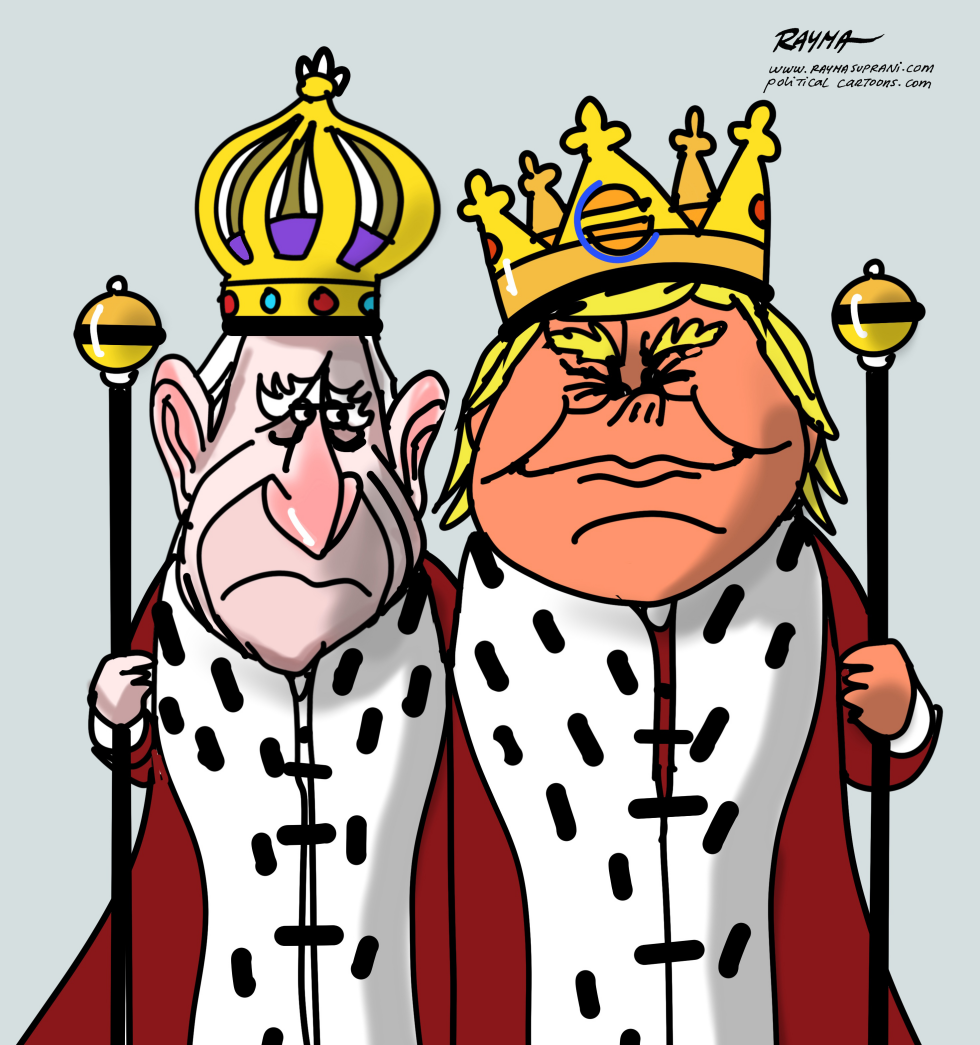
The image shows two figures dressed as kings, one resembling King Charles with a sad expression and large ears, the other like Trump with blonde hair, orange skin, and a frowning face. Both wear white robes with black spots and red undersides, holding scepters. Crowns top their heads, with Trump's featuring a circled 'C'. Tags like King, Charles, UK, Trump, Visit frame this satirical take on a royal visit, poking dry fun at the unlikely duo in political cartoon form. The artwork by Rayma Suprani keeps it straightforward, emphasizing visible caricatures without hidden layers.
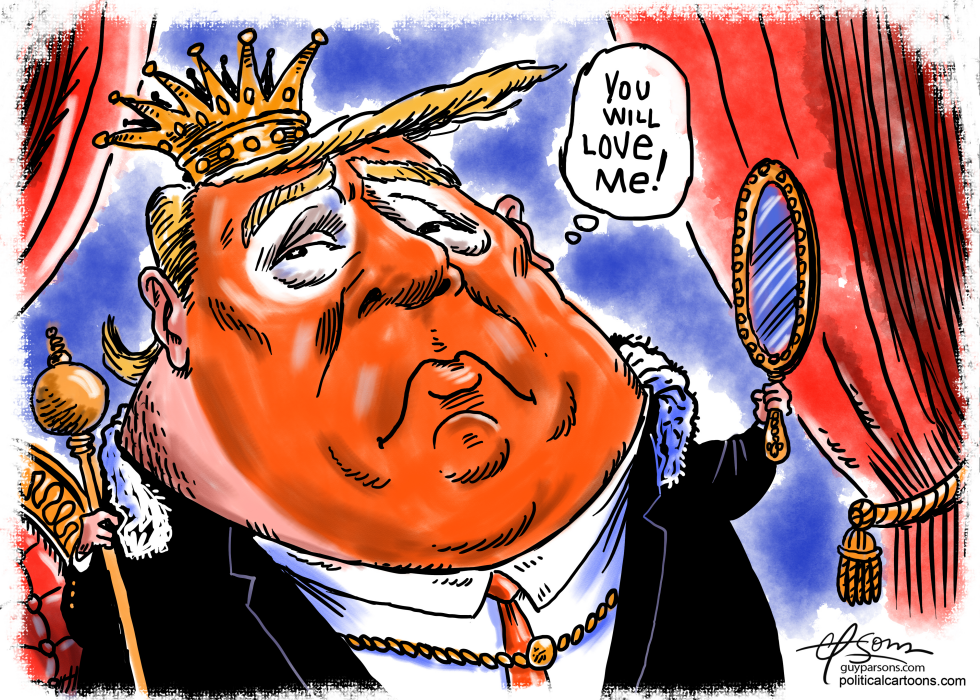
Guy Parsons draws a bloated, orange-faced figure resembling Donald Trump, decked out in a golden crown and royal robe, clutching a scepter in one hand and a hand mirror in the other. The speech bubble proclaims 'You will LOVE ME!' against a backdrop of red curtains, tying into tags like USA, America, Army, 250th anniversary, Trump birthday, and no kings. This setup pokes at delusions of monarchy in a nation founded on rejecting kings, with the mirror emphasizing self-adoration. The cartoon's timing, around Trump's birthday and the upcoming 250th anniversary of American independence, underscores the irony of a leader aspiring to unchecked power. Parsons' style keeps it bold and colorful, making the satire pop without subtlety.