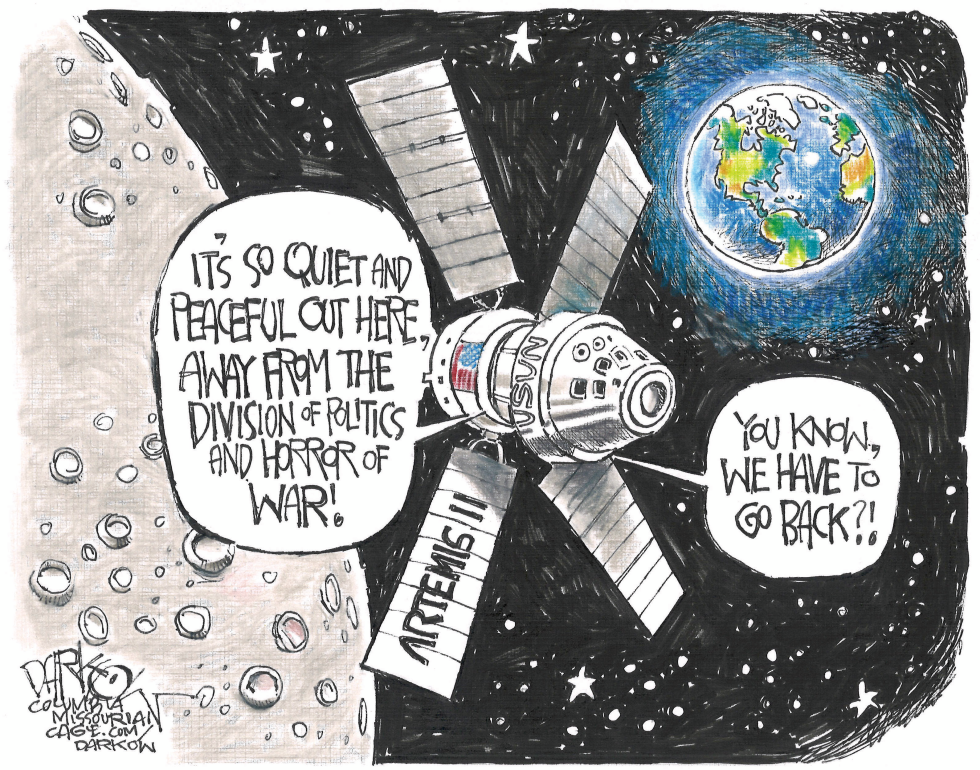
This Daryl Cagle political cartoon analysis features the Artemis II spacecraft floating in serene space, with Earth glowing in the background and the moon nearby. The left speech bubble extols the quiet peace away from division of politics and horror of war, while the right one resignedly notes the need to go back. It's a satirical cartoon on politics and war division, poking fun at how space exploration escaping earthly conflicts offers temporary respite. The NASA Artemis program humor illustration underscores the irony of advanced space missions contrasting with unresolved human divisions on Earth. Through this humorous take on returning to political division, the cartoon cleverly comments on the allure of peaceful space vs chaotic Earth without delving into specifics.
This satirical political cartoon depicts a bizarre lunar scene where a green alien is climbing a gushing oil derrick, tethered by rope to a spacesuit-wearing figure holding a 'TACO' sign. The backdrop includes a cratered moon surface, a starry sky, and a blue planet, with the white rocket labeled 'ARTEMIS 2 MAGA OIL MOON' emitting green smoke. A ladder leans against the rocket's open door, and a black barrel sits nearby. The imagery humorously critiques ambitious lunar exploits, blending space exploration with oil drilling fantasies in a visually striking composition that highlights the absurdity of extraterrestrial resource grabs.
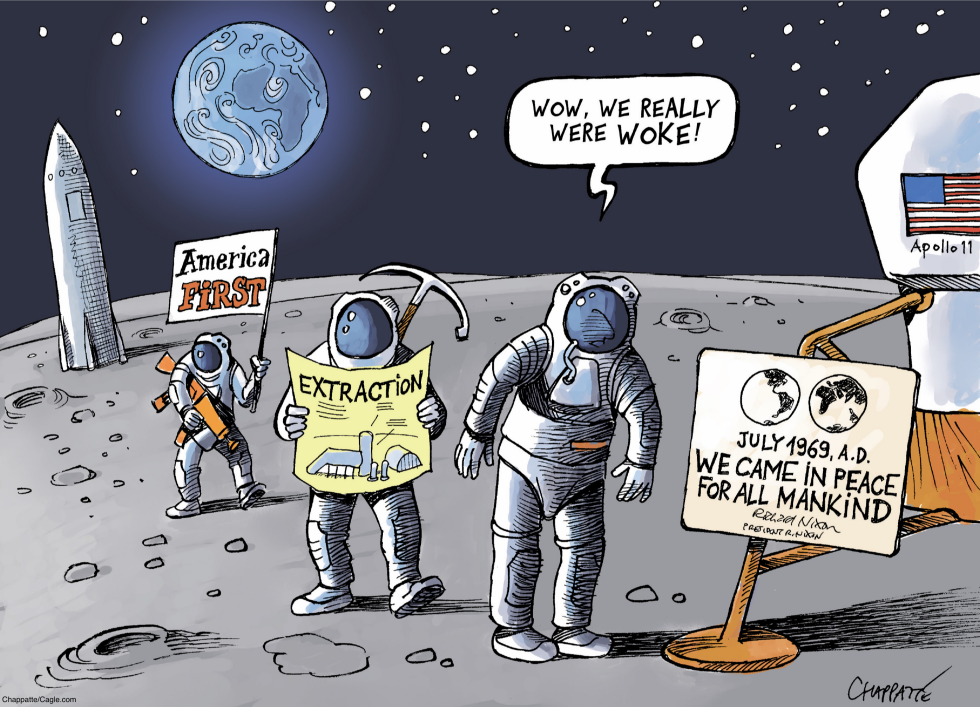
The cartoon shows three astronauts on the moon\\\\\\\'s surface, with Earth visible in the background. One holds a sign reading America First while carrying a weapon, another grips a document titled Extraction with a mining diagram, and the third wields a pickaxe next to a plaque stating We came in peace for all mankind from July 1969 A.D. near the Apollo 11 lander flagged with the US stars and stripes. A speech bubble declares Wow, we really were woke! The scene captures space race satire, lunar exploration humor, political cartoon commentary on shifting priorities from global peace to nationalistic resource grabs, all in Patrick Chappatte\\\\\\\'s style.
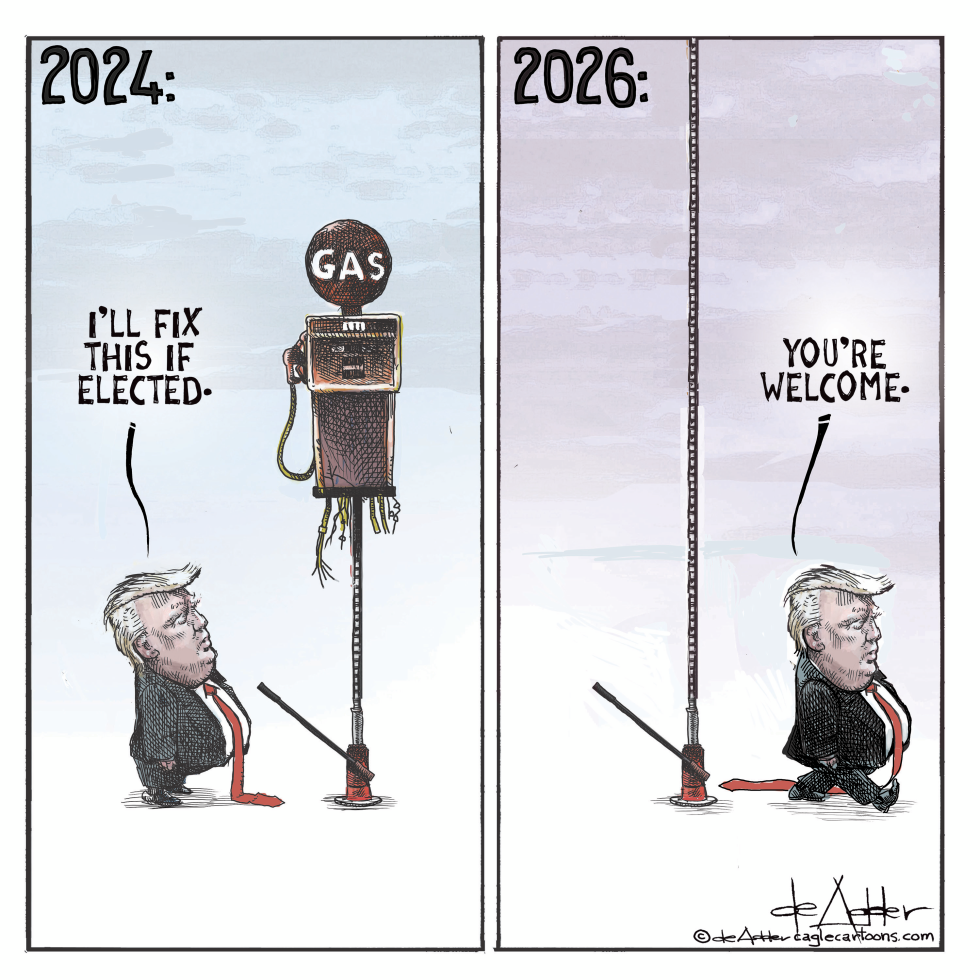
Michael de Adder's cartoon splits into 2024 and 2026 panels, showing a figure resembling Trump addressing a high gas pump with a promise to fix it if elected, tagged with Trump, gas, prices. In the later panel, the same figure pulls the pump down low, saying 'you're welcome,' tying into election, energy, Iran, war themes. The satire highlights contrasts in promise versus action on cost, economy, inflation, oil, barrel issues. This visual commentary underscores political pledges on energy costs, with the figure's actions suggesting a direct, perhaps misguided intervention. Tags like conflict and prices emphasize the economic satire at play.
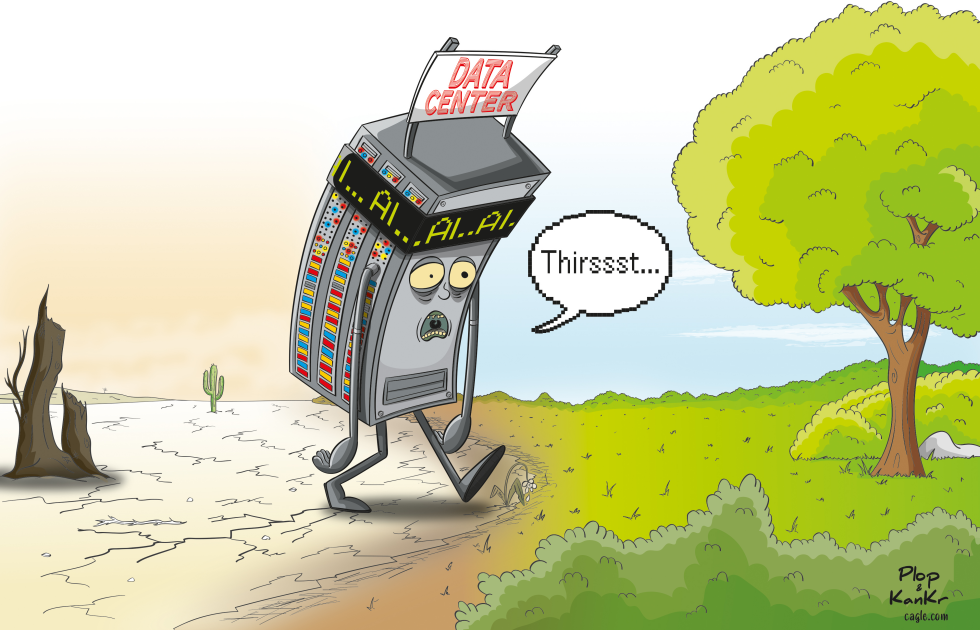
Visible cartoon depicts a walking data center structure with multiple colored server lights on side. The unit shows AI repeated on front panel. Eyes and mouth are drawn on the front. A speech bubble contains the word Thirssst. The machine stands on dry cracked soil near a path leading to grass and a large leafy tree. Artist names appear at bottom right along with cagle.com.
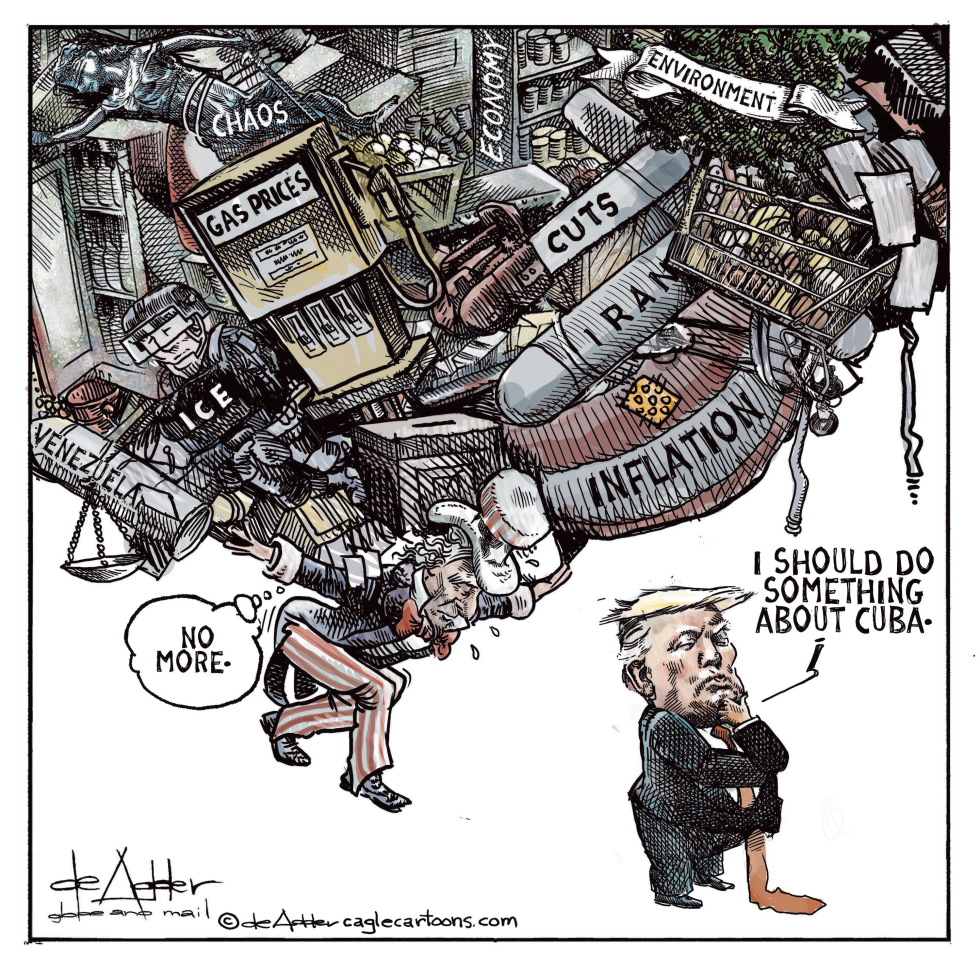
Donald Trump appears in the foreground contemplating action on Cuba. Behind him a swirl of labeled elements shows inflation, gas prices, Iran, Venezuela, ICE, and cuts tied to economy and environment. A second figure says no more. The March 2026 cartoon highlights distraction amid multiple pressures.
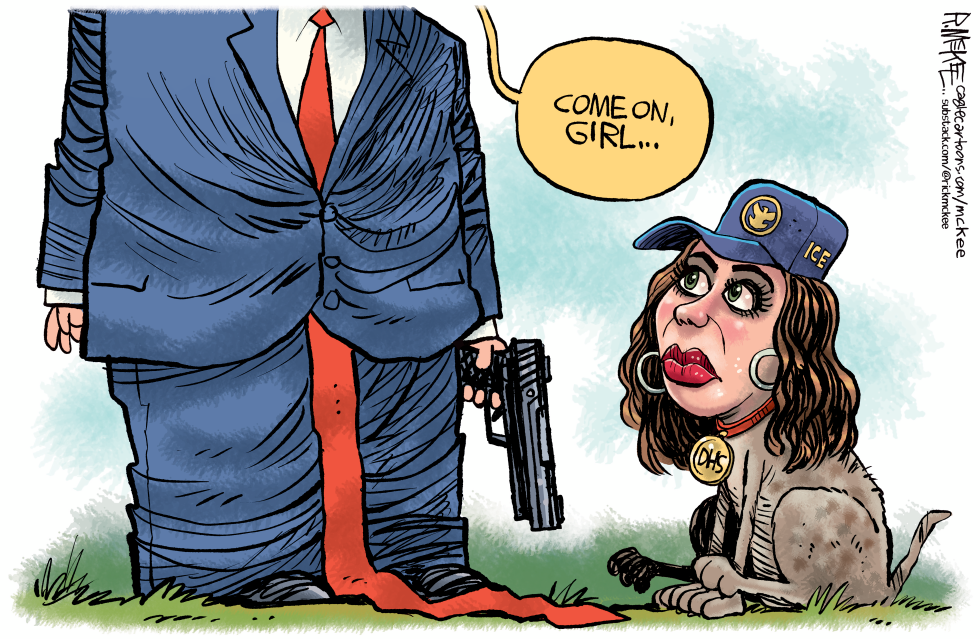
This political cartoon features Donald Trump coaxing a dog-like figure with Alexandria Ocasio-Cortez's face, donned in an ICE cap and DHS tag, gripping a gun on a leash— a sharp satire on immigration enforcement and border control. The image lampoons the Trump administration's hardline stance on deportation and US politics, using caricature to underscore the dehumanizing aspects of border patrol. With elements of political humor, it critiques how figures like AOC are portrayed in opposition, blending viral meme potential with editorial cartoon flair. The scene evokes questions about power dynamics in immigration policy, making it a timely piece for discussions on satire and governance.
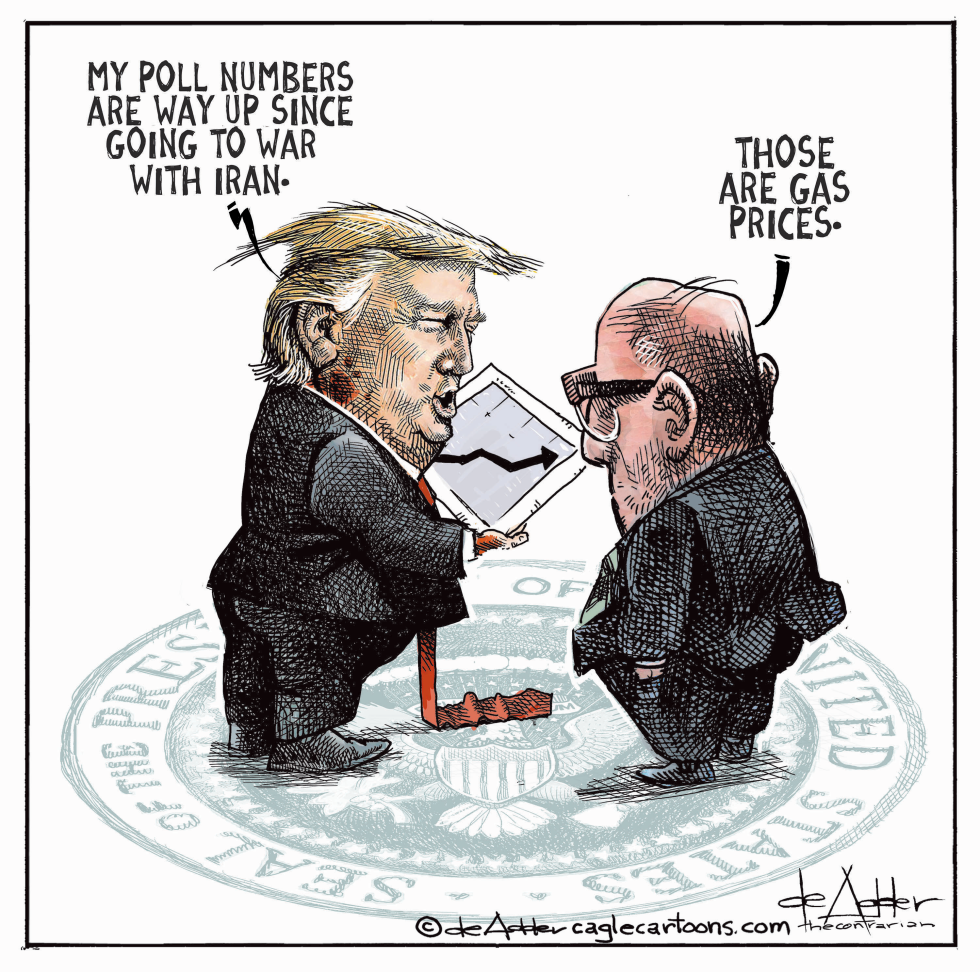
This sharp political cartoon by Michael de Adder captures Donald Trump triumphantly holding a chart of upward trends, claiming his poll numbers have skyrocketed since going to war with Iran. However, a bespectacled Dick Cheney corrects him, revealing those are actually gas prices soaring. The satire highlights the ironic consequences of Middle East conflict on the US economy, blending humor with commentary on presidential approval ratings tied to foreign policy blunders. Incorporating elements of US politics, oil prices, and war economy, the image stands on the presidential seal, emphasizing official folly. It's a witty jab at how leaders might misread economic fallout as personal gains, perfect for editorial discussions on satire and current events.
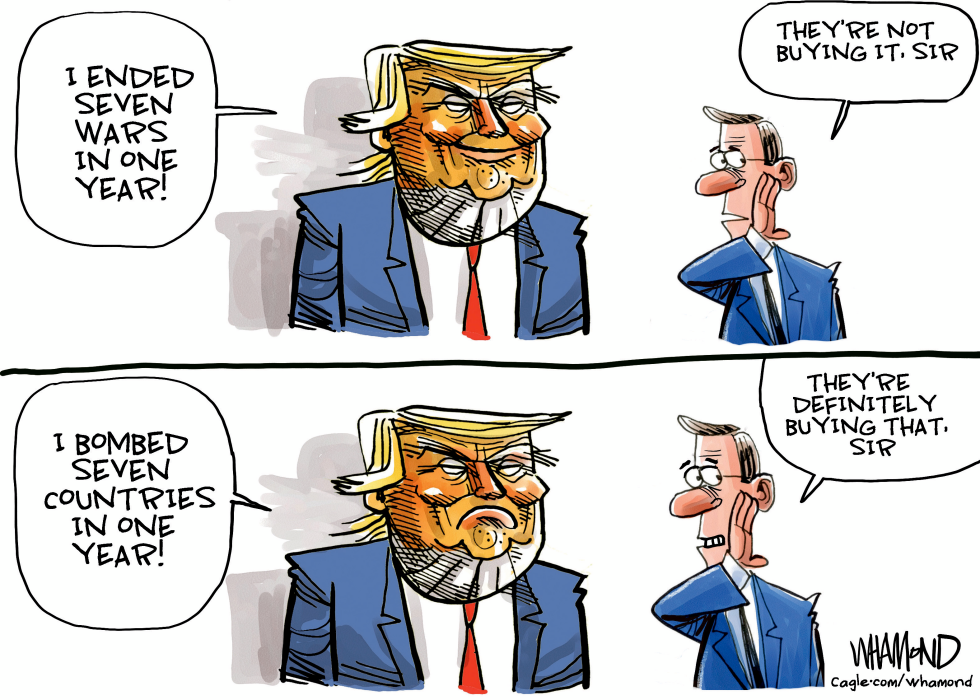
This Donald Trump cartoon masterfully captures the essence of satirical Trump presidency through political bombing humor. Trump boasts about ending seven wars, but his advisor notes the public's skepticism, leading to a pivot where he claims bombing seven countries instead, which the advisor says is 'definitely buying that.' The Trump wars satire underscores inconsistencies in Trump foreign policy cartoon style, poking fun at boastful claims versus reality. Created by Whamond, this political cartoon Whamond piece exemplifies humorous political analysis on US military satire, blending irreverent wit with insightful commentary on leadership and perception.
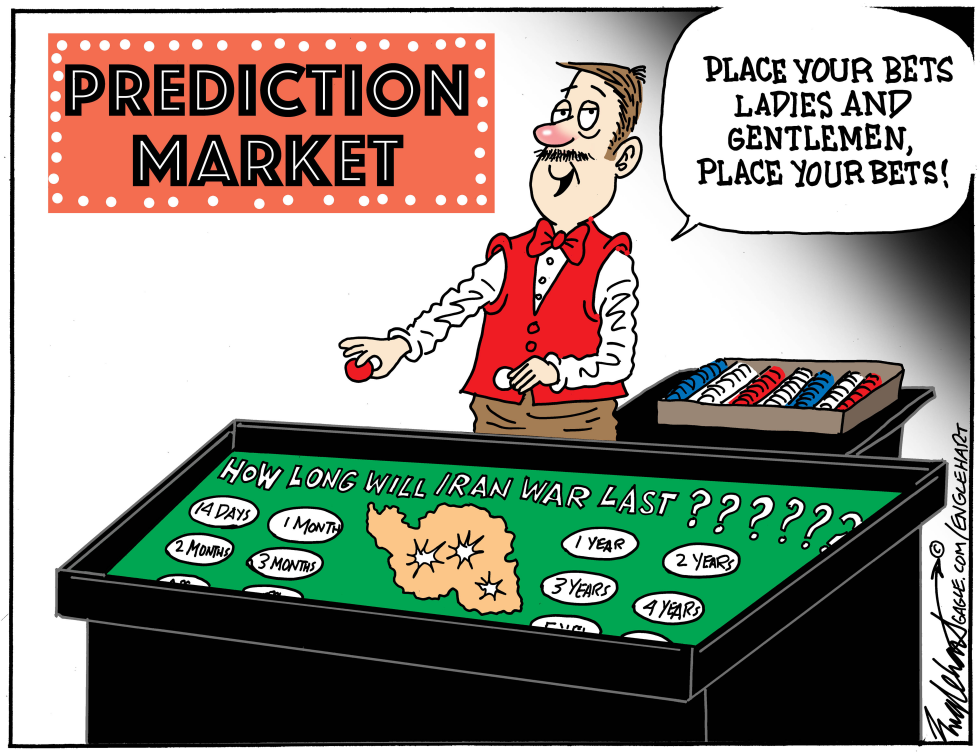
In a biting political cartoon, a smirking croupier oversees a prediction market table shaped like Iran, complete with explosion graphics, where punters can wager on war duration options ranging from 14 days to 5 years. This satirical take skewers the commodification of geopolitical betting, turning grave matters like Iran war into casino-style gambles. By blending elements of gambling on war with Middle East conflict, the artwork highlights the absurdity of prediction markets applied to real-world crises, offering humorous yet insightful commentary on how society speculates on political humor and potential catastrophes. The irreverent style underscores the folly of treating war length wager as just another market fluctuation.
This Daryl Cagle cartoon features a white dove stylized with Donald Trump's iconic blonde hair and orange face, clutching an olive branch in its beak while defecating a white splat onto a pastel-colored map prominently labeled 'IRAN.' The political cartoon Trump Iran image blends symbols of peace with irreverent humor, as the Trump dove olive branch figure perches awkwardly over the country. Surrounded by vague outlines of neighboring regions in soft blues and beiges, the satirical map Iran defecating bird pokes fun at diplomatic tensions. The artist's signature 'DARYLCAGLE.COM' appears at the bottom, grounding the Trump hair bird cartoon in professional satire. This olive branch dove pooping artwork cleverly critiques foreign policy facades, making it a sharable gem in Middle East political humor circles. Overall, it's a witty take on how peace offerings can sometimes feel like mere dumps on international relations.
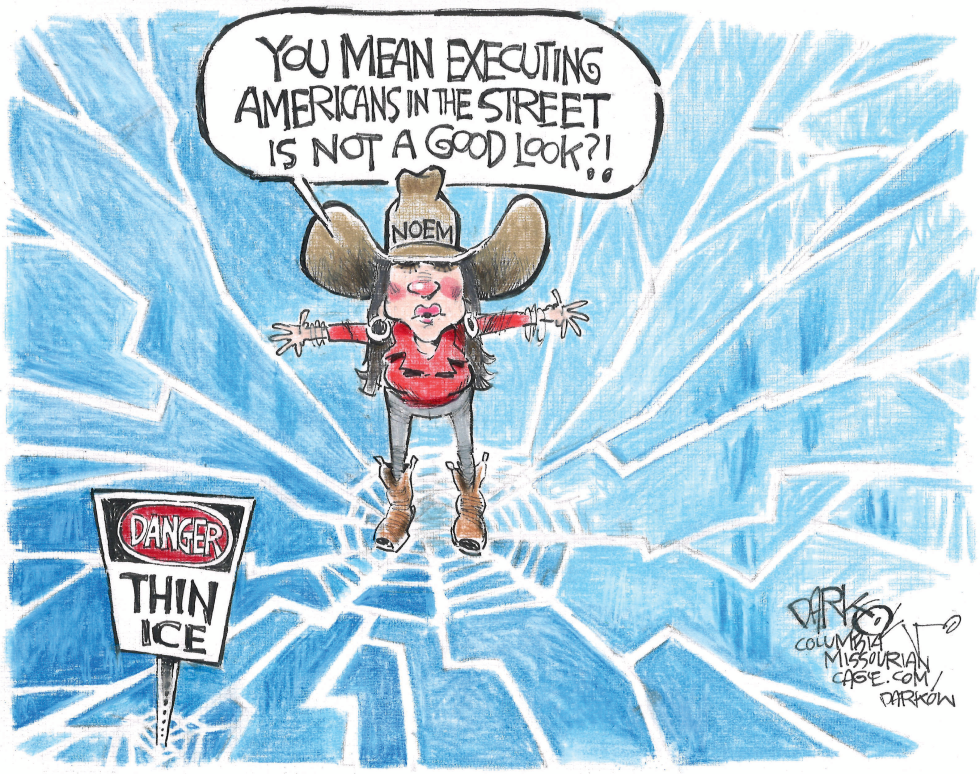
This Kristi Noem cartoon captures the South Dakota governor in a precarious position on thin ice, her hat emblazoned with 'NOEM' as she incredulously asks if executing Americans in the street isn't a good look. The image, a sharp political satire, alludes to the ongoing presidential immunity debates surrounding Donald Trump, where his allies like Noem find themselves on shaky ground. With the 'DANGER THIN ICE' sign prominently featured, the artwork highlights the risks of endorsing extreme views on executive power. Amid Noem's own memoir backlash involving her dog-killing anecdote, this thin ice metaphor amplifies the GOP backlash she's facing. The humorous political art style underscores the absurdity, making it a viral cartoon potential hit. Overall, it's a biting commentary on conservative politics satire in American discourse.
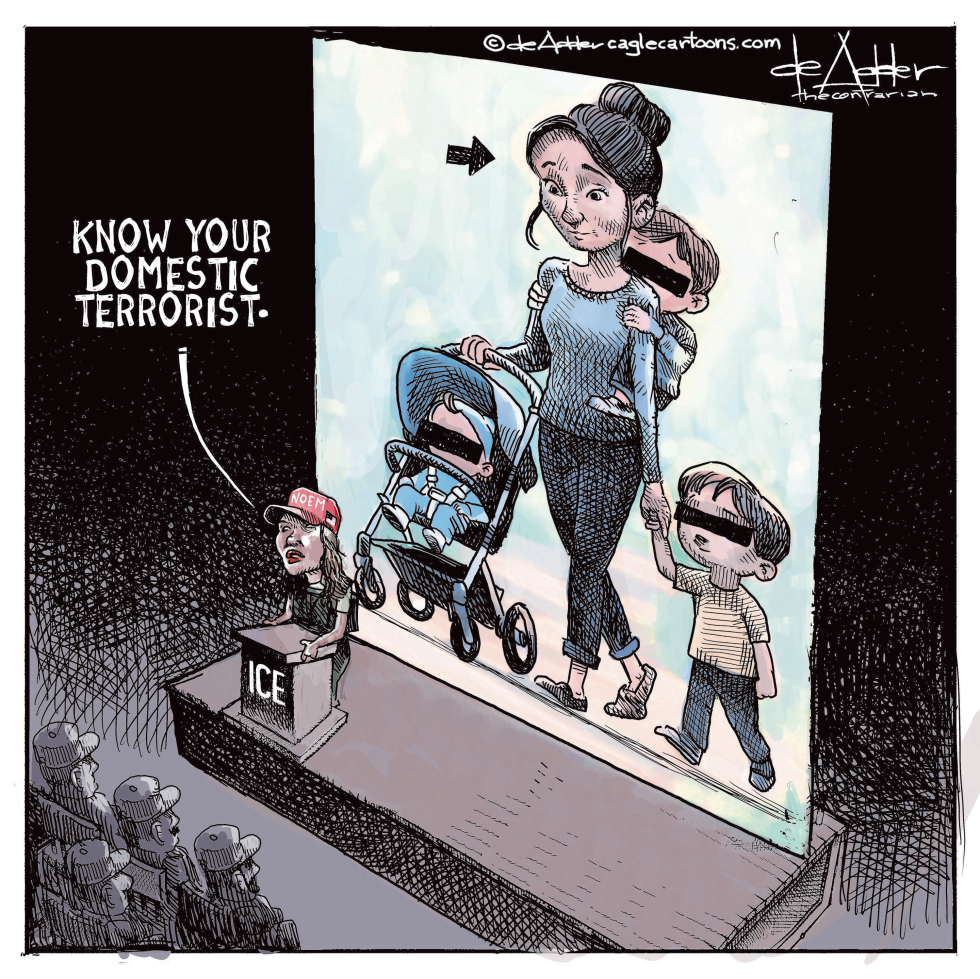
Noen says know your domestic terrorist by Michael de Adder, CagleCartoons.com