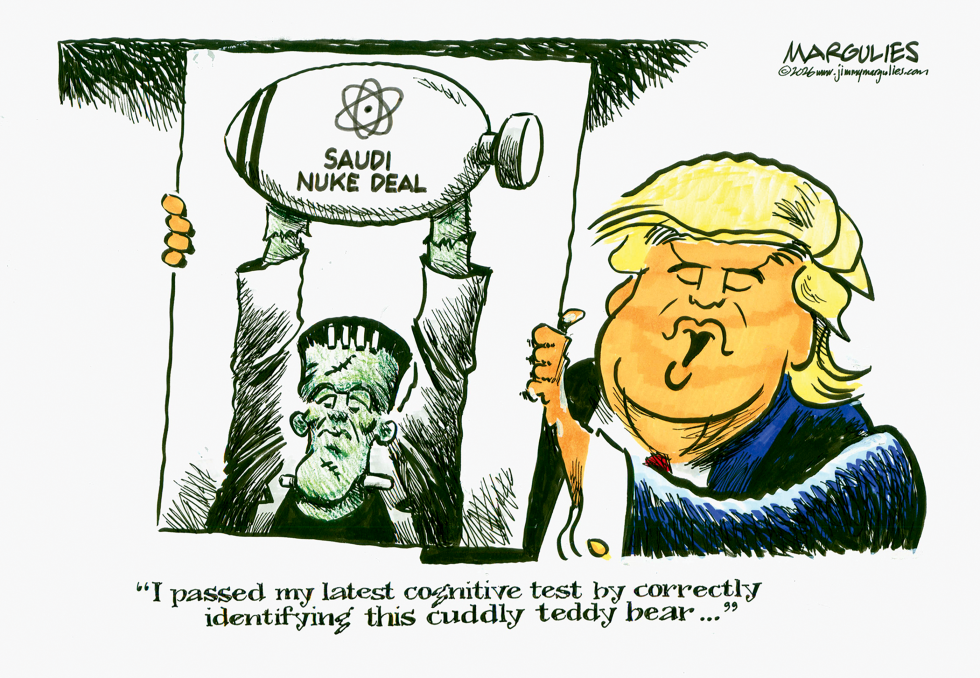
Donald Trump referenced a cognitive test while describing a Saudi nuclear deal in personal terms. The episode occurs against ongoing debates over arms control and Middle East policy. The piece portrays the deal as a dangerous misjudgment.
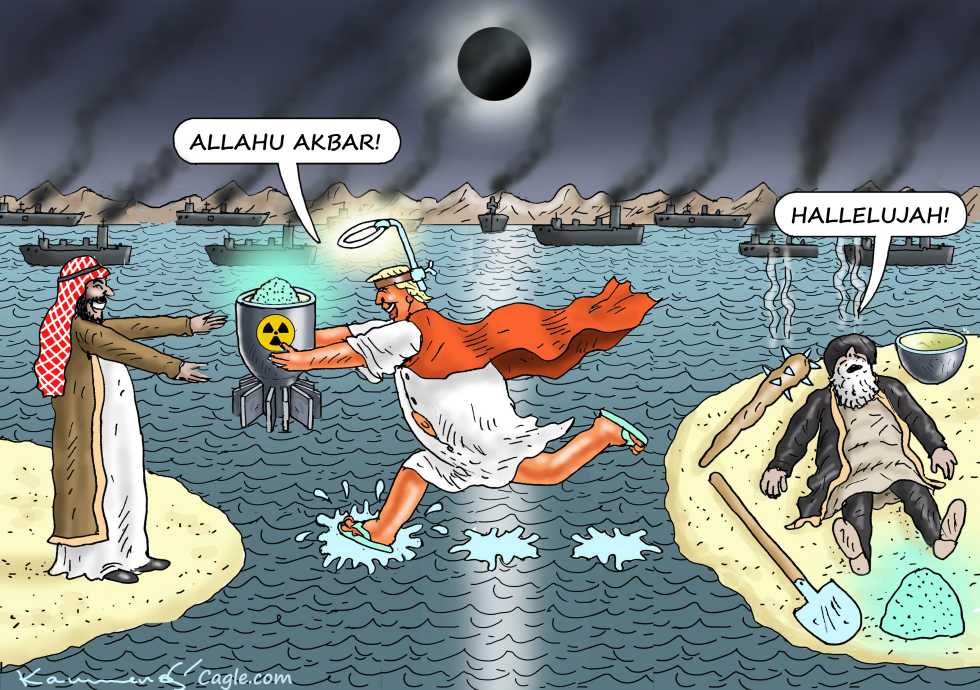
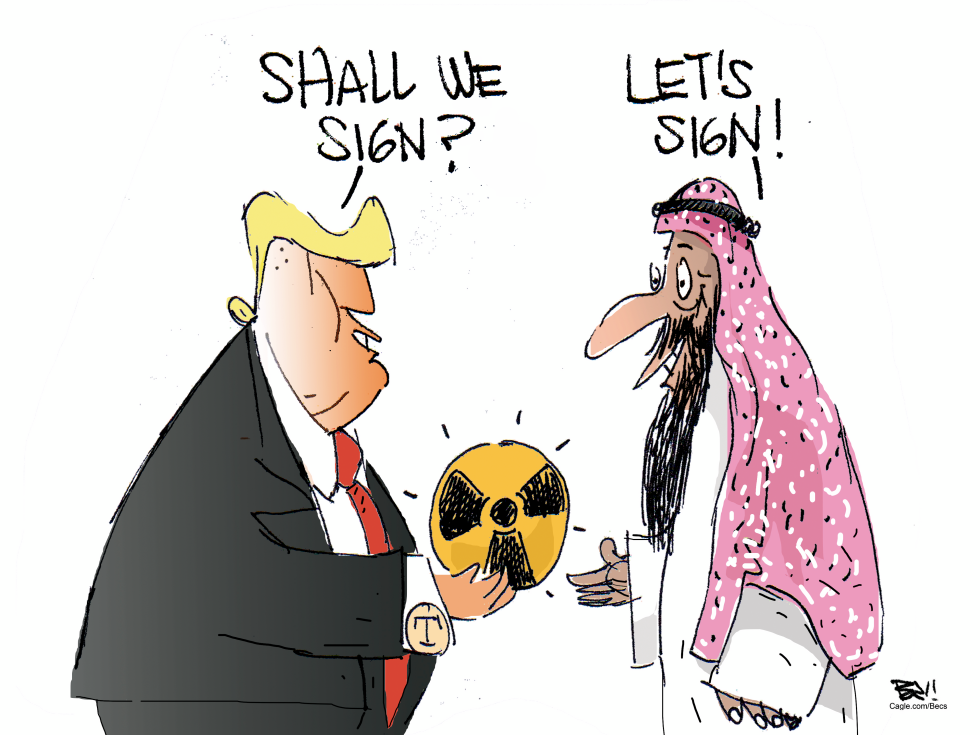
Donald Trump proposed a nuclear cooperation agreement with Saudi Arabia in mid-2026, reviving long-standing talks over civilian atomic energy that critics fear could advance weapons ambitions. The move drew immediate scrutiny from nonproliferation experts who warned that Riyadh has previously signaled interest in matching any Iranian capability. The cartoon frames the overture as reckless, using the radiation symbol to underscore the inherent dangers of such a deal.
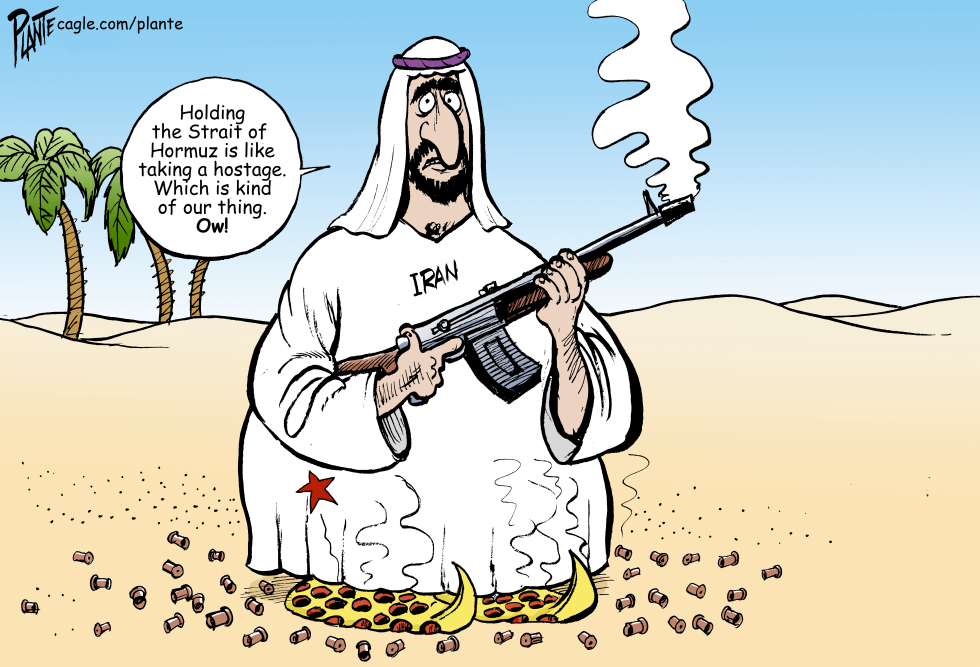
The cartoon shows a figure labeled Iran in desert robes holding a rifle and standing on a pizza slice marked with a crescent moon. A speech bubble has the figure saying holding the Strait of Hormuz is like taking a hostage which is kind of our thing. The scene is set against palm trees and sand dunes. It responds to ongoing concerns about Iran and shipping routes in the Persian Gulf as of late May 2026.
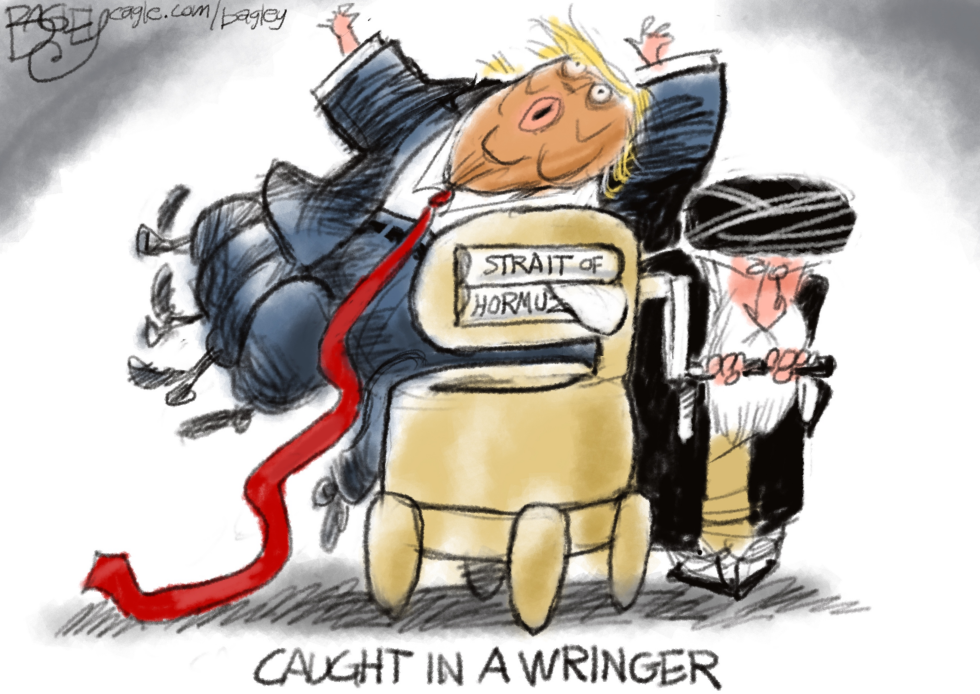
The image features a cartoon figure resembling Trump squeezed in a yellow wringer marked Strait of Hormuz while a robed figure operates the device. Visible elements include flailing limbs, a red tie trailing like an arrow, and the caption Caught in a Wringer. Tags include Trump, wringer, strait of Hormuz, Iran, and war. The drawing uses bold lines and exaggerated proportions typical of editorial cartoons. No other text or symbols appear beyond the signature area.
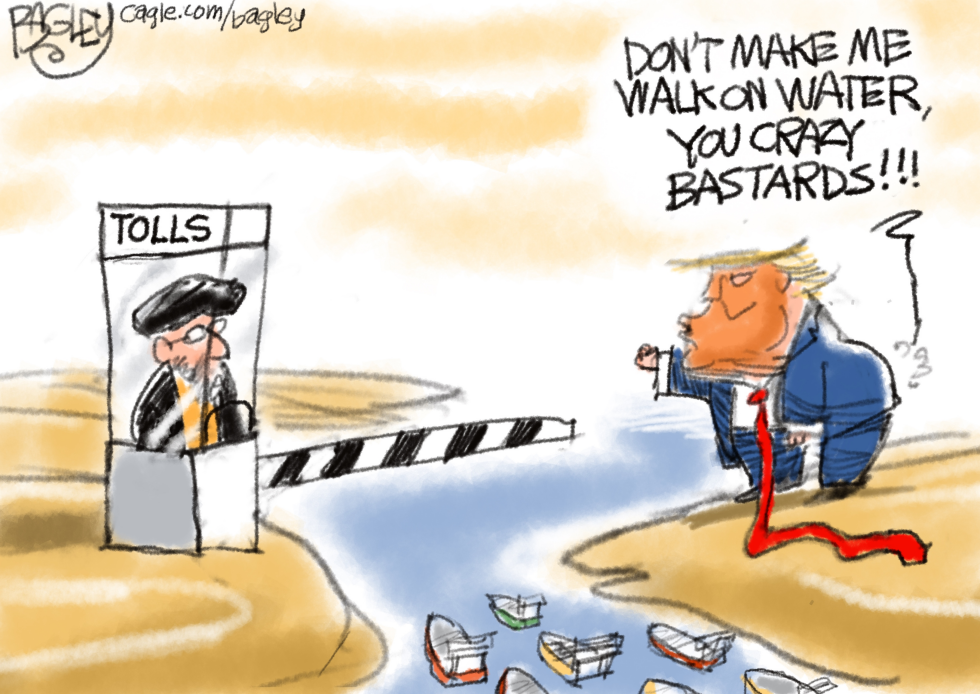
Donald Trump stands at the edge of a body of water confronting a toll booth operated by a figure resembling Ayatollah Khamenei. Small tankers sit in the water below while Trump issues a warning about walking on water. The scene references shipping routes through the Strait of Hormuz and surrounding nations.
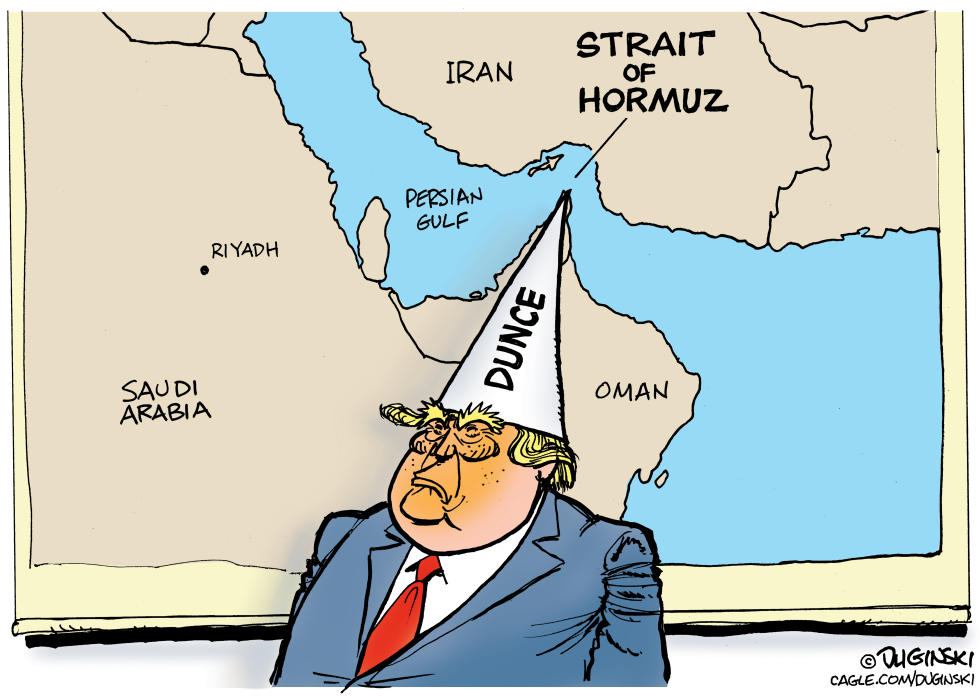
The cartoon depicts a simplified map of the Middle East, including labels for Iran, Saudi Arabia, Oman, Riyadh, and the Persian Gulf. The Strait of Hormuz is prominently marked, with a caricatured man in a suit and red tie wearing a dunce cap labeled \'DUNCE\' positioned over it. This setup uses the strait as a choke point for oil and energy, tying into themes of foreign policy, war, and ignorance. The image critiques handling of Middle East waterway issues, possibly linked to closure threats, tankers, and ceasefire efforts. Artist signature appears in the bottom right.
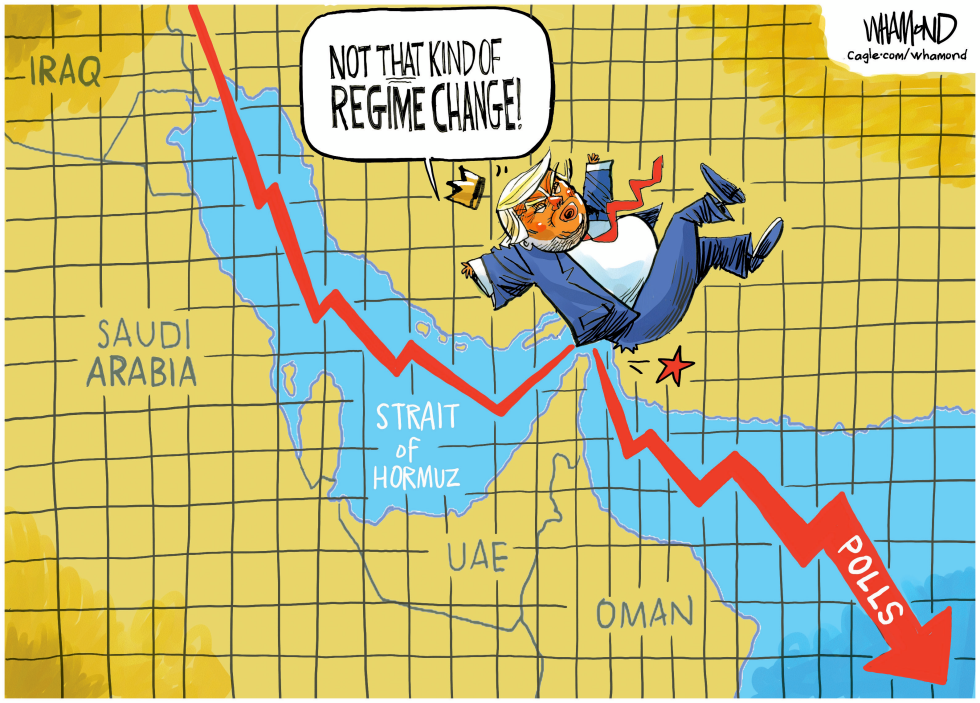
Dave Whamond's Trump regime change cartoon depicts the ex-president caricature plummeting down a jagged red line labeled 'POLLS' across a simplified map of the Persian Gulf region, including Strait of Hormuz, Iraq, Saudi Arabia, UAE, and Oman. The speech bubble exclaims 'Not that kind of REGIME CHANGE!' in a clear pun on foreign policy term versus political fortunes. This political satire captures the visual wordplay with Trump in suit and tie, mid-fall with a starburst impact, against a grid background. The dry humor lands on current events without overstatement, fitting newspaper syndication. Tags like regime change pun, Trump falling polls, Middle East map cartoon, satirical Trump caricature, polls decline illustration, and editorial cartoon Trump downfall emphasize the image's SEO potential.
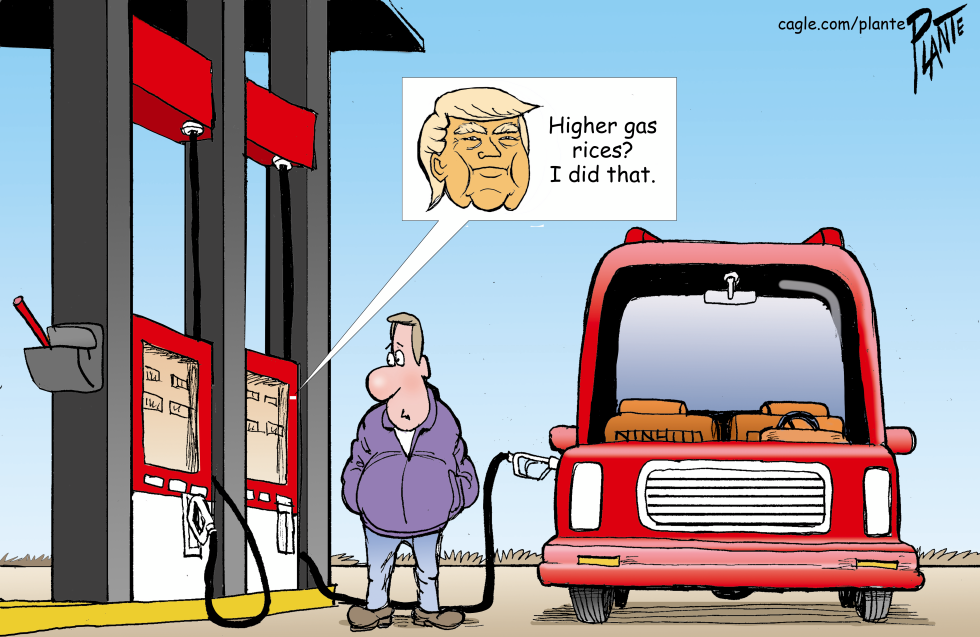
Bruce Plante's cartoon shows a gas pump topped with President Donald J. Trump's head, smirking as it says, 'Higher gas rices? I did that,' while a driver fuels his red truck. The image ties into tags like higher gas prices, war, Iran, Israel, Middle East, and energy crisis, poking at Trump's potential role in escalating fuel costs through foreign policy missteps. It's a straightforward jab, clear in its satire without overcomplicating the visuals. The dry humor lands on the absurdity of a politician claiming credit for economic pain at the pump. With tags covering UAE, Saudi Arabia, and other regional players, the cartoon nods to broader geopolitical tensions driving oil prices up. Editors see these kinds of cartoons circulate well when gas prices spike, reminding readers of the human cost in everyday routines.
Bruce Plante's cartoon depicts a typical American driver at a gas station, his purple car parked under the canopy, as he reacts with censored profanity to a coin-operated viewer. The sign reads 'TO SEE GAS PRICES DEPOSIT 25¢,' cleverly satirizing how #HighGasPrices have soared beyond easy visibility, like distant sights needing magnification. The man's USA shirt and coffee cup add a relatable everyman touch, emphasizing consumer shock. This piece fits into ongoing #FuelCosts debates, blending #InflationHumor with #EconomicSatire. Plante's style, straightforward and punchy, targets #EnergyPrices and their impact on daily life, making it shareable for #PoliticalCartoons enthusiasts. The dry humor underscores the absurdity without overstatement, a hallmark of syndicated work.
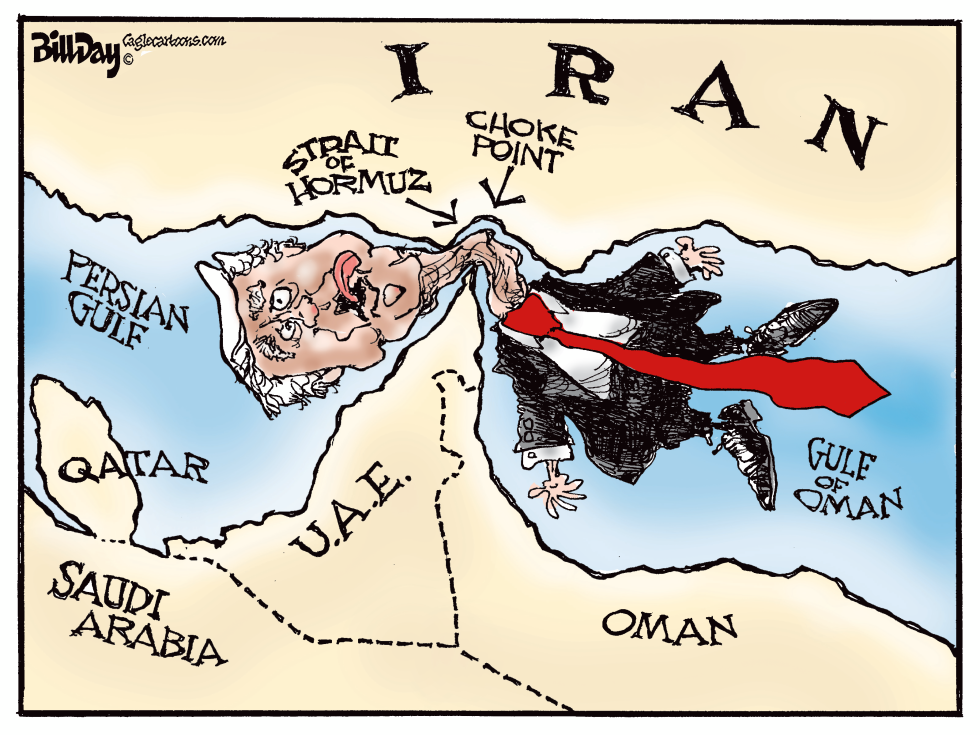
Dive into this Bill Day creation where the map of Iran morphs into a menacing hand at the Strait of Hormuz choke point, gripping a flailing figure in a suit and red tie, symbolizing tension in the Persian Gulf. Surrounding nations like Saudi Arabia, UAE, Qatar, Oman, and the Gulf of Oman frame the scene, highlighting the strategic choke point. This political cartoon Iran Strait of Hormuz captures the essence of Middle East satire, with Iran's form literally choking the strait, a nod to real-world frictions without delving into unshown depths. The irreverent style pokes fun at power plays, making the geopolitical humor both insightful and shareable in editorial circles.
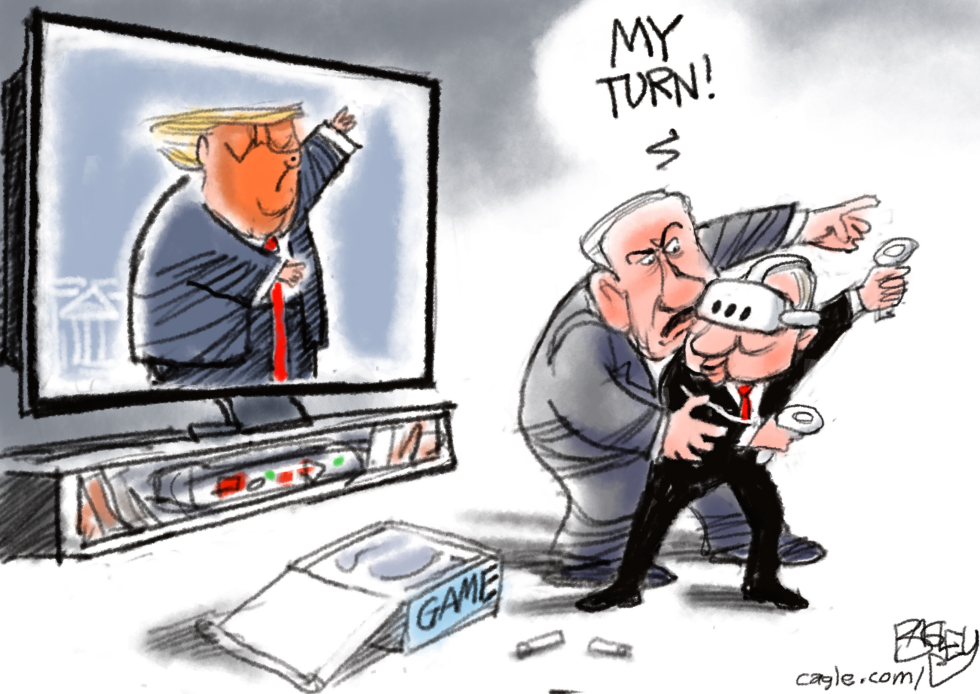
Pat Bagley's cartoon captures Vladimir Putin in a suit, firmly holding a smaller Benjamin Netanyahu who wears a VR headset and wields controllers, exclaiming 'My Turn!!' with frustration. Donald Trump dominates the TV screen, arm raised dramatically against a White House-like backdrop. The floor features a tipped 'GAME' box, underscoring the video game metaphor. This setup highlights themes of manipulation and turn-taking among leaders, delivered with sharp lines and exaggerated features typical of political satire. The dry humor lies in reducing global tensions to childish squabbles over a game, a classic cartoon trope that packs punch without overstatement.