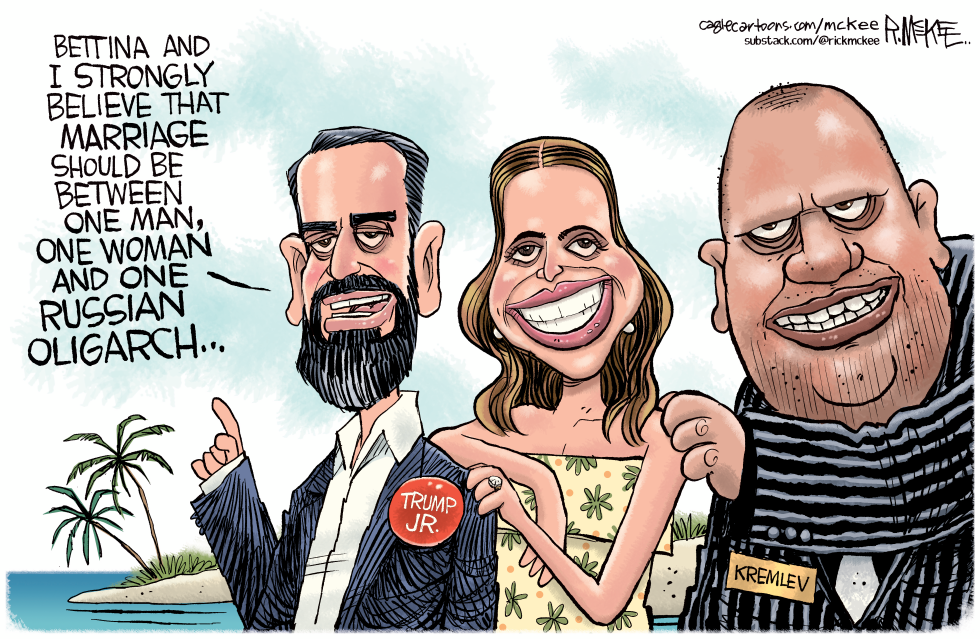
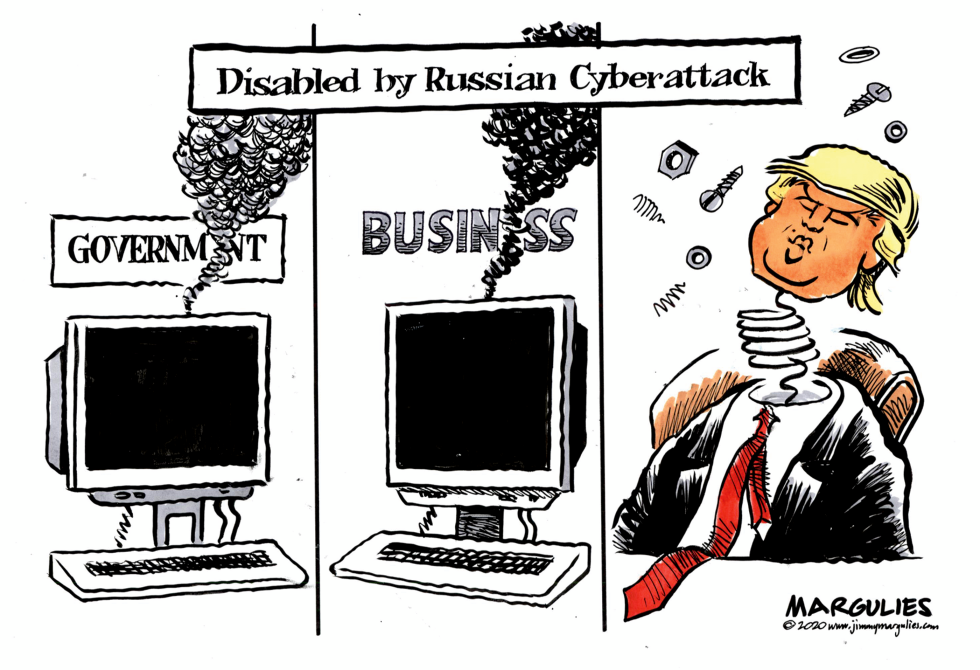
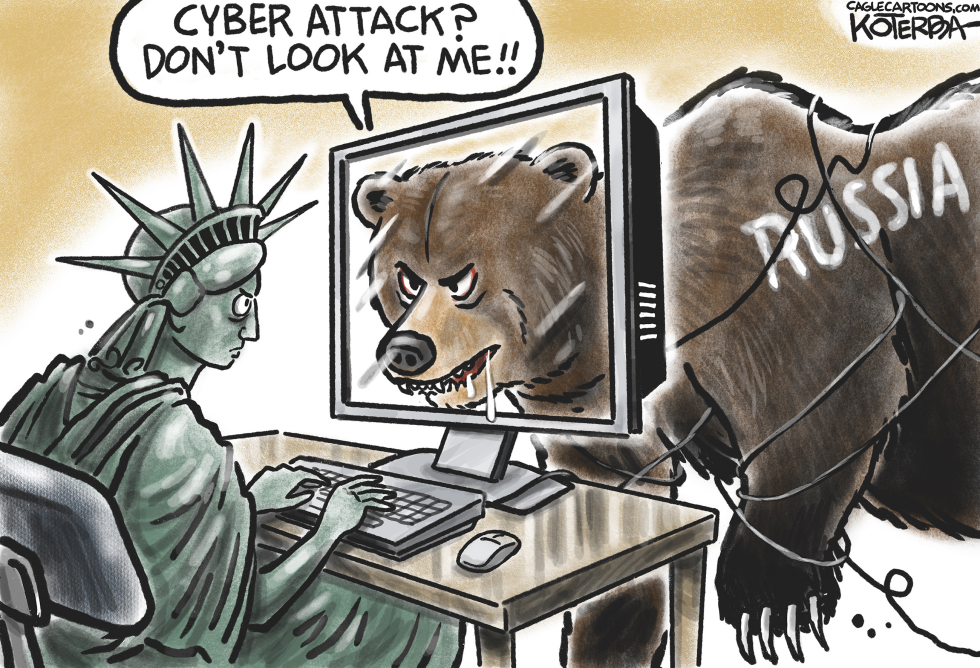
On September 15, 2026, commentary emerged around reports of Russian oligarch involvement in events tied to Donald Trump Jr. and Bettina. The development raises questions about foreign influence on the Trump family. The piece argues such connections undermine claims of independence from external interests.
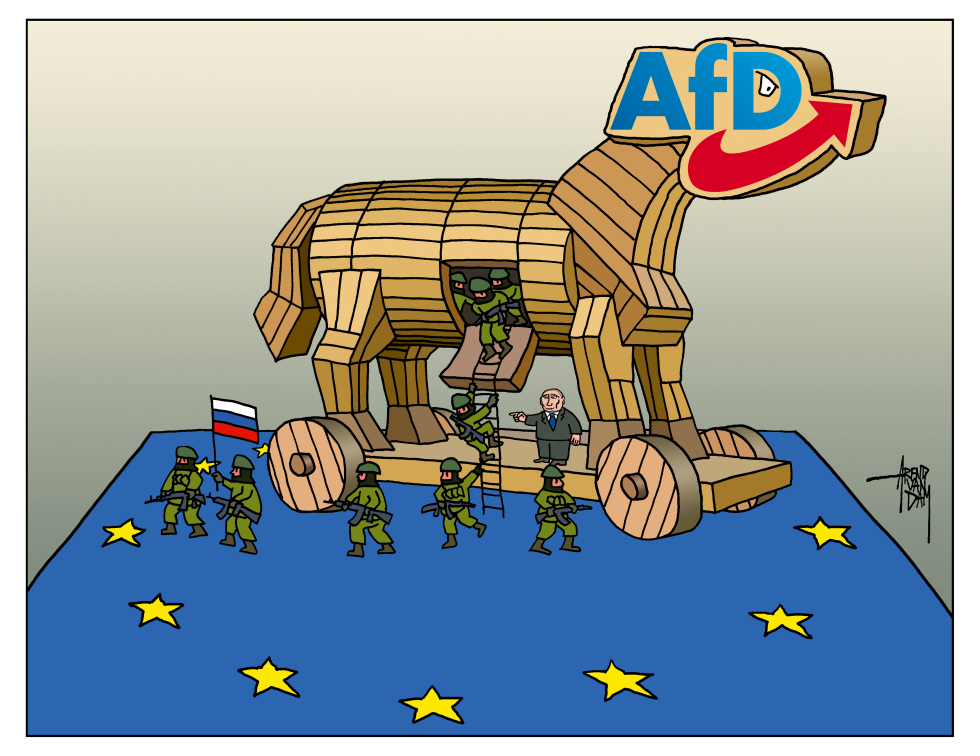
The AfD party in Germany faces accusations of serving as a conduit for Russian influence operations targeting the EU. Vladimir Putin benefits from the far-right group's rising profile ahead of elections, using it to sow division and weaken European unity. The cartoon portrays this dynamic as a classic Trojan horse tactic, with Russian troops emerging from the AfD structure on EU soil. Critics argue the party's policies align too closely with Kremlin interests, undermining NATO and EU cohesion at a critical time. The editorial stance warns that ignoring these ties risks strategic vulnerability for Europe.
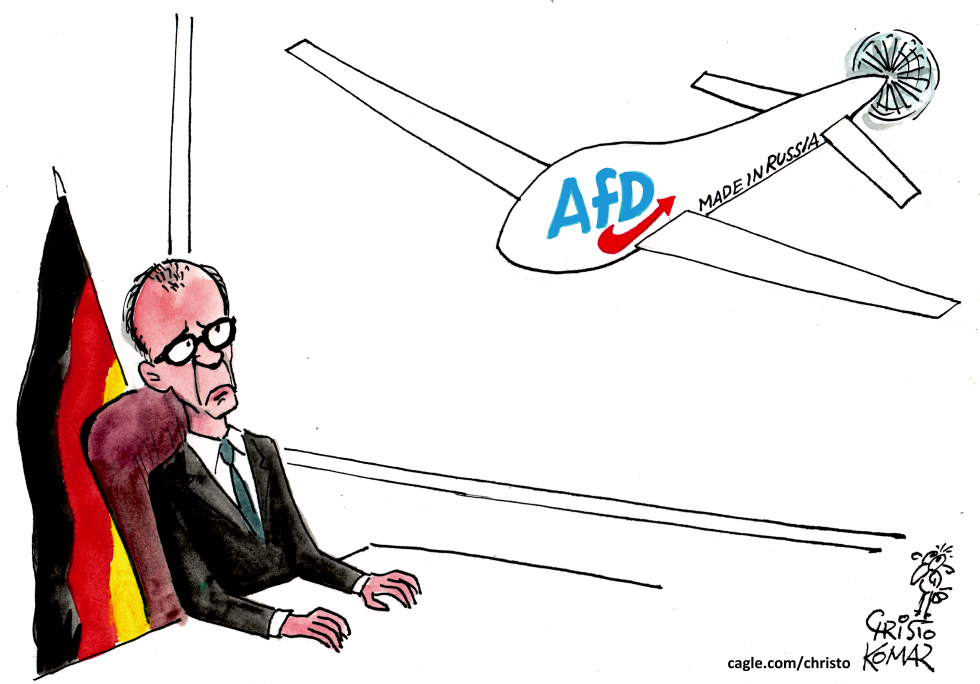
Germany's Alternative for Germany party draws renewed attention for its pro-Russia stance and possible external support. The cartoon uses the image of an AfD-branded plane labeled made in Russia to suggest the party's campaign and positions are shaped by Moscow. This comes amid ongoing debates over foreign interference in European elections and the party's rising poll numbers. Critics argue such ties undermine German sovereignty and democratic processes. The piece takes the view that AfD functions as a vehicle for Russian interests rather than a genuine domestic movement.
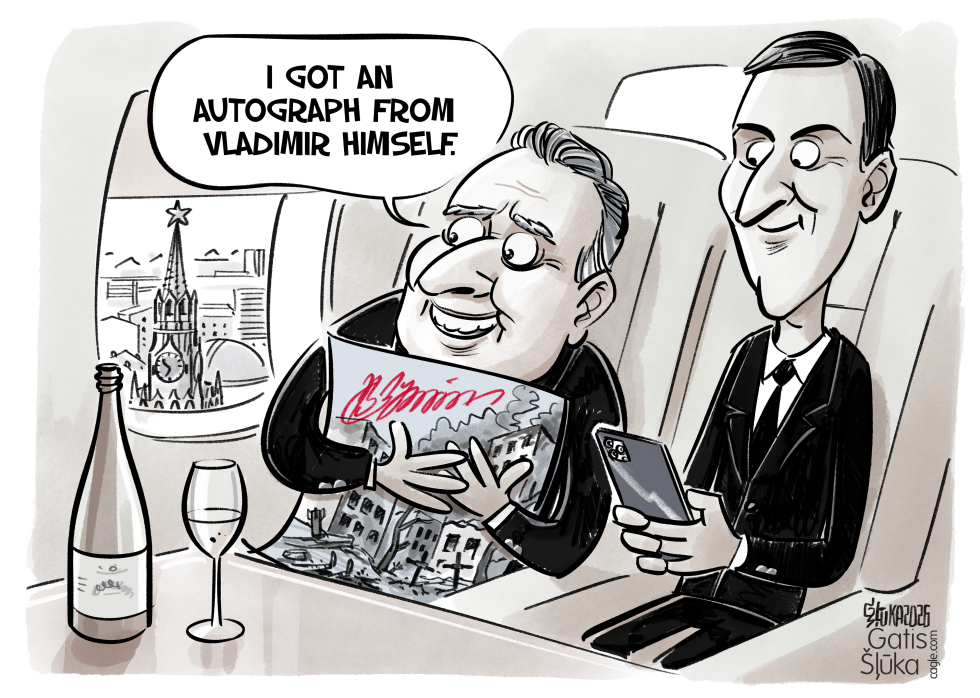
The cartoon depicts a politician on an airplane excitedly showing a colleague an autograph from Vladimir Putin on a book or document. The speech bubble reads that the autograph came from Vladimir himself. A bottle of wine and glass sit on the table, with a view of a city featuring a star-topped tower outside the window. The second man smiles while holding a phone. Published on September 7, 2026, the image comments on political figures maintaining or displaying ties to Russia despite international strains. The visual emphasizes the politician's enthusiasm for the souvenir as a point of pride.
Russian President Vladimir Putin and former President Donald Trump are shown aiding Germany's AfD party in the run-up to elections. The piece argues that external interference from these figures is boosting the far-right German party while harming domestic U.S. political elements.
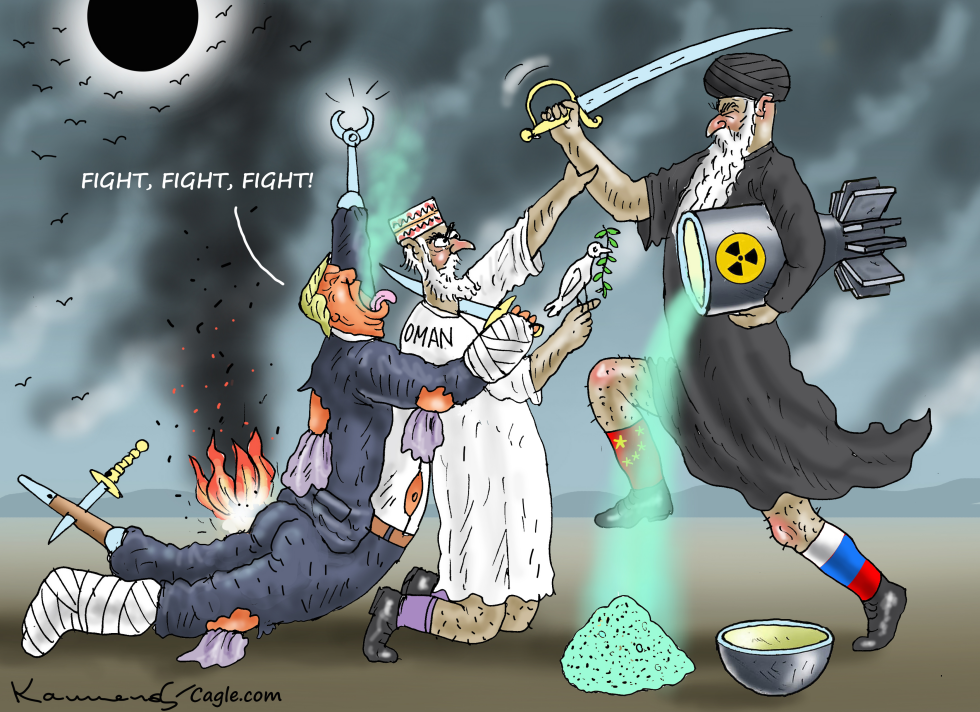
A confrontation involving the former president unfolded in Oman amid regional tensions with a nuclear capable participant. The incident highlights ongoing friction in Middle East diplomacy and arms concerns. The piece portrays the event as a chaotic clash where peace efforts compete with aggressive posturing.
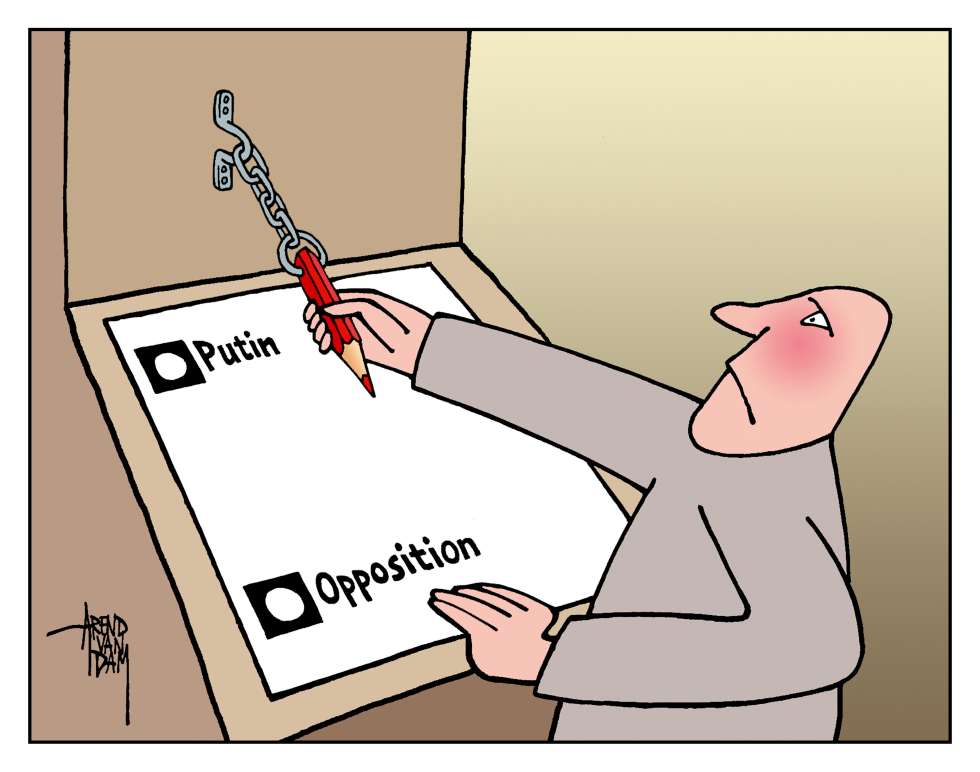
Russian voters face restricted ballot access ahead of the 2026 presidential election cycle. The chained pencil in the voting booth limits choice to the incumbent. This setup underscores ongoing limits on opposition participation. The piece argues that such physical constraints mirror broader electoral controls that prevent genuine competition.
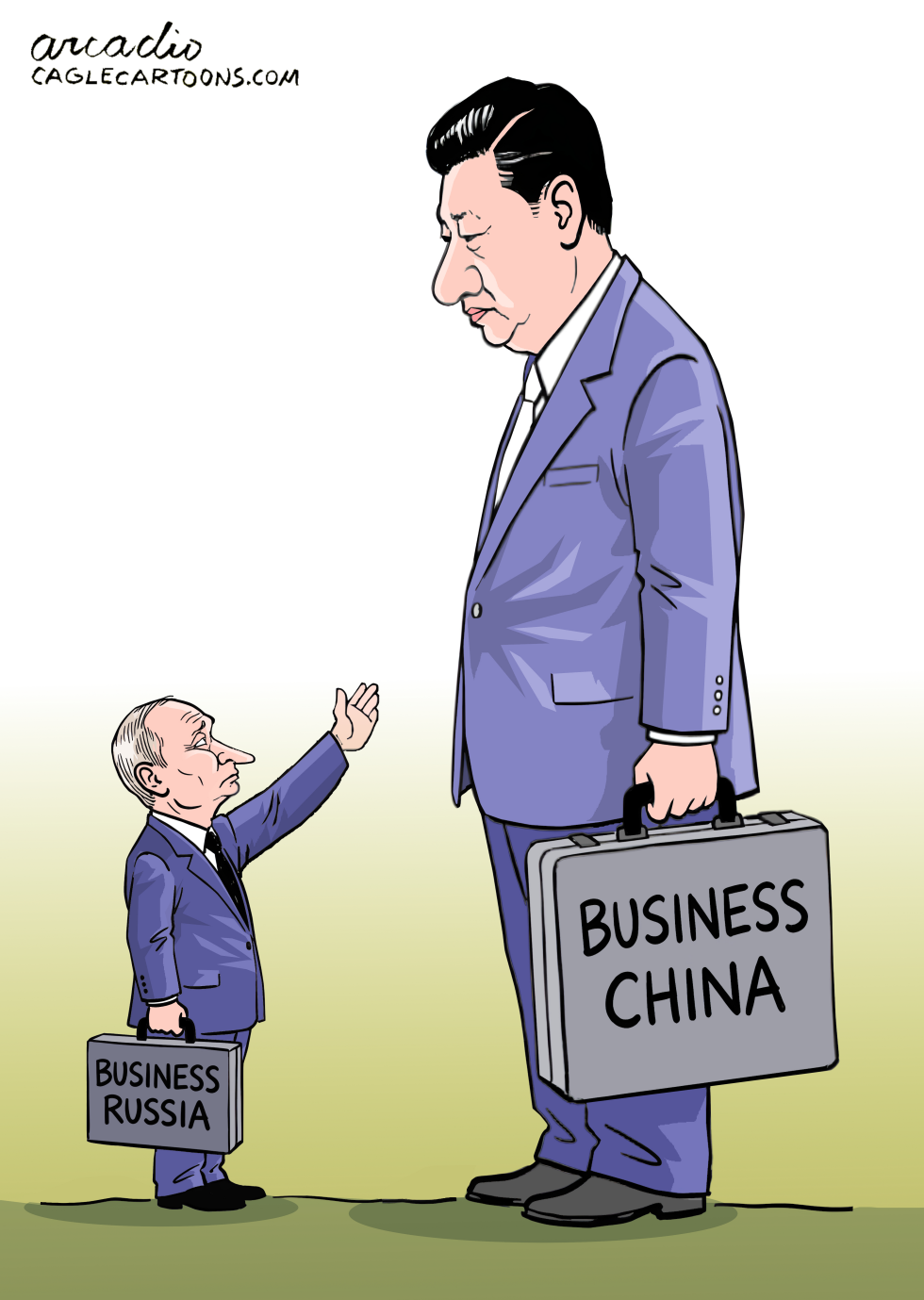
China and Russia continue deepening economic cooperation amid Western sanctions on Moscow. Xi Jinping's government provides critical markets and technology to Russia while extracting favorable terms. The cartoon underscores the unequal power dynamic in their partnership.
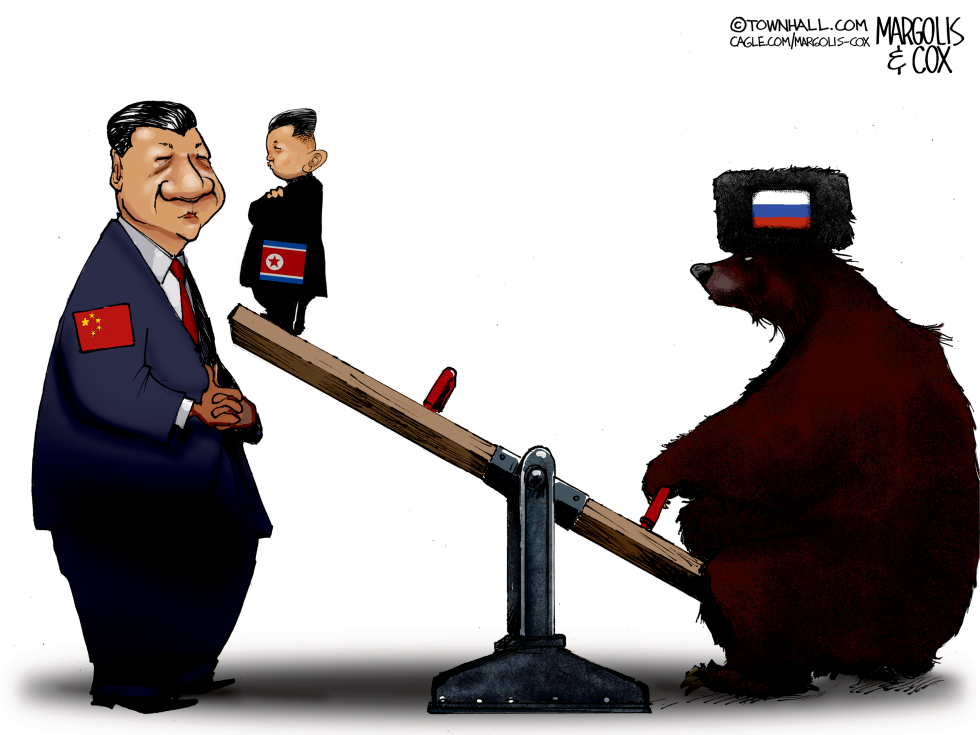
Xi Jinping stands on the left side of a seesaw while a Russian bear sits on the right. Kim Jong Un stands on the plank closer to Xi as the board tilts under their weights.
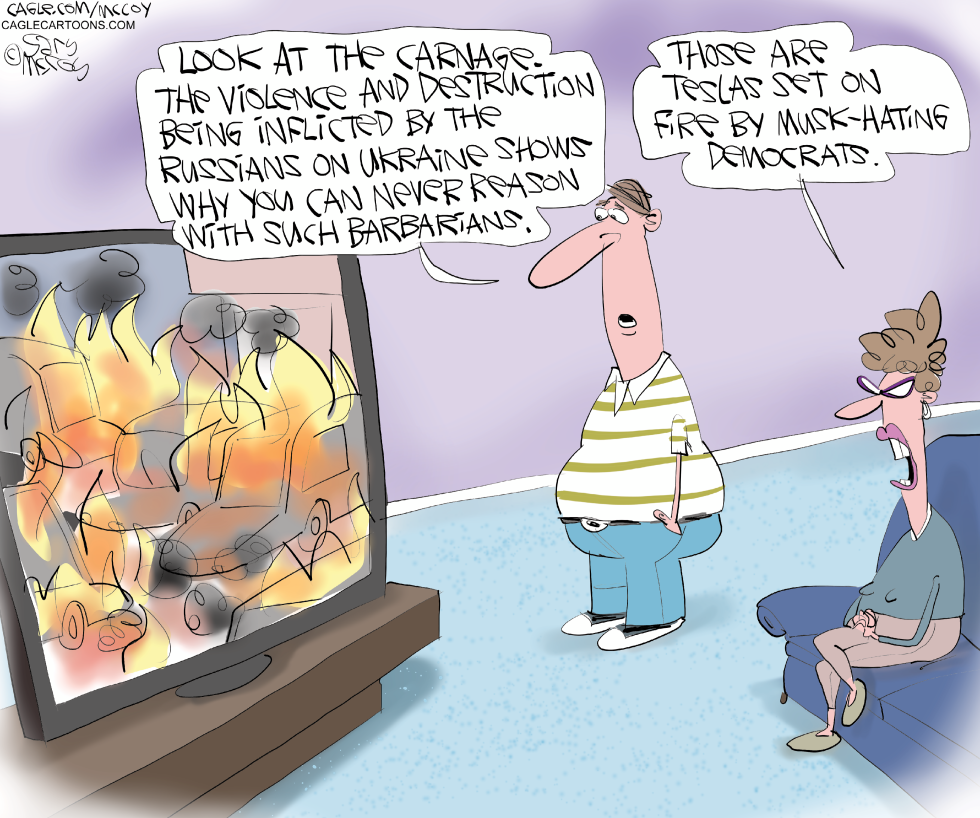
On March 22 2025 Gary McCoy depicts a man watching burning cars on television and assuming Russian attacks in Ukraine. A seated woman clarifies the vehicles are Teslas set ablaze by Musk-hating Democrats. The scene draws from recent protests and vandalism targeting Tesla properties amid political tensions over Elon Musk's role in government efficiency efforts.