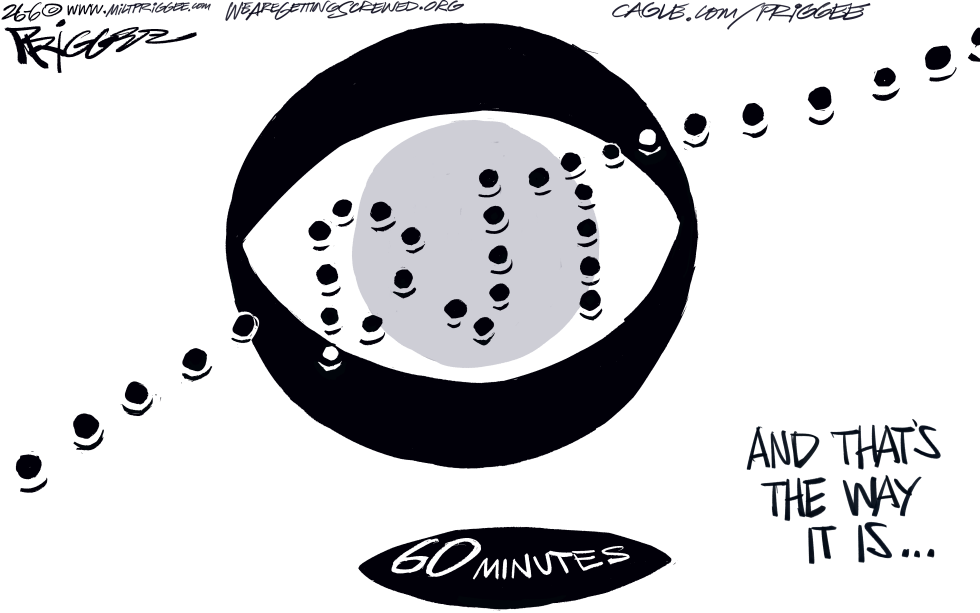
The June 2026 cartoon shows a massive eye formed around the 60 Minutes logo. A trail of dots extends from the pupil toward the right. Text at bottom right echoes the program's closing line while a website reference highlights screening concerns. The image questions the reach of the long-running CBS news program.
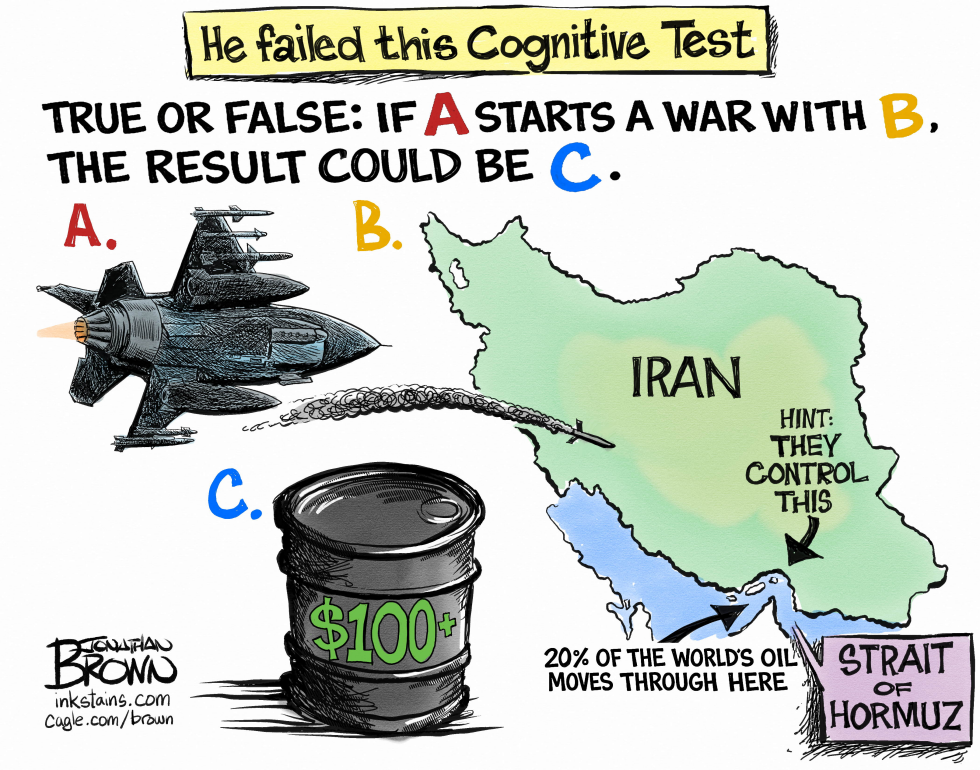
Jonathan Brown's cartoon presents a stark true-or-false cognitive test: if A (a fighter jet) starts a war with B (Iran), the result could be C (an oil barrel marked $100+). The map of Iran includes a hint pointing to the Strait of Hormuz, noting that 20% of the world's oil moves through there, underscoring control over this chokepoint. Tags such as cognitive test, war in Iran, oil prices, Strait of Hormuz, gas prices, and cost of war frame the satire. The artwork warns of economic fallout from conflict, with the jet trailing toward Iran and the oil barrel symbolizing surging costs. This piece captures geopolitical tensions in a simple, visual riddle.
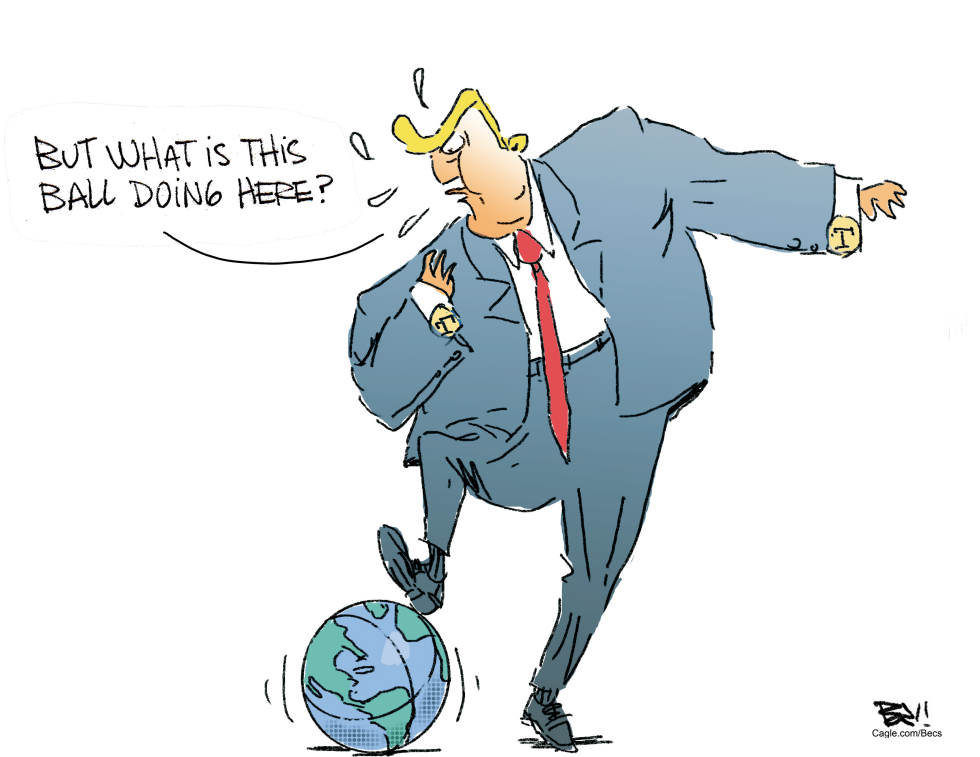
On May 10 2026 Donald Trump appears in a cartoon kicking a globe shaped like a soccer ball. The former president looks down in confusion at the ball near his foot. A speech bubble shows him asking what the ball is doing there. The image coincides with the upcoming 2026 World Cup tournament. The cartoon highlights Trump's apparent disconnect from the sporting event.
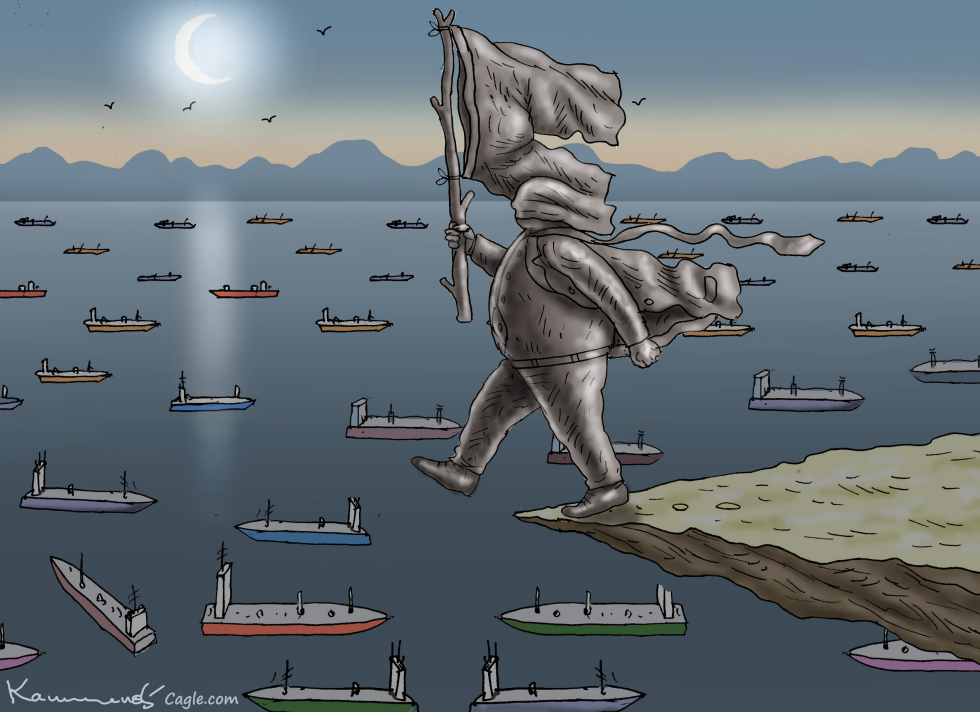
The cartoon shows a large, gray, statue-like figure with a hooded cloak, gripping a flag on a pole, as it steps forward off a cliff's edge. Below stretches a dark sea filled with many small ships of various colors, scattered across the water. In the background, mountains rise against a sky with a crescent moon and flying birds. The image, tagged with Banksy, Trumo, Hormuz, fascism, patriotism, and Maga terror, captures a moment of precarious advance. Artist Marian Kamensky signs it at the bottom left, linking to Cagle.com. This setup highlights a bold, unyielding march into potential downfall amid a busy maritime scene.
Arend van Dam's cartoon shows a gray battleship marked USA, complete with guns and missiles, driven by a figure in a suit at the wheel, as it goes over a waterfall between rocky cliffs under a blue sky. The image captures the essence of strategy failure in the Strait of Hormuz, tying into themes of Iran, ayatollahs, war, battleship mishaps, Middle East conflicts, oil, gas, energy, and economy. Such visuals often poke at misguided military moves, where the ship's plunge represents a dramatic downfall in strategic planning. The dry humor lies in the absurdity of a warship treating a strait like a river rapid, underscoring potential economic fallout from regional tensions. Cartoons like this thrive on clear, exaggerated metaphors that resonate with readers familiar with global news.
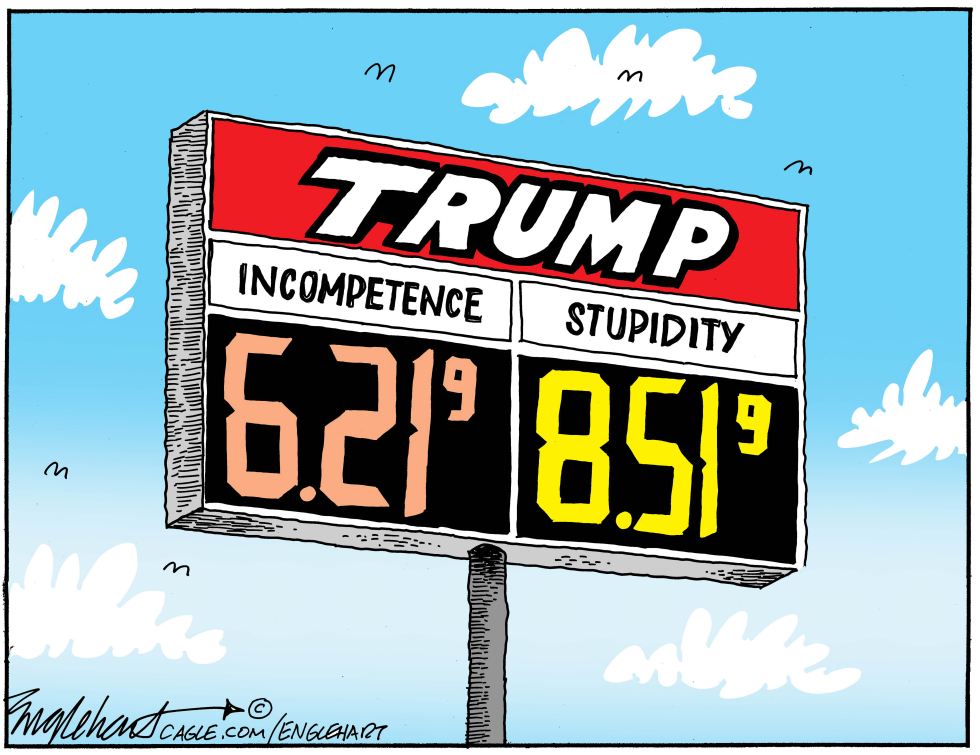
Bob Englehart's cartoon features a gas station sign with Trump at the top, showing prices for incompetence at 6.21⁹ and stupidity at 8.51⁹ against a blue sky with clouds. The tags Trump, Iran War, gas prices, gasoline, and gallon frame the visual pun. Such cartoons often tie political figures to everyday economic pains like fuel costs. The dry humor lands on how leadership flaws inflate prices, making it relatable for readers hit by pump shocks. With no characters, just the sign, it keeps the message direct. Tags like incompetence and stupidity drive the satire home, poking at perceived policy missteps without overcomplicating the scene.
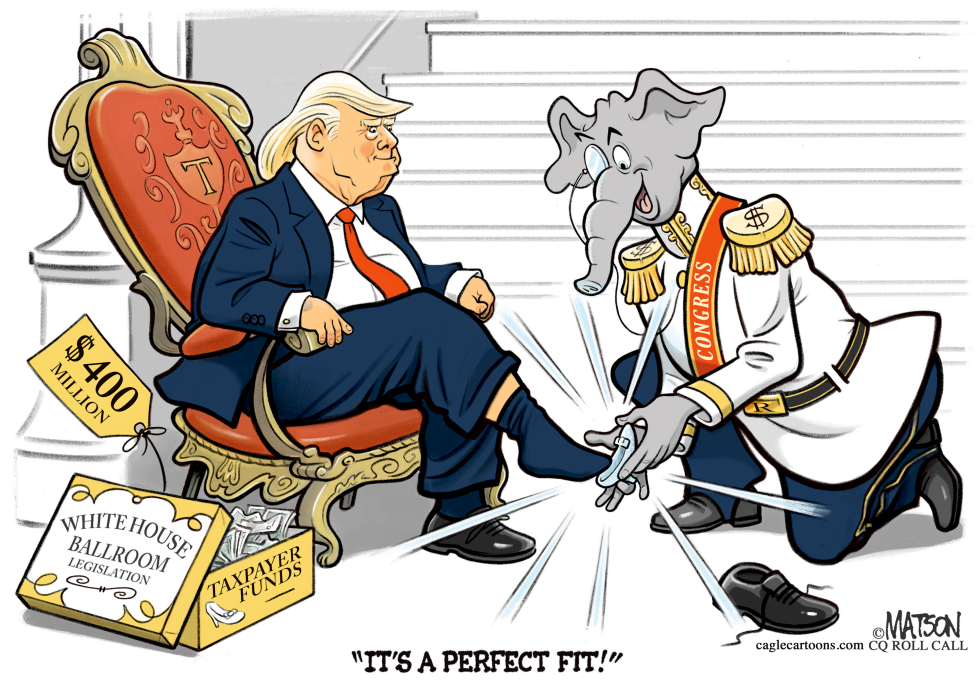
RJ Matson's cartoon depicts President Trump as Cinderella, lounging on a throne while a grinning Congress elephant, adorned with a sash and dollar-sign epaulets, slips a black shoe onto his foot, exclaiming 'It's a perfect fit!!' A box labeled 'White House Ballroom' overflows with 'Taxpayer Funds,' and a $400 million tag dangles nearby. This sharp satire targets Congressional Republicans' approval of hefty taxpayer funding for White House upgrades, echoing the fairy tale but with a political twist on government spending and Donald Trump's influence. The White House Correspondents Association Dinner at the Hilton Hotel lurks in the background tags, highlighting budget priorities amid fiscal debates.