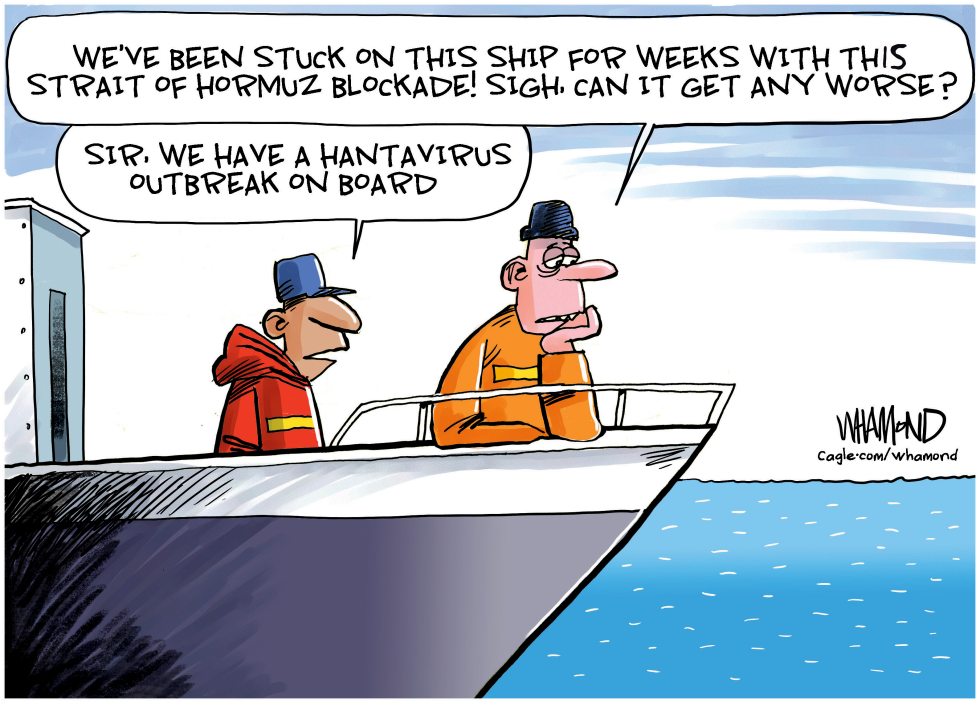
The cartoon depicts two sailors aboard a ship trapped in the Strait of Hormuz due to a naval blockade. One laments the weeks-long delay and wonders if conditions can worsen. The other reports a hantavirus outbreak on board. The image responds to ongoing tensions involving Iran and disruptions to global oil routes. As of the May 2026 publication date, the blockade has halted tanker traffic and strained energy markets. The added health crisis underscores the compounding risks for crews and supply chains. The visual ties geopolitical conflict directly to immediate human and economic consequences.
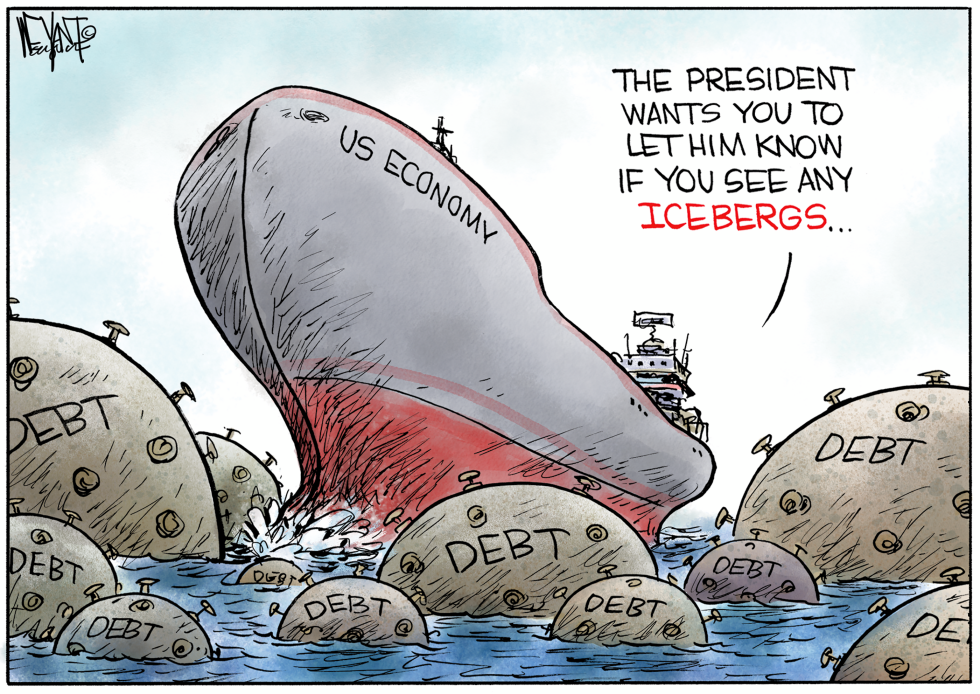
This political cartoon illustrates the US Economy as a massive ship labeled accordingly, dramatically sinking after colliding with numerous icebergs each marked 'DEBT.' A speech bubble from the ship warns to alert the president about icebergs, evoking the Titanic disaster in a clear metaphor for economic peril. Incorporating tags such as economy, debt, budget, inflation, prices, and costs, the image critiques fiscal irresponsibility. The artwork by Christopher Weyant uses simple lines and colors to emphasize the collision's impact, with water splashing and the ship's hull damaged. Such cartoons often highlight how mounting debt threatens stability, drawing parallels to historical maritime tragedies for satirical effect. The composition places the ship at an angle, surrounded by floating debt bergs, underscoring inevitable crisis if warnings go unheeded.
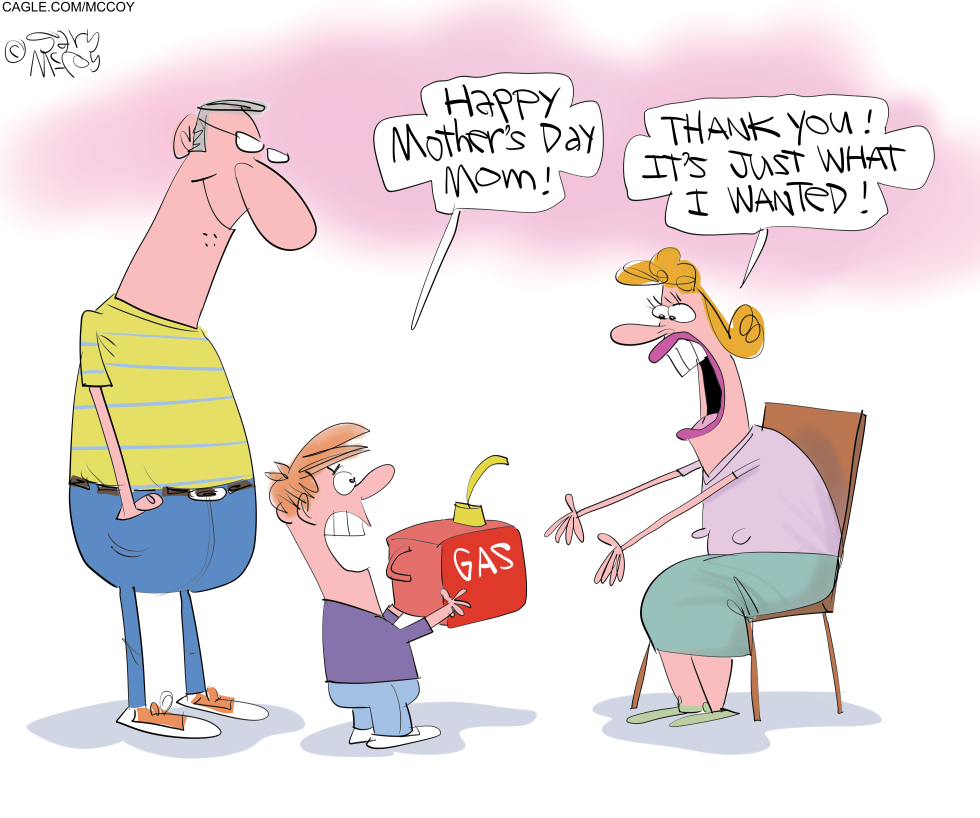
Gary McCoy's cartoon captures a family moment where a young son hands his mother a lit bomb marked GAS, exclaiming Happy Mother's Day, while she thanks him enthusiastically. The image ties into tags like Mom, mother, Mothers Day, gas, oil, petro, prices, economy, inflation. It highlights the burden of rising energy costs on families, with the explosive gift symbolizing volatile fuel markets. Amid references to Iran, strait of hormuz, Trump, the satire underscores how global tensions affect everyday life, blending holiday cheer with economic reality in a straightforward, exaggerated style typical of political cartoons.
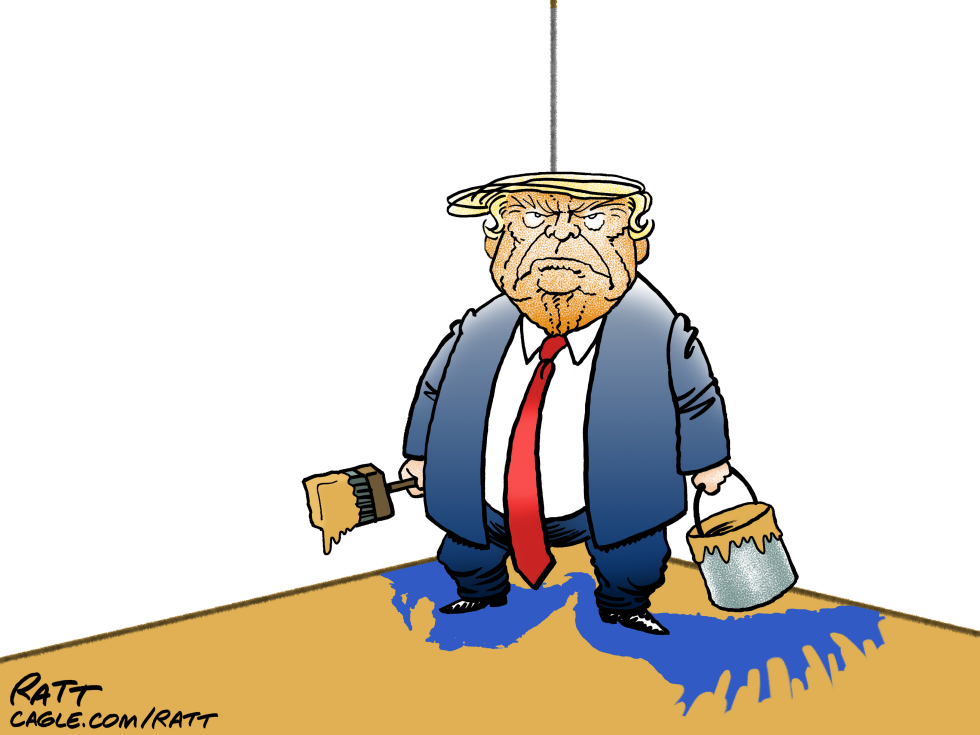
Donald Trump appears in a 2026 editorial image holding a paintbrush and bucket while standing on a blue painted area resembling the Strait of Hormuz. The scene responds to ongoing concerns over Iranian oil routes, potential conflict, and resulting effects on global oil and gas prices. The visual shows the figure applying paint that creates a path leading to restricted movement.
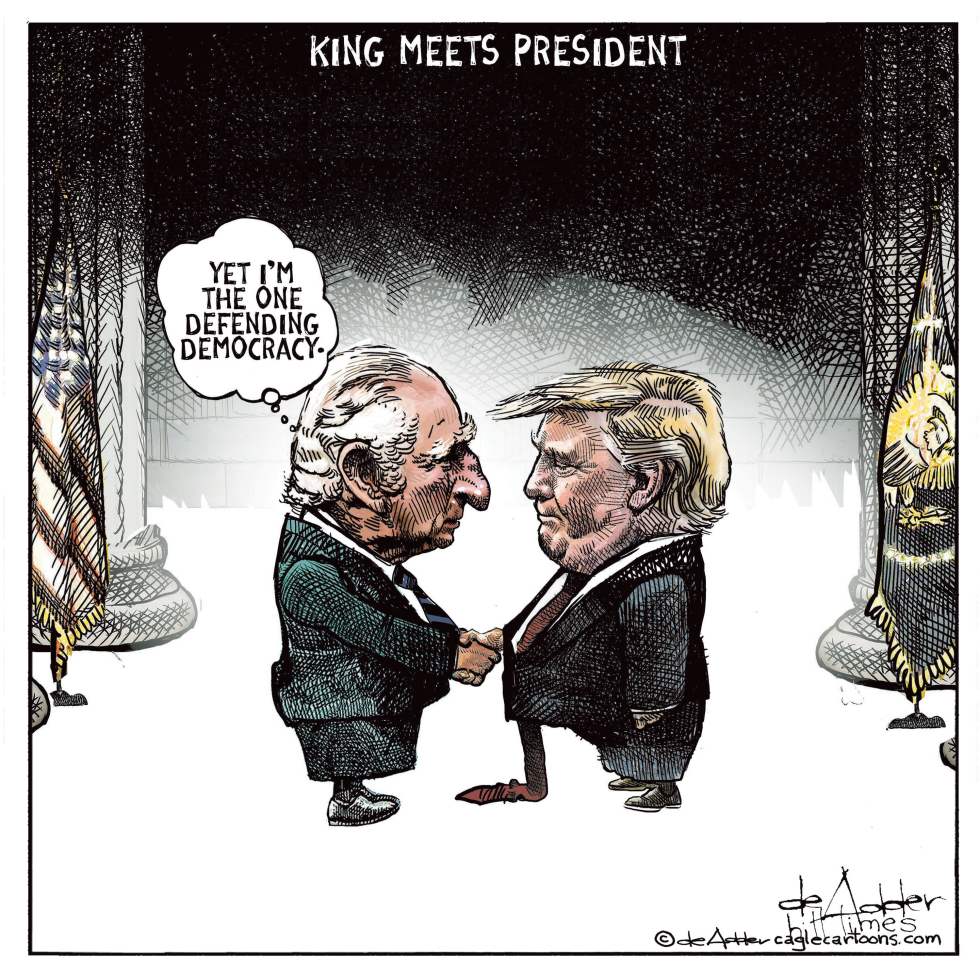
Michael de Adder's cartoon captures a handshake between King Charles and President Trump, set against American and implied British flags in a White House-like scene. The title 'KING MEETS PRESIDENT' tops the image, with Charles saying, 'Yet I'm the one defending democracy.' Tags like UK, United Kingdom, States, America, White House, Visit, State underscore the diplomatic theme. This satire touches on trade, tariffs, and economy without overreaching into unseen motives. The dry humor lies in the visual irony of two leaders in suits, one royal and one presidential, amid formal backdrops. Artistic style uses crosshatching for depth, keeping focus on the central exchange.
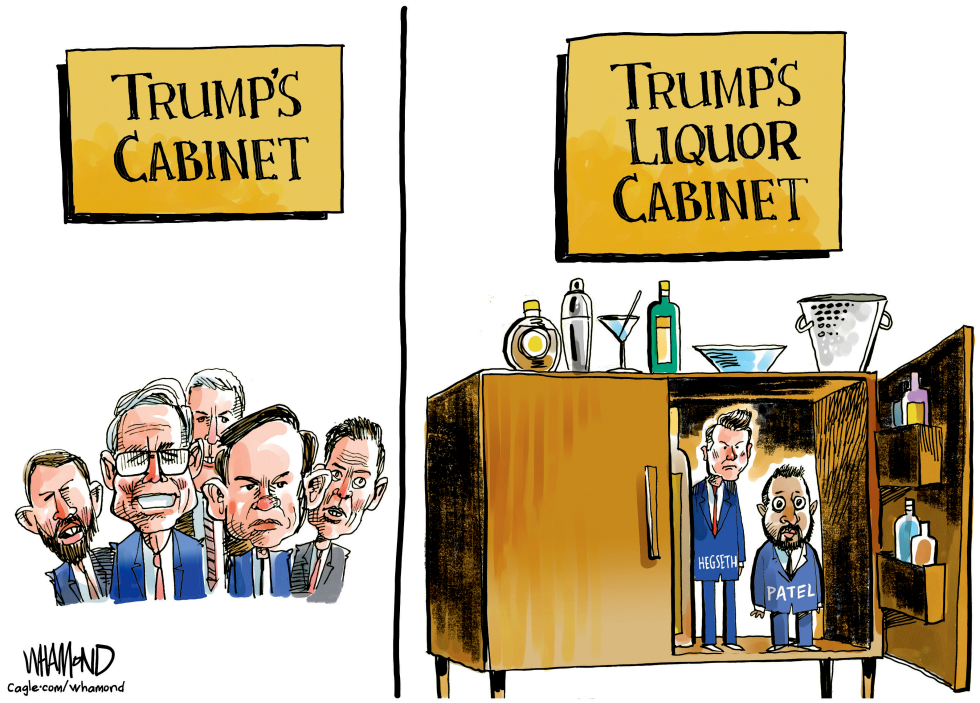
Dave Whamond's cartoon splits the scene between Trump's Cabinet of stern-faced men in suits and Trump's Liquor Cabinet, where caricatures labeled Hegseth and Patel emerge disheveled amid bottles and barware, poking at Trump's cabinet problems. The dry humor targets Kash Patel as FBI director nominee and Pete Hegseth for Secretary of Defense, amid drinking allegations and excessive drinking claims from The Atlantic. Unexplained absences and AWOL accusations add to the satire of unfit picks, with a defamation lawsuit looming. This piece captures the irony of Trump's best people turning into a partying liquor cabinet fiasco, all in a straightforward, insider jab at political absurdity.
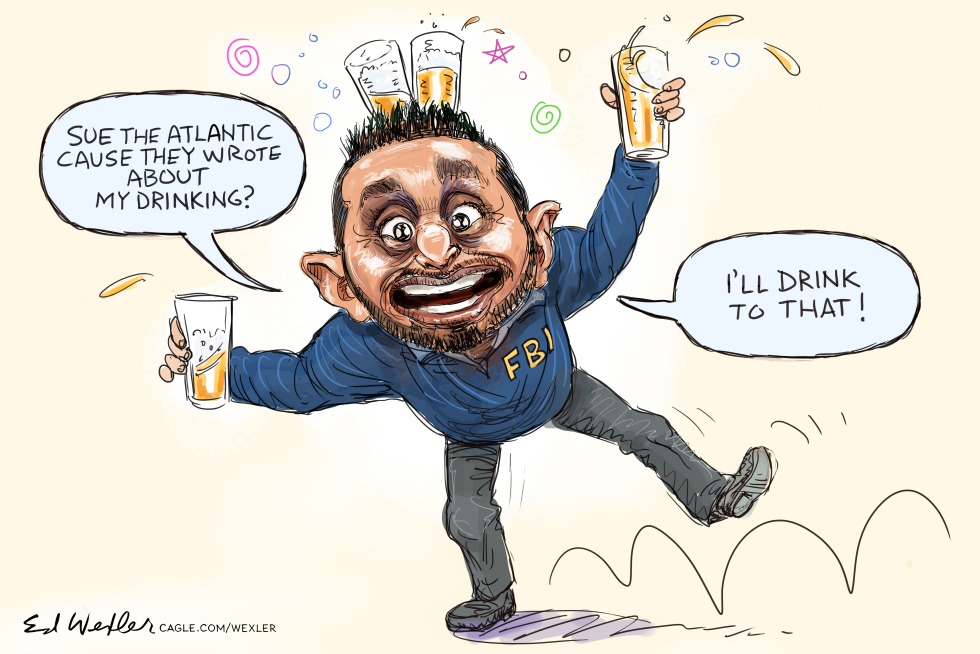
Ed Wexler's cartoon captures a man clearly modeled after a public figure, dressed in an FBI sweatshirt, balancing beers on his head and in his hands, with tags like kash, patel, the atlantic, drinking, alcohol, beer, obvious intoxication, and absences. The figure, showing signs of inebriation with wide eyes and a goofy grin, holds a glass in each hand while more pints teeter atop his spiky hair, foam spilling everywhere. Speech bubbles reveal his slurred plan to sue the Atlantic for writing about his drinking, followed by the punchline 'I'll drink to that!' Bubbles and stars float around, emphasizing the dizzy, drunken state. The signature at the bottom credits the artist and site, grounding the satire in visible elements of alcohol-fueled absurdity.
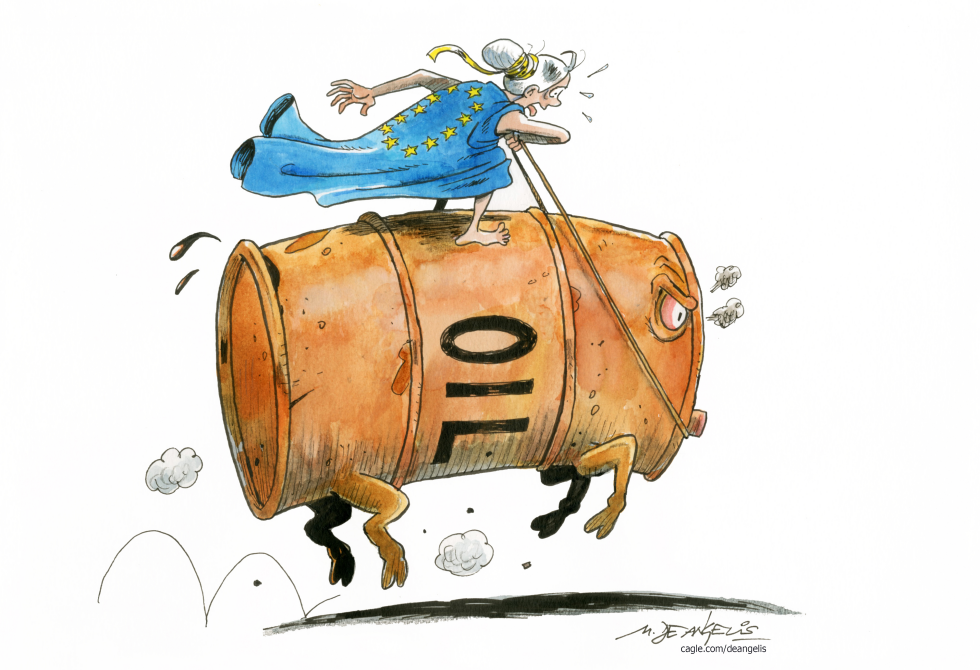
Marco De Angelis draws a sharp symbolic scene where a figure draped in the European Union flag clings to a bucking oil barrel marked OIL, legs kicking like a furious bull, smoke puffing from its nostrils. The rodeo metaphor nails the wild ride of economy and prices amid war in places like Hormuz. Europe looks desperate, one hand waving, mouth open in shock, as the oil tank rears up. It\'s a straightforward jab at how USA policies and global tensions turn energy into a beast no one can tame. Tags like symbolic, European, oil, tank, war, and economy drive the point home without fluff.
Monte Wolverton\'s cartoon depicts a doctor holding up an xray that reveals an intestine shaped like the Strait of Hormuz, complete with stars indicating blockages and inflammation. Trump peers over the top, his distinctive hair visible, as the doctor diagnoses intermittent blockages, polyps, and suggests consuming more fiber while cutting back on fast food. Tags like Iran War and blockade tie into the visual pun, turning a geopolitical chokepoint into a medical ailment. The piece uses dry humor to highlight discomfort in a straightforward way, with the xray\'s pinkish intestine contrasting against the black background. Artistic elements include the doctor\'s pointing finger and Trump\'s curious pose, emphasizing the satire without overcomplicating the scene.
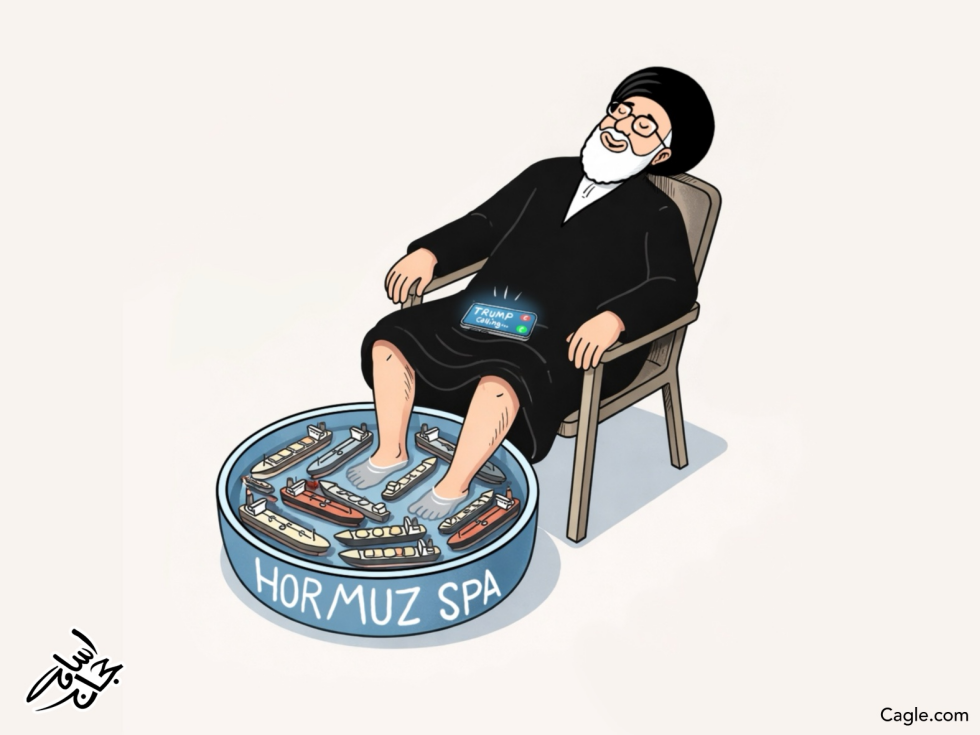
Osama Hajjaj draws an Iranian leader, resembling a cleric in black robes and turban, slouched in a chair with feet immersed in a blue basin labeled Hormuz Spa. Tiny ships float around his feet, evoking the Strait of Hormuz. A phone on his lap displays Trump with a green light, implying a call or alert. The scene captures dry satire on Iran-Trump relations, with the spa pun highlighting control over vital shipping lanes. Tags like Hormuz, Iran, Donald Trump, spa, and political cartoon underscore the humor in geopolitical friction.
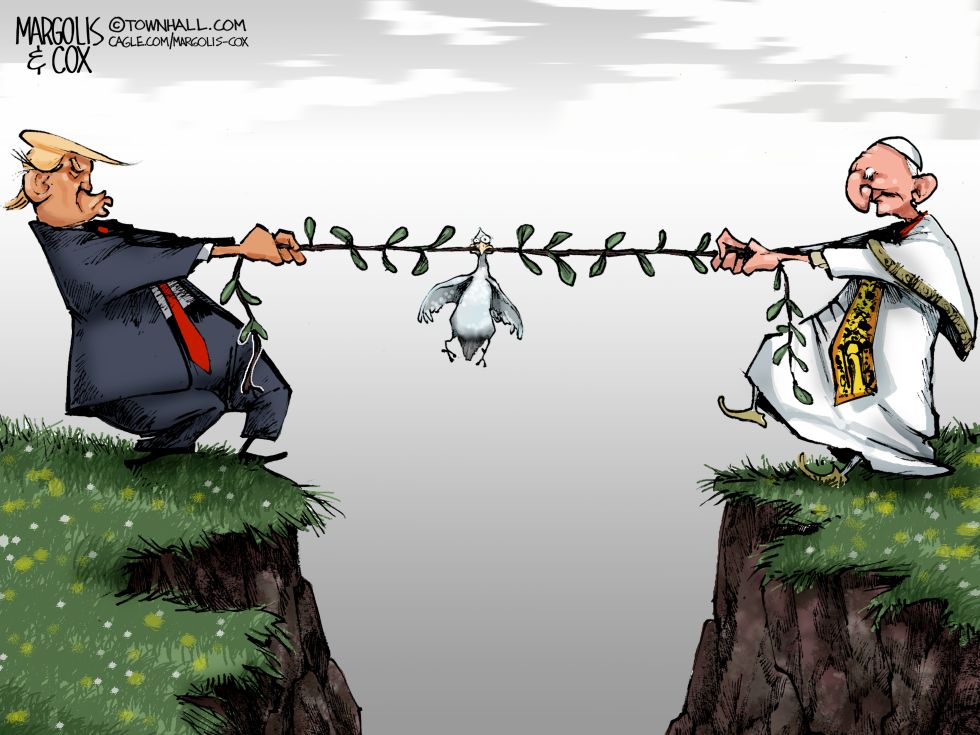
The cartoon shows a caricature of President Trump on one grassy cliff, gripping a vine with leaves that connects to a white dove in the center, while a figure resembling Pope Leo stands on the opposite cliff, also pulling the vine. They face each other across a deep chasm, with cloudy skies above. Tags like war, peace, dove, Iran, Middle East, and Church underscore the visual tension. The artists, Margolis & Cox, place their signature prominently. This setup captures a straightforward conflict over a peace symbol, without hidden layers. The dove hangs upside down, wings slightly spread, as the two figures strain. No emotions or backstories are added; it's just the visible pull between suited man and robed leader.
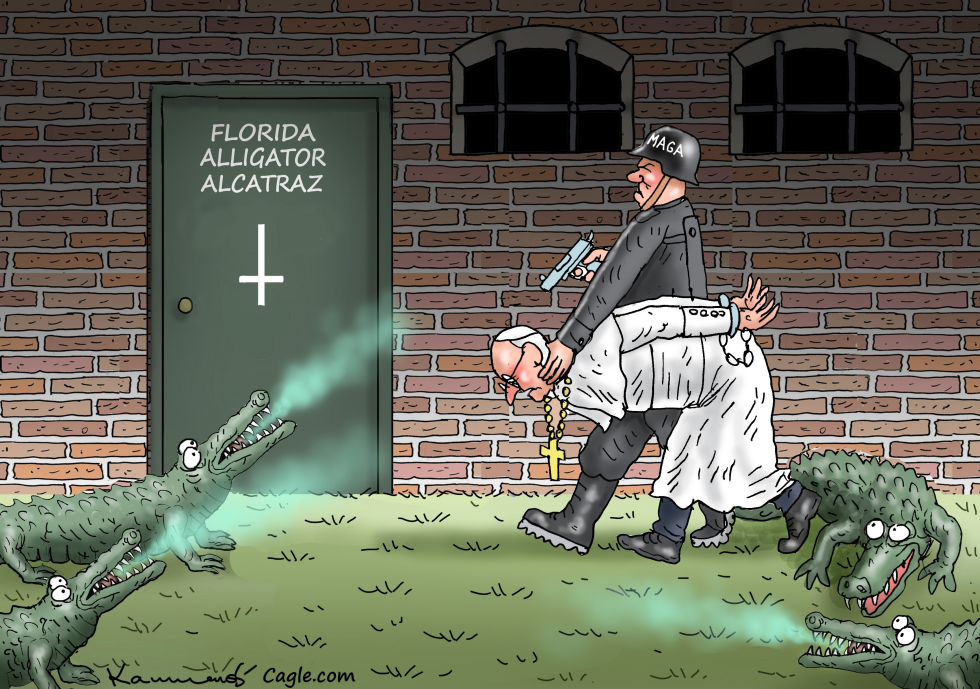
Marian Kamensky's cartoon depicts a fascist scene where a MAGA-helmeted guard, pistol in hand, forces a white-robed Pope caricature with cross necklace into Florida Alligator Alcatraz, marked by an inverted cross on the door. Surrounding alligators with glowing eyes and mist add a surreal, menacing touch to the anti-Christianity theme. The brick wall and barred windows evoke a prison atmosphere, blending Florida's swamp imagery with Alcatraz notoriety. This satire critiques authoritarian politics, highlighting perceived attacks on religious figures amid MAGA influences. The dry humor underscores the absurdity of such a regime, making it sharable for political discourse.
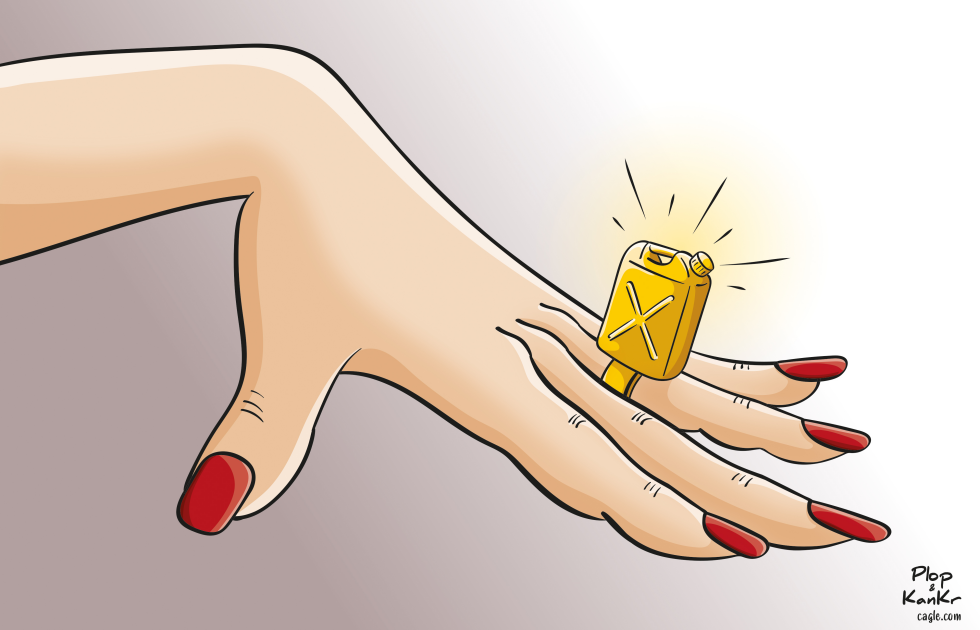
The cartoon shows a hand extended, wearing a ring shaped like a yellow gas can with an X, sparkling as if it's a precious diamond. Red nails add a touch of glamour to the scene against a plain background. This straightforward image pokes fun at oil prices skyrocketing, turning everyday fuel into something as valuable as jewelry. Tags like fuel luxury, energy satire, gasoline bling, petroleum parody, high costs humor, and economic pun capture the dry wit here. Cartoonists Plop and KanKr keep it simple, letting the visual speak without overcomplicating the message. It's a classic setup for editorial pages, reminding readers how energy crises make basics feel extravagant.
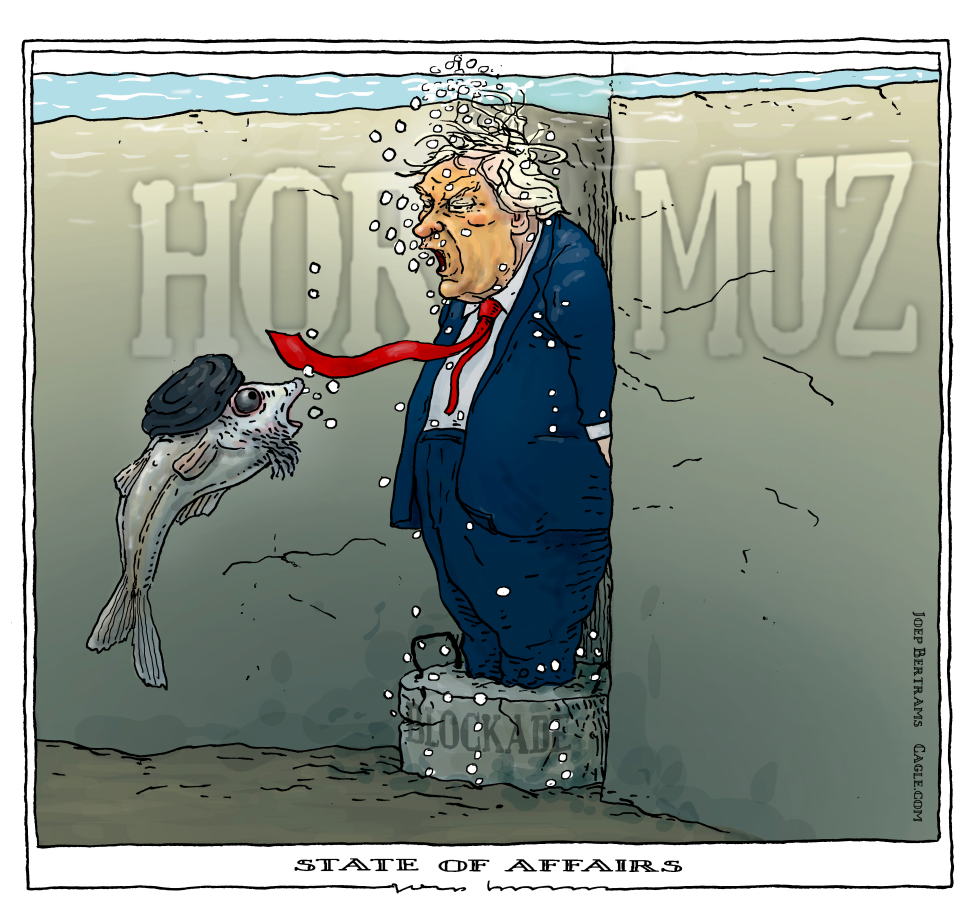
Joep Bertrams captures the Strait of Hormuz tensions with a caricature of Donald Trump sinking in concrete shoes marked blockade, bubbles rising from his open mouth as a fish in a black hat nibbles his red tie. The underwater setting features a cracked wall labeled Hormuz, emphasizing the sunk metaphor for diplomatic failures. Tags like Iran, concrete shoes, and fish highlight the satirical take on US-Iran relations, with the caption State of Affairs underscoring the dire situation. This cartoon from 2026 blends humor and commentary on potential blockades, showing Trump in a blue suit against a murky seabed.
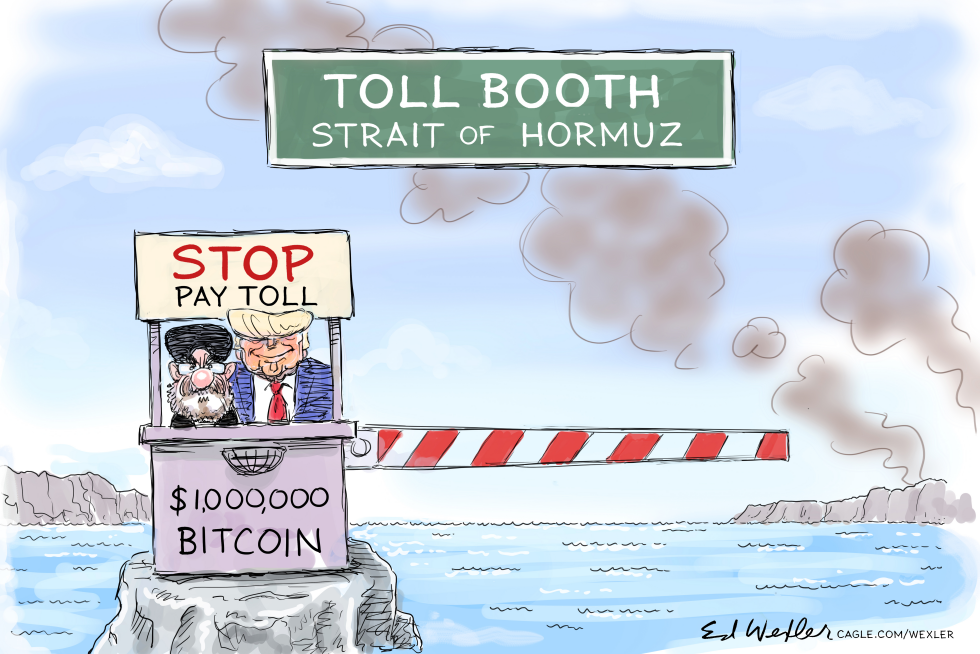
Ed Wexler\\\'s cartoon captures a toll booth in the Strait of Hormuz, where figures resembling Trump and the Ayatollah enforce a $1,000,000 Bitcoin toll. Smoke rises from what look like mines in the water, blending tags like Iran, Strait of Hormuz, tolls, Bitcoin, Trump, Ayatollah, and crypto into a sharp commentary. The barrier arm blocks passage, emphasizing control over this vital shipping lane. It\\\'s a straightforward jab at geopolitical tensions, with the toll sign demanding payment to proceed. No hidden layers here, just clear visuals tying economic pressures to digital currency in a contested area. The dry humor shines through in the absurdity of a Bitcoin booth amid potential explosions.