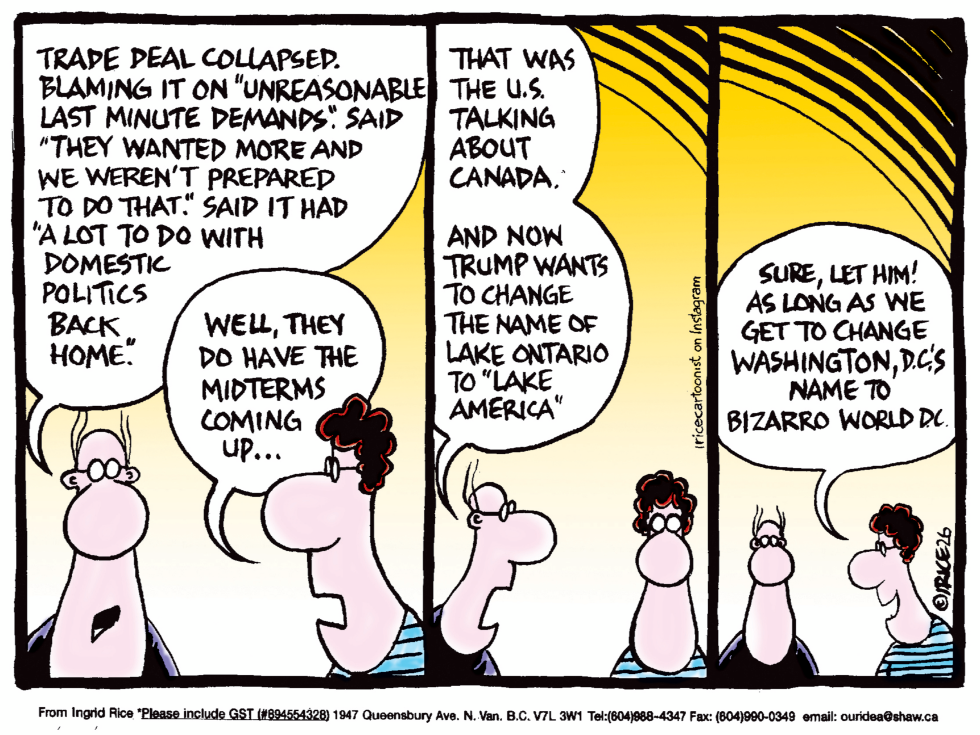
A Canada-U.S. trade deal collapsed after U.S. negotiators cited unreasonable last-minute demands and linked the failure to domestic politics ahead of midterms. President Trump then proposed renaming Lake Ontario to Lake America. Canadian officials responded by offering to rename Washington D.C. to Bizarro World DC if the change proceeds. The exchange highlights how trade tensions and political posturing are escalating between the two countries. The cartoon mocks the name-change idea as emblematic of broader dysfunction in bilateral relations.
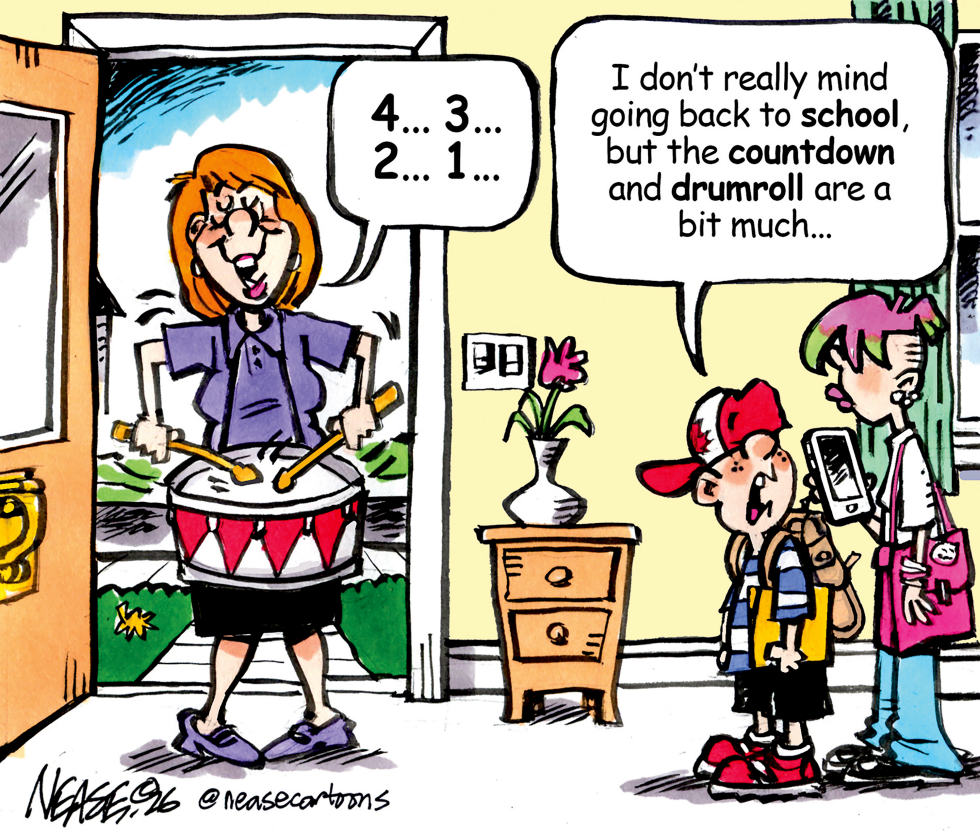
As families across the country prepare for the new school year, parents often express excitement about the return to routine while children may greet the transition with mixed feelings. The cartoon captures this annual dynamic through a mother who marks the moment with a literal drumroll and countdown. The piece highlights the contrast between parental enthusiasm and children's more reserved response to the first day of school.
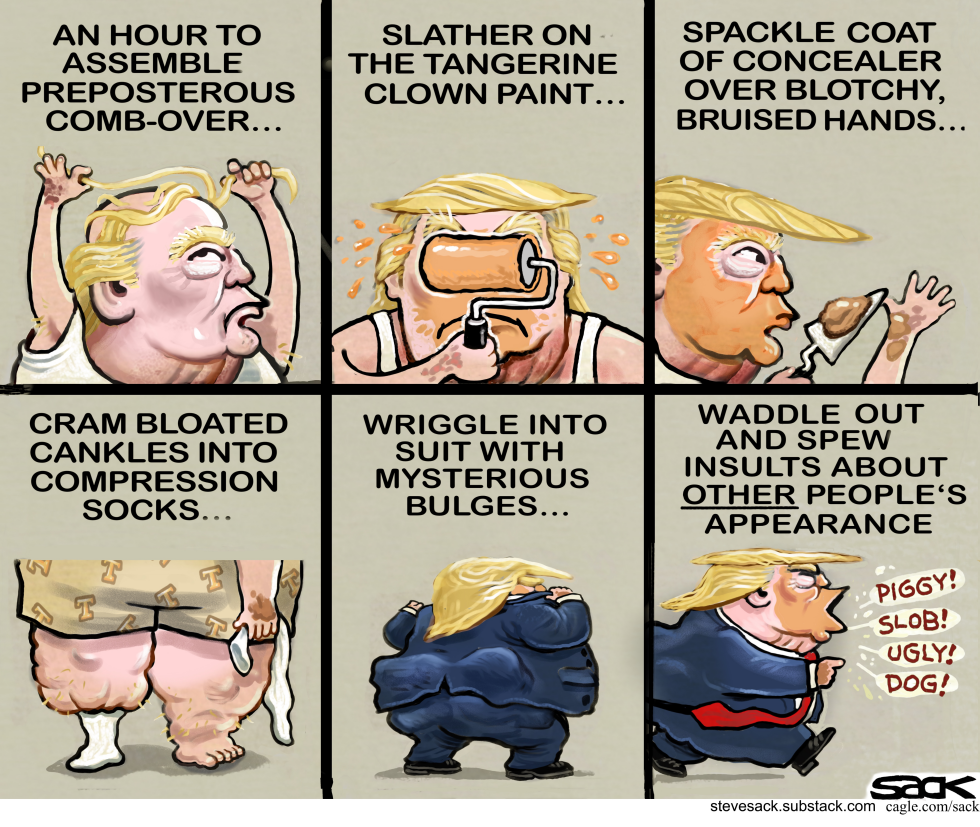
Donald Trump maintains a detailed personal grooming regimen that includes assembling a comb-over, applying tangerine-toned makeup, concealing skin issues, using compression socks, and adjusting his suit. This preparation precedes his public remarks criticizing the appearances of others. The piece presents the contrast as evidence of inconsistent standards in political discourse.
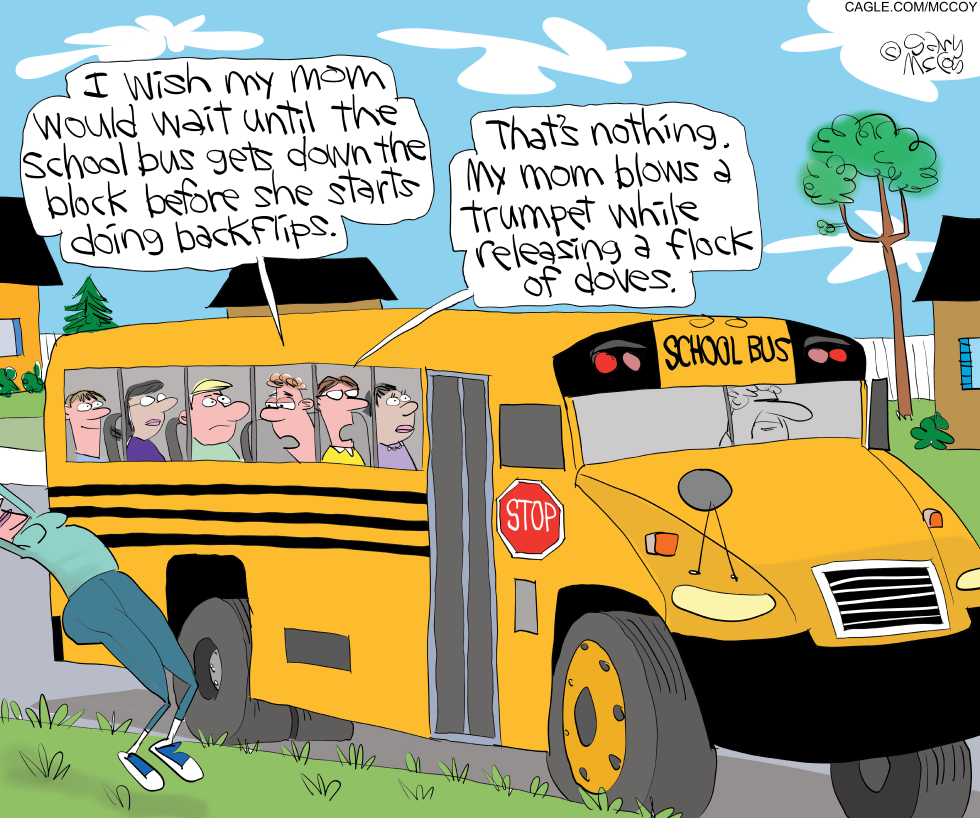
Parents often embarrass their children with enthusiastic send-offs at the school bus. The piece highlights the humorous side of overzealous maternal behavior in daily routines.
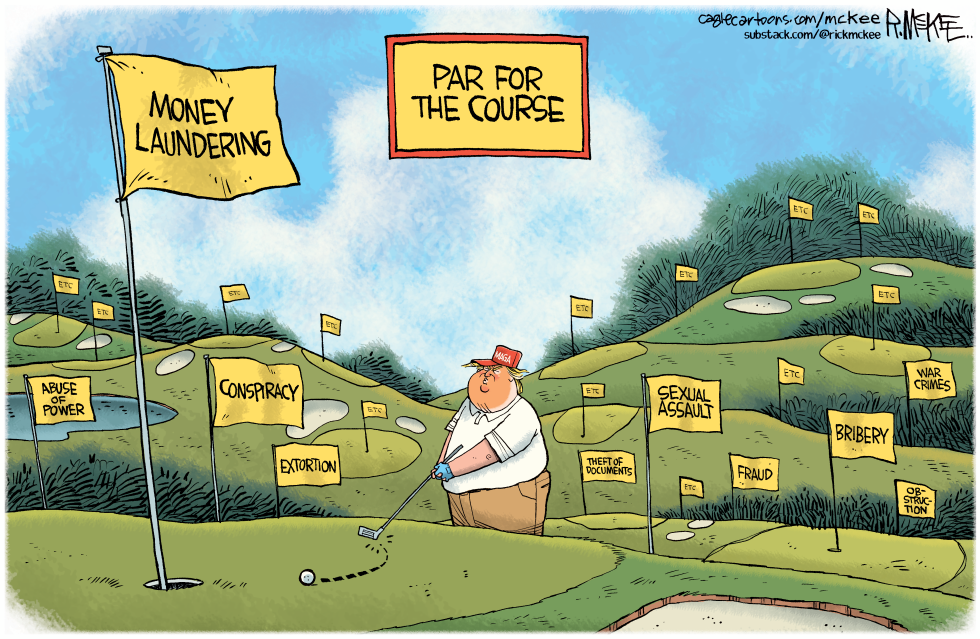
Donald Trump appears on a golf course in an editorial cartoon dated August 6 2026. Multiple yellow flags label alleged offenses including money laundering, conspiracy, extortion, sexual assault, bribery, fraud and obstruction. The piece responds to ongoing legal and political scrutiny of the former president. It frames these issues as routine for Trump through the visual metaphor of a golf course. The editorial position presents the allegations as expected elements of his record.
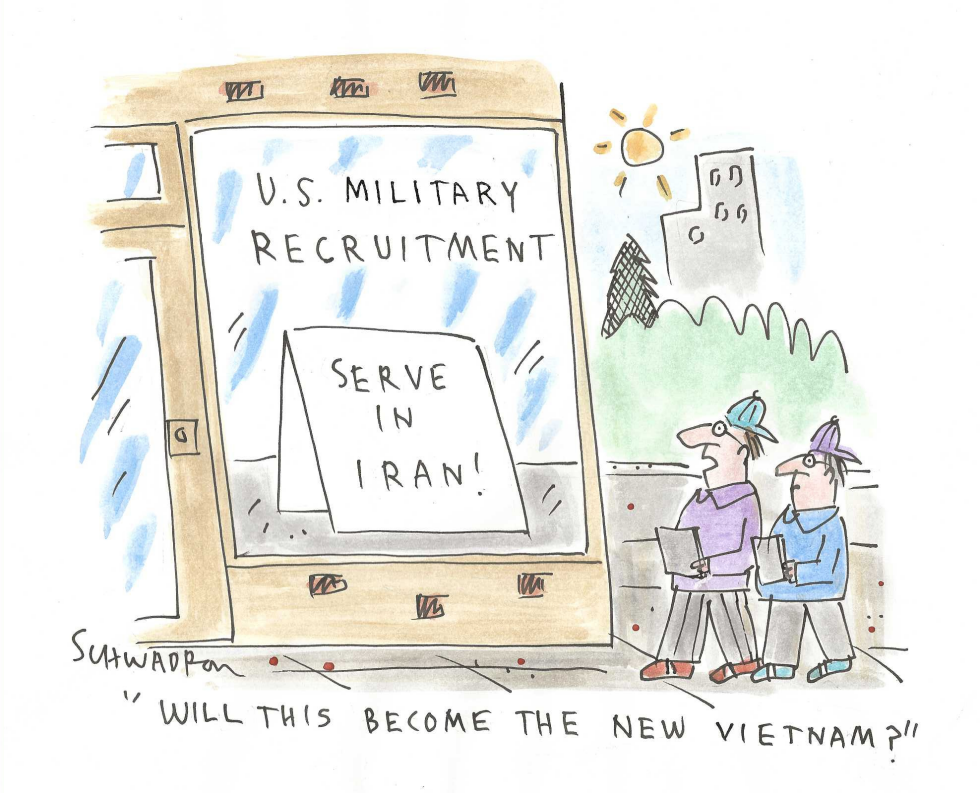
U.S. military recruitment efforts have begun highlighting opportunities to serve in Iran, prompting public questions about potential escalation. The move comes amid ongoing regional tensions and draws direct comparisons to the Vietnam War era. Observers worry the campaign signals a shift toward deeper U.S. military commitments overseas. The editorial takes the position that such recruitment tactics risk repeating past mistakes by underestimating public resistance to prolonged conflicts.
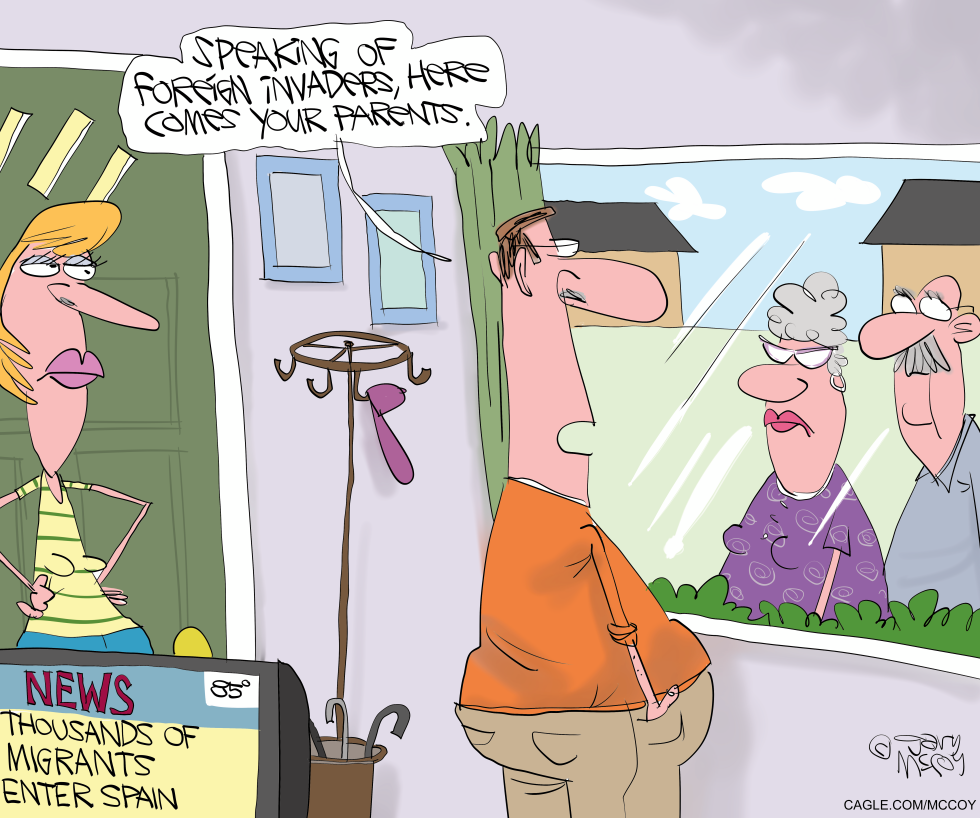
News reports show thousands of migrants entering Spain. The cartoon responds by having a man greet his in-laws with the same 'foreign invaders' label used in immigration debates. It highlights how inflammatory rhetoric can apply beyond policy to everyday family situations.
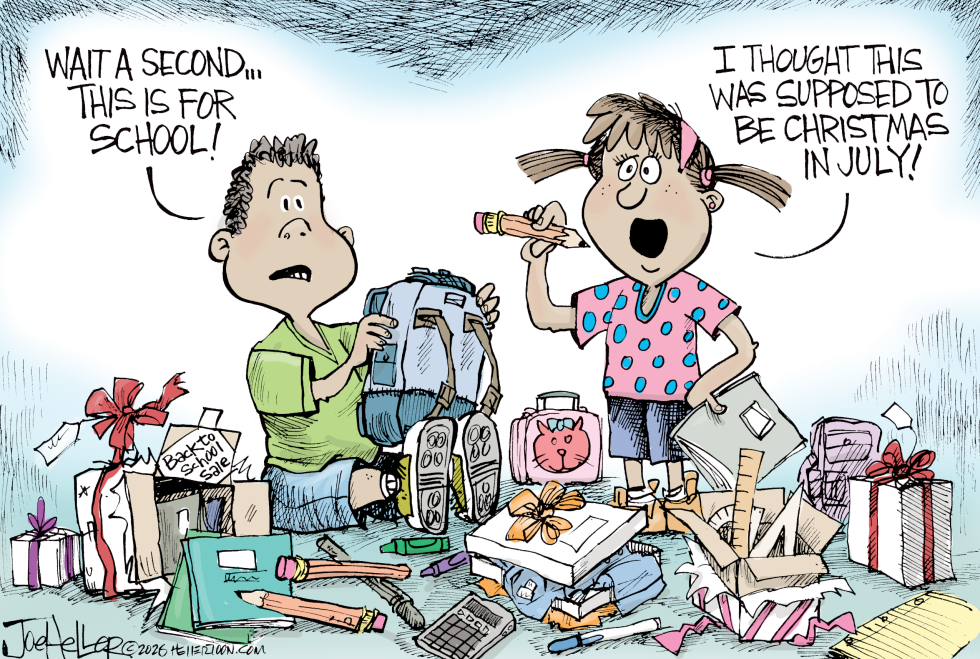
Retailers launched back-to-school promotions in late July, prompting families to stock up on supplies weeks ahead of the academic calendar. The timing overlaps with summer clearance events that mimic holiday marketing tactics. Parents and students face added pressure to buy early amid rising costs for essentials. The piece highlights how commercial calendars compress traditional shopping seasons and shift family routines.
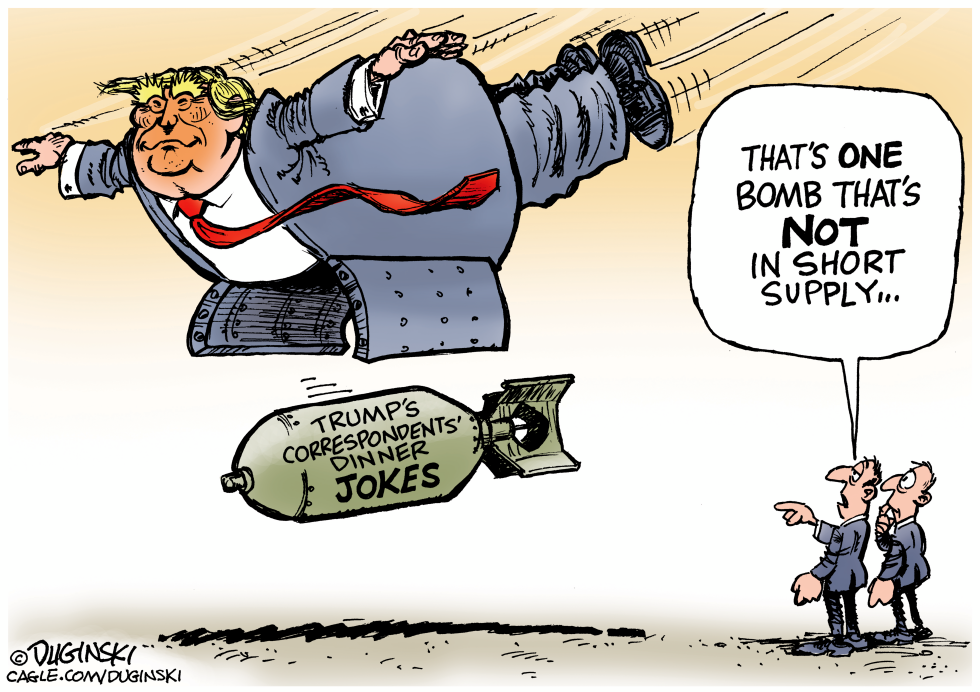
Donald Trump delivered jokes at the 2026 White House Correspondents Dinner that landed poorly with the audience. The event drew attention for the president's comedic missteps amid ongoing tensions with the press. The piece argues the routine exposed a persistent pattern of tone-deaf delivery rather than isolated misfires.
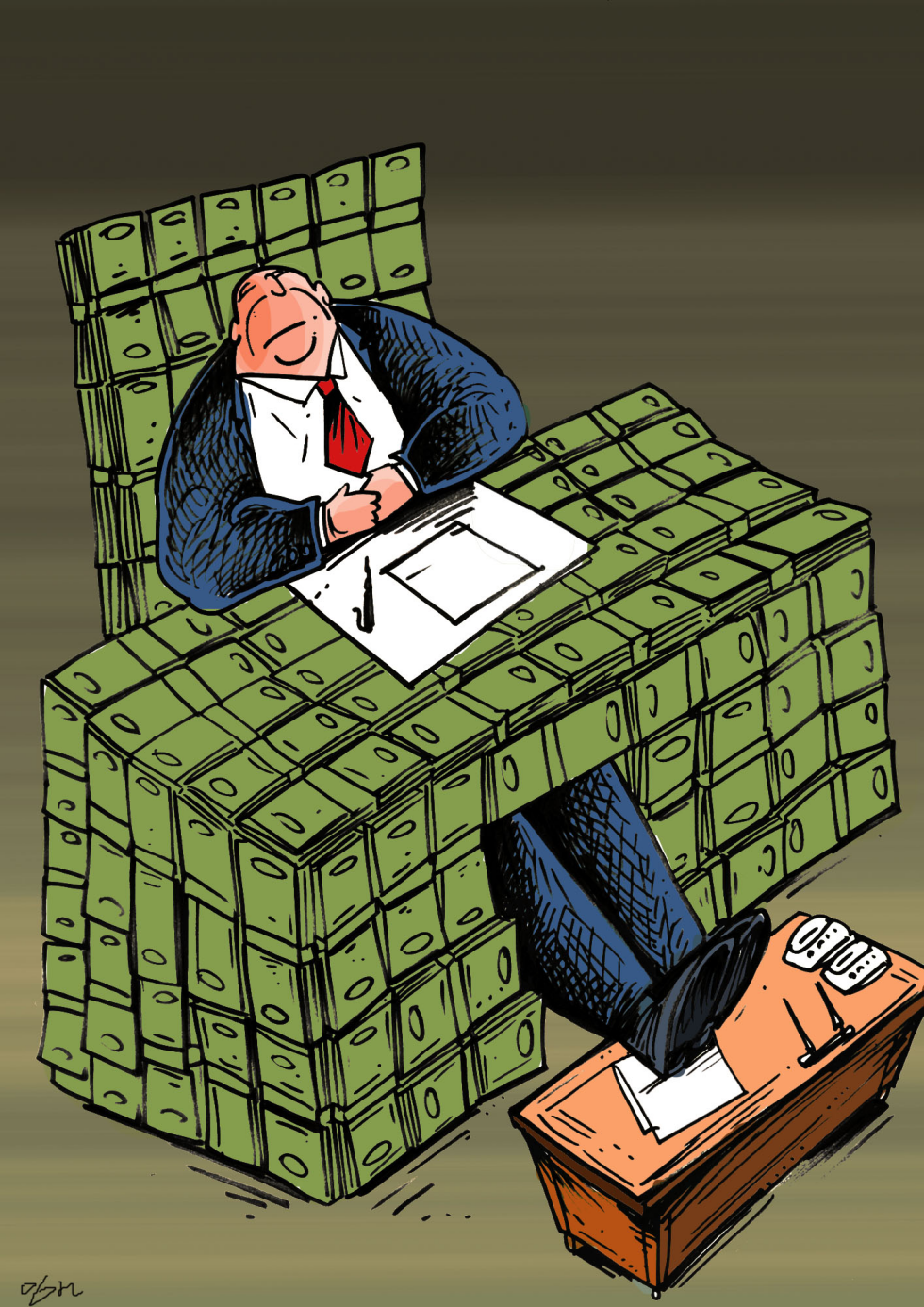
Public officials and business leaders often operate amid substantial financial resources that shape their daily environments and decisions. Recent developments in campaign finance and corporate influence have kept scrutiny on how wealth intersects with governance. The piece portrays an executive fully at ease within a setting constructed entirely from currency, underscoring the normalization of money's central role in positions of authority.
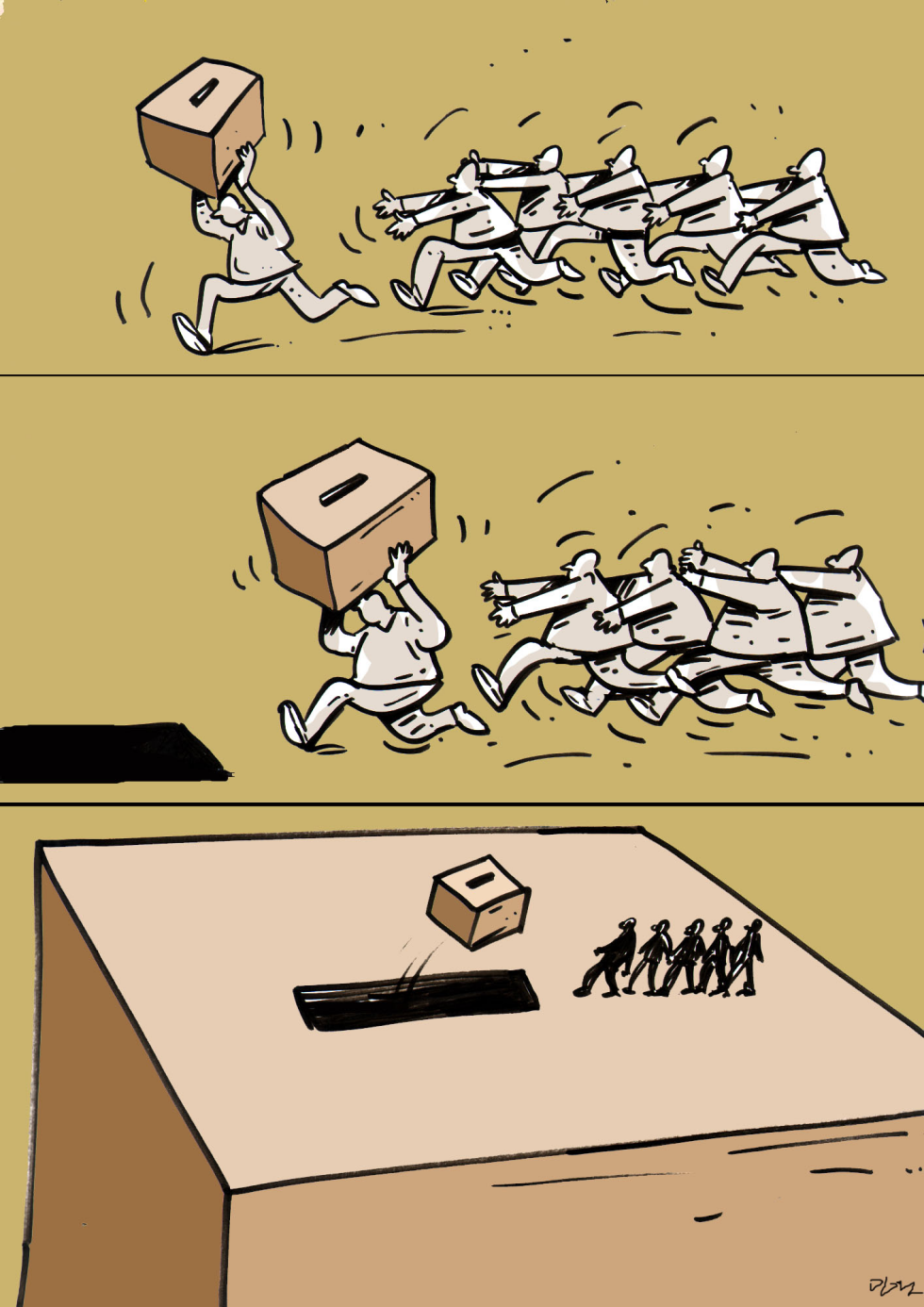
An election official carries a ballot box while pursued by a chain of figures in successive panels. The sequence ends with the box on a voting table beside its slot and the group nearing. The piece highlights concerns over ballot security and potential interference in vote counting during an election cycle.
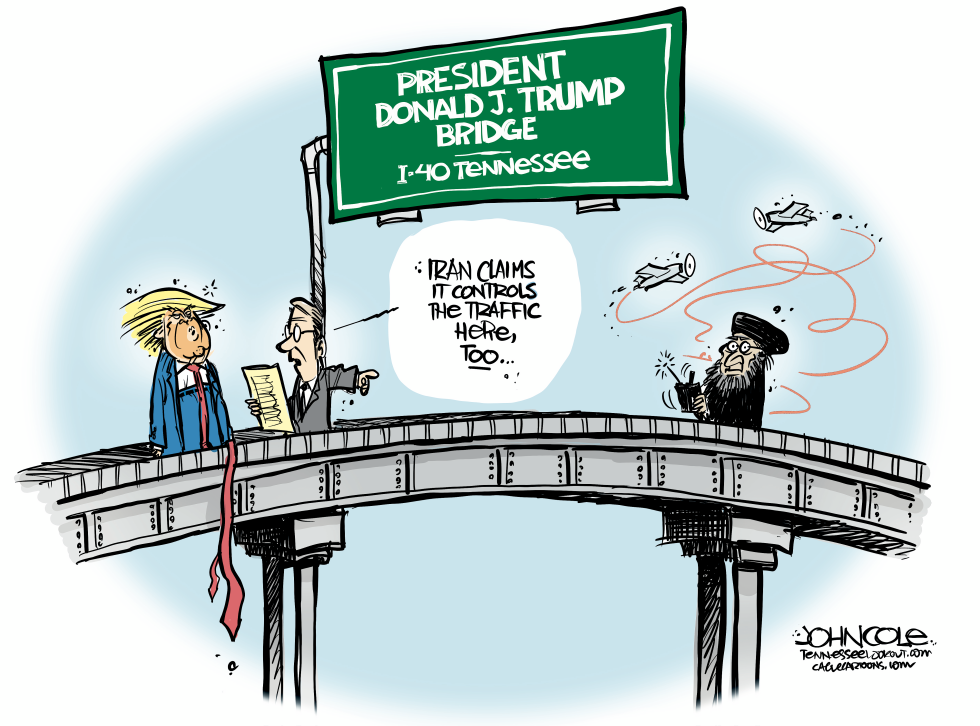
President Donald J. Trump attended the naming of the President Donald J. Trump Bridge on I-40 in Tennessee. The event drew attention when an Iranian figure appeared to claim control over traffic on the span. The development highlights ongoing tensions with Iran over shipping lanes and international routes. The cartoon frames the claim as an extension of Iran's broader pattern of asserting dominance over key passages. It positions the bridge naming as a domestic moment overshadowed by foreign threats.
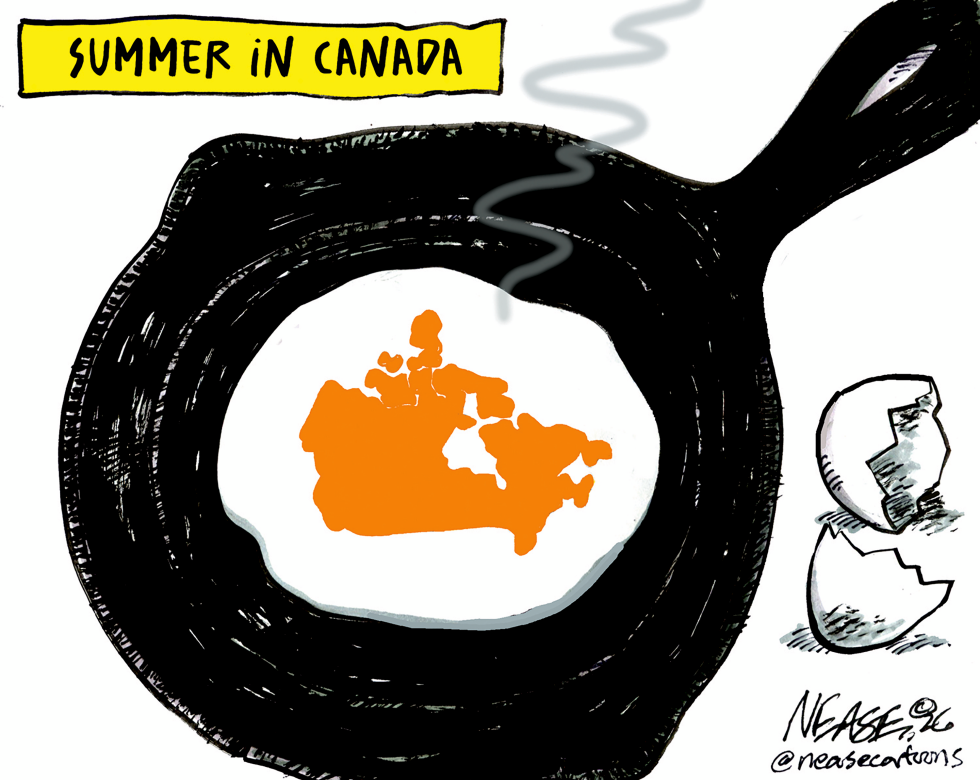
Canada has faced repeated extreme heat and wildfire seasons in recent years. The piece responds to summers that now bring health advisories and air quality warnings rather than mild weather. It renders the country as an egg frying in a skillet.
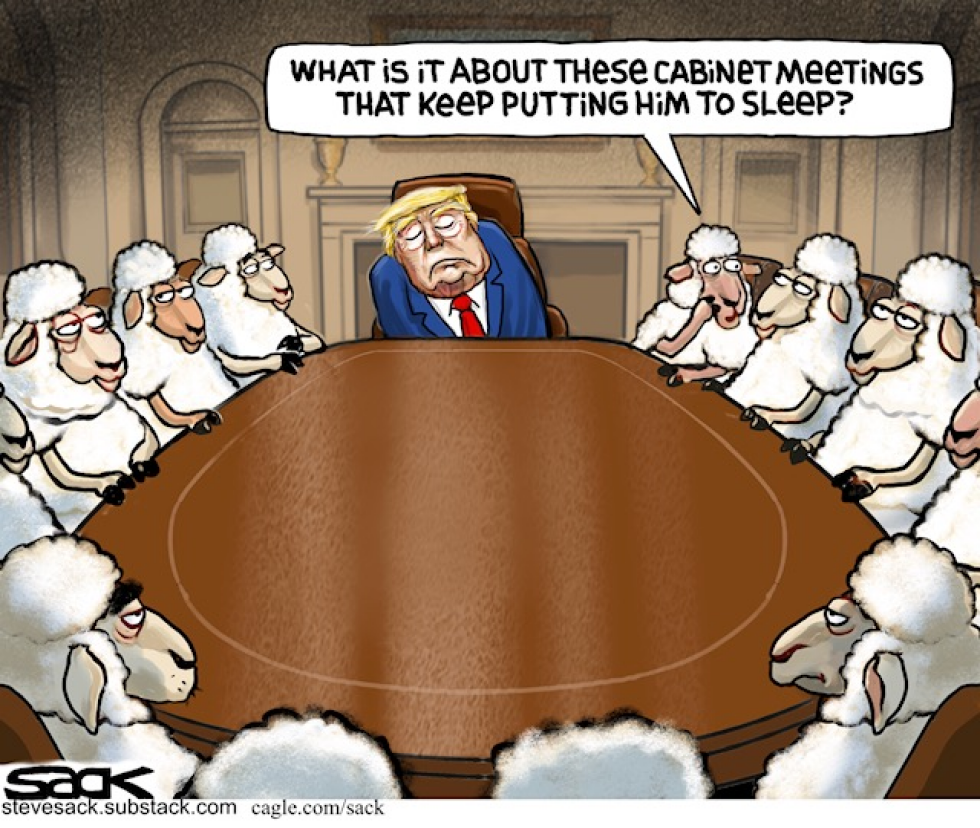
Donald Trump appears asleep at the head of a long conference table while sheep dressed in business attire occupy the surrounding seats. A speech bubble above the scene asks what about cabinet meetings keeps putting him to sleep. The July 2026 image from Steve Sack depicts the president in a blue suit and red tie with eyes closed and head tilted. The setting shows a formal room with arched doorways and a large wooden table. Text at the bottom includes the artist's signature and website links.
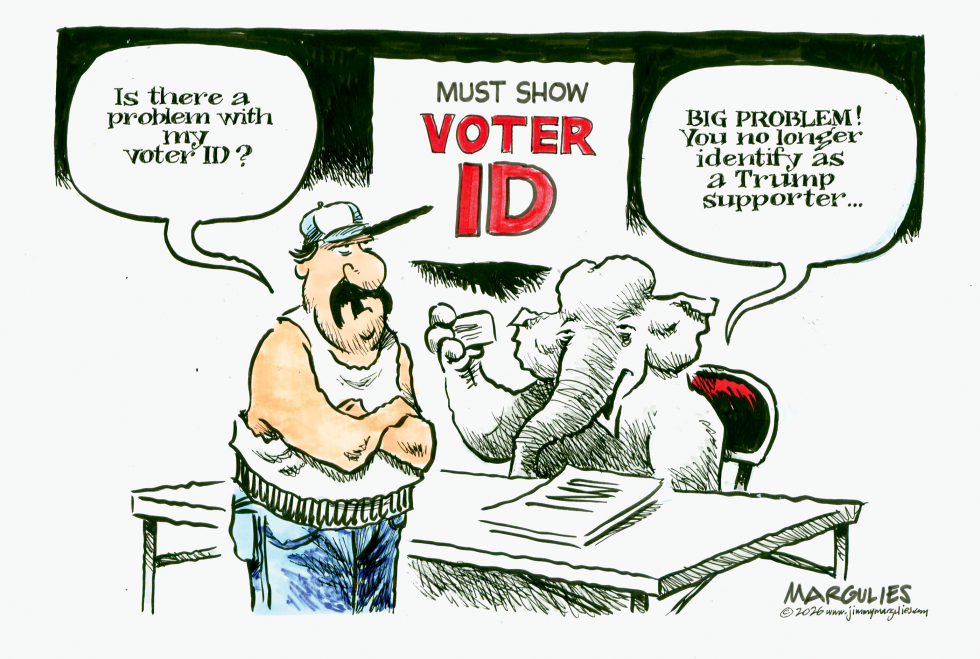
A voter at a registration desk presents identification while asking if there is an issue. The Republican elephant official responds that the problem stems from the man no longer identifying as a Trump supporter. The scene centers on a large sign requiring voter ID. This cartoon from June 2026 addresses ongoing debates over identification rules at polling places and shifting political affiliations ahead of elections.