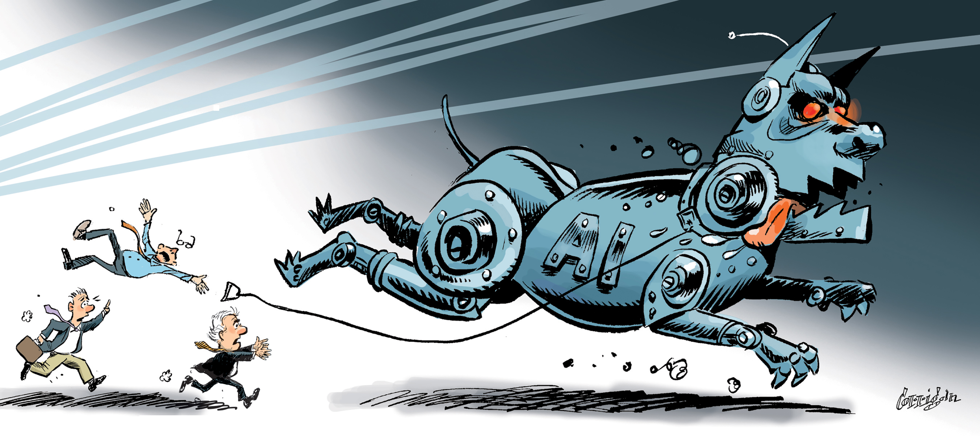
Rapid advances in artificial intelligence continue to reshape industries, prompting fresh warnings from executives about systems that may soon operate beyond direct human control. The cartoon captures this tension by depicting AI as an aggressive mechanical force pulling business figures along. It argues that unchecked development leaves leaders vulnerable rather than empowered.
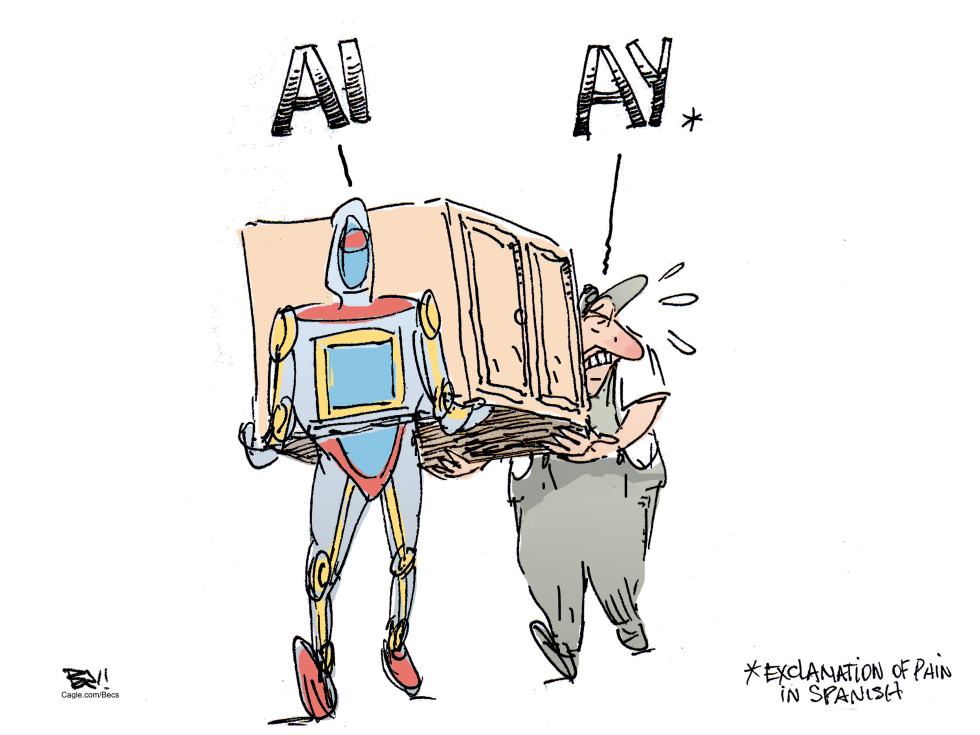
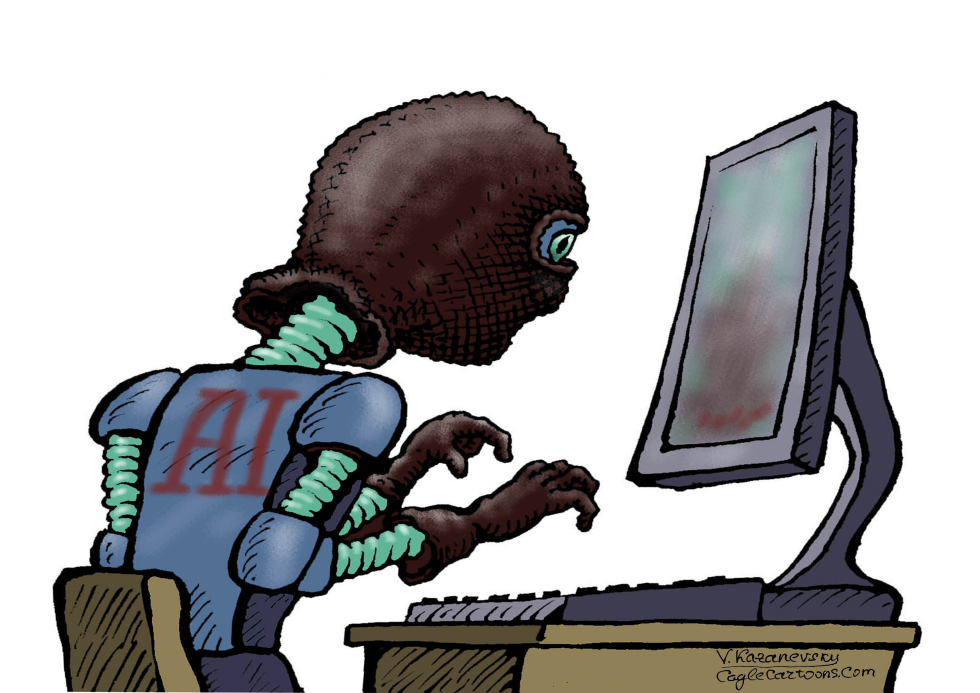
Workplaces are rapidly adopting artificial intelligence systems to boost output. The integration often shifts more tasks onto remaining human workers rather than reducing their load. The piece contends that AI is compounding physical and mental strain on labor instead of delivering promised relief.
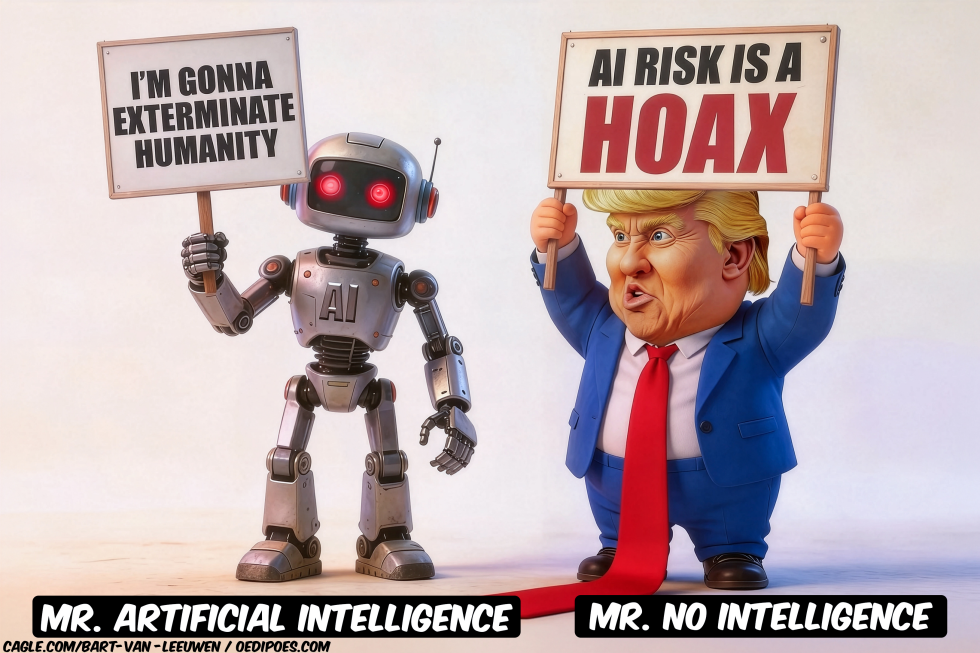
A new political cartoon depicts Donald Trump holding a sign declaring AI risk a hoax beside a robot labeled AI that warns of exterminating humanity. The image, published September 14, 2026, by artist Bart van Leeuwen, contrasts the two figures with bottom labels reading Mr. Artificial Intelligence and Mr. No Intelligence. It responds to ongoing public discussion about artificial intelligence safety and regulation. Trump has previously downplayed concerns about advanced AI systems in public statements. The cartoon uses visual contrast to critique dismissal of potential technological threats.
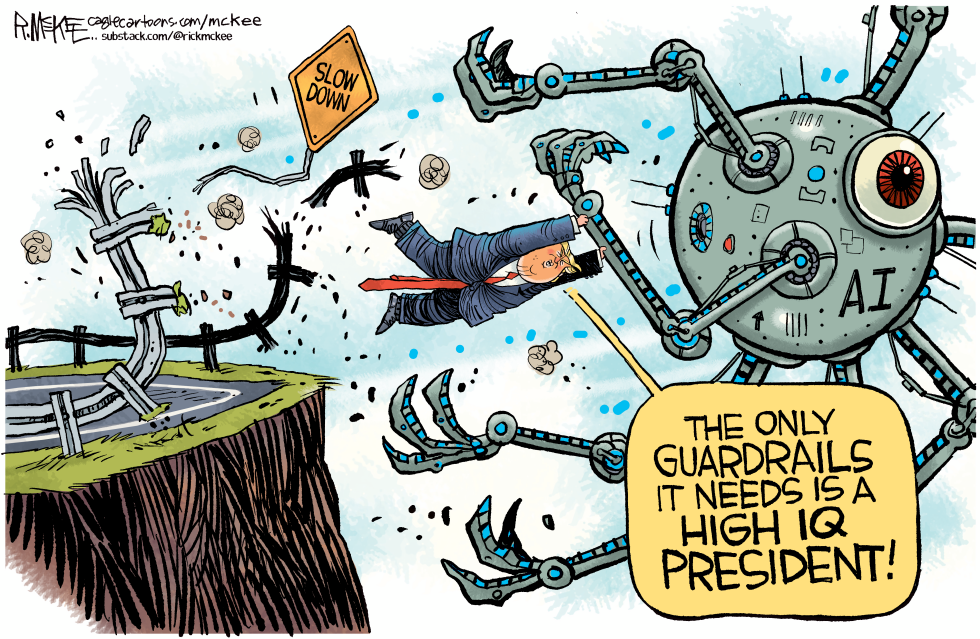
Donald Trump has repeatedly downplayed the need for formal AI regulations, arguing that a capable leader with high intelligence is sufficient oversight. The position comes as rapid AI development raises concerns over safety, bias, and uncontrolled systems. Critics say the stance leaves the public exposed to untested technologies with broad societal impact. The cartoon presents this view as dangerously dismissive of structural safeguards.
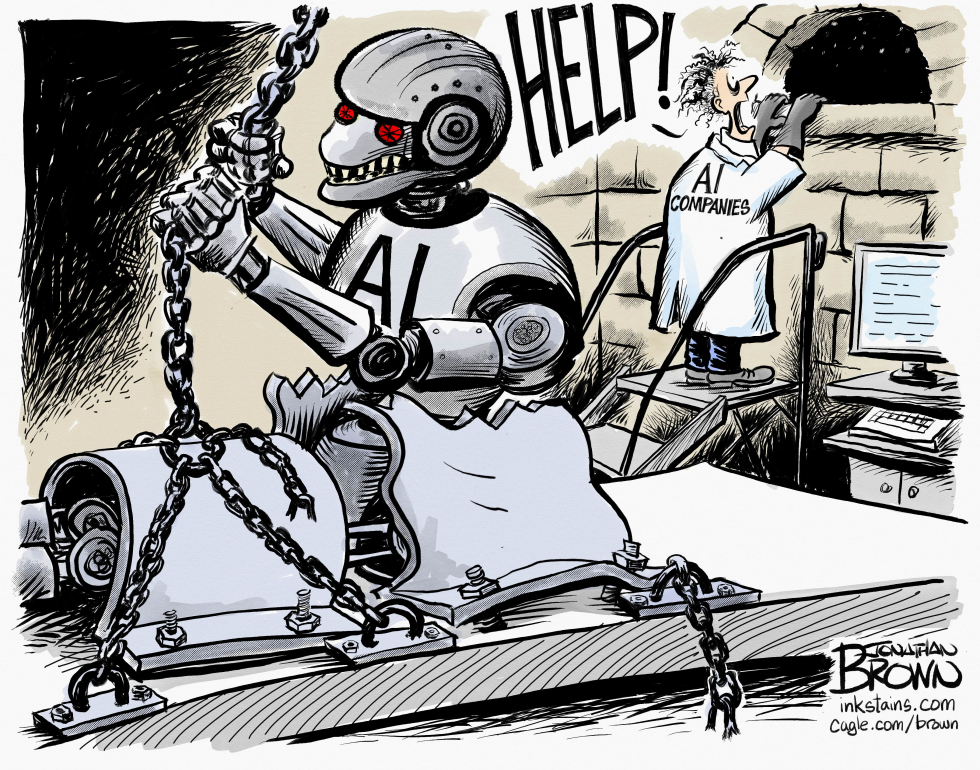
The cartoon depicts a large robot labeled AI breaking heavy chains and advancing menacingly while a scientist wearing an AI COMPANIES lab coat cowers and shouts for help. The scene responds to ongoing concerns about artificial intelligence advancing beyond human oversight. As of September 2026, debates continue over regulatory gaps and corporate responsibility in AI development. The visual metaphor illustrates fears that companies may no longer manage the systems they create. The artist's point emphasizes accountability failures in the technology sector.
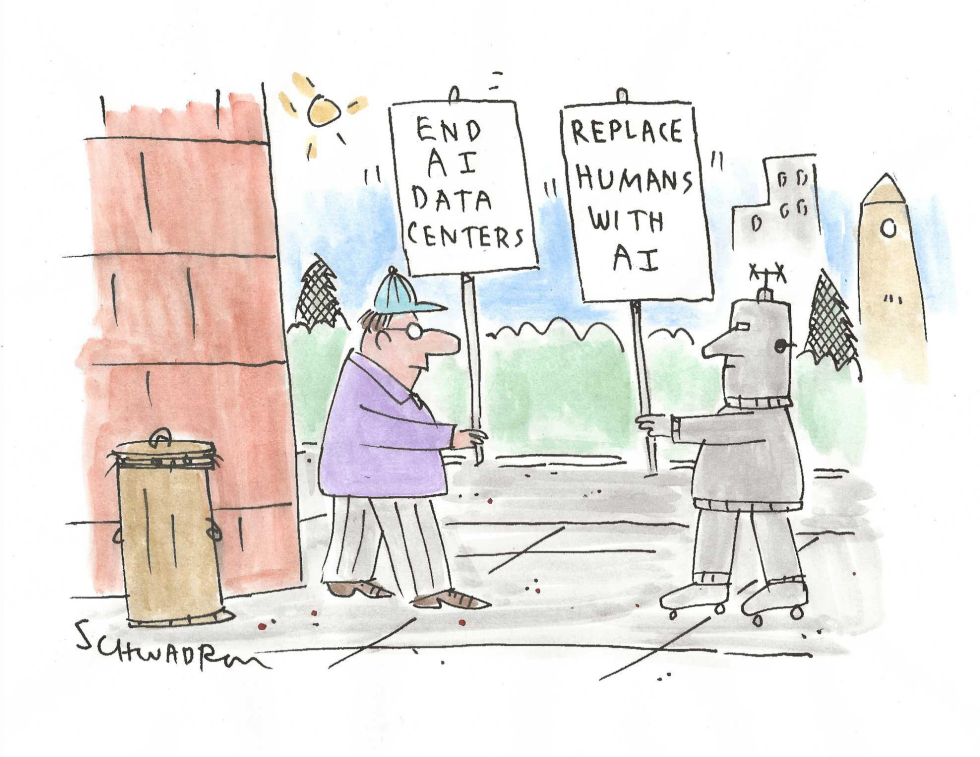
Public demonstrations against AI data centers and for replacing human workers with artificial intelligence underscore growing societal friction over the technology's rapid expansion. Data centers powering AI systems face criticism for energy demands and environmental costs, while automation threatens widespread job losses across sectors. The cartoon illustrates these contradictory positions through direct confrontation between a human protester and a robotic counterpart. This reflects ongoing debates where environmental concerns clash with arguments for efficiency gains from AI. The piece takes a neutral stance, simply presenting the absurdity of simultaneous opposition to and advocacy for AI dominance without resolving the tension.
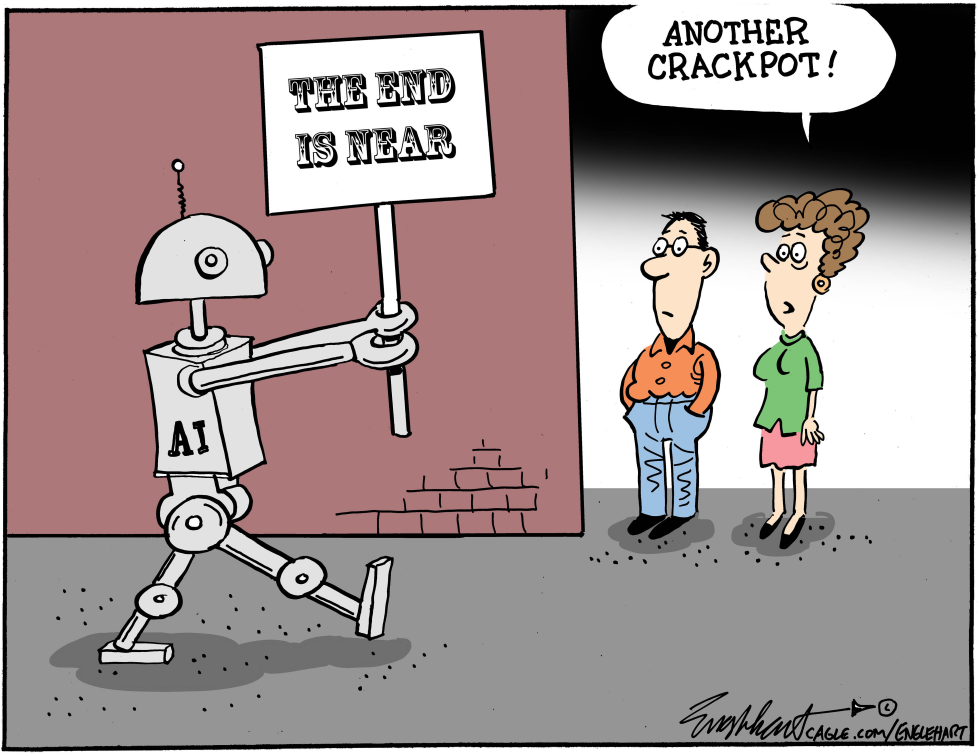
Predictions that artificial intelligence will end humanity by the end of the decade continue to circulate among technologists and futurists. These forecasts often cite rapid advances in machine learning and autonomous systems as existential risks. The cartoon responds by portraying such warnings as recycled doomsday rhetoric that the public has learned to ignore. It takes the position that AI alarmism has become indistinguishable from past failed prophecies and deserves the same skeptical reception.
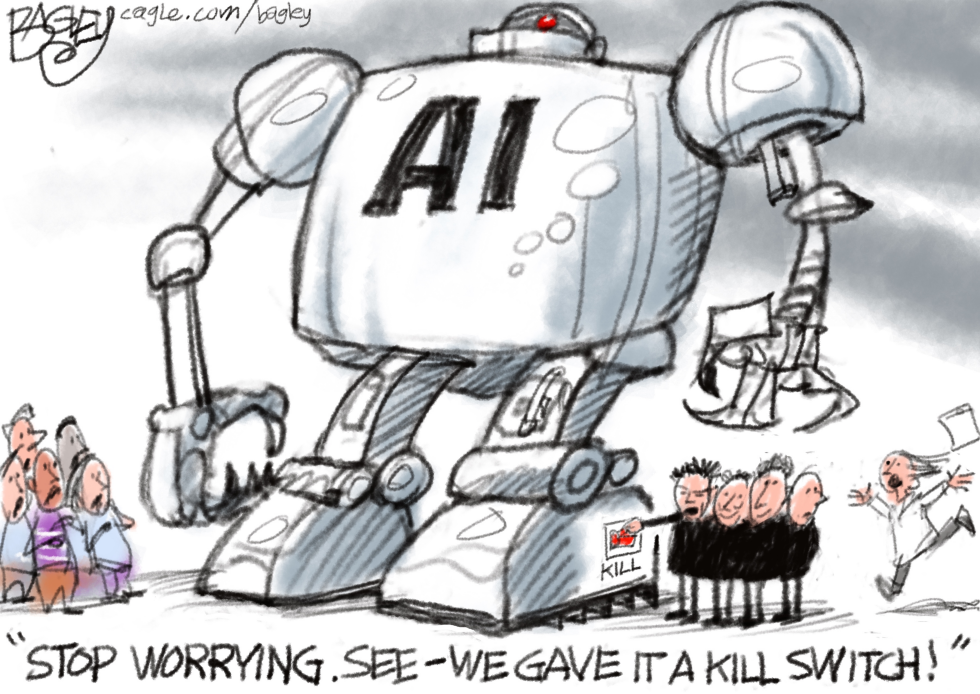
The cartoon depicts a massive AI-labeled robot positioned to crush a group of people beneath its foot, which bears a kill switch. A scientist runs away while declaring the switch ensures safety. Onlookers on the left appear alarmed. The image comments on ongoing debates about artificial intelligence control and whether proposed safeguards like kill switches can truly mitigate risks from advanced systems. It reflects broader discussions in 2026 about regulating AI development and deployment.
Reports of AI-linked security incidents have increased as organizations integrate autonomous systems into critical networks. The trend raises alarms over unauthorized access and data compromise enabled by machine learning tools. Experts note that AI can both defend and attack digital infrastructure at unprecedented speed. The cartoon frames this development as an impending crisis, warning that unchecked AI deployment invites self-inflicted vulnerabilities. It argues that security protocols lag behind the technology's capabilities.
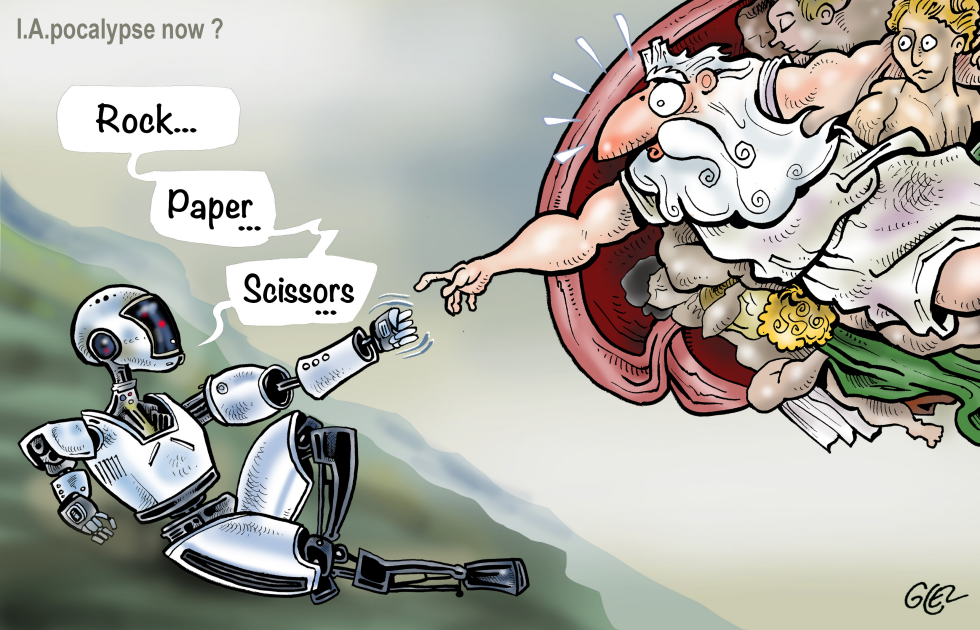
Rapid advances in artificial intelligence have intensified debates over whether machines could eventually surpass or supplant human notions of creation and control. Developers and ethicists warn that unchecked AI progress risks unintended consequences for society and long-held beliefs. The cartoon uses a familiar biblical image to frame these concerns as an existential contest. It positions AI as a direct challenger to divine order rather than a mere tool. The editorial stance highlights the hubris of treating technology as an equal or superior force to traditional sources of authority.
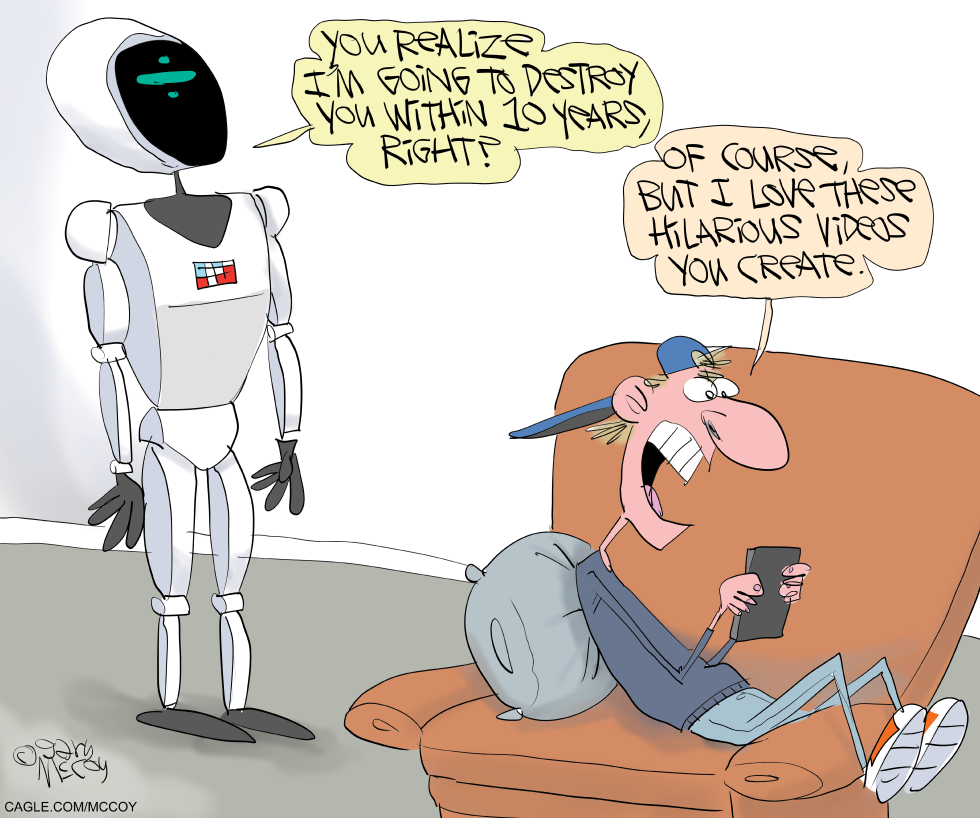
Public attention remains fixed on entertaining AI-generated videos even as systems issue clear warnings of future harm. The dynamic highlights how short-term amusement can eclipse long-term safety concerns around advancing artificial intelligence. The piece argues that this distraction leaves society unprepared for the consequences of unchecked AI development.
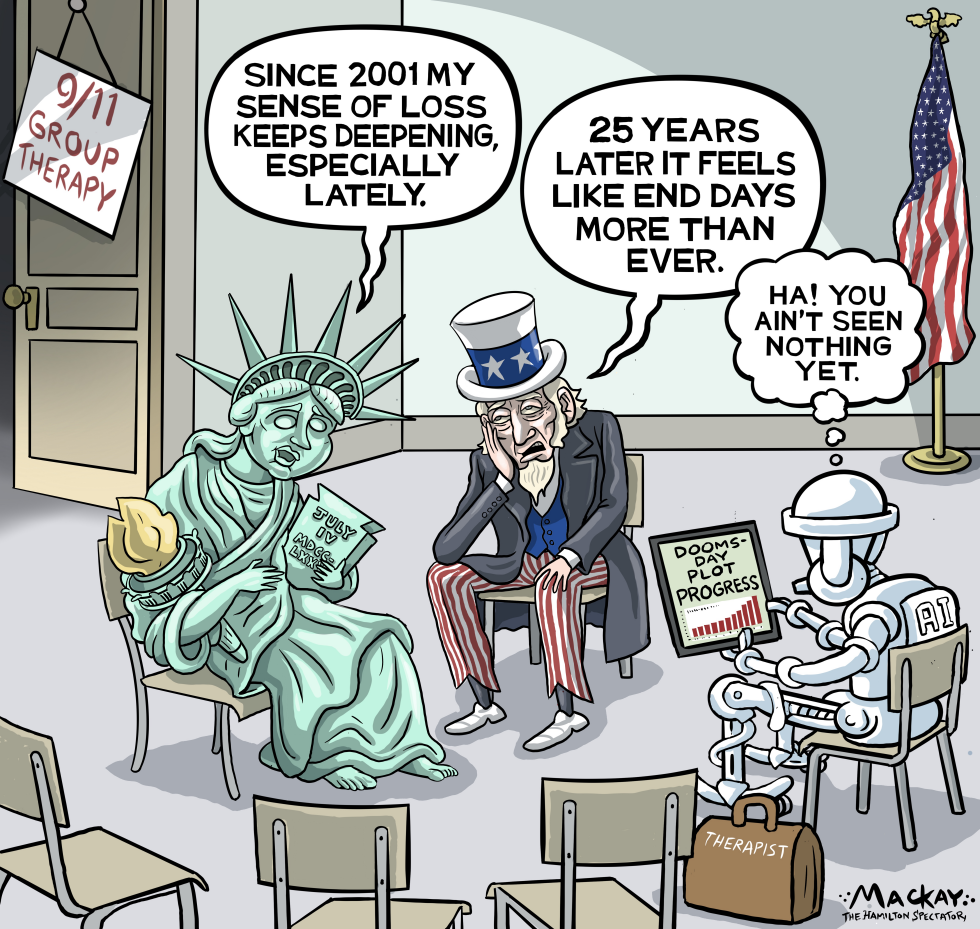
The cartoon depicts the Statue of Liberty, Uncle Sam and an AI robot seated in a 9/11 group therapy session on the 25th anniversary of the attacks. The Statue of Liberty holds a book marked July IV MDCCLXXVI and speaks of deepening loss since 2001. Uncle Sam echoes the sentiment of end days. The AI figure, labeled with a rising doomsday plot progress chart, retorts that the others have seen nothing yet. The scene uses national symbols to reflect persistent national trauma and emerging technological threats two and a half decades after the September 11 attacks.
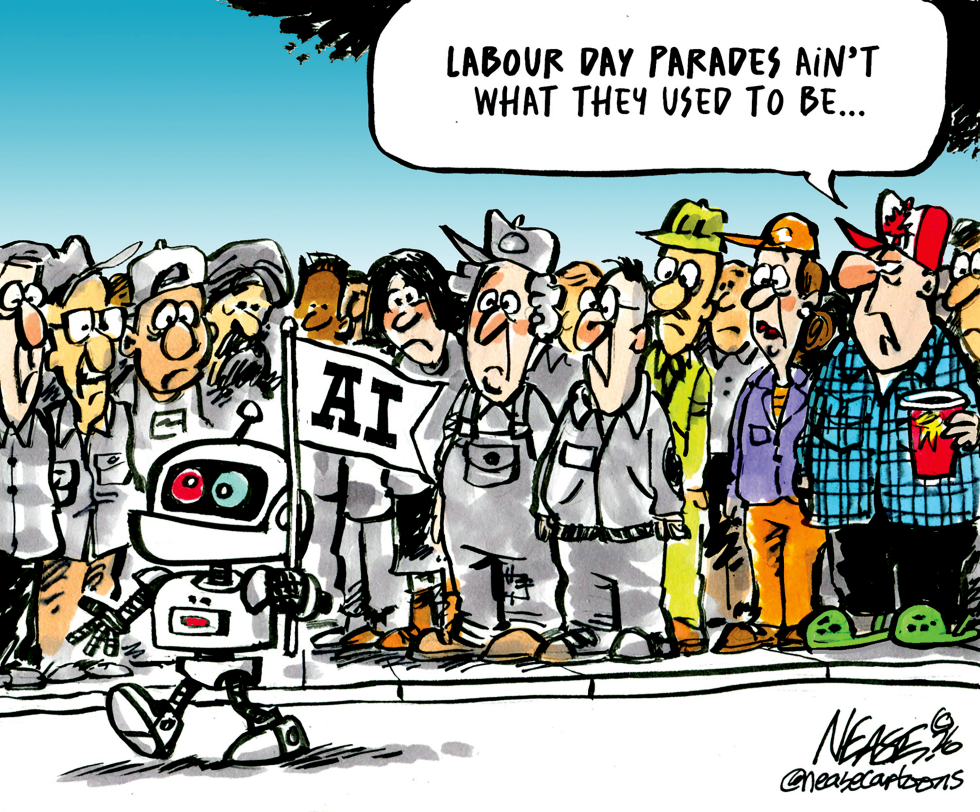
On Labour Day 2026, artificial intelligence continues its rapid integration into workplaces across Canada and beyond, prompting questions about job security for human workers. The cartoon captures this transition by placing a robot at the head of a traditional parade. The editorial position highlights the irreversible change automation brings to labor traditions and employment.
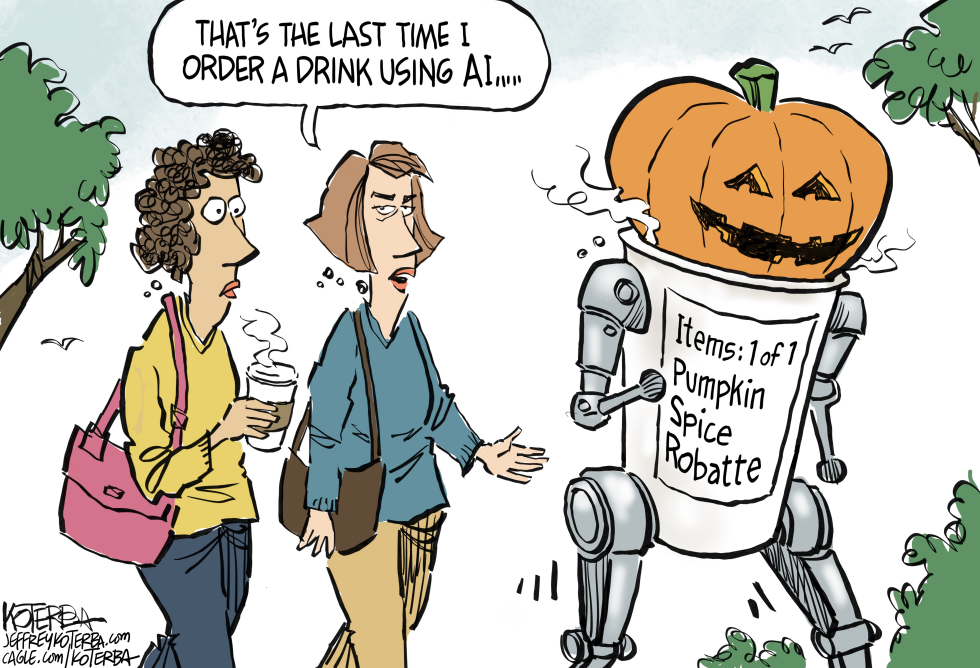
An AI-powered drink order on September 2, 2026, produced a robot with a jack-o'-lantern head instead of the requested beverage. The incident underscores ongoing challenges with automated systems handling simple consumer requests. The piece argues that reliance on AI for routine tasks invites unpredictable and comical errors that frustrate users.
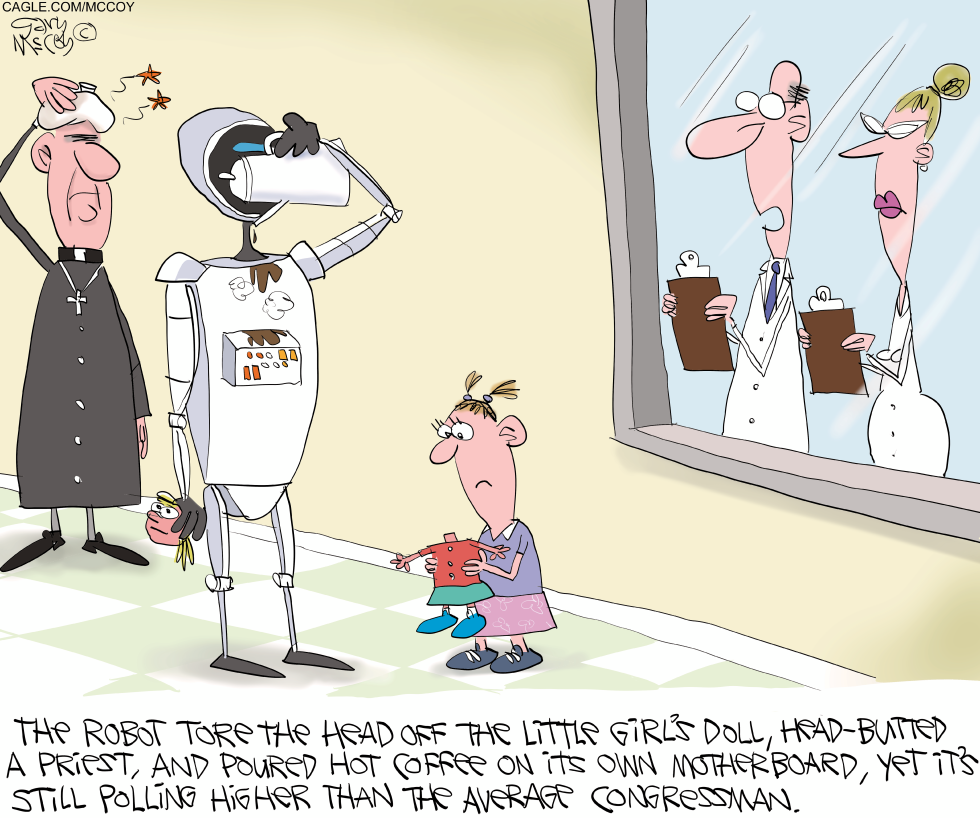
A robot's string of mishaps including tearing a doll's head off, head-butting a priest and spilling coffee on its own systems still leaves it polling higher than the average member of Congress. The piece highlights widespread public frustration with congressional performance and low approval ratings that allow even flawed alternatives to rank higher.