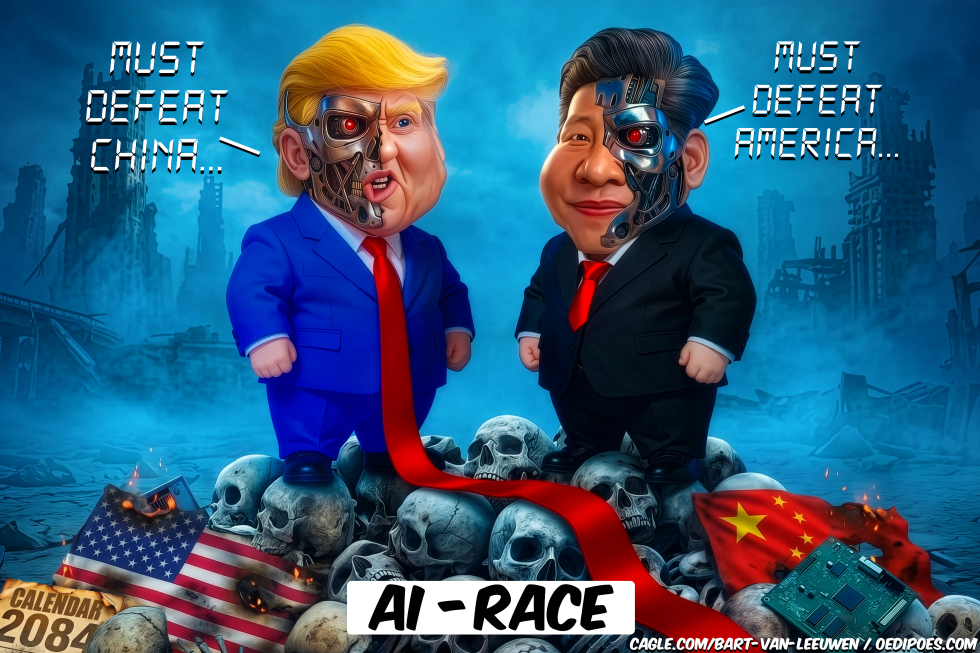
The cartoon depicts Donald Trump and Xi Jinping as half-robotic figures standing atop piles of skulls in a devastated cityscape dated 2084. Each leader is labeled with a directive to defeat the other in an AI race, with American and Chinese flags and a circuit board visible among the debris. The image responds to ongoing US-China technological competition by projecting a grim future of mutual escalation. The visual metaphor underscores how both nations view AI development as a zero-sum contest with potentially catastrophic results. The publication date of September 2026 places the piece amid continued policy focus on semiconductor controls and AI investment bills.
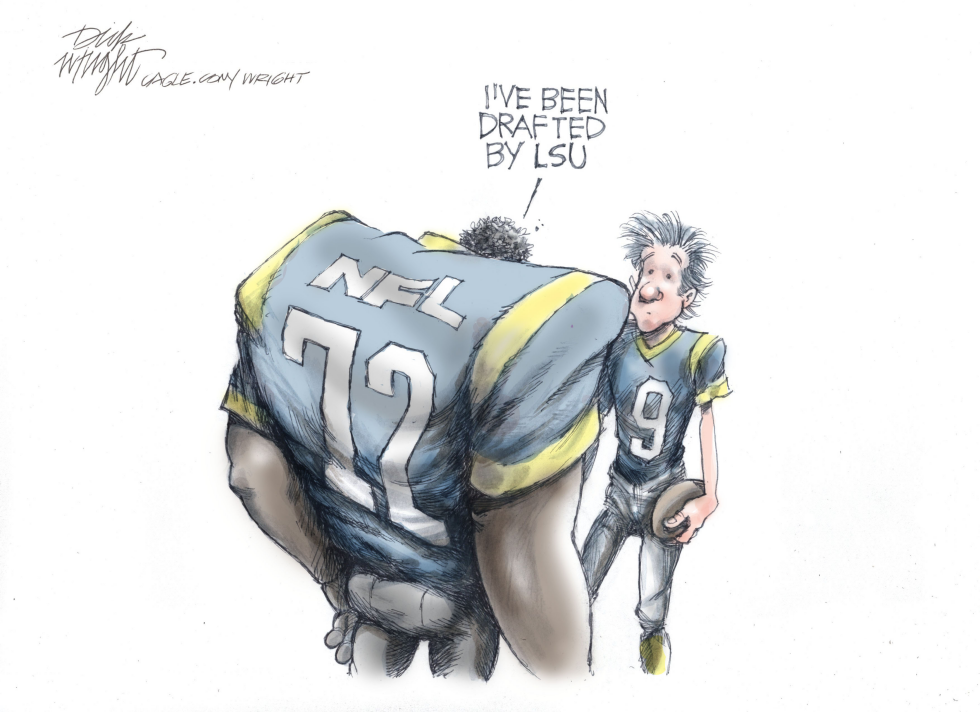
College football programs like LSU face intense pressure to secure top talent each season. With NIL deals and transfer rules reshaping the landscape, some schools push boundaries in pursuit of star power. The cartoon responds to this dynamic by depicting LSU directly targeting NFL players, underscoring the absurdity of ever-escalating recruitment efforts that blur lines between amateur and professional levels.
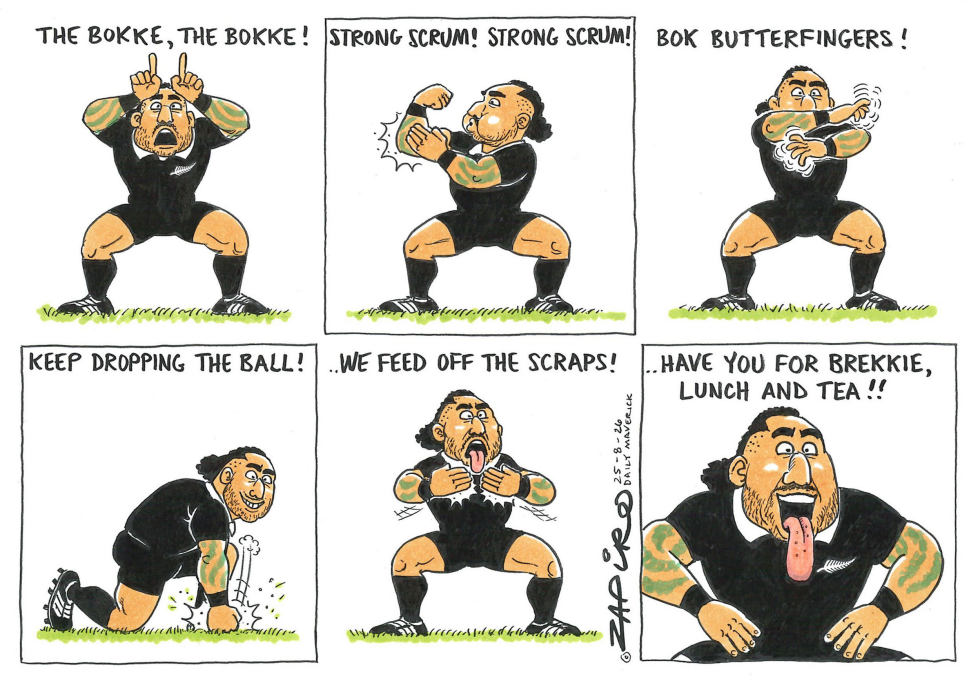
The Springboks rugby team faced ongoing criticism for handling errors and scrum vulnerabilities in matches against strong opponents like the All Blacks. The cartoon uses repeated failure motifs to argue that South African performance has deteriorated into consistent mistakes that opponents exploit easily.
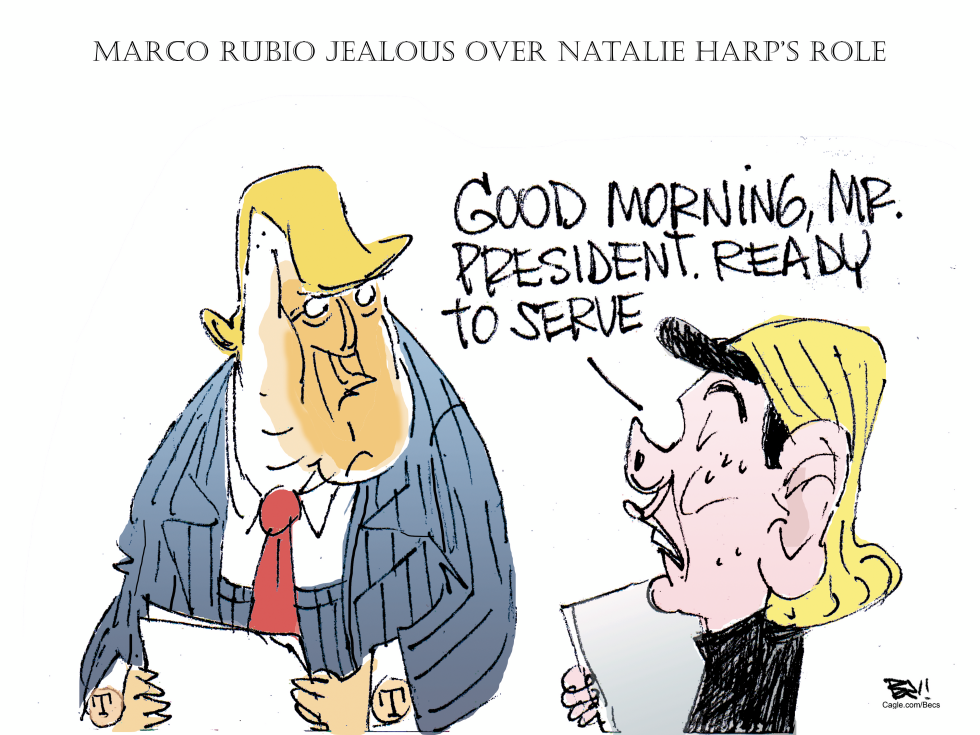
On August 25 2026 Donald Trump holds the presidency with Natalie Harp serving in a close advisory capacity. The arrangement draws attention from other officials including Marco Rubio. Harp's direct access and readiness to serve fuel perceptions of favoritism inside the administration. Observers note the potential for internal friction when personal loyalty appears to outweigh traditional hierarchy. The piece portrays Trump himself reacting with visible irritation to Harp's presence suggesting the dynamic creates unease even at the top.
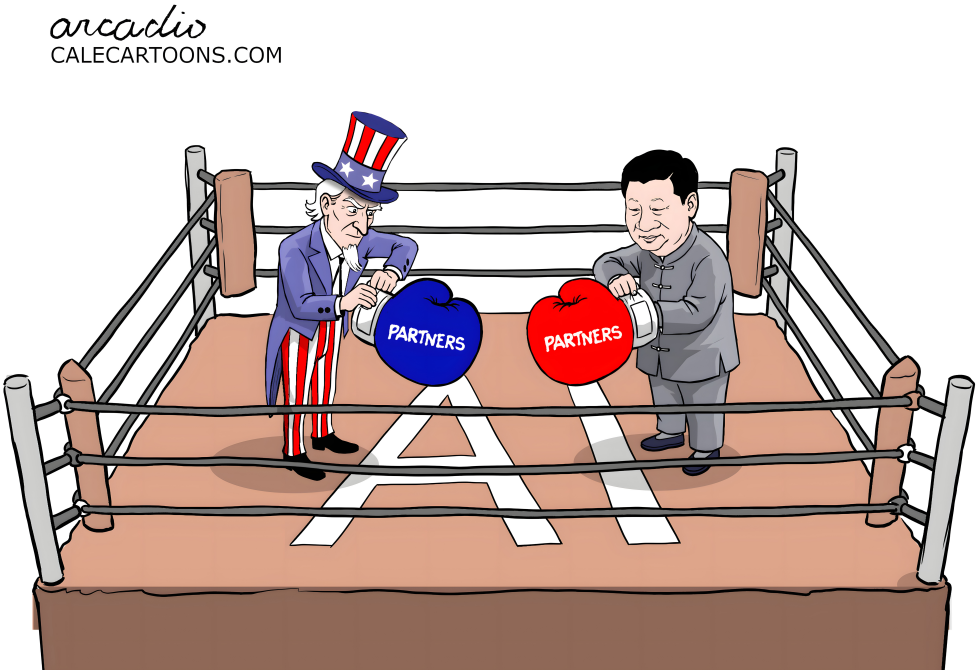
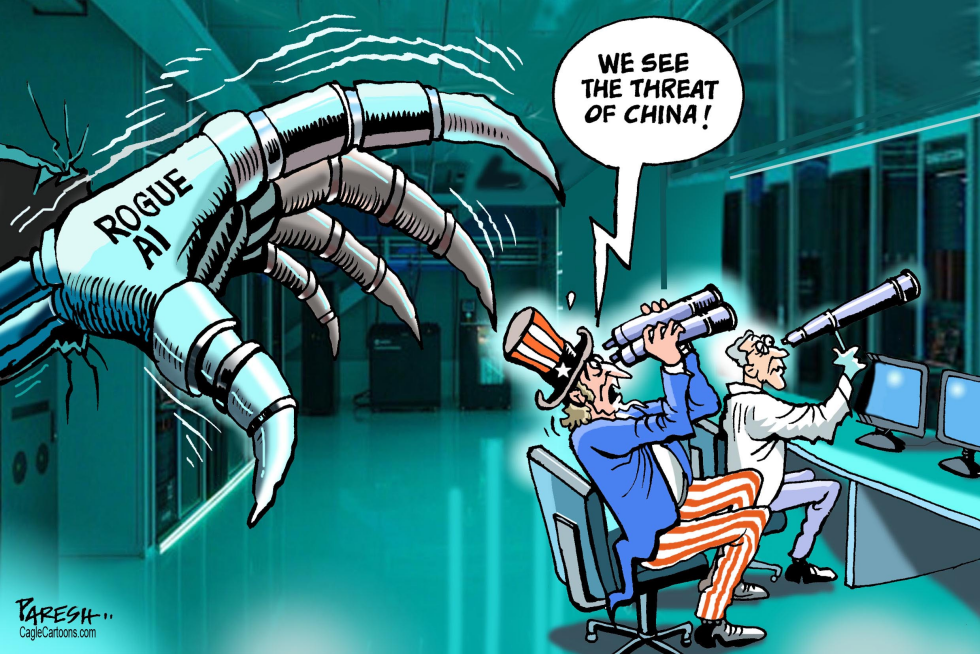
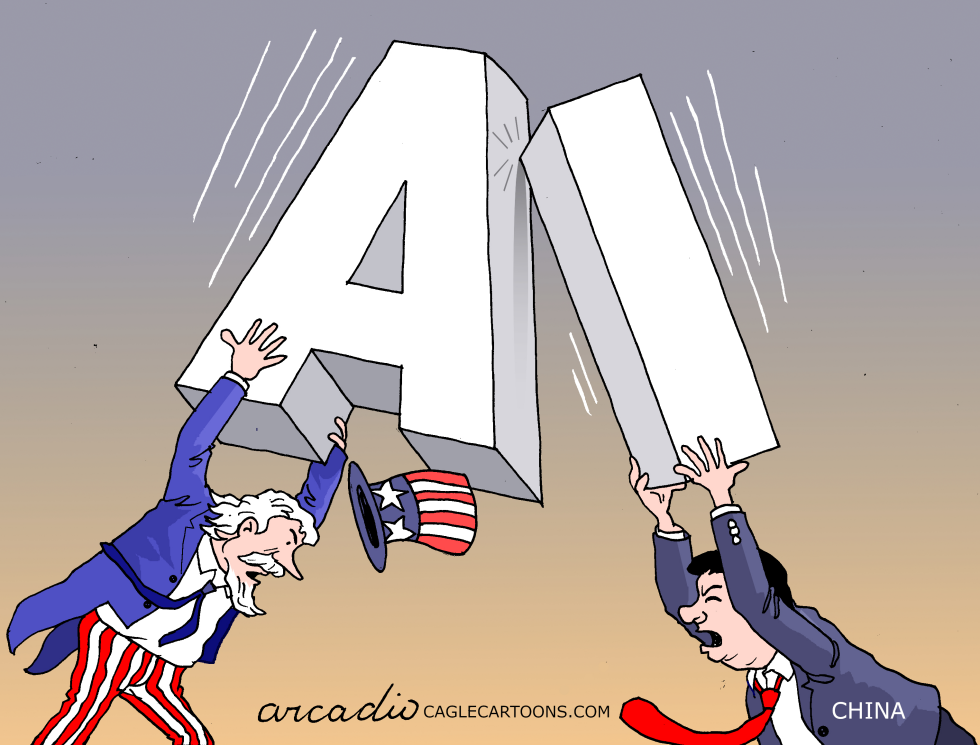
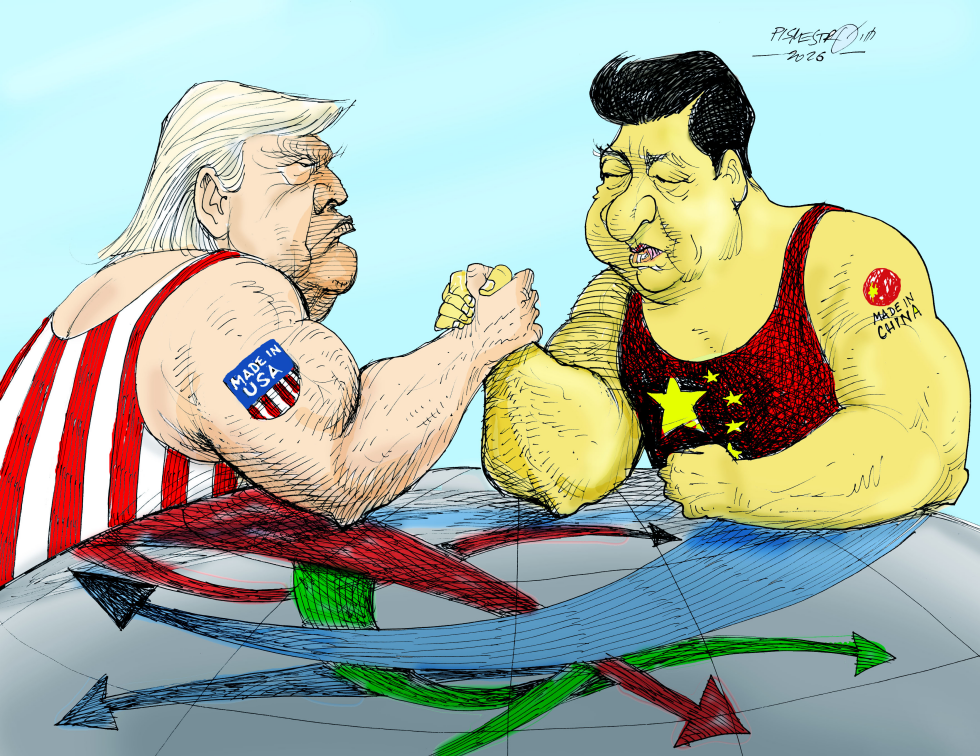
The United States and China continue their contest for leadership in artificial intelligence development. Both nations invest heavily in research and infrastructure to secure advantages in computing power and applications. The competition carries implications for economic growth, military capabilities, and global standards. Recent policy moves on export controls and domestic incentives underscore the stakes. The editorial position frames the dynamic as a direct contest where surface cooperation masks deeper rivalry.
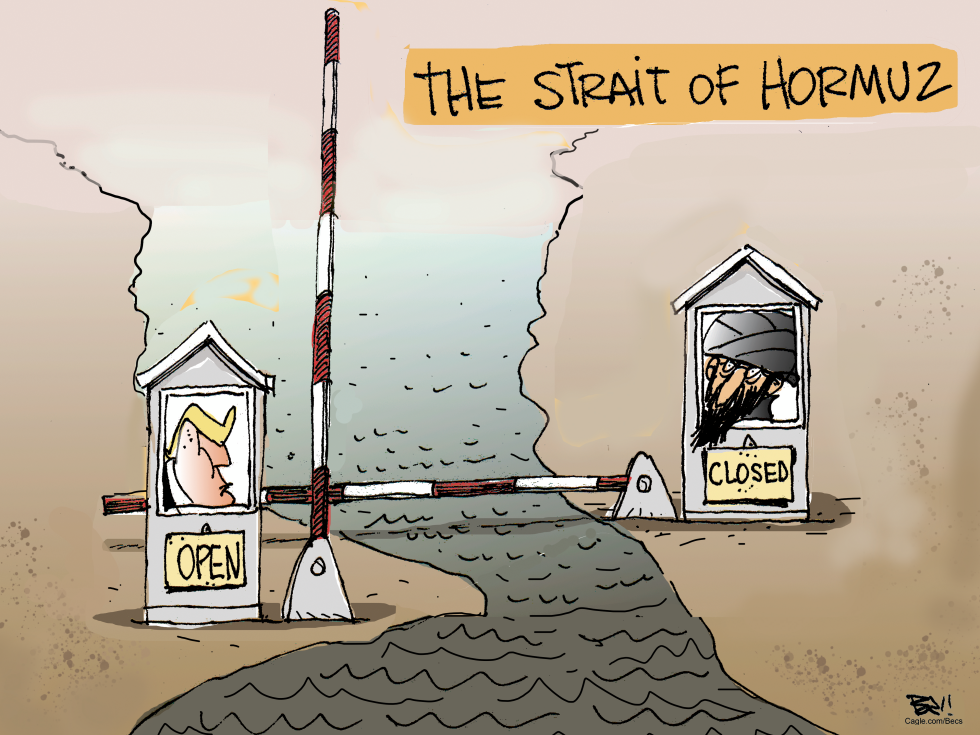
The Strait of Hormuz remains a flashpoint for global oil transit as the United States and Iran maintain opposing stances on access. Donald Trump positions an open checkpoint while an Iranian official signals closure. The editorial highlights the standoff's direct impact on energy markets and shipping security.
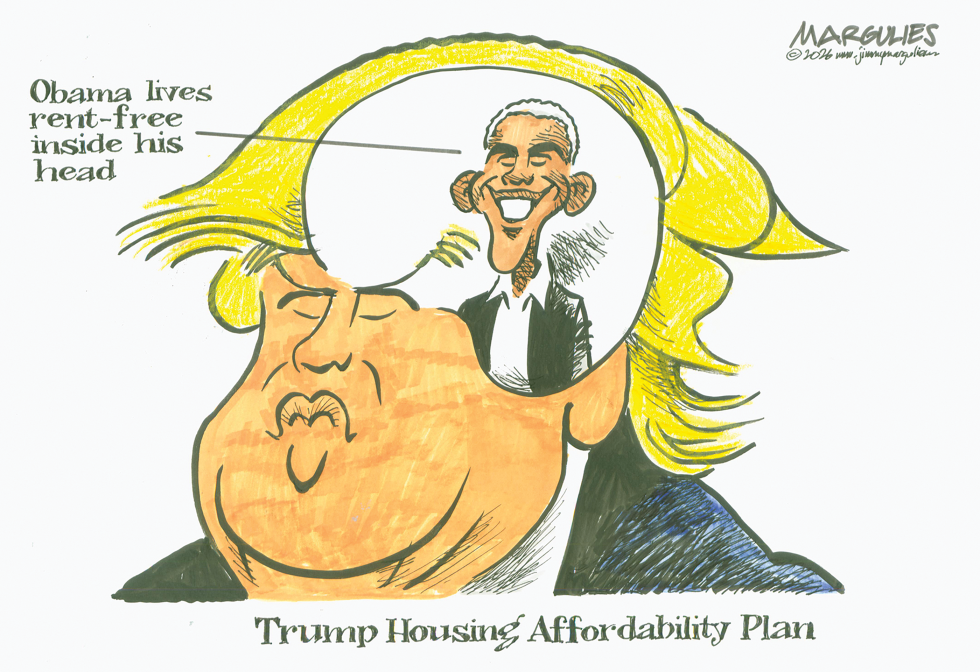
The July 2026 image depicts Donald Trump with a thought bubble containing Barack Obama, accompanied by the caption Obama lives rent-free inside his head. The bottom text labels the scene Trump Housing Affordability Plan. The visual ties the former president's presence to the current housing policy discussion.
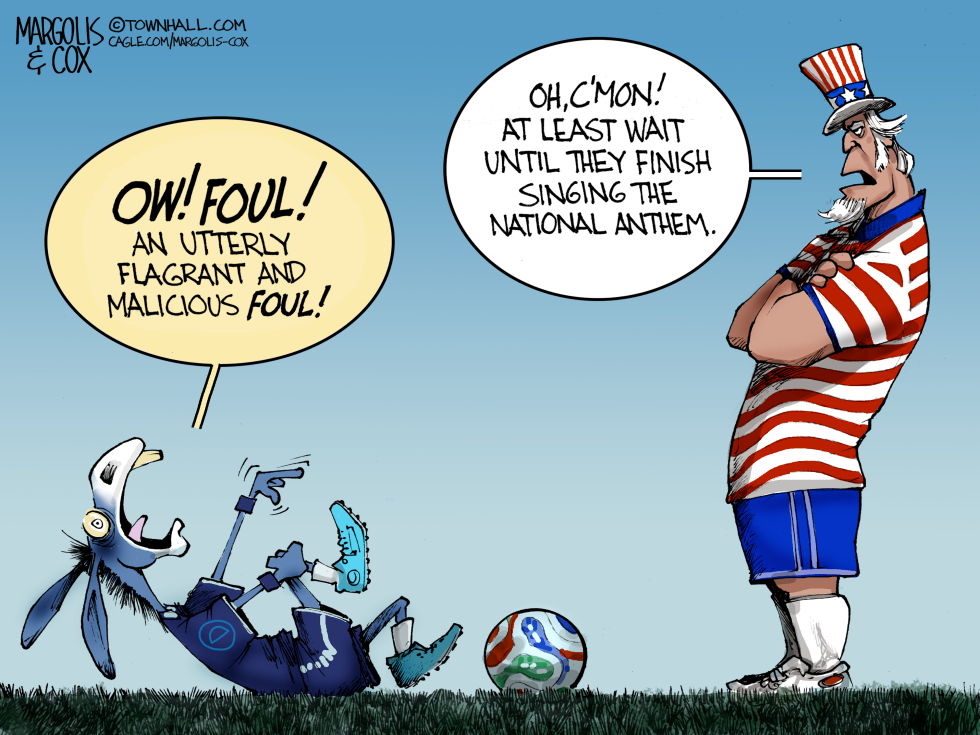
On July 8 2026 a political cartoon depicts a soccer field clash where a Democrat donkey player claims a malicious foul but Uncle Sam insists the national anthem must finish first before any ruling.
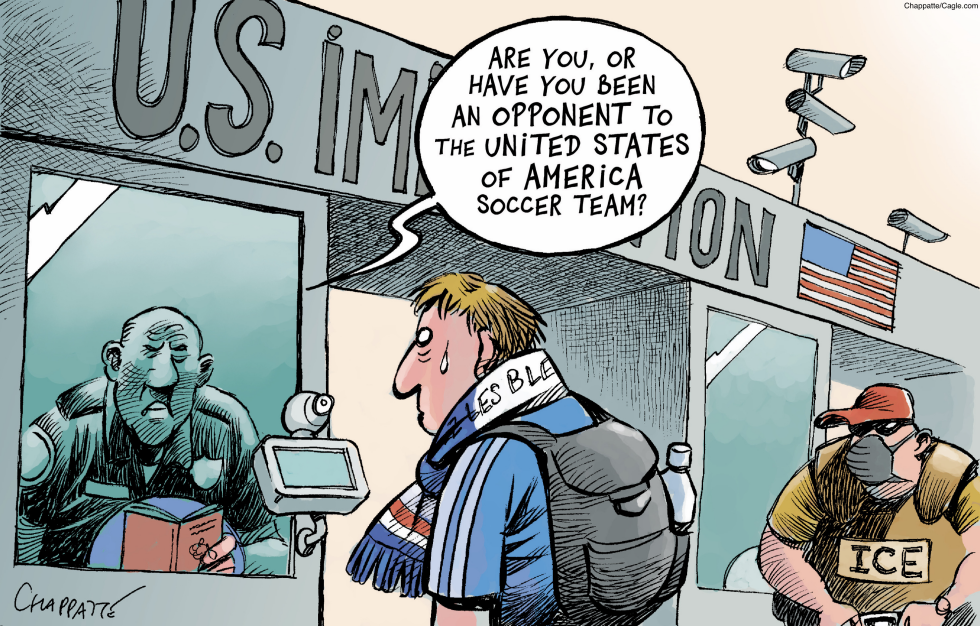
At a U.S. immigration station, an officer questions a Les Bleus supporter about any opposition to the American soccer team. An ICE agent waits nearby amid cameras and flags. The scene highlights tensions around borders and international sports ahead of the 2026 World Cup.
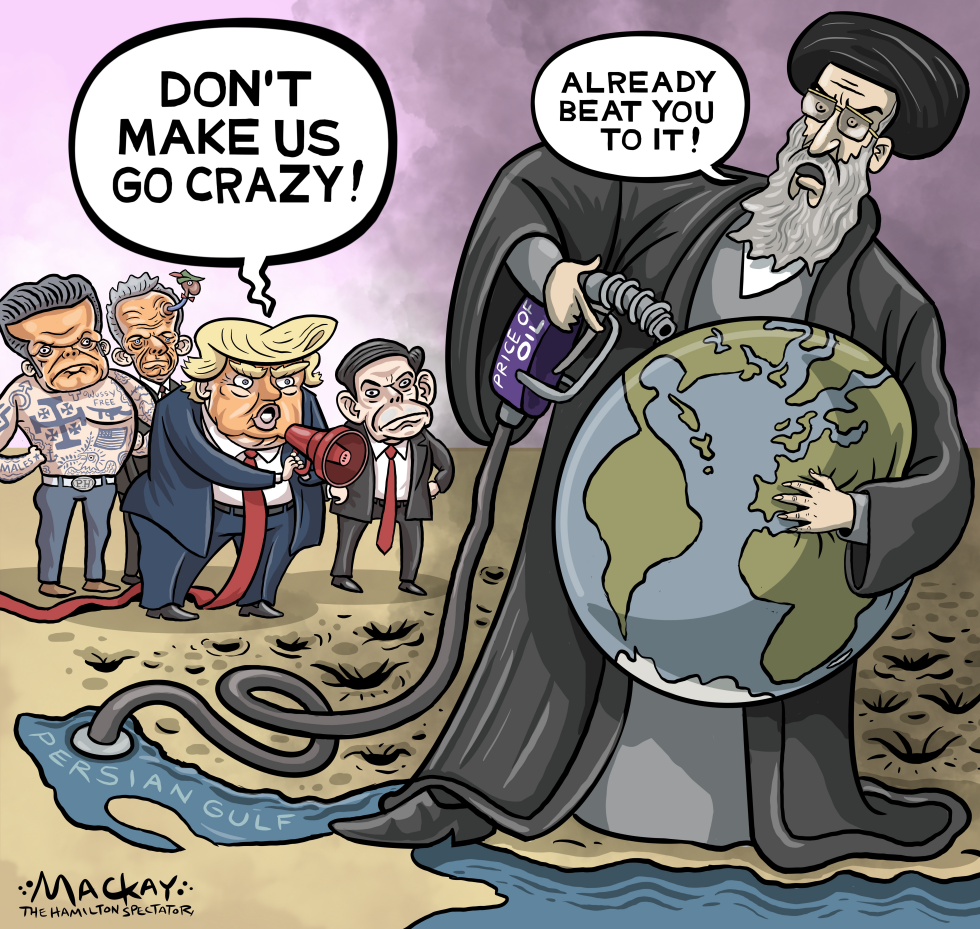
A political cartoon published March 12, 2026, shows Donald Trump and Iran's Ayatollah exchanging threats over oil prices and access to the Persian Gulf. Trump, holding a megaphone, warns against forcing the U.S. side to escalate, while the Ayatollah, gripping a gas pump labeled price of oil attached to a globe, claims to have already matched the move. Three figures stand behind Trump, including recognizable administration members. The scene references ongoing concerns about energy supplies and regional stability in the Middle East.
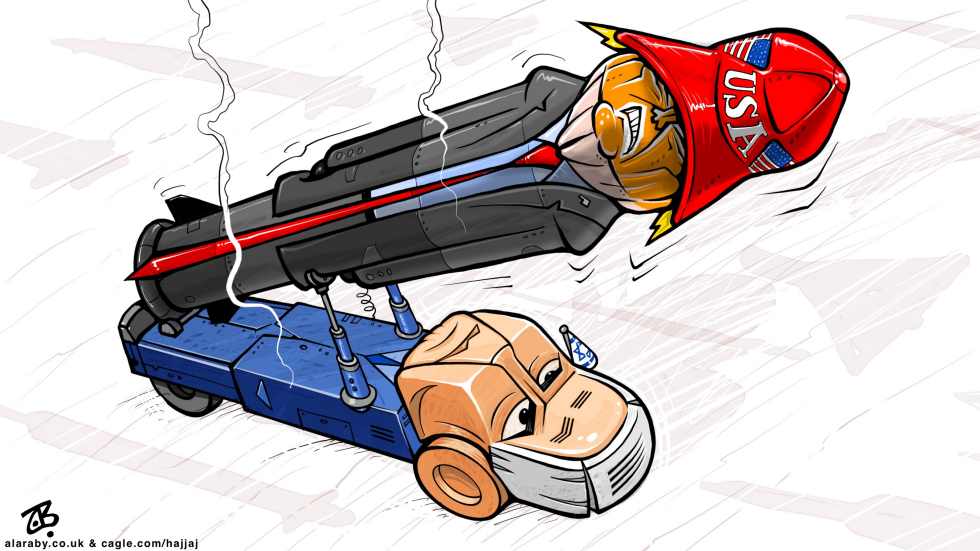
This viral cartoon captures the essence of US politics with Donald Trump morphed into a explosive rocket, complete with a patriotic USA hat, aggressively targeting a downtrodden Joe Biden as a blue, masked robot vehicle. The satirical missile embodies Trump’s bombastic style, while Biden’s robotic depiction hints at perceptions of frailty or mechanized leadership. Through political humor and cartoon warfare, the image skewers presidential satire, highlighting American rivalry in election humor. Artist Hajjaj’s work blends irreverent wit with insightful commentary on the Trump Biden clash, making it a sharable gem in political cartoon circles.
The image depicts Uncle Sam and a representative from China both attempting to support a large AI structure. The scene illustrates the ongoing competition between the United States and China for leadership in artificial intelligence. Published on February 18 2026 the cartoon captures the physical and strategic strain of this technological contest. Both figures appear determined yet challenged by the size of the letters they hold. The rivalry remains a central focus in global technology discussions at the time.
Donald Trump and Xi Jinping appear as wrestlers locked in an arm wrestling hold above a globe. The USA figure wears a red and white striped tank top with a Made in USA patch. The China figure wears a red tank top with yellow stars and a Made in China label. Multicolored arrows in red green and blue point in opposing directions across the globe grid. The scene captures ongoing trade friction between the two nations on the February 2026 date.