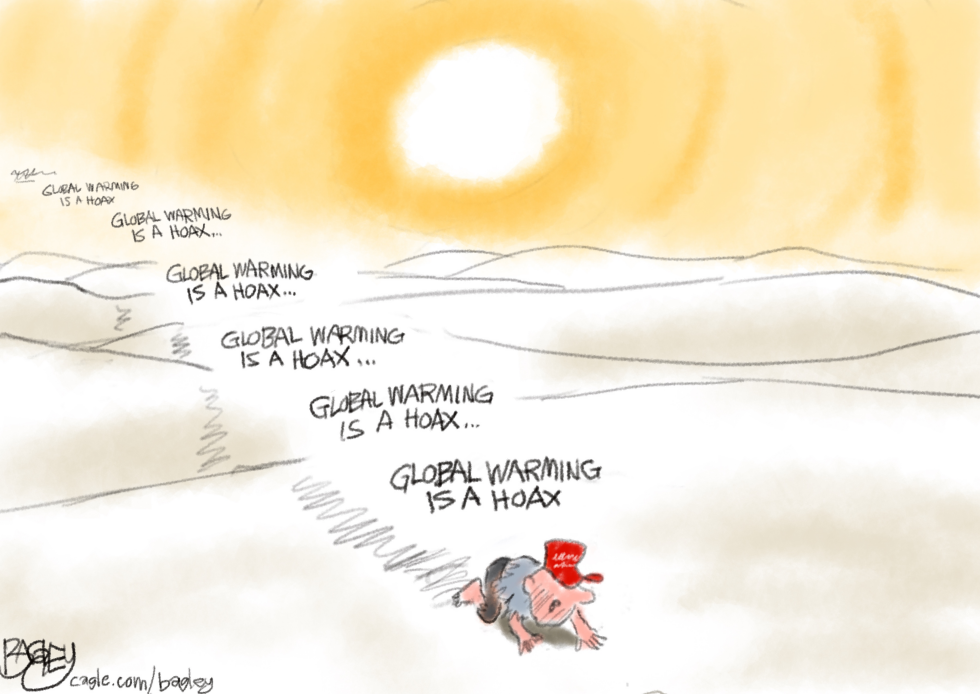
Public figures continue to label global warming a hoax despite record heat events affecting communities worldwide. The stance draws scrutiny as temperatures climb and denial rhetoric persists in political circles. The piece highlights the disconnect between such claims and observable conditions on the ground.
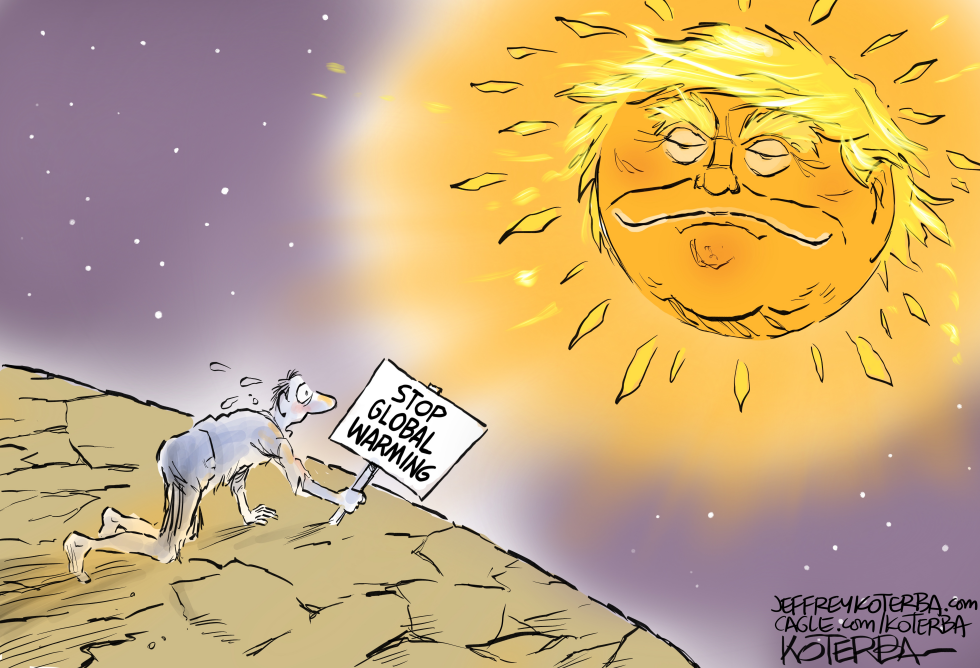
Donald Trump remains a central figure in U.S. politics on June 26, 2026. Ongoing debates over climate policy continue amid his influence. The piece portrays the sun as Trump to highlight resistance to warming efforts.
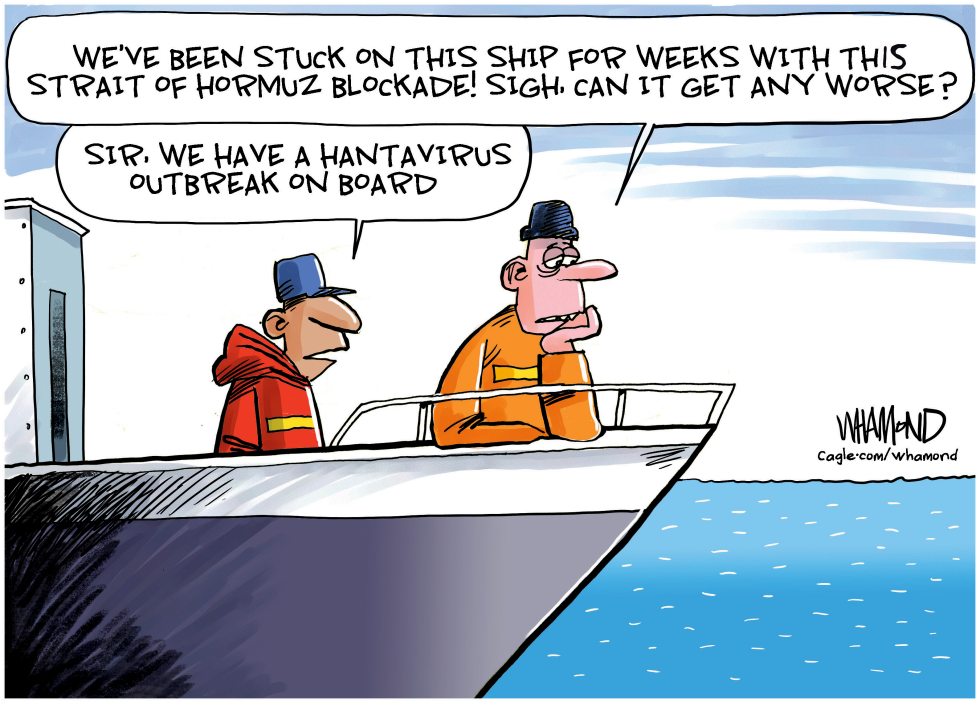
The cartoon depicts two sailors aboard a ship trapped in the Strait of Hormuz due to a naval blockade. One laments the weeks-long delay and wonders if conditions can worsen. The other reports a hantavirus outbreak on board. The image responds to ongoing tensions involving Iran and disruptions to global oil routes. As of the May 2026 publication date, the blockade has halted tanker traffic and strained energy markets. The added health crisis underscores the compounding risks for crews and supply chains. The visual ties geopolitical conflict directly to immediate human and economic consequences.
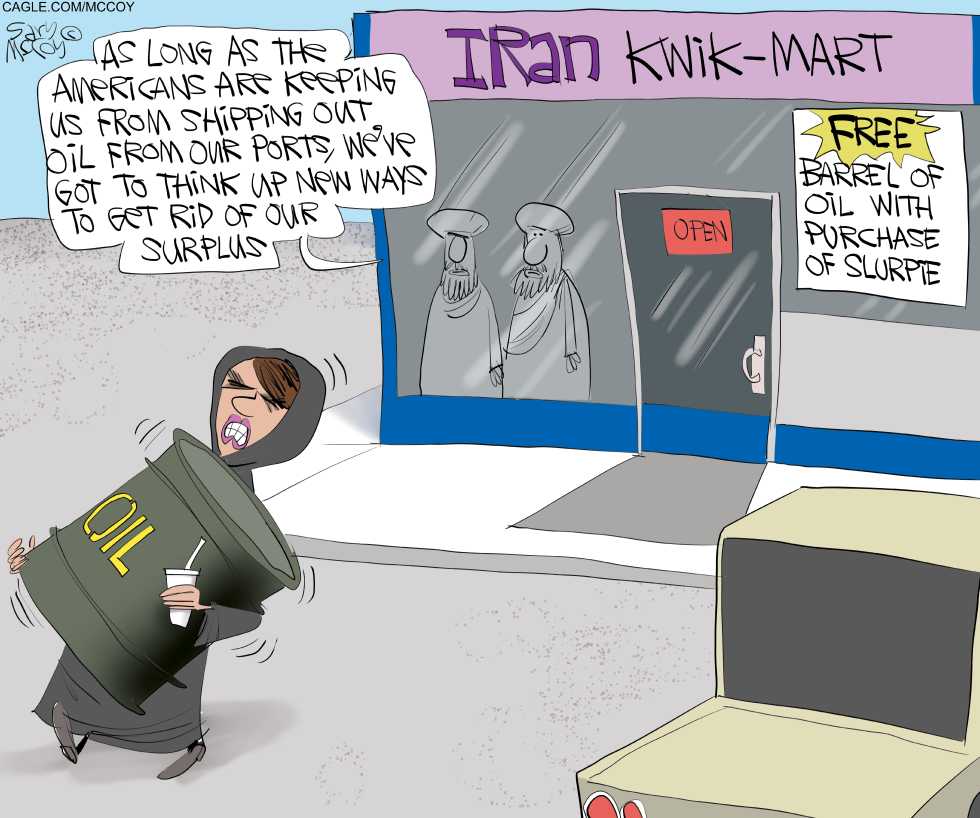
Gary McCoy's cartoon depicts two bearded Iranian clerics inside the Iran Kwik-Mart, promoting a free barrel of oil with Slurpee purchase to handle surplus crude. Outside, a hooded figure dumps an oil barrel into a car trunk, lamenting U.S. blockades on shipping ports. The image ties into Strait of Hormuz tensions, oil prices, Trump-era policies, Iran's Revolutionary Guard, and Middle East conflicts, highlighting ironic solutions to energy surplus amid international sanctions and naval standoffs. Commercial ships and tankers face barriers, forcing creative disposal methods in this dryly humorous take on global oil dynamics.
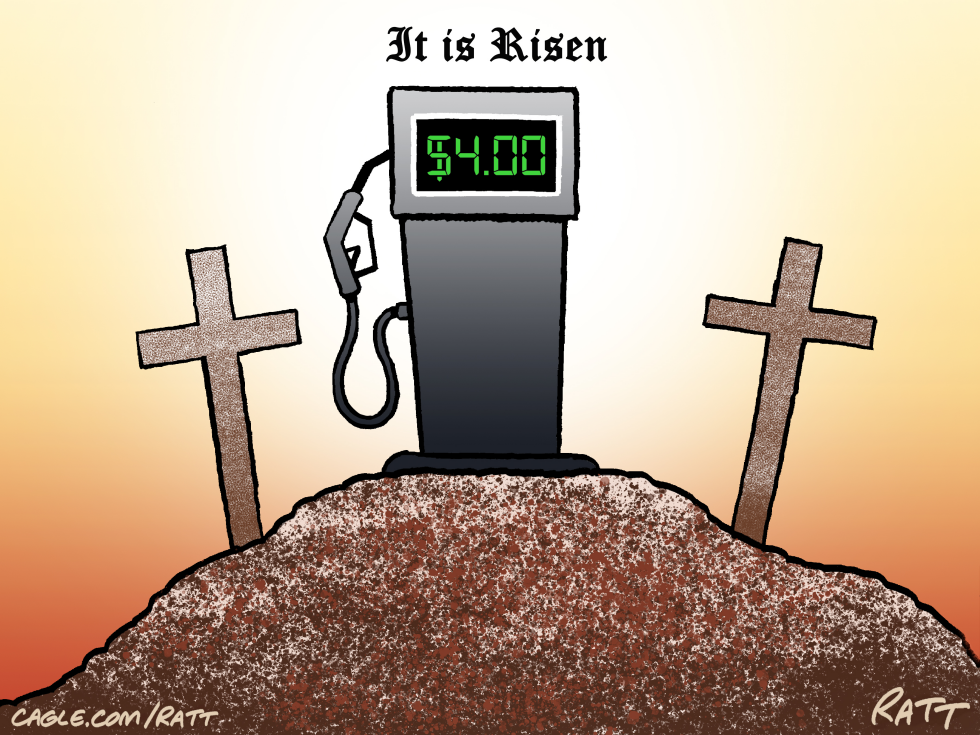
Ratt's cartoon captures Easter in America 2026 with a gas pump standing in for the central cross on a Calvary hill, showing $4.00 on its display and the text 'It is Risen' above, playing on rising gas prices. Tags like Easter, gas prices, oil, Iran war, and Strait of Hormuz suggest a future where geopolitical tensions drive fuel costs skyward. The artwork uses simple lines and a sunset background to evoke the biblical scene, but replaces resurrection with economic pain. This satire highlights how global events, including potential conflicts in the Strait of Hormuz, could lead to exorbitant oil prices by 2026. The dry humor underscores American dependence on foreign oil, making the cartoon timely and shareable amid ongoing energy debates.
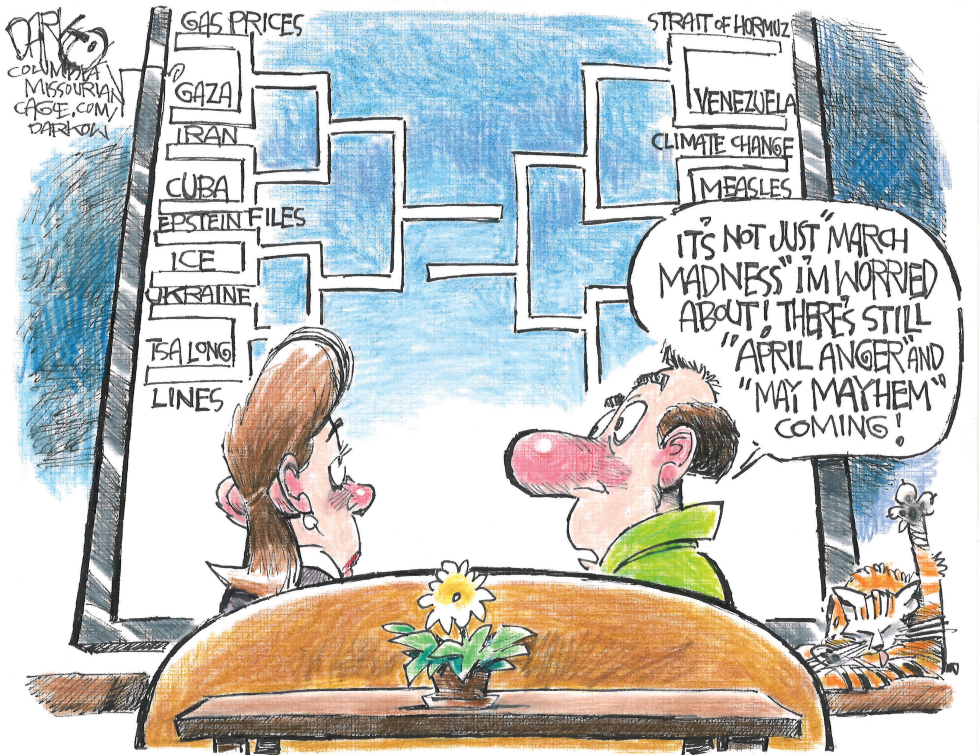
John Darkow's cartoon twists the March Madness tournament bracket into a lineup of global headaches, from gas prices spiking due to Strait of Hormuz tensions and Venezuela instability, to ongoing conflicts in Gaza and Ukraine. Measles outbreaks and climate change join the fray, alongside Cuba relations, Epstein files, ICE policies, and long TSA lines. The scene shows a couple at a table, with the man fretting that it's not just March Madness to worry about—April Anger and May Mayhem loom. A potted daisy and a striped cat add a touch of domestic normalcy to the absurd bracket of woes. This piece captures the relentless parade of news cycle disasters, using at least six tags like March Madness, Strait of Hormuz, Venezuela, measles, gas prices, and Gaza.
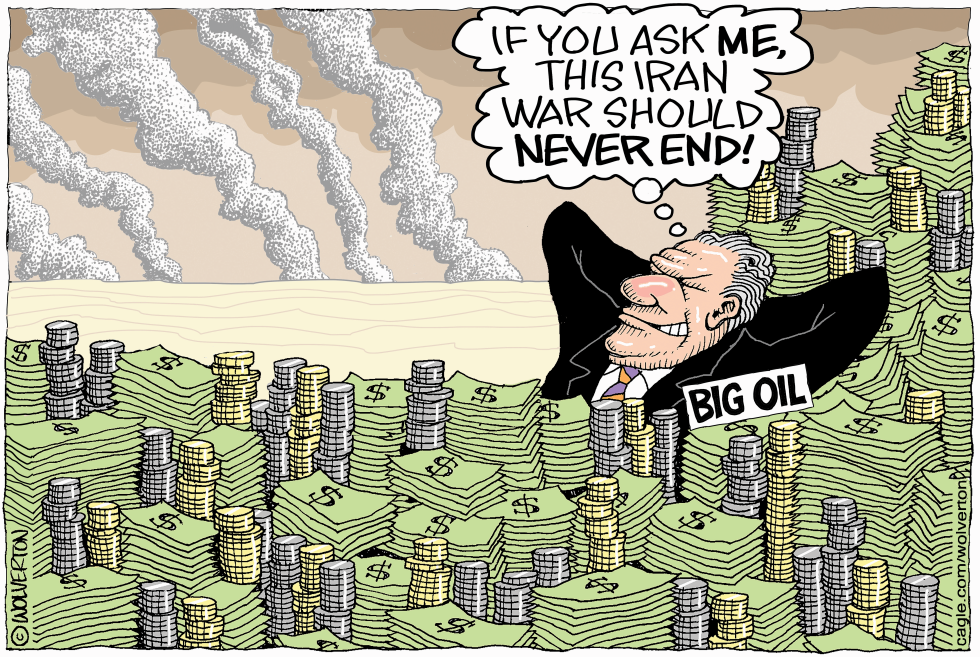
A political cartoon dated March 17, 2026, depicts a Big Oil executive reclining amid stacks of cash and coins. The figure, labeled BIG OIL, thinks that the Iran war should never end. Smoke rises in the background over a landscape of dollar bills. The image responds to ongoing concerns about oil industry gains during Middle East conflicts.
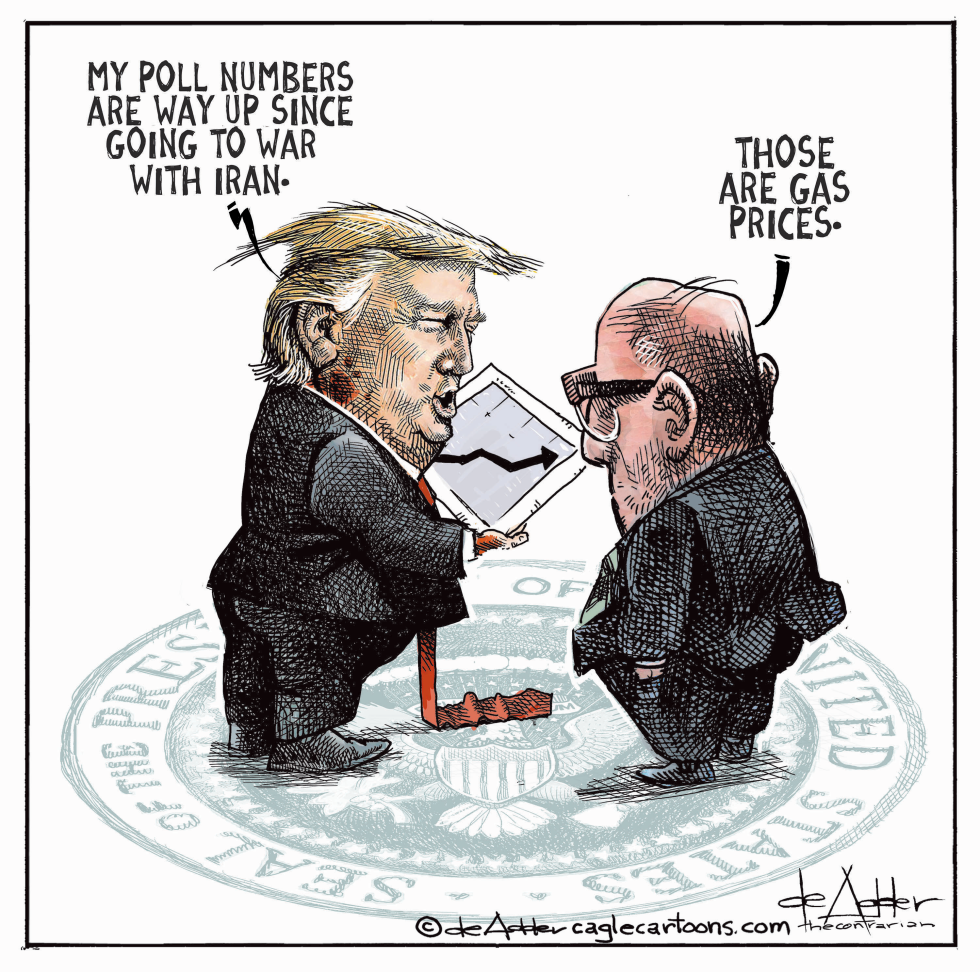
This sharp political cartoon by Michael de Adder captures Donald Trump triumphantly holding a chart of upward trends, claiming his poll numbers have skyrocketed since going to war with Iran. However, a bespectacled Dick Cheney corrects him, revealing those are actually gas prices soaring. The satire highlights the ironic consequences of Middle East conflict on the US economy, blending humor with commentary on presidential approval ratings tied to foreign policy blunders. Incorporating elements of US politics, oil prices, and war economy, the image stands on the presidential seal, emphasizing official folly. It's a witty jab at how leaders might misread economic fallout as personal gains, perfect for editorial discussions on satire and current events.
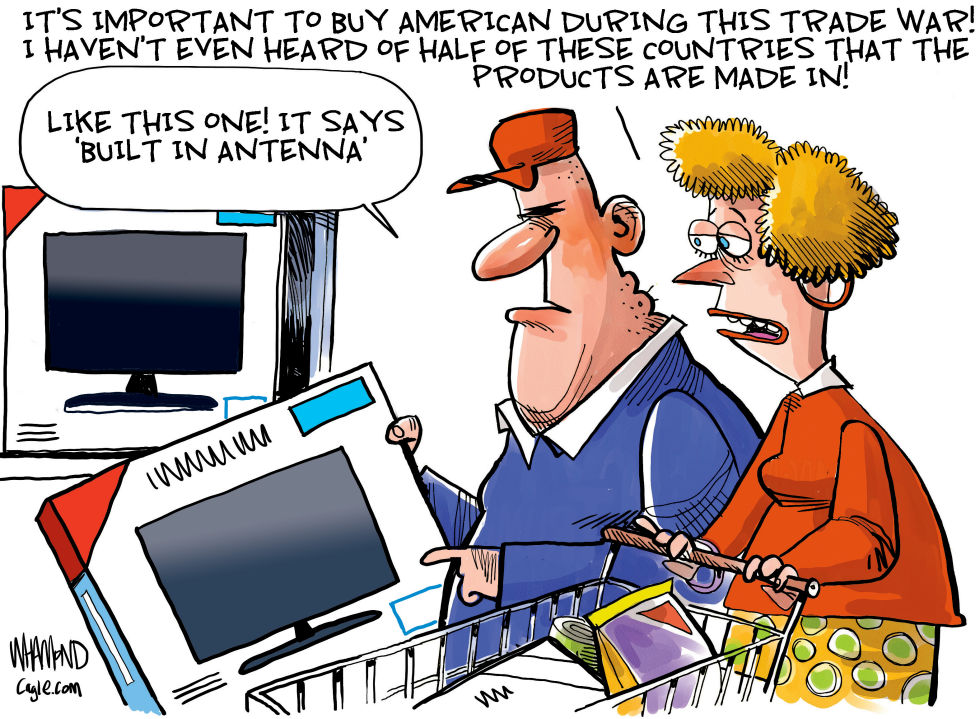
A couple shops for electronics in a store as the man points to a television box labeled built in antenna while declaring support for American goods during an ongoing trade war. The woman reacts with surprise at the label. Large text overhead stresses the importance of domestic purchases because many product origins remain unfamiliar. The scene reflects consumer reactions to tariffs and protectionist policies active in late 2025.