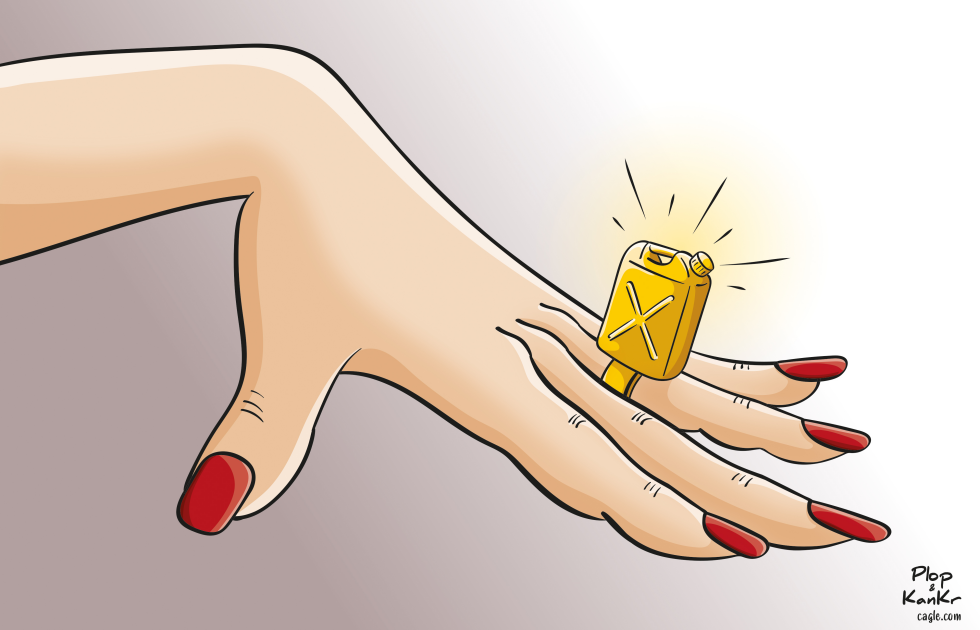
The cartoon shows a hand extended, wearing a ring shaped like a yellow gas can with an X, sparkling as if it's a precious diamond. Red nails add a touch of glamour to the scene against a plain background. This straightforward image pokes fun at oil prices skyrocketing, turning everyday fuel into something as valuable as jewelry. Tags like fuel luxury, energy satire, gasoline bling, petroleum parody, high costs humor, and economic pun capture the dry wit here. Cartoonists Plop and KanKr keep it simple, letting the visual speak without overcomplicating the message. It's a classic setup for editorial pages, reminding readers how energy crises make basics feel extravagant.
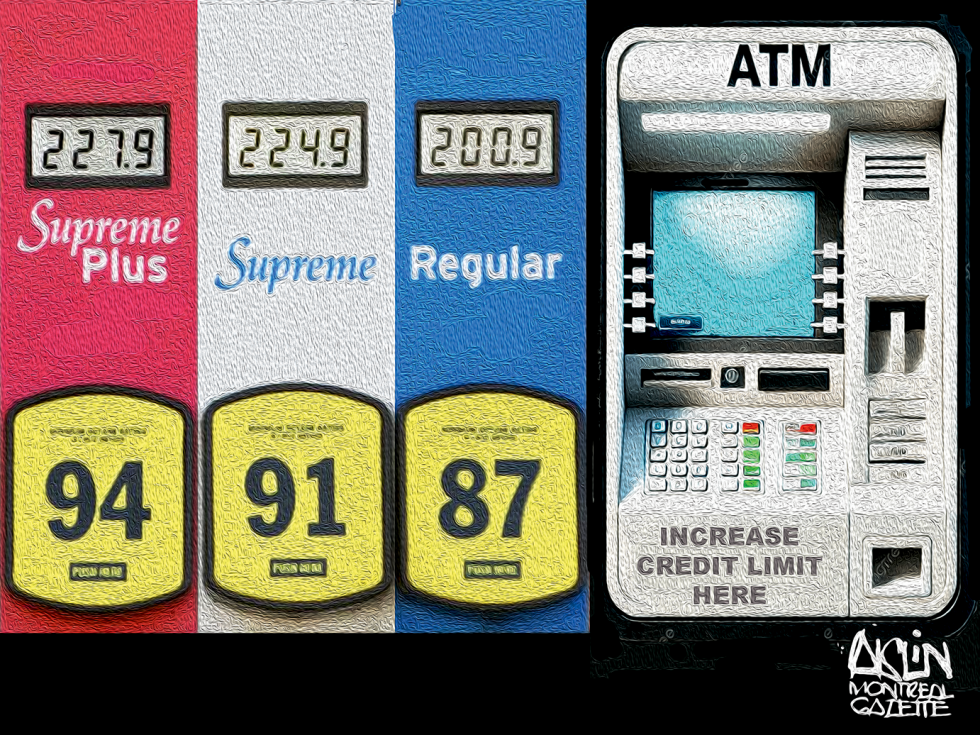
The cartoon shows a gas pump price board with supreme plus at 2.279 per gallon and 94 octane, supreme at 2.249 with 91 octane, and regular at 2.009 with 87 octane. Next to it sits an ATM labeled to increase credit limit here, poking at high gas prices and the economy's push toward more credit. Tags like gas, prices, cost, economy, credit, and pump underline the visual joke on affording fuel through debt. This setup captures the frustration with rising fuel costs without words, relying on the absurdity of blending a gas pump with credit services. Cartoonists often use such direct imagery to comment on everyday economic strains.
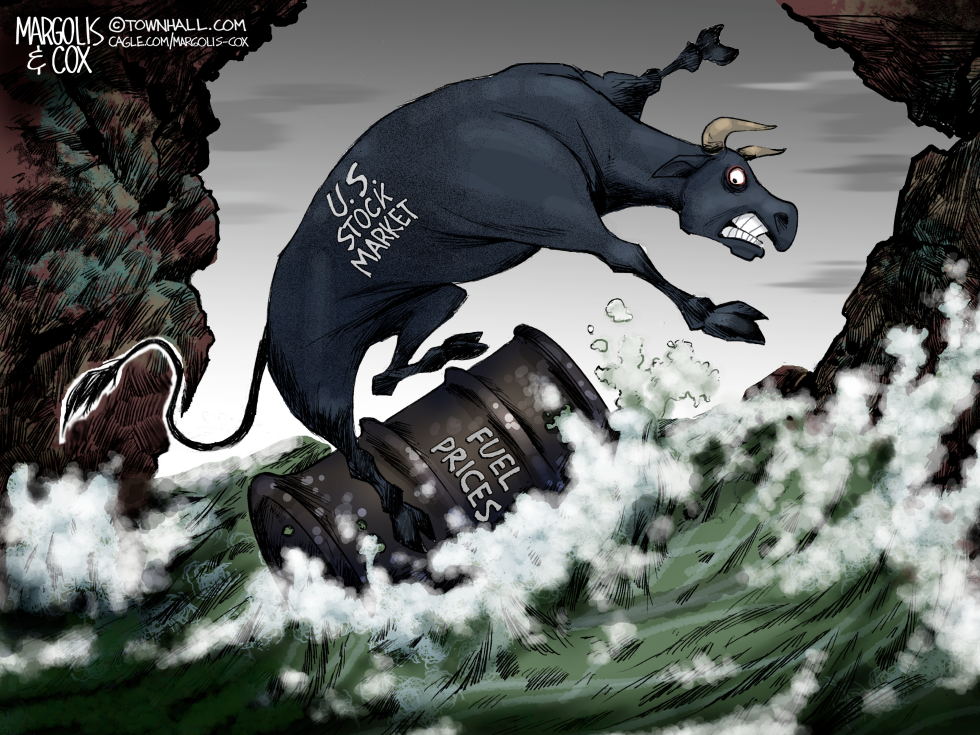
The cartoon shows a fierce black bull, emblazoned with 'U.S. Stock Market,' plummeting off jagged cliffs into a turbulent green sea where an oil barrel labeled 'Fuel Prices' tips over amid white foam. This visual packs a punch on how rising fuel prices can drag down the bull market, touching on economy, stocks, oil, prices, portfolio, and market tags. It's a classic setup: the bull charges ahead but hits the wall of energy costs, splashing into chaos. Editors see these often, where financial optimism meets harsh commodity realities, making it relatable for readers watching their investments swirl in the currents.
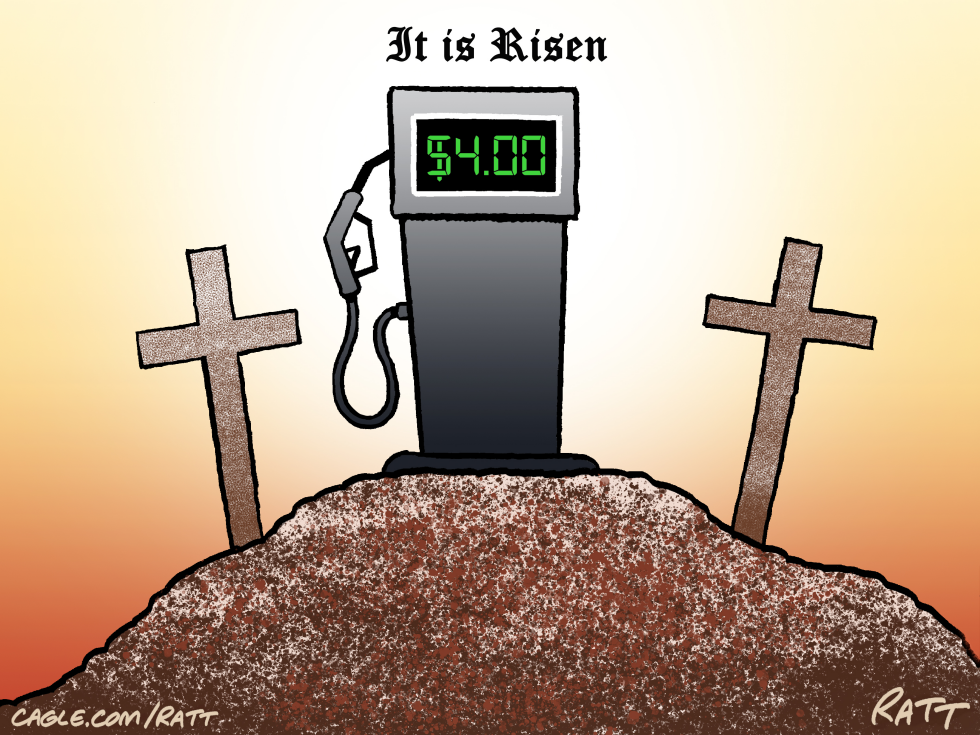
Ratt's cartoon captures Easter in America 2026 with a gas pump standing in for the central cross on a Calvary hill, showing $4.00 on its display and the text 'It is Risen' above, playing on rising gas prices. Tags like Easter, gas prices, oil, Iran war, and Strait of Hormuz suggest a future where geopolitical tensions drive fuel costs skyward. The artwork uses simple lines and a sunset background to evoke the biblical scene, but replaces resurrection with economic pain. This satire highlights how global events, including potential conflicts in the Strait of Hormuz, could lead to exorbitant oil prices by 2026. The dry humor underscores American dependence on foreign oil, making the cartoon timely and shareable amid ongoing energy debates.
John Darkow's cartoon captures the sting of high gas prices amid inflation and war, showing a yellow vehicle at a station with unleaded fuel marked at 3.95 9/10 per gallon, pay in advance. Speech bubbles reveal a conversation where one asks about not going anywhere for spring break, and the reply puns on being 'Spring Broke' due to gas costs. The image underscores travel disruptions, with tags like gas prices, inflation, spring break, travel, war, and economic satire emphasizing how rising fuel expenses halt vacation plans. This straightforward drawing uses dry humor to point out everyday economic frustrations without overcomplicating the scene.
Bruce Plante's cartoon depicts a typical American driver at a gas station, his purple car parked under the canopy, as he reacts with censored profanity to a coin-operated viewer. The sign reads 'TO SEE GAS PRICES DEPOSIT 25¢,' cleverly satirizing how #HighGasPrices have soared beyond easy visibility, like distant sights needing magnification. The man's USA shirt and coffee cup add a relatable everyman touch, emphasizing consumer shock. This piece fits into ongoing #FuelCosts debates, blending #InflationHumor with #EconomicSatire. Plante's style, straightforward and punchy, targets #EnergyPrices and their impact on daily life, making it shareable for #PoliticalCartoons enthusiasts. The dry humor underscores the absurdity without overstatement, a hallmark of syndicated work.
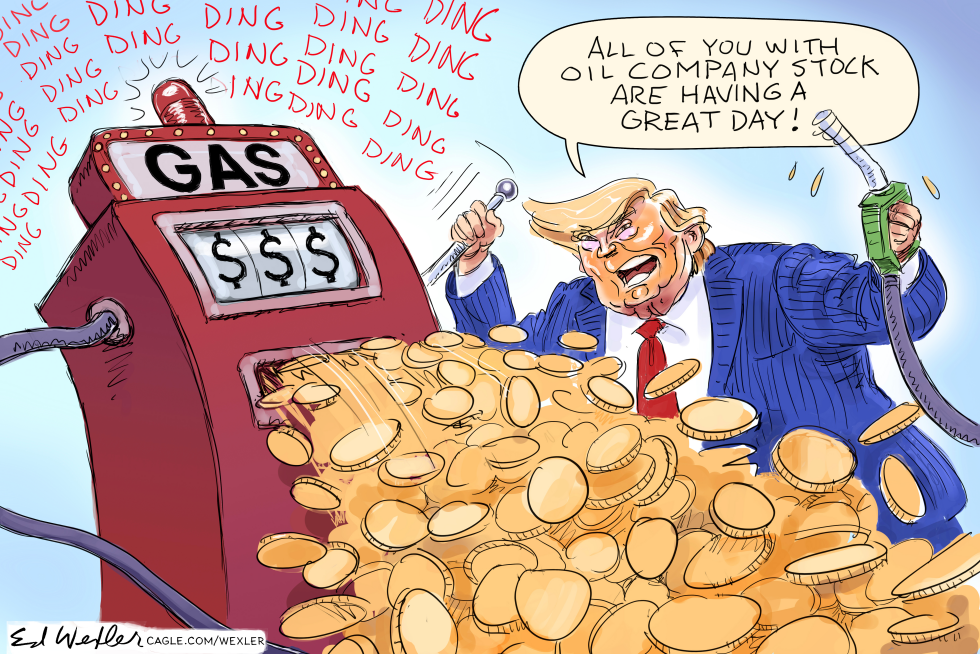
On March 17 2026 the cartoon depicts Donald Trump beside a gas pump dispensing coins instead of fuel. The pump display shows dollar signs while a speech bubble congratulates oil company stockholders. The scene references rising gas prices tied to Middle East tensions and conflict in Iran.
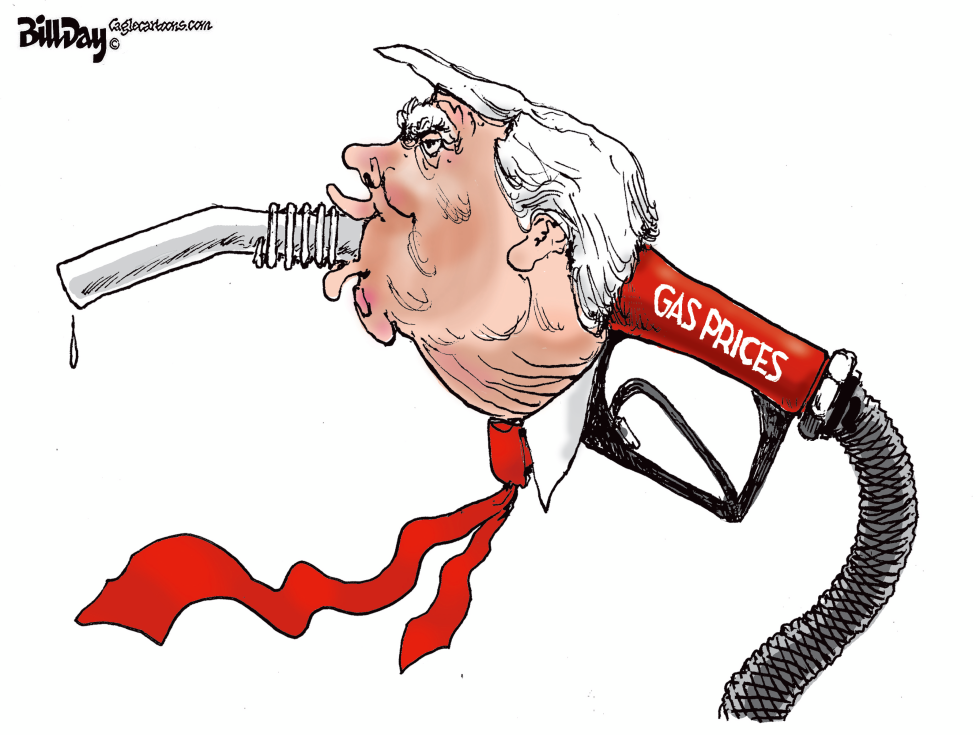
On March 11 2026 Bill Day depicts Donald Trump with his head serving as a gas pump nozzle labeled gas prices. The red tie dangles like a fuel hose. The image responds to ongoing concerns over rising fuel costs linked to tensions involving Iran and the Strait of Hormuz.
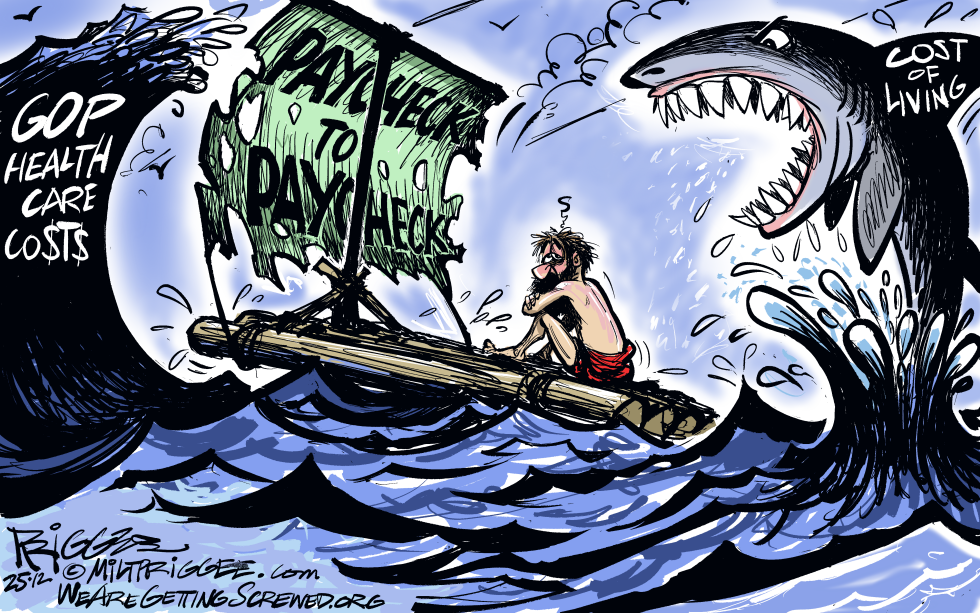
A man on a raft labeled paycheck to paycheck navigates rough seas. One wave carries the label GOP health care costs while a shark marked cost of living approaches from the other side. The image from January 2026 captures ongoing concerns over healthcare expenses and daily living costs for working families.
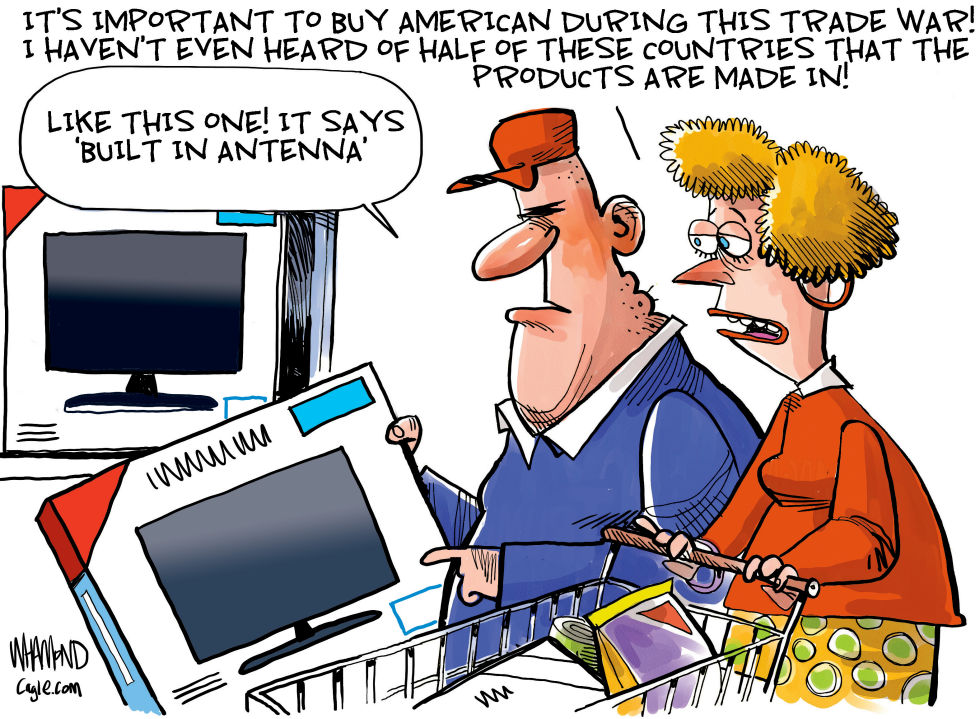
A couple shops for electronics in a store as the man points to a television box labeled built in antenna while declaring support for American goods during an ongoing trade war. The woman reacts with surprise at the label. Large text overhead stresses the importance of domestic purchases because many product origins remain unfamiliar. The scene reflects consumer reactions to tariffs and protectionist policies active in late 2025.
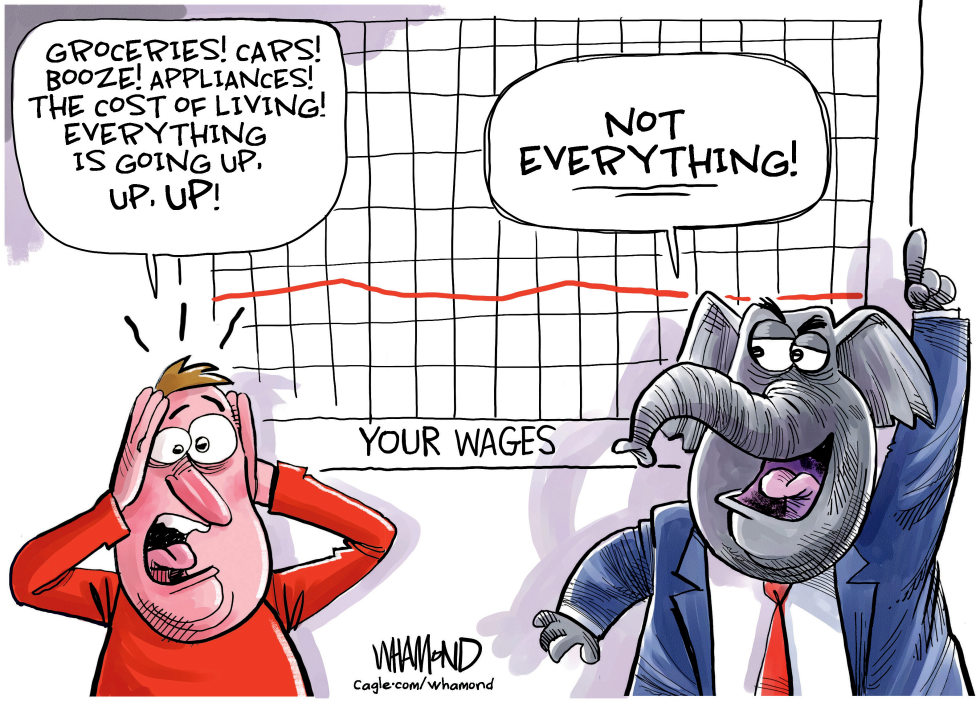
A man clutches his head in distress as an elephant in a suit points upward. Speech bubbles list rising costs for groceries, cars, booze and appliances. A graph line stays flat under the label your wages while the elephant declares not everything.
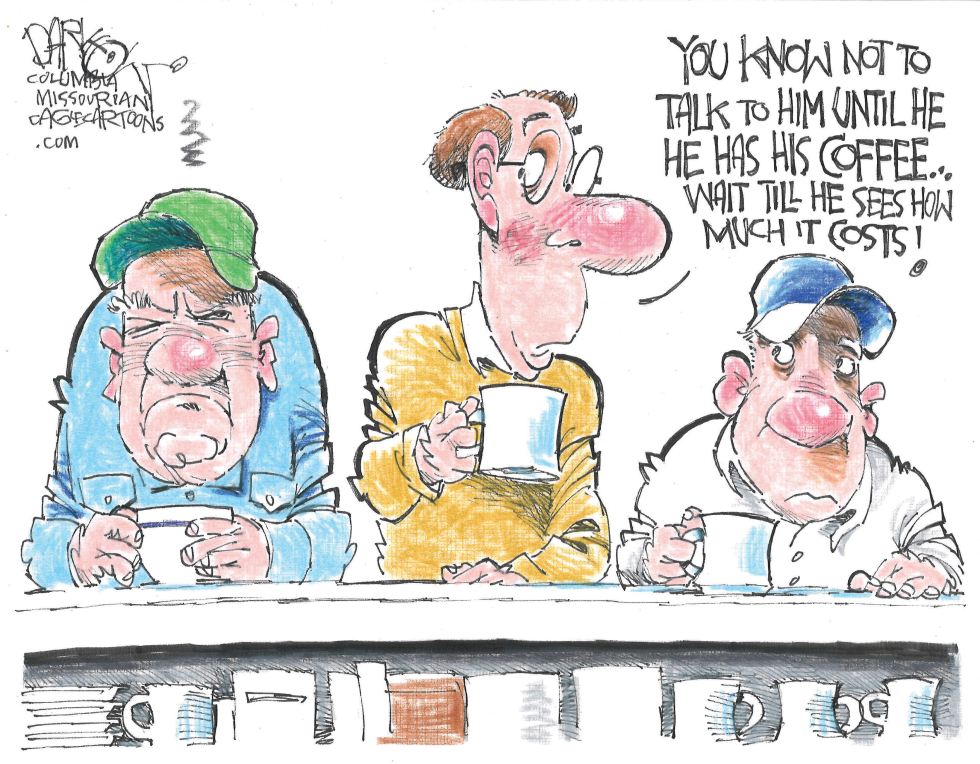
Three men at a diner counter react to rising coffee prices in a cartoon published September 15, 2025. The central figure warns against speaking until the grumpy patron in the green cap sees the cost. The scene ties directly to ongoing inflation and tariff policies affecting consumer goods under President Trump.