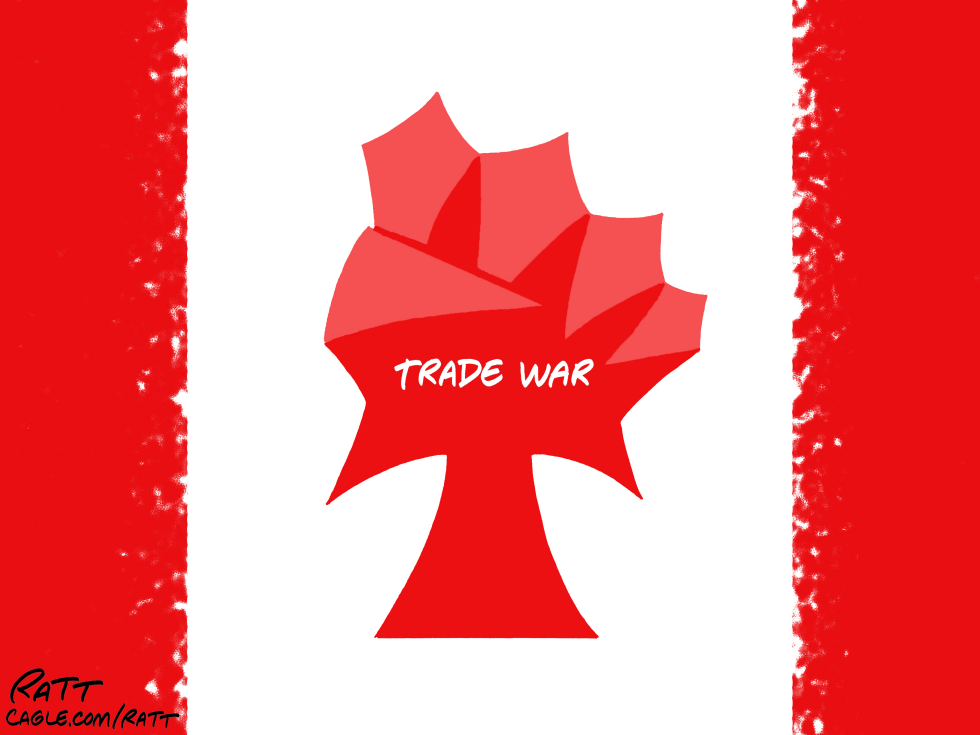
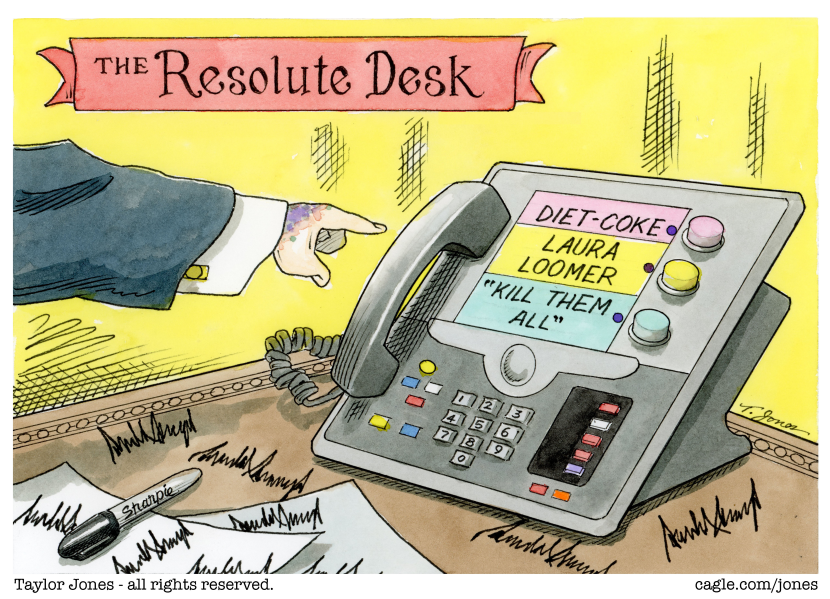
Ongoing US-Canada trade tensions escalated in 2026 with new tariff threats targeting Canadian exports. The dispute threatens key sectors including autos, lumber and agriculture, raising costs for consumers on both sides of the border. Canada has signaled plans to diversify markets and strengthen domestic industry. The cartoon frames the conflict as a direct assault on Canadian sovereignty and economic stability. It portrays the trade war as fracturing national symbols while urging a stronger northern response.
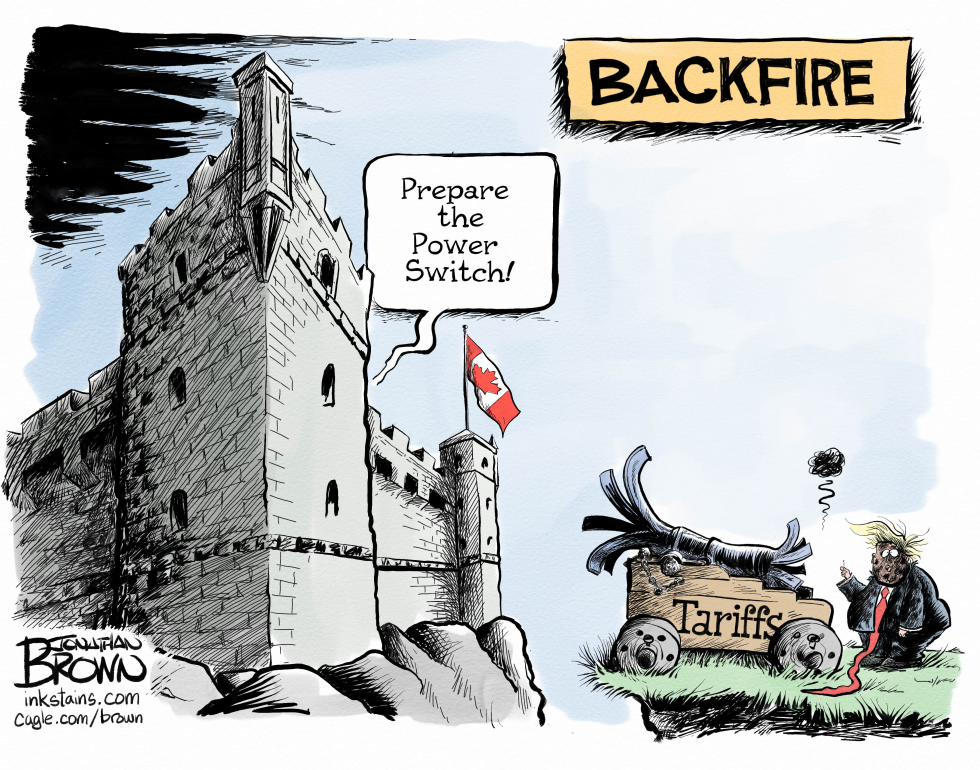
The cartoon shows a Canadian castle flying its flag while a cannon labeled Tariffs explodes backward toward a figure resembling Donald Trump. The scene responds to ongoing trade tensions where U.S. tariffs on Canadian goods prompted retaliatory measures. The visual emphasizes the policy rebounding on its originator rather than achieving intended pressure.
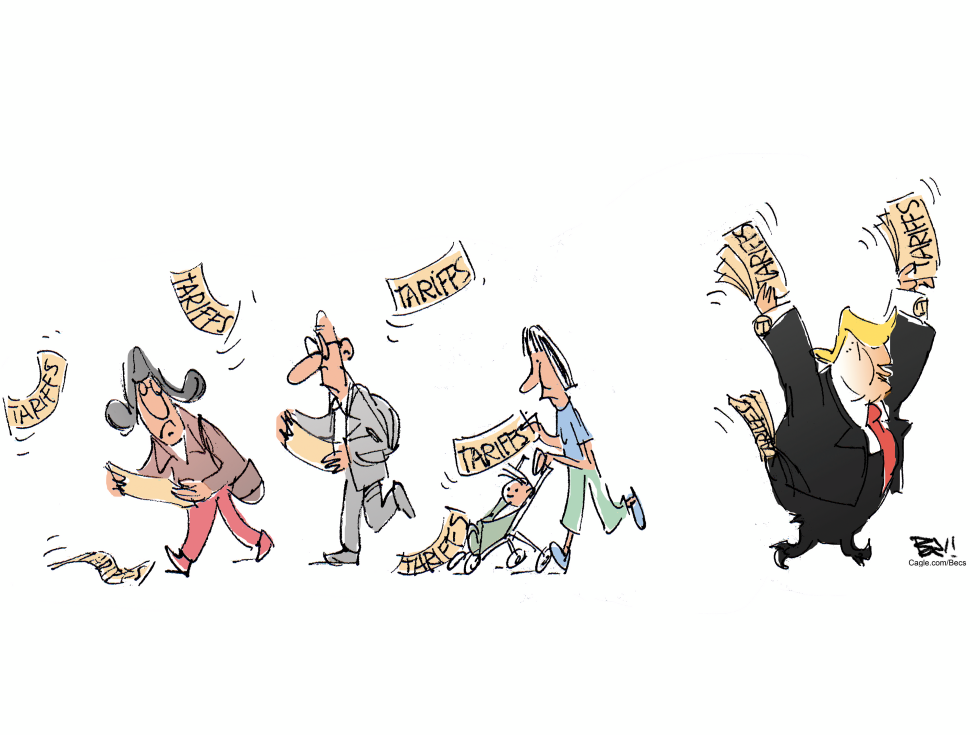
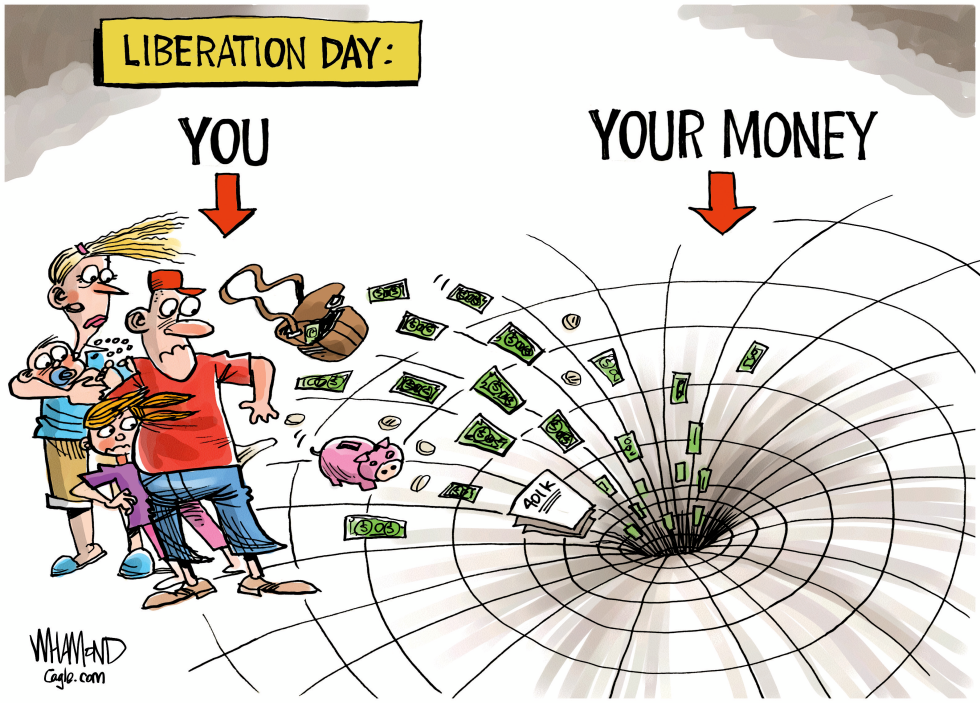
Donald Trump expanded tariffs across trading partners in mid-2026, triggering immediate market volatility and diplomatic pushback. The move raised costs for consumers and businesses reliant on imports. The piece portrays the policy as an indiscriminate barrage that disrupts daily life and global commerce.
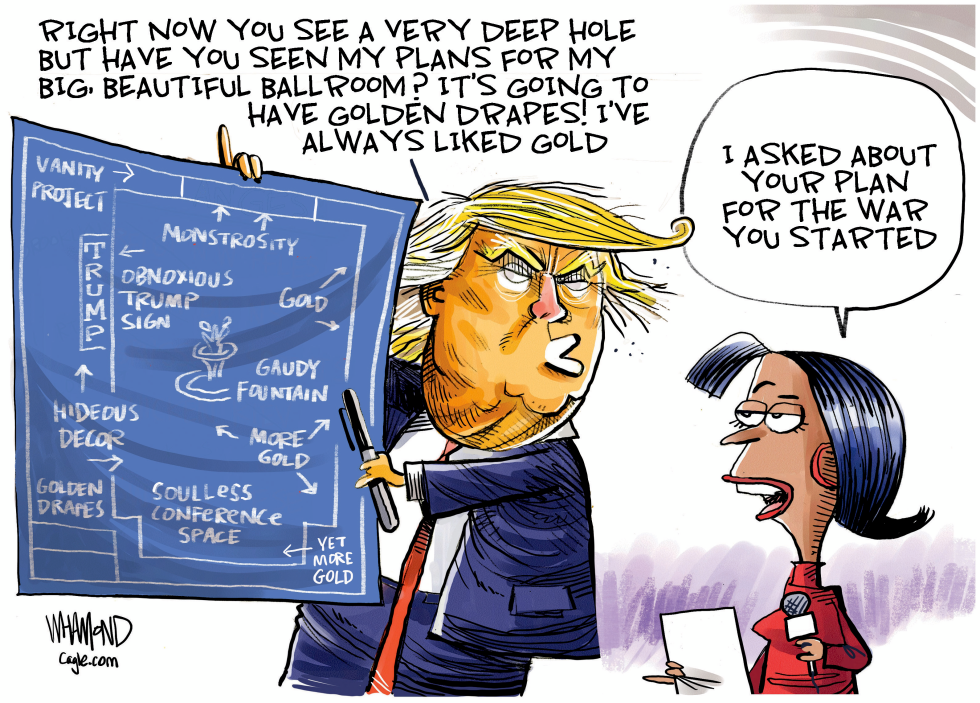
Dave Whamond's cartoon captures Trump in a classic pose, holding up a blueprint riddled with tags like vanity project, monstrosity, Trump obnoxious Trump sign, gaudy fountain, hideous decor, golden drapes, soulless conference space, and repeated calls for more gold. The scene unfolds with Trump enthusiastically describing a very deep hole for his big beautiful ballroom, emphasizing his love for golden drapes. A female reporter, microphone in hand, points out the mismatch, stating she asked about the plan for the war he started. This setup skewers Trump's apparent lack of strategy, turning serious inquiries about Iran war, no endgame, quagmire, military campaign, regime change, and improvising into a punchline about frivolous vanity. The dry humor lands on the contradictions, with Trump's focus on gaudy aesthetics over critical issues like troops in danger and boots on ground.
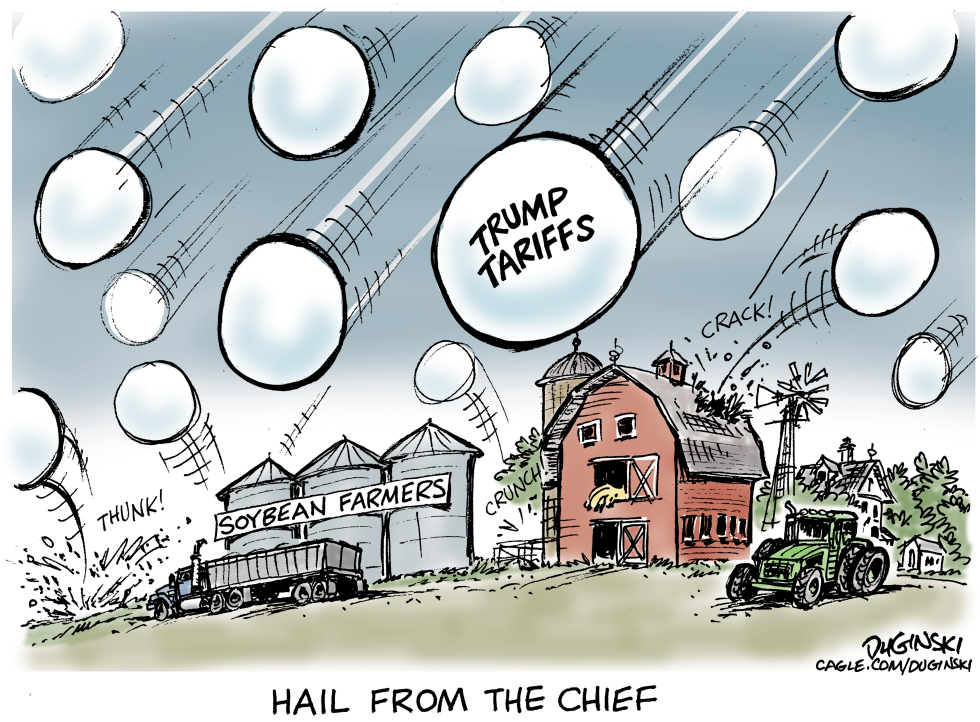
The cartoon shows large hailstones marked Trump tariffs raining down on a soybean farm, cracking a red barn and striking silos labeled soybean farmers. This visual responds to ongoing 2025 trade policies affecting U.S. agriculture and export markets.
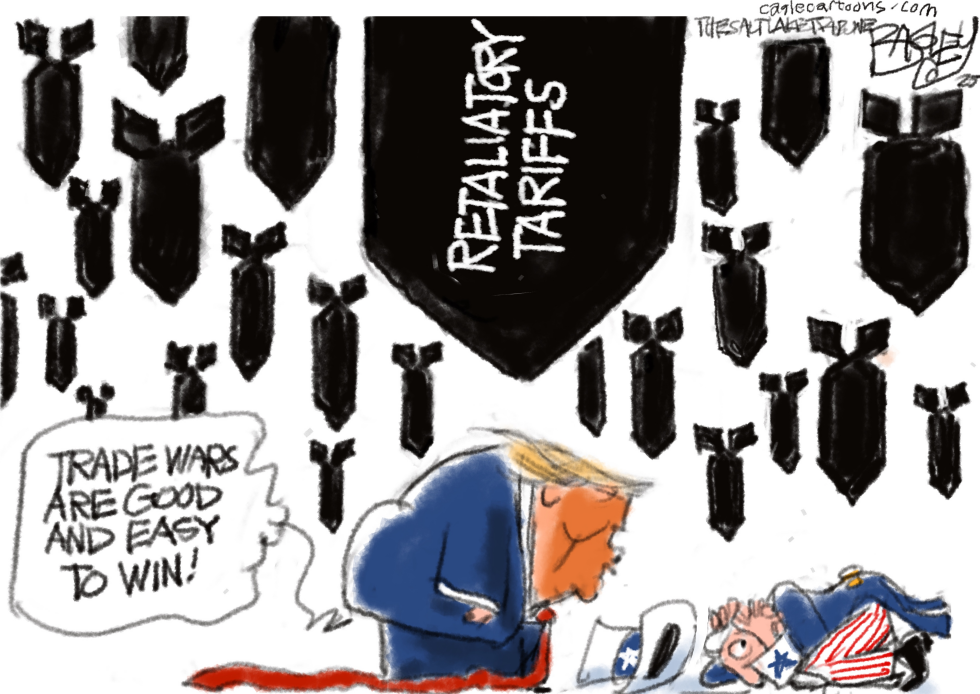
On April 8, 2025, the cartoon depicts Donald Trump proclaiming trade wars easy to win while retaliatory tariff bombs fall around a downed Uncle Sam, reflecting ongoing U.S. tariff policies and international responses from Europe and China.
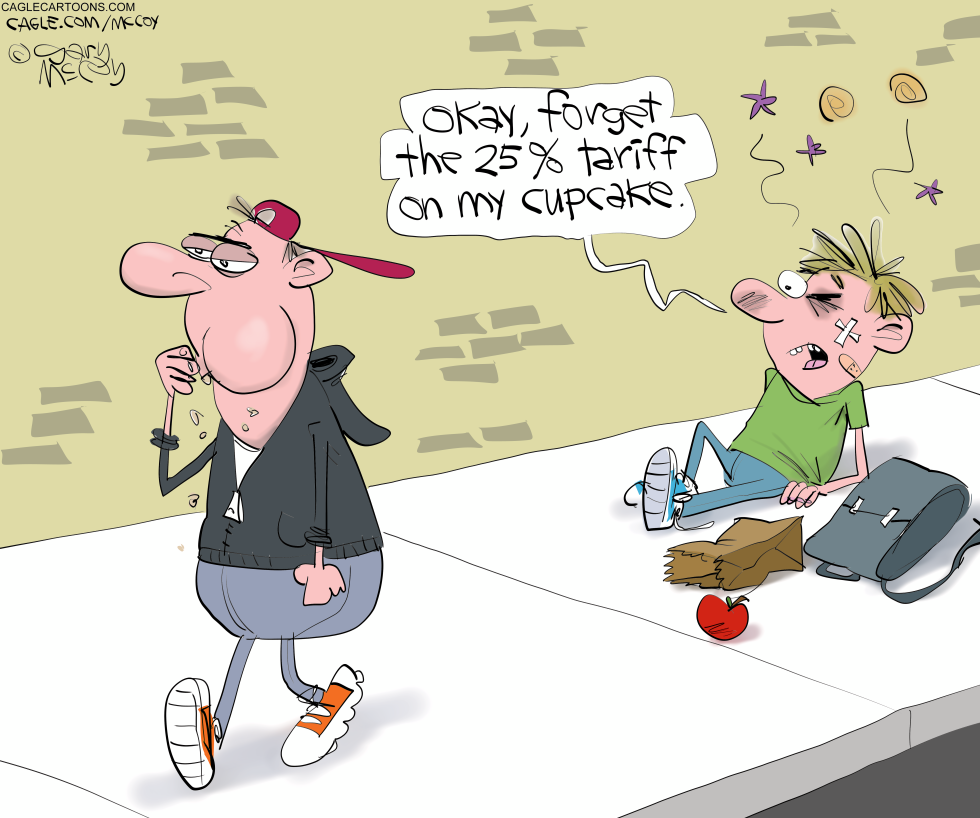
On April 8 2025 a drawing shows two boys on a sidewalk. The larger one in a red cap and dark jacket walks away holding a small object. The smaller one sits on the ground with facial marks and torn clothing. A speech bubble from the seated boy reads OKAY forget the 25% tariff on my cupcake. Scattered objects include an apple and a paper bag. The scene uses a brick wall background.
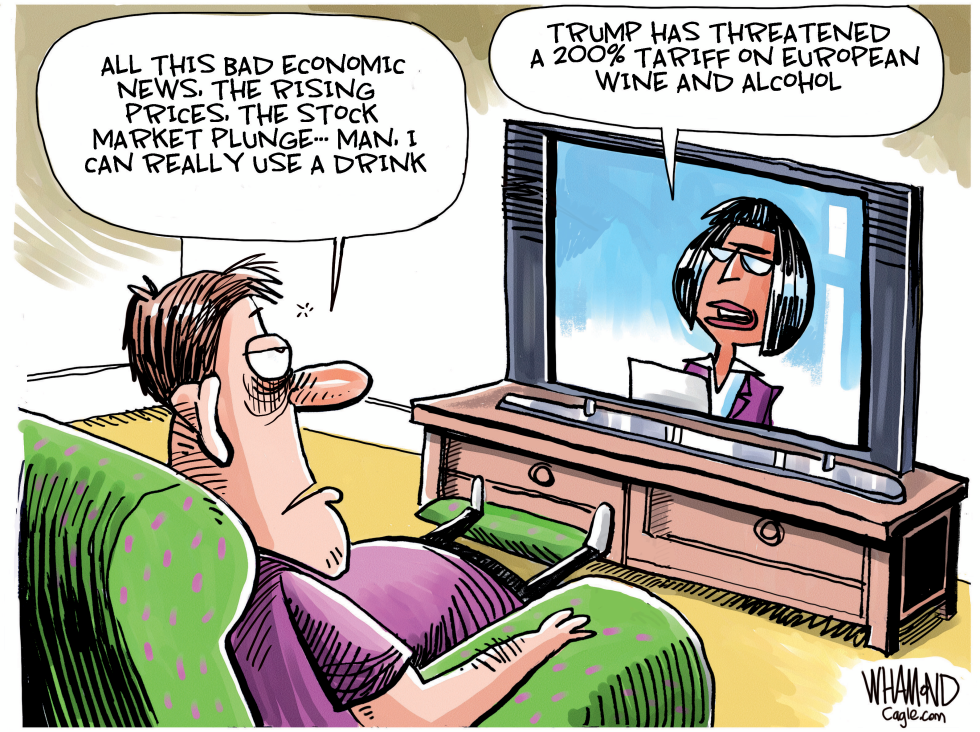
Dave Whamond's cartoon captures the irony of Trump alcohol tariffs, where a 200 percent tariff on European wine and alcohol threatens to escalate trade wars with the EU. Amid bad economic news like rising prices and stock market plunge, a weary viewer laments needing a drink, underscoring how such policies drive us to drink. Investors shaken by potential inflation and retaliatory tariffs on US whiskey and bourbon face higher costs for alcoholic beverages. The image highlights consumer burdens in this economy, blending humor with critique of trade escalation.
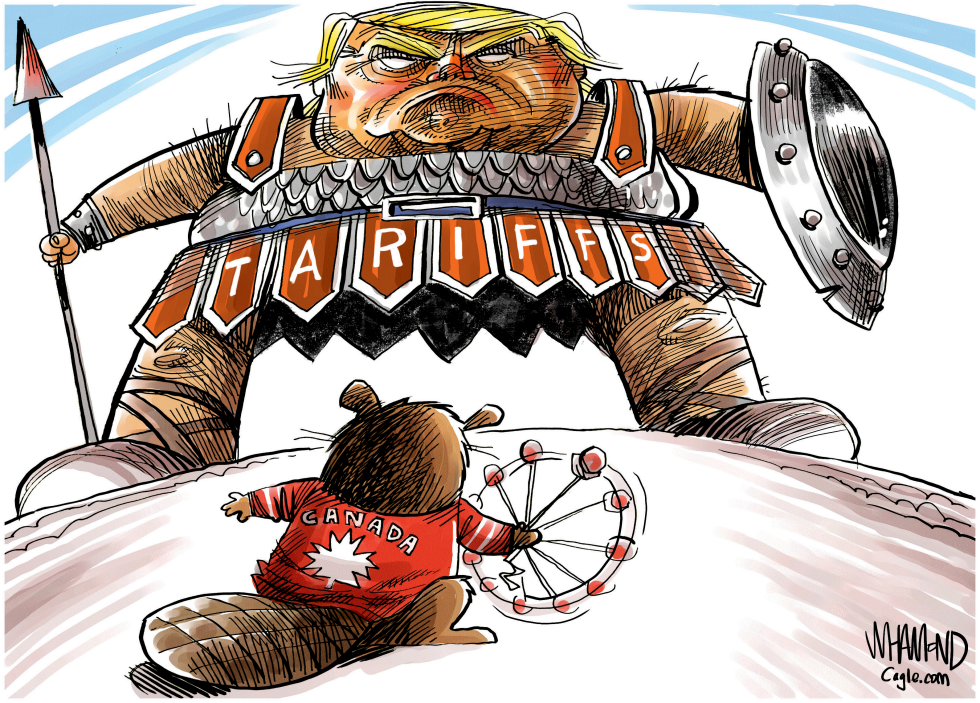
The cartoon shows President Donald Trump depicted as a massive armored warrior labeled TARIFFS standing over a small beaver representing Canada. The beaver holds a small wheel while Trump grips a spear and shield. This imagery responds to the March 2025 announcement of U.S. tariffs on Canadian goods. The visual draws on the David versus Goliath story to illustrate the economic pressure on the smaller trading partner. Publication occurred as markets reacted to the policy shift and concerns grew over rising consumer costs.