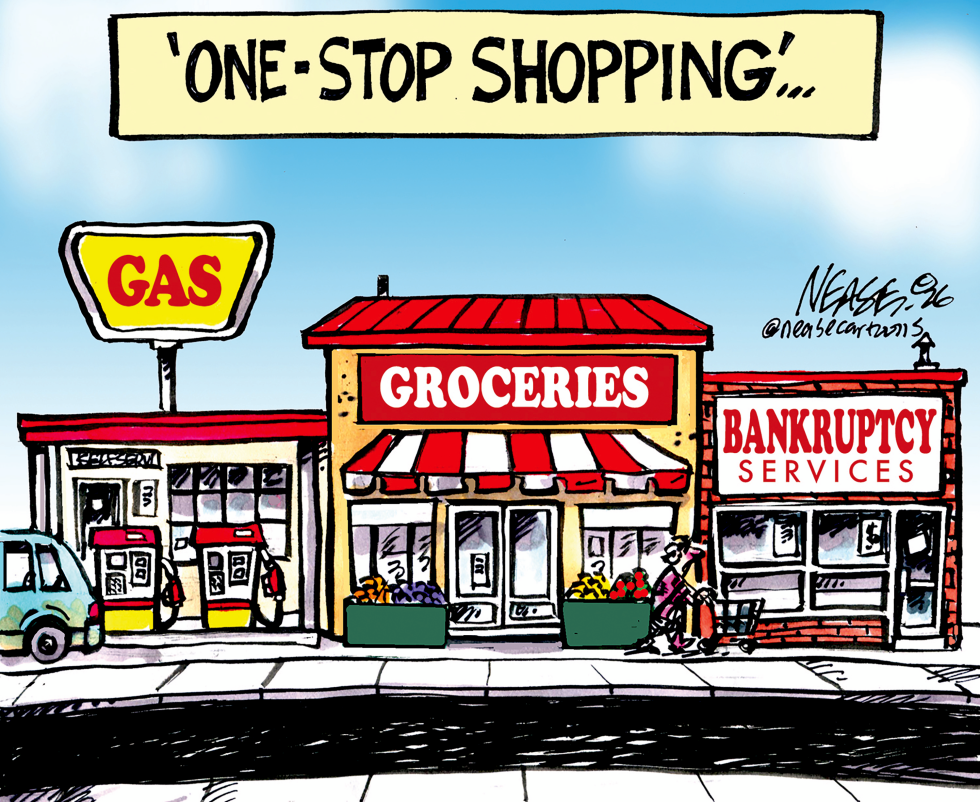
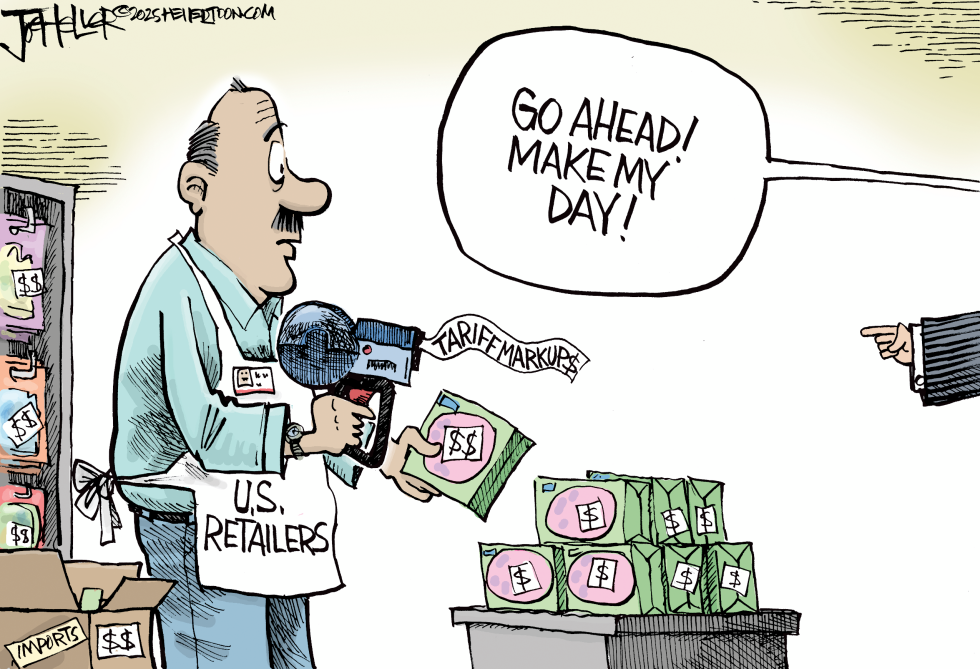
Consumers face persistent inflation that raises the cost of essentials such as fuel and food. A strip mall now groups gas, groceries and bankruptcy services together, highlighting how household budgets stretch thin. The editorial position criticizes the normalization of bankruptcy as a routine stop in everyday commerce.
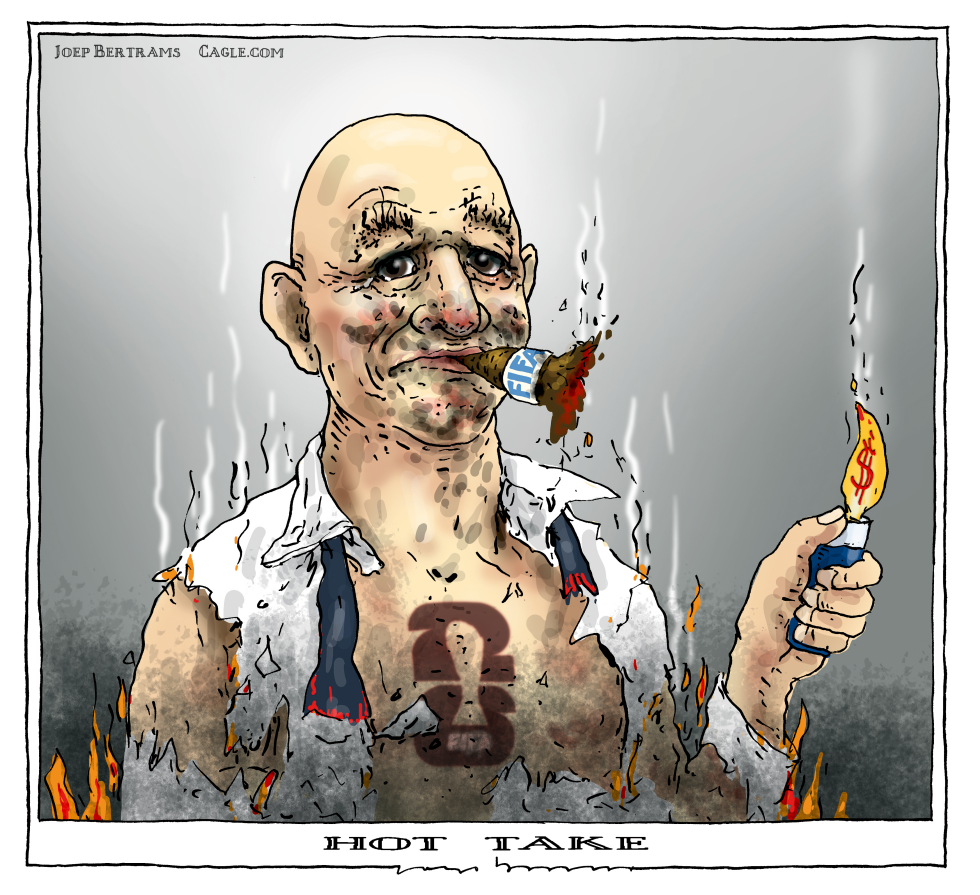
Elon Musk's public commentary on cryptocurrency markets continues to drive price swings and investor attention in 2026. His recent statements coincide with renewed volatility in Bitcoin trading. The editorial takes a critical view of how such high-profile interventions amplify market instability rather than stabilize it.
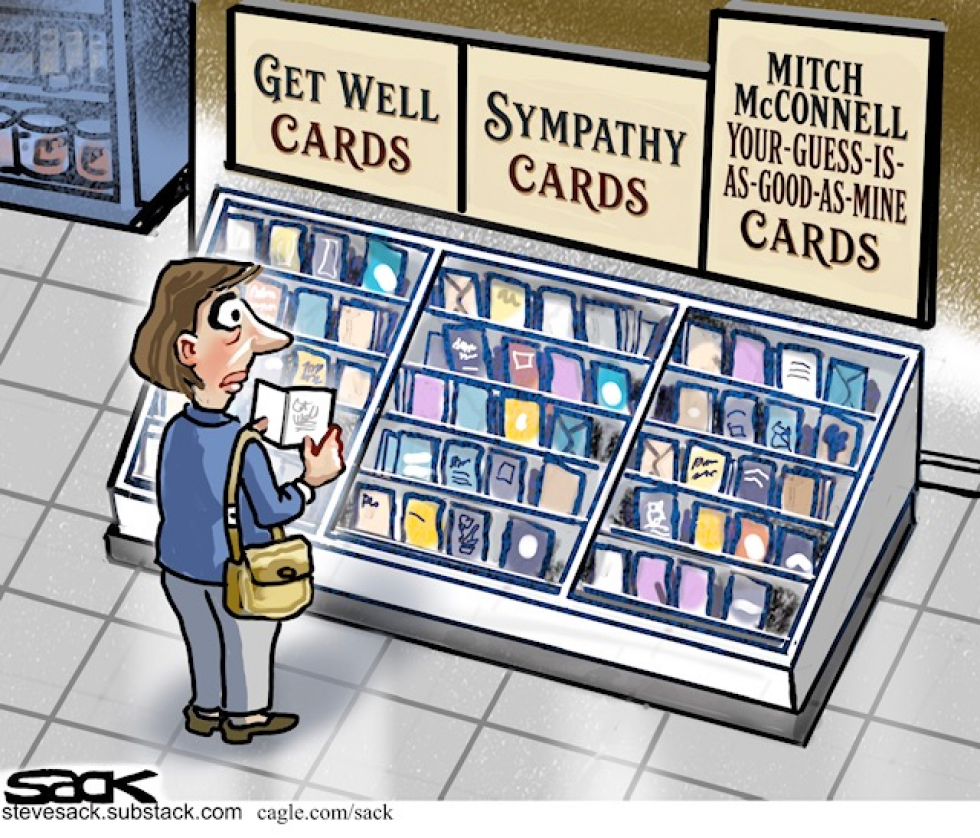
Questions about Mitch McConnell's health and future in Senate leadership have persisted into mid-2026. The Kentucky Republican has faced repeated absences and public episodes that fuel speculation about his capacity to continue. Colleagues in both parties watch closely because his position influences committee assignments and floor strategy. The uncertainty affects legislative timelines on appropriations and judicial matters. The piece argues that the situation leaves observers with little reliable information and treats the ambiguity itself as the central story.
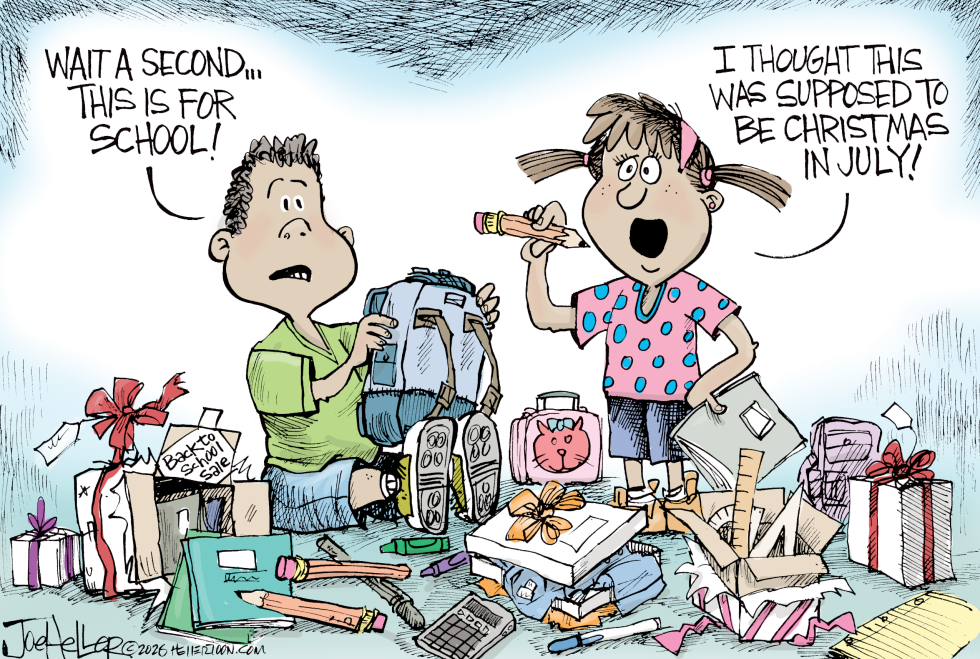
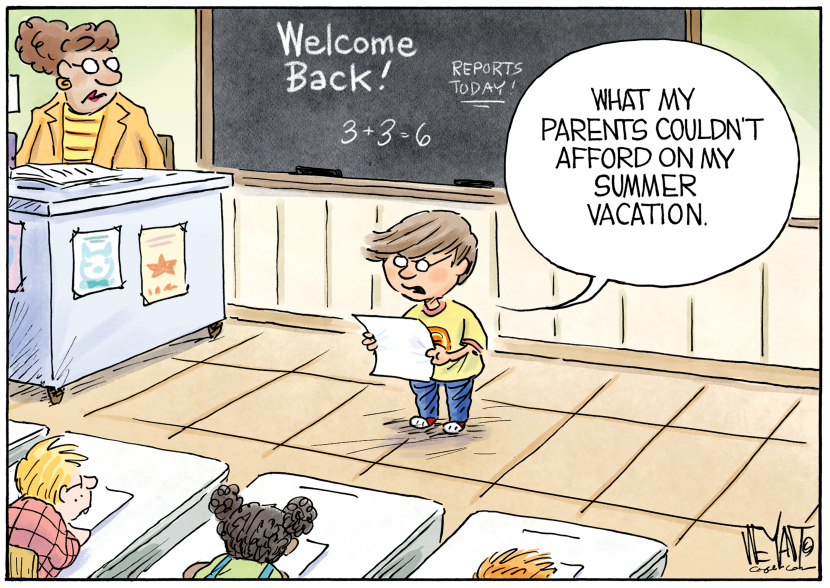
Retailers launched back-to-school promotions in late July, prompting families to stock up on supplies weeks ahead of the academic calendar. The timing overlaps with summer clearance events that mimic holiday marketing tactics. Parents and students face added pressure to buy early amid rising costs for essentials. The piece highlights how commercial calendars compress traditional shopping seasons and shift family routines.
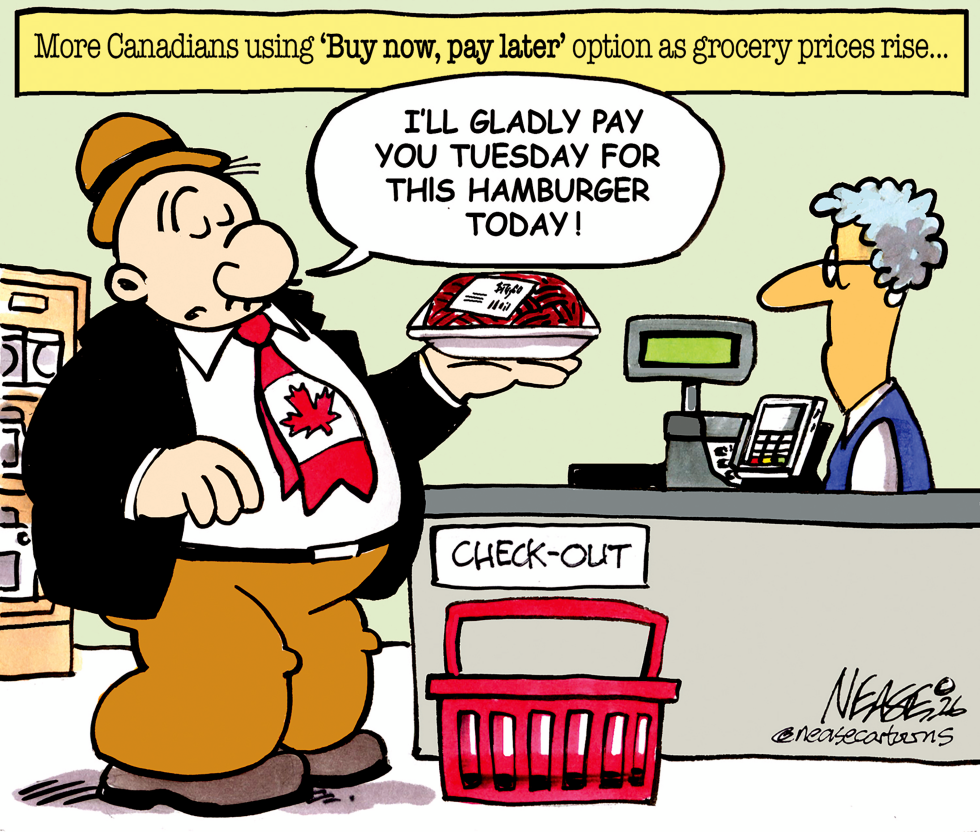
A cartoon published July 8, 2026, shows a Canadian shopper at a grocery checkout counter holding a package of hamburger meat while declaring he will gladly pay Tuesday for the item today. The scene references the classic Wimpy line and highlights growing use of buy now pay later services as grocery prices continue to climb in Canada.
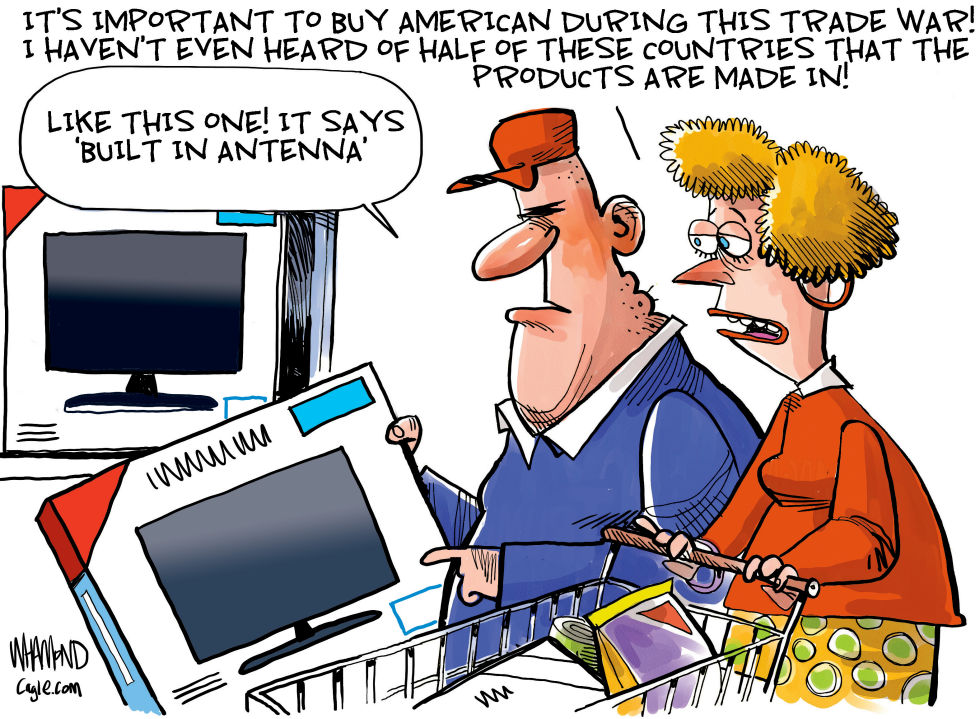
A couple shops for electronics in a store as the man points to a television box labeled built in antenna while declaring support for American goods during an ongoing trade war. The woman reacts with surprise at the label. Large text overhead stresses the importance of domestic purchases because many product origins remain unfamiliar. The scene reflects consumer reactions to tariffs and protectionist policies active in late 2025.
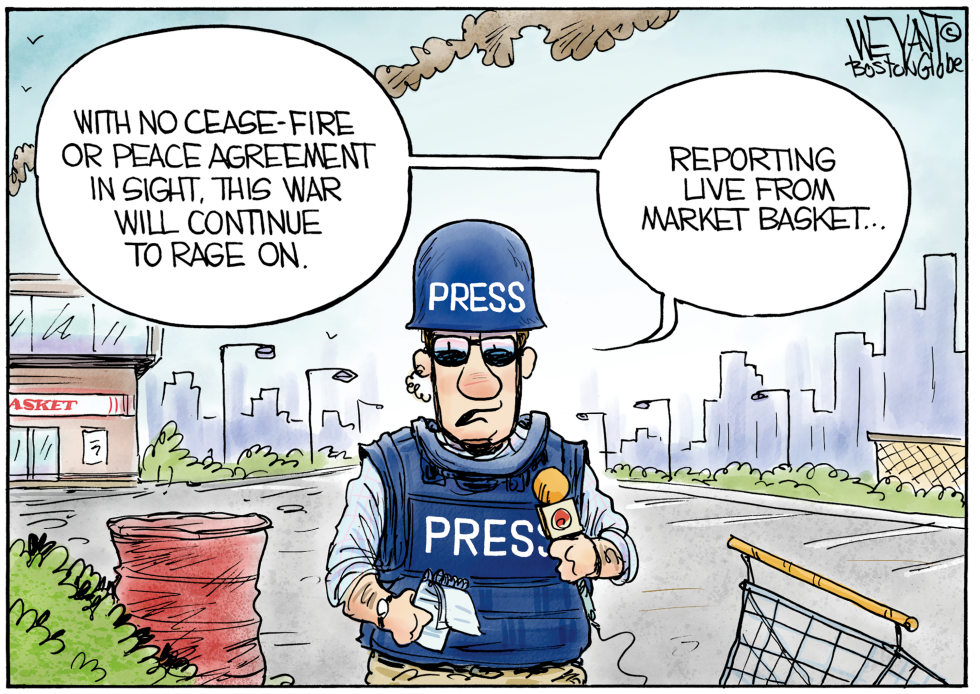
A Boston Globe cartoon shows a reporter in press armor broadcasting live from a Market Basket store. Speech bubbles frame the supermarket scene as an unresolved war with no cease-fire in sight. The image responds to ongoing tensions over ownership, supply chains, and rising prices at the New England chain during August 2025.
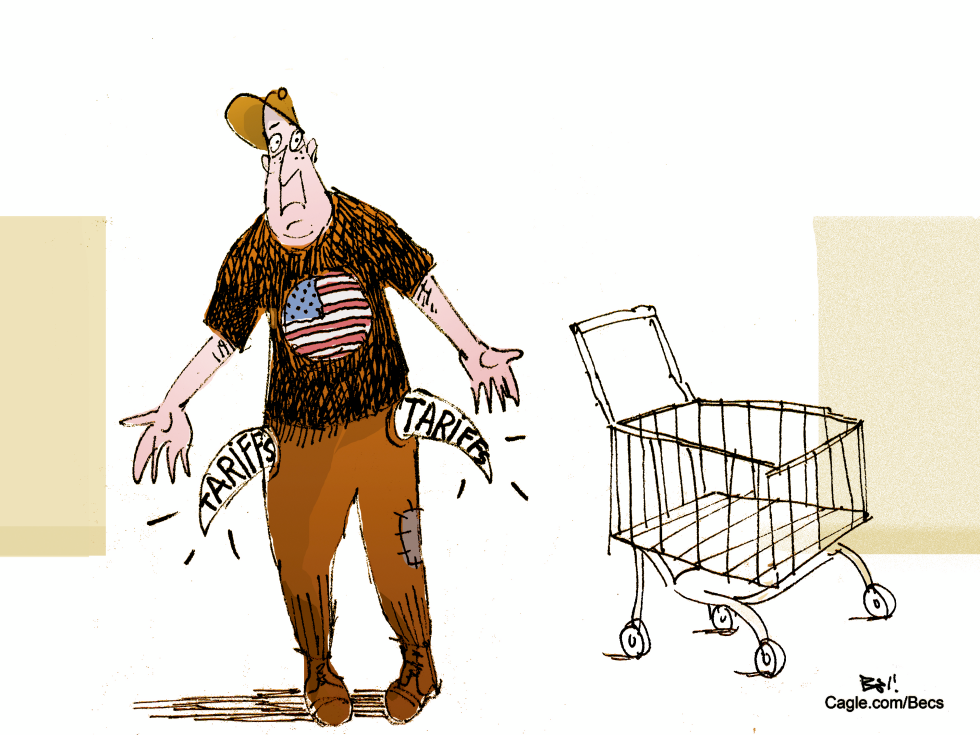
A figure wearing a tattered American flag shirt and brown pants labeled tariffs stands with empty hands next to an empty shopping cart. The scene responds to 2025 tariff increases under the Trump administration that have contributed to higher consumer prices and reduced purchasing power. The image highlights the direct effect on everyday Americans facing inflation and limited spending ability.
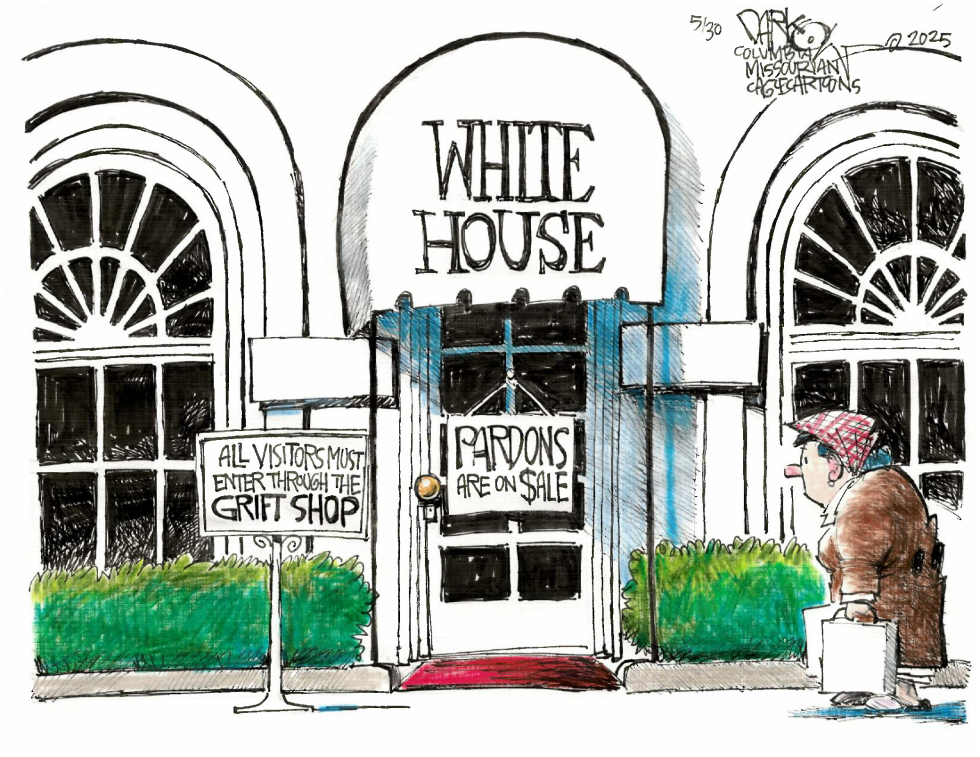
On May 29, 2025, John Darkow's cartoon portrays the White House as a commercial operation where pardons are sold and all visitors must pass through a grift shop. The drawing responds to ongoing concerns about monetization of presidential powers during the Trump administration. A figure carrying a briefcase approaches the entrance beneath signs advertising pardons for sale.
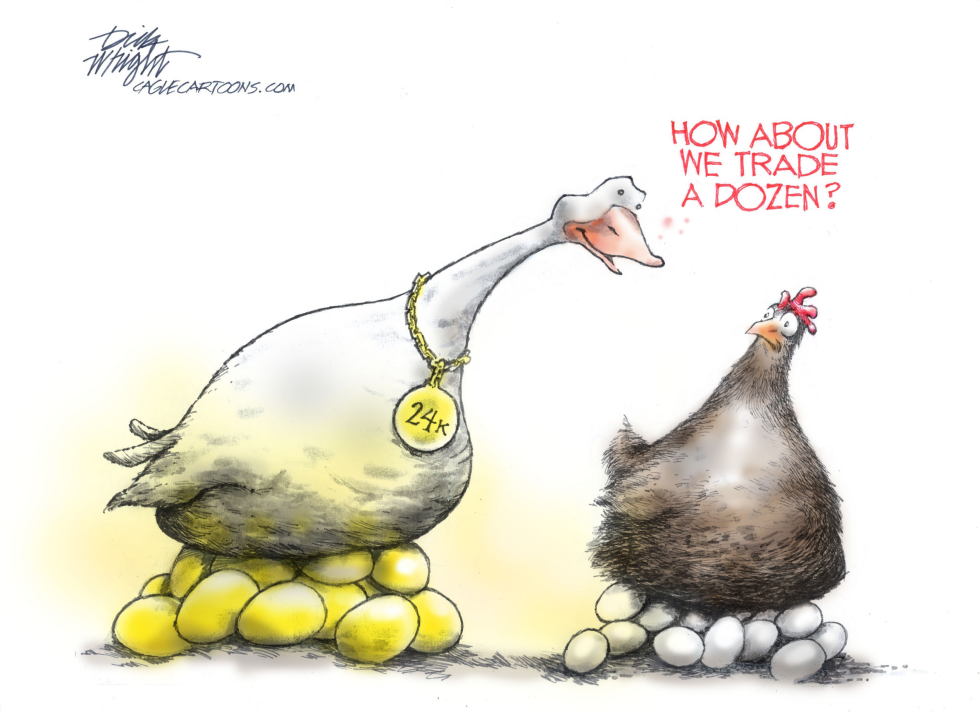
A goose labeled 24k stands atop a pile of yellow eggs and offers to trade a dozen with a chicken perched on white eggs. The exchange highlights ongoing egg shortages tied to bird flu culls and production losses reported in early 2025.