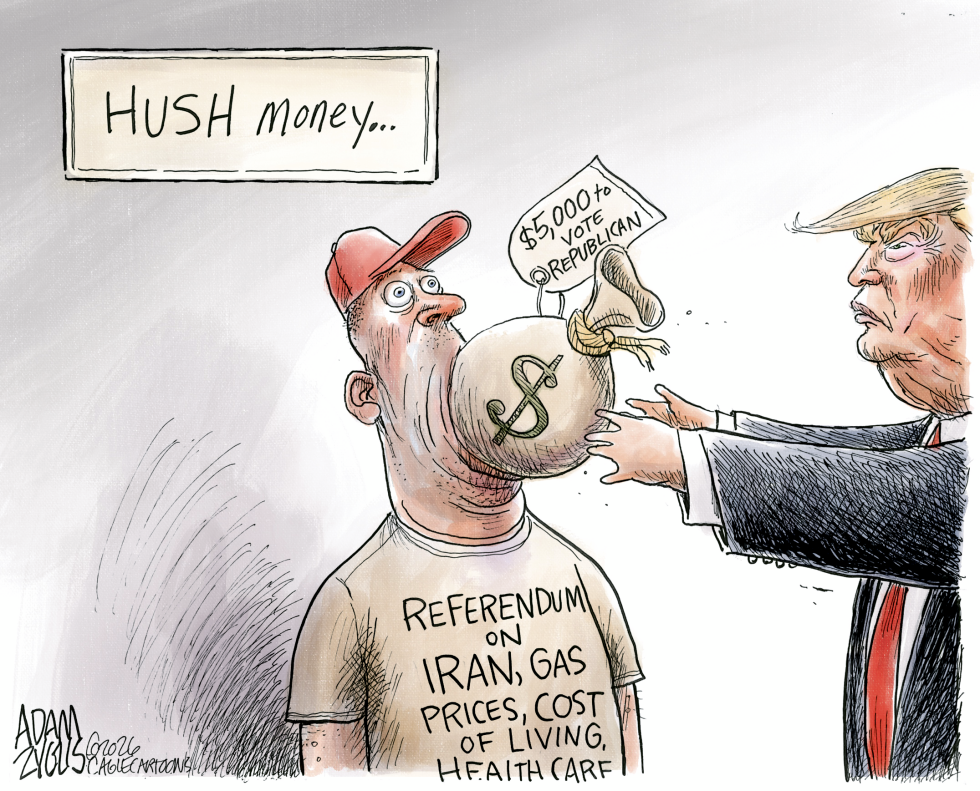
The cartoon shows Donald Trump handing a large bag of cash labeled as hush money to a man in a referendum shirt covering Iran, gas prices, cost of living and health care. A tag on the bag promises $5,000 to vote Republican. The scene responds to ongoing debates over election integrity and foreign policy issues involving Iran as of September 2026. It uses the visual metaphor of a bribe to comment on alleged attempts to influence voter priorities through financial incentives.
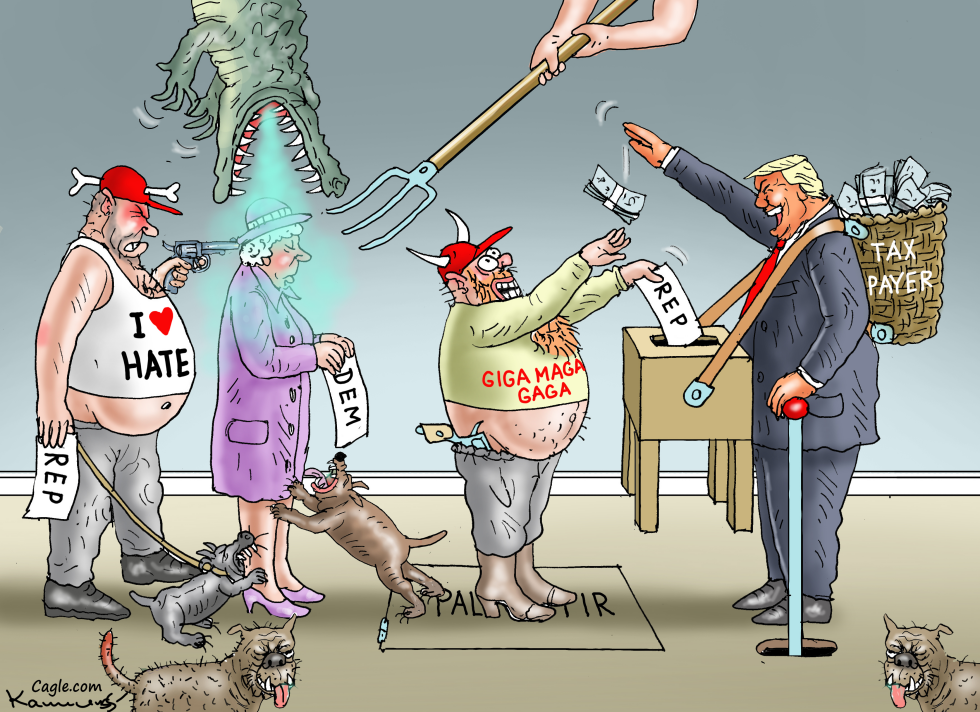
As the 2026 midterm elections approach, former President Trump has positioned himself as a central force in Republican campaigns, directing resources and mobilizing supporters. The cartoon highlights the use of taxpayer money in these efforts and the intense partisan divide, with Democrats portrayed as under attack. It takes the position that such involvement risks undermining fair electoral processes.
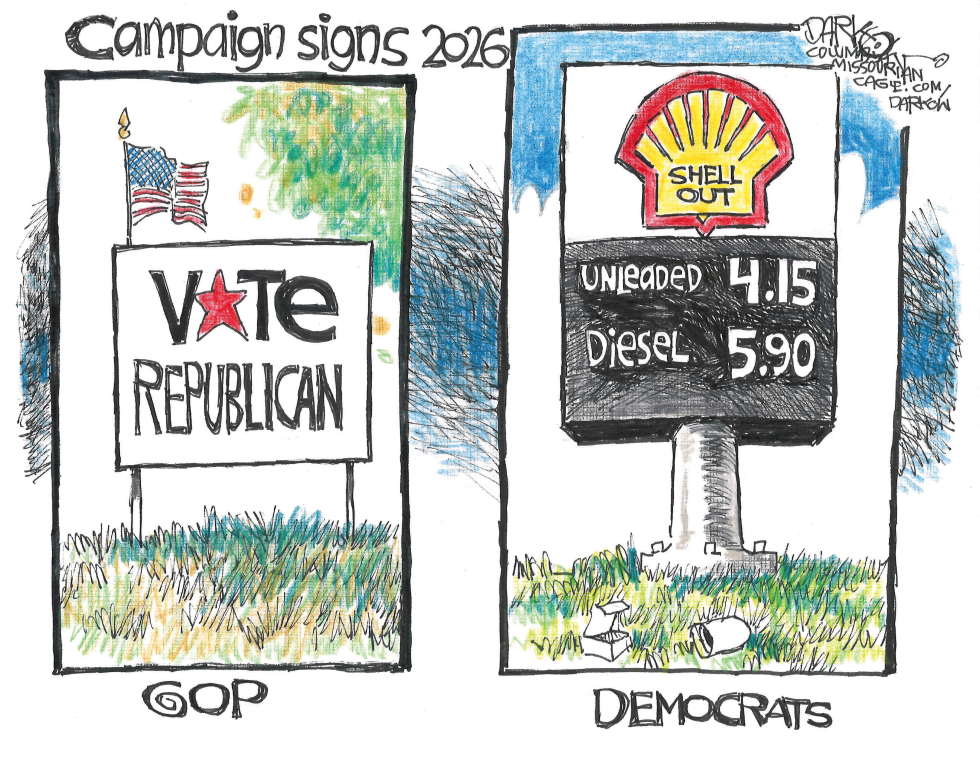
As the 2026 midterm campaigns intensify, Democrats confront voter frustration over elevated gasoline and diesel prices at the pump. The Shell station sign reading Shell Out with unleaded at $4.15 and diesel at $5.90 underscores how economic pressures can overshadow traditional political messaging. Republicans benefit from straightforward campaign signage while Democrats appear tied to the cost increases. The cartoon argues that fuel prices serve as a more potent electoral signal than yard signs for one party.
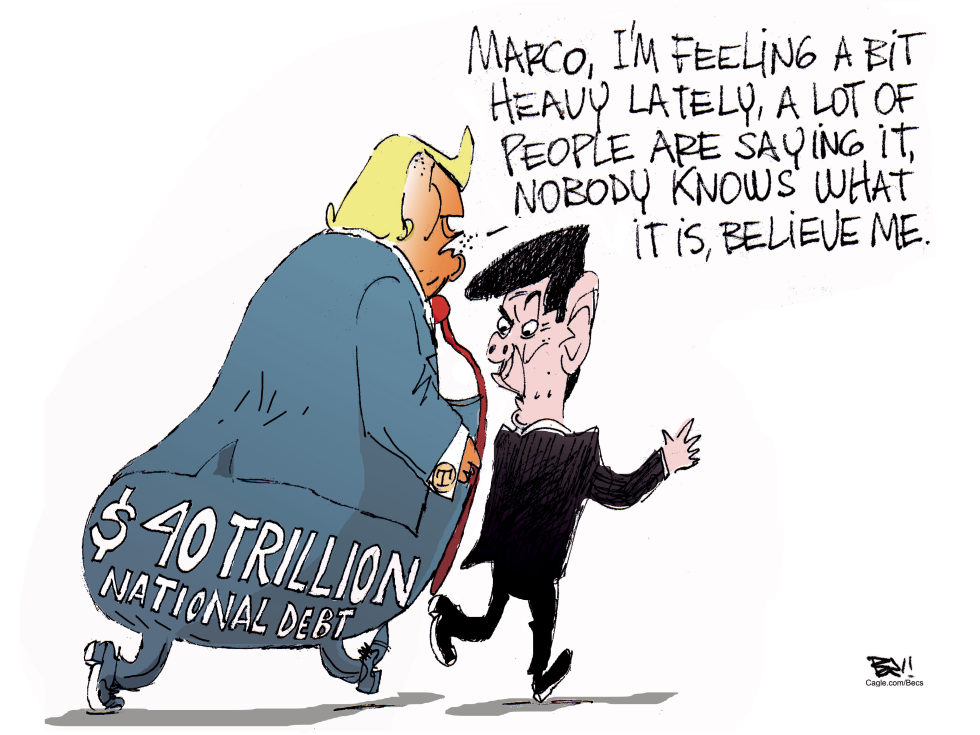
President Trump discussed the national debt with Senator Marco Rubio in early September 2026. The conversation highlighted the $40 trillion figure and public confusion over its scale. The exchange occurs as the administration manages spending priorities and deficit growth. The piece portrays the debt as a personal load that Trump seeks to downplay by blaming external views rather than policy choices.
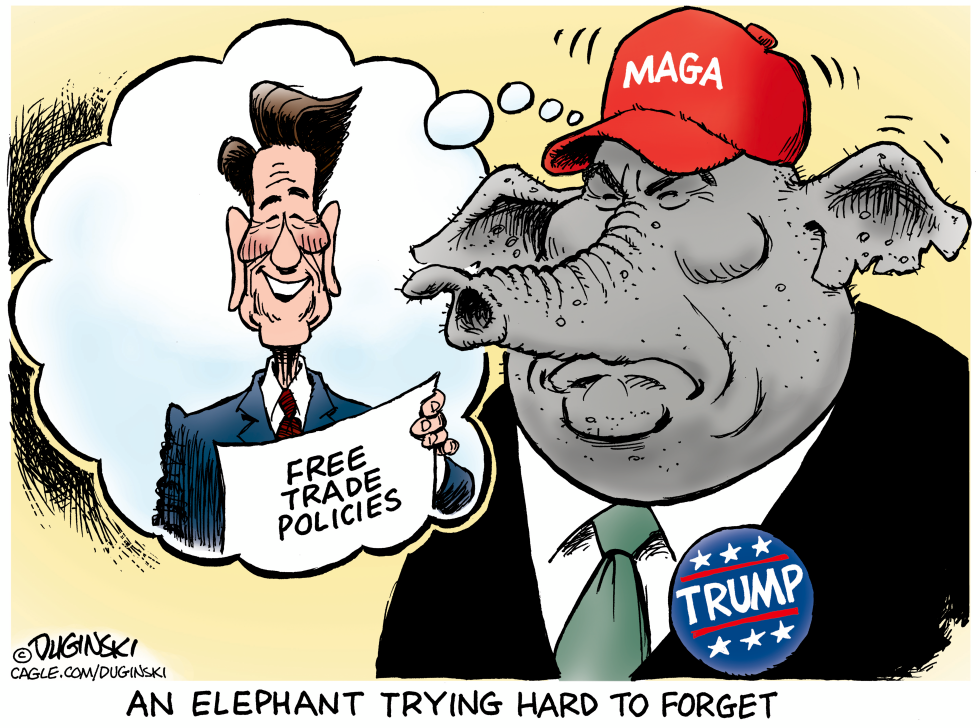
Republicans under Donald Trump have moved away from Ronald Reagan's free trade advocacy toward protectionist policies. The shift reflects internal party tensions over economic strategy and global engagement. The cartoon criticizes the GOP for abandoning a core Reagan principle in favor of current leadership priorities.
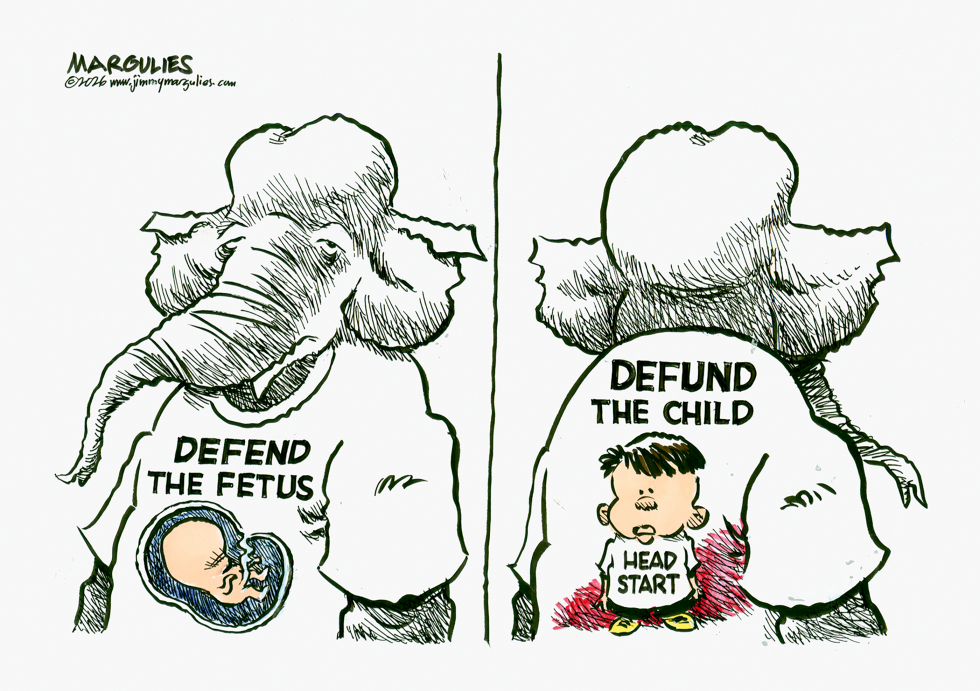
Republicans continue to champion fetal protections while proposing cuts to early childhood programs such as Head Start. The divide highlights ongoing debates over when government support for life begins and ends. The cartoon criticizes the inconsistency in prioritizing the unborn over living children in need of assistance.
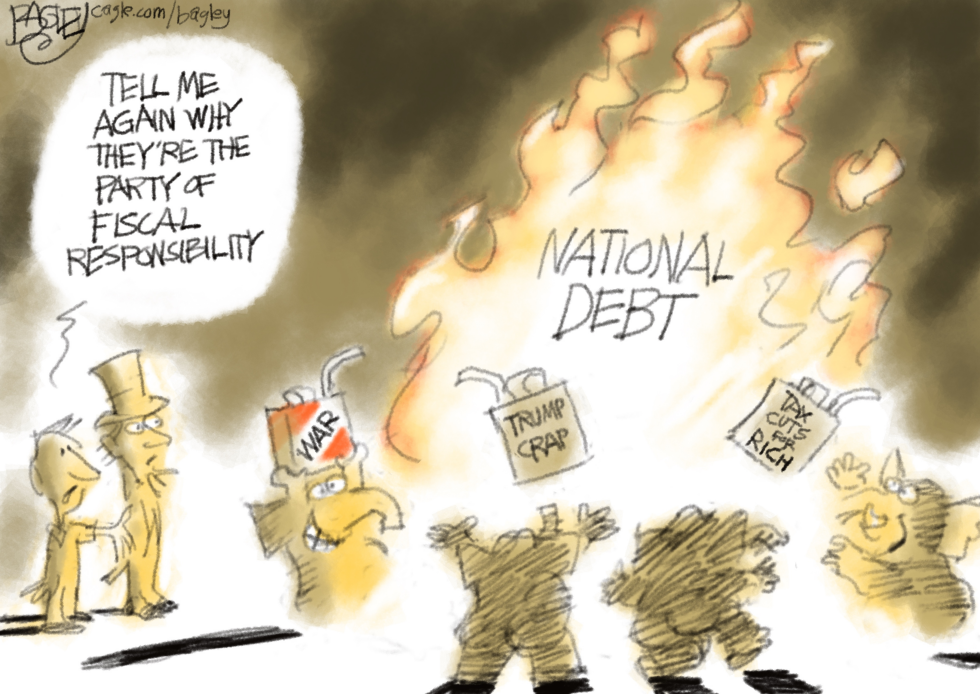
Republicans continue to promote themselves as the party of fiscal responsibility even as national debt rises sharply from sustained war spending and tax cuts favoring the wealthy. The editorial takes the position that these policies directly contradict the fiscal responsibility label.
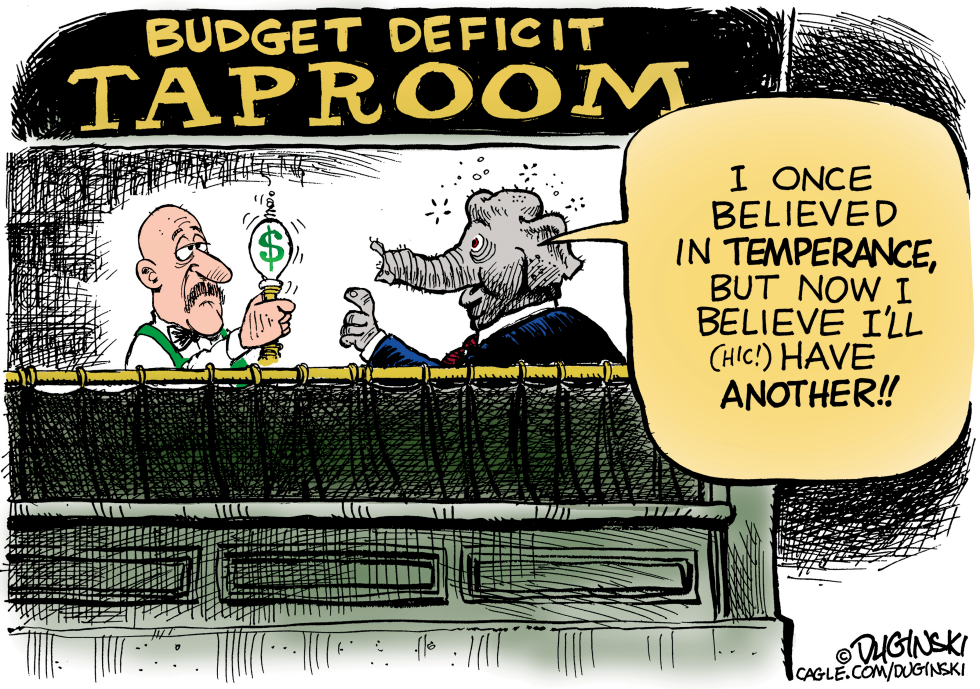
Republicans have long criticized deficit spending under Democratic administrations yet continue to support policies that expand federal borrowing when in power. The pattern reflects ongoing tension between stated fiscal restraint and actual legislative priorities on taxes and spending. The cartoon argues that the party has abandoned earlier commitments to balanced budgets in favor of repeated deficit increases.
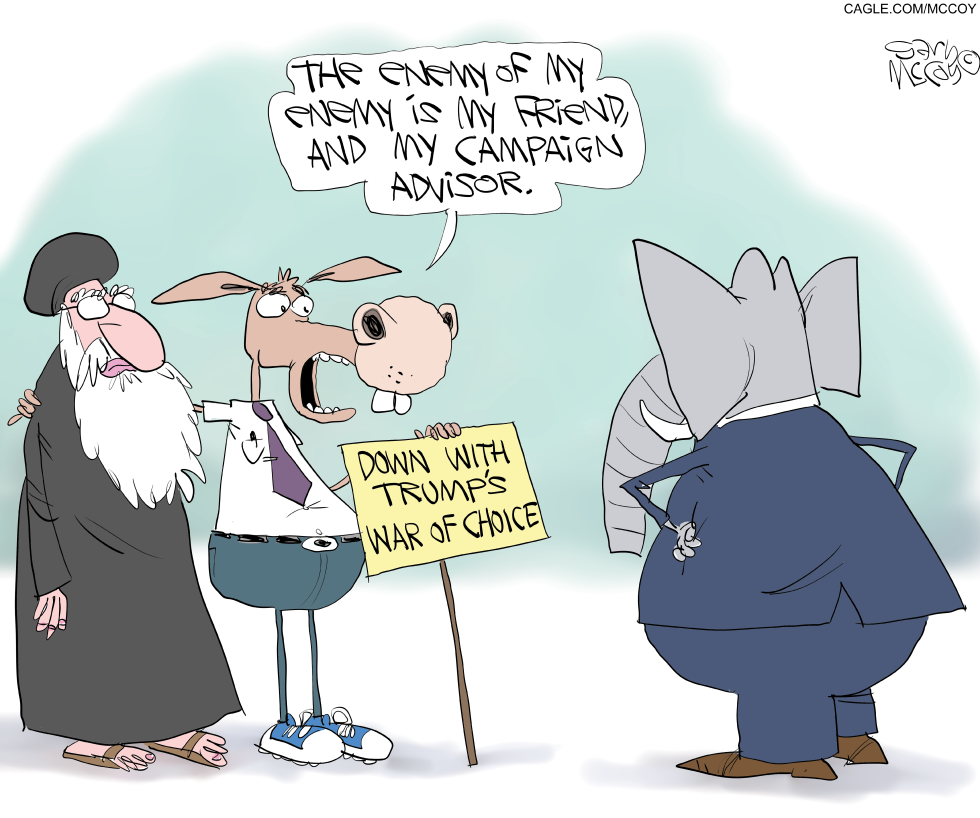
Democrats have signaled opposition to potential Trump administration actions toward Iran, framing them as unnecessary conflict. The alliance draws on shared criticism of U.S. policy in the Middle East. This dynamic highlights partisan divides over foreign engagement and raises questions about domestic political strategy. The piece portrays the partnership as opportunistic and shortsighted.
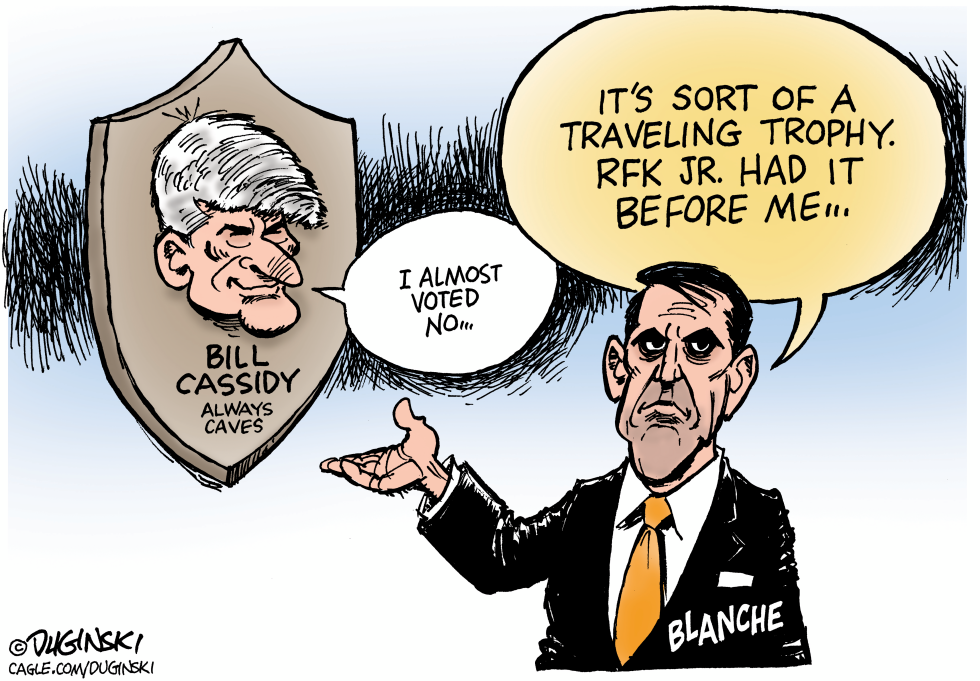
Todd Blanche, recently confirmed to a senior administration post, has mounted a shield bearing Sen. Bill Cassidy\'s likeness on his office wall. The Louisiana Republican, long viewed as a potential swing vote, backed the nomination despite earlier signals of hesitation. RFK Jr. reportedly displayed the same item during his own tenure. The arrangement underscores ongoing tensions within the GOP over loyalty tests and confirmation battles. The piece portrays Cassidy\'s support as another instance of yielding under pressure rather than a principled stand.
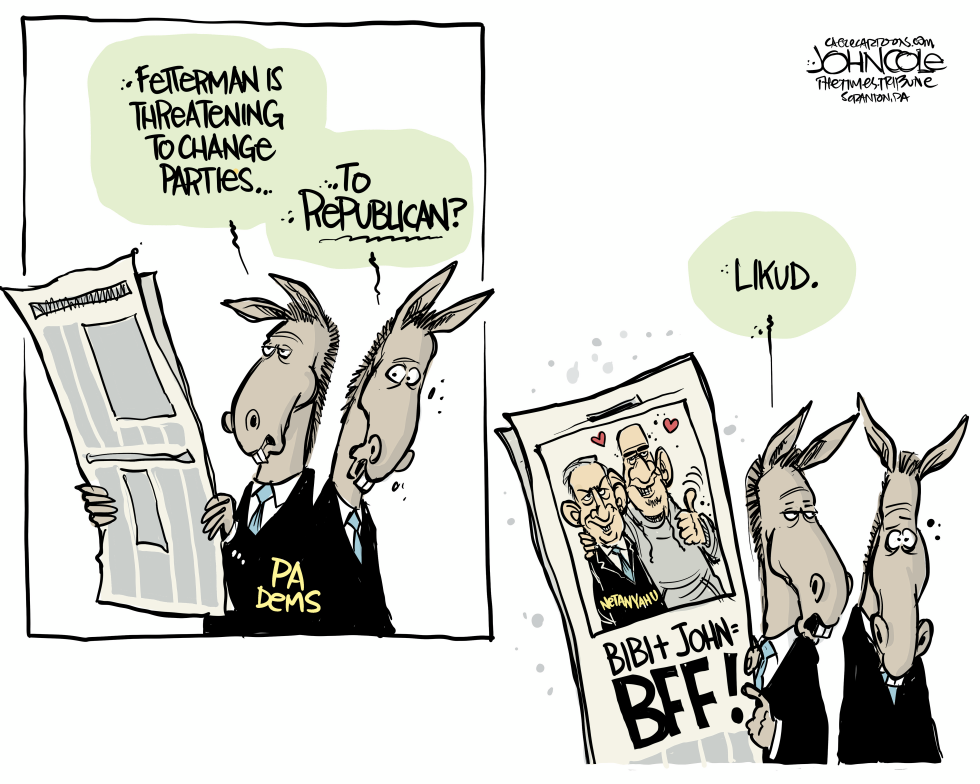
Senator John Fetterman has signaled a possible party switch that has Pennsylvania Democrats scrambling. Speculation centered on a Republican move until the senator's close ties to Israeli Prime Minister Benjamin Netanyahu and the Likud party surfaced instead. The development highlights ongoing tensions within the Democratic coalition over foreign policy alignments and personal political trajectories.
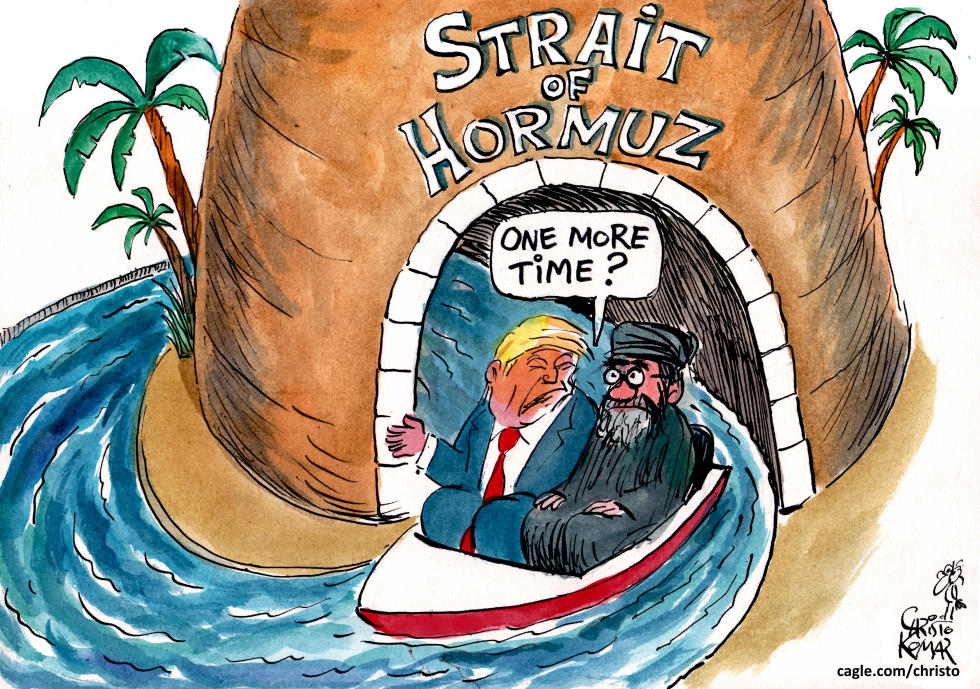
On August 5 2026 renewed friction over shipping lanes in the Strait of Hormuz draws attention as former President Donald Trump appears alongside Iran's Supreme Leader in a symbolic return to the chokepoint. The episode underscores ongoing US-Iran friction over energy exports and naval presence. The piece portrays the pair repeating a risky transit that highlights persistent strategic vulnerabilities in the Persian Gulf.
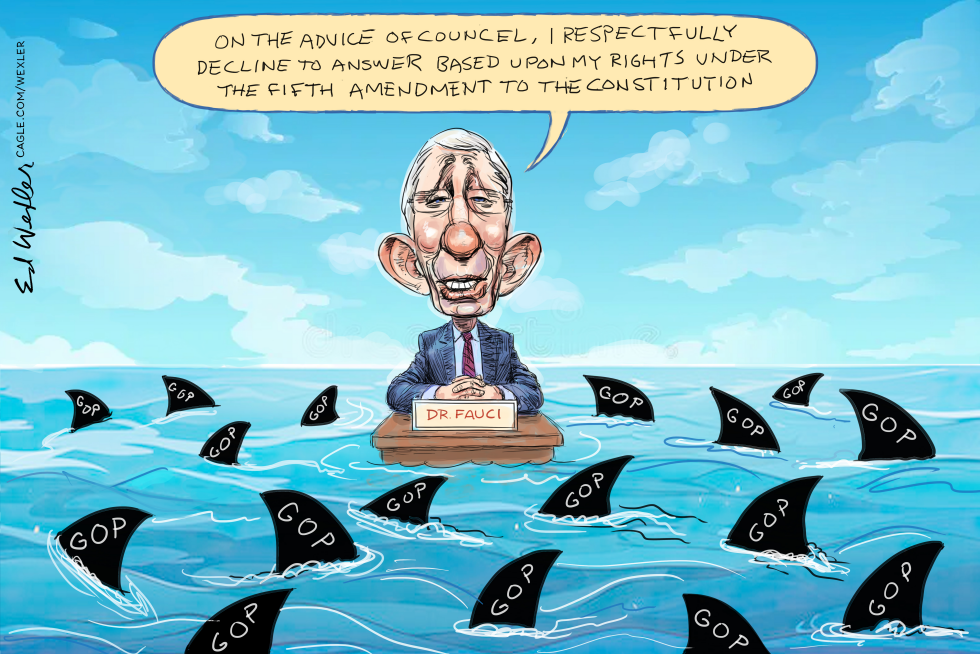
Dr. Anthony Fauci declined to answer questions at a House hearing, invoking his Fifth Amendment protections. The piece responds to Republican-led scrutiny of his role in pandemic-era public health decisions. It depicts the proceeding as a hostile setting rather than a neutral fact-finding exercise.
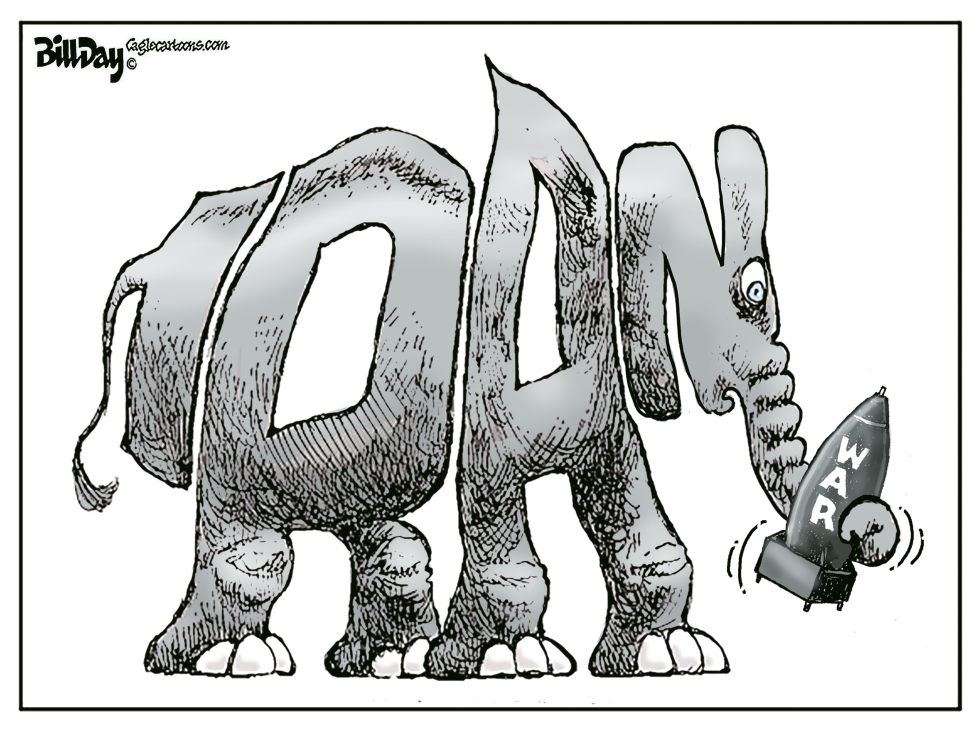
The Republican Party continues to navigate internal divisions over foreign policy and military engagement. Recent statements from party leaders have emphasized strength abroad while avoiding specific commitments on ongoing global conflicts. The piece portrays the GOP elephant as directly handling a war bomb, underscoring the risks of escalating rhetoric. It highlights how party identity remains tied to assertive defense postures. The editorial position criticizes the embrace of war imagery as potentially reckless.
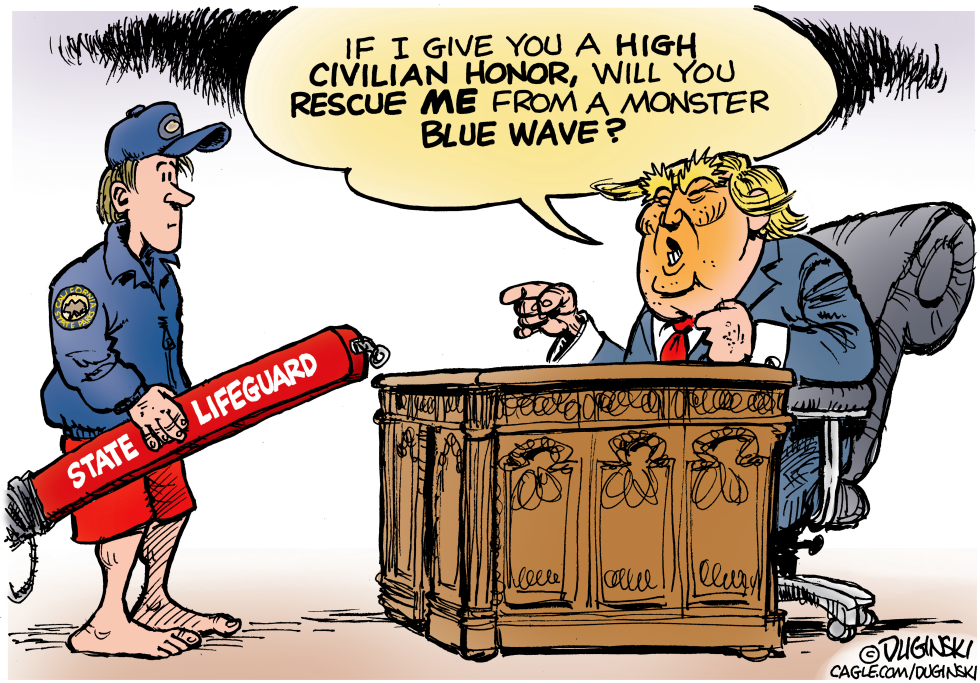
Donald Trump appealed to a California state lifeguard for rescue from an anticipated Democratic electoral surge, offering a high civilian honor in return. The request highlights concerns over midterm or future election outcomes. The piece portrays the overture as a desperate bid for political survival.