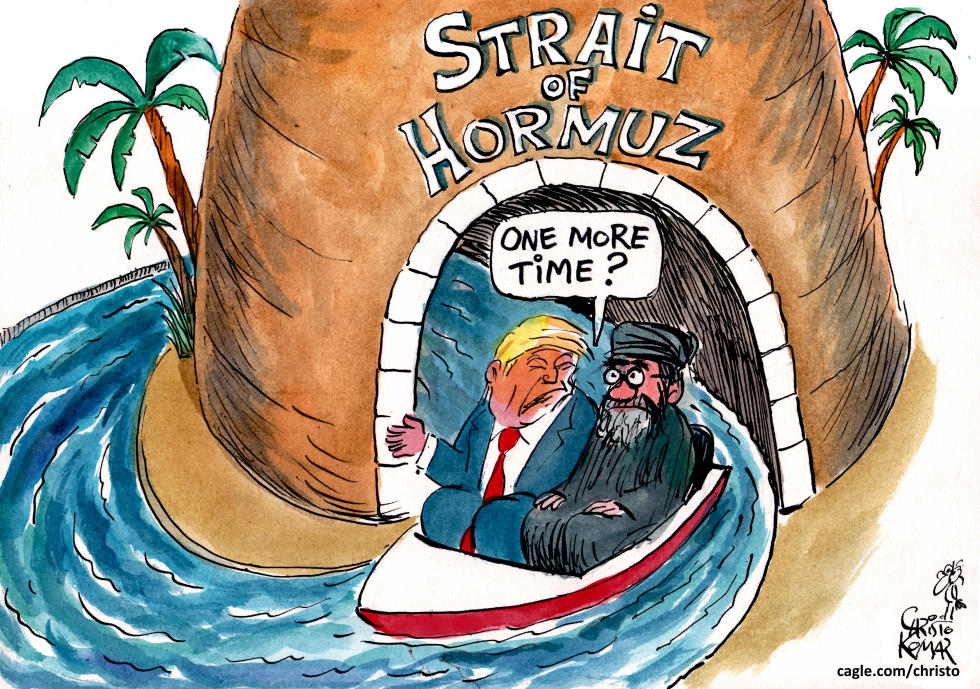
On August 5 2026 renewed friction over shipping lanes in the Strait of Hormuz draws attention as former President Donald Trump appears alongside Iran's Supreme Leader in a symbolic return to the chokepoint. The episode underscores ongoing US-Iran friction over energy exports and naval presence. The piece portrays the pair repeating a risky transit that highlights persistent strategic vulnerabilities in the Persian Gulf.
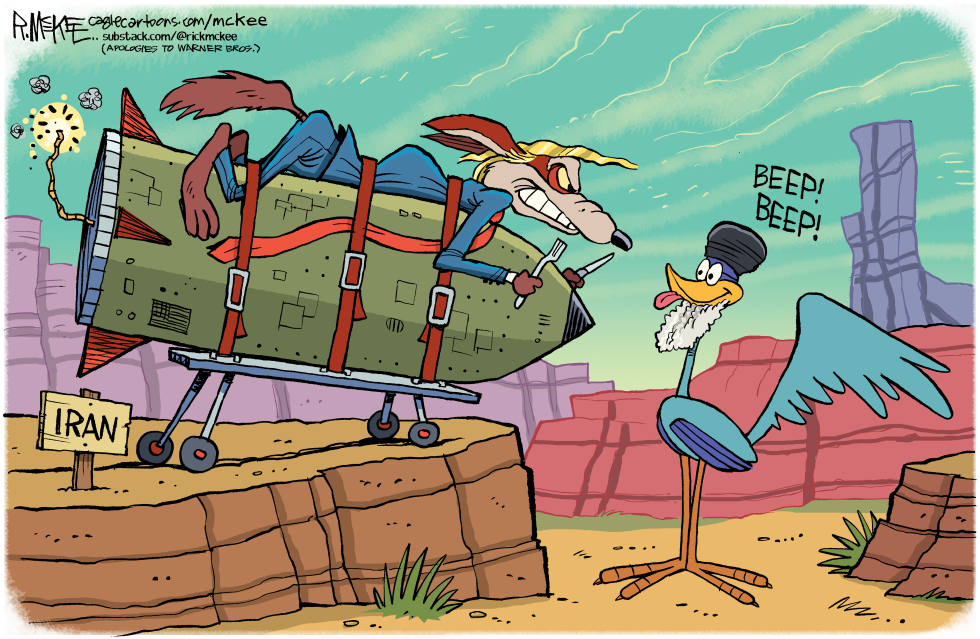
Donald Trump has renewed pressure on Iran through statements and policy signals in recent weeks. The moves come amid ongoing nuclear concerns and regional instability. The piece argues that such aggressive posturing risks backfiring in ways similar to past miscalculations.
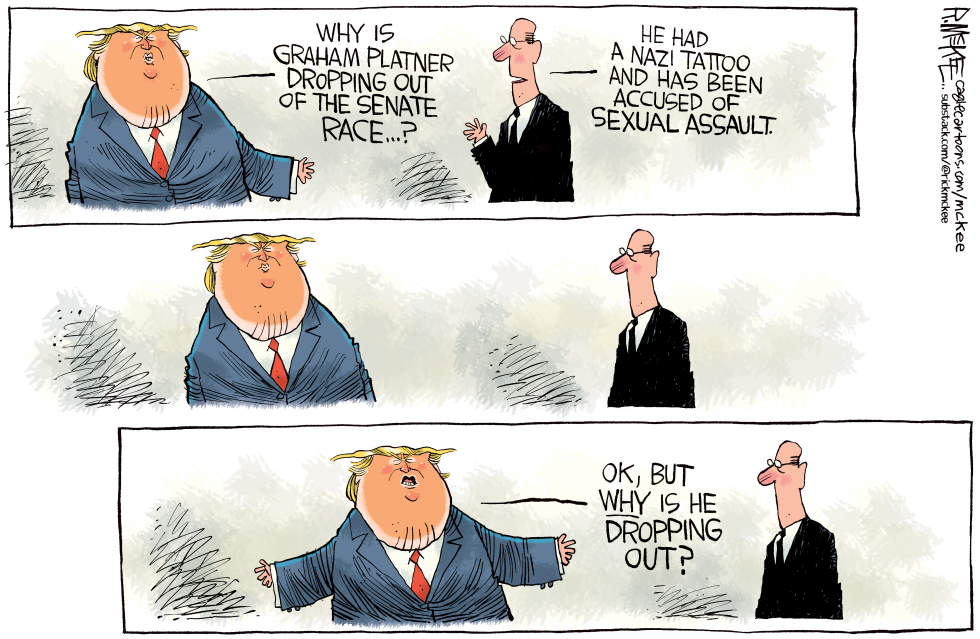
On July 10 2026 Rick McKee depicts Donald Trump questioning an aide about Graham Platner dropping out of a Senate race. The aide cites a Nazi tattoo and sexual assault accusation as reasons. Trump responds by asking again why the candidate is leaving the race. The exchange highlights the former president's focus on the withdrawal itself rather than the underlying controversies. Publication occurs during the 2026 election cycle when candidate viability and scandal impacts remain central topics in Senate contests.
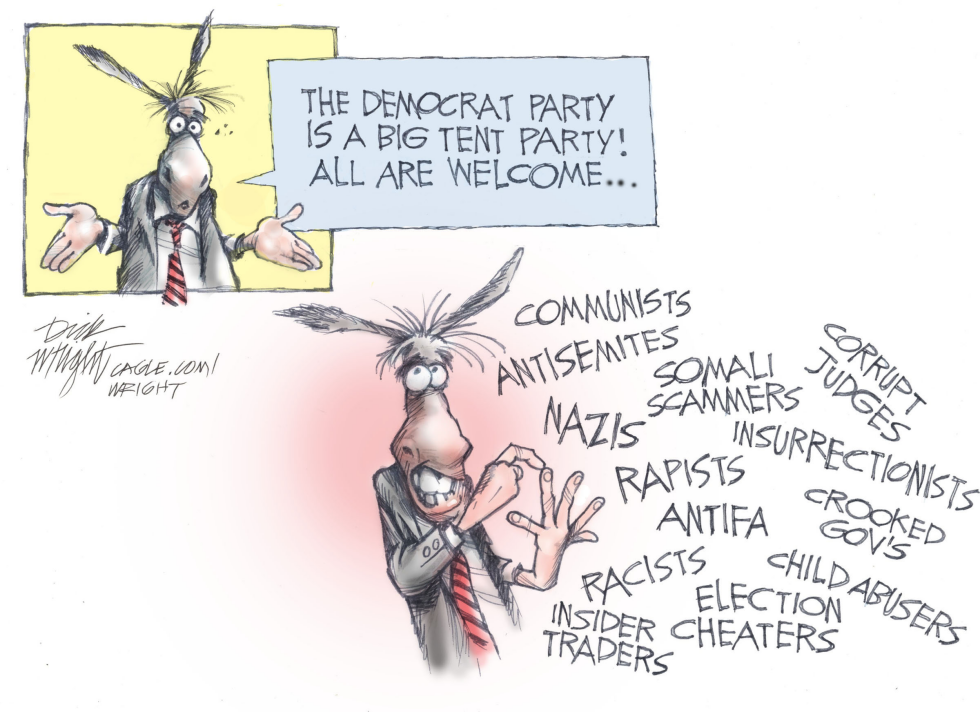
A July 2026 cartoon by Dick Wright depicts the Democrat Party's big tent claim through an inset donkey figure. The main character, also a donkey in a suit, gestures amid a cloud of labels naming groups such as communists, antisemites, Nazis, rapists, Antifa, racists, and election cheaters. The image critiques the party's inclusivity rhetoric by associating it with these categories. Publication occurs amid ongoing partisan debates over party platforms and voter bases.
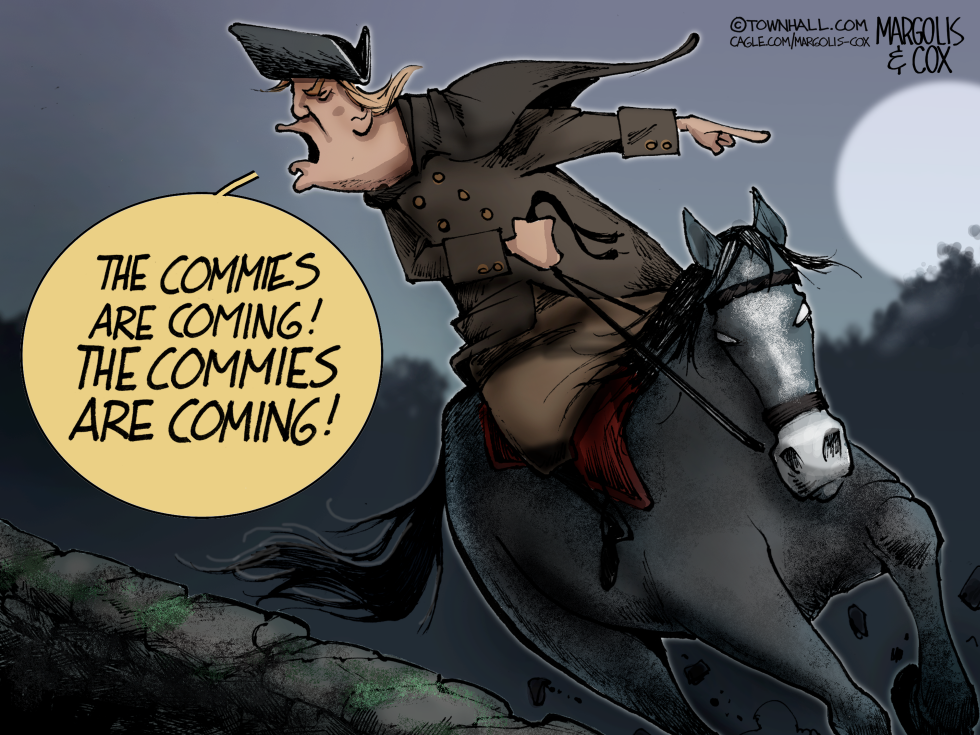
A rider on a dark horse gallops across rocky ground at night under a full moon. The figure, with blonde hair and dark coat, leans forward and points ahead while shouting a repeated warning about communists arriving. The scene draws on a historical ride motif updated to current concerns about communist influence. Publication occurred on July 5, 2026, amid ongoing political debates over foreign policy threats.
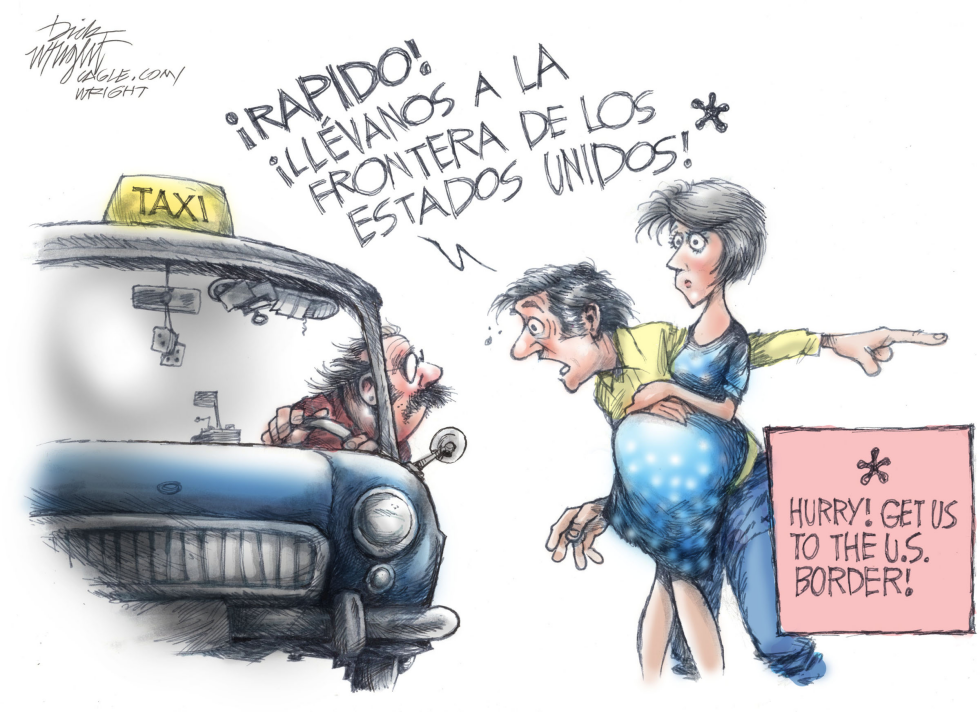
A man carries his pregnant partner toward a waiting taxi while she points urgently toward the US border. The driver leans from the vehicle as Spanish and English text convey a hurried request to reach the frontier. The July 2026 cartoon depicts a common immigration scenario at the southern border where individuals seek quick transport amid enforcement concerns.
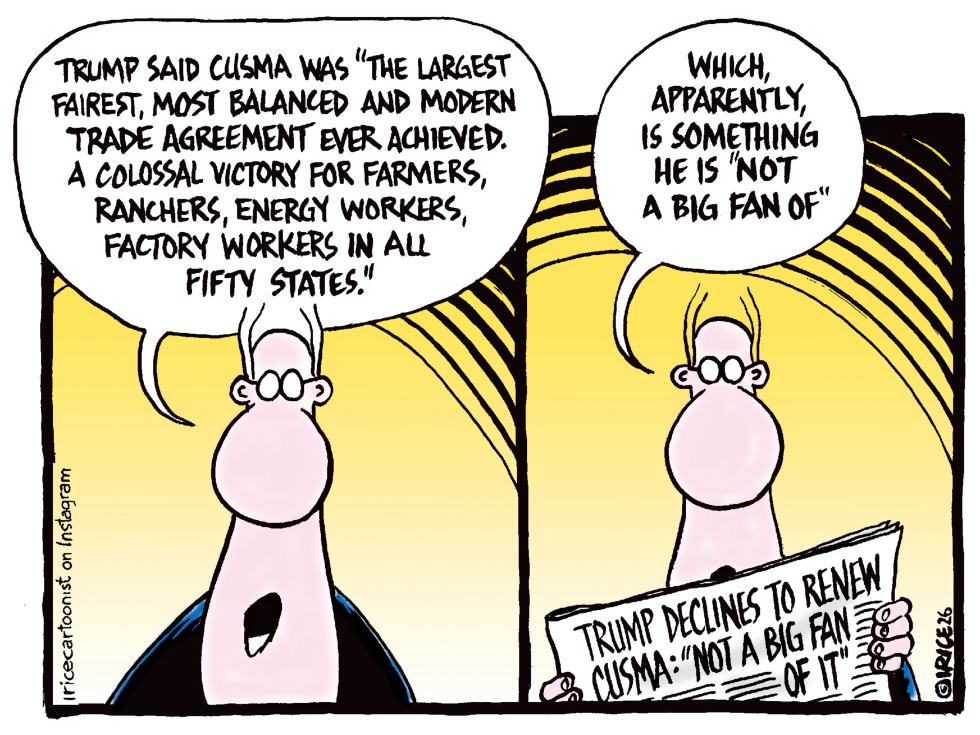
The July 2026 cartoon depicts a figure resembling President Trump in two panels. The left shows praise for CUSMA as the best trade deal. The right shows the same figure reading a newspaper headline about declining to renew it. The visual points to a shift in position on the agreement covering Canada, the US, and Mexico.
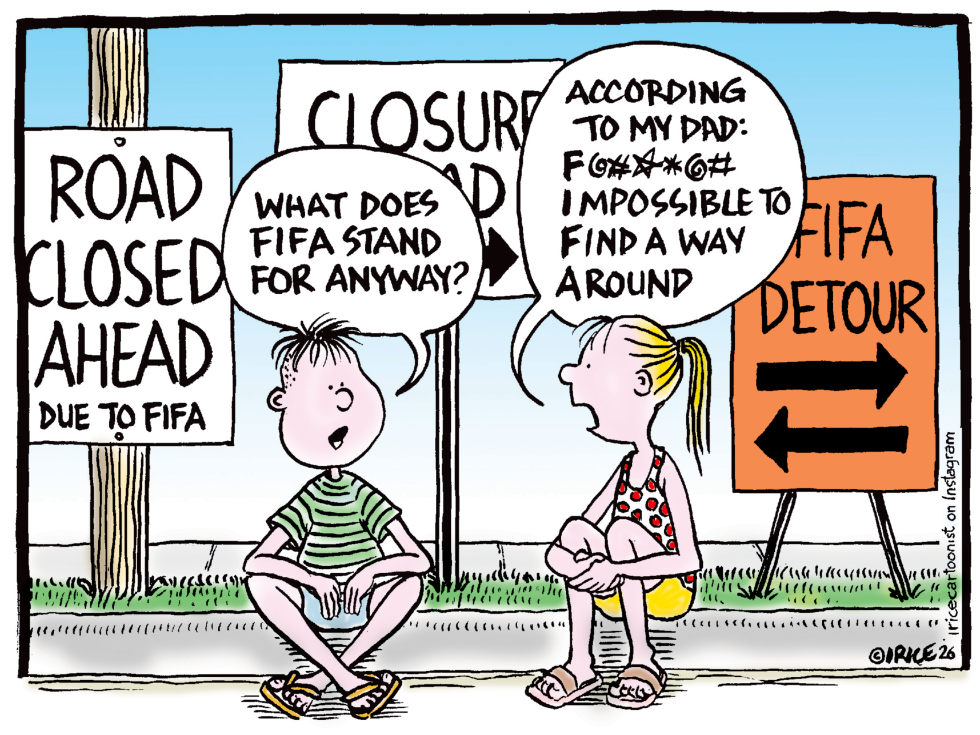
A cartoon shows two children seated beside road closure and detour signs tied to a FIFA event. One child asks what the acronym stands for while the other relays a frustrated, censored remark from a parent about finding alternate routes.
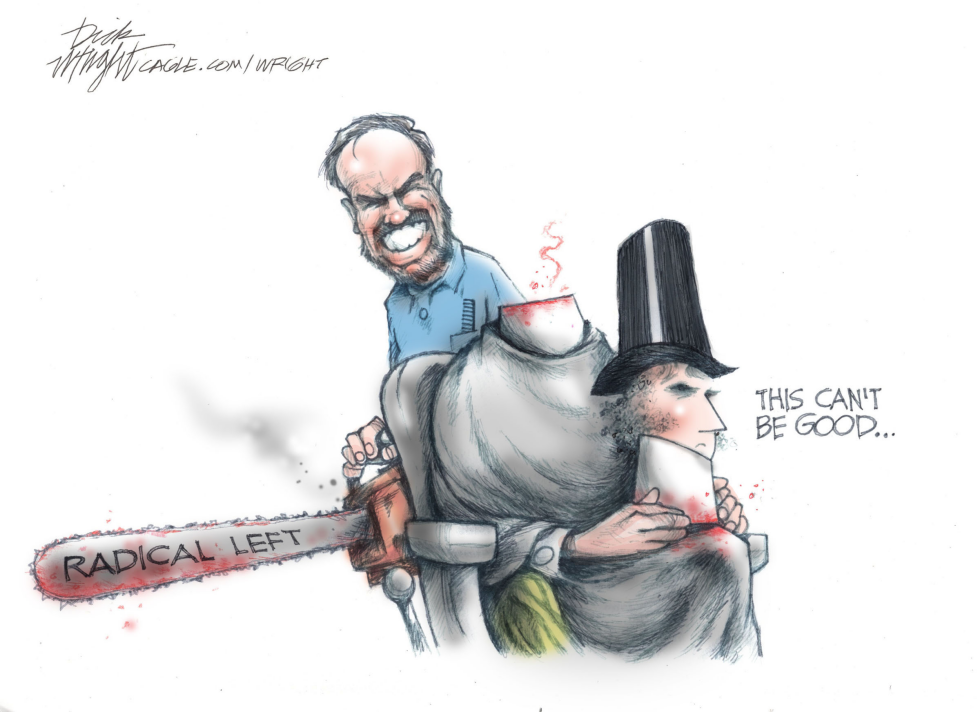
A cartoon published June 25 2026 shows a man labeled radical left operating a chainsaw against a top-hatted figure in formal clothes. Blood appears at the neck cut. The victim holds a document and comments on the situation. The artist Dick Wright signed the work with a cagle.com credit.
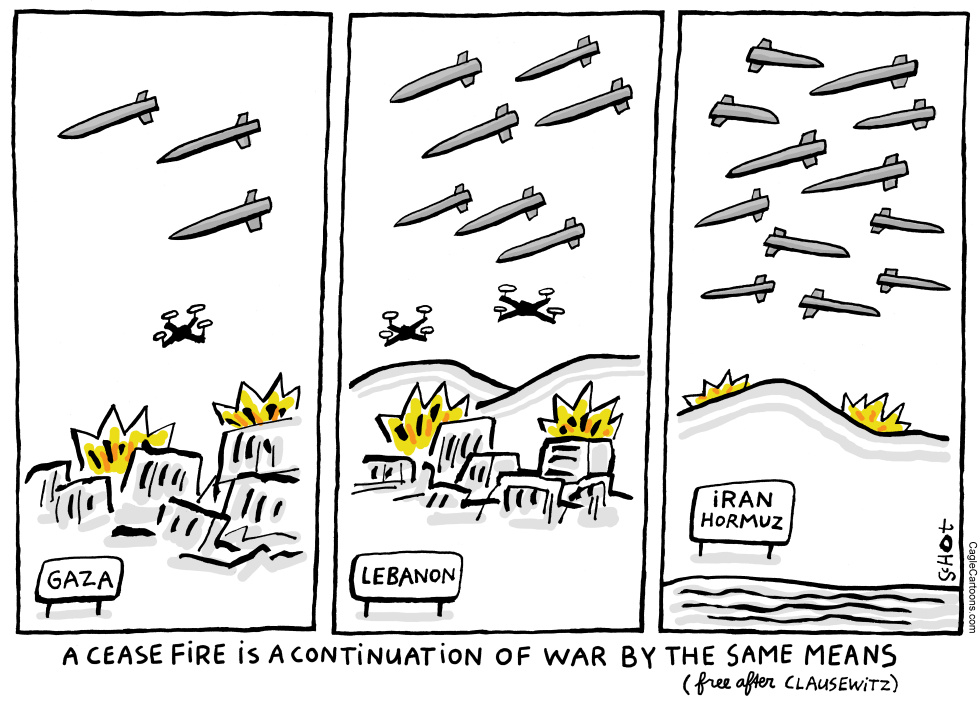
A three-panel cartoon depicts missiles and drones flying above cities in Gaza, Lebanon and Iran Hormuz with explosions visible. The caption rephrases Clausewitz to argue that a ceasefire continues war by the same means. The June 2026 image responds to active regional conflicts involving those locations.
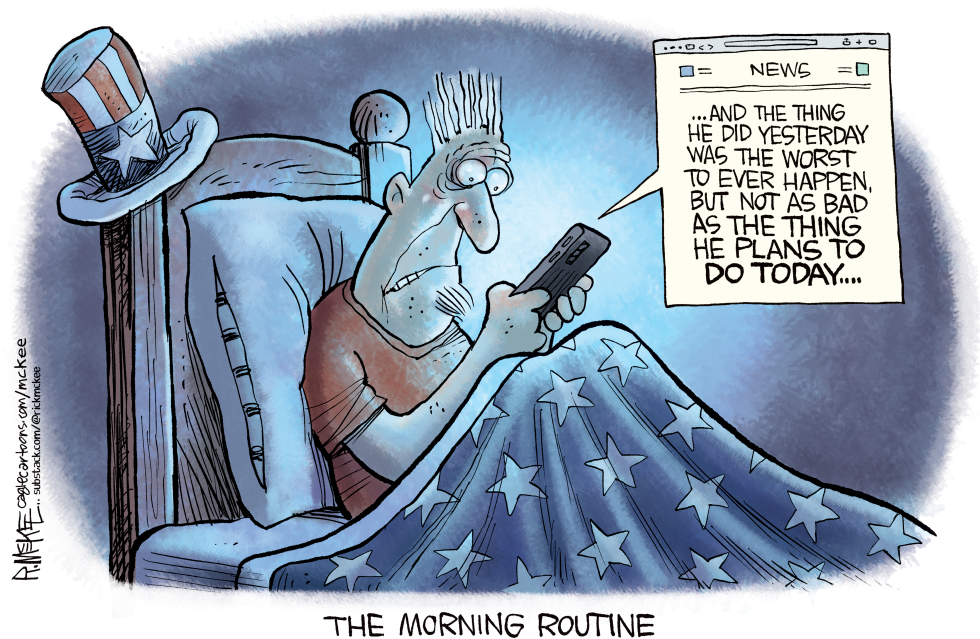
A man in bed examines a phone displaying a news alert about recent and upcoming events. The scene includes an Uncle Sam style hat and a blanket patterned with stars. The bottom text labels the scene as a morning routine. Publication occurred on May 20 2026.
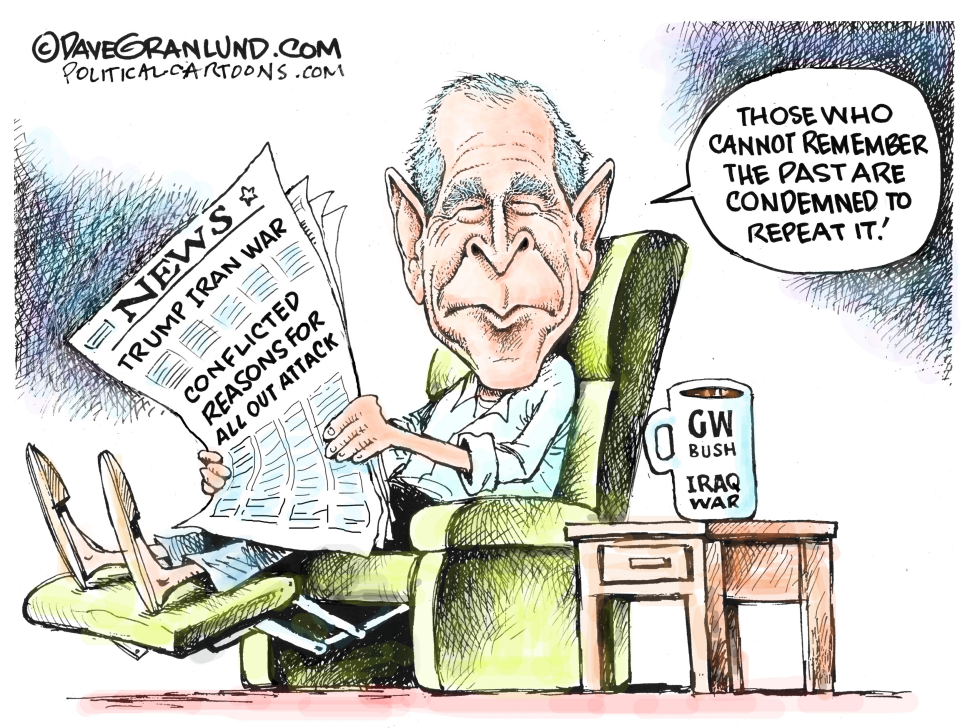
Dave Granlund's political cartoon cleverly lampoons the Trump Iran conflict by portraying a smug, elf-eared figure—possibly a nod to forgetful policymakers—lounging with a newspaper screaming 'Iran War' headlines, while clutching a mug emblazoned with 'GW Bush Iraq War.' The speech bubble twists George Santayana's famous quote on historical amnesia, warning that those who cannot remember the past are condemned to repeat it. This satirical jab underscores the eerie parallels between Bush's ill-fated Iraq invasion and Trump's bellicose posturing toward Iran, blending humor with sharp insight into geopolitical folly. Tags like Iraq War repetition and Trump Iran conflict amplify its relevance, making it a viral-ready critique of endless war cycles.
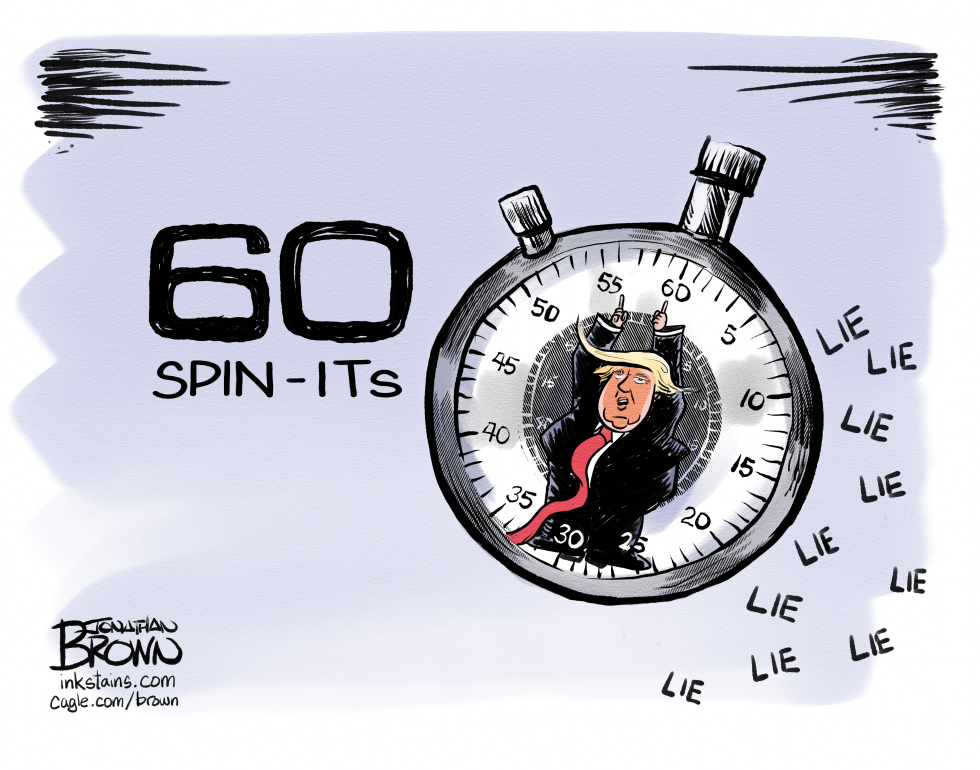
The cartoon depicts Donald Trump inside a stopwatch rebranded from 60 Minutes to Spin-Its. Repeated LIE text surrounds the dial. The image criticizes the news program for soft coverage rather than hard-hitting questions during a recent interview.
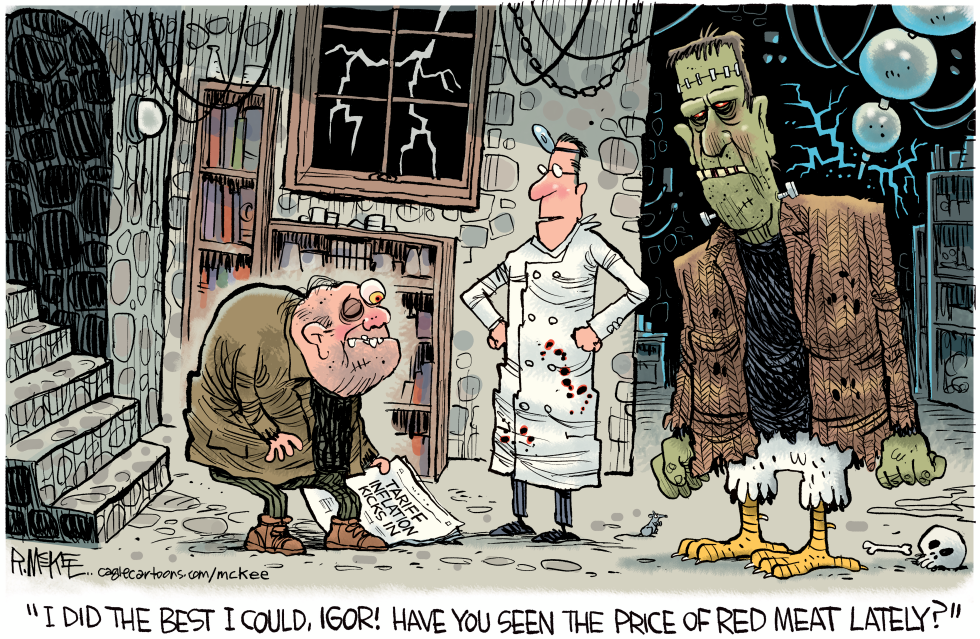
A laboratory scene shows a scientist in a coat labeled Tariff Inflation standing beside a hulking Frankenstein-style monster assembled from meat cuts. The creature has a stitched head, angry expression, and chicken feet. A hunched assistant named Igor holds a newspaper headlined Tariff Inflation while complaining about red meat prices. The caption reads: I did the best I could, Igor! Have you seen the price of red meat lately? The October 2025 cartoon links recent tariff policies to higher grocery costs.
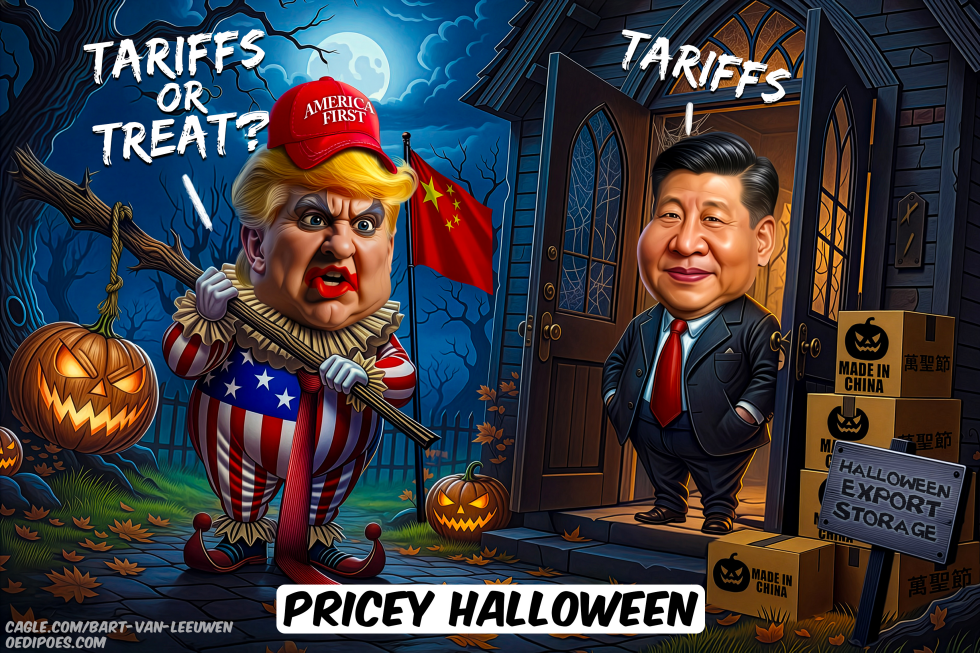
On October 4 2025 the cartoon depicts Donald Trump in a jester costume confronting Xi Jinping outside a house stacked with Chinese made Halloween goods. The scene highlights the impact of proposed tariffs on imported holiday products and resulting higher consumer prices in the United States.