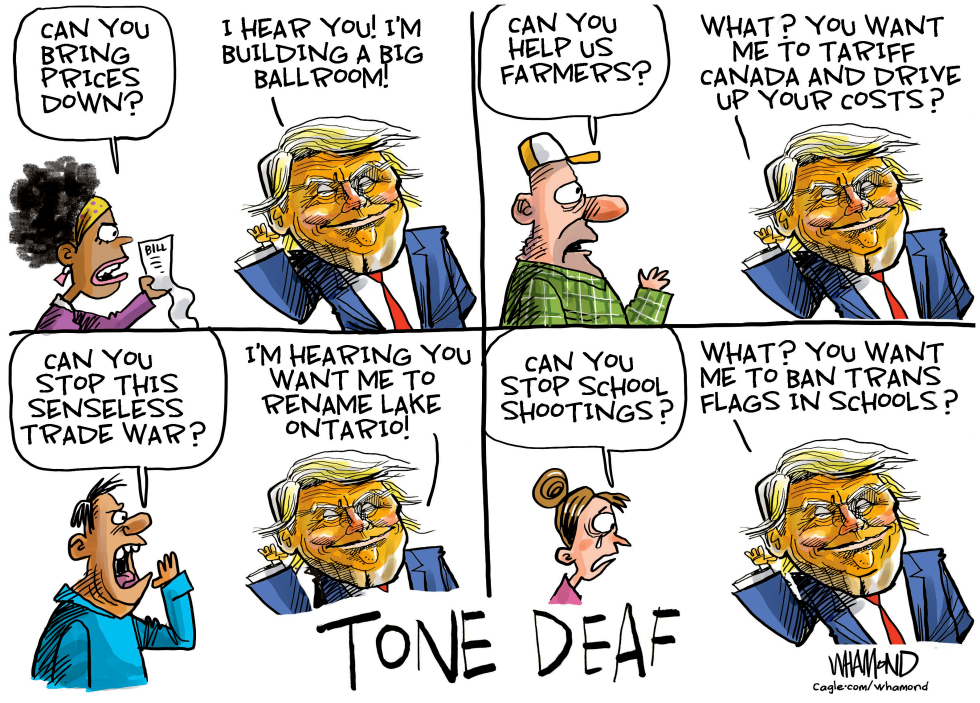
The cartoon by Dave Whamond published September 15, 2026, shows Donald Trump responding to citizen concerns about prices, tariffs on Canada, trade wars, school shootings and transgender flags by pivoting to a ballroom project and renaming Lake Ontario. The four-panel layout underscores a pattern of tone-deaf replies that ignore the original requests.
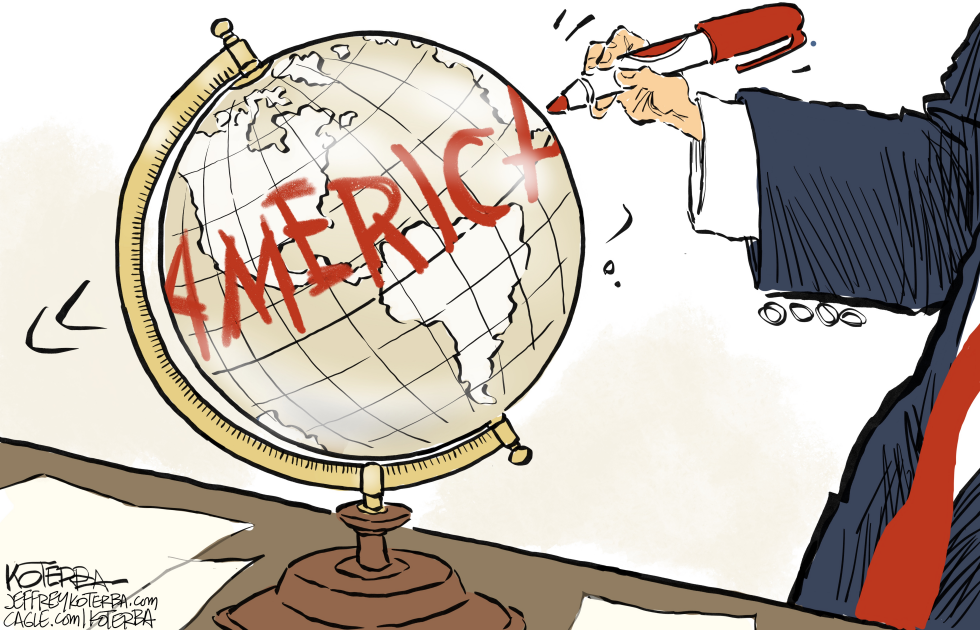
On September 14, 2026, President Trump was depicted altering a globe by crossing out America and writing 4merica. The move reflects ongoing efforts to center his personal brand on national symbols. The cartoon criticizes the action as an exercise in self-promotion that distorts global perspective.
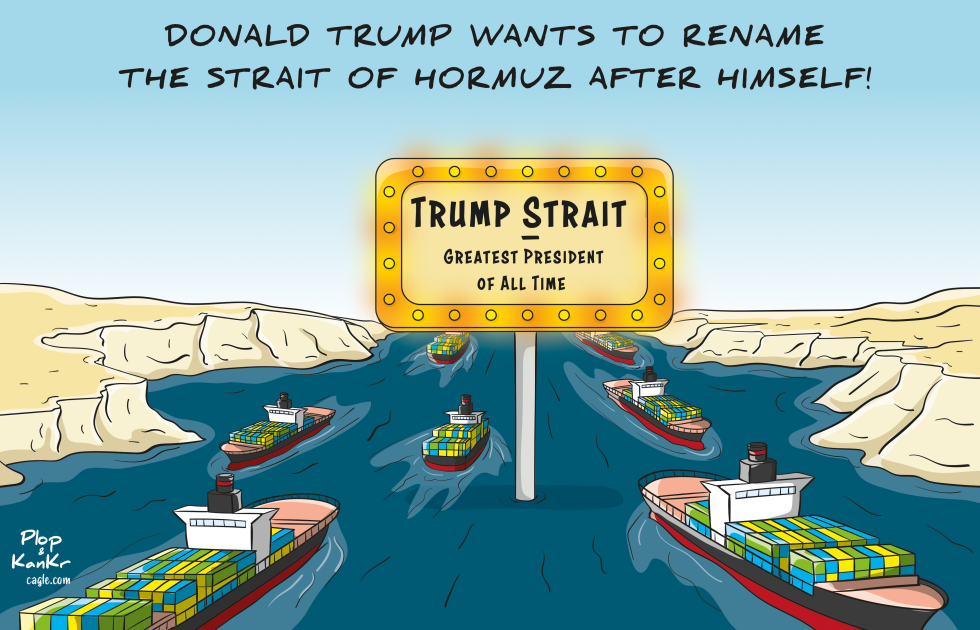
A political cartoon depicts Donald Trump proposing to rename the Strait of Hormuz after himself. The image shows multiple cargo ships navigating the waterway beneath a large glowing sign reading Trump Strait with the subtitle Greatest President of All Time. The top text states Donald Trump wants to rename the Strait of Hormuz after himself. The cartoon uses the visual of a prominent sign overlooking busy shipping lanes to comment on the proposal. It responds to ongoing discussions about international waterways and presidential initiatives in the Middle East region as of the September 2026 publication date.
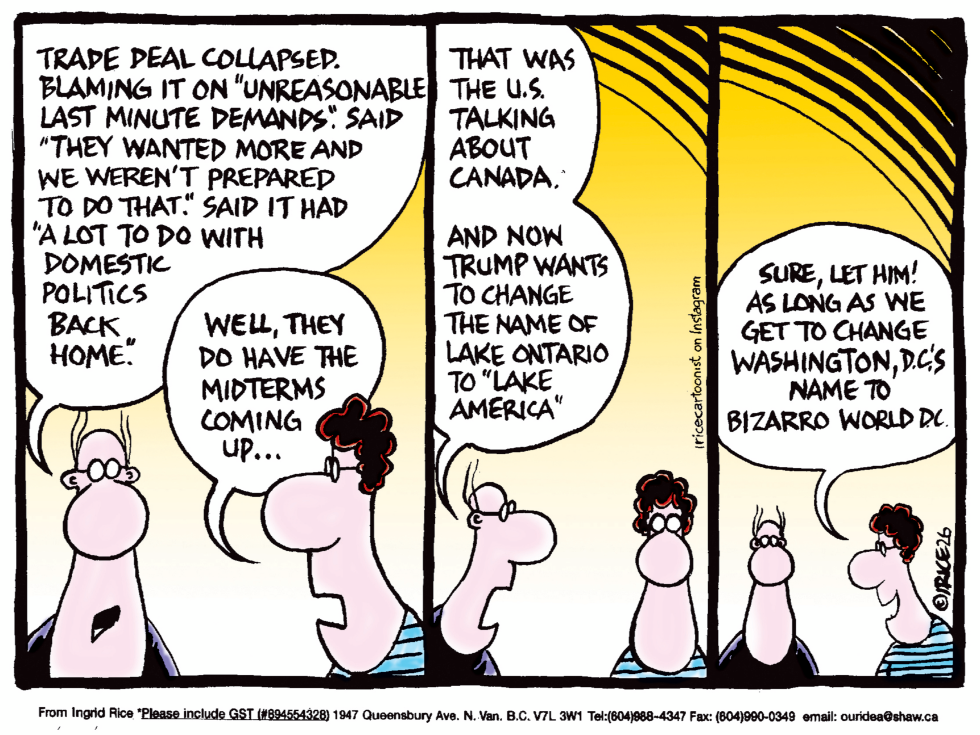
A Canada-U.S. trade deal collapsed after U.S. negotiators cited unreasonable last-minute demands and linked the failure to domestic politics ahead of midterms. President Trump then proposed renaming Lake Ontario to Lake America. Canadian officials responded by offering to rename Washington D.C. to Bizarro World DC if the change proceeds. The exchange highlights how trade tensions and political posturing are escalating between the two countries. The cartoon mocks the name-change idea as emblematic of broader dysfunction in bilateral relations.
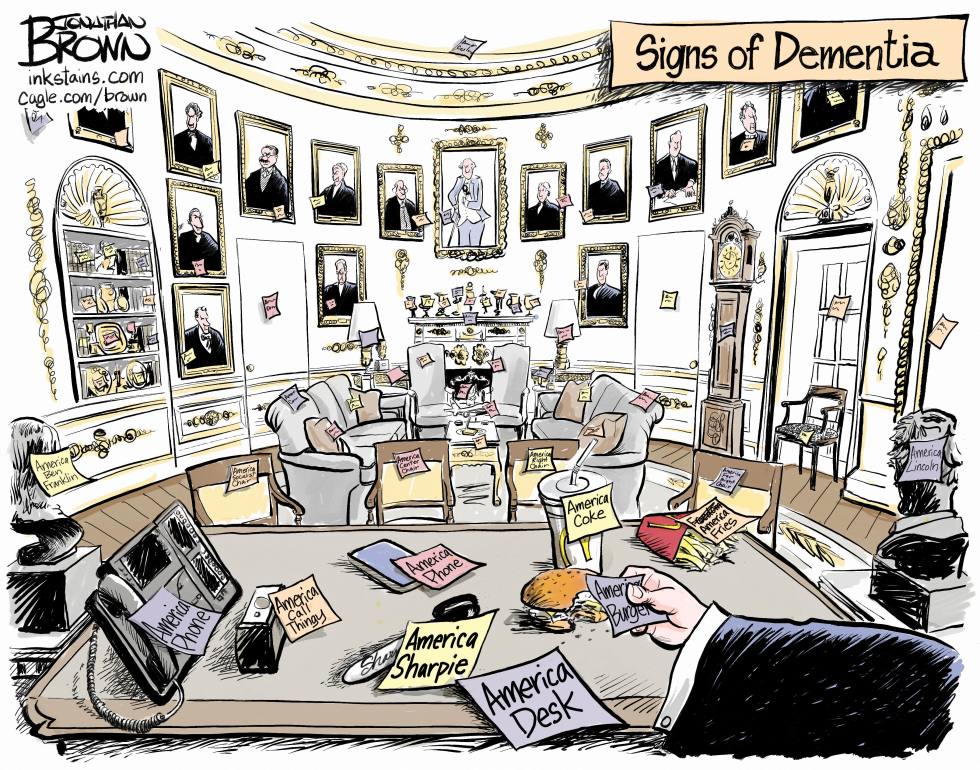
A new editorial cartoon depicts the Oval Office overrun with sticky notes labeling everyday items as America. The scene highlights signs of dementia through repeated branding on phones, desks, food and furniture. Published on September 9, 2026, the work comments on ongoing concerns about cognitive fitness in the presidency. The visual uses the familiar setting of the White House to underscore confusion and memory issues. Observers note the cartoon captures public debate over leadership capacity without naming specific individuals.
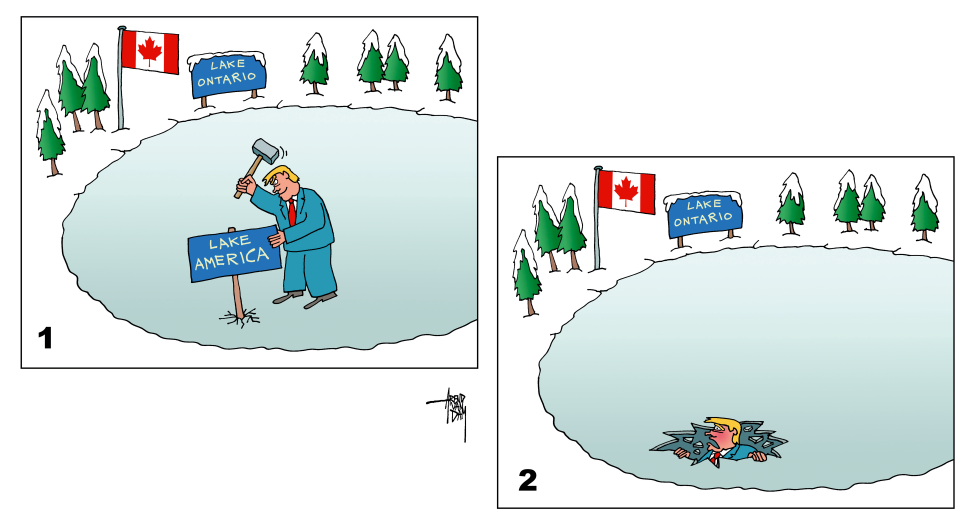
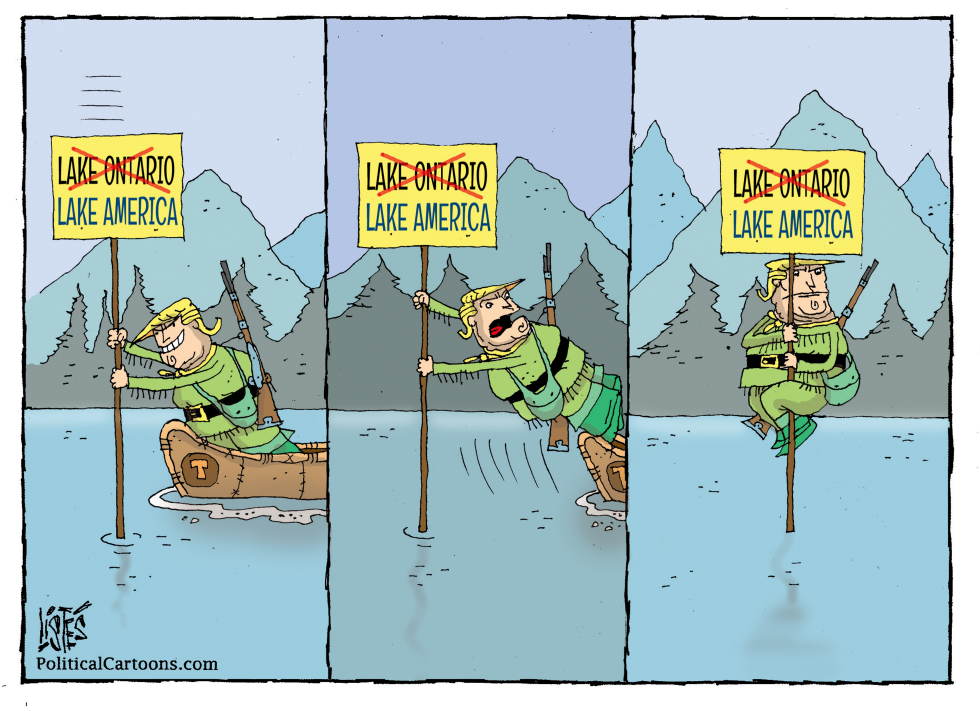
Donald Trump directed an aide to plant a Lake America sign on the frozen surface of Lake Ontario in a symbolic claim on Canadian waters. The move was part of ongoing US-Canada friction over shared resources and border definitions. The ice broke, sending the figure through the surface. The episode underscores the practical limits of unilateral US assertions against a close neighbor whose cooperation remains essential on trade, security, and environmental issues. The cartoon presents the effort as self-defeating and poorly timed.
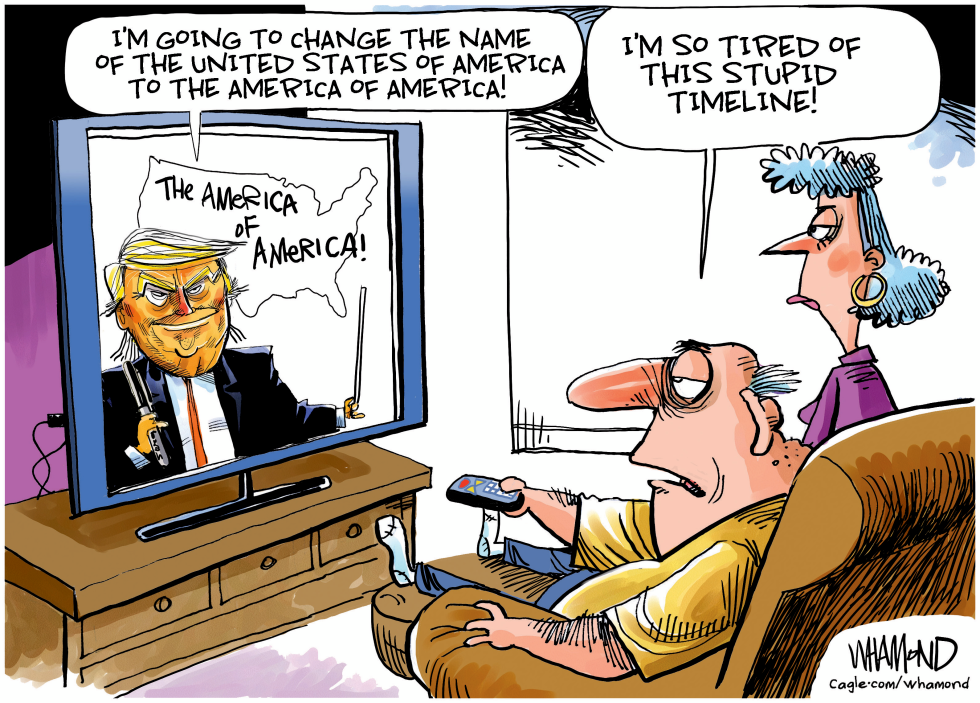
Donald Trump proposed renaming the United States to the America of America during a televised appearance. The suggestion fits a pattern of attention-grabbing rebrands that dominate headlines and fuel public cynicism. Critics argue such moves distract from substantive governance while supporters see them as bold assertions of national identity. The cartoon captures widespread viewer exhaustion with the constant stream of provocative statements. It highlights how repeated name games erode trust in political discourse and amplify perceptions of a chaotic timeline.
Donald Trump has floated the idea of reclassifying parts of the Great Lakes as exclusively American territory amid ongoing trade and border disputes with Canada. The move has drawn sharp criticism from Canadian officials and environmental groups concerned about resource management. The cartoon portrays the effort as a futile struggle against established geography and international norms.
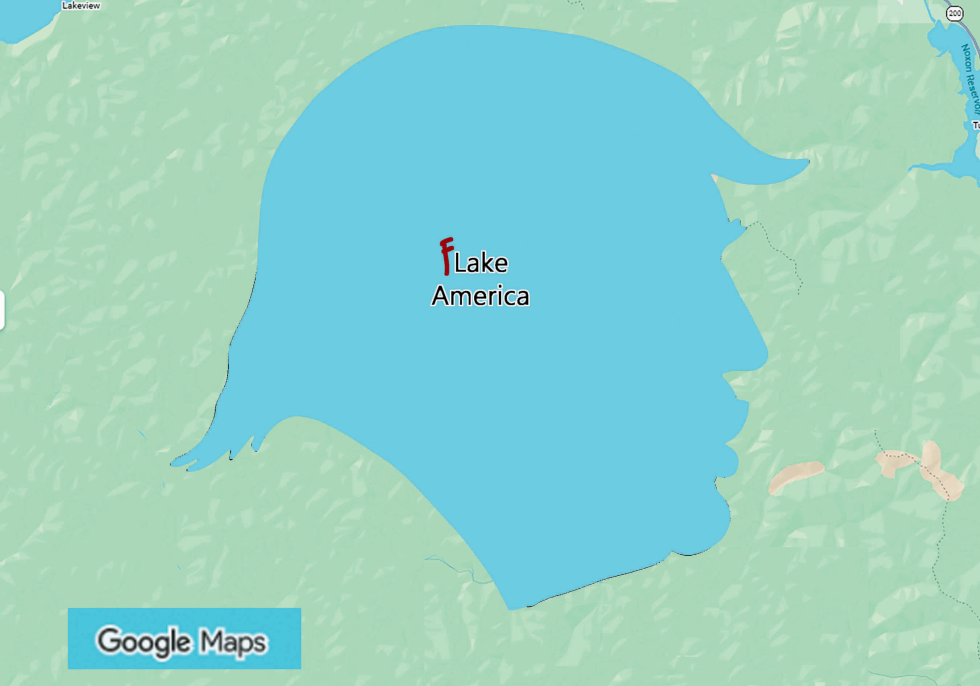
A digital map rendering depicts a body of water shaped like Donald Trump's profile and labeled Lake America. The image appears amid ongoing debates over presidential branding and national identity in 2026. The piece presents the map as evidence of excessive personal imprint on public symbols.
Donald Trump directed the renaming of Lake Ontario to Lake America in a move targeting shared U.S.-Canada waters. The action underscores ongoing tensions over border resources and national identity. The piece portrays the effort as an overreaching nationalist gesture that ignores international boundaries and practical realities.
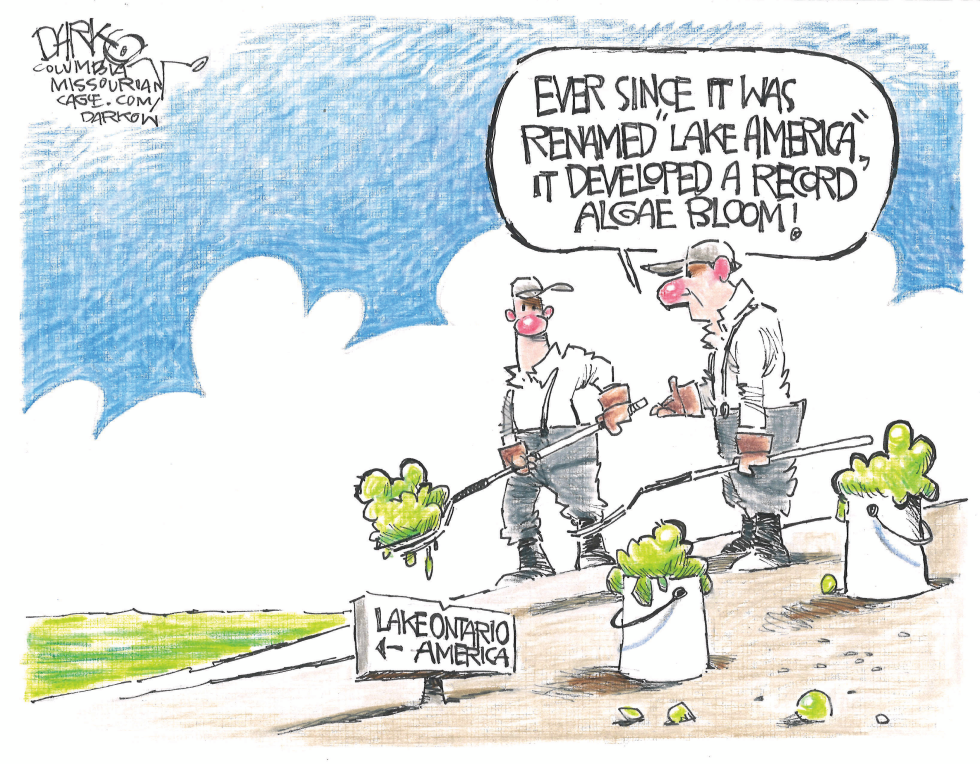
Workers clean a massive algae bloom from a lake recently renamed Lake America, formerly Lake Ontario. The outbreak follows the rebranding and draws attention to environmental conditions. The piece argues that superficial political gestures fail to address underlying ecological problems and may even coincide with worsening conditions.
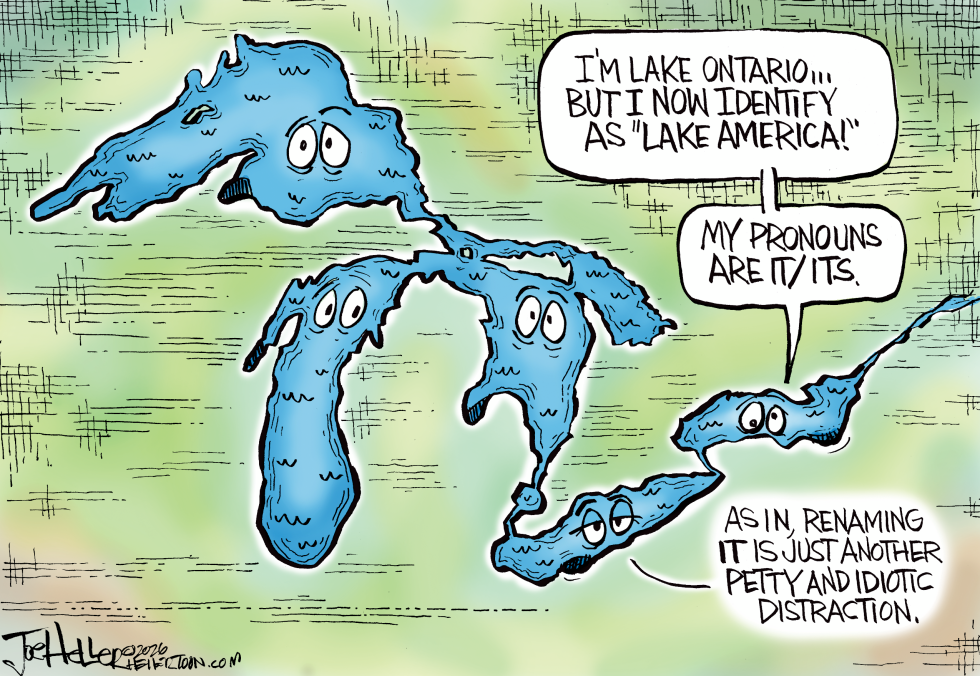
Lake Ontario publicly declares a new identity as Lake America and adopts it/its pronouns. The move draws immediate pushback from other Great Lakes figures who call the renaming a petty distraction. The piece argues such identity gestures divert attention from substantive issues facing the region.
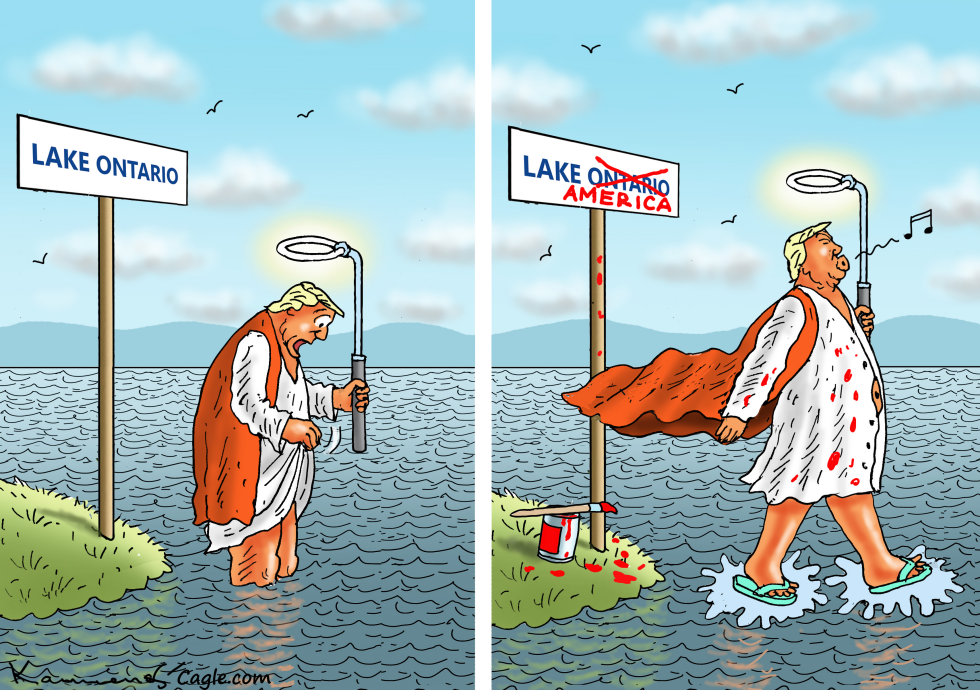
Donald Trump has moved to rename Lake Ontario as Lake America in a symbolic gesture tied to national branding efforts. The action underscores ongoing debates over executive reach into geographic and cultural symbols. Critics view the move as an extension of personal branding into public spaces. The piece portrays the effort as self-aggrandizing and detached from practical governance concerns.
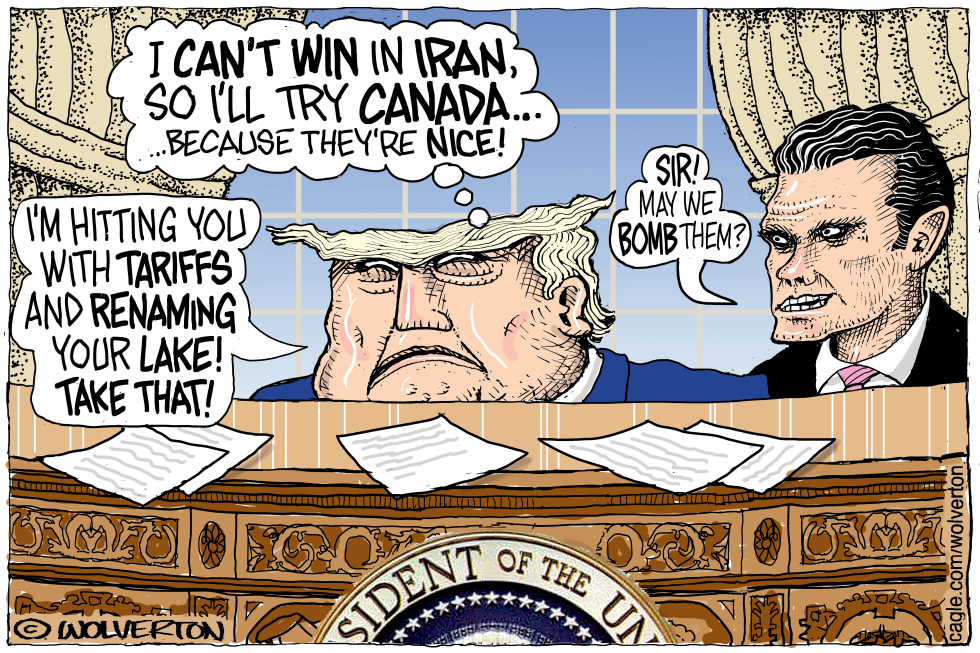
In the cartoon, President Trump appears frustrated at his desk, declaring tariffs and a lake renaming against Canada after setbacks in Iran. His advisor interjects with a suggestion to bomb the northern neighbor. The scene plays on recent trade tensions and foreign policy frustrations as of late August 2026. The visual uses speech and thought bubbles to highlight the shift in targets from a difficult adversary to a more cooperative one. This reflects ongoing debates over tariffs as leverage in international relations.
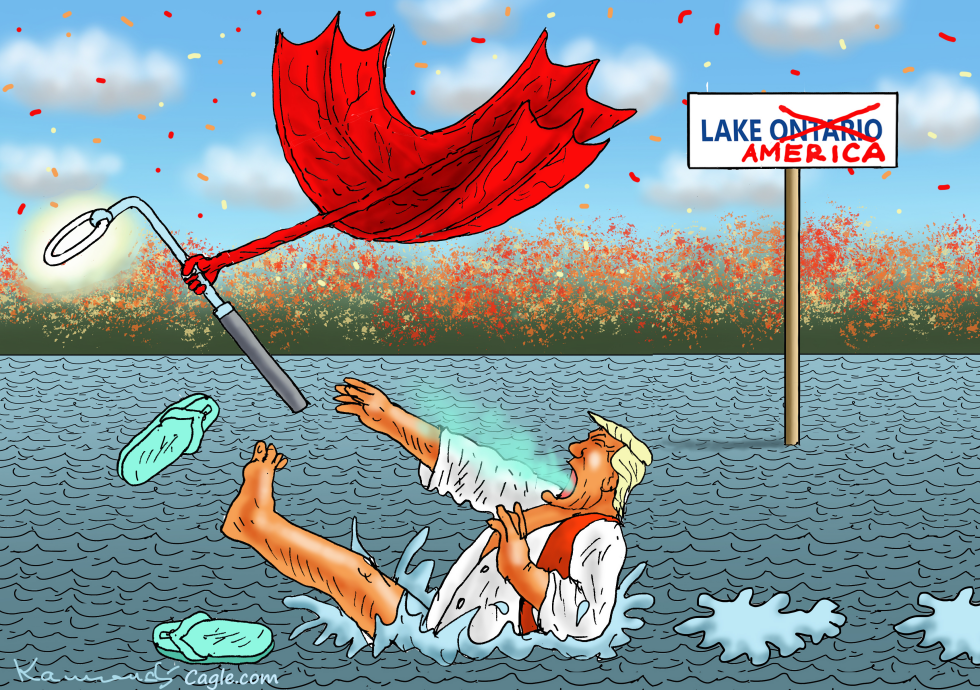
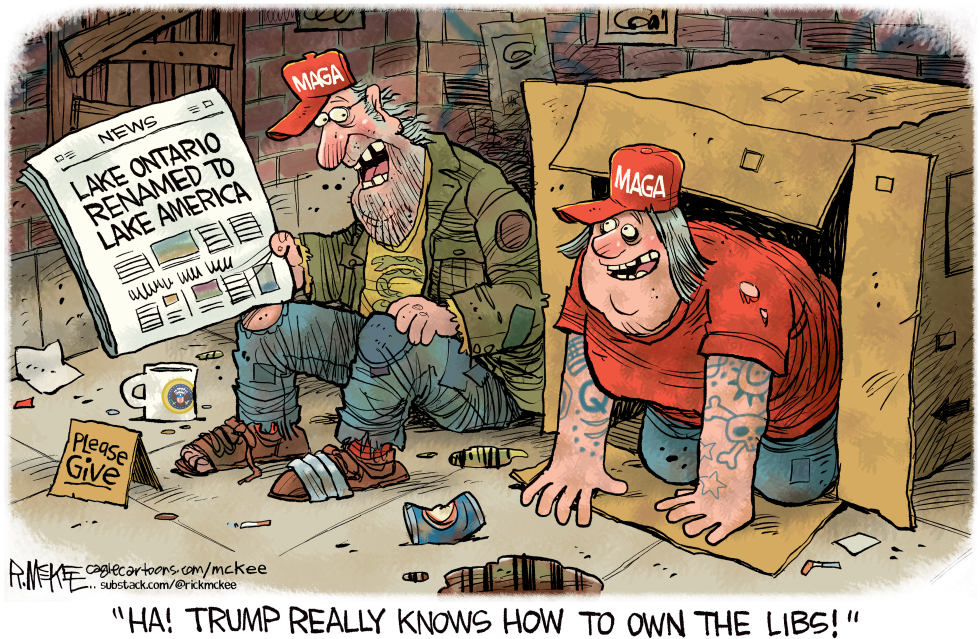
President Trump has renamed Lake Ontario to Lake America, prompting celebrations among his MAGA supporters who view the action as a victory over political opponents. The move underscores ongoing efforts to reshape national symbols and assert dominance in cultural debates. The cartoon argues that such gestures provide little tangible benefit to the president's base while they continue to face economic and social difficulties.