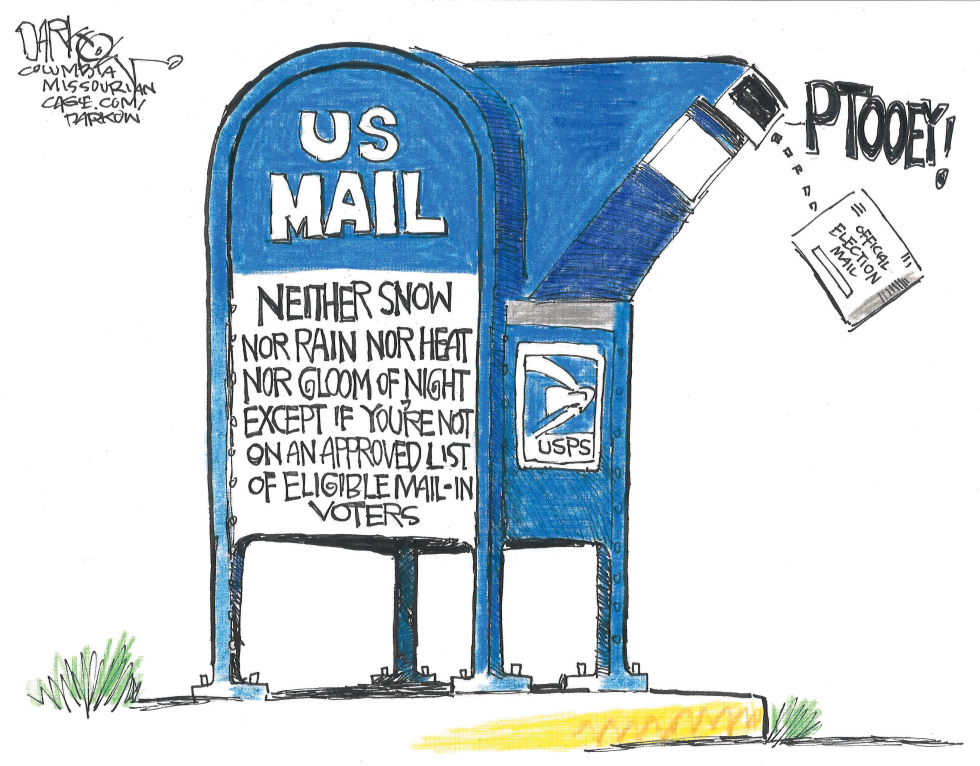
A USPS mailbox rejects mail-in ballots unless the sender appears on an approved list of eligible voters. The action highlights ongoing debates over mail voting security and access ahead of elections. Critics argue such restrictions disproportionately affect certain voter groups and undermine confidence in the postal system. Supporters claim the measures prevent fraud. The cartoon portrays the mailbox as actively enforcing these limits, suggesting institutional barriers to participation.
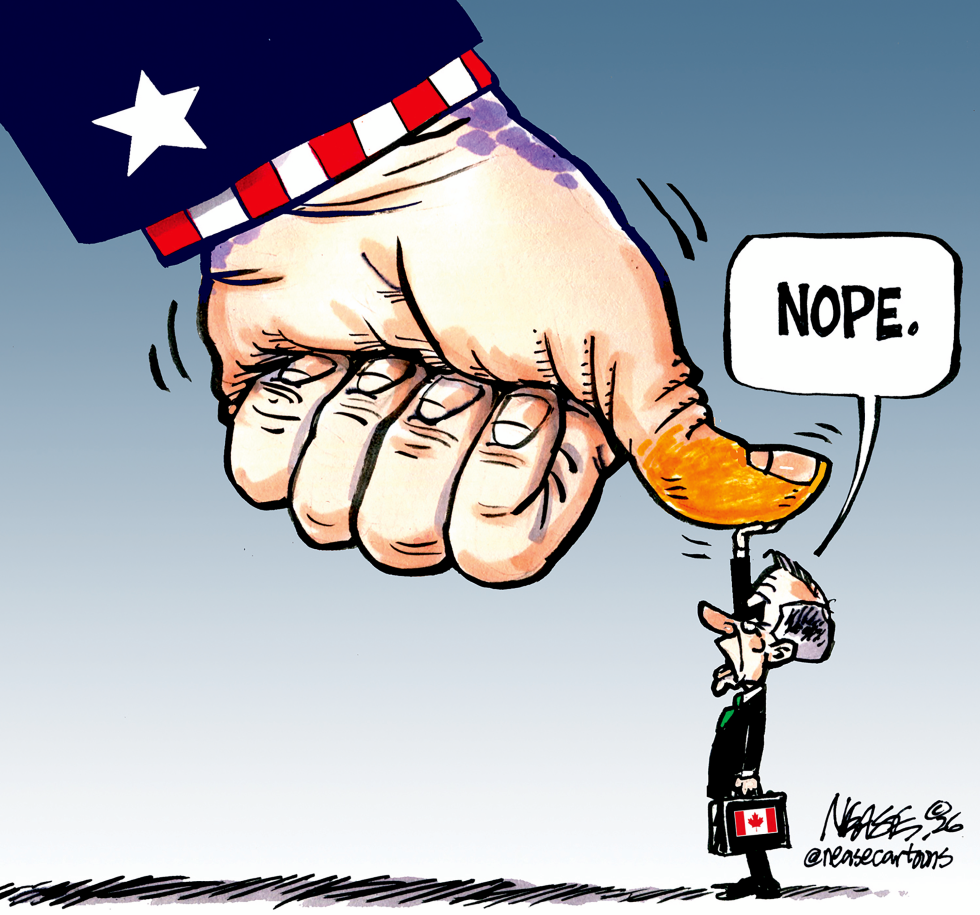
Canada has rejected a US trade offer during bilateral negotiations. The decision highlights ongoing tensions over economic terms between the two neighbors. It matters because trade relations affect supply chains and tariffs across North America. The piece portrays the Canadian stance as a direct refusal to the American proposal.
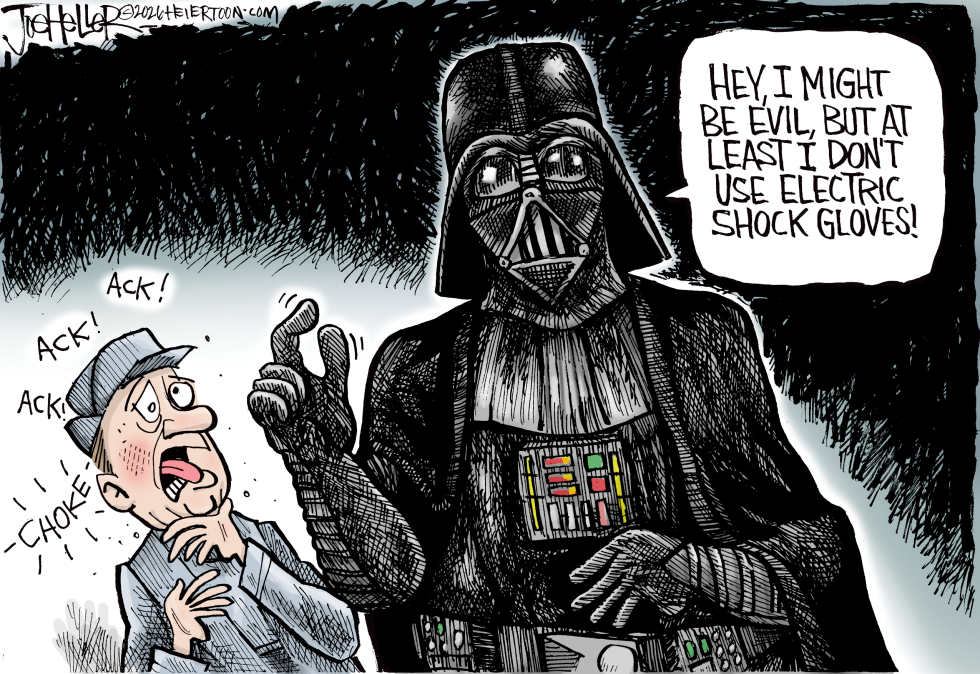
Public discussion continues over the use of electric shock gloves in security and law enforcement settings. Critics argue the devices risk excessive force and injury during confrontations. Darth Vader's stance in the piece frames the tools as crossing a line that even a fictional villain avoids. The editorial position holds that such methods undermine claims of restraint and invite scrutiny on their necessity and oversight.
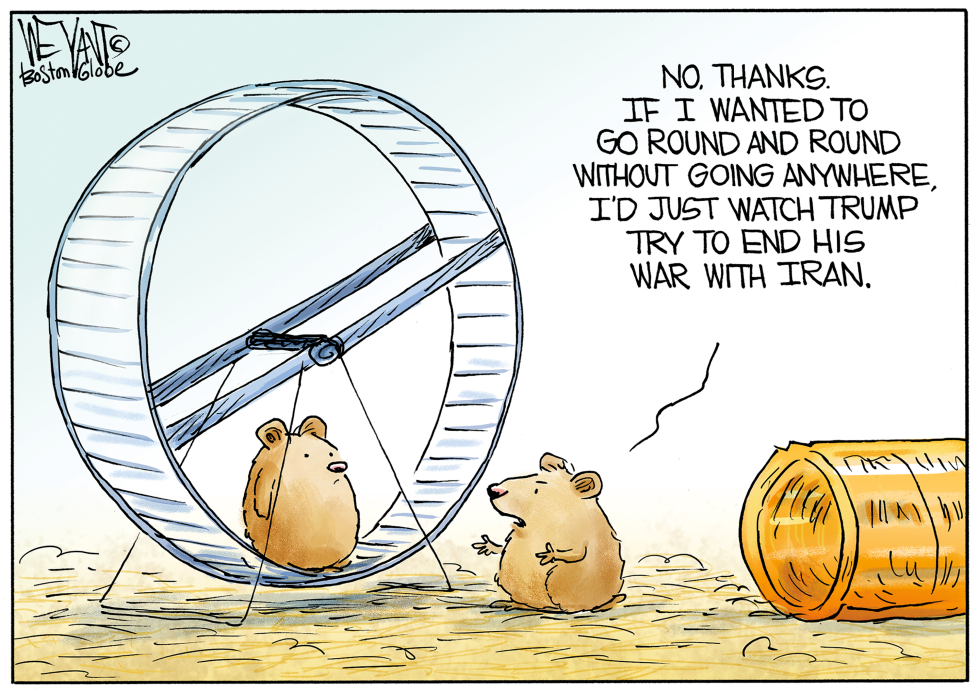
President Trump continues efforts to resolve the ongoing conflict with Iran through repeated diplomatic rounds. The situation remains stalled with no clear progress after multiple attempts. Observers note the repetitive nature of the process without advancement. The piece portrays the hamster's refusal as a commentary on the futility of the approach.
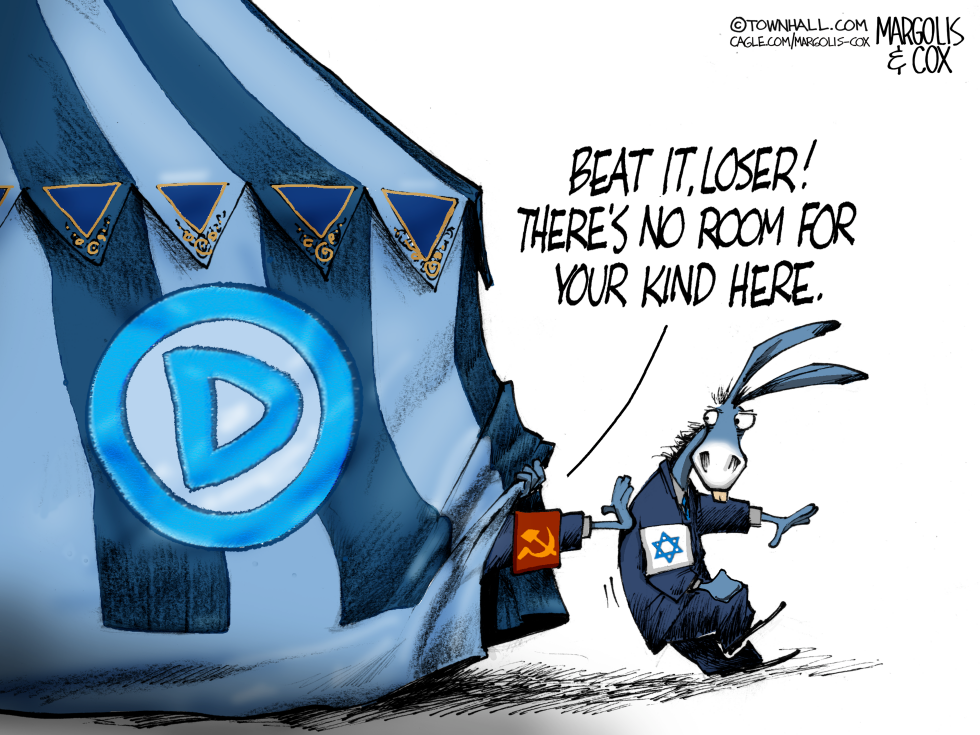
The Democratic Party's big tent faces internal pressure over its stance on Israel and ideological extremes as the traditional donkey mascot is shown being expelled. The cartoon highlights tensions between inclusivity claims and rejection of certain viewpoints. It argues the party is narrowing its base by excluding elements tied to both pro-Israel positions and communism.
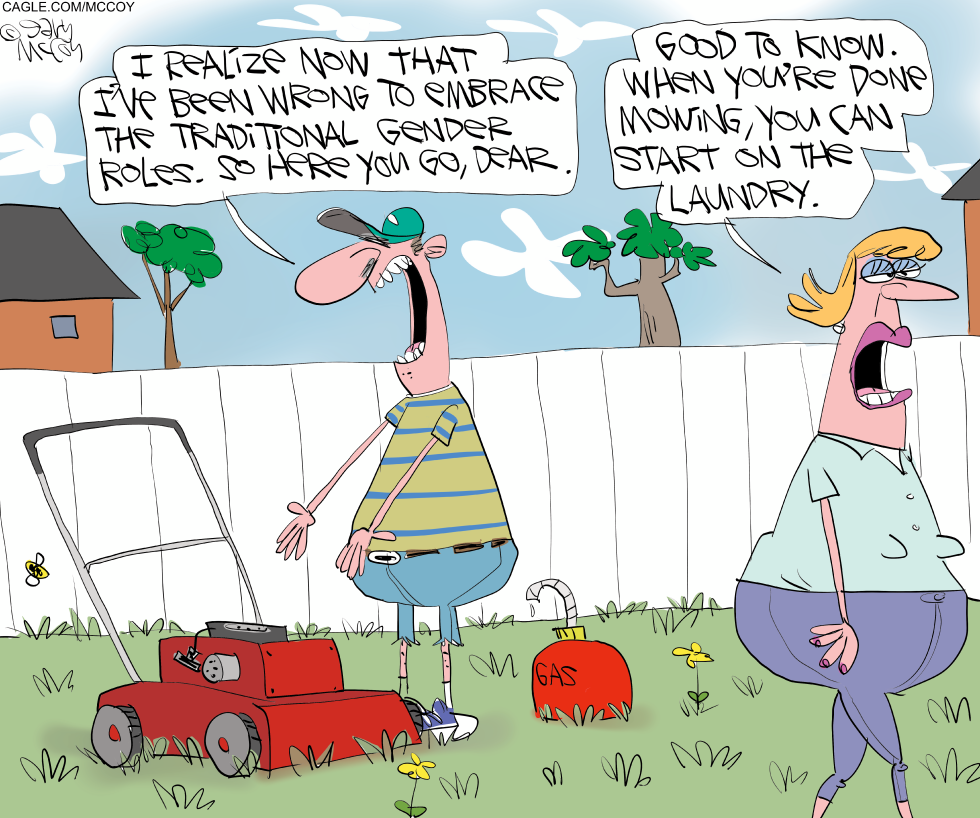
A man publicly rejects traditional gender roles and hands over the lawn mower in a suburban backyard. The woman responds by directing him to laundry afterward. The piece highlights ongoing cultural friction over household task divisions and expectations around gender.
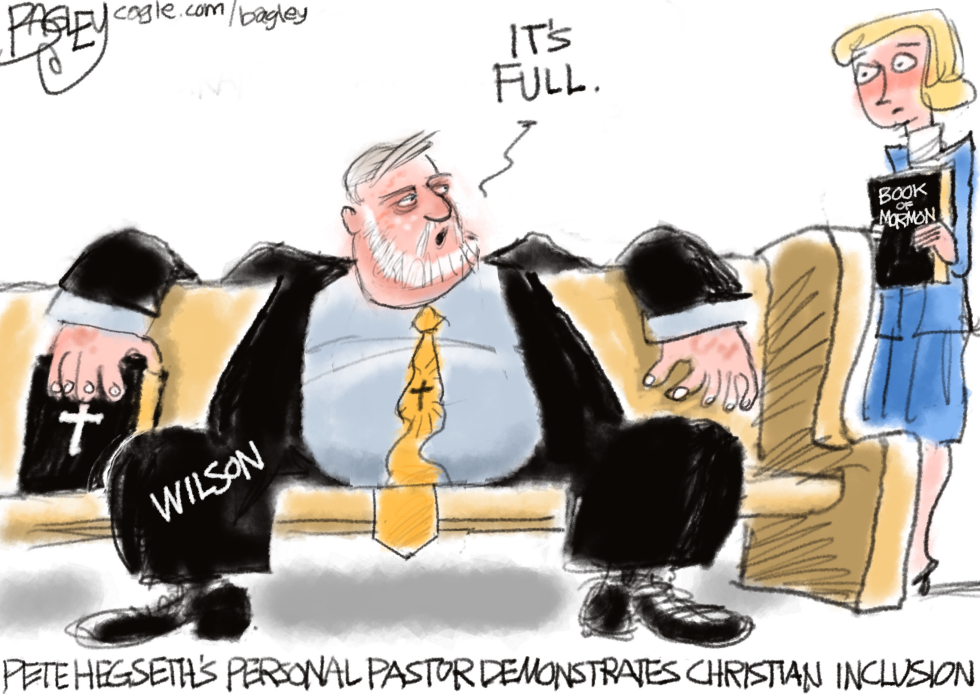
The July 2026 cartoon depicts Pastor Wilson seated on a couch holding a cross-emblazoned book and stating it is full. A woman stands nearby offering the Book of Mormon. The caption states that Pete Hegseth's personal pastor demonstrates Christian inclusion. The image responds to ongoing discussions about religious boundaries and denominational acceptance tied to the defense secretary nominee's faith advisors.
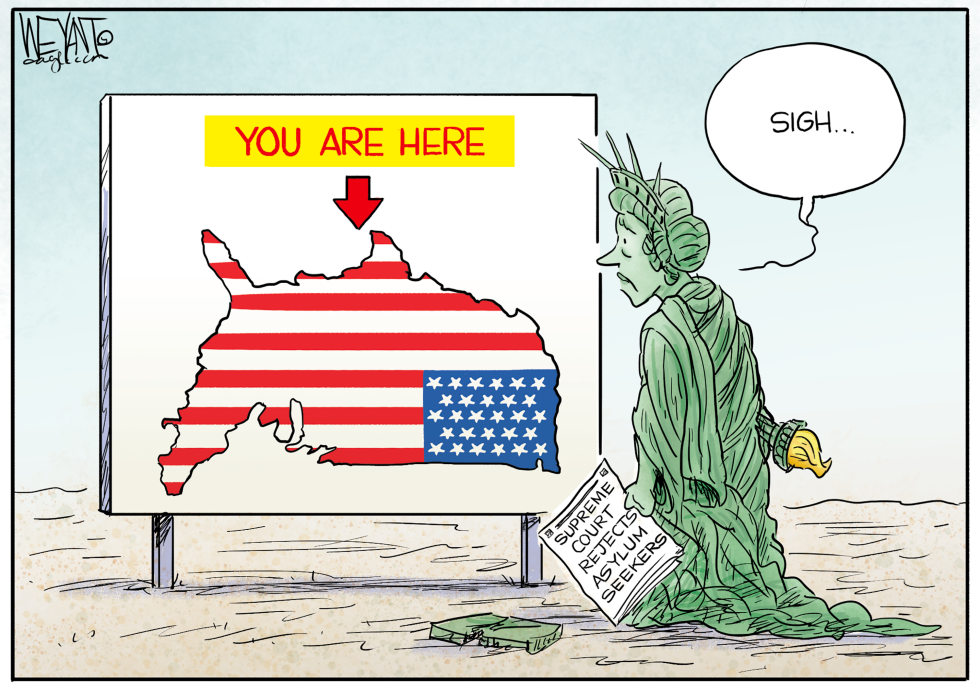
The cartoon depicts the Statue of Liberty seated on the ground beside a large sign displaying a map of the United States marked with a yellow "YOU ARE HERE" label and an American flag design. The figure holds a document reading "SUPREME COURT REJECTS ASYLUM SEEKERS" and exhales a visible sigh in a speech bubble. The image responds to a Supreme Court ruling on asylum policy issued near the June 28 2026 publication date.
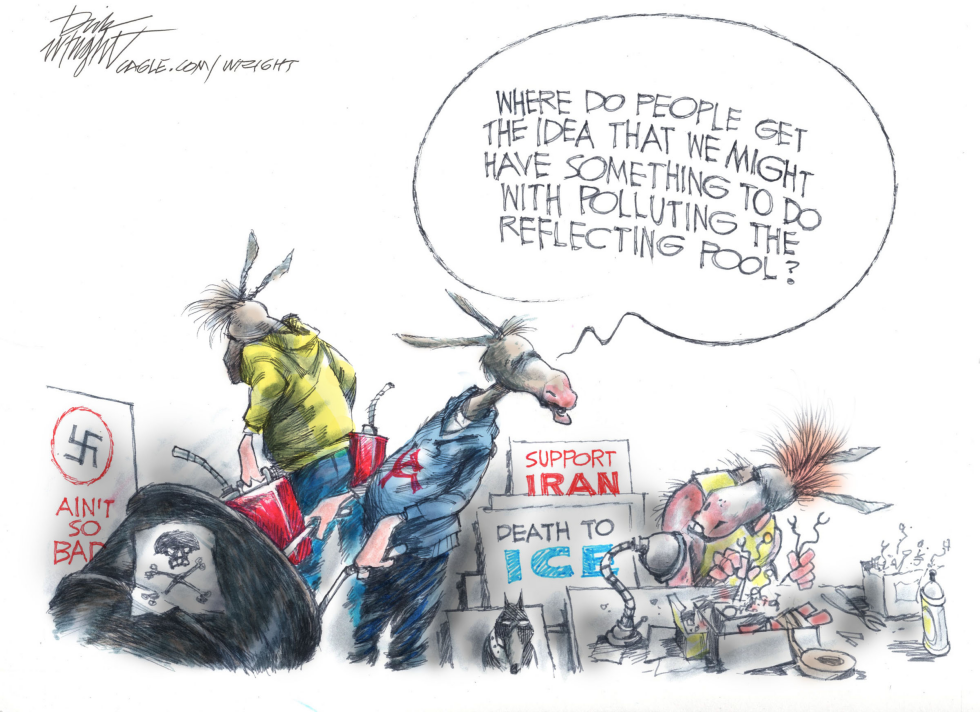
A group of protesters at the reflecting pool in Washington DC dump red liquid from containers marked with toxic symbols while holding signs reading Support Iran and Death to ICE. One figure displays a swastika and another denies involvement in any pollution through a large speech bubble. The scene includes scattered debris and a skull-and-crossbones bag.
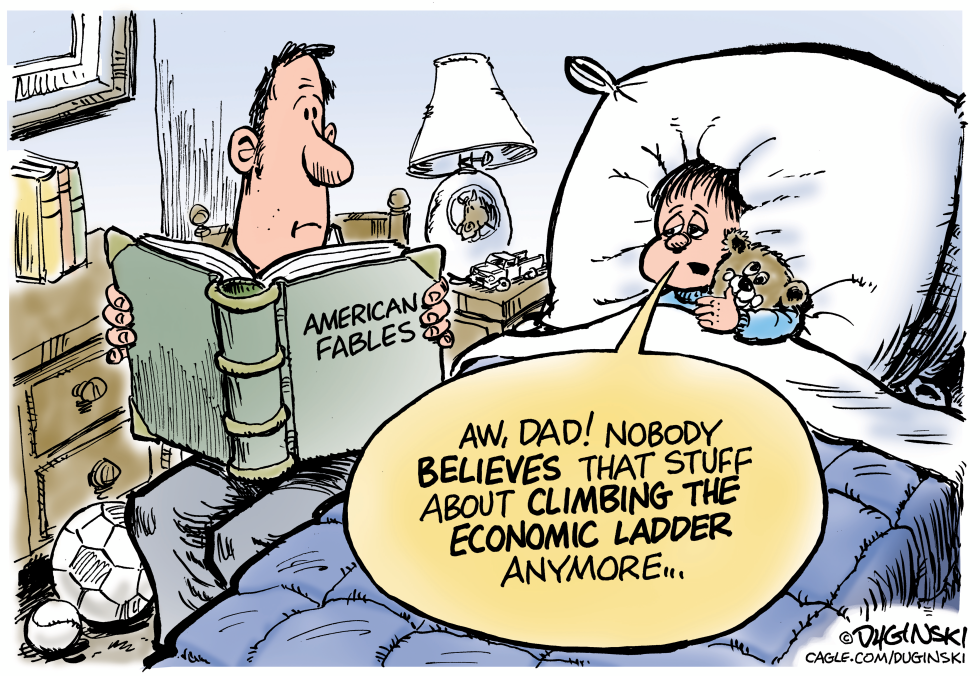
The image shows a father holding an open book titled American Fables beside a child tucked in bed with a teddy bear. The boy speaks from a large speech bubble rejecting the notion of climbing the economic ladder. A soccer ball rests on the floor near stacked books and a nightstand with a lamp and toy train. Tags include American Dream, climbing the economic ladder, upward mobility, cost of living, affordability, and inflation. The scene stays limited to these visible elements without added context.
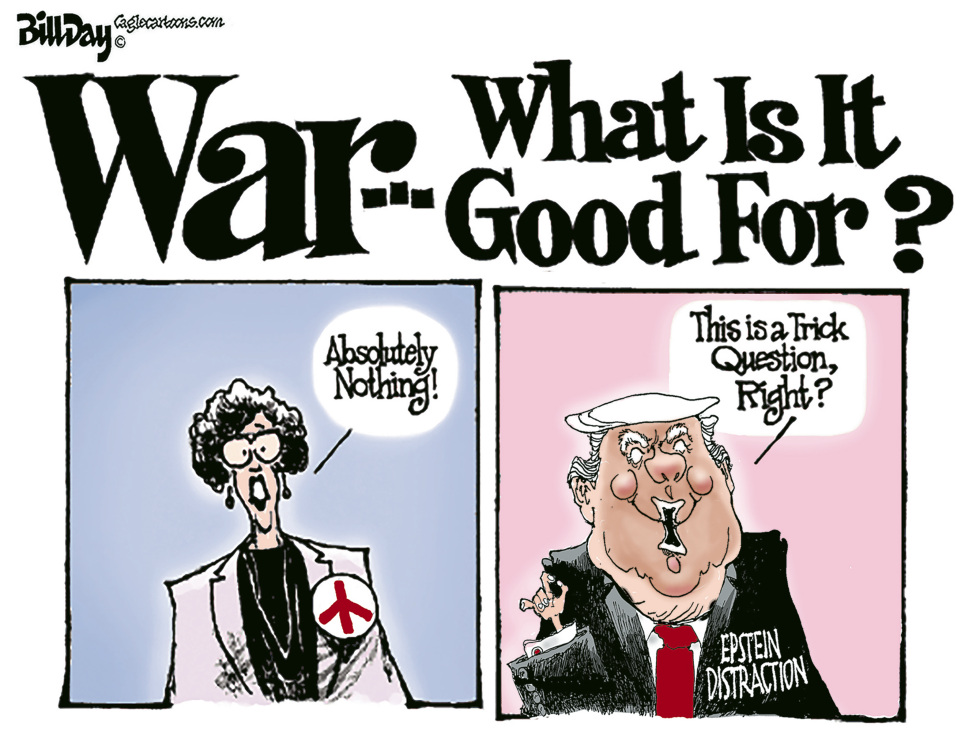
On March 26 2026 Bill Day cartoon depicts Donald Trump dismissing an Epstein files query as a trick question while holding a briefcase labeled Epstein Distraction. The left panel shows a woman resembling Attorney General Pam Bondi declaring war is good for absolutely nothing. The large headline parodies the song War and ties into ongoing Iran conflict coverage and document releases.
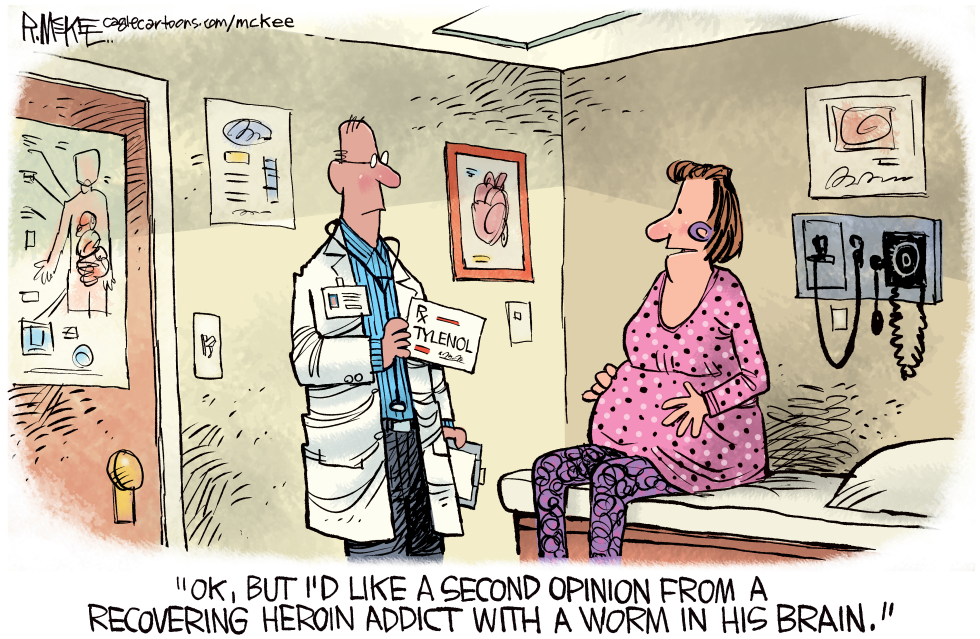
A doctor prescribes Tylenol to a pregnant patient in an exam room. The patient responds by requesting a second opinion from a recovering heroin addict with a brain worm. The exchange references Robert F. Kennedy Jr. and ongoing debates over health guidance during pregnancy.
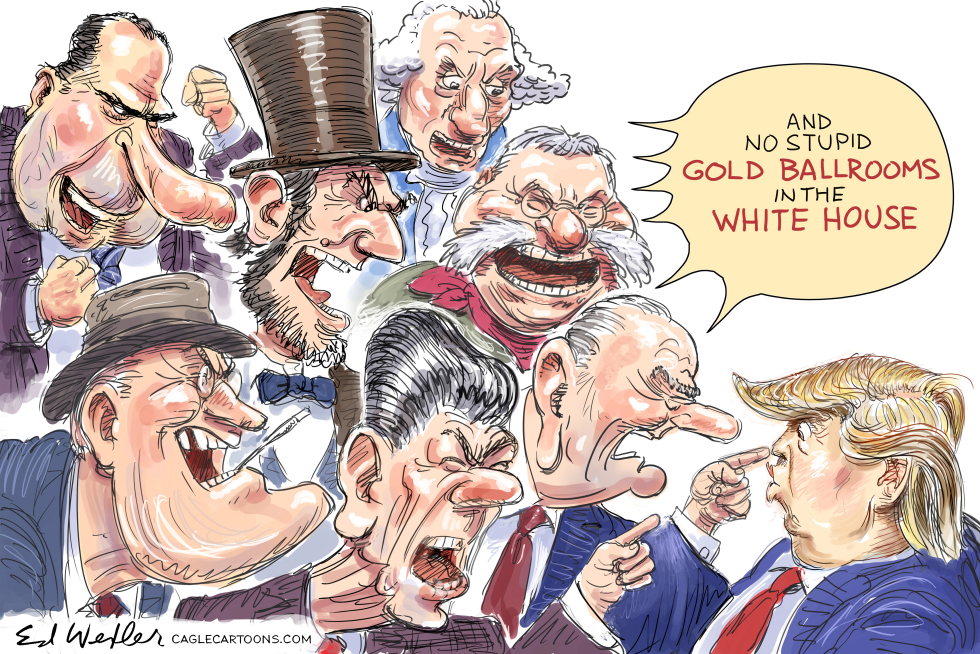
A group of past U.S. presidents appears in a 2025 cartoon by Ed Wexler, confronting Donald Trump about a proposed gold ballroom addition to the White House. The speech bubble from the group states their opposition to the ostentatious project. The image draws on themes of fiscal responsibility and poor optics for such a legacy undertaking. Trump is shown on the right, facing the cluster of figures. The date places this in the context of ongoing discussions about presidential projects and White House modifications.
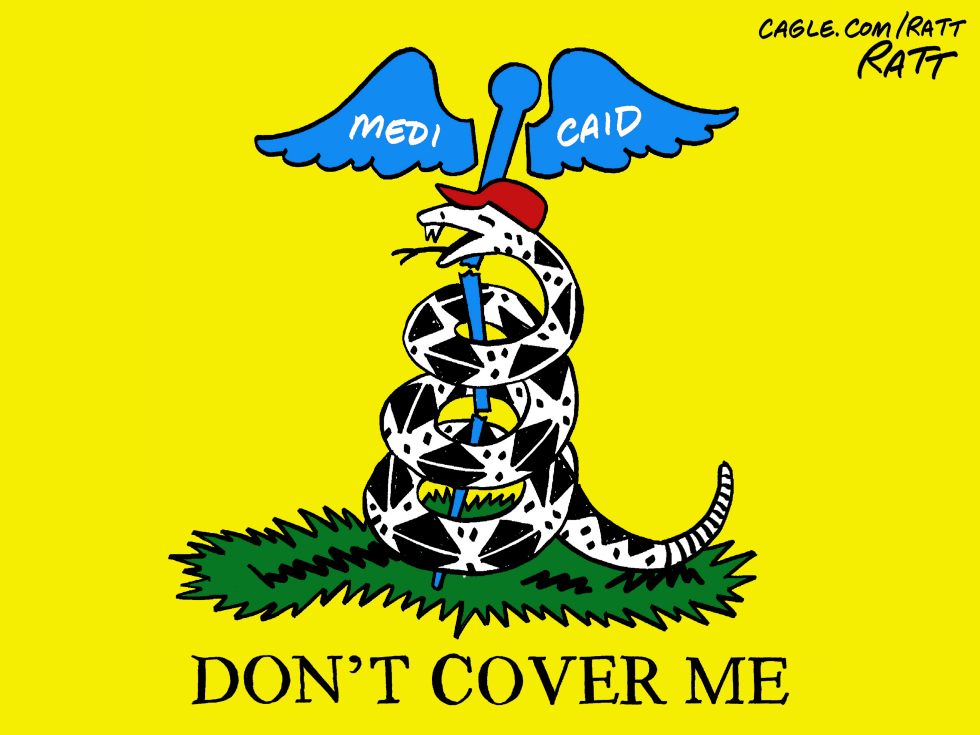
The cartoon adapts the Gadsden flag by replacing the snake's typical staff with a medical caduceus split into Medi and Caid wings. A red cap tops the snake, which coils around a blue-and-yellow pole on green grass. Large text at the bottom declares Don't Cover Me. The image responds to ongoing discussions about Medicaid reductions and their effects on rural hospitals and healthcare access. The visual ties the liberty symbol to coverage concerns under proposed legislation.
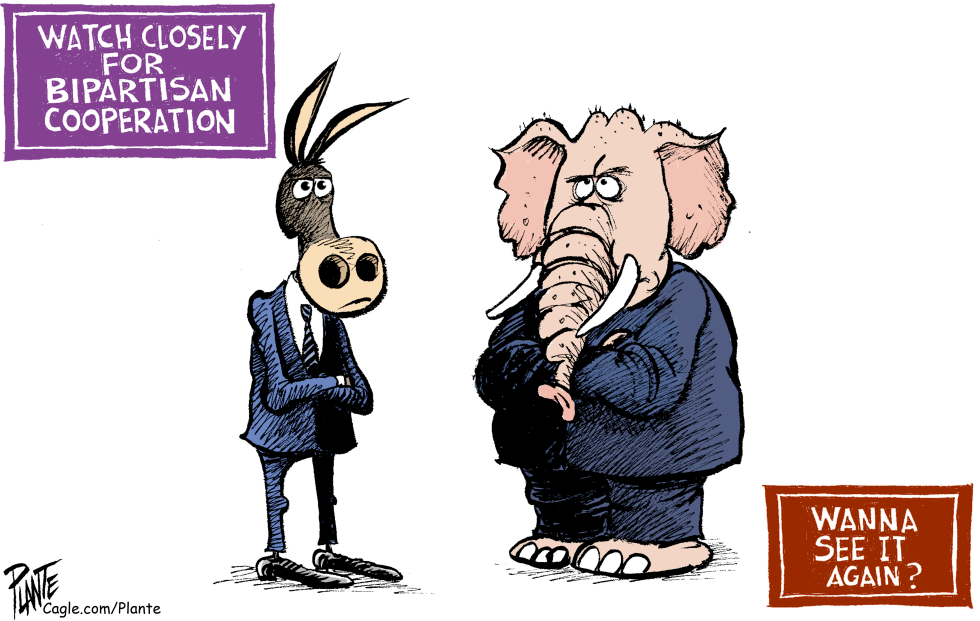
The cartoon depicts a donkey representing Democrats and an elephant representing Republicans standing with arms crossed and stern expressions. A purple sign urges viewers to watch for bipartisan cooperation while a red sign questions if they want to see the refusal again. The image responds to ongoing congressional disputes including the Senate's rejection of an antitariff bill. It illustrates persistent partisan divisions that block joint legislative efforts in the current session.