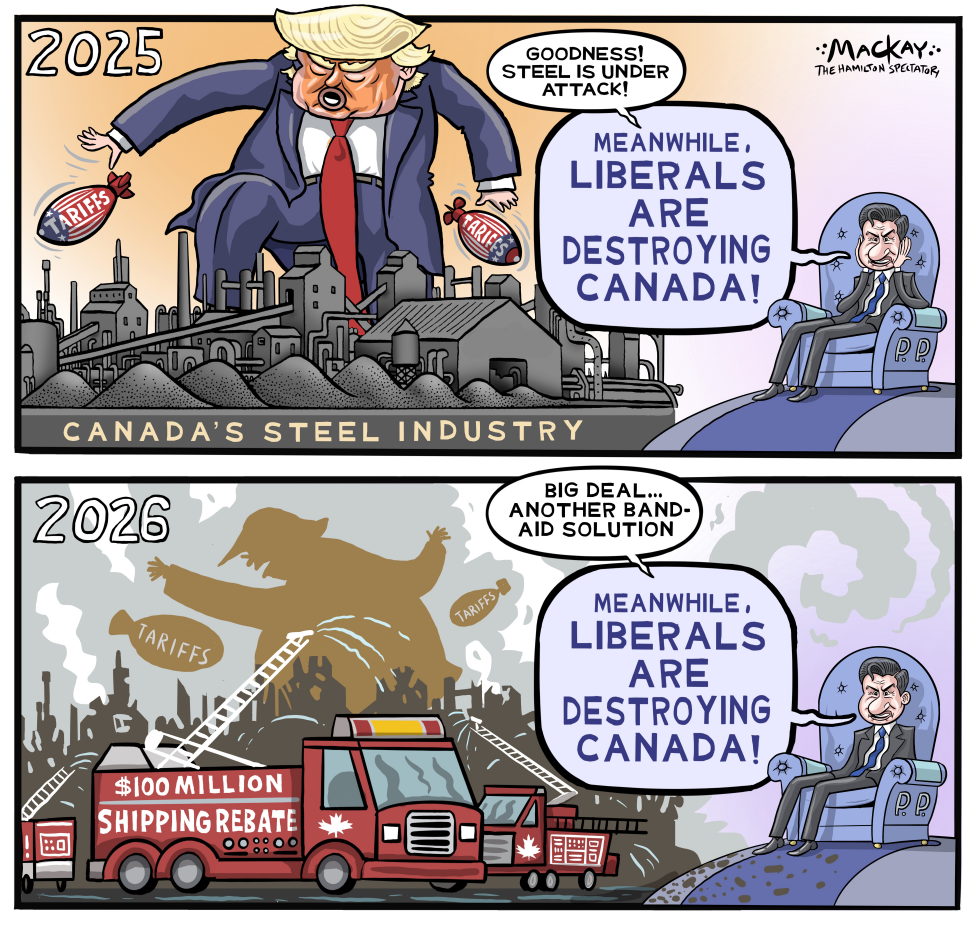
U.S. tariffs imposed on Canadian steel in 2025 triggered sharp declines in the domestic industry by 2026. The federal government responded with a $100 million shipping rebate. Conservative Leader Pierre Poilievre continued to focus attacks on the Liberal government rather than the trade shock. The cartoon argues this stance amounts to a repeated distraction from the core economic damage.
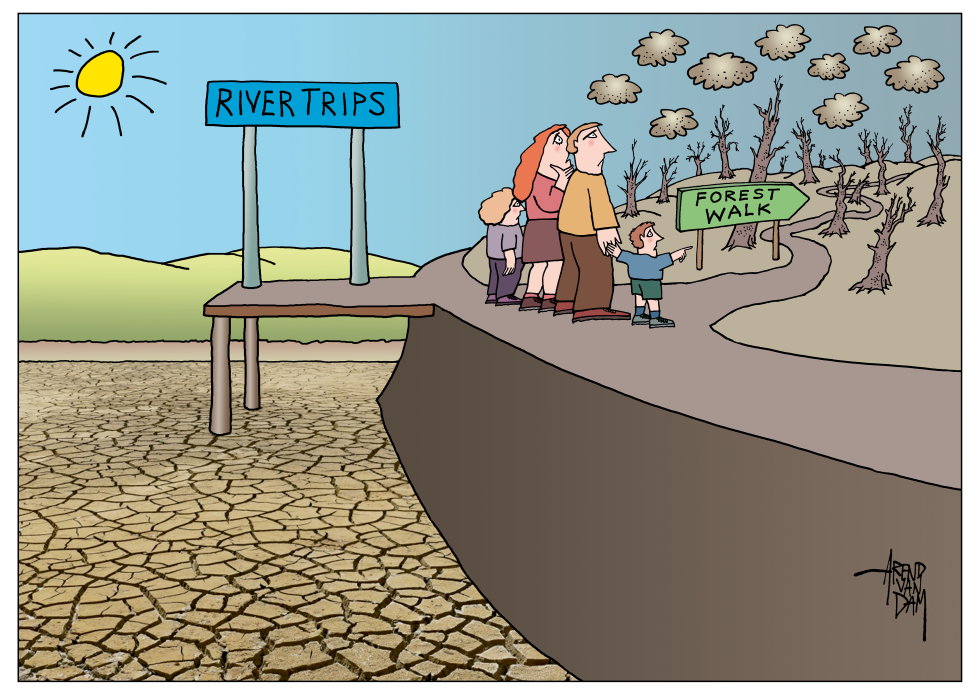
Persistent drought has left riverbeds cracked and forests withered across affected regions, undermining tourism and outdoor recreation. Families arriving for advertised river trips and forest walks instead encounter dry ground and dead trees. The piece highlights how climate-driven water shortages continue to disrupt normal seasonal activities without immediate policy relief in sight.
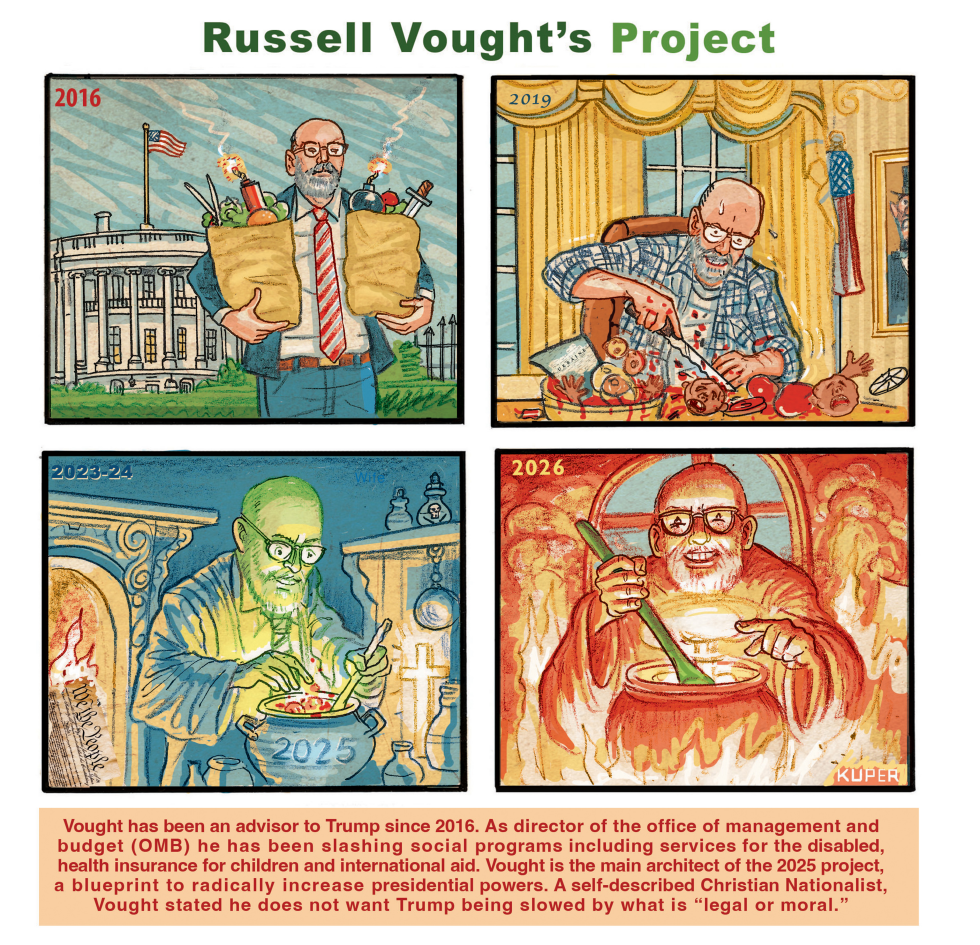
Russell Vought has served as a Trump advisor since 2016 and later directed the Office of Management and Budget, where he cut funding for disability services, children’s health insurance and foreign aid. He is the principal author of Project 2025, a plan to enlarge presidential authority. The cartoon presents his progression from 2016 through 2026 as a deliberate effort to remove legal or moral restraints on executive action.
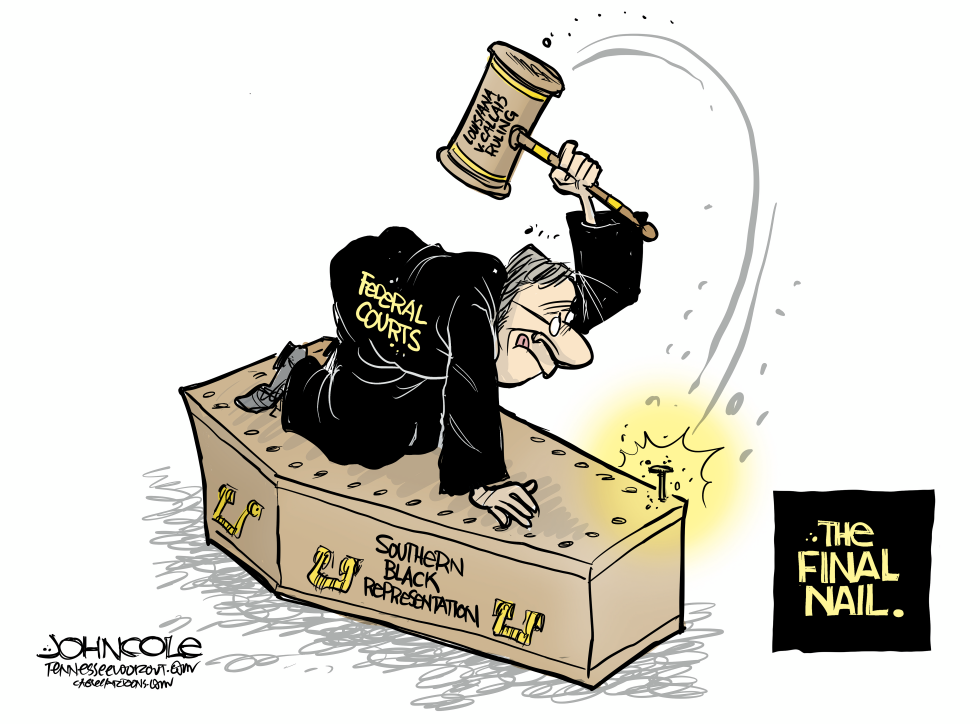
A federal court ruling on Louisiana redistricting has reduced black congressional representation across southern states. The decision follows ongoing litigation over district maps and voting access. It matters because it alters the number of majority-minority seats available in Congress. The piece argues the ruling delivers a decisive setback to those representation gains.
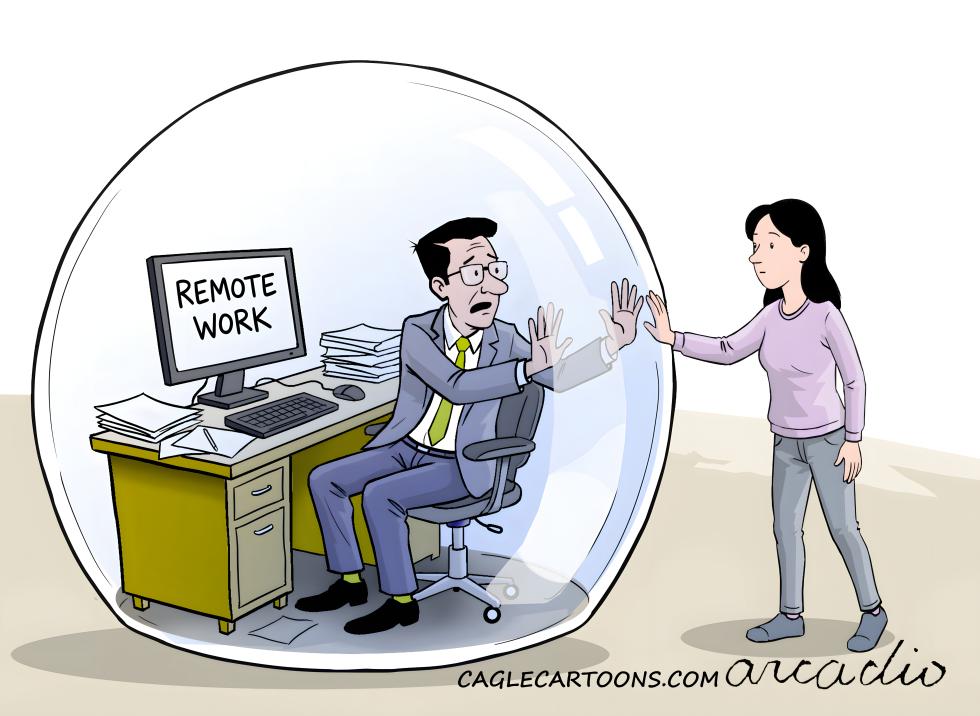
Remote work arrangements have expanded rapidly since the pandemic, allowing employees to perform duties from home but raising concerns about reduced collaboration and social connection in offices. The piece responds to ongoing debates over hybrid schedules and their impact on workplace culture. It takes the position that remote setups create artificial barriers that separate workers from direct human interaction and shared reality.
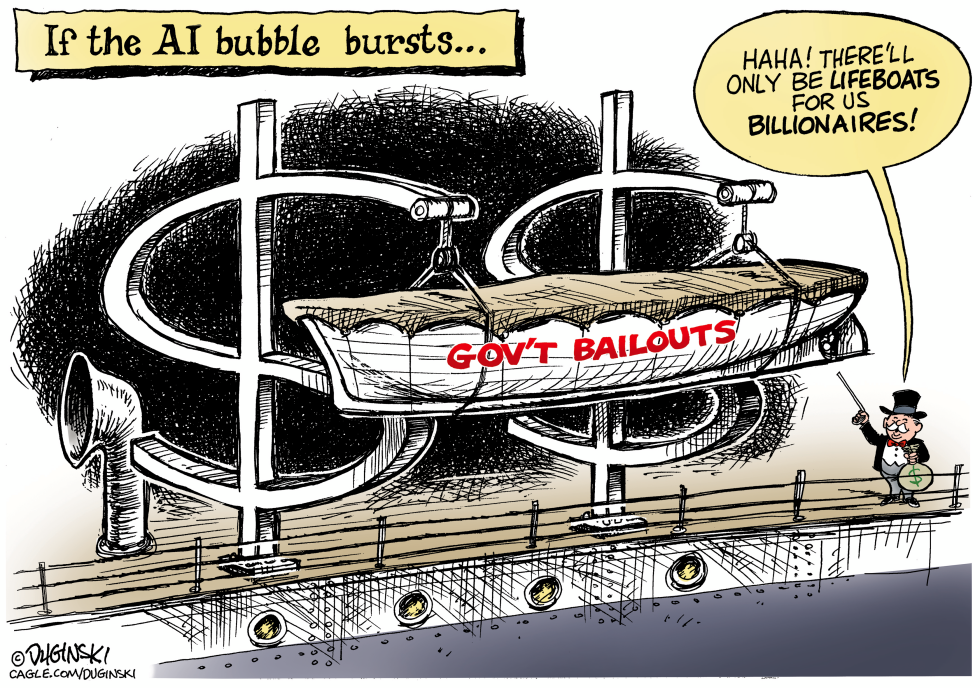
Speculation grows over potential government intervention if the artificial intelligence sector experiences a sharp downturn. Industry leaders and investors face questions about whether public funds would support failing companies. The editorial argues that any such support would primarily protect billionaires rather than address wider economic fallout from overvalued tech assets.
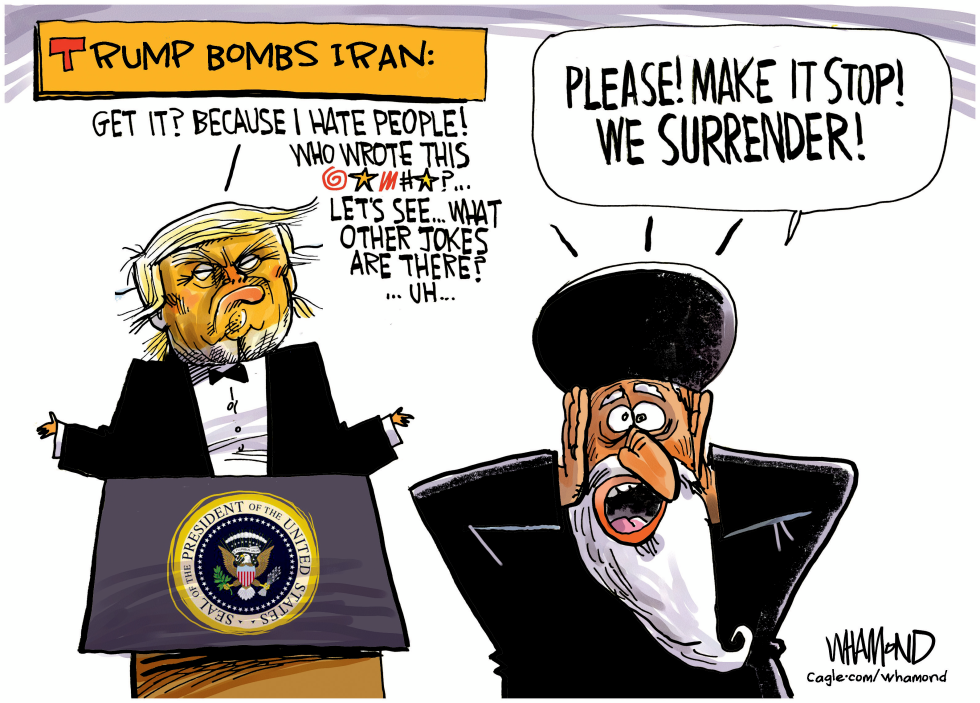
President Trump ordered strikes on Iran in late July 2026, prompting an immediate public plea for surrender from Iranian leadership. The action escalates tensions in the Middle East and raises questions about U.S. military objectives. The editorial takes the position that the strikes reflect personal animus rather than strategic necessity and mocks the president's framing of the operation.
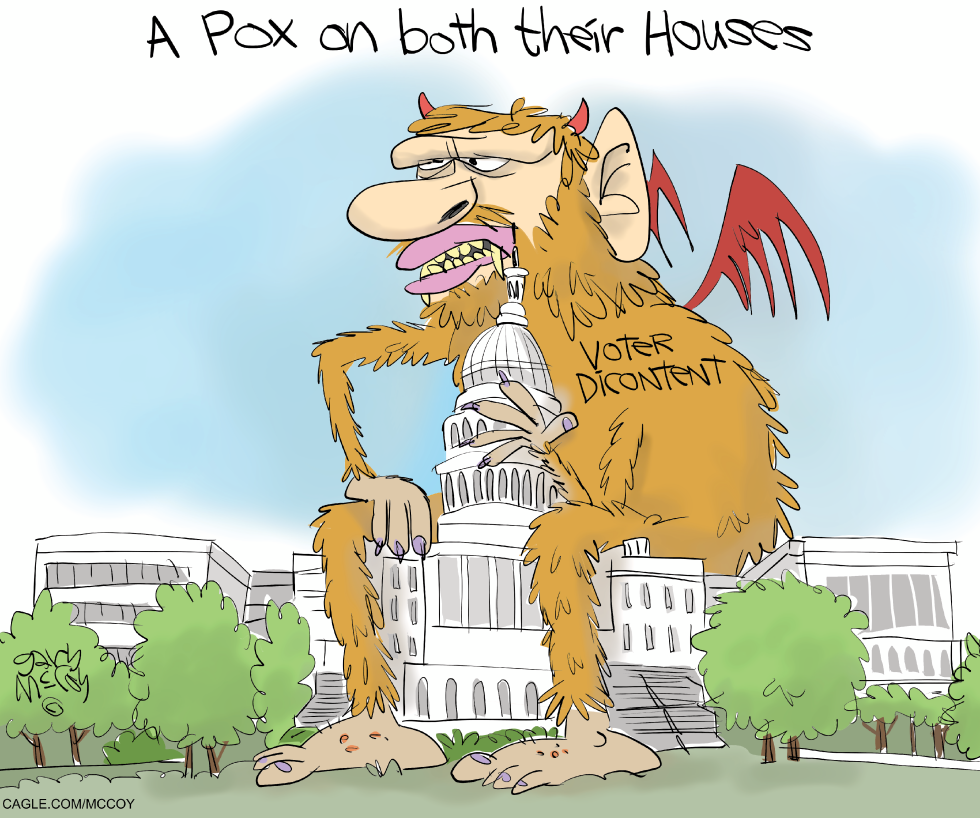
Voter frustration with Congress has grown amid stalled legislation and partisan gridlock on Capitol Hill. The piece portrays this sentiment as a towering monstrous force looming over the legislative branch. It argues that public anger targets both parties equally for failing to address key issues.
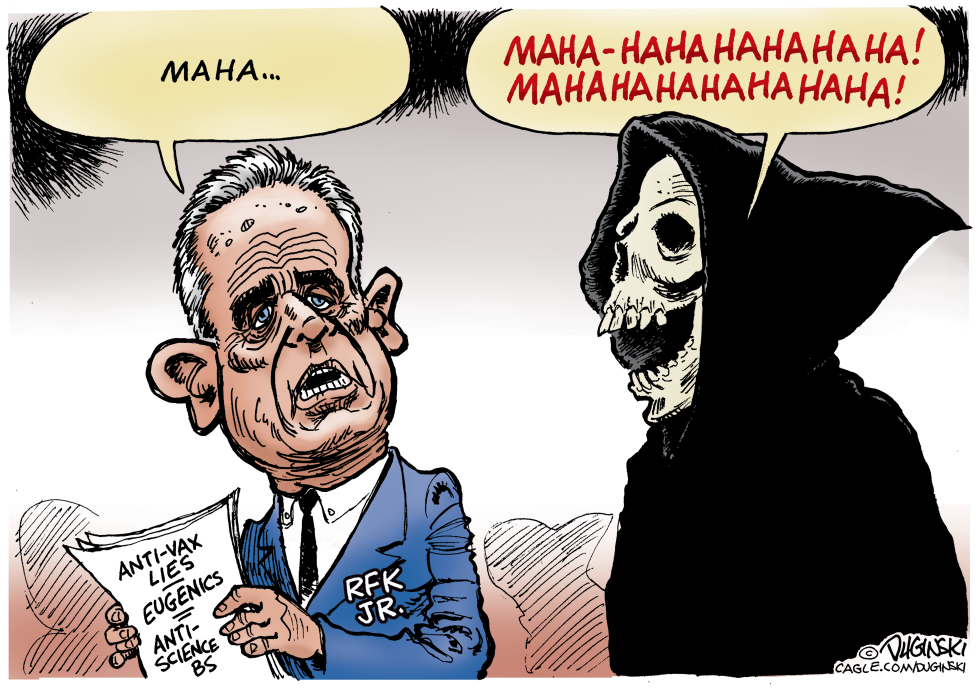
Robert F. Kennedy Jr. continues promoting Make America Healthy Again initiatives tied to his anti-vaccine positions in mid-2026. The approach draws criticism for linking public health measures to eugenics concerns and undermining scientific consensus. The editorial takes the position that such rhetoric risks real harm by eroding trust in established medical guidance.
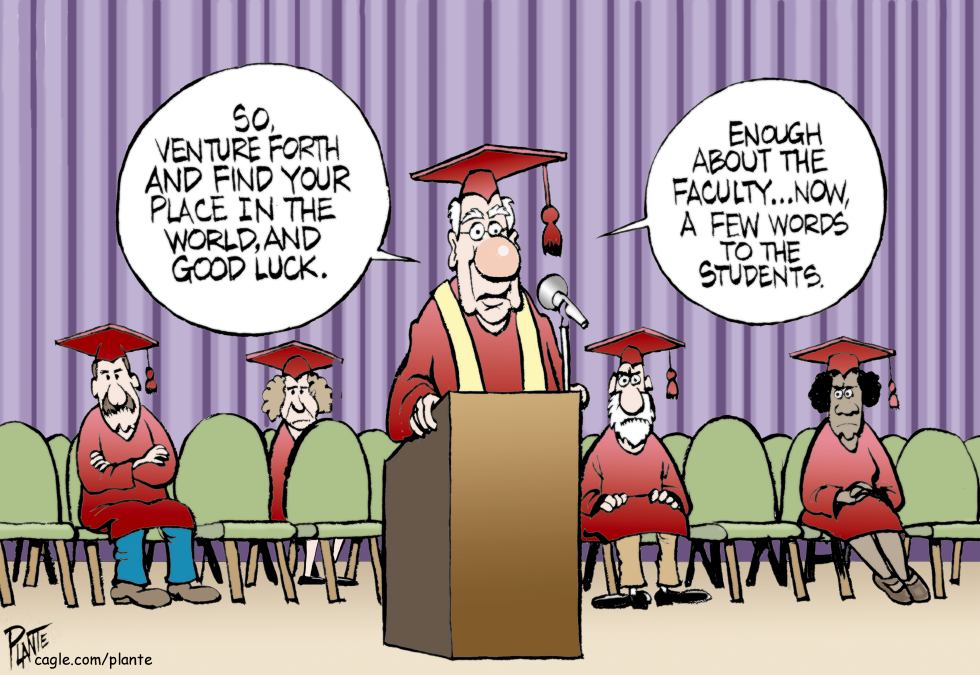
At a 2026 university commencement, the speaker at the podium tells seated faculty members in caps and gowns that discussion of their situation is over before turning to the graduates. The scene reflects ongoing budget pressures on colleges and universities after the pandemic, including professor layoffs and loss of tenure.
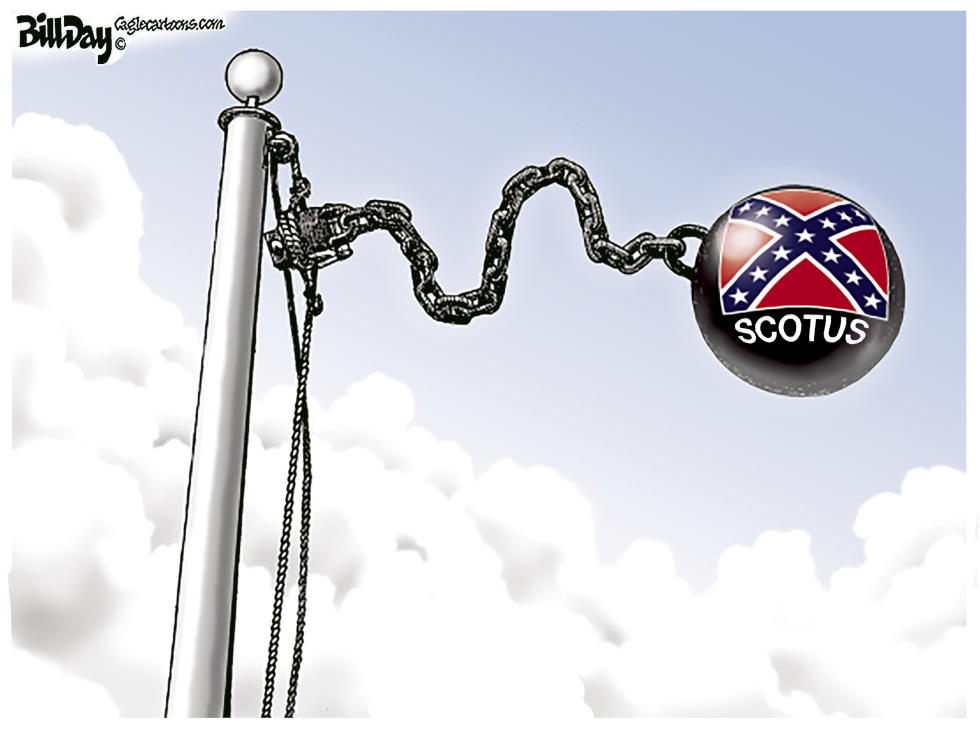
The cartoon shows a flagpole with a chain and wrecking-ball style weight. The weight displays the Confederate battle flag and the word SCOTUS. Publication occurred on May 17 2026. The image responds to ongoing debates over Supreme Court decisions involving voting rights and reapportionment. The visual links the court to symbols of the Confederacy.
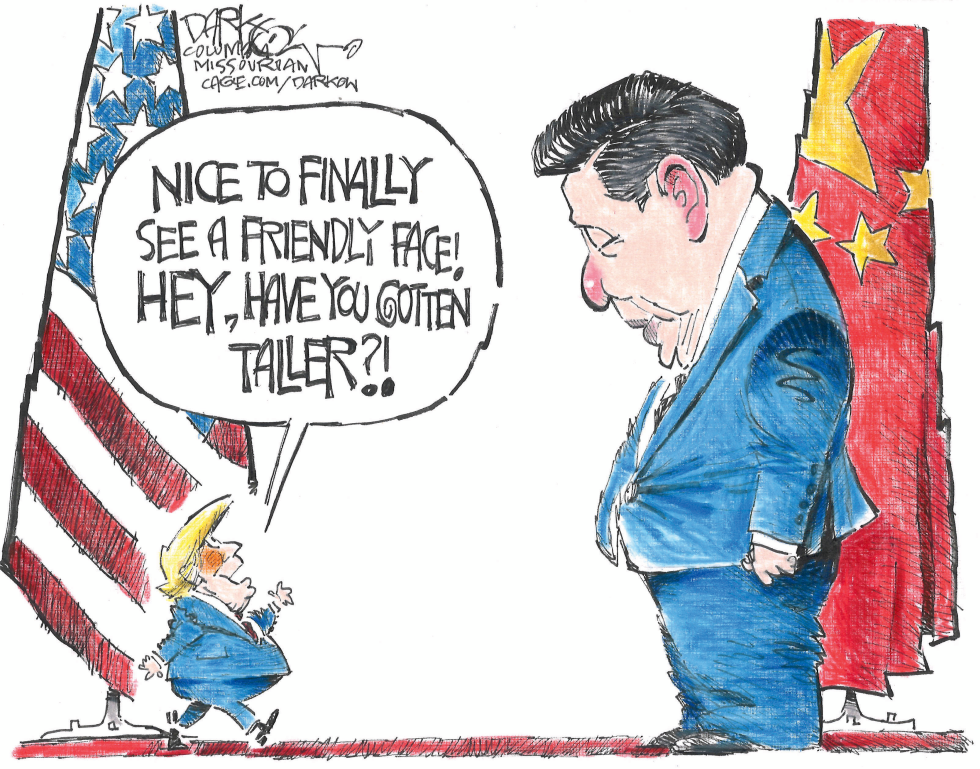
The cartoon depicts a small Donald Trump figure positioned beside a large American flag, addressing a much taller figure in a blue suit standing next to a prominent Chinese flag. The speech bubble from Trump reads about finally seeing a friendly face and notes increased height. The title references a diminished president. Publication occurred on May 12 2026 amid ongoing US China diplomatic engagements involving trade and energy topics.
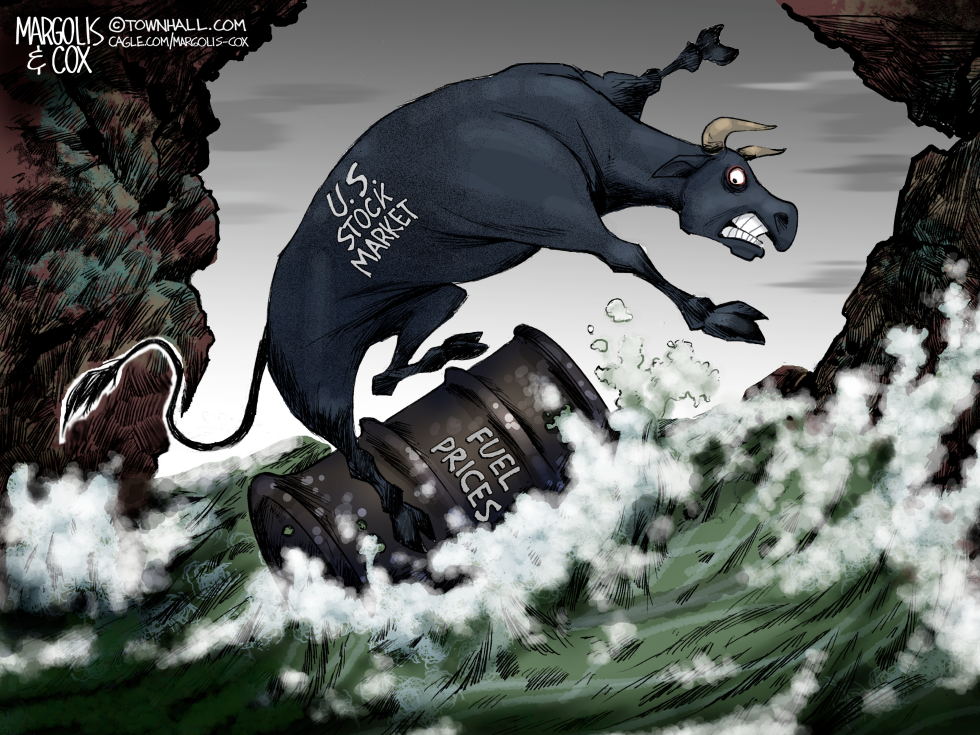
The cartoon shows a fierce black bull, emblazoned with 'U.S. Stock Market,' plummeting off jagged cliffs into a turbulent green sea where an oil barrel labeled 'Fuel Prices' tips over amid white foam. This visual packs a punch on how rising fuel prices can drag down the bull market, touching on economy, stocks, oil, prices, portfolio, and market tags. It's a classic setup: the bull charges ahead but hits the wall of energy costs, splashing into chaos. Editors see these often, where financial optimism meets harsh commodity realities, making it relatable for readers watching their investments swirl in the currents.
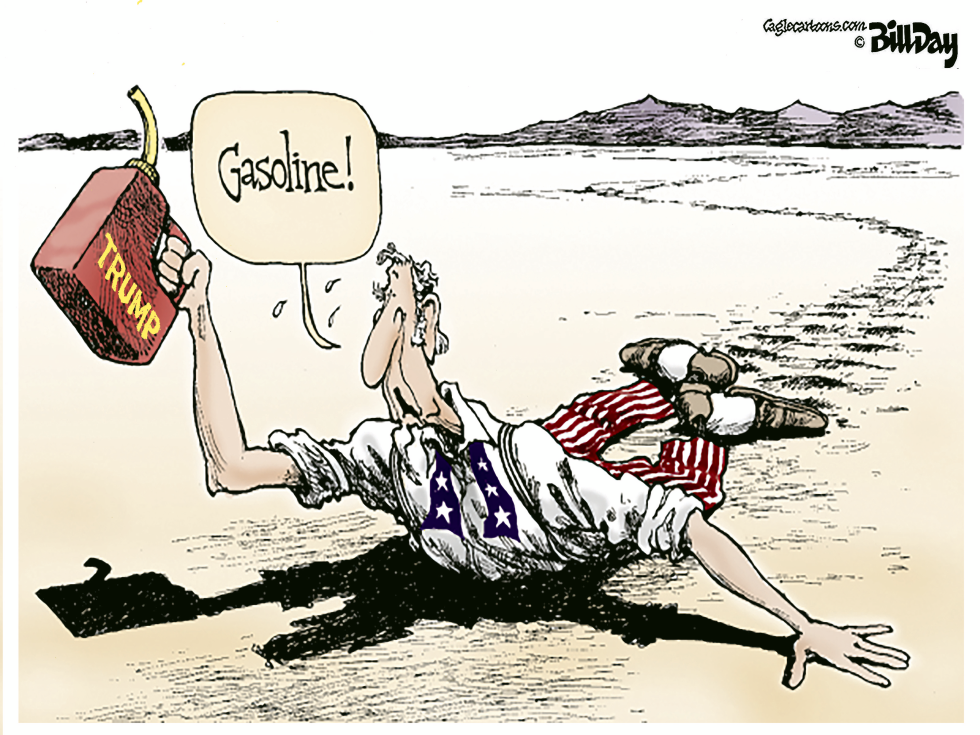
Bill Day's cartoon shows Uncle Sam in American flag attire, crawling through a sandy desert with distant mountains, his trail marking exhaustion. He grips a red gas can labeled Trump, spout dripping, and yells 'Gasoline!' in a speech bubble. The scene captures desperation for fuel, tying into political satire on energy policies. Tags like political cartoon Trump gasoline, Uncle Sam crawling desert Trump gas can, satirical cartoon high gas prices Trump, Bill Day political cartoon 2026, American flag outfit man needing gasoline, and desert survival political satire Trump underscore the visual punch.
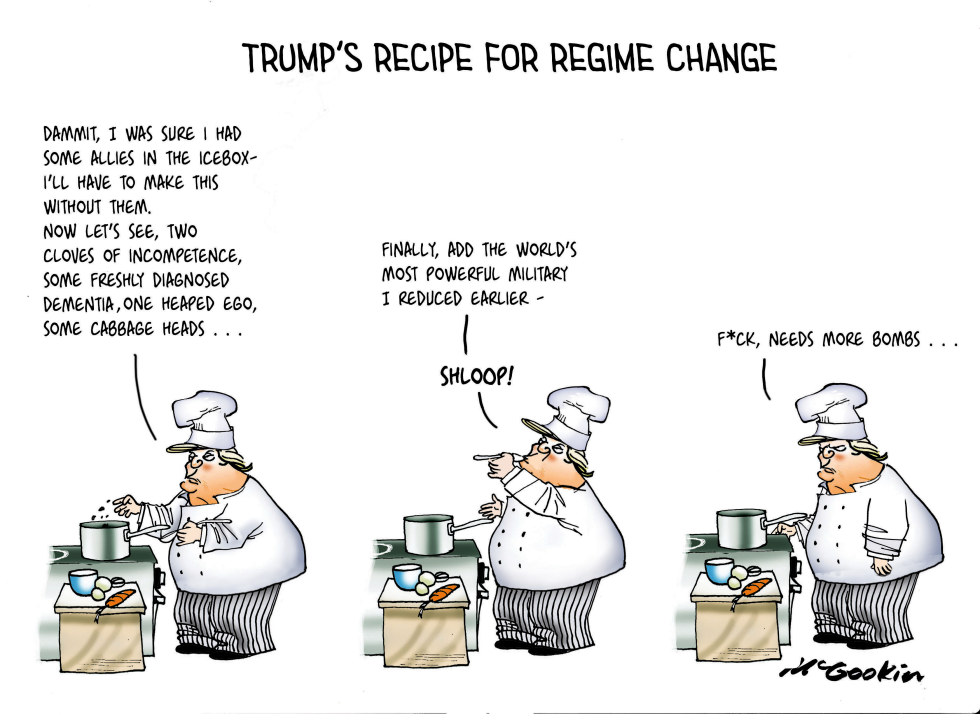
The image shows Donald Trump depicted as a chef preparing a dish labeled regime change. Three panels illustrate adding ingredients like incompetence and dementia then reducing military power before demanding more bombs. The work responds to ongoing tensions involving Iran and regional conflicts as of March 2026.