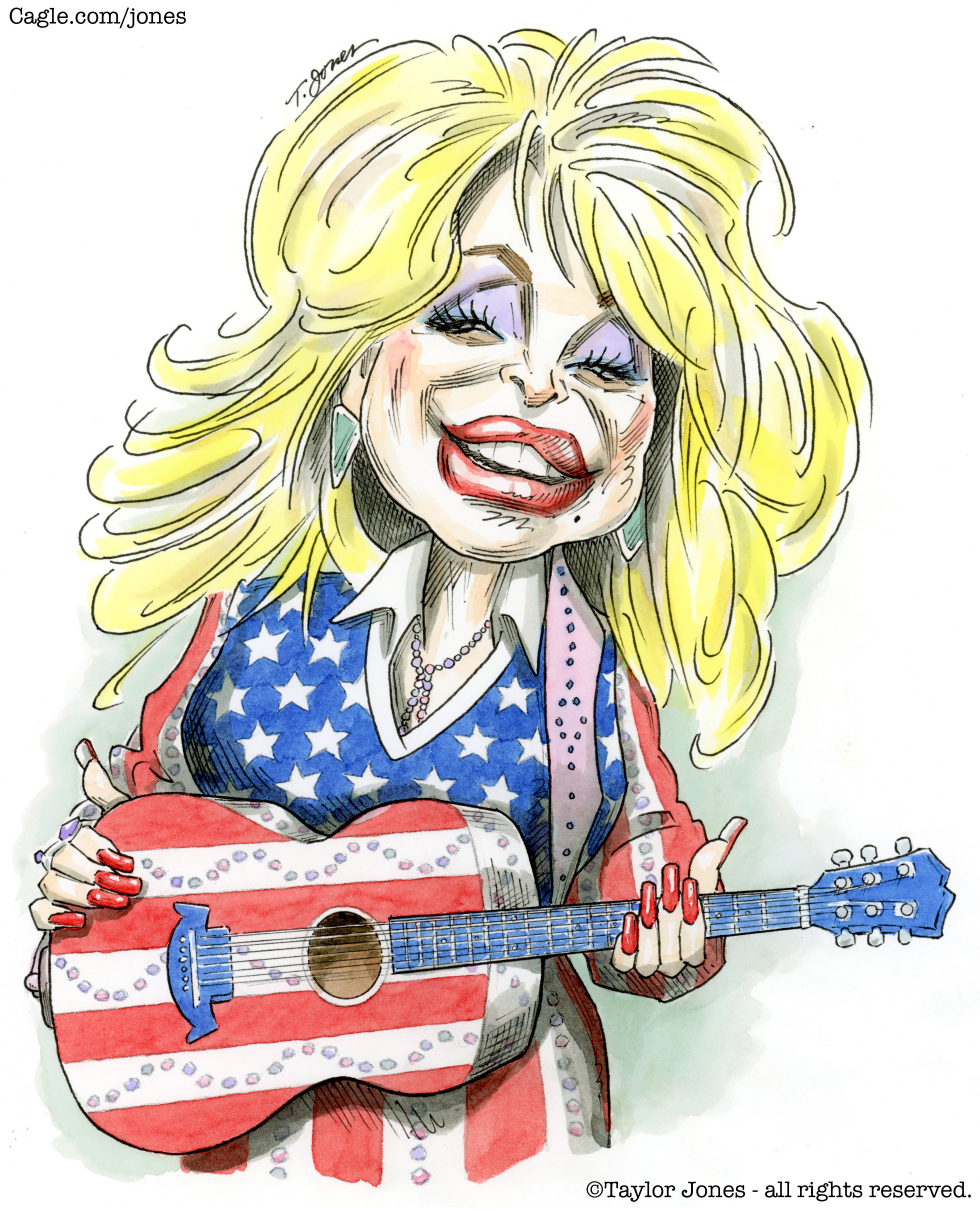
Dolly Parton appears in a vibrant portrait holding a guitar covered in American flag colors. The image captures her long standing role as a prominent figure in American entertainment without tying to any specific recent event.
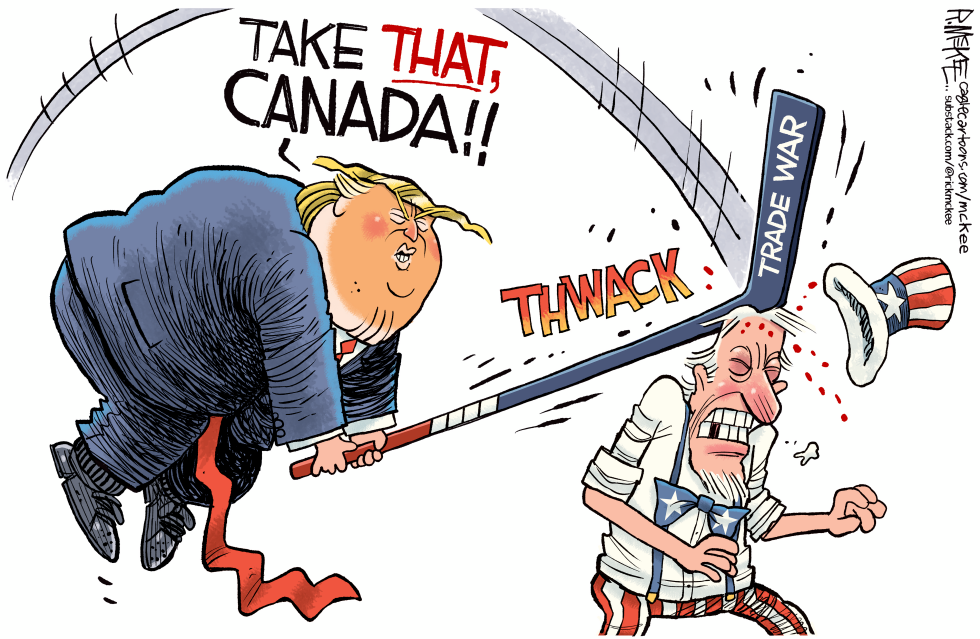
President Trump escalated trade tensions with Canada through new tariffs and barriers in August 2026. The moves targeted key sectors including lumber, dairy and autos. Domestic industries braced for retaliation while consumers faced higher prices. The action drew criticism for harming American interests alongside the intended foreign pressure. The cartoon portrays the policy as self-inflicted damage on the United States itself.
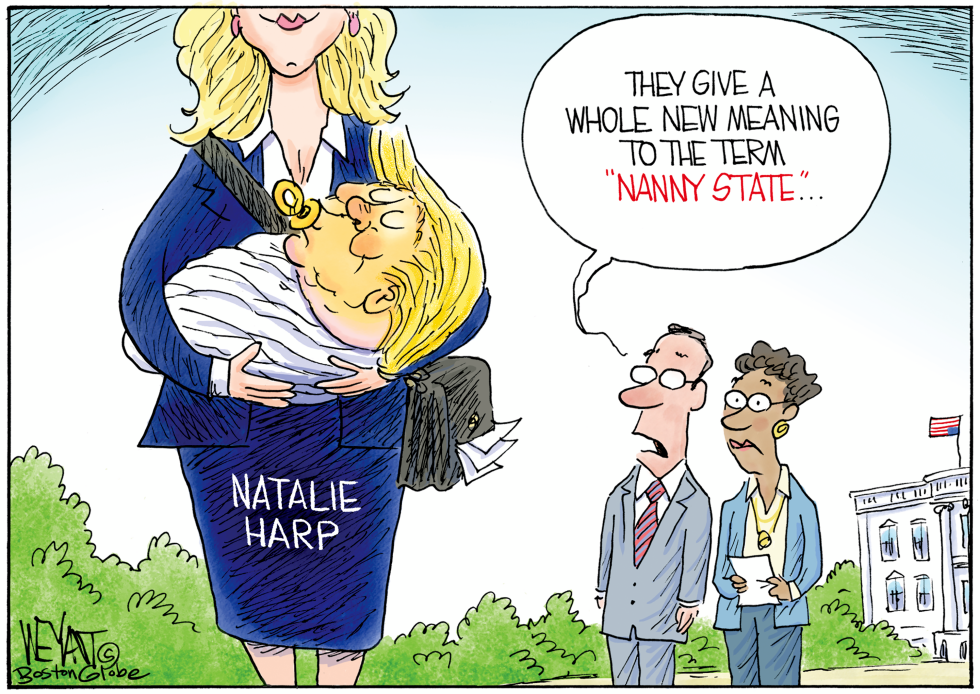
Natalie Harp, a Trump aide, appears in a Boston Globe cartoon holding an infant version of the former president. The image plays on the term nanny state as Harp carries Trump in a carrier. The piece comments on the close personal dynamic between the two figures amid ongoing political developments in 2026.
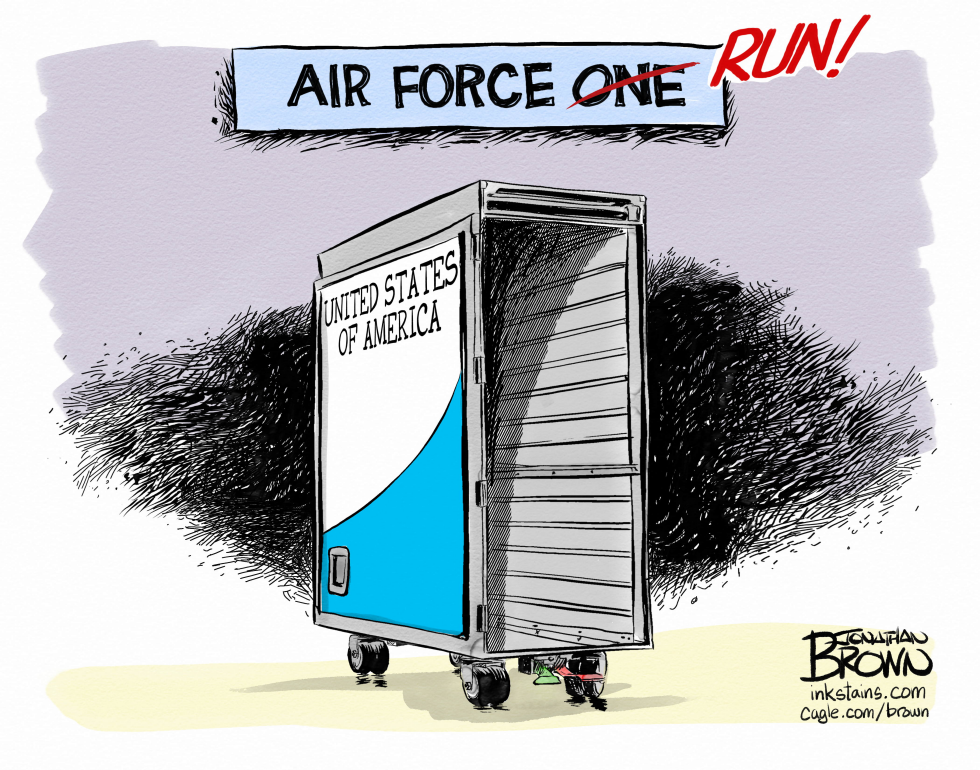
A wheeled airline catering cart occupies the center of the frame, painted in the livery of the presidential aircraft: white upper body, curved blue lower panel, and UNITED STATES OF AMERICA lettered down the side. Its full height door hangs open on empty wire shelving. Above it a pale blue placard reads AIR FORCE ONE, with ONE struck through in red and RUN! added beside that word in the same color. Two neckties poke out from between the casters underneath, one of them the long red tie Donald Trump is known for, the only trace of the men folded up inside. The drawing responds to reports that Trump sheltered in an airline galley cart against an assassination threat traced to Iran, turning the most recognizable branding in presidential aviation into an instruction to flee. Jonathan Brown signed the lower right corner alongside inkstains.com and Cagle.com/brown.
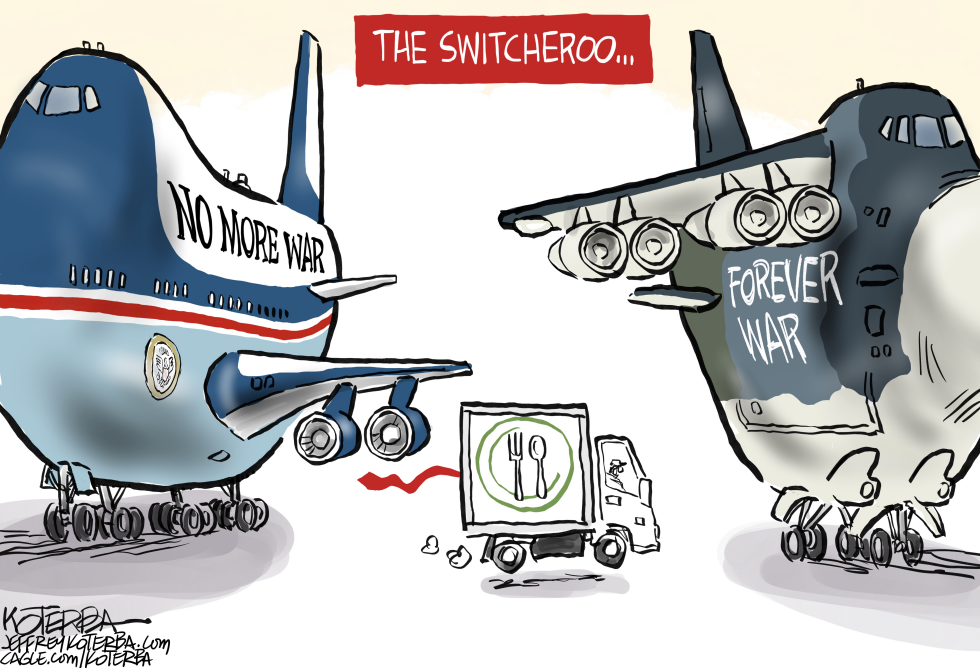
A political shift in military posture draws attention as commitments move from ending wars to sustaining them indefinitely. The editorial critiques the reversal as a cynical about-face on foreign engagements.
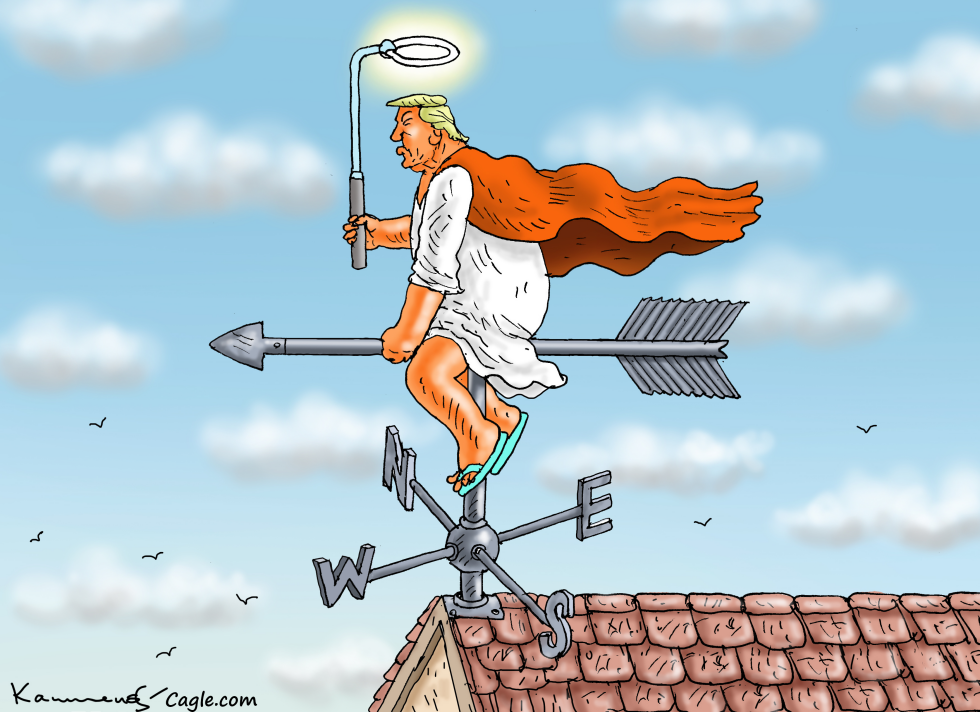
Donald Trump appears in public commentary as a changeable political presence. The depiction places the former president on a rooftop weather vane, suggesting ongoing shifts in position or influence. No single recent policy action or vote anchors the image. The visual argument frames Trump as responsive to prevailing directions rather than fixed in stance. This reflects broader debates over consistency in leadership and public perception of adaptability.
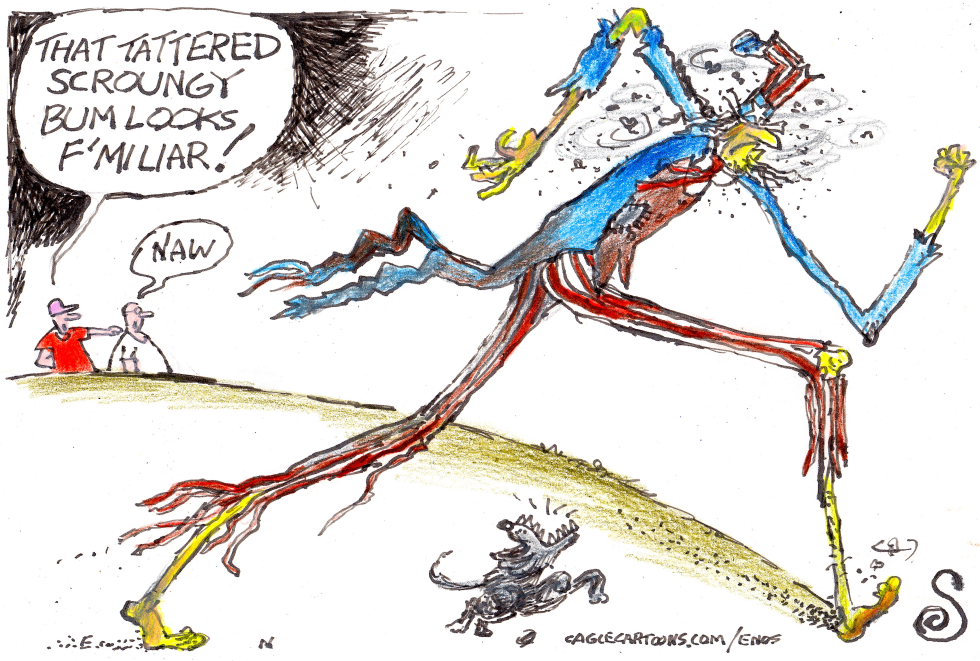
A symbolic national figure appears in ragged condition on a public stage. Observers note its scroungy appearance and question the resemblance. The piece highlights ongoing concerns about the state of government institutions and public trust in their condition.
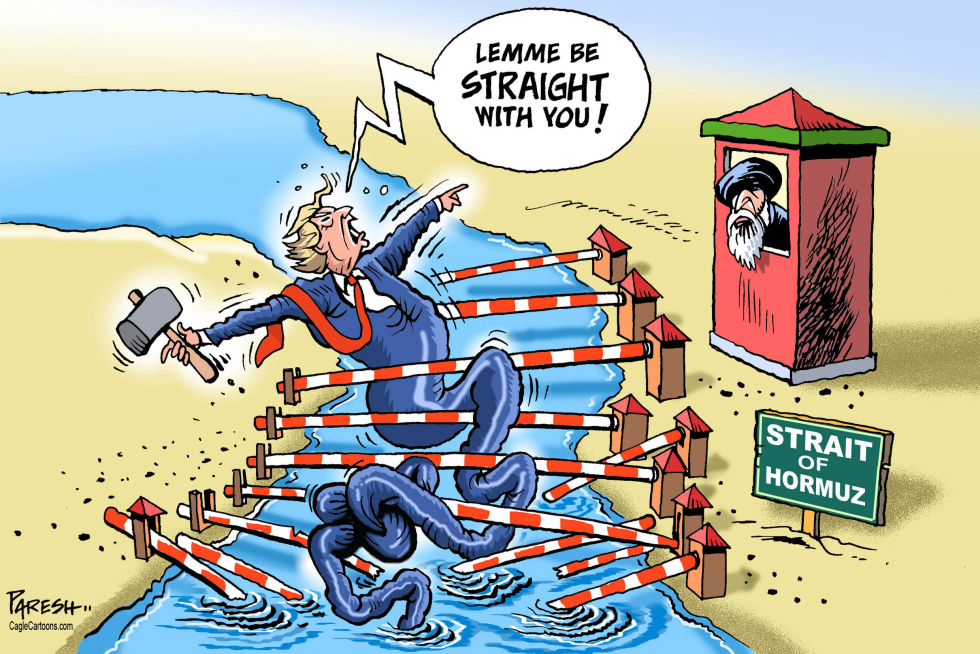
The cartoon depicts Donald Trump entangled in red-and-white barriers stretching across the Strait of Hormuz. He holds a hammer in one hand while gesturing with the other and declares through a speech bubble that he wants to be straight with the viewer. A bearded figure in traditional attire observes from inside a red booth on the shore. A green sign identifies the waterway. The scene references ongoing tensions involving navigation rights and U.S.-Iran relations in the strategic chokepoint.
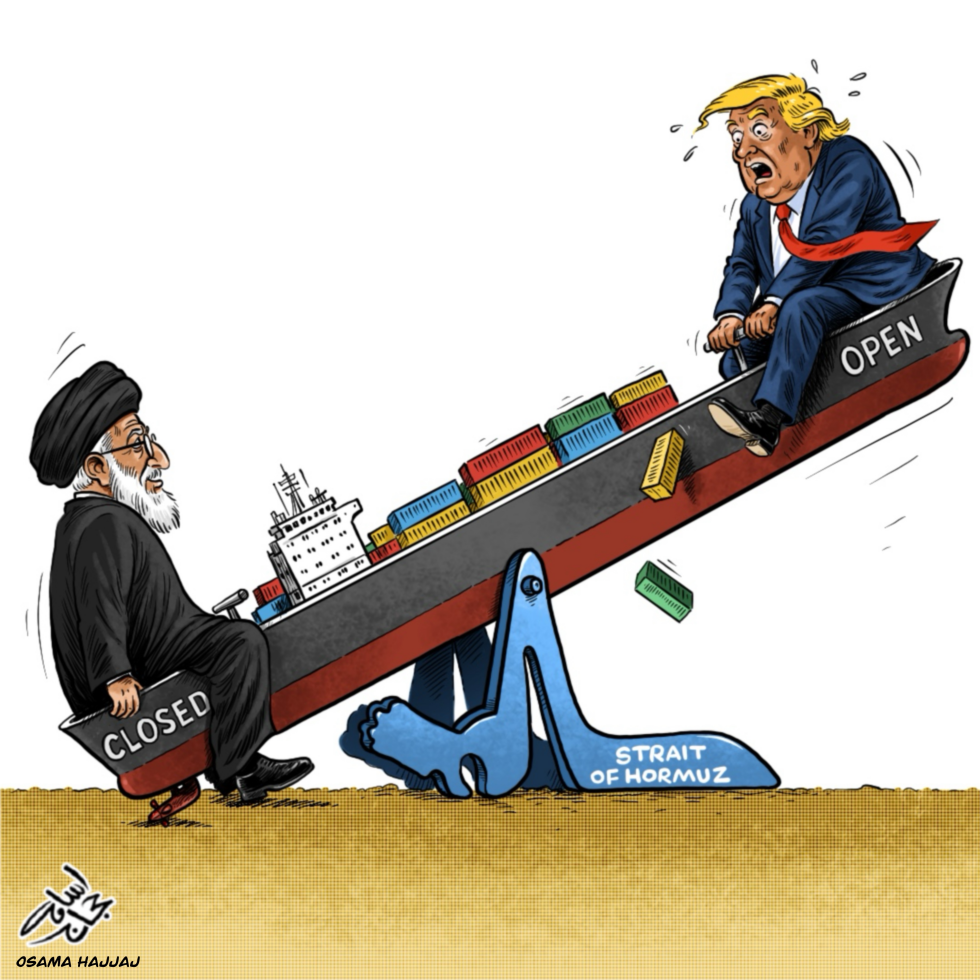
A political cartoon shows Donald Trump and Ayatollah Khamenei on opposite ends of a seesaw labeled Strait of Hormuz. Trump occupies the open side while the Iranian leader sits on the closed side. Colorful shipping containers line the beam with some falling off. The image highlights tensions over the vital oil shipping route. The cartoon uses the seesaw to illustrate competing efforts to control access through the strait.
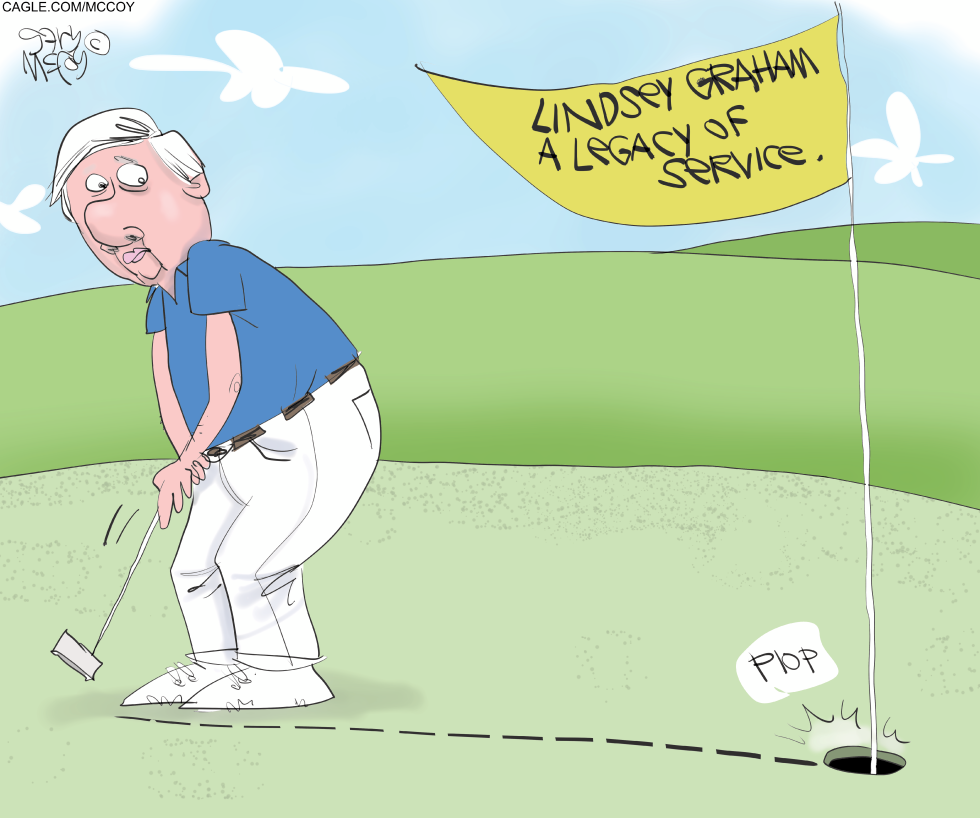
On July 12 2026 Gary McCoy depicts Sen. Lindsey Graham on a golf green missing a short putt. The ball rolls past the hole as a yellow flag proclaims a legacy of service. The cartoon uses the golf metaphor to comment on the South Carolina Republican's record in Congress.
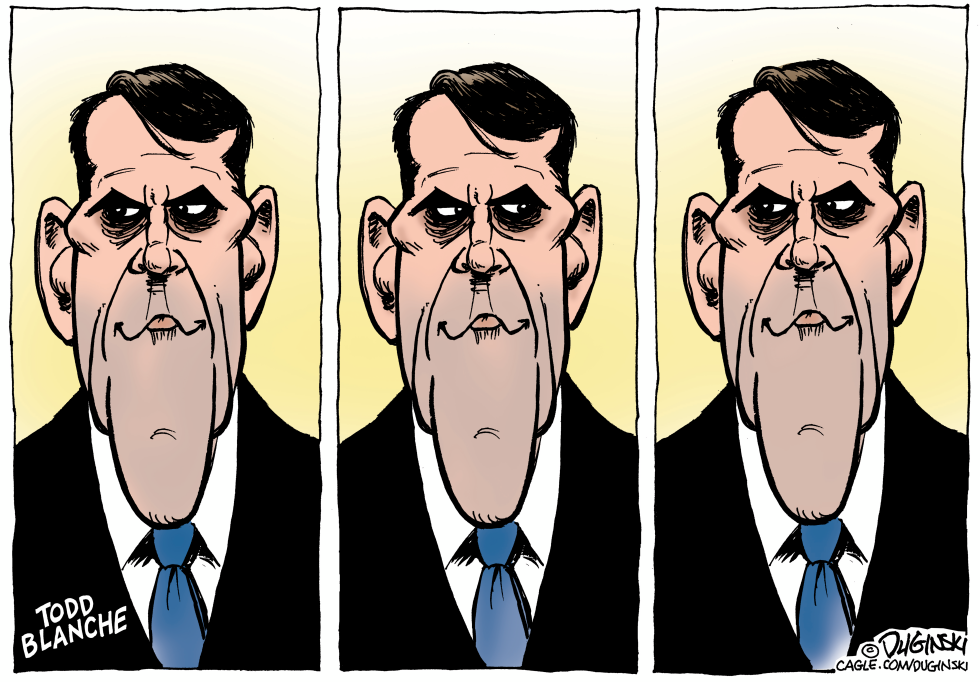
Todd Blanche is shown in three adjacent panels. Each panel presents a close view of the same man wearing a dark suit, white shirt and blue tie. The expressions feature narrowed eyes, furrowed brows and a downturned mouth. Slight variations appear in head angle and eye direction between the panels. The left panel includes the name Todd Blanche in capital letters at the bottom. The right panel includes a copyright notice at the bottom. All three images share a light yellow gradient background and black borders.
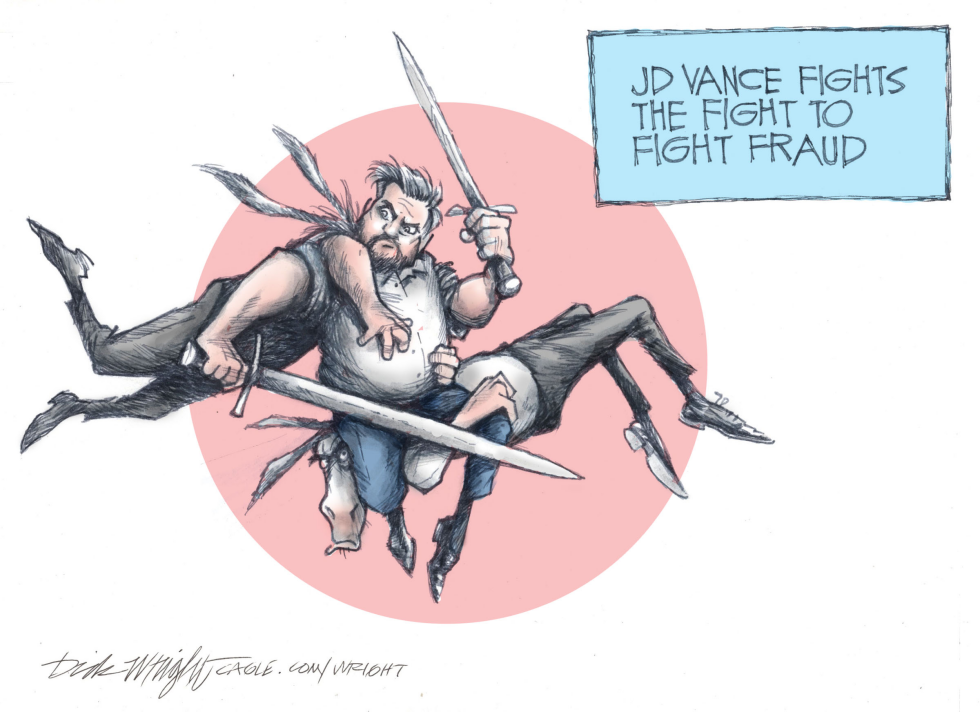
The July 10 2026 cartoon by Dick Wright shows JD Vance in mid-leap with two swords drawn against a prone figure topped by a donkey head. A blue text box reads JD VANCE FIGHTS THE FIGHT TO FIGHT FRAUD. The scene uses a red circle backdrop and captures the vice presidential figure in exaggerated combat stance amid torn clothing and motion lines.
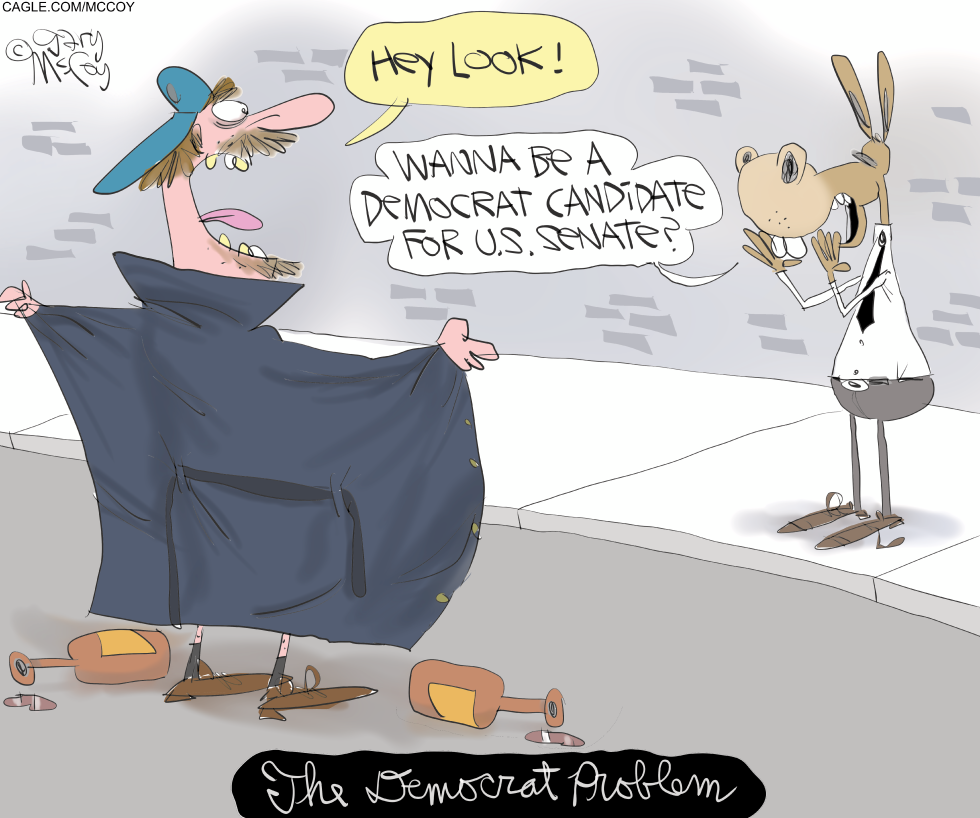
A trench-coated figure flashes on a sidewalk as a donkey in business attire extends a Senate candidacy offer. The July 2026 image from Gary McCoy labels the exchange as the Democrat problem. Scattered bottles and shoes lie at the flasher feet. The donkey speech bubble directly invites the figure to run for U.S. Senate. A separate bubble from the flasher draws attention to the moment.
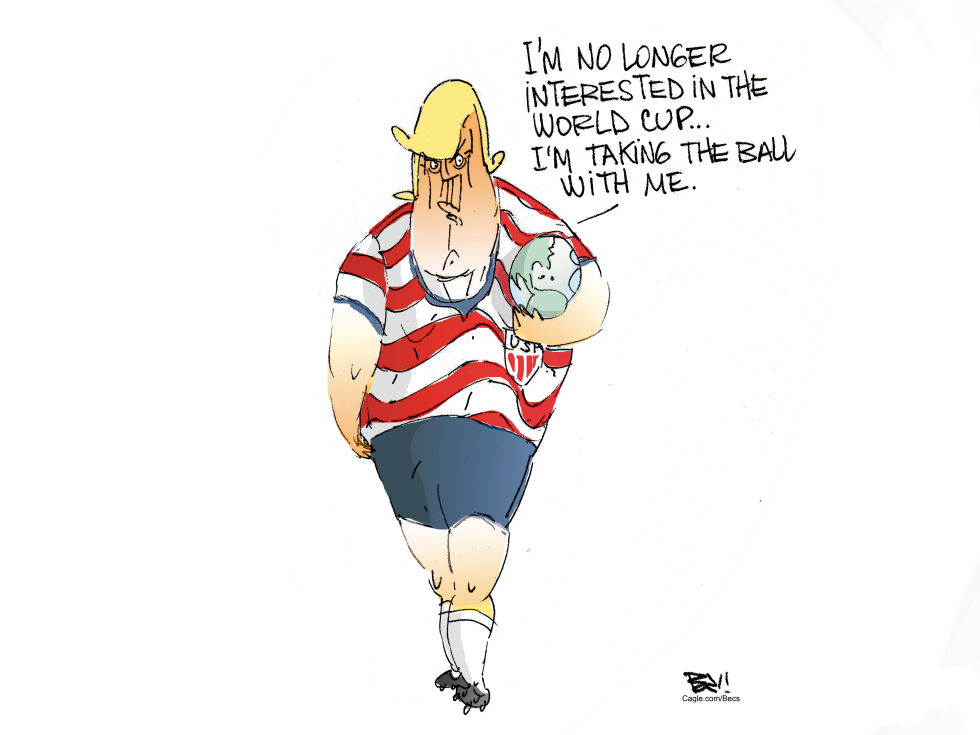
Donald Trump appears in a USA soccer jersey on July 9, 2026, clutching a globe and announcing he is no longer interested in the World Cup. The image shows him walking off with the ball under his arm. The cartoon responds to the 2026 World Cup hosted in North America and ongoing political debates over U.S. engagement in international events.
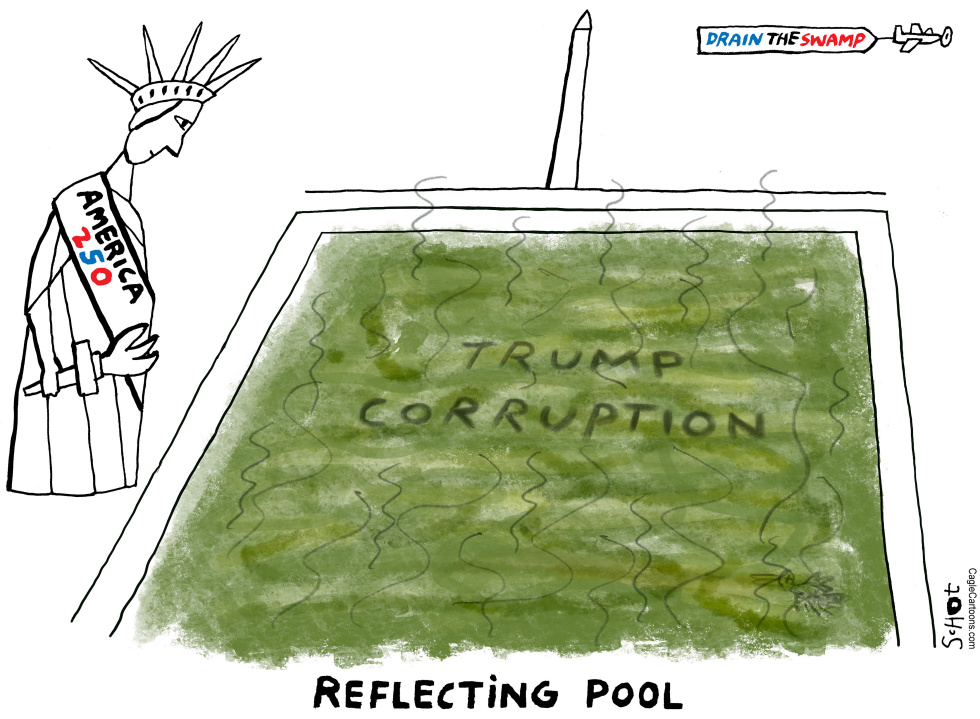
On July 9 2026 the cartoon shows the Statue of Liberty gazing at a reflecting pool filled with green murky water labeled Trump corruption. A banner above reads drain the swamp beside a small airplane. The figure wears an America 250 sash. The scene references ongoing political debates about government ethics and past campaign rhetoric during the America 250 period.