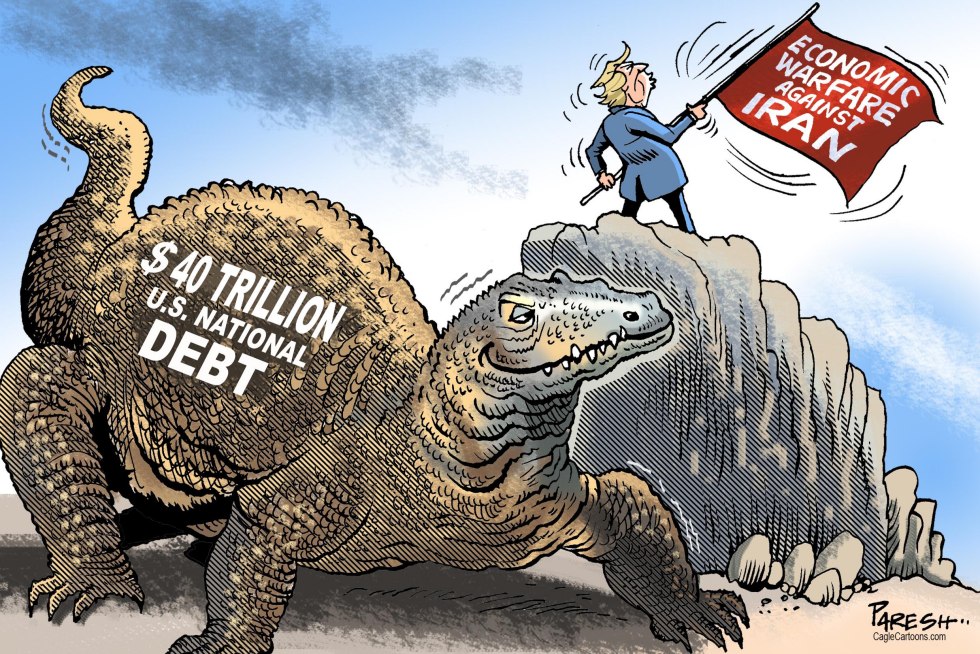
The image depicts Donald Trump standing on a rocky outcrop and waving a red flag reading Economic Warfare Against Iran. Below him a large dinosaur carries the label $40 Trillion U.S. National Debt on its side. The composition places the debt creature in motion near the rock formation. The scene responds to ongoing discussions of U.S. policy toward Iran and the size of federal obligations. The visual places the foreign policy action directly above the debt figure to link the two elements.
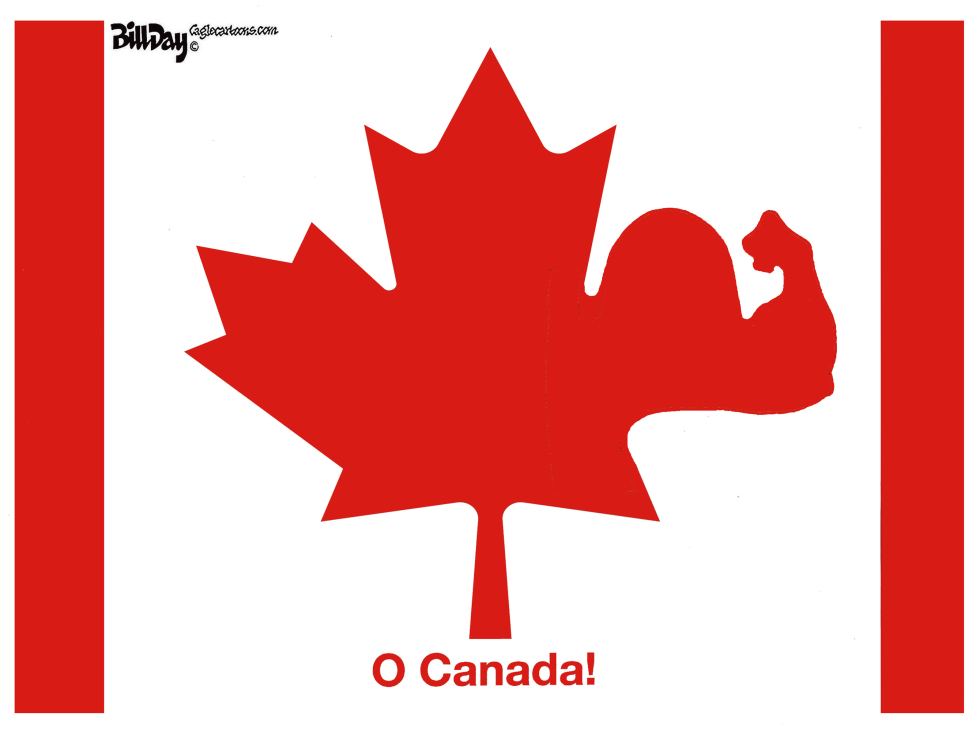
The Canadian flag appears with its central maple leaf altered to show a flexed bicep. No specific news event ties directly to the image on the publication date. The ongoing dynamic involves expressions of national pride and identity in Canada. The piece presents a straightforward visual of strength through the modified emblem paired with the national anthem phrase. It takes the position that Canada stands ready and capable on the world stage.
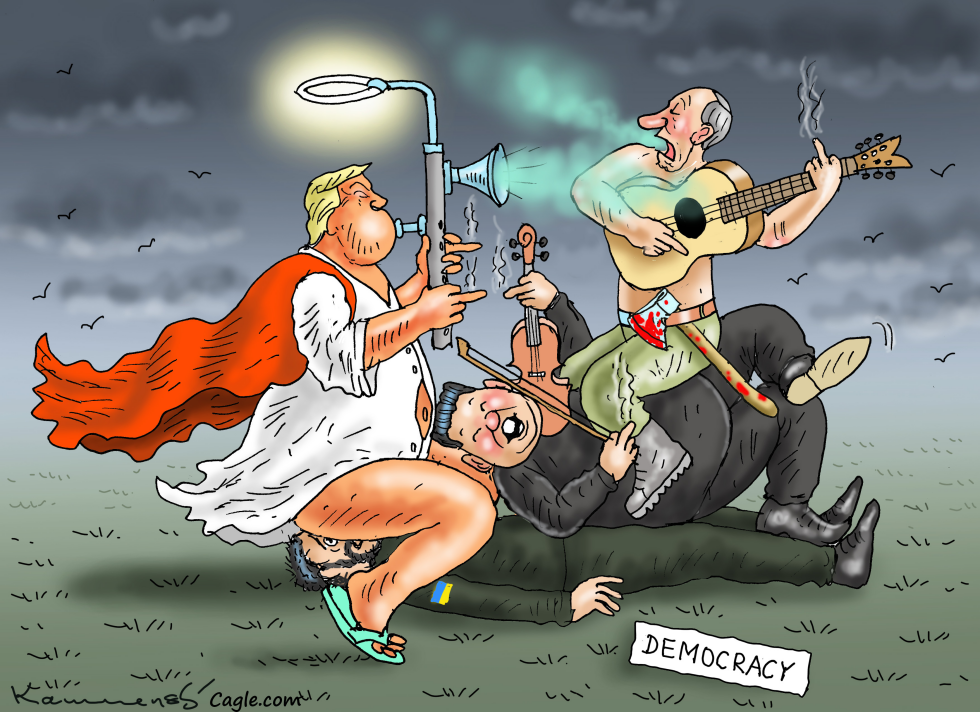
On August 21, 2026, the ongoing Ukraine conflict continued with no resolution in sight as U.S., Russian and Ukrainian leaders remained locked in diplomatic friction. The cartoon responds by depicting the three men as musicians whose finger-pointing and instruments create discord rather than harmony, underscoring the editorial view that personal posturing has overtaken substantive progress toward peace.
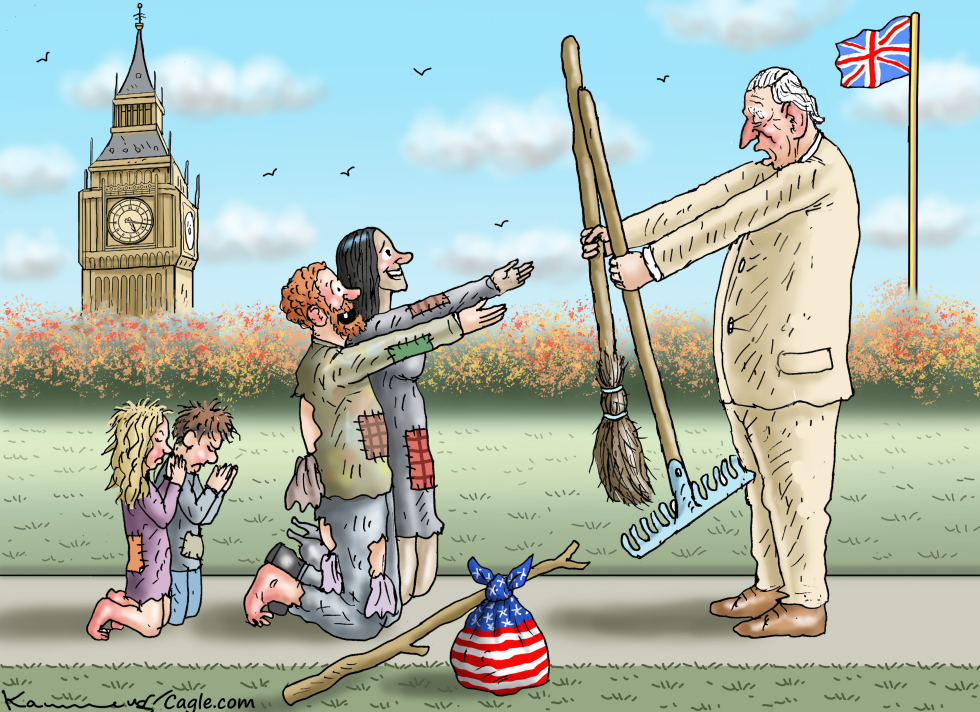
Prince Harry and family appear in tattered clothing seeking reentry to Britain as King Charles stands with a broom marked welcome near the Houses of Parliament. The scene reflects ongoing tensions over the couple's status after their move to the United States.
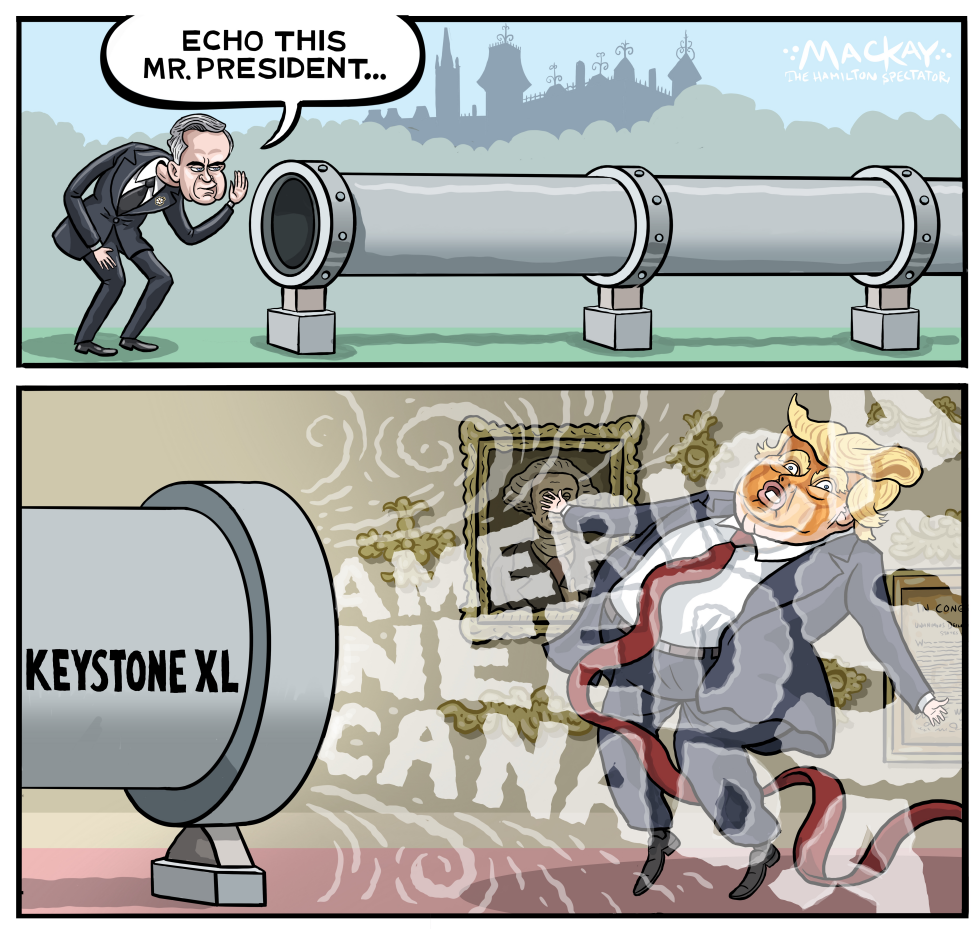
The Keystone XL pipeline project faces renewed scrutiny in 2026 as echoes of prior administration policies surface in energy and trade discussions. Officials reference past directives on cross border infrastructure while current stakeholders weigh environmental and economic impacts. The piece argues that the project continues to reflect lingering influence from earlier presidential priorities on fossil fuel development and international relations.
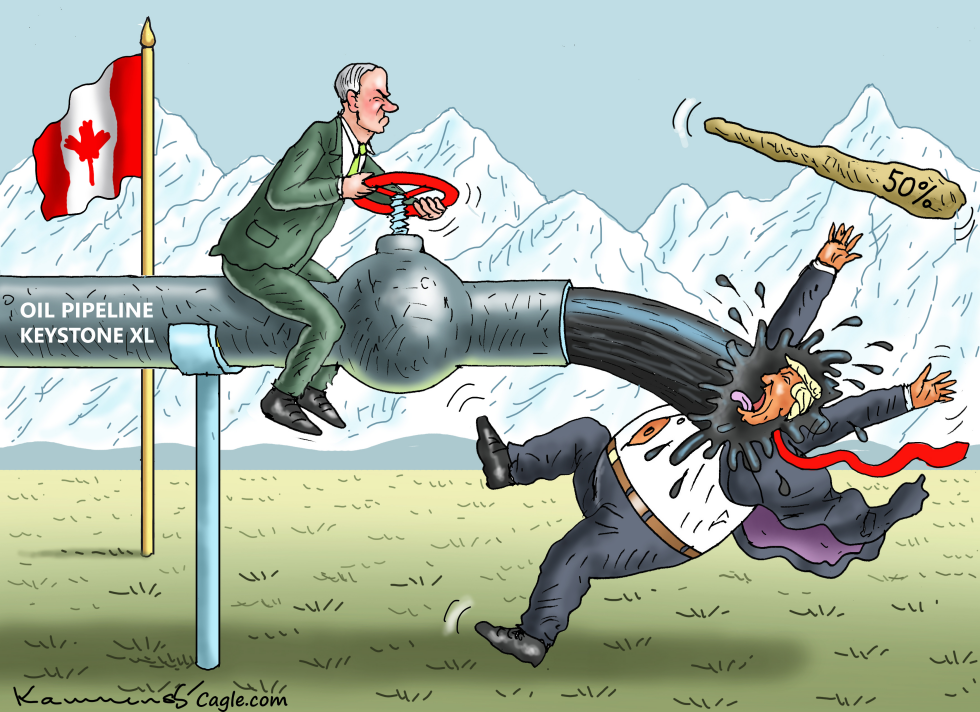
Canadian Prime Minister Mark Carney moves to restrict the Keystone XL pipeline in a direct action affecting U.S. interests tied to Donald Trump. The decision carries implications for cross-border energy flows and bilateral relations. The piece portrays the move as a targeted setback delivered through the pipeline controls.
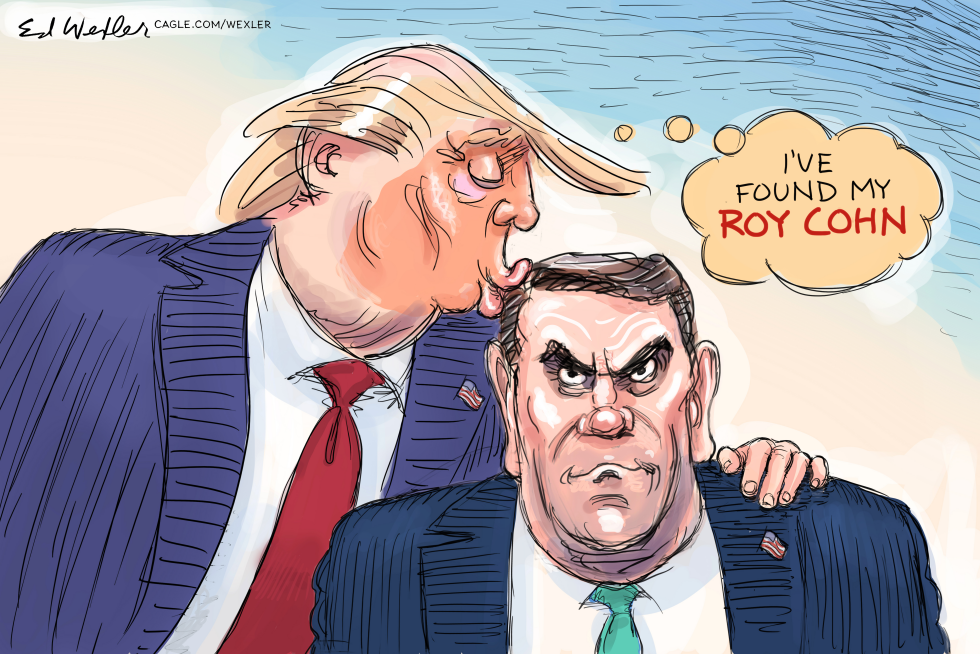
Donald Trump has publicly signaled interest in securing a new legal or political advisor modeled on his late attorney Roy Cohn. The reference revives memories of Cohn's aggressive tactics during Trump's early career. The development matters because it underscores Trump's preference for confrontational representation amid legal and political pressures. The piece portrays this choice as a deliberate return to combative strategy rather than measured counsel.
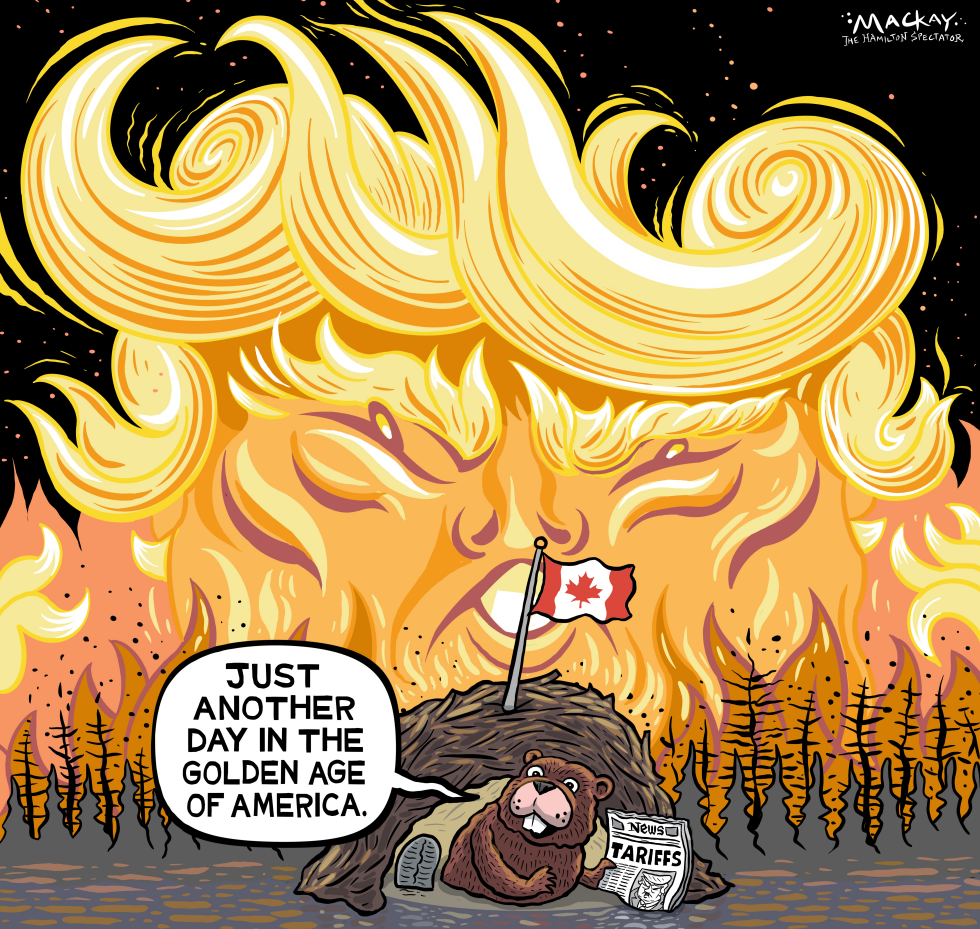
President Trump escalated tariff threats against Canada in mid-August 2026, targeting key exports and prompting Ottawa to brace for economic pressure. The move reignites bilateral trade tensions that have simmered since earlier rounds of duties. The cartoon portrays Canada hunkering down while dismissing the disruption as routine under the current administration.
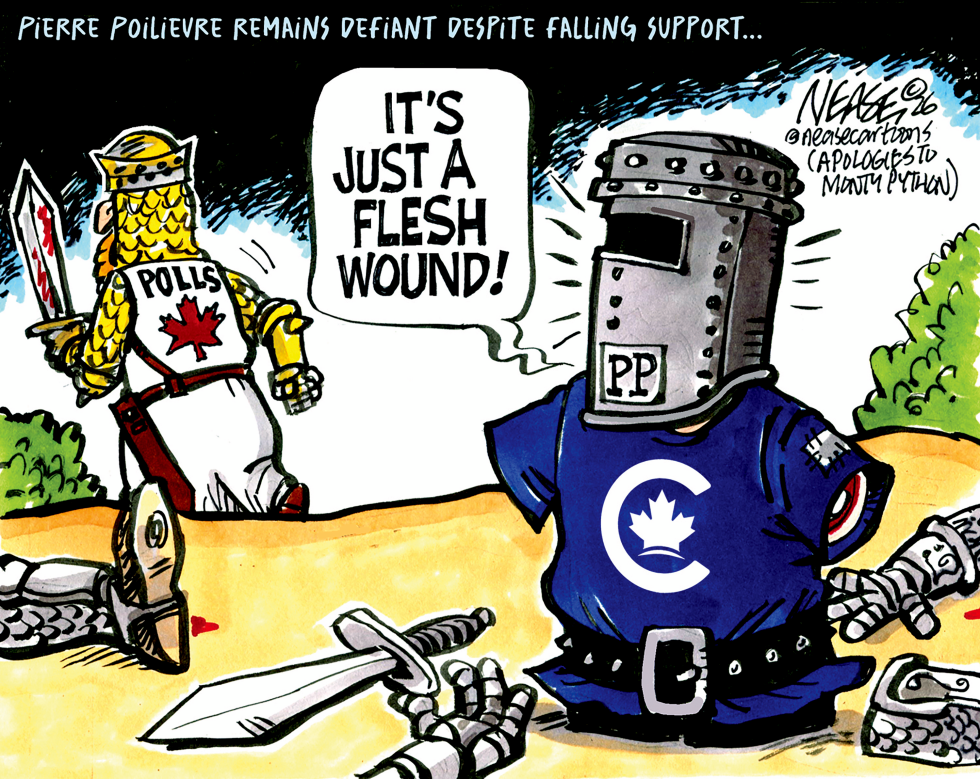
Pierre Poilievre faces declining poll numbers for the Conservative Party of Canada ahead of the next federal election. The situation highlights internal party pressure and opposition momentum. The piece portrays his refusal to acknowledge setbacks as a key leadership trait.
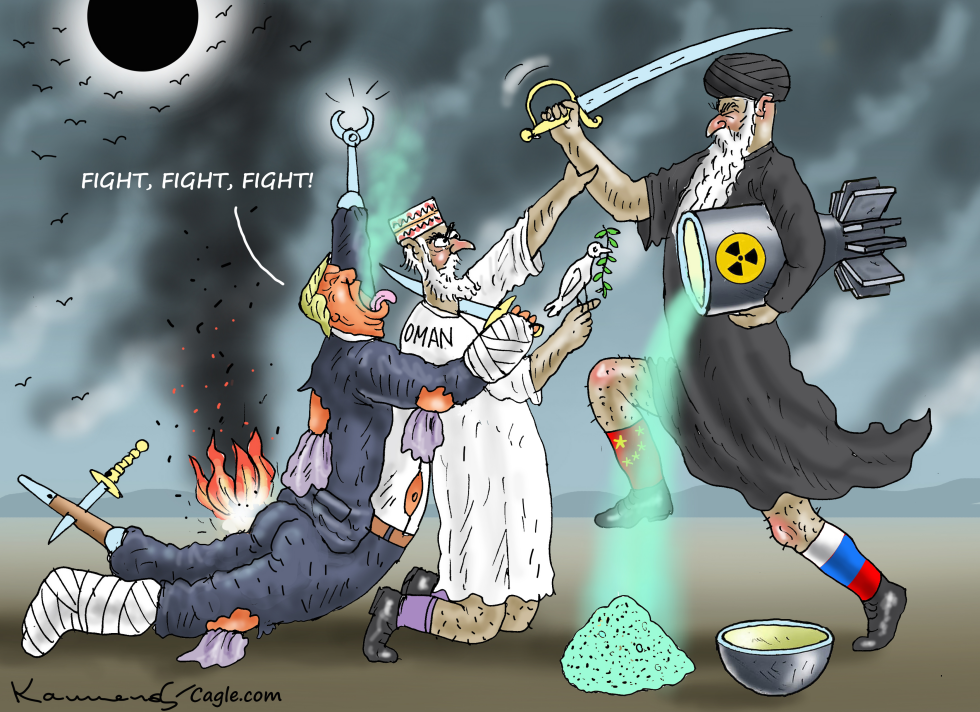
A confrontation involving the former president unfolded in Oman amid regional tensions with a nuclear capable participant. The incident highlights ongoing friction in Middle East diplomacy and arms concerns. The piece portrays the event as a chaotic clash where peace efforts compete with aggressive posturing.
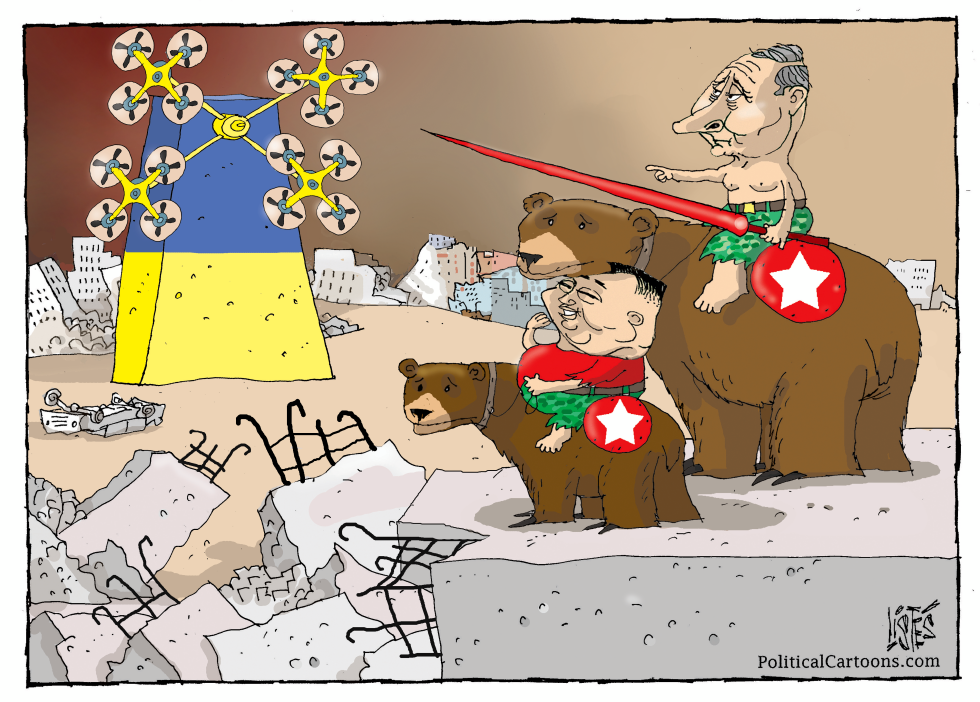
Russian President Vladimir Putin and North Korean leader Kim Jong-un coordinate military support involving drones and personnel in the ongoing Ukraine conflict. The partnership raises concerns over expanded battlefield capabilities and prolonged fighting. The piece portrays their joint advance as a direct strike on Ukrainian infrastructure and sovereignty.
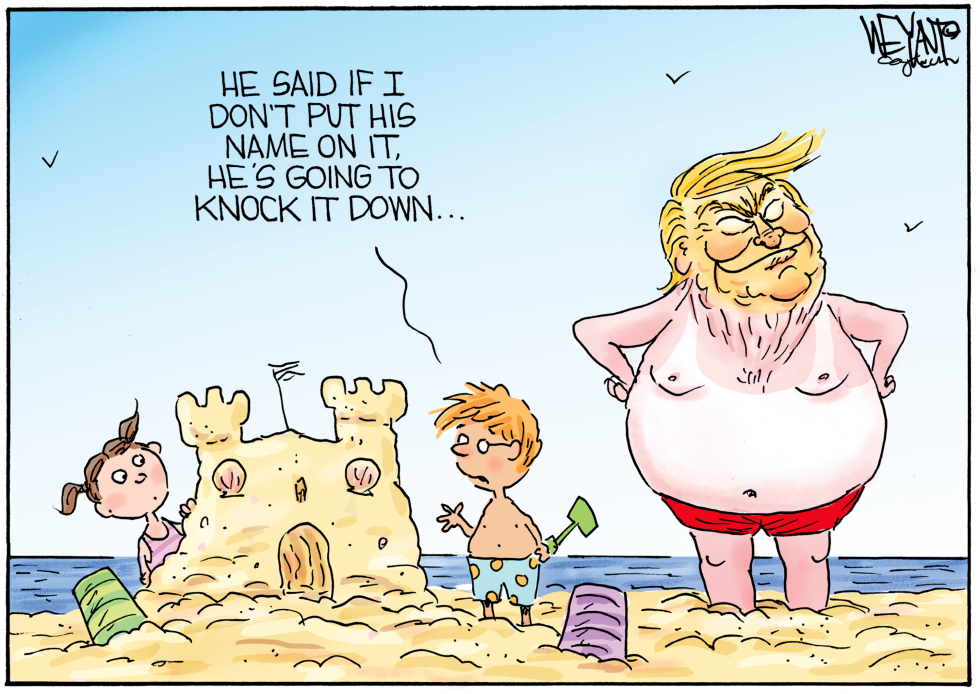
Donald Trump has long pressed for personal credit in public projects and political dealings. The pattern involves demands for recognition that extend even to minor or symbolic matters. This dynamic matters because it reveals how one figure seeks to dominate credit and loyalty across settings. The piece takes the position that such demands reflect an outsized need for acknowledgment that overrides ordinary boundaries.
Donald Trump faces ongoing scrutiny over expanding allegations of misconduct and deception in public office. Recent developments have heightened concerns among associates about the accumulating impact. The editorial takes the position that these issues are intensifying and demand accountability.
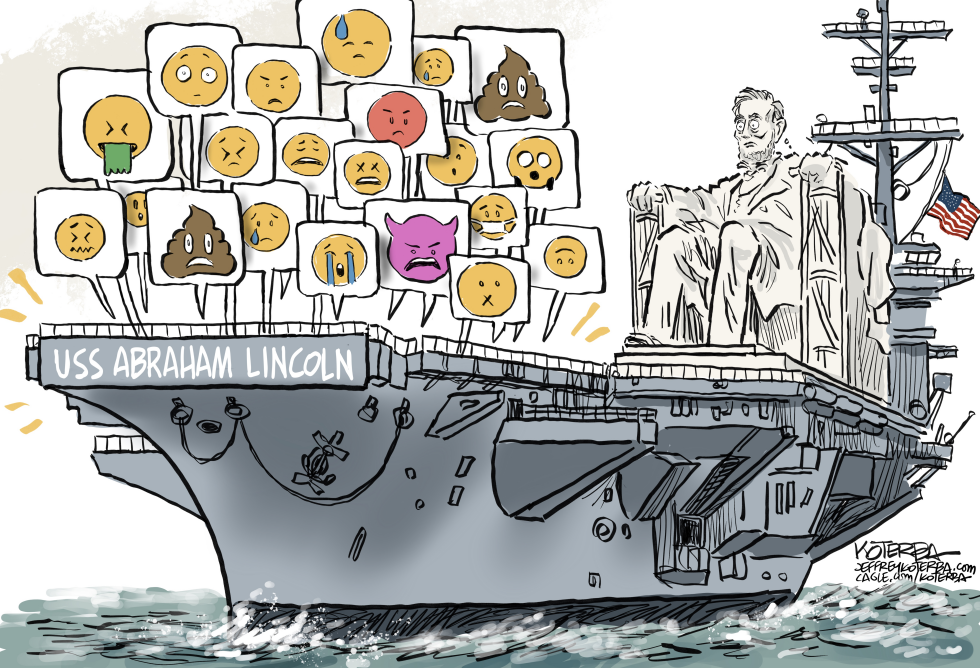
Public reaction to US naval deployments has intensified through social media platforms in recent weeks. Online users have flooded discussions with critical emojis targeting military assets like the USS Abraham Lincoln. The piece portrays this digital deluge as an overwhelming force on longstanding symbols of American leadership and naval power.
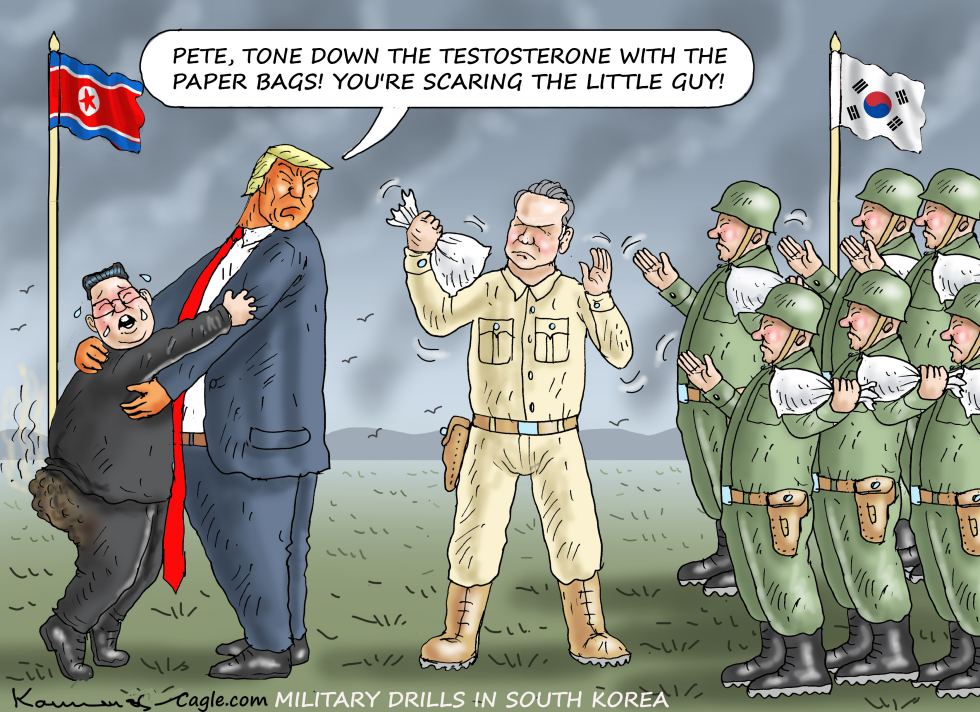
US and South Korean forces conducted joint military drills in mid-August 2026, prompting sharp North Korean protests over perceived threats. Donald Trump appeared at the scene restraining Kim Jong-un while a uniformed figure urged restraint with paper bags to calm the North Korean leader. The image frames the drills as overly provocative and mocks the testosterone-driven posturing on all sides.