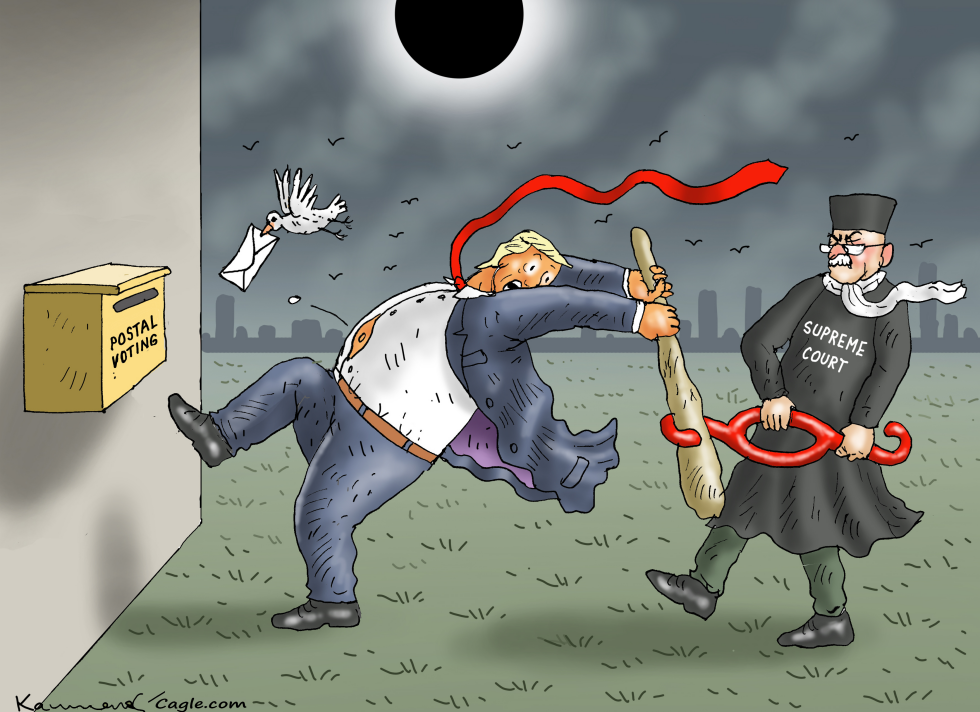
The Supreme Court has moved to restrict efforts by former President Trump to limit or challenge postal voting ahead of the 2026 midterms. The ruling comes as both parties prepare for a high-stakes contest that could determine control of Congress. Trump allies have pushed measures they say protect election integrity while critics see them as attempts to suppress turnout. The decision underscores the court's continuing role in shaping voting rules. The cartoon portrays the court as a necessary check on Trump's aggressive tactics.
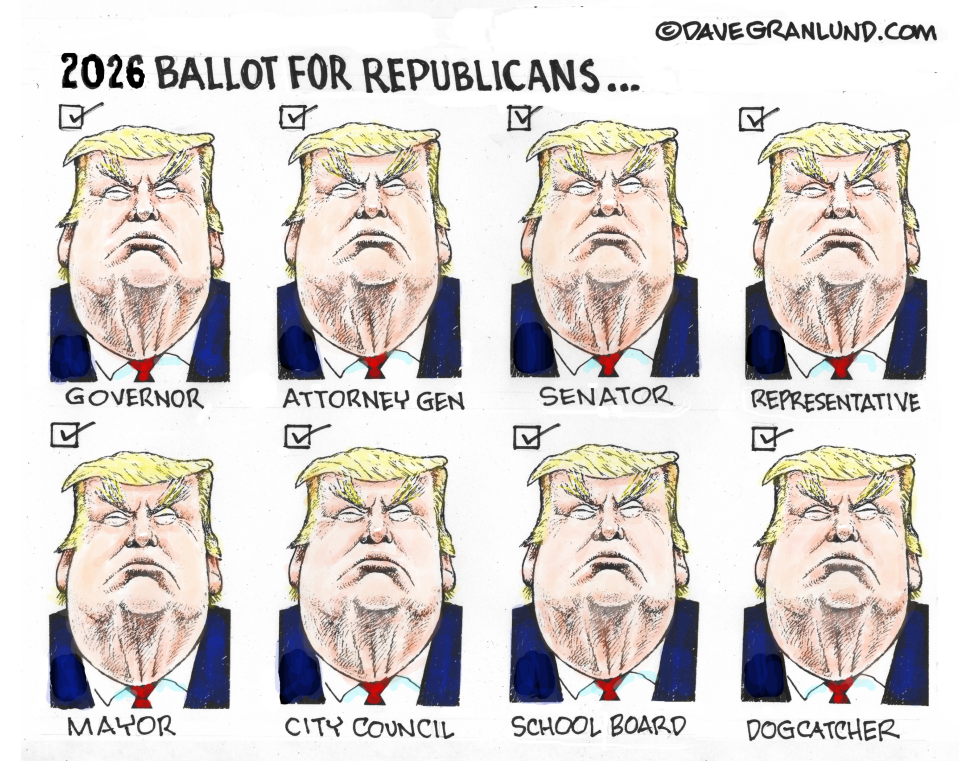
The cartoon depicts eight identical caricatures of Donald Trump filling every position on a 2026 Republican ballot, from governor and attorney general down to dogcatcher. Each image carries a checkmark, underscoring the editorial point that Trump loyalty has become the sole qualification for GOP candidates at every level. Published September 11, 2026, the image comments on the ongoing consolidation of Republican primaries around Trump-aligned figures ahead of the midterm cycle. The visual repetition emphasizes how the former president's influence extends from high-profile statewide offices to local contests. This approach mirrors real-world patterns where Trump endorsements shape candidate selection across the party.
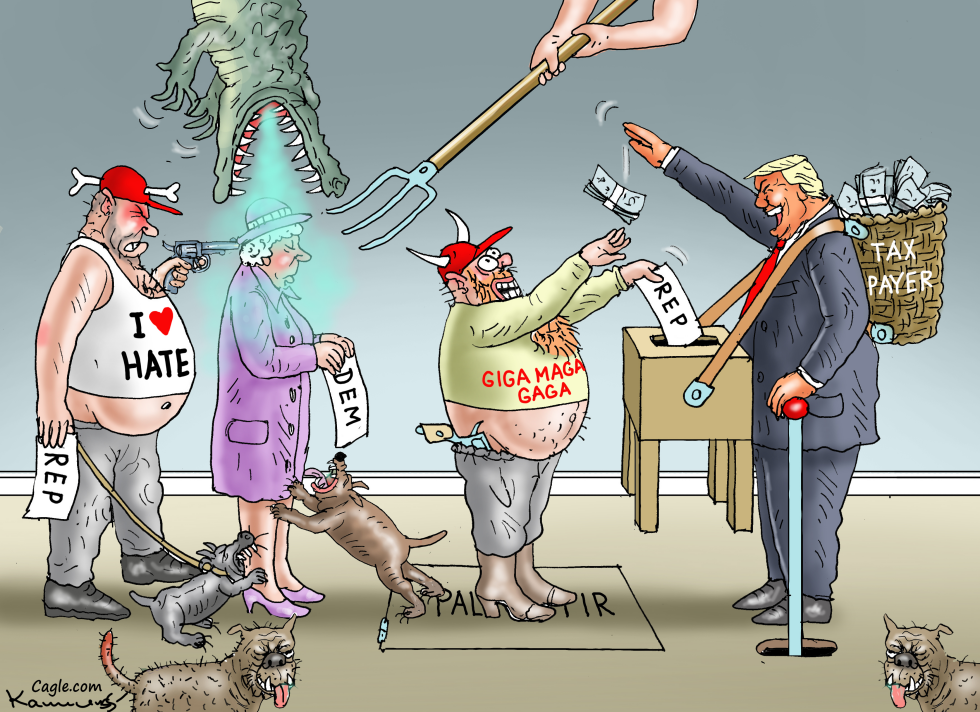
As the 2026 midterm elections approach, former President Trump has positioned himself as a central force in Republican campaigns, directing resources and mobilizing supporters. The cartoon highlights the use of taxpayer money in these efforts and the intense partisan divide, with Democrats portrayed as under attack. It takes the position that such involvement risks undermining fair electoral processes.
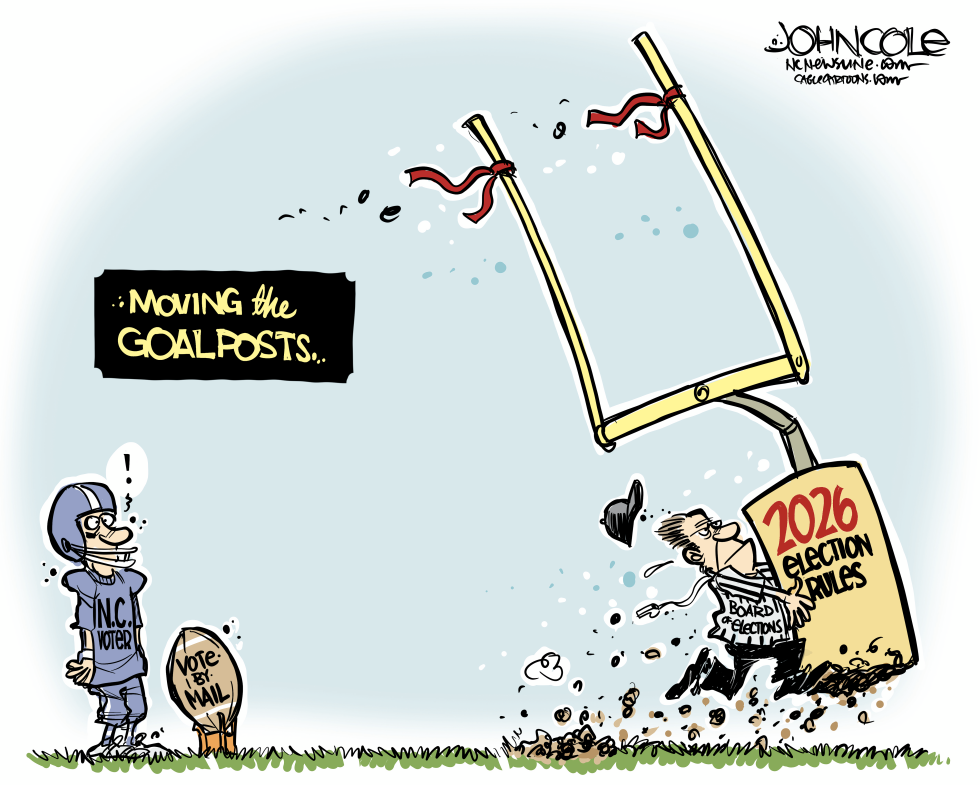
The North Carolina Board of Elections has updated rules governing mail ballots for the 2026 elections, introducing stricter verification and deadline requirements. The changes affect how voters submit ballots and have drawn criticism for complicating access. The move comes amid ongoing debates over election security and participation. Critics argue the adjustments disproportionately impact certain voter groups. The cartoon portrays the board as actively shifting standards to the disadvantage of mail voters.
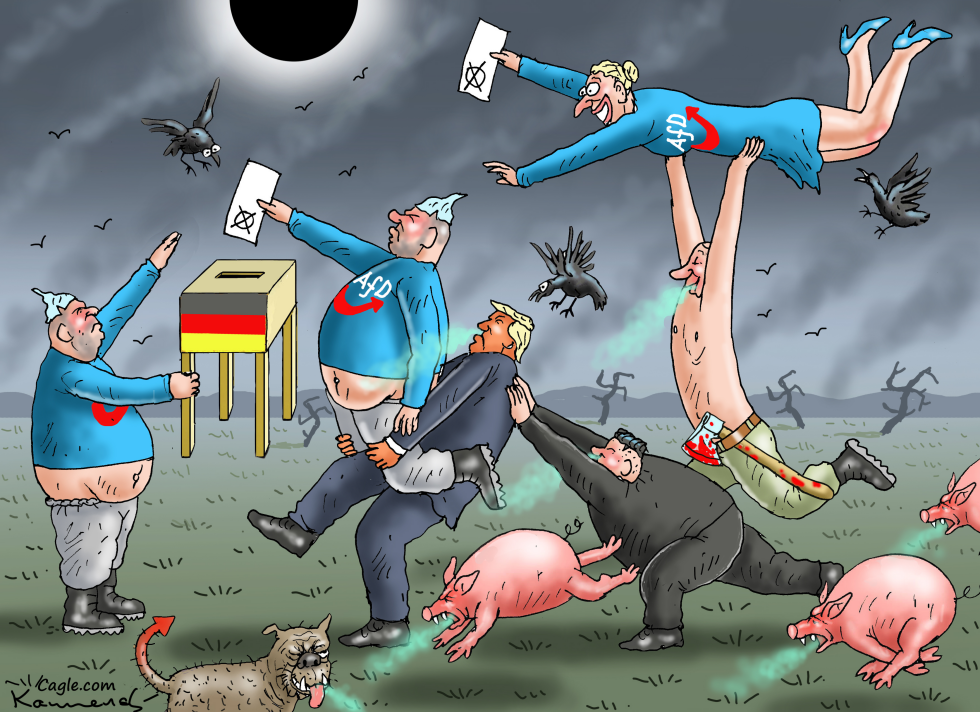
Russian President Vladimir Putin and former President Donald Trump are shown aiding Germany's AfD party in the run-up to elections. The piece argues that external interference from these figures is boosting the far-right German party while harming domestic U.S. political elements.
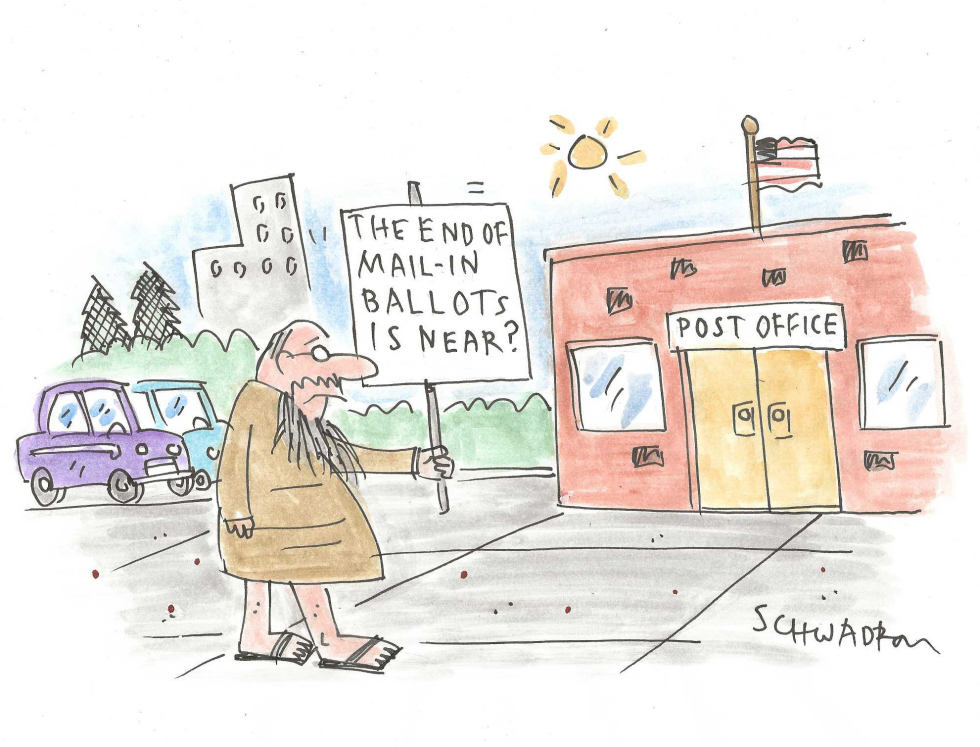
Proposals to restrict or end mail-in ballots have gained traction in several states ahead of upcoming elections, prompting concerns from voting rights advocates about reduced access for elderly, rural, and disabled voters. The post office has long served as a key conduit for absentee ballots. Critics argue the changes prioritize unproven fraud concerns over convenience and turnout. Supporters say tighter rules restore confidence in results. The cartoon frames the debate as an abrupt shift that could sideline a proven voting method.
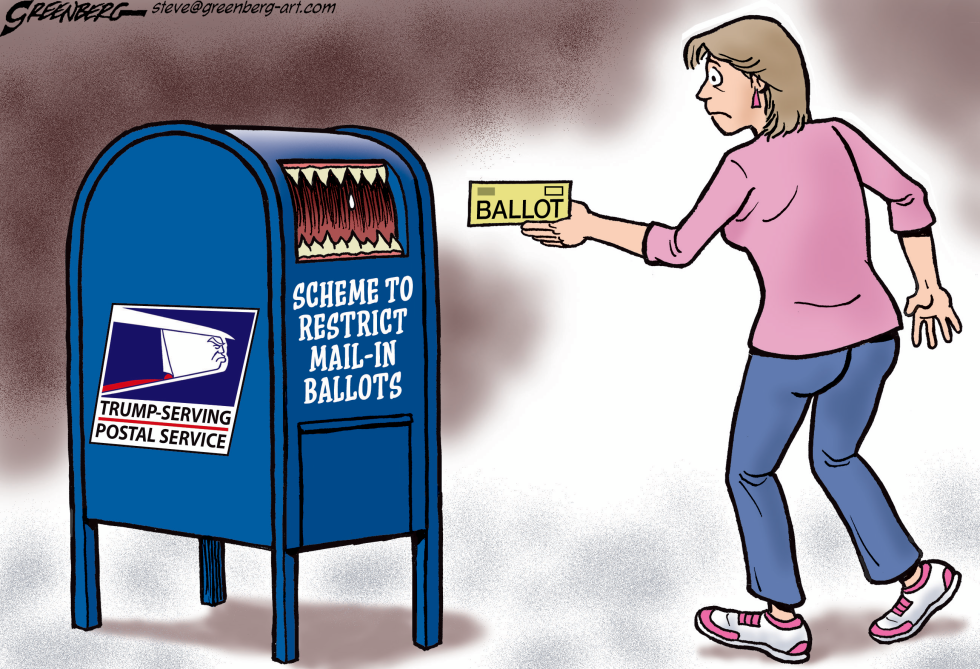
The U.S. Postal Service under Trump influence has implemented measures to restrict mail-in ballots ahead of the 2026 elections. These actions limit voter access through operational changes and heightened scrutiny of mail ballots. The moves raise concerns about equitable participation in elections. Critics argue the changes disproportionately affect certain voter groups and undermine trust in the process. The cartoon portrays the postal service as actively hostile to mail-in voting, framing the restrictions as a deliberate scheme to suppress turnout.
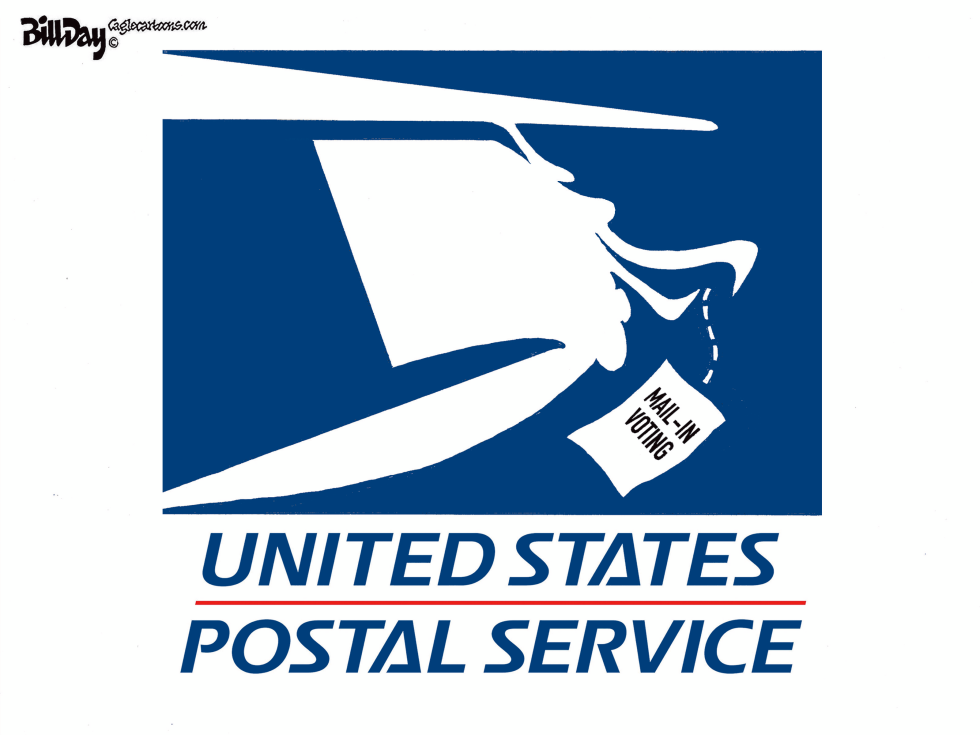
The US Postal Service continues to play a central role in processing and delivering mail-in ballots for federal elections. With voting by mail now a standard option in many states, the agency manages millions of ballots each cycle, raising questions about capacity, security, and timely delivery. The editorial position emphasizes the importance of a reliable postal network to maintain voter access without disruption.
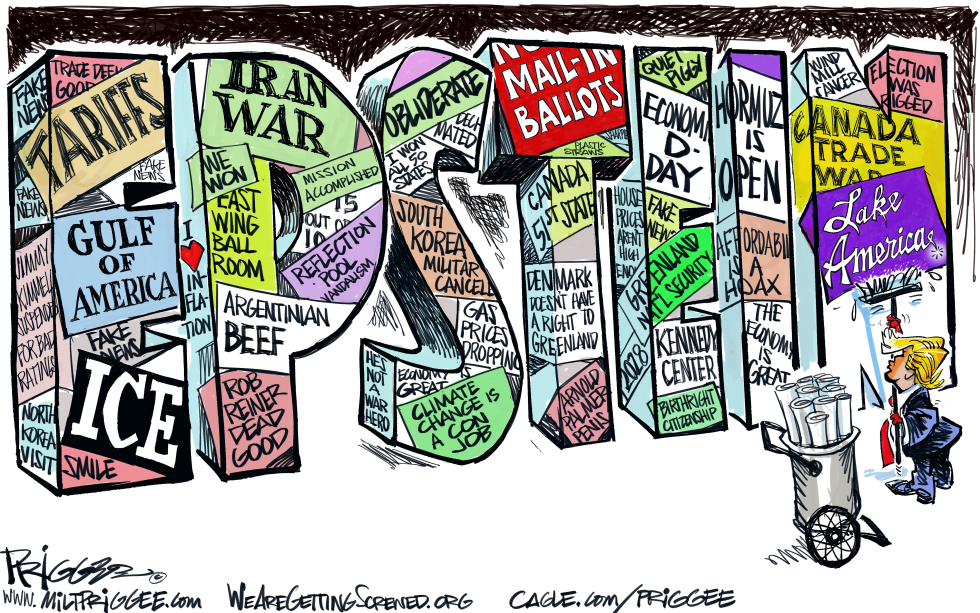
Donald Trump appears in a September 2026 cartoon pushing a cart stacked with signs promoting tariffs, questioning mail-in ballots, and asserting claims about Iran, Canada trade, and domestic issues. The image captures a pattern of public messaging that blends economic nationalism with repeated challenges to established processes. The editorial position frames these statements as a deliberate strategy to keep multiple controversies in motion at once.
The AfD seeks gains in upcoming German elections with visible support from Donald Trump and other authoritarian figures. The party faces accusations of extremist ties. The cartoon portrays this backing as a direct boost to the far-right campaign while highlighting Nazi symbols on ballots.
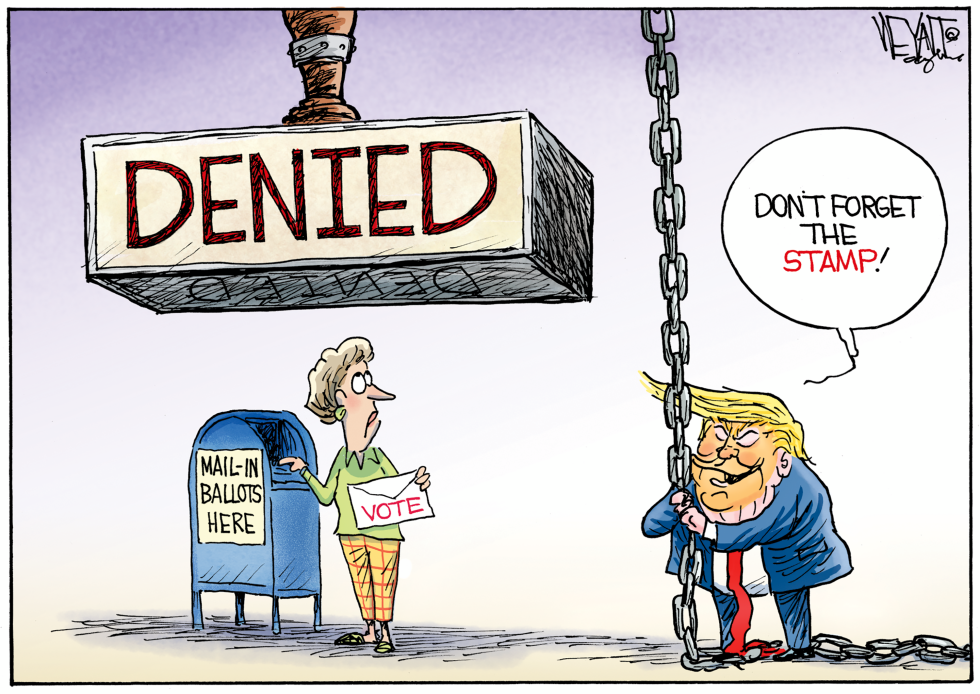
President Trump has directed efforts to deny mail-in ballots in the 2026 election cycle, citing concerns over fraud and integrity. The move affects millions of voters who rely on absentee and mail voting. Critics argue the policy suppresses turnout and favors in-person Republican voters. The cartoon portrays Trump personally enforcing the denial mechanism.
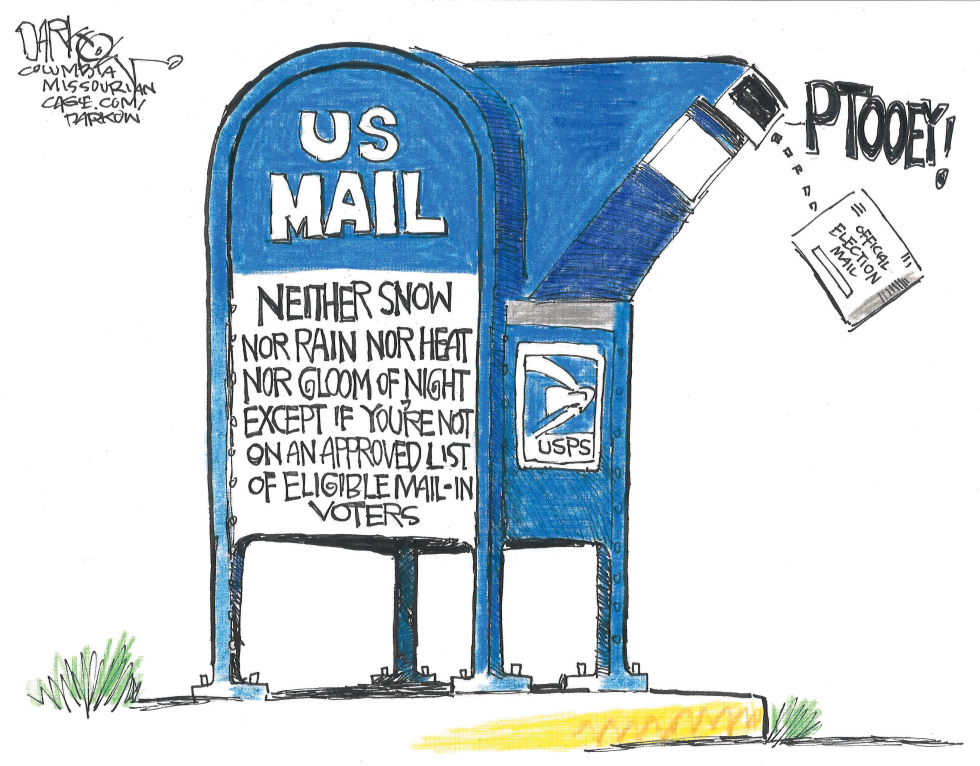
A USPS mailbox rejects mail-in ballots unless the sender appears on an approved list of eligible voters. The action highlights ongoing debates over mail voting security and access ahead of elections. Critics argue such restrictions disproportionately affect certain voter groups and undermine confidence in the postal system. Supporters claim the measures prevent fraud. The cartoon portrays the mailbox as actively enforcing these limits, suggesting institutional barriers to participation.
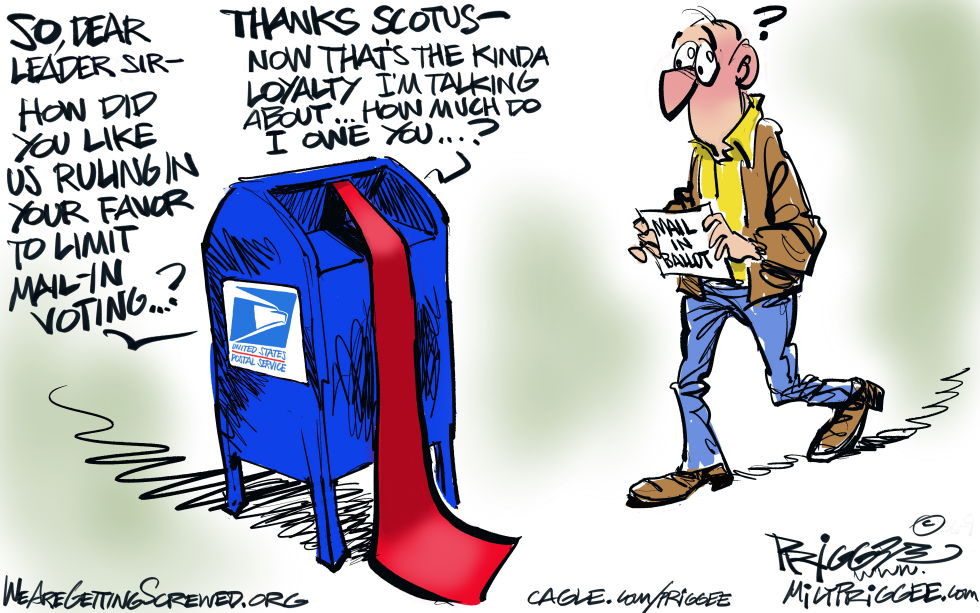
The cartoon shows a voter holding a mail-in ballot and questioning a USPS mailbox about a Supreme Court ruling that limited mail-in voting in favor of a political leader. The mailbox responds with thanks for the loyalty and an offer to pay. The image highlights concerns over judicial influence on elections and voter access as of the 2026 publication date.
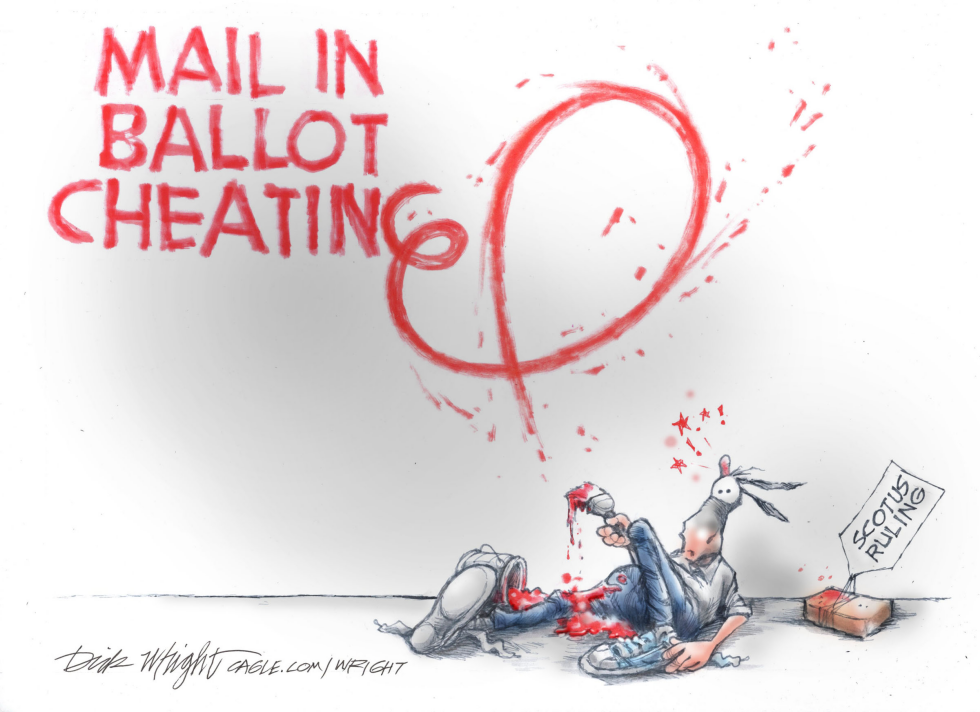
The image depicts the Democratic Party symbol as a donkey lying wounded on the ground with red liquid visible near its body. A large red prohibition symbol covers the words mail in ballot cheating at the top. A sign reading SCOTUS ruling stands nearby next to a box. The composition responds to a Supreme Court decision limiting certain mail-in ballot procedures. The visual argument centers on claims of reduced opportunities for improper voting practices. Publication occurred on August 25 2026. The work uses the party emblem to illustrate the effect of the ruling on one political side. No specific prior case details appear in the image itself.
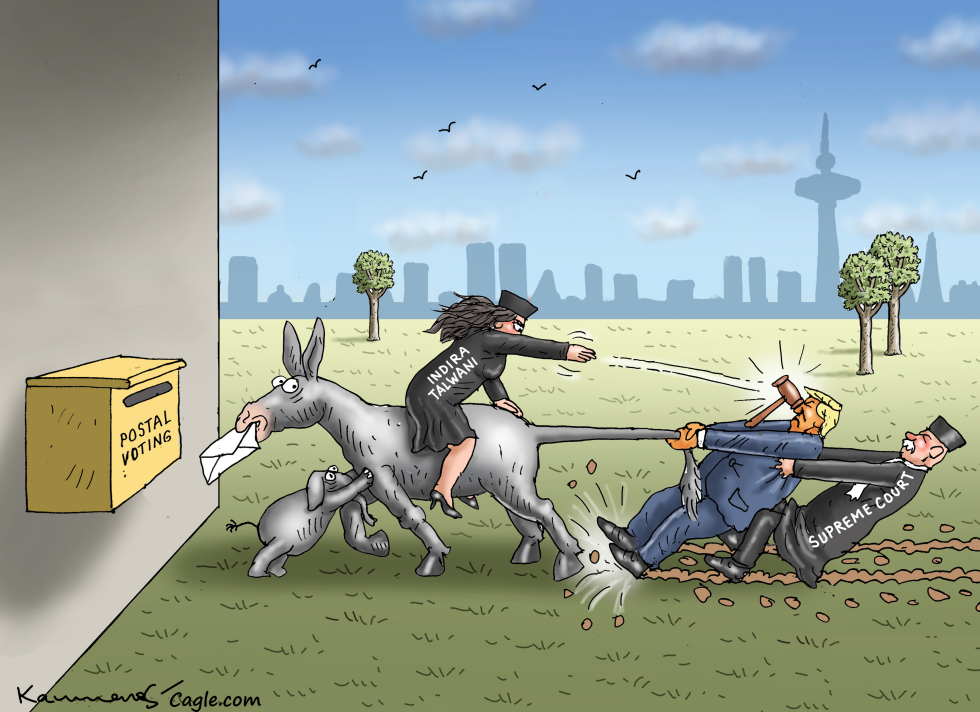
A political cartoon shows federal Judge Indira Talwani riding a Democratic donkey labeled with postal voting while dragging two Supreme Court justices across a field near the Space Needle. The image responds to ongoing disputes over postal voting rules and federal court involvement in election procedures. Talwani, a U.S. District Judge, has issued rulings affecting voting access in recent cases. The cartoon uses the donkey as a party symbol and a yellow ballot box to illustrate the conflict between lower court decisions and the Supreme Court. The visual argument centers on judicial power in election law matters active in 2026.