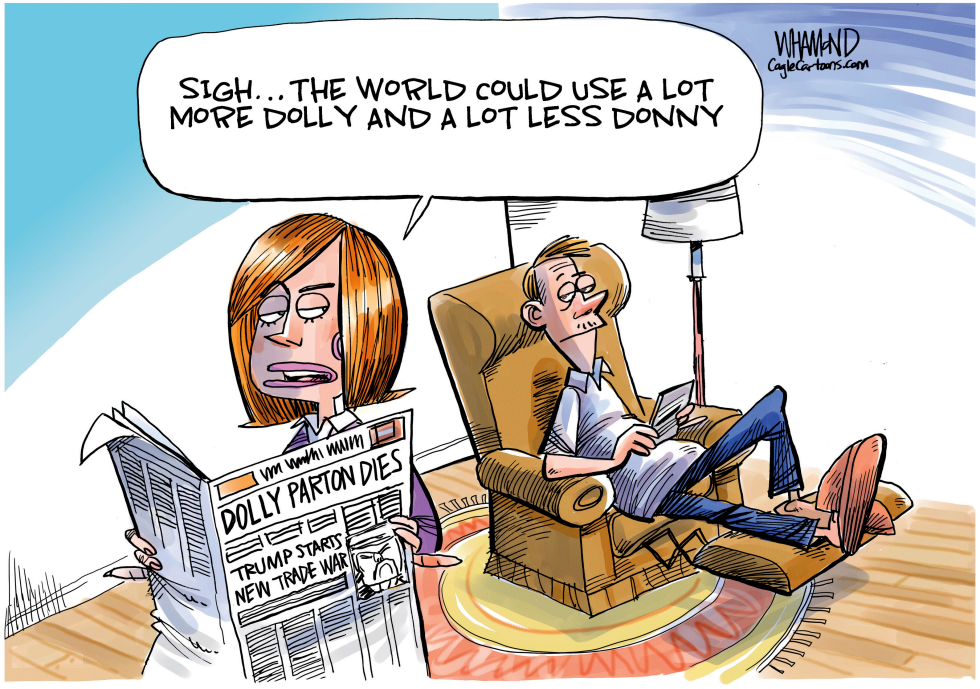
Donald Trump initiated a new trade war, coinciding with the reported death of Dolly Parton. The development drew public reactions contrasting the entertainer's legacy with the president's economic policies. The piece portrays a citizen preferring more of Parton's influence and less of Trump's.
The image displays a woman standing with papers looking concerned next to a man seated in a recliner holding papers. Visible text in speech bubbles refers to credit cards being maxed out and a plan to add a reflecting pool. The title at the top reads about politicians operating as average Americans. A signature appears in the upper right.
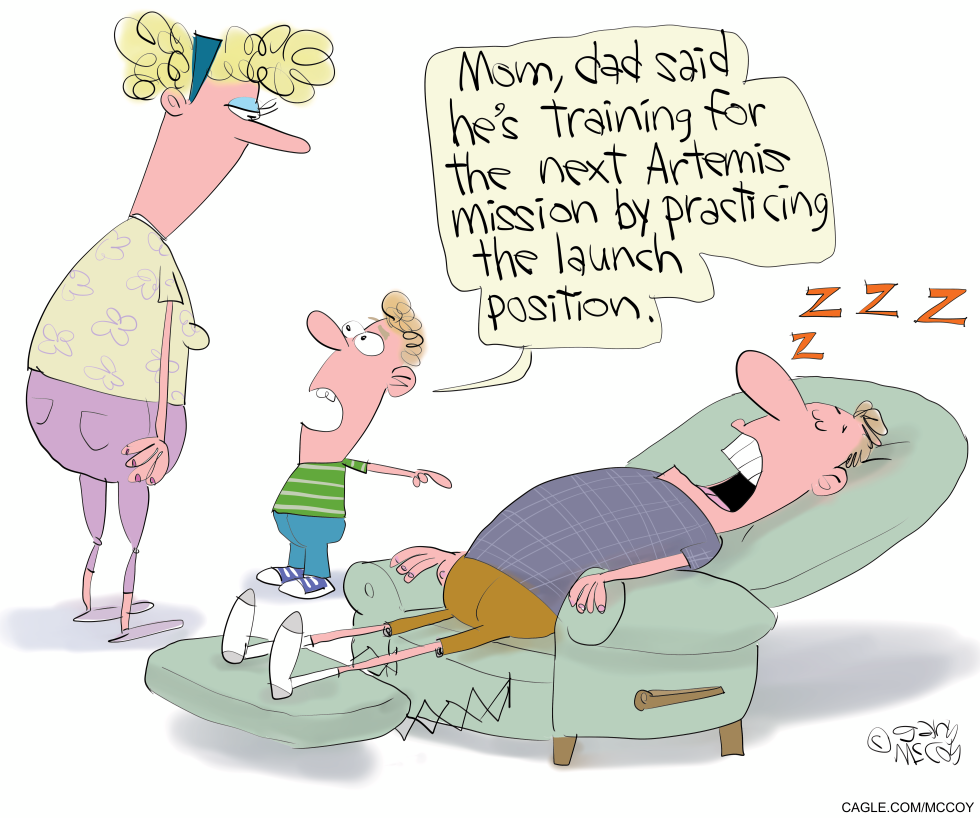
A family scene shows a reclining man asleep in a chair while his child tells the mother that the pose represents training for the next Artemis mission. The image plays on the contrast between space exploration ambitions and everyday rest.
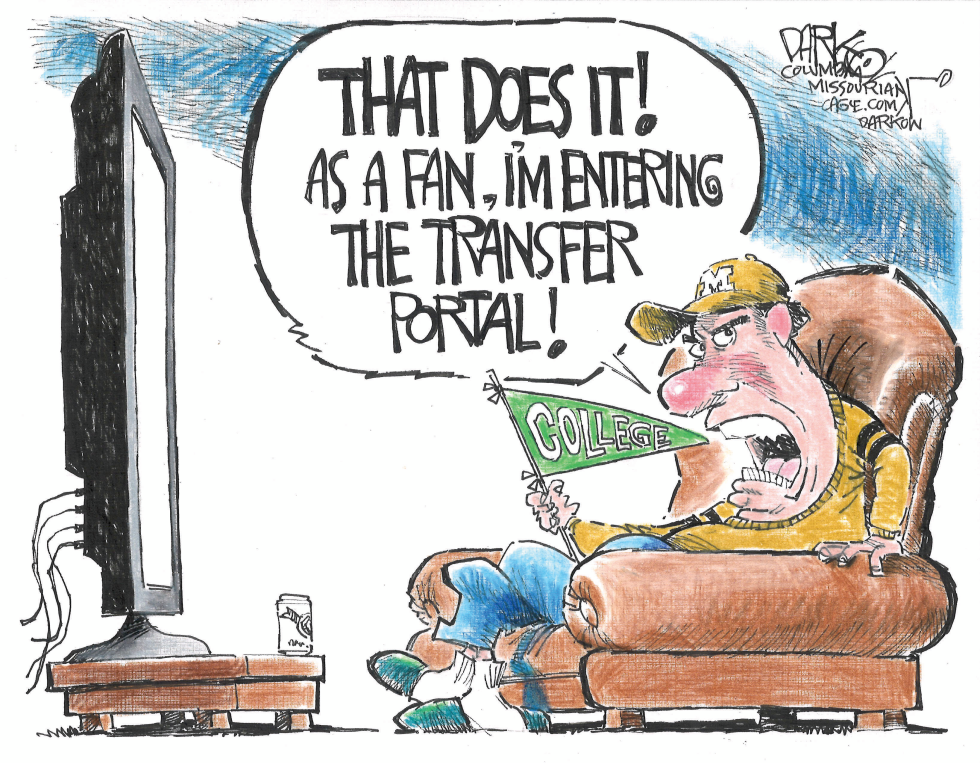
A college sports fan in a recliner erupts in anger at his television and announces he is entering the transfer portal. The scene reflects ongoing frustration with player movement, NIL compensation, and shifting team loyalties in NCAA football and basketball during the 2025 season. The cartoon highlights how these changes affect even dedicated supporters who once valued school allegiance.
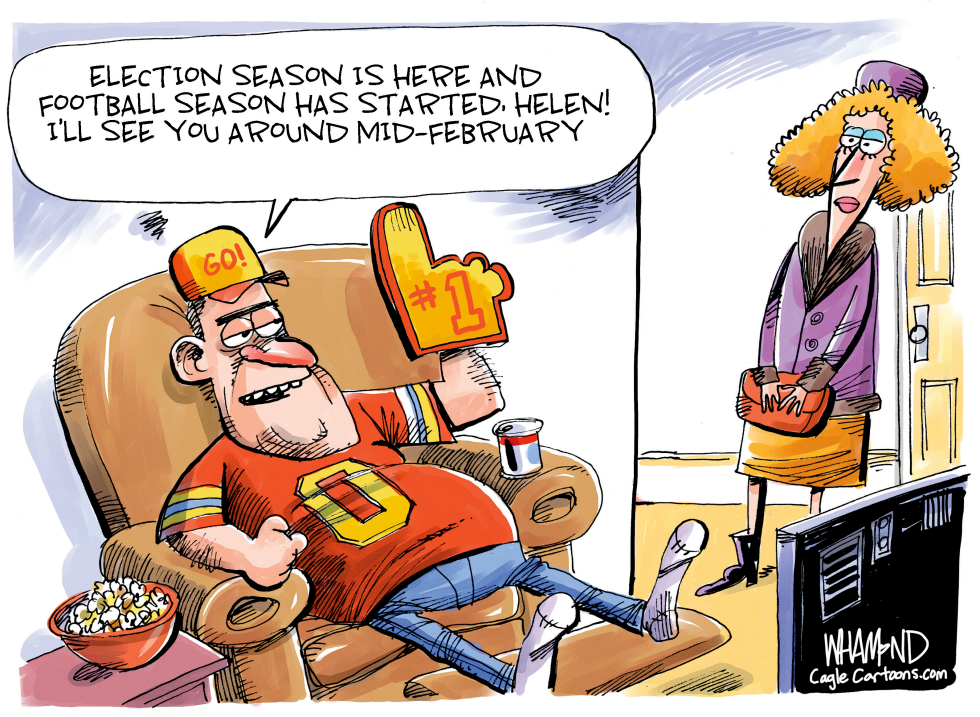
On September 3 2024 a cartoon shows a man in a recliner telling his wife he will be unavailable until mid-February because election season and football season have both started. He holds a foam finger and wears a team jersey while surrounded by snacks and a television. The scene highlights overlapping fall coverage of politics and sports that keeps viewers indoors.
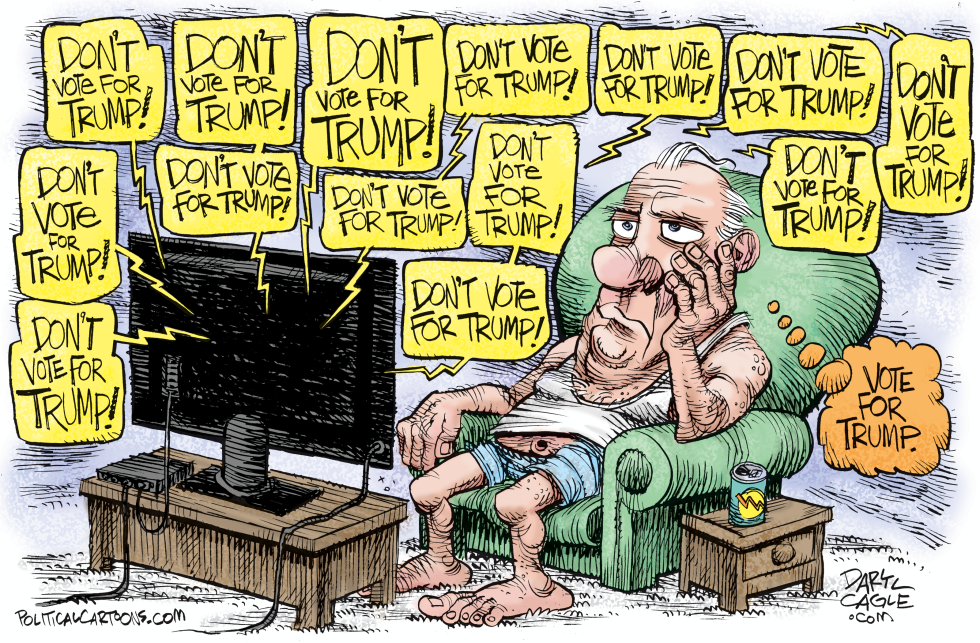
On April 5, 2024, as the presidential campaign heated up, cable news networks intensified coverage urging voters away from Donald Trump. The cartoon shows a weary man in his living room bombarded by repeated on-screen messages from CNN and MSNBC telling him not to support the former president. Despite the barrage, his private thought reveals he plans to vote for Trump anyway. The scene highlights the disconnect between mainstream media messaging and individual voter sentiment during the 2024 cycle.