On July 6, 2026, a cartoon depicts Donald Trump examining a phone displaying Chris Christie’s quote labeling his $2.2 billion earnings while in office as Putin-esque. Trump’s thought bubble reveals he interprets the remark as flattery rather than criticism, highlighting an ongoing dynamic between the two figures amid foreign policy references to Russia.
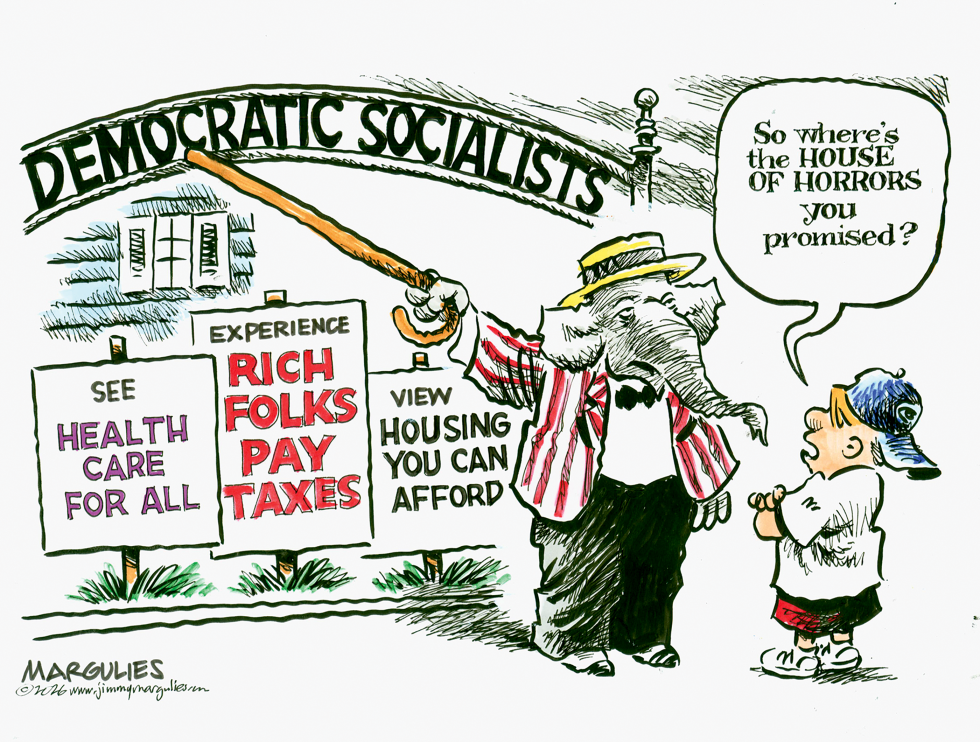
An elephant representing Republicans conducts a tour of attractions labeled Democratic Socialists on July 1 2026. Three signs advertise health care for all, taxes paid by the rich and housing that average people can afford. A young visitor in a cap asks where the house of horrors is that was promised. The scene uses the classic elephant symbol to frame policy offerings as ordinary exhibits rather than frightening outcomes.
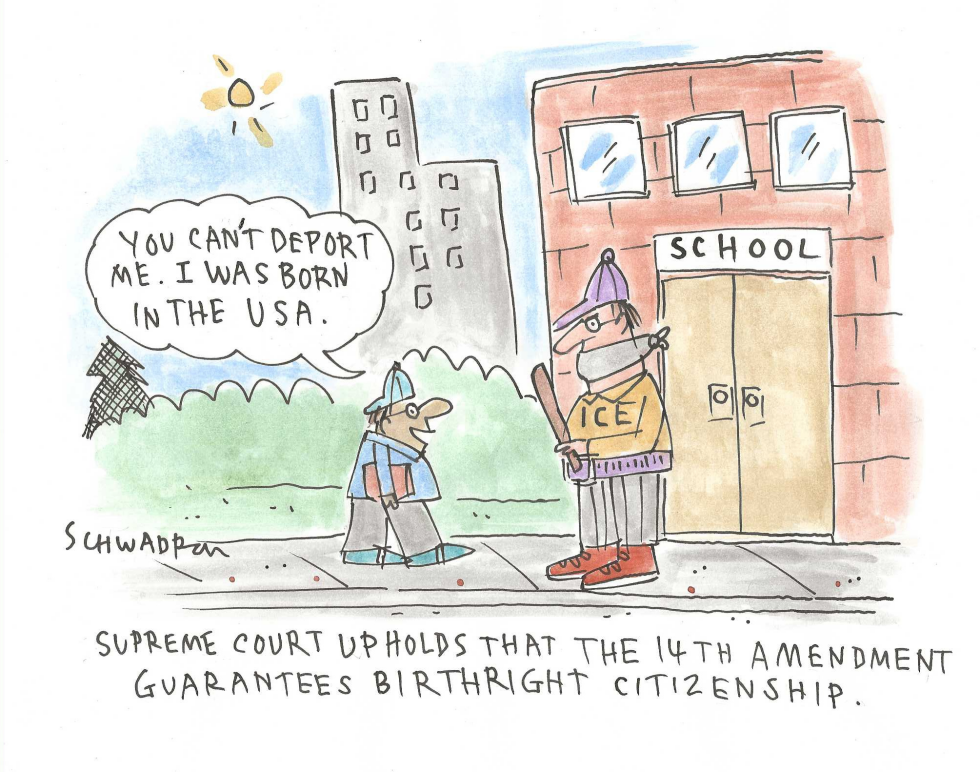
The image shows a student asserting US birth to an ICE agent holding a bat outside a school. The caption states the Supreme Court upheld 14th Amendment birthright citizenship. This responds to ongoing deportation policy debates involving the amendment and enforcement actions as of the 2026 publication date.
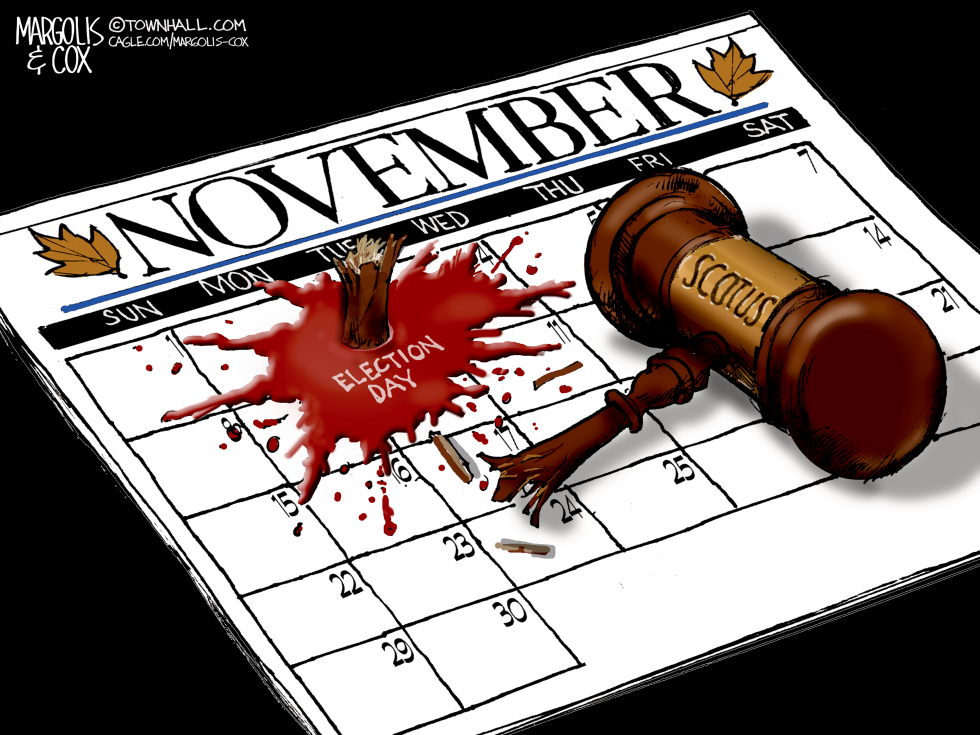
A large wooden gavel labeled SCOTUS rests on a November calendar page, its head crushing the words Election Day in a red splatter resembling blood. The calendar shows days of the week and dates with scattered debris and broken pieces around the impact site. The image appears on July 1, 2026, amid ongoing debates over Supreme Court rulings affecting electoral processes.
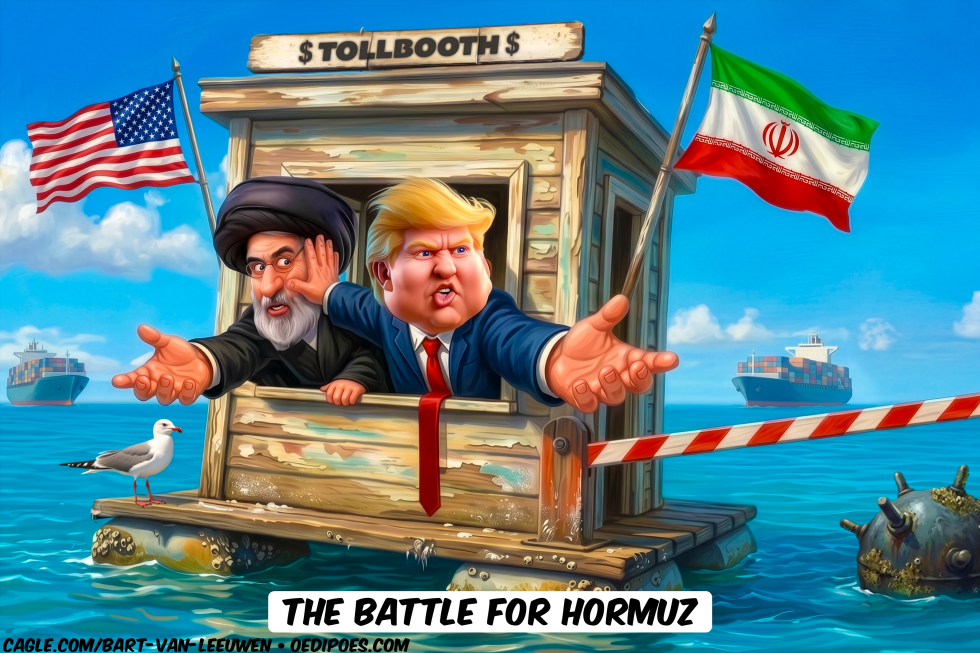
A new political cartoon shows President Trump and Iran's supreme leader sharing a tollbooth positioned across the Strait of Hormuz. Both figures extend their hands toward passing cargo ships while American and Iranian flags fly from the structure. The image comments on ongoing disputes over control of the vital oil shipping route.
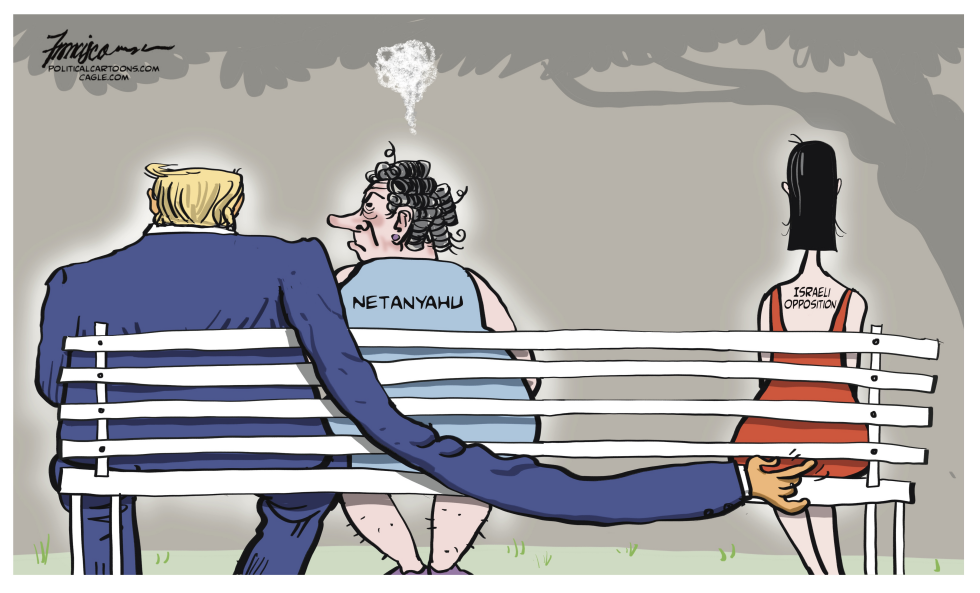
Francisco depicts Donald Trump and Benjamin Netanyahu together at the White House, symbolically marginalizing the Israeli political opposition critical of Netanyahu's war strategy. The Philippine cartoonist captures the mutual reinforcement between two leaders facing legal and political challenges at home. The opposition bench metaphor implies democratic norms being bypassed.
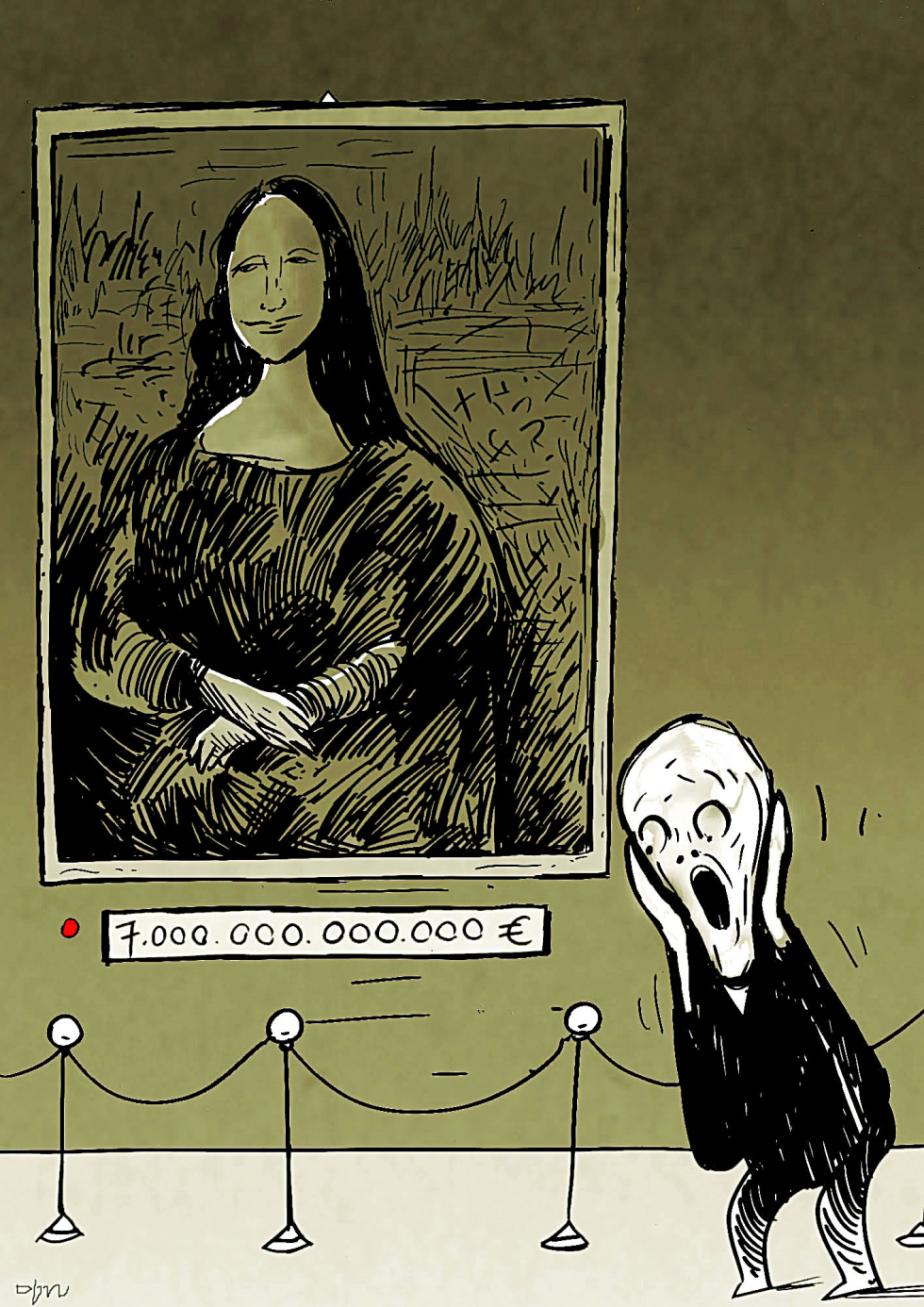
The Mona Lisa receives an eye-popping valuation of seven trillion euros in a museum setting. The figure in the image conveys immediate disbelief at the figure. The piece highlights ongoing debates over astronomical art market prices for cultural treasures.
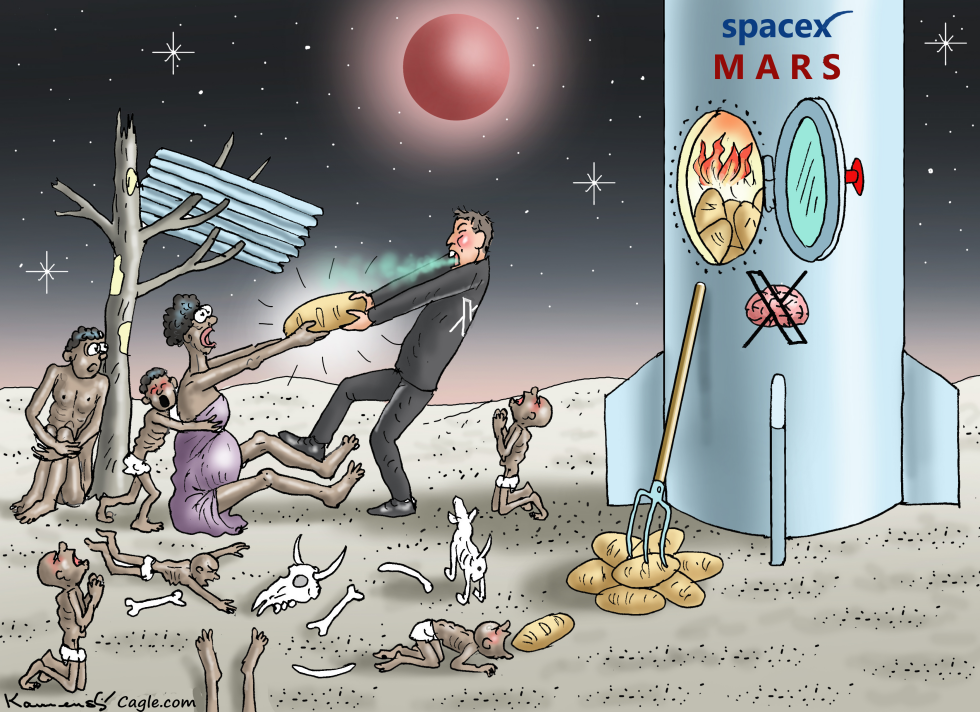
On the 2026 publication date the image shows Elon Musk on a Mars like surface beside a SpaceX labeled rocket. Emaciated figures reach for bread he holds while others lie amid bones and a pile of potatoes rests near a pitchfork.
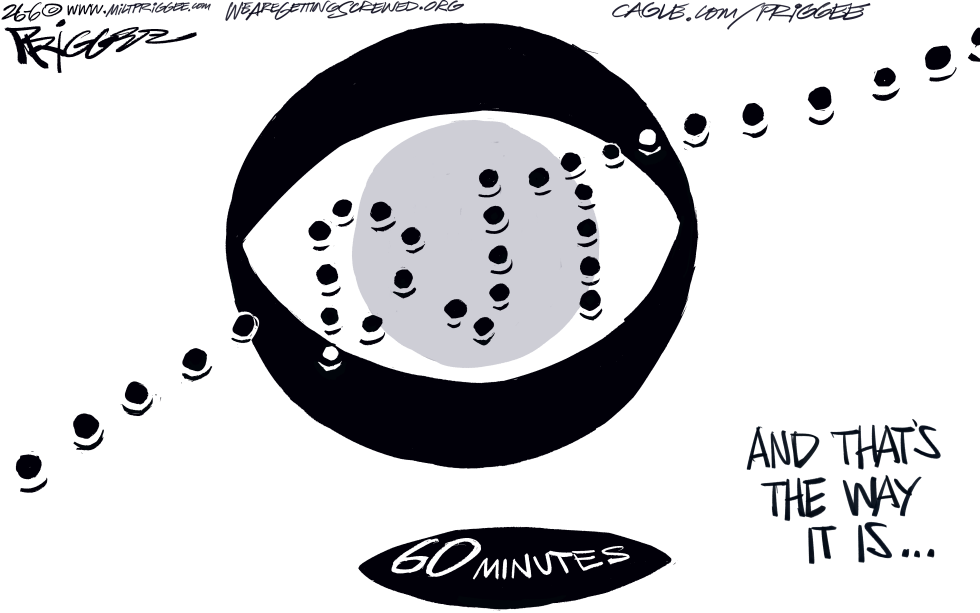
The June 2026 cartoon shows a massive eye formed around the 60 Minutes logo. A trail of dots extends from the pupil toward the right. Text at bottom right echoes the program's closing line while a website reference highlights screening concerns. The image questions the reach of the long-running CBS news program.
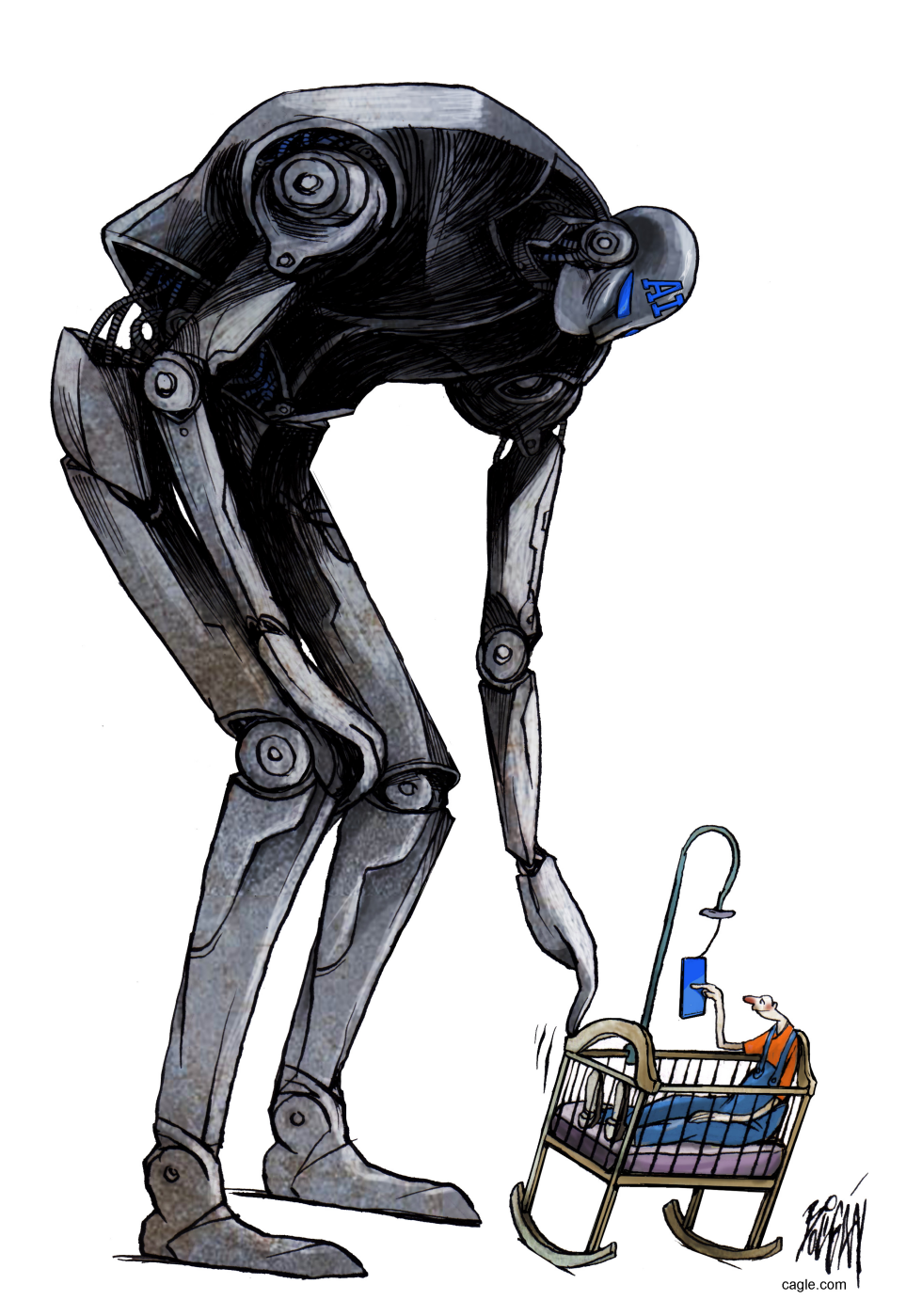
A large robot marked AI bends down to a crib containing a small human figure holding a blue device. The image from April 27 2026 illustrates the expanding presence of artificial intelligence next to everyday human life. The composition places the mechanical form above the wooden crib on a plain background.
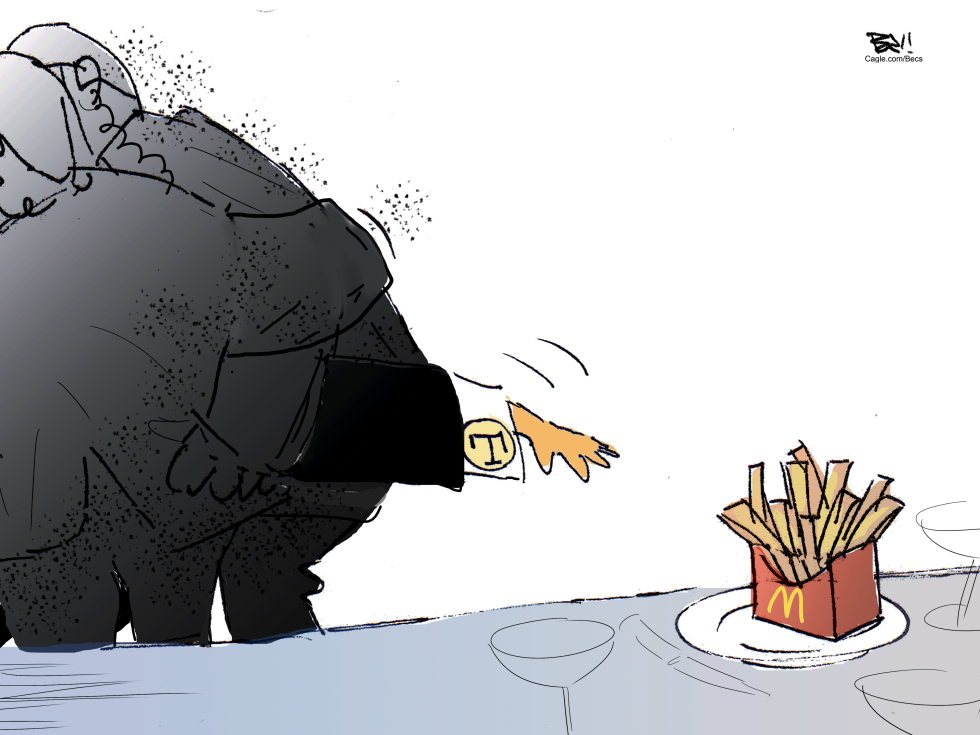
This political cartoon shows a bulky figure in a dark suit, viewed from behind, with a hand bearing a cufflink labeled TRUMP reaching out toward a red box of McDonalds fries overflowing on a white plate. The scene is set on a table with stemmed glasses, and there's a dusting of particles on the figure's shoulder. Incorporating tags such as Donald Trump Administration USA, attack, Hilton Hotel, shooting, terrorist, lone wolf, the image pokes fun at familiar tropes of excess and impulse. The artist's signature Becs and Cagle.com/Becs appear in the corner, grounding it in syndicated cartoon tradition. Such drawings often go viral for their sharp, relatable jabs at public figures. At around 100 words, this summary captures the essence without overreaching what's drawn.
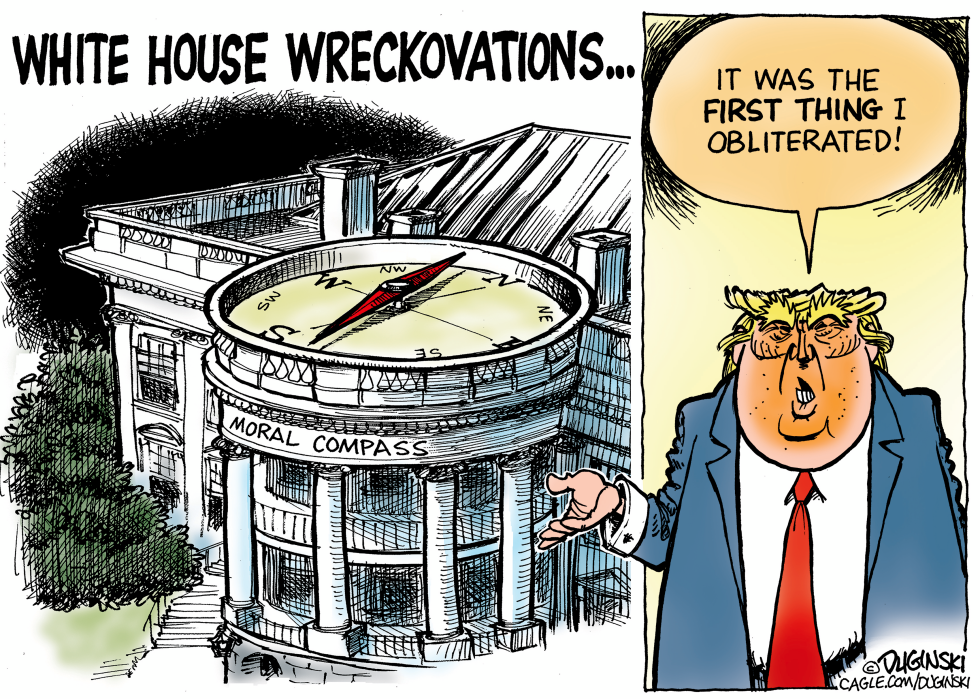
Paul Duginski's cartoon shows a caricatured Trump gesturing proudly while speaking about obliterating the moral compass, a large dome-like structure labeled 'Moral Compass' with directional arrows, placed on the White House roof. The title 'White House Wreckovations' plays on renovations, suggesting destructive changes. Tags including president, MAGA, White House, demolition, morality, ethics, obliteration, Republicans, and Iran war frame the image as a critique of ethical standards in politics. The scene captures a dark night setting with part of the building and trees visible, emphasizing the theme of moral destruction in Washington.
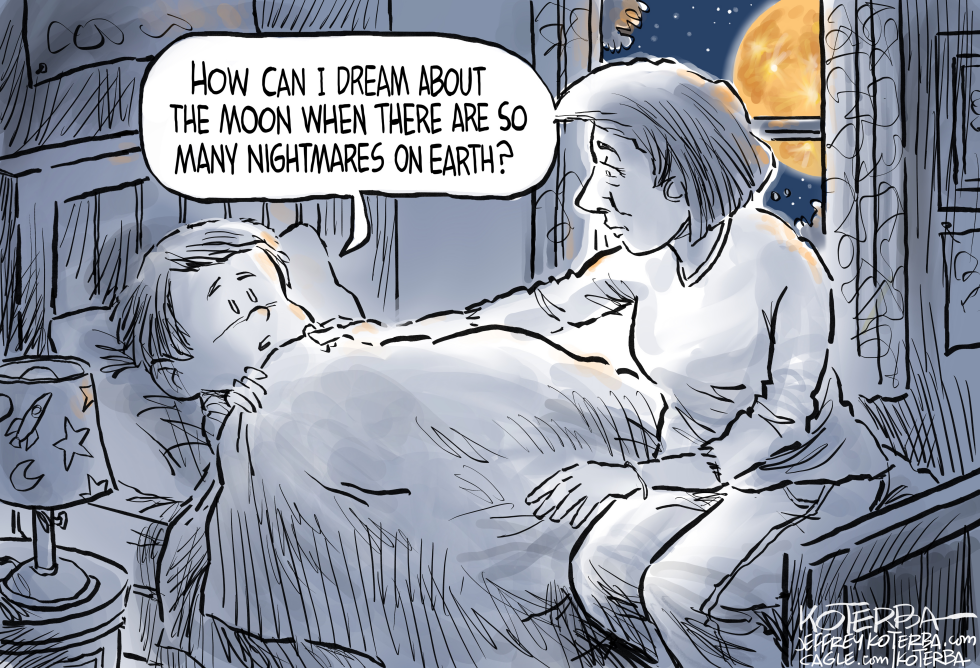
This poignant political cartoon depicts a child in bed, gazing toward a window framing a massive orange moon against a starry night sky, while confiding in a seated adult figure. The child's speech bubble reads: 'How Can I Dream About The Moon When There Are So Many Nightmares On Earth?' A bedside lamp with a star design illuminates the scene. Through this setup, the artwork satirizes how youth anxiety from global issues—like wars, climate woes, and social upheavals—stifles big dreams and aspirations. It's a clever commentary on how earthly nightmares eclipse celestial hopes, blending humor with insight into modern parenthood and childhood innocence lost. Tags: political cartoon, child nightmares, moon dreams, earth troubles, satirical illustration, youth anxiety, global chaos.
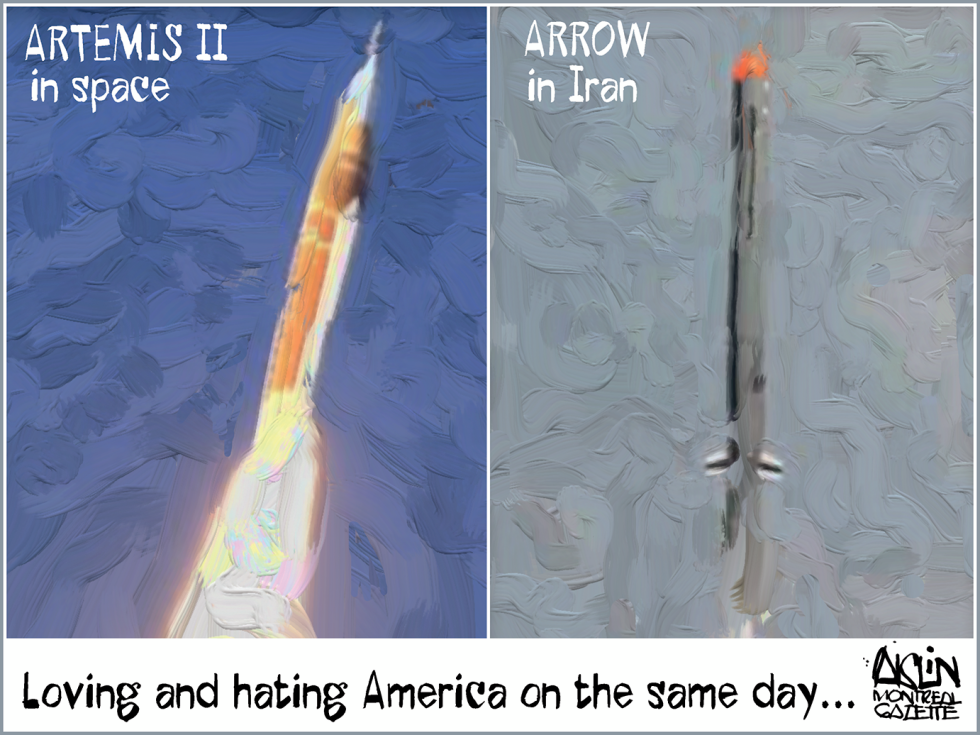
In this irreverent political cartoon, a vibrant Artemis II space launch rockets upward in a blue expanse on the left, symbolizing American innovation and triumph in US space exploration. Contrasting sharply on the right, a stark Arrow in Iran points downward with an orange glow against a gray sky, evoking geopolitical tension and Iranian weaponry. The caption 'Loving and hating America on the same day....' ties it together, offering a humorous take on the bipolar view of America in world news. With its simple yet effective composition, the artwork captures the absurdity of global perceptions, blending satire on international conflict with admiration for NASA's feats. This piece underscores the dichotomy in how the world engages with American power, from awe at space missions to ire over foreign policy frictions.