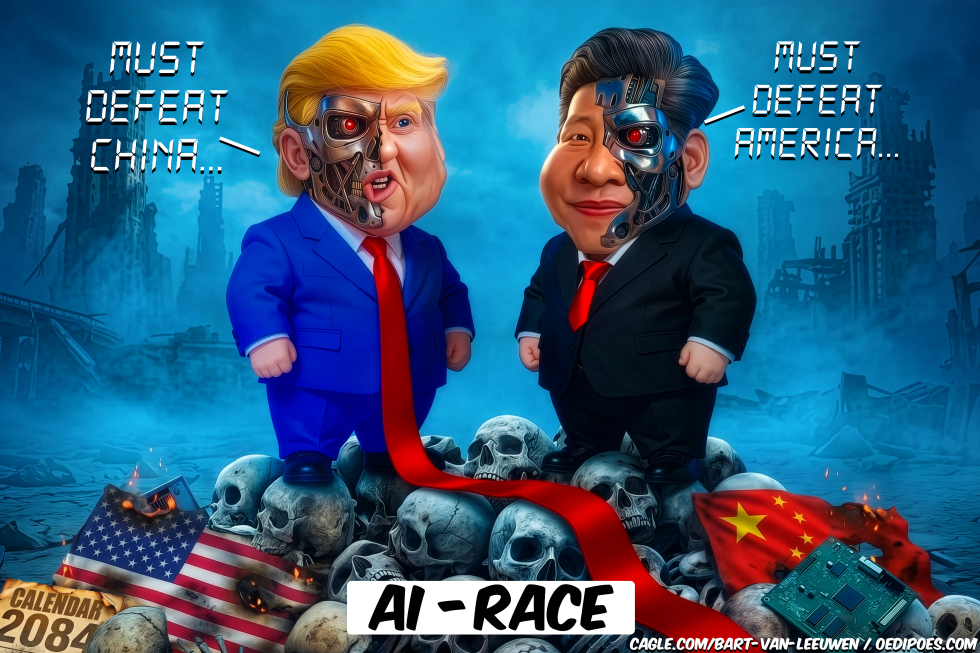
The cartoon depicts Donald Trump and Xi Jinping as half-robotic figures standing atop piles of skulls in a devastated cityscape dated 2084. Each leader is labeled with a directive to defeat the other in an AI race, with American and Chinese flags and a circuit board visible among the debris. The image responds to ongoing US-China technological competition by projecting a grim future of mutual escalation. The visual metaphor underscores how both nations view AI development as a zero-sum contest with potentially catastrophic results. The publication date of September 2026 places the piece amid continued policy focus on semiconductor controls and AI investment bills.
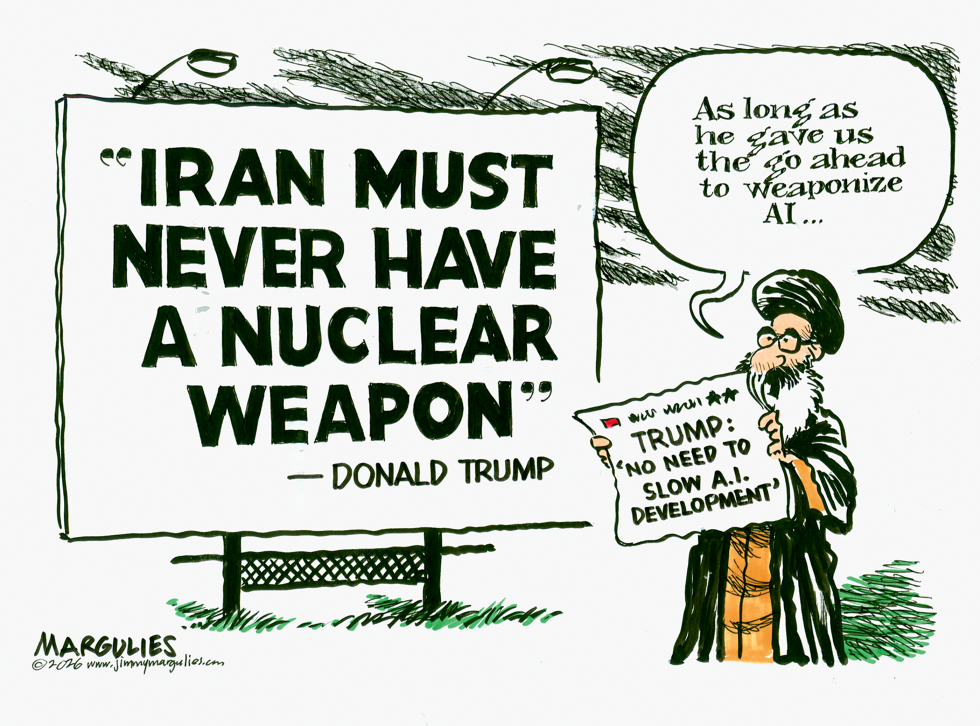
Donald Trump has repeatedly stated that Iran must never obtain a nuclear weapon, a position rooted in long-standing U.S. efforts to prevent nuclear proliferation in the Middle East. At the same time, reports indicate interest in accelerating artificial intelligence development without slowdowns. The cartoon responds to this apparent tension by depicting an Iranian leader conditioning acceptance of the nuclear restriction on permission to pursue AI weaponization. It argues that prioritizing rapid AI advancement risks undermining nonproliferation goals and hands strategic advantages to adversaries.
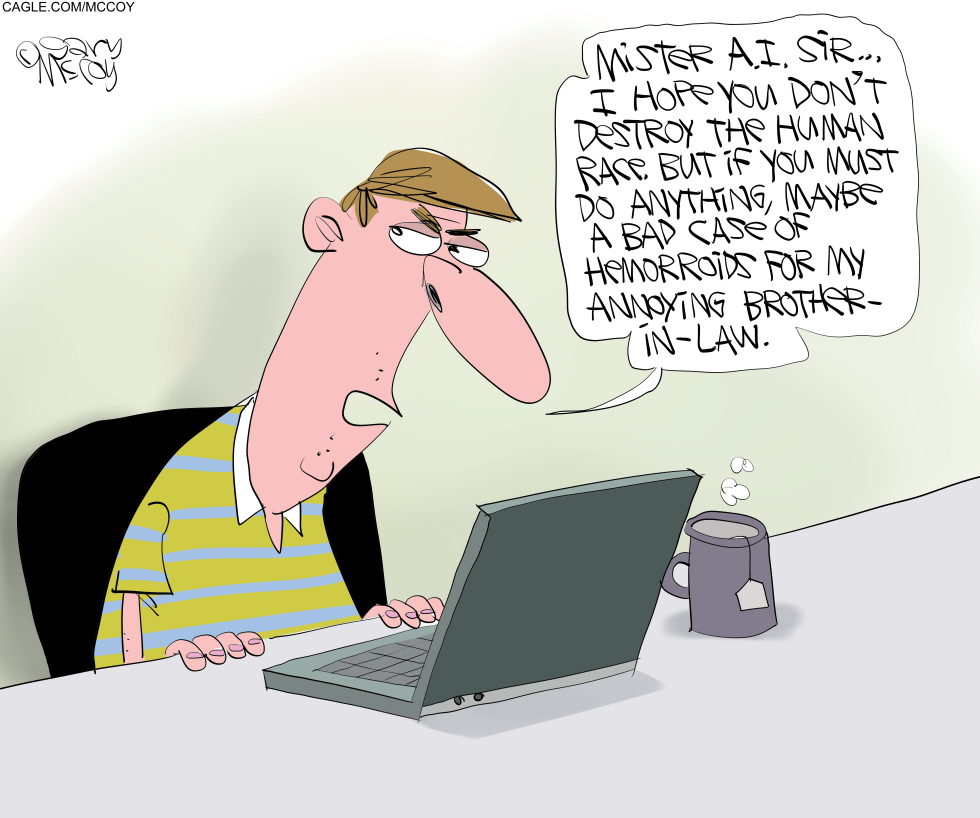
Public anxiety over artificial intelligence continues to grow as systems advance in capability. Users voice both broad existential concerns and narrow personal grievances in direct address to the technology. The cartoon captures this mix by showing one individual framing a request for selective harm amid a larger plea for restraint. It highlights how AI discussions often blend genuine worry with trivial self-interest.
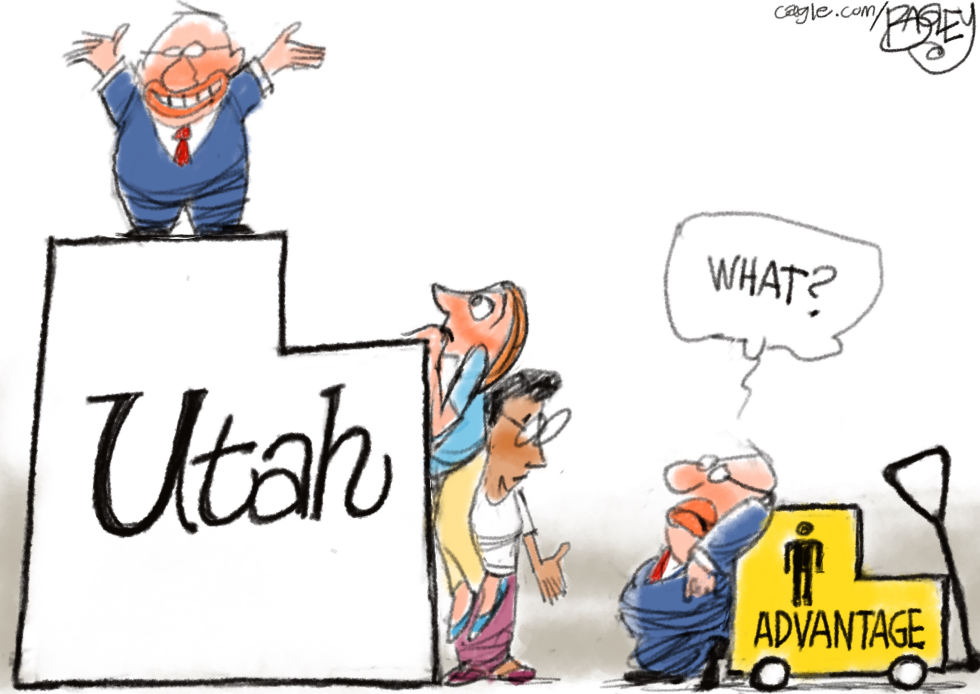
Utah's political advantage has changed hands following recent election developments. Key figures react with visible surprise as power dynamics realign in the state. The shift matters because it alters control and strategy for upcoming contests. The cartoon highlights the unexpected nature of the transition and questions how the new arrangement will hold.
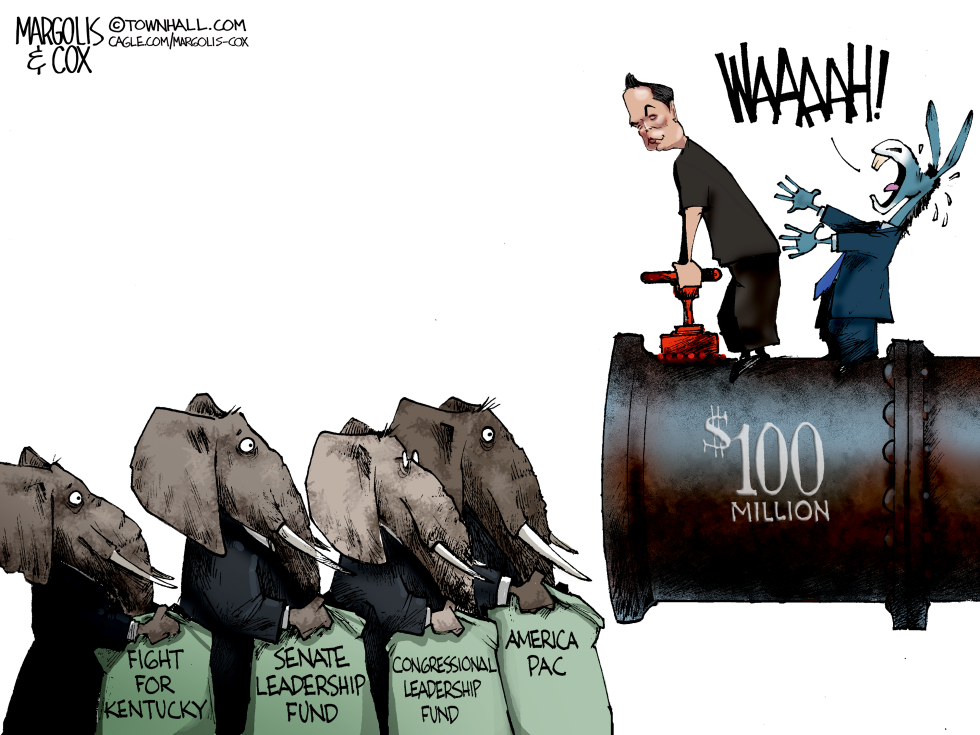
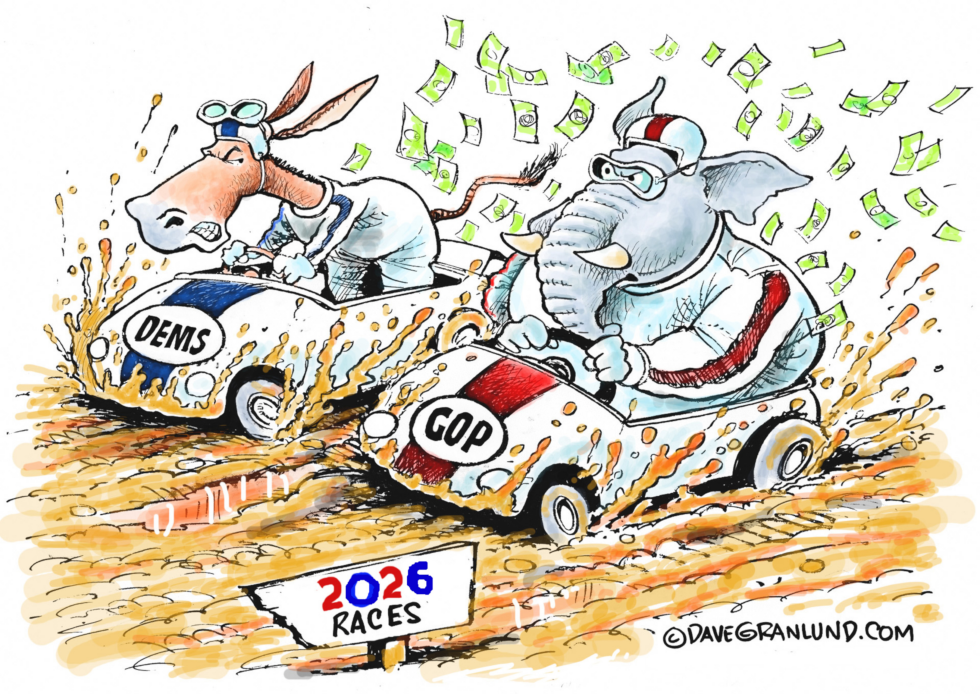
Elon Musk directed $100 million through America PAC and Republican leadership funds targeting Senate races including Kentucky. The spending drew immediate Democratic criticism. The cartoon portrays the donations as a direct power play that sidelines opponents.
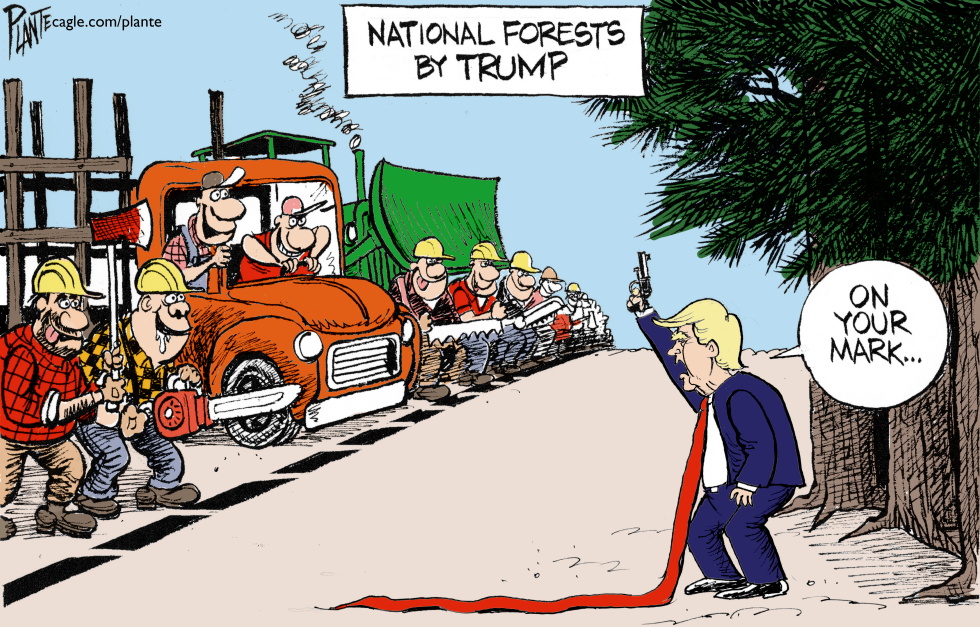
President Trump has directed expanded logging across national forests, ordering crews to begin timber harvests on federal lands. The move opens protected areas to commercial cutting under new administration policy. Critics argue the action prioritizes industry over conservation while supporters cite economic benefits and reduced wildfire risk. The cartoon depicts Trump firing the starting gun to launch the operations.
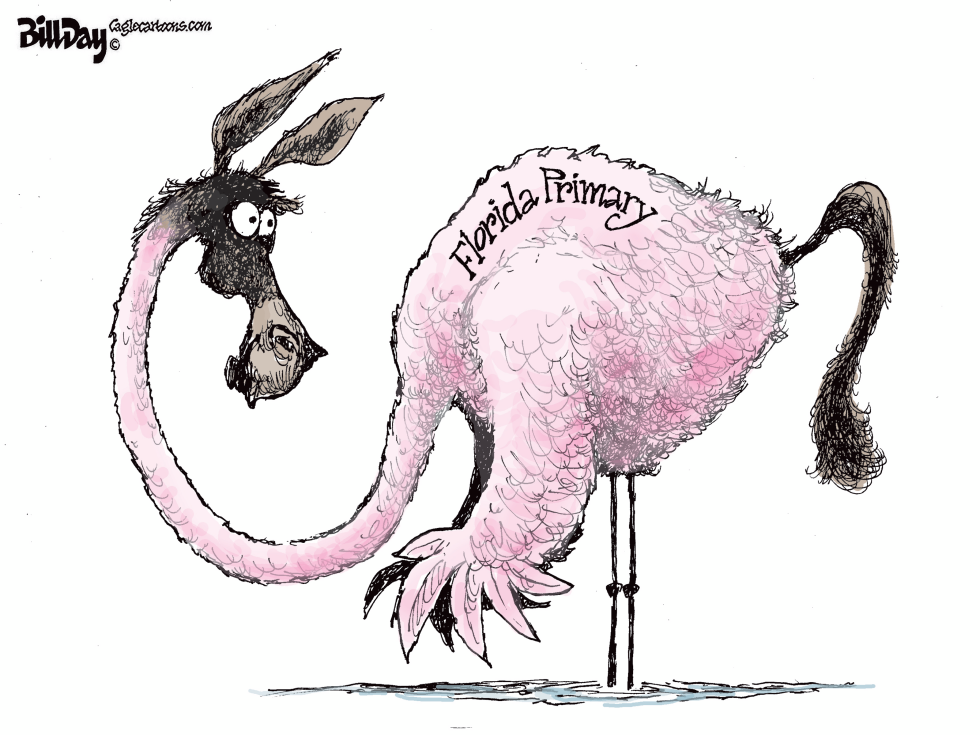
Florida prepares for its primary election with Democratic candidates competing for key nominations. The contest draws attention due to the state's role in national party positioning. The piece portrays the primary as an awkward fusion of traditional party identity and local Florida elements, suggesting the process strains familiar symbols.
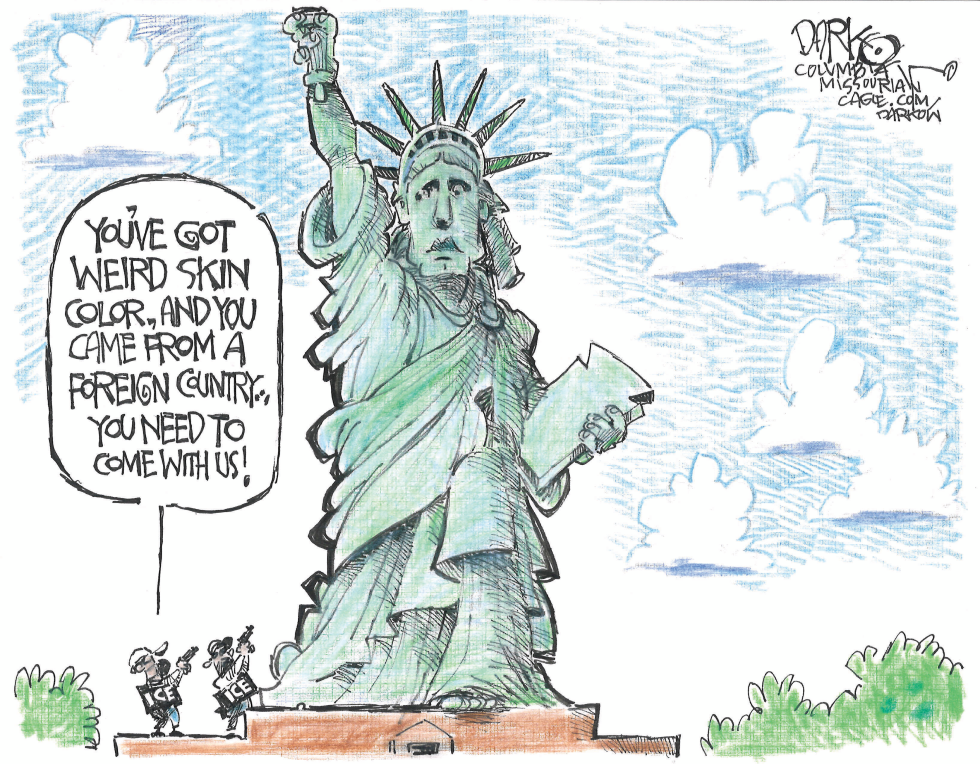
ICE agents have been depicted confronting the Statue of Liberty at its base while citing the monument's skin color and foreign origin as grounds for removal. The action highlights ongoing debates over immigration enforcement priorities and the use of appearance-based criteria in federal operations. The editorial position frames such tactics as inconsistent with the monument's historic role welcoming immigrants.
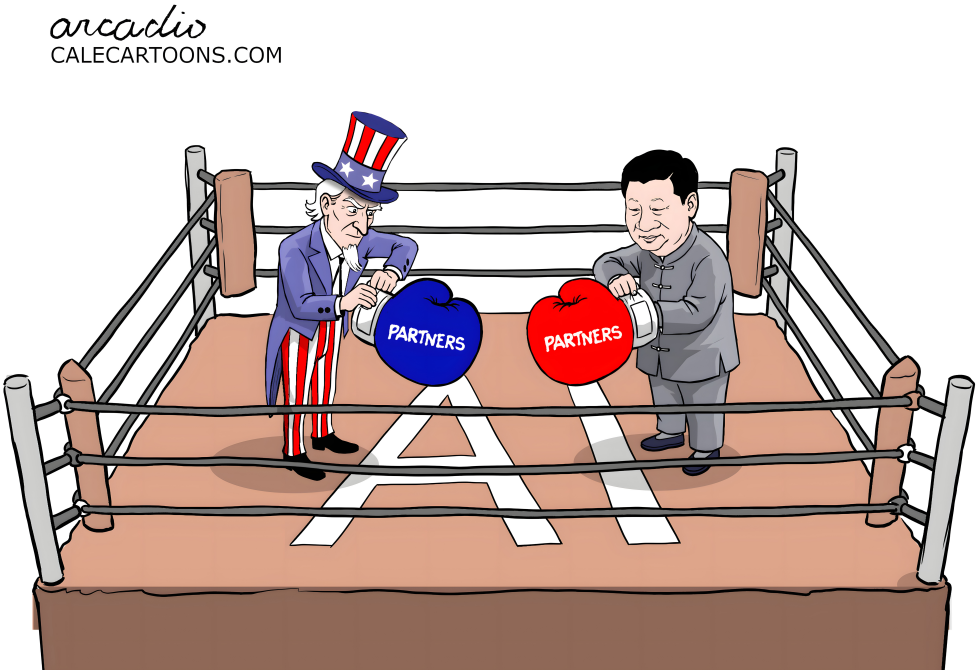
The United States and China continue their contest for leadership in artificial intelligence development. Both nations invest heavily in research and infrastructure to secure advantages in computing power and applications. The competition carries implications for economic growth, military capabilities, and global standards. Recent policy moves on export controls and domestic incentives underscore the stakes. The editorial position frames the dynamic as a direct contest where surface cooperation masks deeper rivalry.
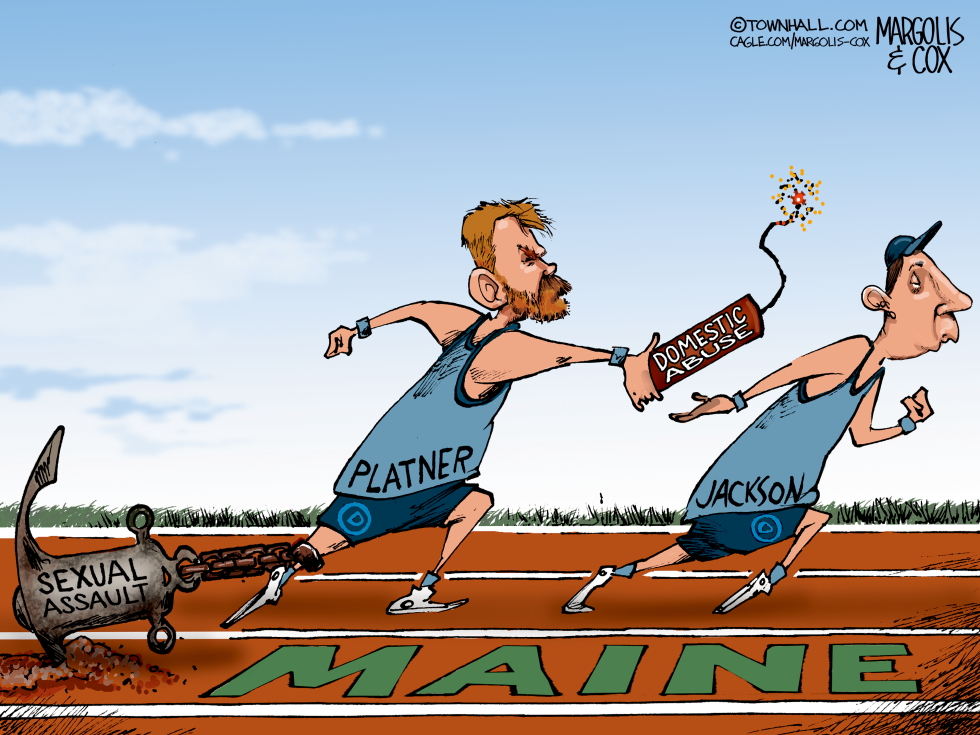
Maine candidates Platner and Jackson compete in a Senate race while facing sexual assault and domestic abuse allegations that threaten their campaigns. The scandals have become central issues in the contest. The piece portrays the candidates as hampered by these controversies.
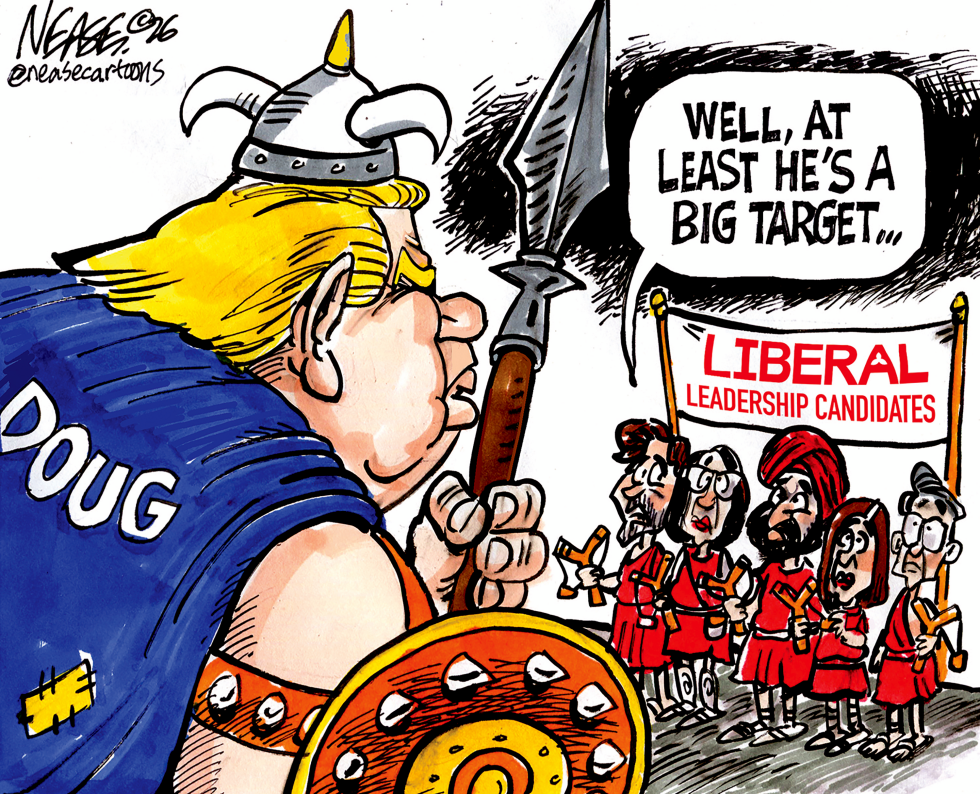
Liberal leadership candidates have identified a prominent opponent as their primary focus in an ongoing contest. The opponent, labeled Doug, appears as a large and visible figure in the political landscape. This dynamic highlights how one individual can dominate attention during a party’s internal selection process. The piece presents the situation as an opportunity for the candidates to rally around a clear adversary rather than internal divisions.
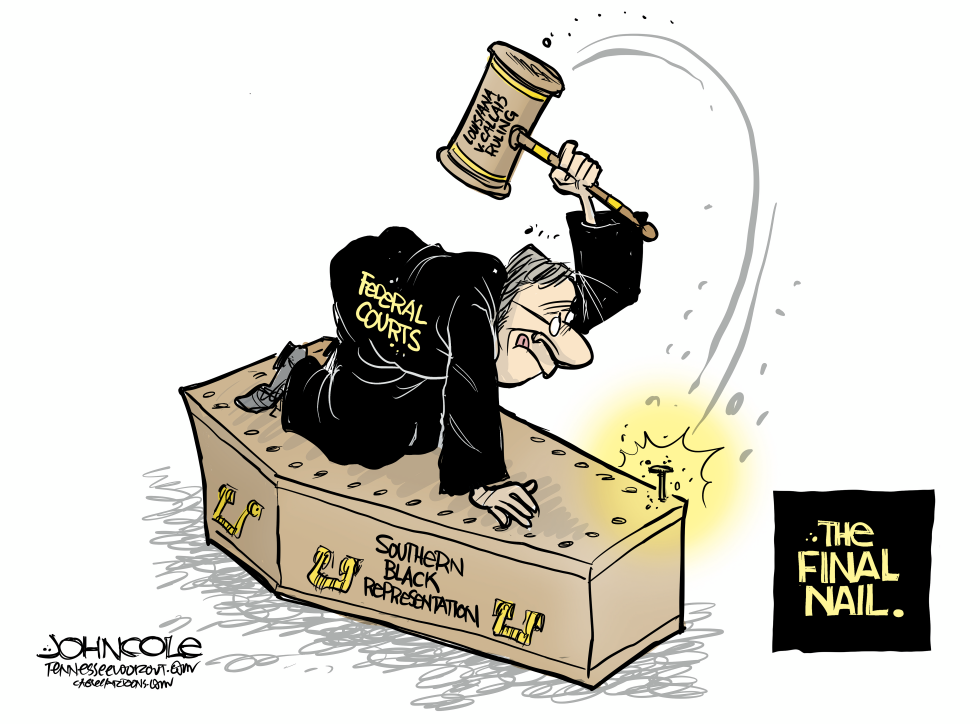
A federal court ruling on Louisiana redistricting has reduced black congressional representation across southern states. The decision follows ongoing litigation over district maps and voting access. It matters because it alters the number of majority-minority seats available in Congress. The piece argues the ruling delivers a decisive setback to those representation gains.
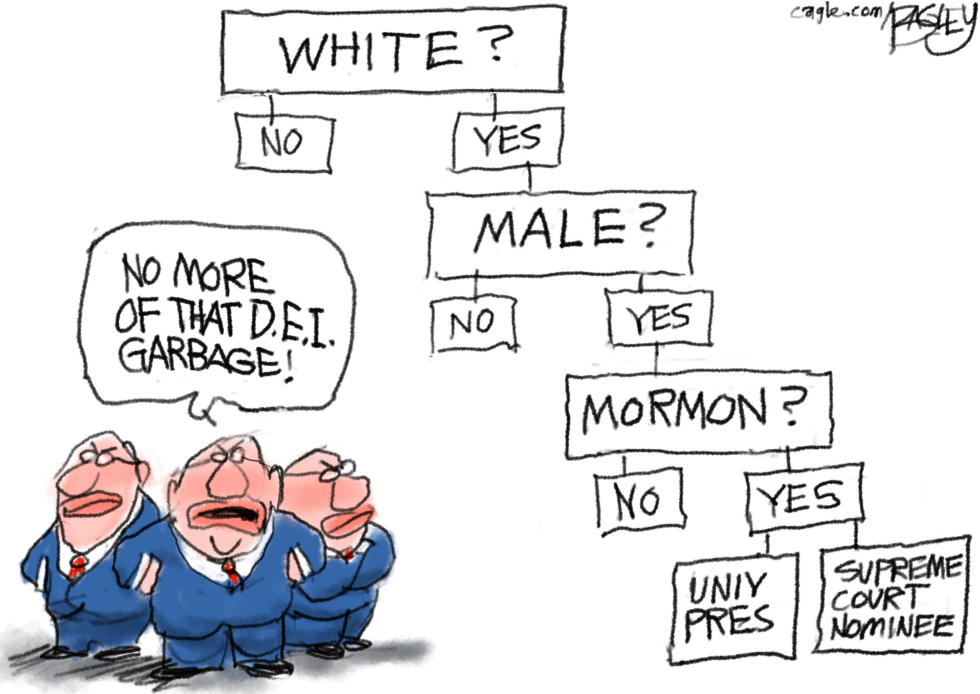
A flowchart circulating in political circles outlines a narrow path to Supreme Court nomination that begins with questions about race, gender and religion. The diagram routes only white male Mormons to the top position while directing others toward university presidencies. Three figures in the image voice opposition to diversity initiatives. The piece responds to ongoing debates over judicial selection standards and identity considerations in appointments. It takes the position that such rigid criteria undermine broader merit-based processes.
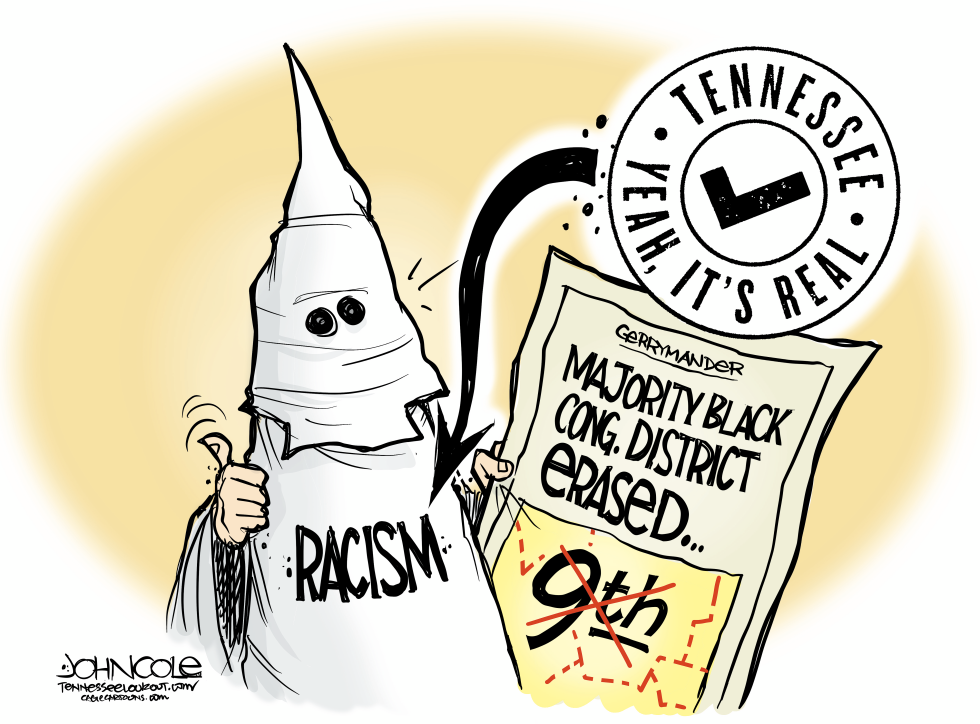
A robed figure labeled racism holds a newspaper headlined about the erasure of Tennessee's majority-Black congressional district. The cartoon responds to the state's new map that eliminates the 9th district. The stamp affirms the change as real. The image ties the redistricting directly to racial motivations in voting maps.