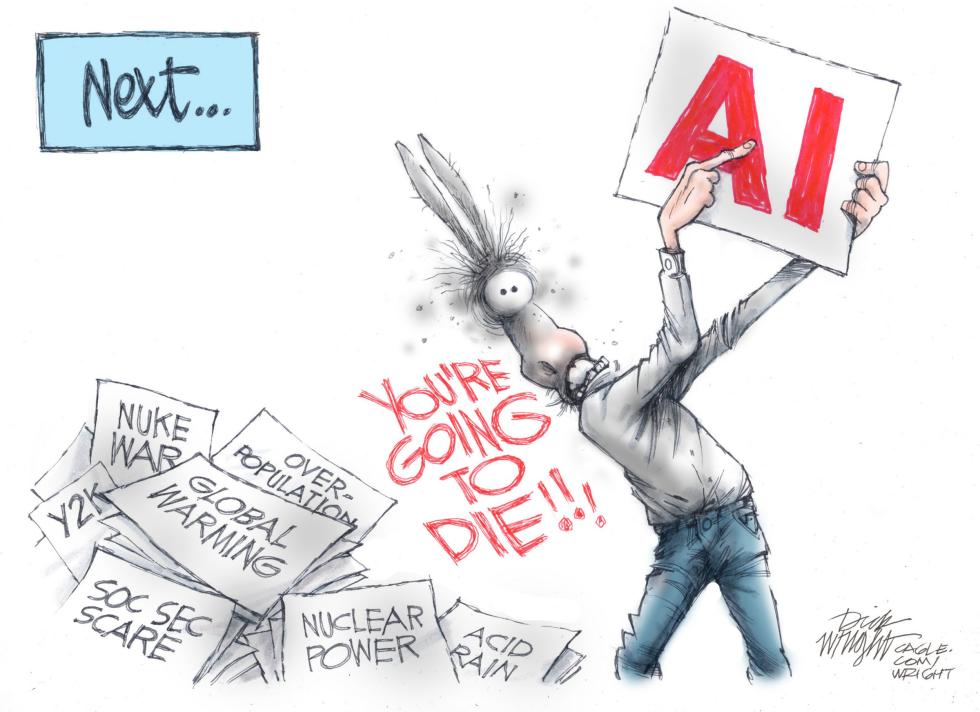
Democrats have renewed warnings that artificial intelligence poses an existential threat, echoing earlier alarms over Y2K, nuclear power, and climate change that later lost urgency. The pattern suggests political use of successive crises to maintain attention. The cartoon argues these claims recycle familiar tactics without new substance.
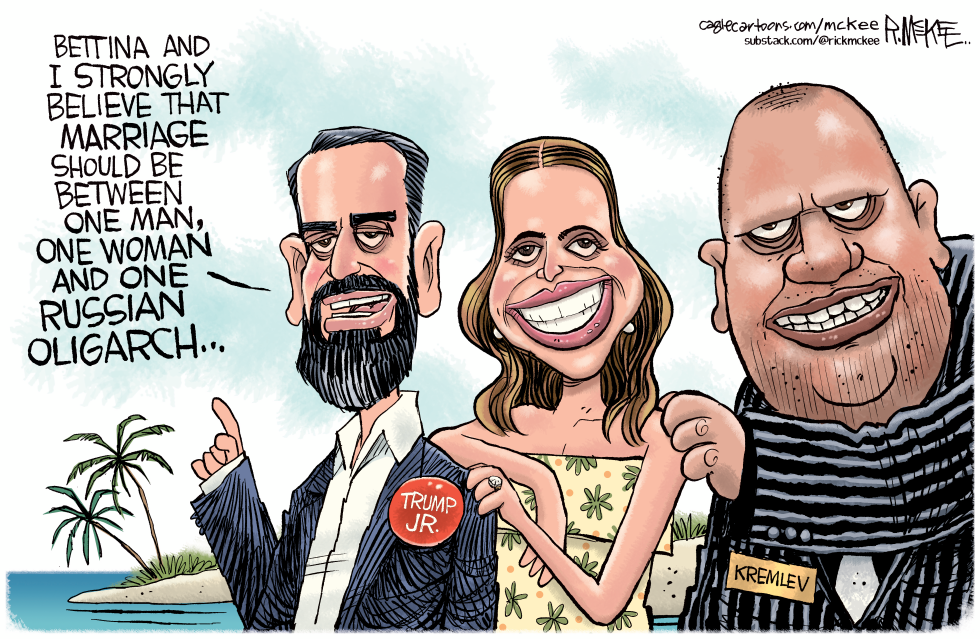
On September 15, 2026, commentary emerged around reports of Russian oligarch involvement in events tied to Donald Trump Jr. and Bettina. The development raises questions about foreign influence on the Trump family. The piece argues such connections undermine claims of independence from external interests.
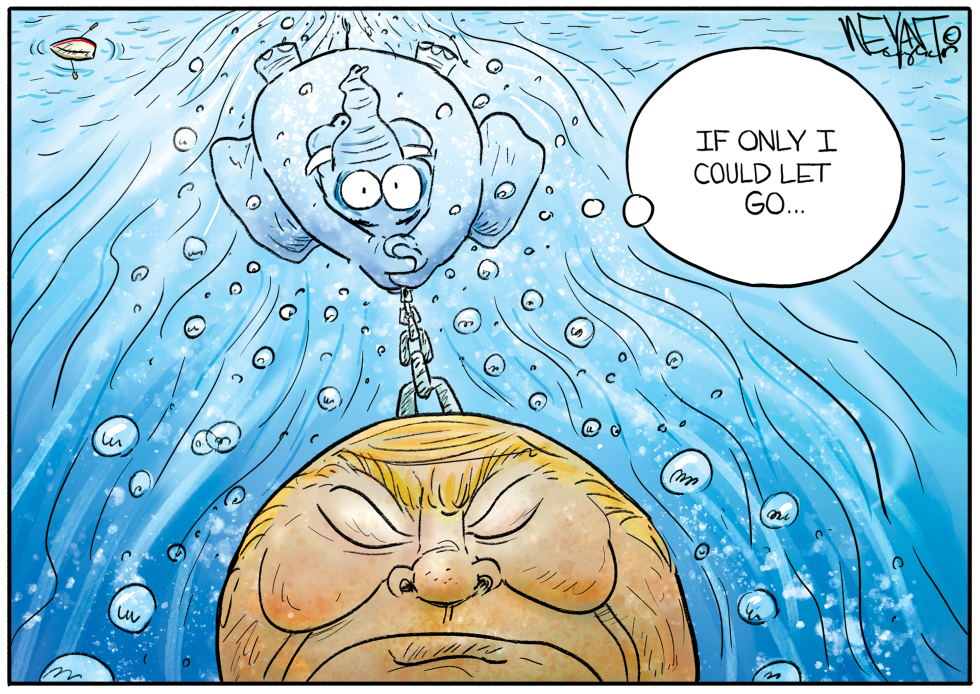
The Republican Party continues to grapple with its deep ties to Donald Trump as the 2026 election cycle approaches. Trump remains the dominant force within the GOP, and efforts to distance the party from him have repeatedly failed. This dynamic risks further electoral damage as voters grow weary of the internal conflict. The cartoon argues that the GOP's inability to break free from Trump is self-inflicted and will lead to its continued decline.
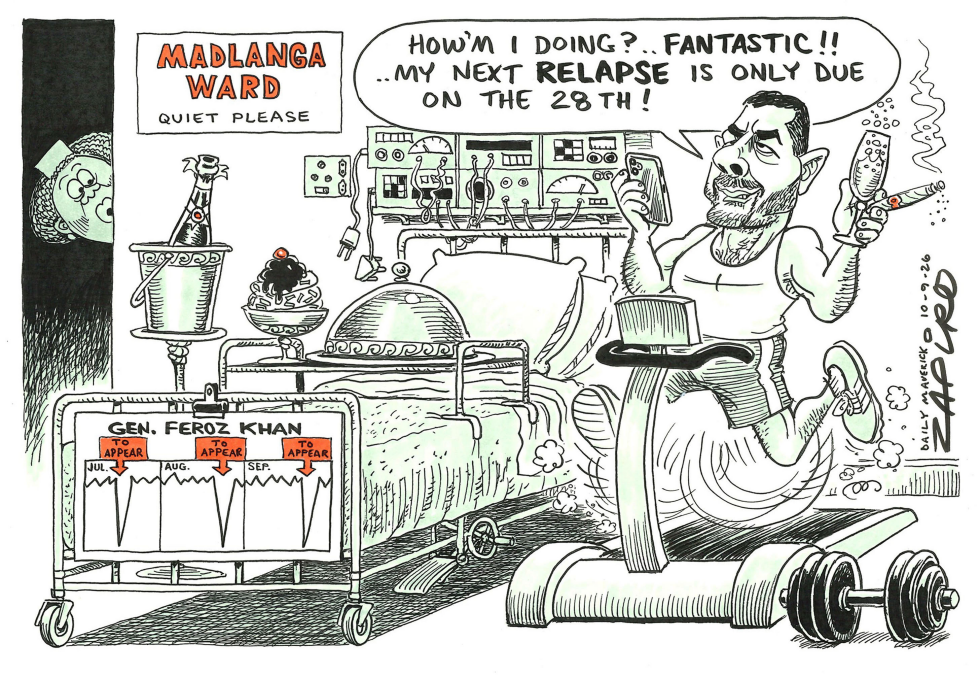
Maj-Gen Feroz Khan, suspended SAPS Crime Intelligence deputy head, was shot in an apparent assassination attempt in June 2026 days before scheduled Madlanga Commission testimony. His evidence was postponed multiple times citing recovery and medical certificates, with the next appearance set for 28 September. The cartoon mocks the pattern of delays as a convenient scheduling of relapse.
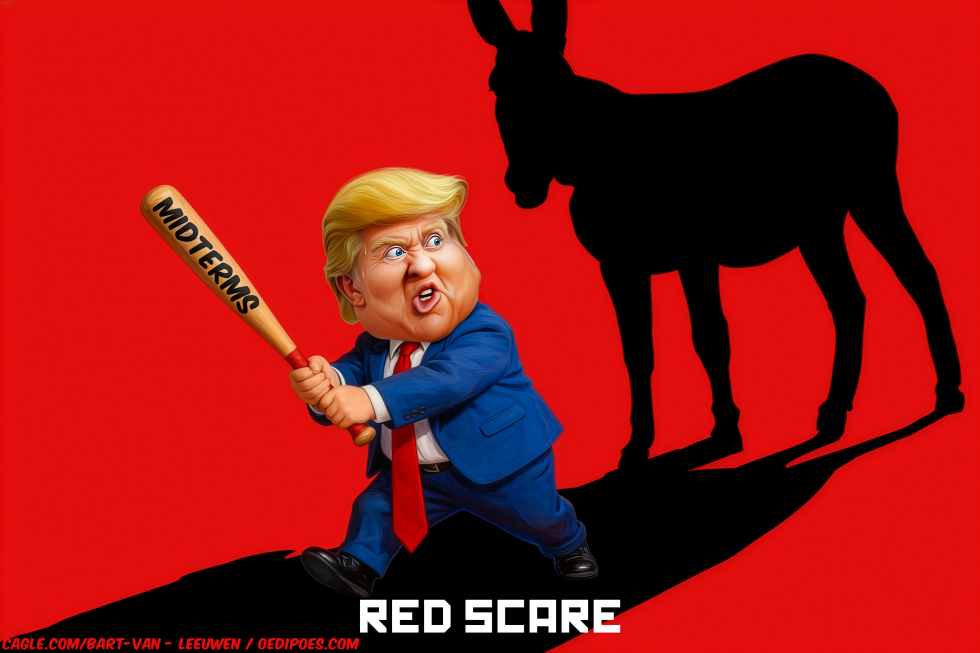
The cartoon shows Donald Trump in a blue suit swinging a baseball bat labeled MIDTERMS toward a black donkey silhouette on a red background. The phrase RED SCARE appears prominently at the bottom. Published on September 14, 2026, the image comments on Trump's approach to the upcoming midterm elections. It portrays the former president as aggressively pursuing Democratic opponents. The visual draws on historical Red Scare imagery to suggest fear-based political tactics. The composition places Trump in the foreground with the donkey shadow looming behind him.
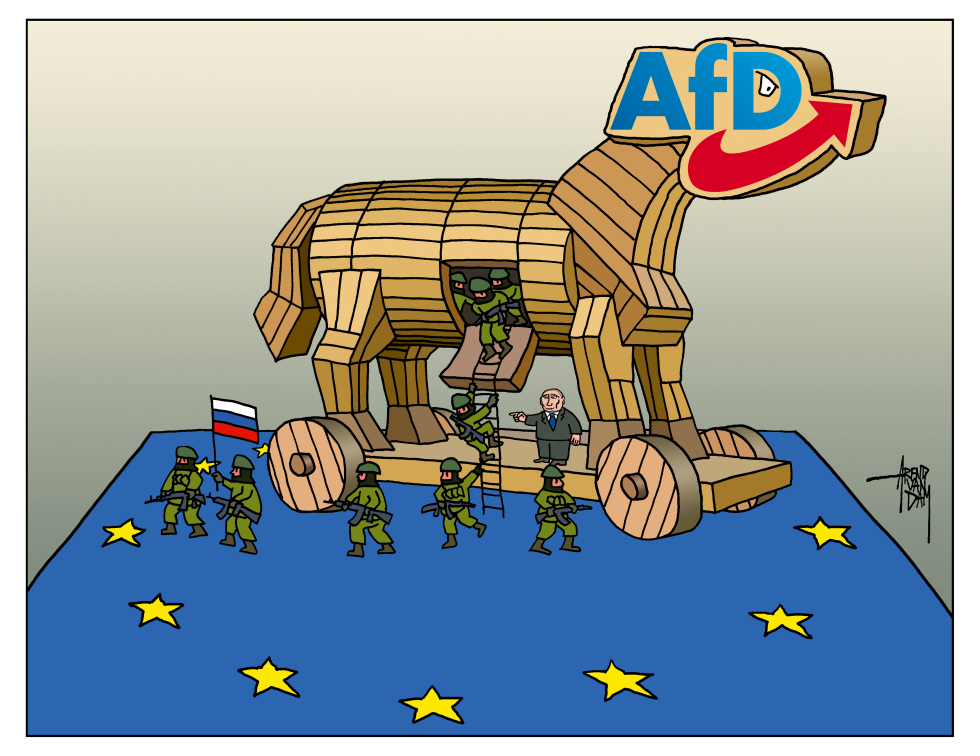
The AfD party in Germany faces accusations of serving as a conduit for Russian influence operations targeting the EU. Vladimir Putin benefits from the far-right group's rising profile ahead of elections, using it to sow division and weaken European unity. The cartoon portrays this dynamic as a classic Trojan horse tactic, with Russian troops emerging from the AfD structure on EU soil. Critics argue the party's policies align too closely with Kremlin interests, undermining NATO and EU cohesion at a critical time. The editorial stance warns that ignoring these ties risks strategic vulnerability for Europe.
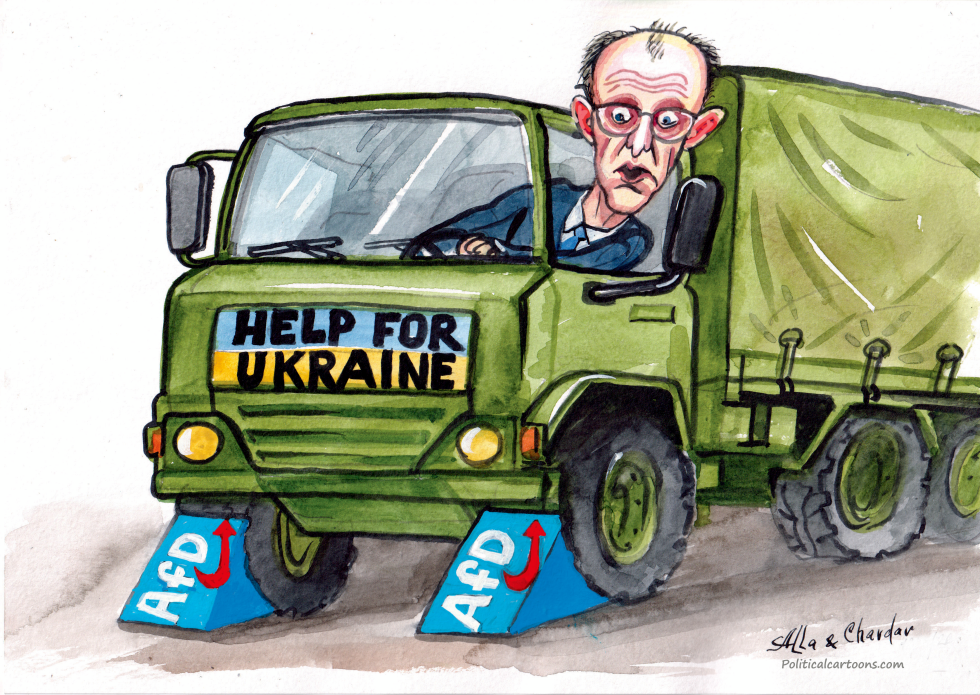
The cartoon depicts a green truck labeled Help for Ukraine stopped by blue AfD wheel chocks. A caricature of an AfD leader sits in the driver's seat. The image comments on the party's opposition to continued German military aid for Ukraine as of September 2026. AfD has consistently voted against additional support packages in the Bundestag. The visual uses the truck and chocks to illustrate the party's blocking role in foreign policy debates.
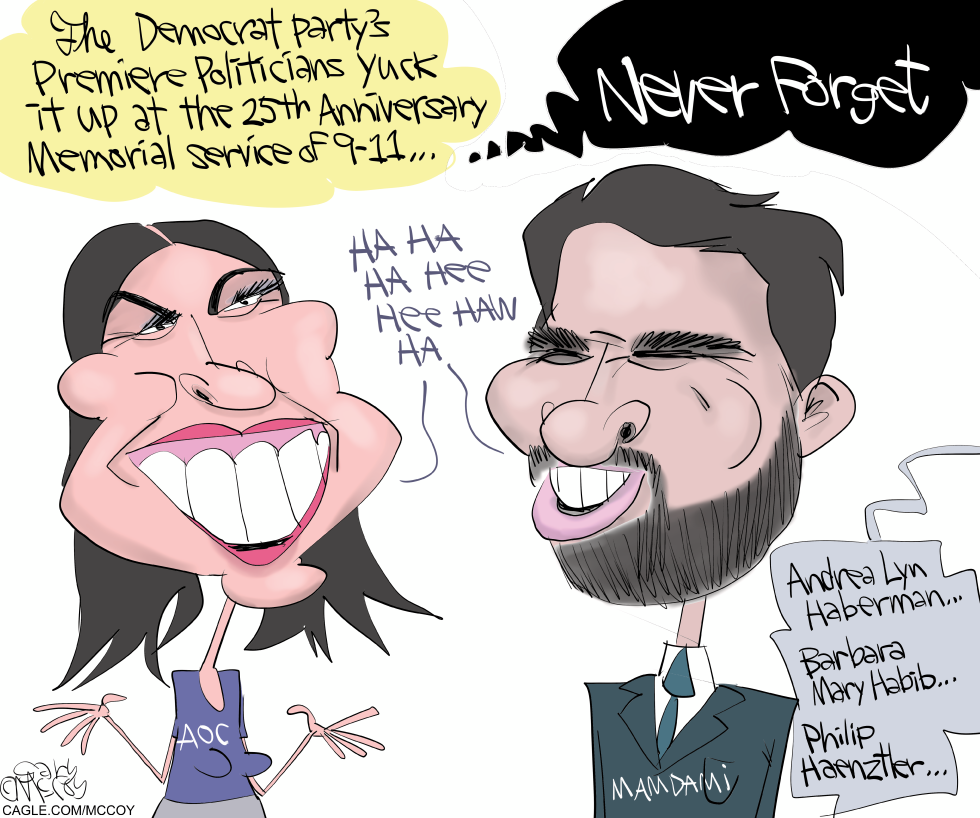
On the 25th anniversary of the September 11 attacks, prominent Democrats faced accusations of inappropriate levity at memorial events. The cartoon depicts AOC and Zohran Mamdani laughing while a thought bubble reading Never Forget trails off, underscoring claims that party leaders have grown detached from the solemnity of the occasion. The piece argues that such behavior reveals a broader erosion of respect for national tragedies among Democratic elites.
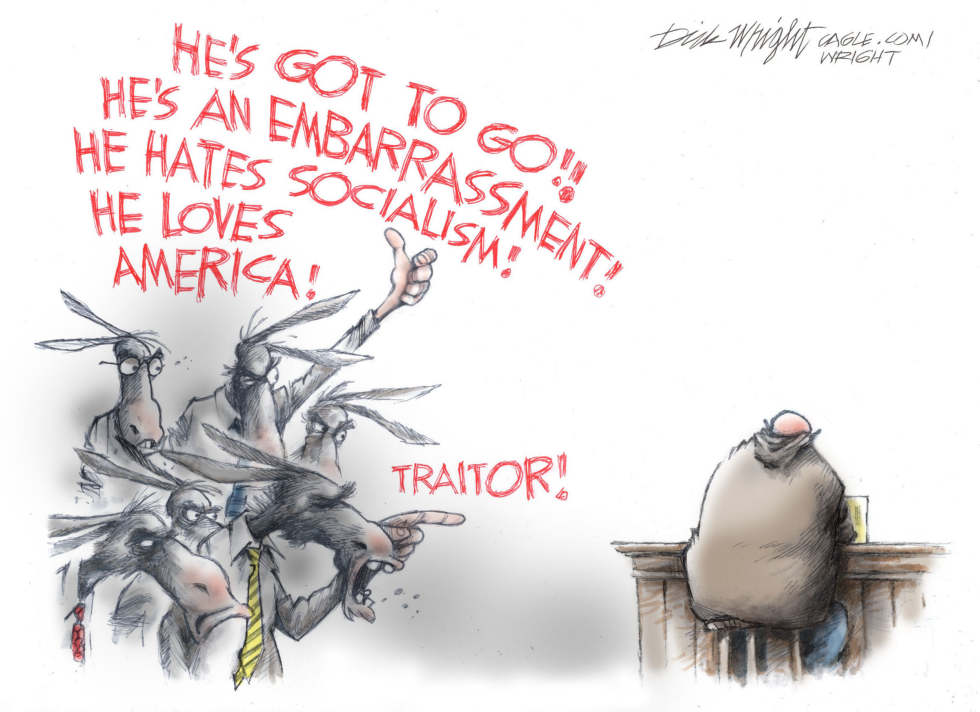
Senator John Fetterman drew sharp criticism from fellow Democrats in September 2026 for publicly rejecting socialism and emphasizing his love of America. The episode highlights deepening tensions within the party over ideological purity tests. The cartoon portrays the attacks as self-destructive party infighting.
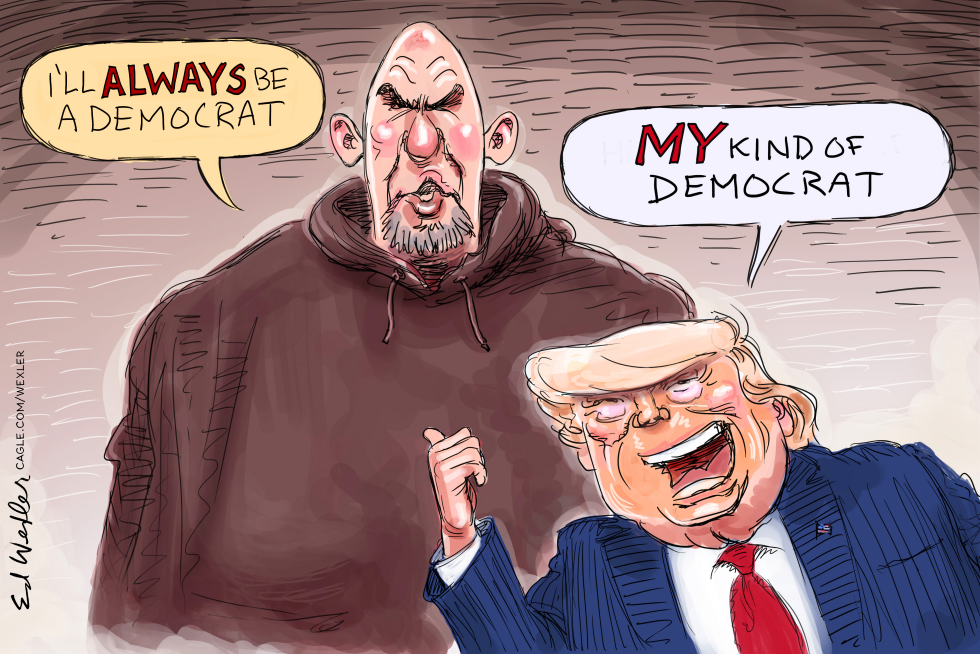
Donald Trump publicly endorsed a Democrat who declared he would always remain in the party. The statement drew attention because it came from a figure outside Trump's usual base. Observers noted the remark as part of ongoing efforts to attract voters across traditional lines. The cartoon presents the exchange as evidence that Trump sees value in Democrats who refuse to change affiliation. It frames the moment as revealing Trump's strategic tolerance for opposition loyalty when it suits his purposes.
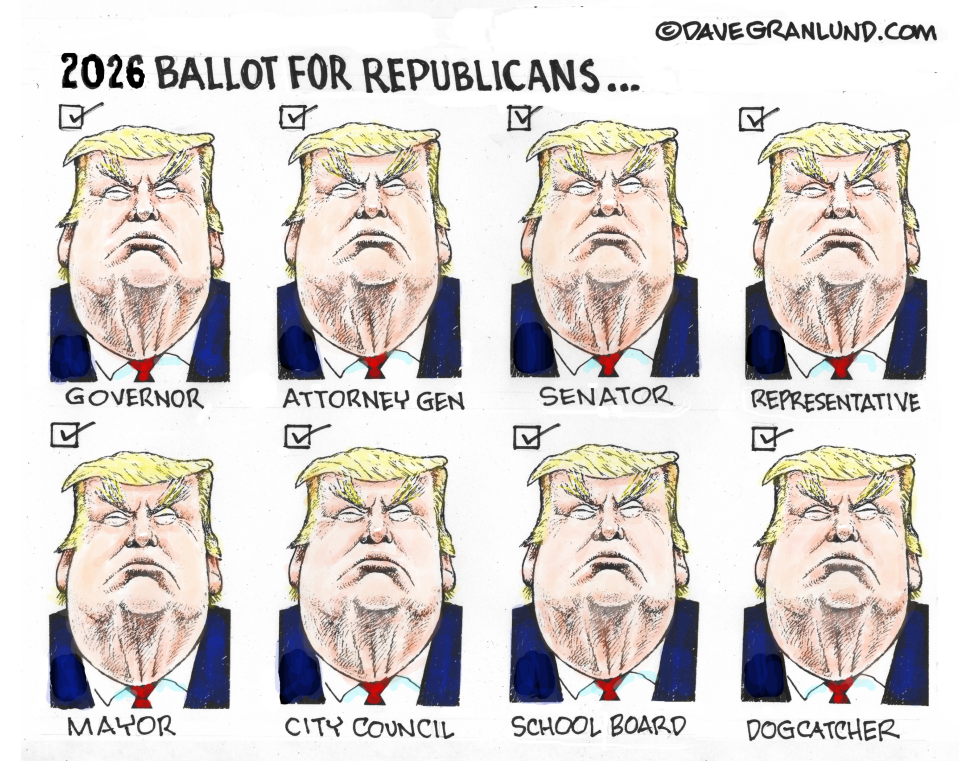
The cartoon depicts eight identical caricatures of Donald Trump filling every position on a 2026 Republican ballot, from governor and attorney general down to dogcatcher. Each image carries a checkmark, underscoring the editorial point that Trump loyalty has become the sole qualification for GOP candidates at every level. Published September 11, 2026, the image comments on the ongoing consolidation of Republican primaries around Trump-aligned figures ahead of the midterm cycle. The visual repetition emphasizes how the former president's influence extends from high-profile statewide offices to local contests. This approach mirrors real-world patterns where Trump endorsements shape candidate selection across the party.
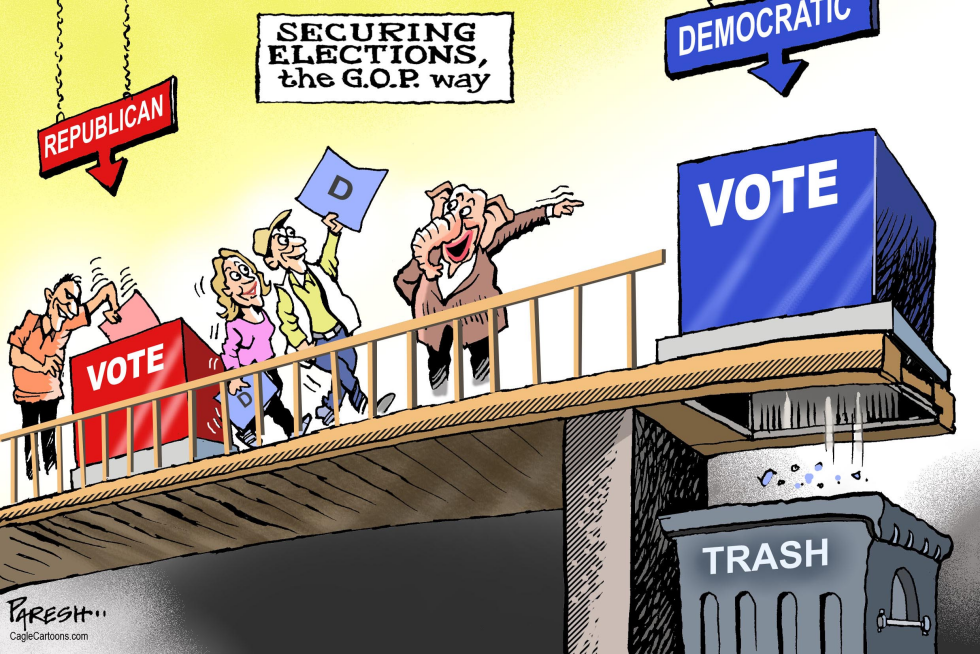
The cartoon depicts Republicans on a platform guiding a large blue vote box labeled Democratic into a trash can below while a red Republican vote box remains on the structure. A sign reads Securing Elections the G.O.P. way. The elephant symbol of the GOP points toward the action as figures including one holding a D flag stand nearby. The image comments on claims of election integrity by showing ballots from one party discarded. This reflects ongoing partisan debates over voting procedures and access as of the 2026 publication date.
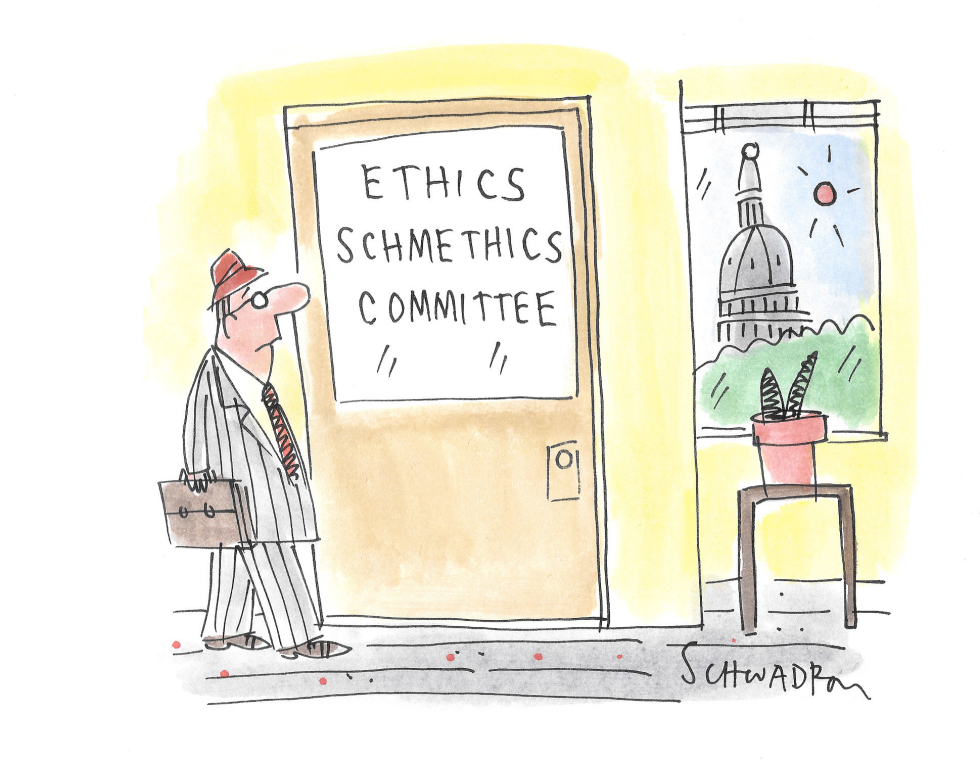
Congress continues to sideline meaningful ethics oversight, with lawmakers showing little interest in strengthening or even respecting the chamber's ethics committee. The panel exists on paper but carries little practical weight in daily operations. This dynamic matters because weak internal standards erode public trust in legislative institutions and invite outside influence. The cartoon captures the prevailing attitude that ethics rules are an afterthought rather than a core responsibility.
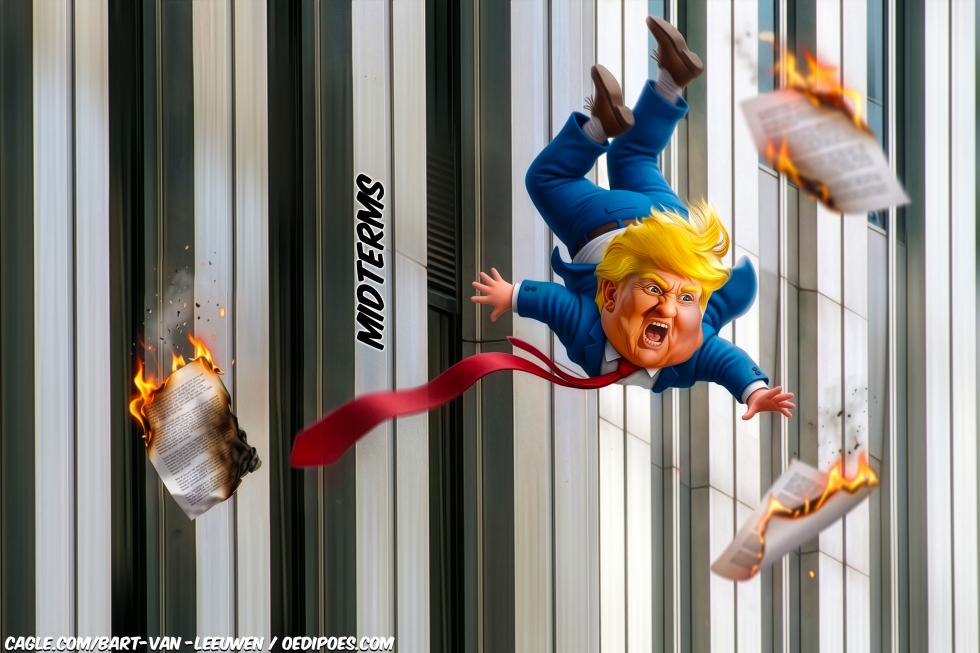
The cartoon shows a caricature of Donald Trump tumbling from a tall building while clutching at burning documents. Vertical lettering spells out midterms along the facade. The scene captures the editorial view of Trump's political position weakening ahead of the 2026 elections. Burning papers suggest damaging records or failed policies catching fire. The falling figure with an open mouth conveys alarm and loss of control. Publication occurred on September 9, 2026, during active midterm campaigning.
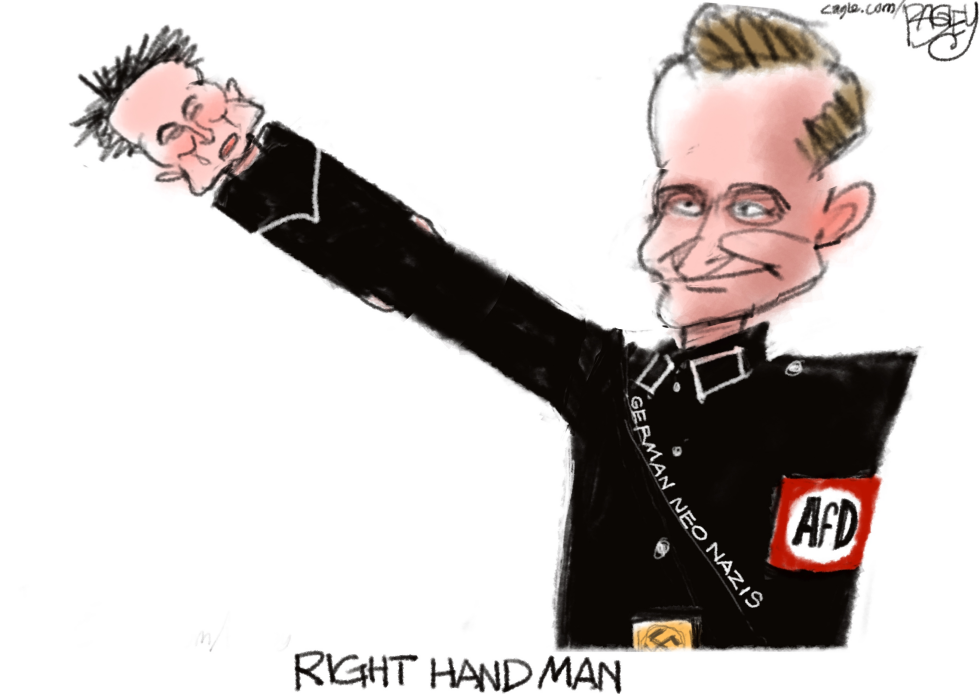
The Alternative for Germany party continues to draw accusations of harboring neo-Nazi elements as recent events spotlight its members and rhetoric. The party has gained electoral ground while facing investigations and public backlash over extremist ties. This development matters because it reflects broader challenges to democratic norms in Europe. The cartoon takes the position that AfD operates as a vehicle for neo-Nazi influence rather than a legitimate political force.