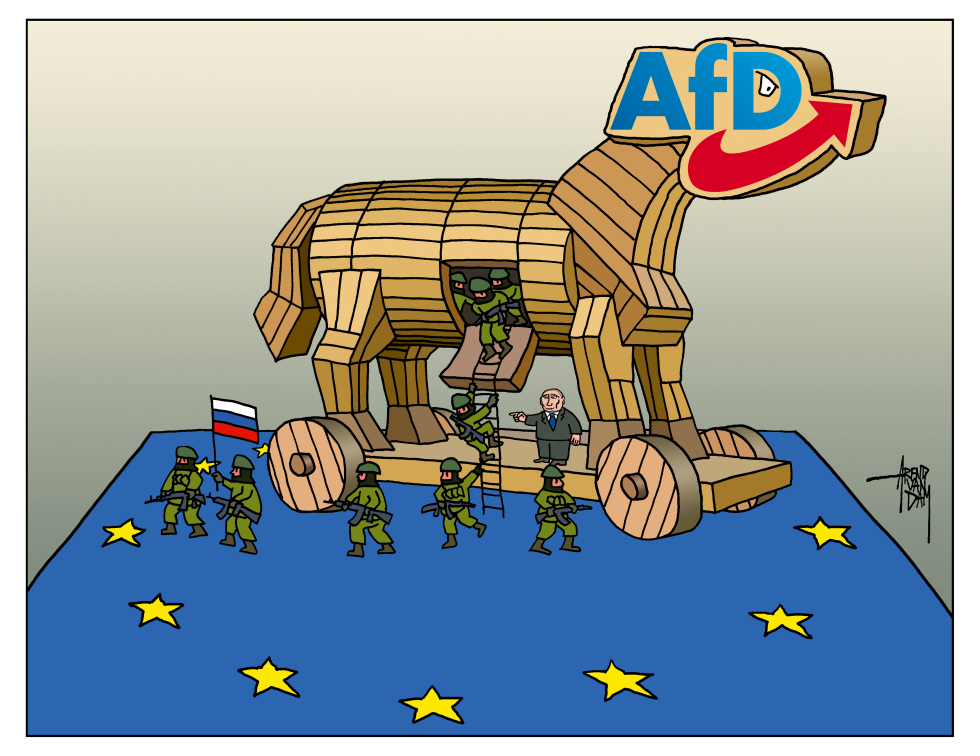
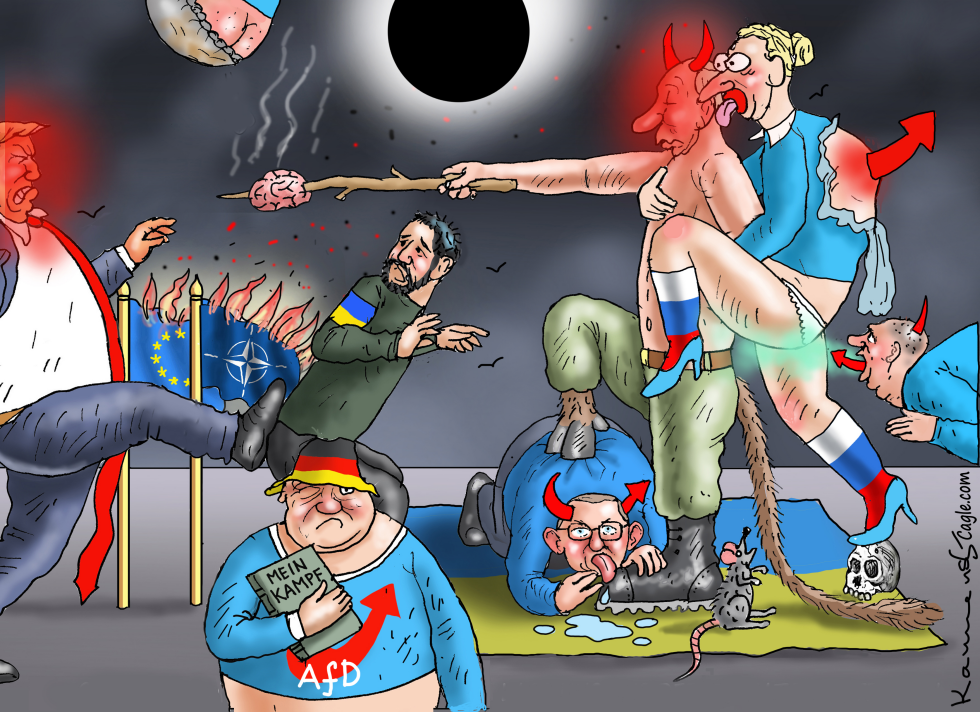
The AfD party in Germany faces accusations of serving as a conduit for Russian influence operations targeting the EU. Vladimir Putin benefits from the far-right group's rising profile ahead of elections, using it to sow division and weaken European unity. The cartoon portrays this dynamic as a classic Trojan horse tactic, with Russian troops emerging from the AfD structure on EU soil. Critics argue the party's policies align too closely with Kremlin interests, undermining NATO and EU cohesion at a critical time. The editorial stance warns that ignoring these ties risks strategic vulnerability for Europe.
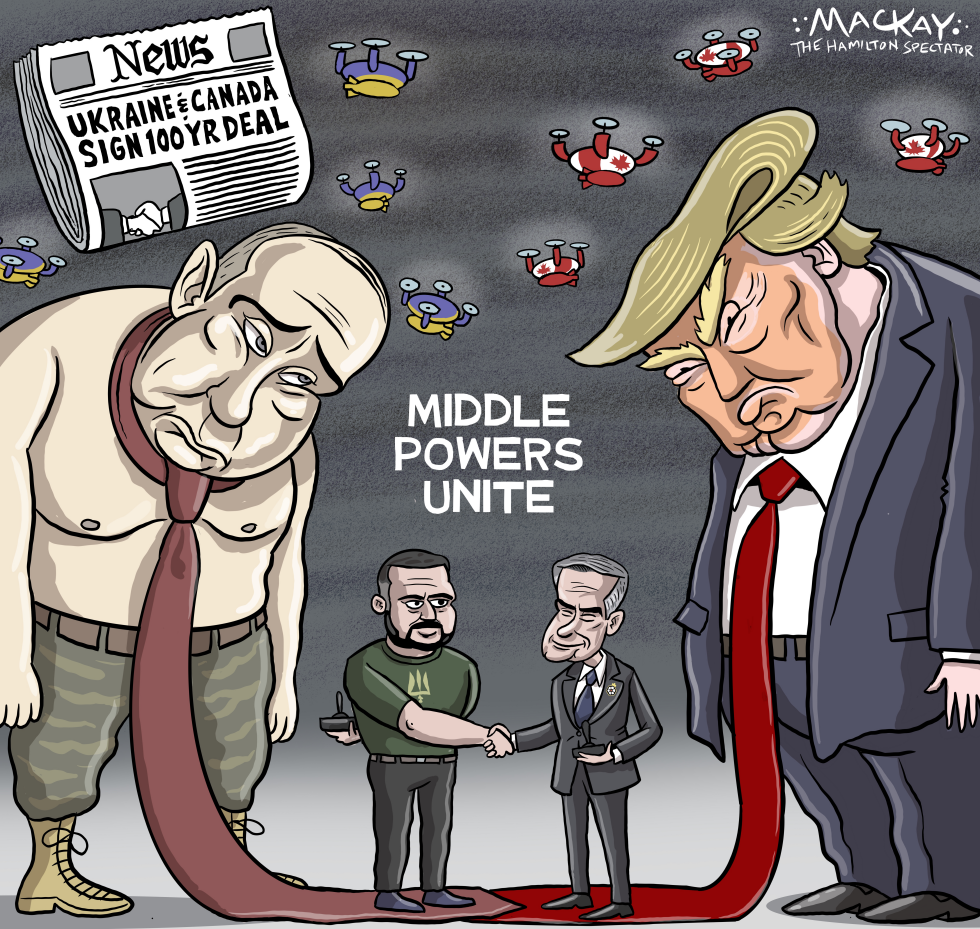
The political cartoon illustrates the signing of a 100-year agreement between Canada and Ukraine, with President Zelenskyy and a Canadian leader shaking hands on a red carpet. Large caricatures of Vladimir Putin and Donald Trump stand on either side, looking down at the smaller central figures. Canadian flag drones fill the background sky near a newspaper announcing the pact. The central text reads Middle Powers Unite. The image comments on how the bilateral deal elevates secondary nations in global affairs while established powers watch the development.
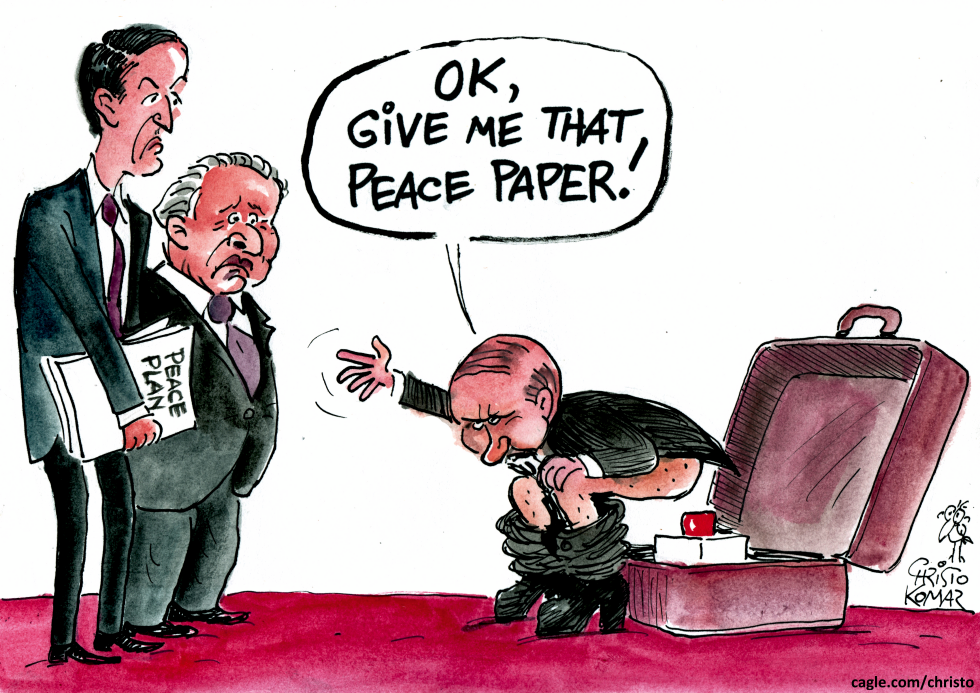
Vladimir Putin has signaled interest in renewed talks to end the war in Ukraine, a conflict that has now stretched for years with heavy costs on all sides. Recent diplomatic overtures have gained little traction as battlefield positions remain entrenched. The cartoon portrays Putin as constrained by his own choices yet eager to claim any available peace document. It underscores the gap between Russian rhetoric and the reality of prolonged fighting. The piece suggests that genuine progress remains unlikely without major concessions from Moscow.
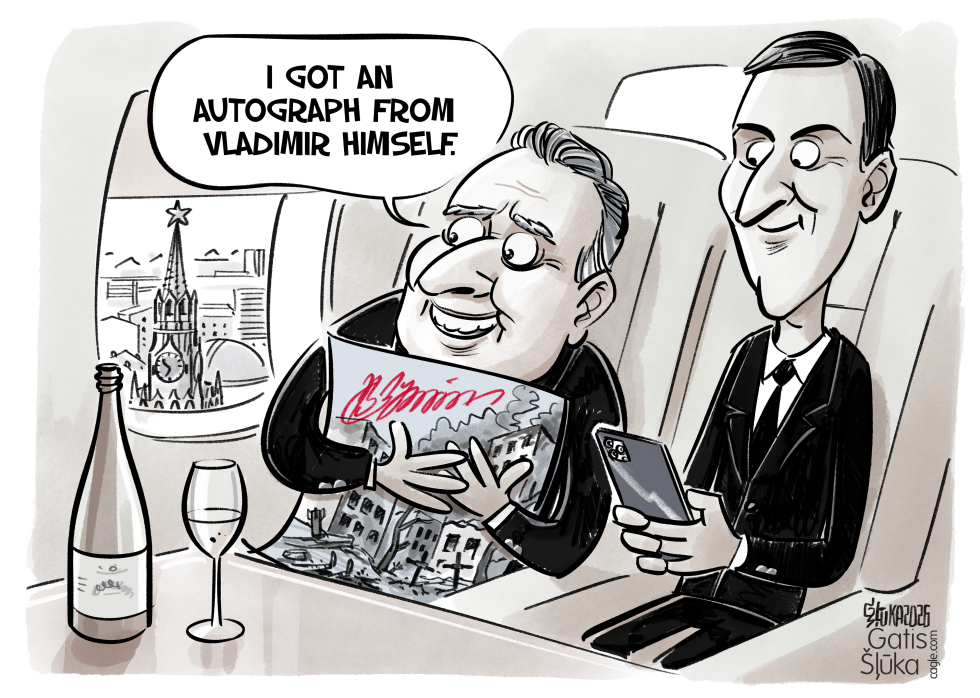
The cartoon depicts a politician on an airplane excitedly showing a colleague an autograph from Vladimir Putin on a book or document. The speech bubble reads that the autograph came from Vladimir himself. A bottle of wine and glass sit on the table, with a view of a city featuring a star-topped tower outside the window. The second man smiles while holding a phone. Published on September 7, 2026, the image comments on political figures maintaining or displaying ties to Russia despite international strains. The visual emphasizes the politician's enthusiasm for the souvenir as a point of pride.
Russian President Vladimir Putin and former President Donald Trump are shown aiding Germany's AfD party in the run-up to elections. The piece argues that external interference from these figures is boosting the far-right German party while harming domestic U.S. political elements.
The Alternative for Germany party faces renewed criticism for its associations with international far-right figures including Donald Trump and apparent sympathy toward Vladimir Putin amid the Russia-Ukraine conflict. The cartoon portrays AfD embracing these influences while rejecting NATO and EU structures. It argues that such alignments expose the party's extremist leanings and undermine Germany's democratic commitments.
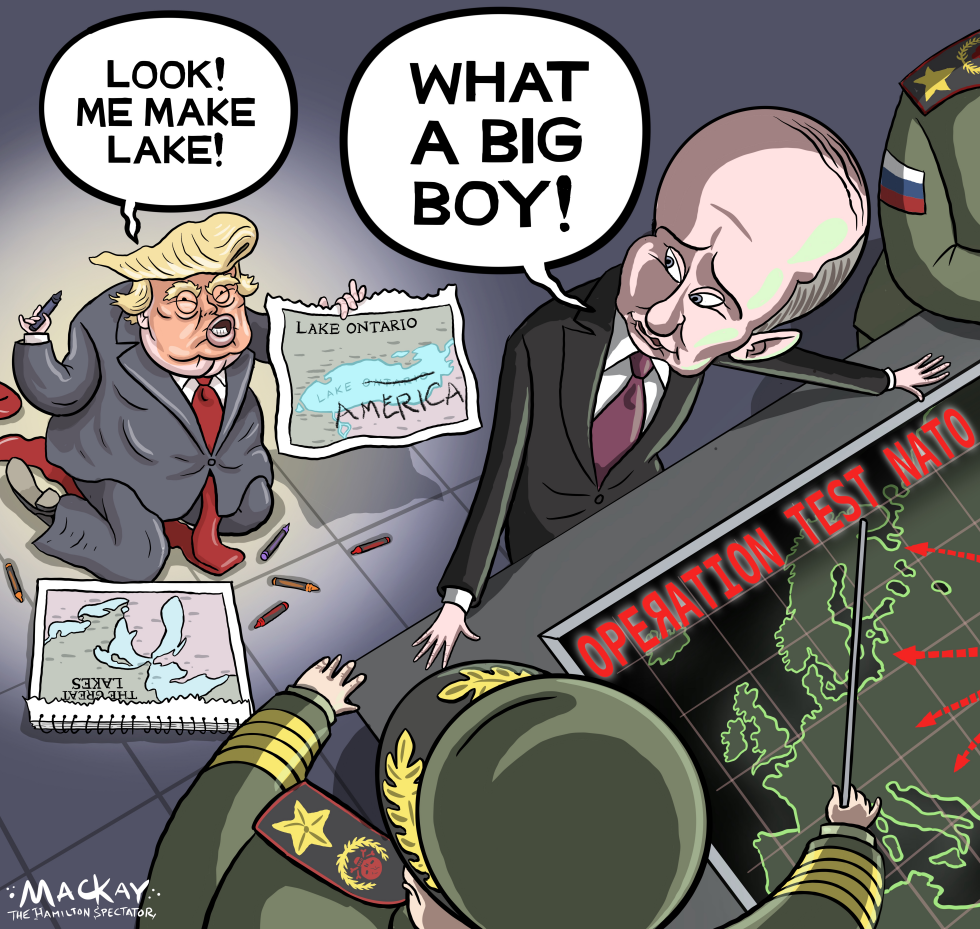
On August 31 2026 Donald Trump presented a hand-altered map renaming Lake Ontario as Lake America during a meeting with Vladimir Putin and Russian military officers reviewing NATO operations. The exchange highlights ongoing tensions over territorial assertions and alliance testing in the Great Lakes region. The cartoon depicts Putin endorsing the claim while officers coordinate a simulated response.
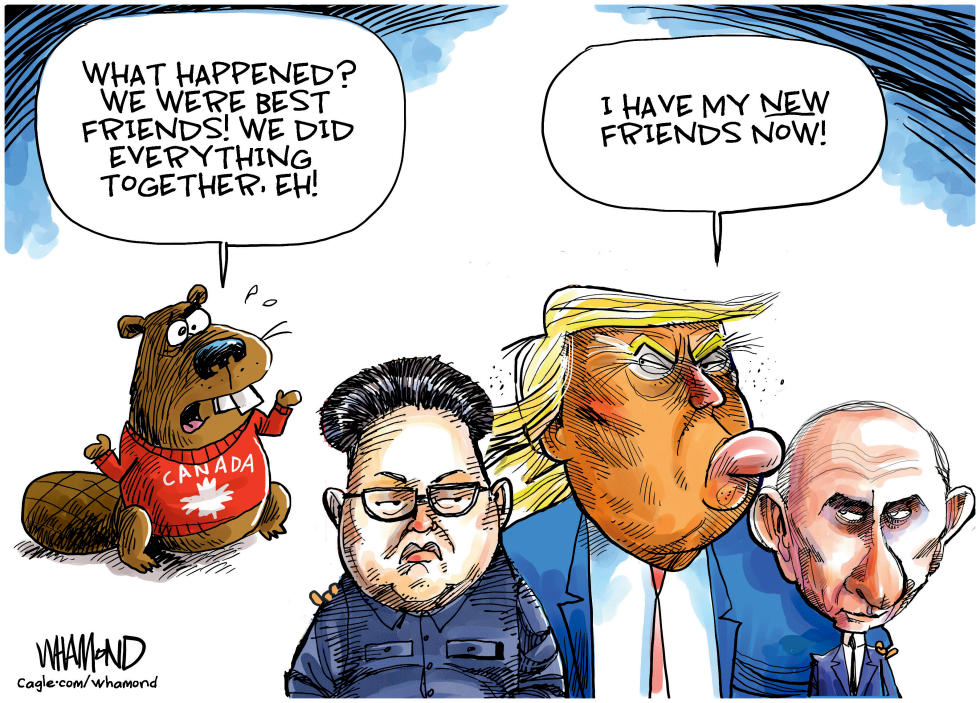
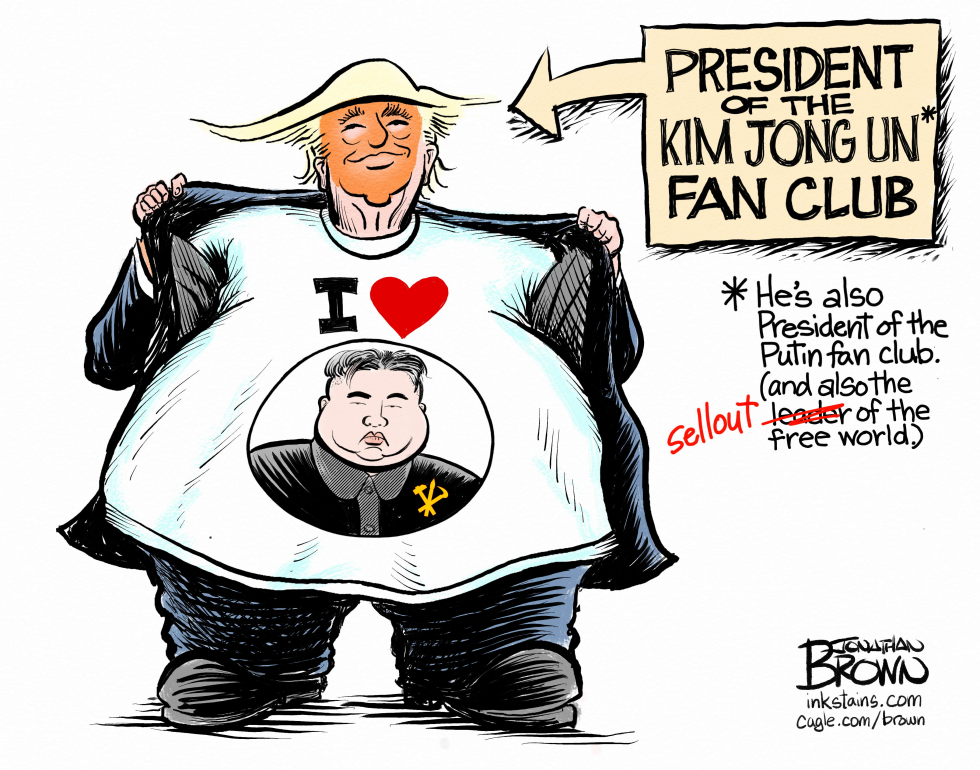
President Trump has redirected diplomatic priorities toward closer ties with Russian President Vladimir Putin and North Korean leader Kim Jong Un. Traditional partners such as Canada now face reduced engagement. The move reflects a broader realignment in U.S. foreign policy that favors authoritarian counterparts over longstanding democratic allies. Observers note the shift carries risks for trade, security cooperation, and international norms. The editorial position criticizes the pivot as shortsighted and damaging to established relationships.
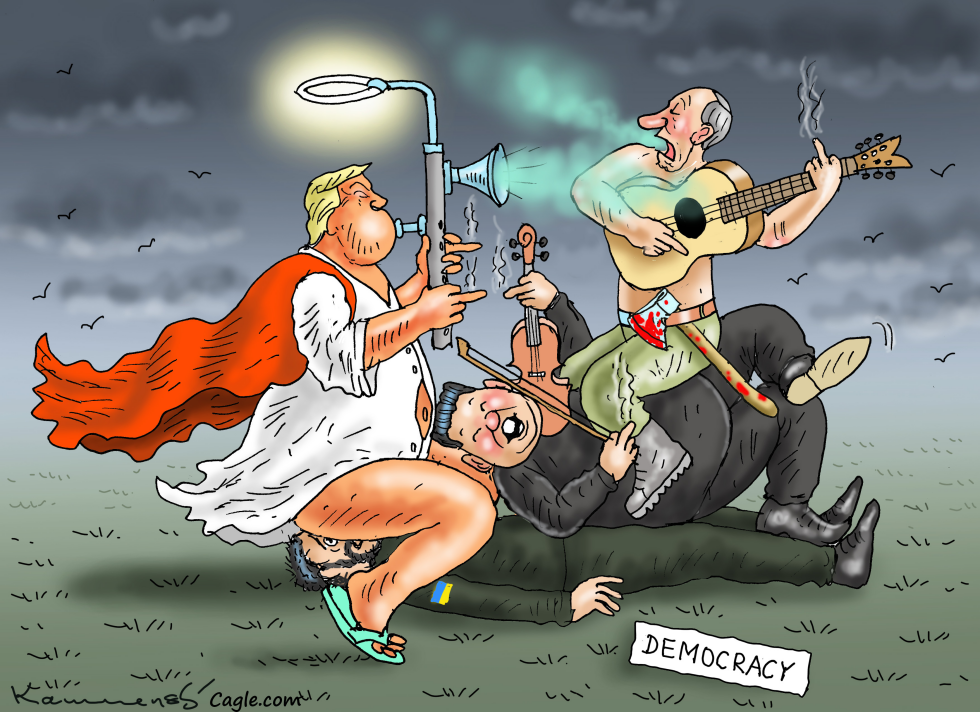
On August 21, 2026, the ongoing Ukraine conflict continued with no resolution in sight as U.S., Russian and Ukrainian leaders remained locked in diplomatic friction. The cartoon responds by depicting the three men as musicians whose finger-pointing and instruments create discord rather than harmony, underscoring the editorial view that personal posturing has overtaken substantive progress toward peace.
The image shows Donald Trump pulling open his jacket to reveal a white shirt bearing a portrait of Kim Jong Un inside a heart. An arrow points to a sign declaring him president of the Kim Jong Un fan club. Additional text notes his role in a Putin fan club and crosses out the word sellout next to a reference to leadership of the free world. The composition centers on the shirt reveal and the sign in the upper right.
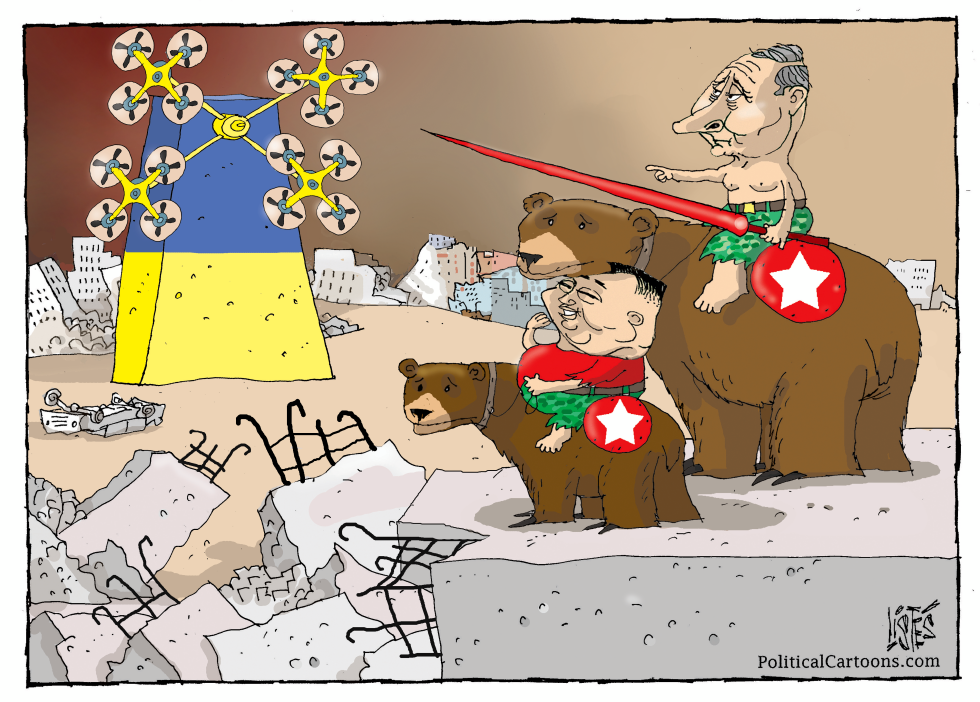
Russian President Vladimir Putin and North Korean leader Kim Jong-un coordinate military support involving drones and personnel in the ongoing Ukraine conflict. The partnership raises concerns over expanded battlefield capabilities and prolonged fighting. The piece portrays their joint advance as a direct strike on Ukrainian infrastructure and sovereignty.
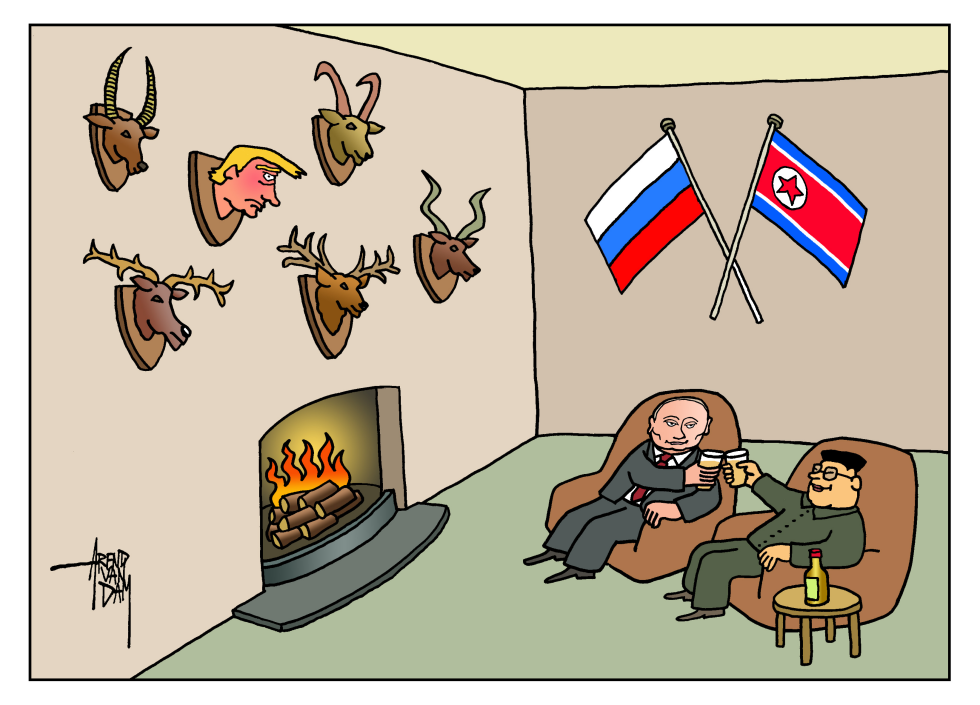
Vladimir Putin and Kim Jong Un appear together in a hunting lodge raising glasses in celebration. A mounted head resembling Donald Trump joins animal trophies on the wall beside the flags of their two nations. The scene reflects ongoing diplomatic alignment between Moscow and Pyongyang amid persistent tensions with Washington over security and sanctions.
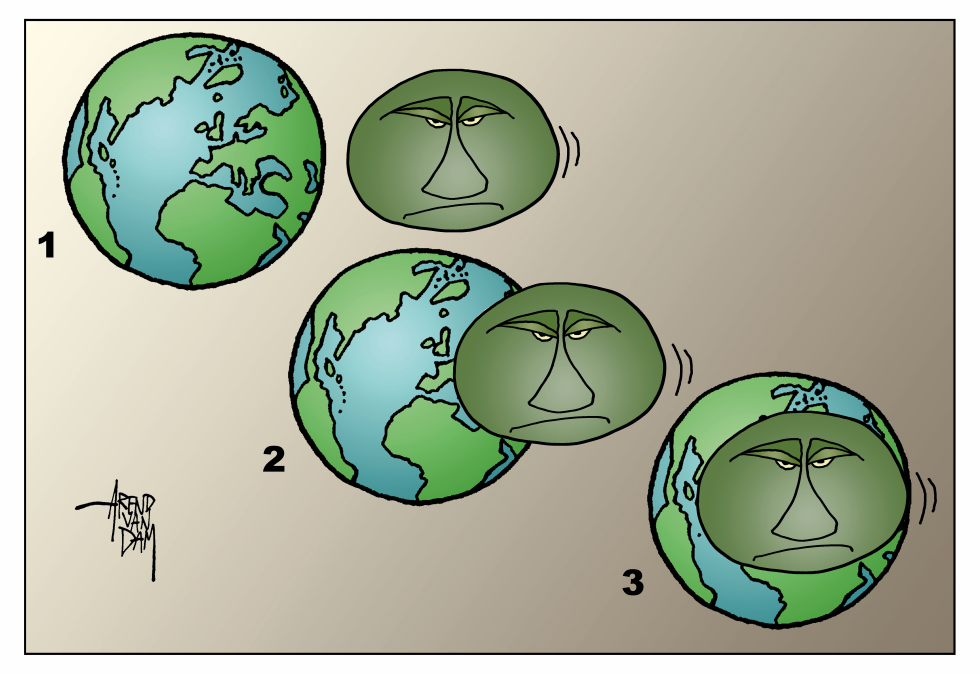
Vladimir Putin appears as a stern green face progressively eclipsing the Earth in three labeled stages. The sequence illustrates expanding Russian influence on the global stage. The piece argues that Putin's reach is steadily overtaking international affairs.