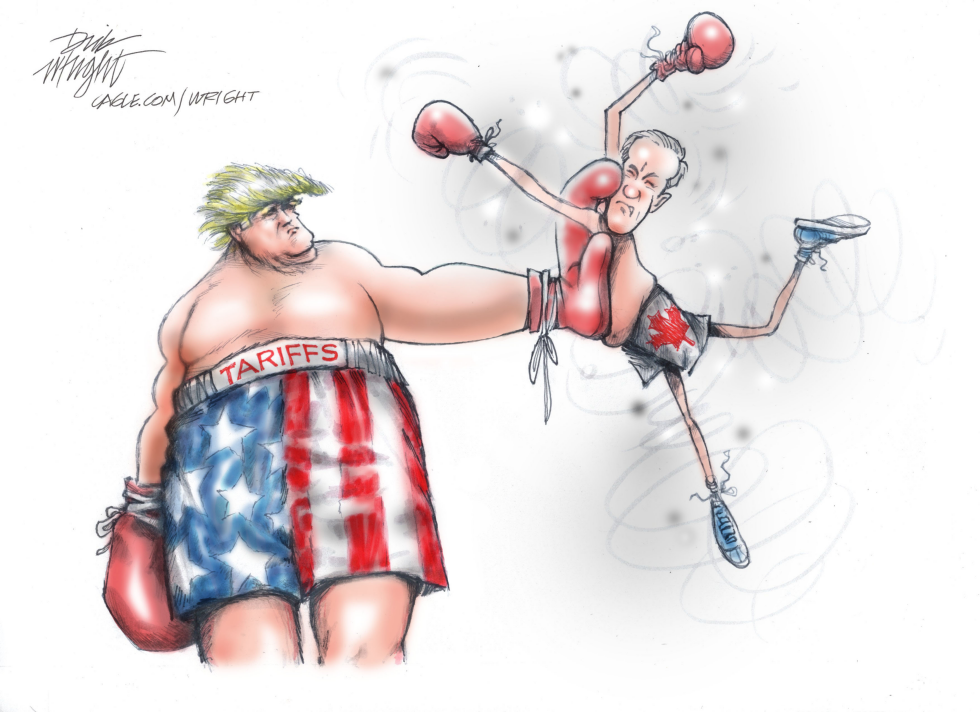
President Trump imposed new tariffs targeting Canadian goods in August 2026, escalating bilateral trade friction over lumber, dairy and autos. The measures aim to protect U.S. industries and renegotiate terms. Markets reacted with volatility in both countries. The editorial argues the tariffs represent necessary leverage that weakens Canada's position and forces concessions.
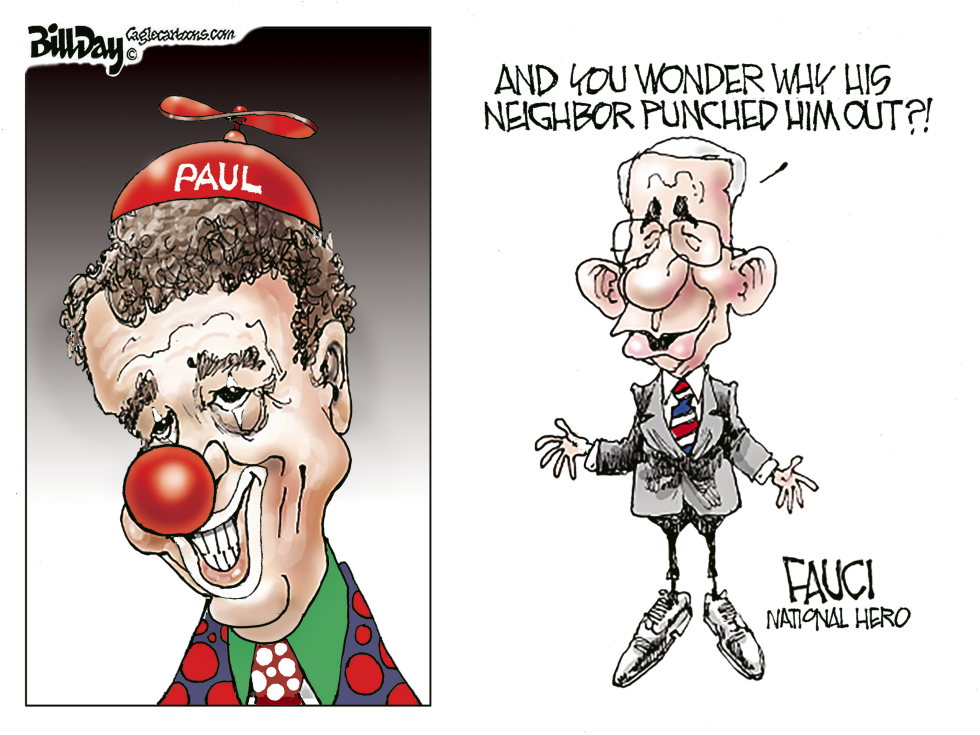
Senator Rand Paul and former NIAID director Anthony Fauci remain focal points in ongoing debates over public health policy and political rhetoric. The piece responds to persistent tensions around Fauci's public role and recent personal incidents involving confrontations. It frames Paul critically while elevating Fauci's standing. The editorial position underscores the contrast to critique attacks on health officials and defend their contributions during national crises.
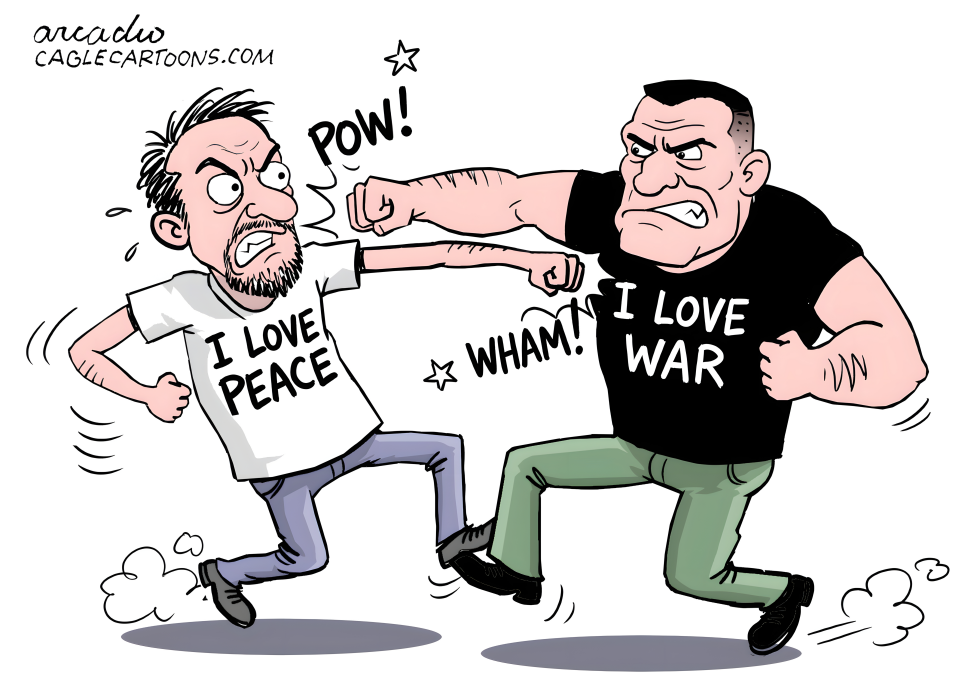
A man in a white shirt reading I LOVE PEACE absorbs a punch to the face from a man in a black shirt reading I LOVE WAR. The two figures clash in a physical fight marked by impact sounds and motion lines. The scene shows the peace advocate recoiling with wide eyes while the war advocate maintains an aggressive forward stance.
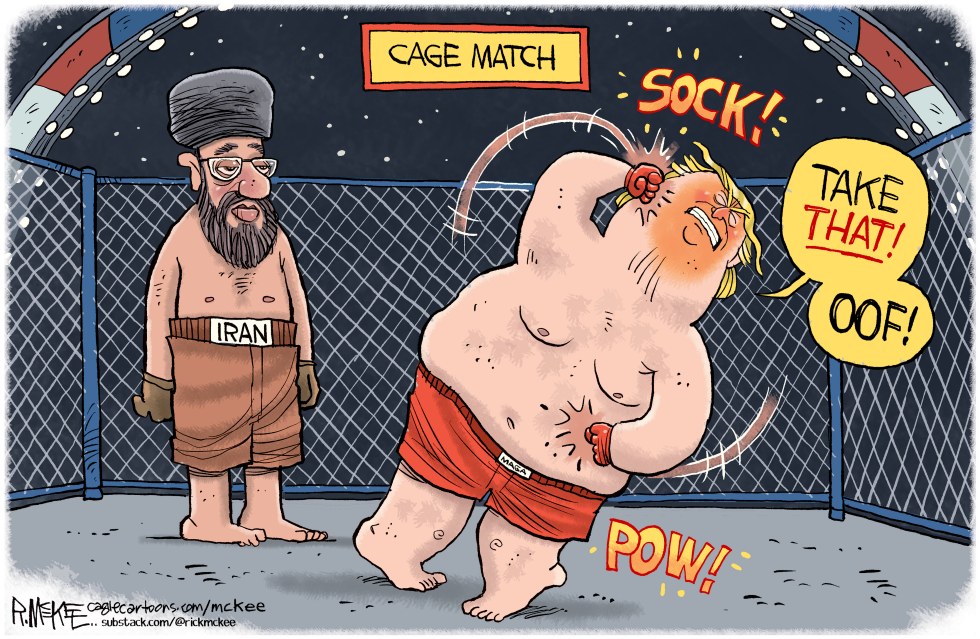
A political cartoon published June 12, 2026, portrays a cage match between a caricature of Donald Trump labeled America and a figure labeled Iran. Trump appears to be on the receiving end of punches with onomatopoeic sound effects. The image uses the fighting ring setting to illustrate the confrontational nature of relations between the United States and Iran during this period.
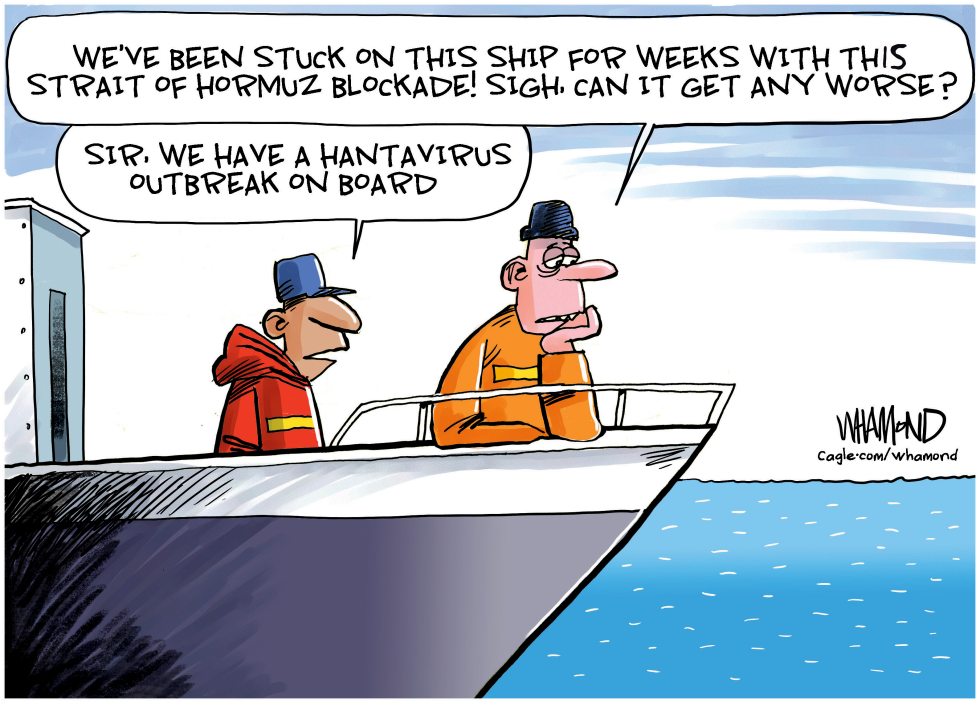
The cartoon depicts two sailors aboard a ship trapped in the Strait of Hormuz due to a naval blockade. One laments the weeks-long delay and wonders if conditions can worsen. The other reports a hantavirus outbreak on board. The image responds to ongoing tensions involving Iran and disruptions to global oil routes. As of the May 2026 publication date, the blockade has halted tanker traffic and strained energy markets. The added health crisis underscores the compounding risks for crews and supply chains. The visual ties geopolitical conflict directly to immediate human and economic consequences.
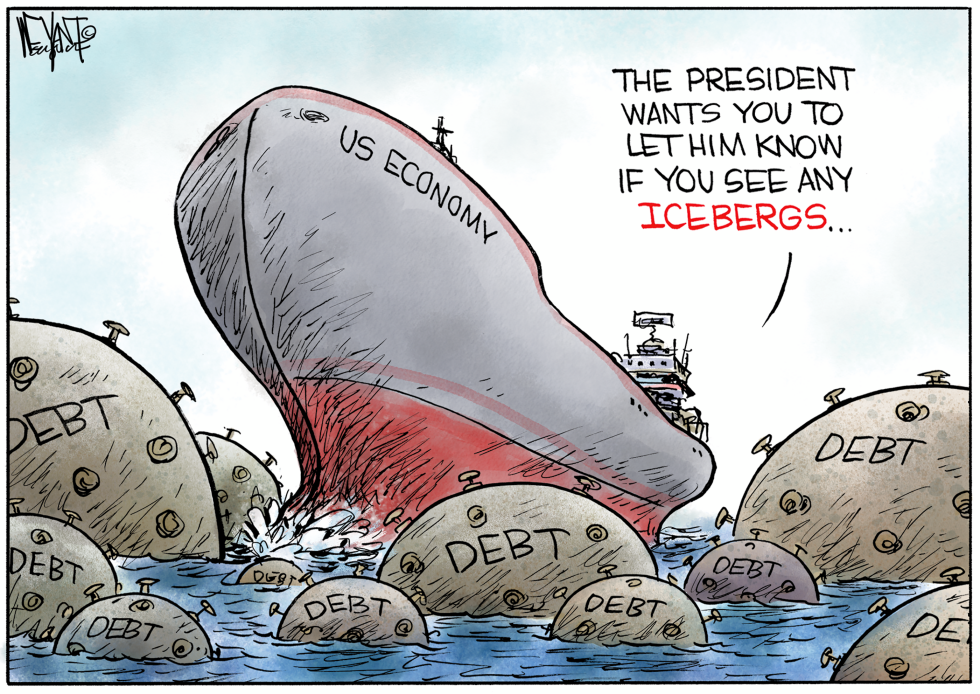
This political cartoon illustrates the US Economy as a massive ship labeled accordingly, dramatically sinking after colliding with numerous icebergs each marked 'DEBT.' A speech bubble from the ship warns to alert the president about icebergs, evoking the Titanic disaster in a clear metaphor for economic peril. Incorporating tags such as economy, debt, budget, inflation, prices, and costs, the image critiques fiscal irresponsibility. The artwork by Christopher Weyant uses simple lines and colors to emphasize the collision's impact, with water splashing and the ship's hull damaged. Such cartoons often highlight how mounting debt threatens stability, drawing parallels to historical maritime tragedies for satirical effect. The composition places the ship at an angle, surrounded by floating debt bergs, underscoring inevitable crisis if warnings go unheeded.
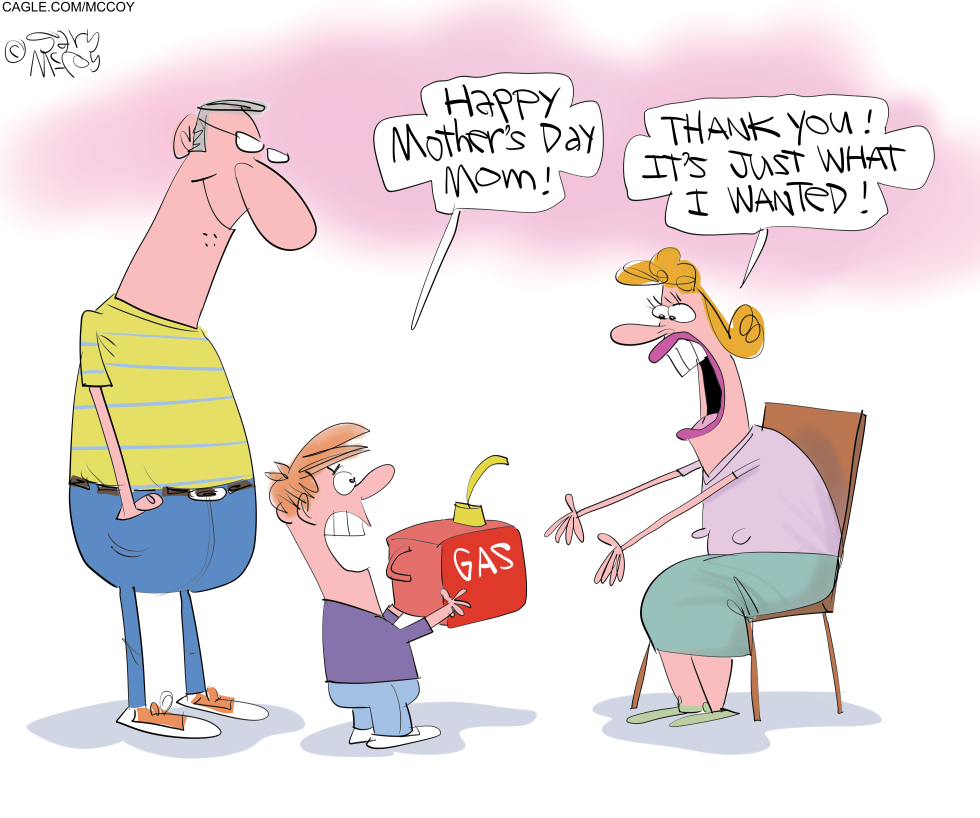
Gary McCoy's cartoon captures a family moment where a young son hands his mother a lit bomb marked GAS, exclaiming Happy Mother's Day, while she thanks him enthusiastically. The image ties into tags like Mom, mother, Mothers Day, gas, oil, petro, prices, economy, inflation. It highlights the burden of rising energy costs on families, with the explosive gift symbolizing volatile fuel markets. Amid references to Iran, strait of hormuz, Trump, the satire underscores how global tensions affect everyday life, blending holiday cheer with economic reality in a straightforward, exaggerated style typical of political cartoons.
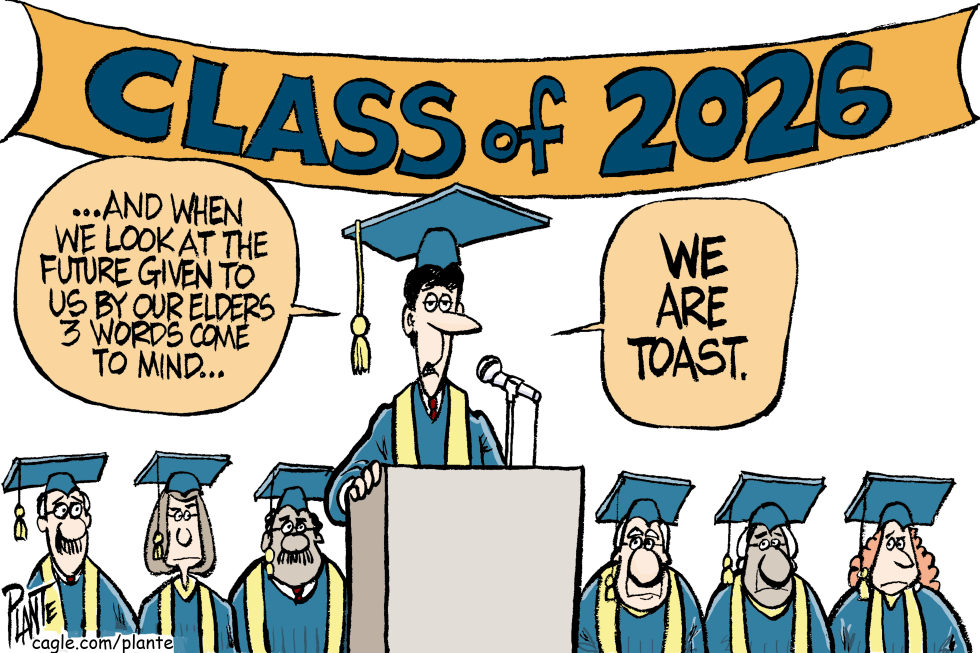
The cartoon shows a commencement speaker at a podium under a Class of 2026 banner. Graduates in blue gowns and caps sit in rows. One speech bubble reads the setup about the future given by elders and three words coming to mind. The second bubble states we are toast. Visible elements include microphone, stage, and bottom left signature area with cagle.com/plante.
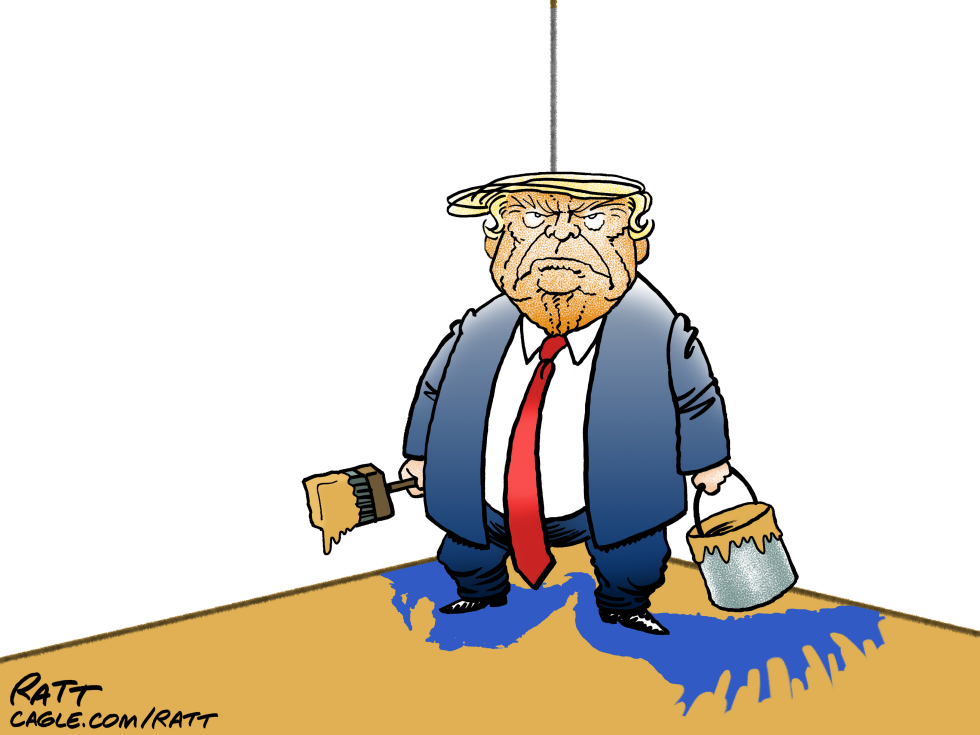
Donald Trump appears in a 2026 editorial image holding a paintbrush and bucket while standing on a blue painted area resembling the Strait of Hormuz. The scene responds to ongoing concerns over Iranian oil routes, potential conflict, and resulting effects on global oil and gas prices. The visual shows the figure applying paint that creates a path leading to restricted movement.
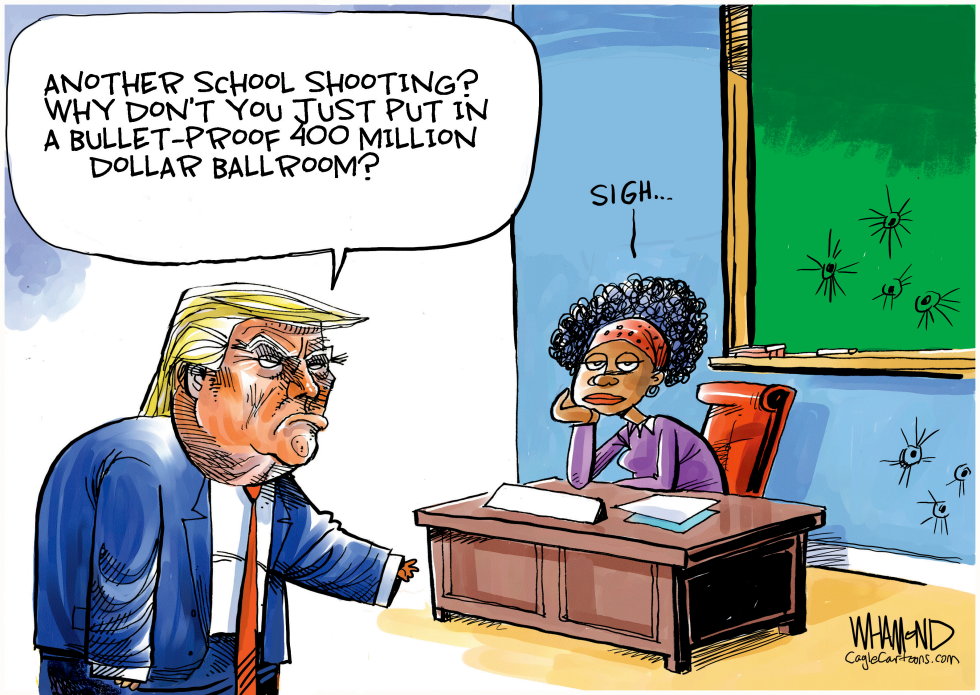
Dave Whamond's cartoon captures a man resembling a political figure leaning over a desk in a classroom, suggesting a bullet-proof 400 million dollar ballroom as a fix for another school shooting. The woman at the desk sighs in response, with a green blackboard showing marks that look like bullet impacts. Tags like school shootings, national issue, security, guns, education, and bullet proof underscore the satire on misplaced priorities, where vanity projects like a top secret ballroom or Trump bunker get funding justifications, echoing build the wall rhetoric and emergency exemptions amid issues like WHCD shooting.
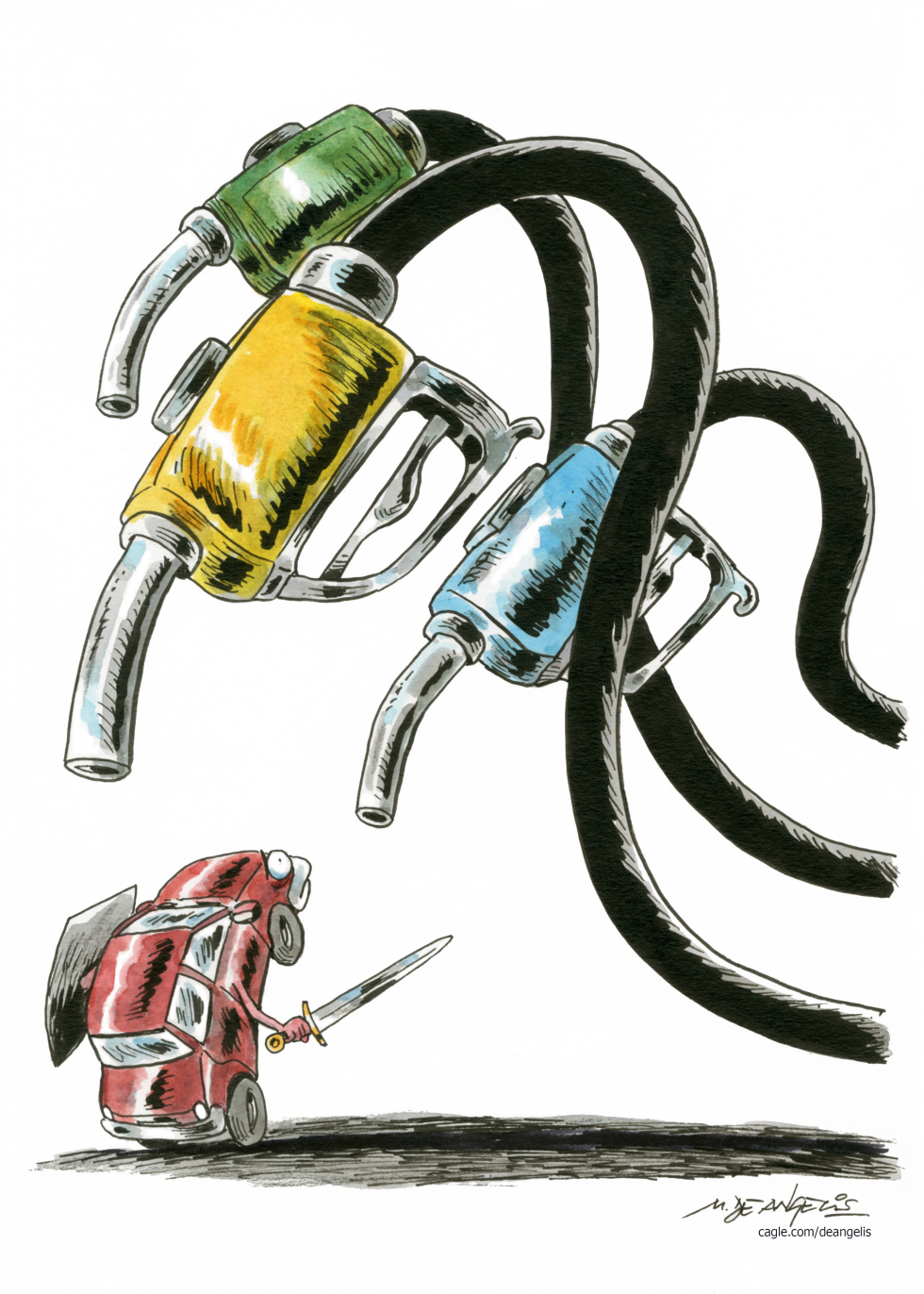
Marco De Angelis draws a clever twist on the ancient HYDRA myth, where a plucky red CAR, sword in hand, squares off against a beastly creature formed by three FUEL pump nozzles—green, yellow, and blue—attached to writhing black hoses. The scene plays on the endless battles drivers face with soaring OIL PRICES and FUEL costs, tying into broader ECONOMY woes. Tags like TRANSPORTATION, TRADE, WAR, CRISIS, IRAN, USA, and HORMUZ hint at real-world tensions in the Strait of Hormuz, where geopolitical strife disrupts global OIL supplies. It's a sharp commentary on how these issues regenerate like hydra heads, making every victory temporary in the fight against economic pressures.
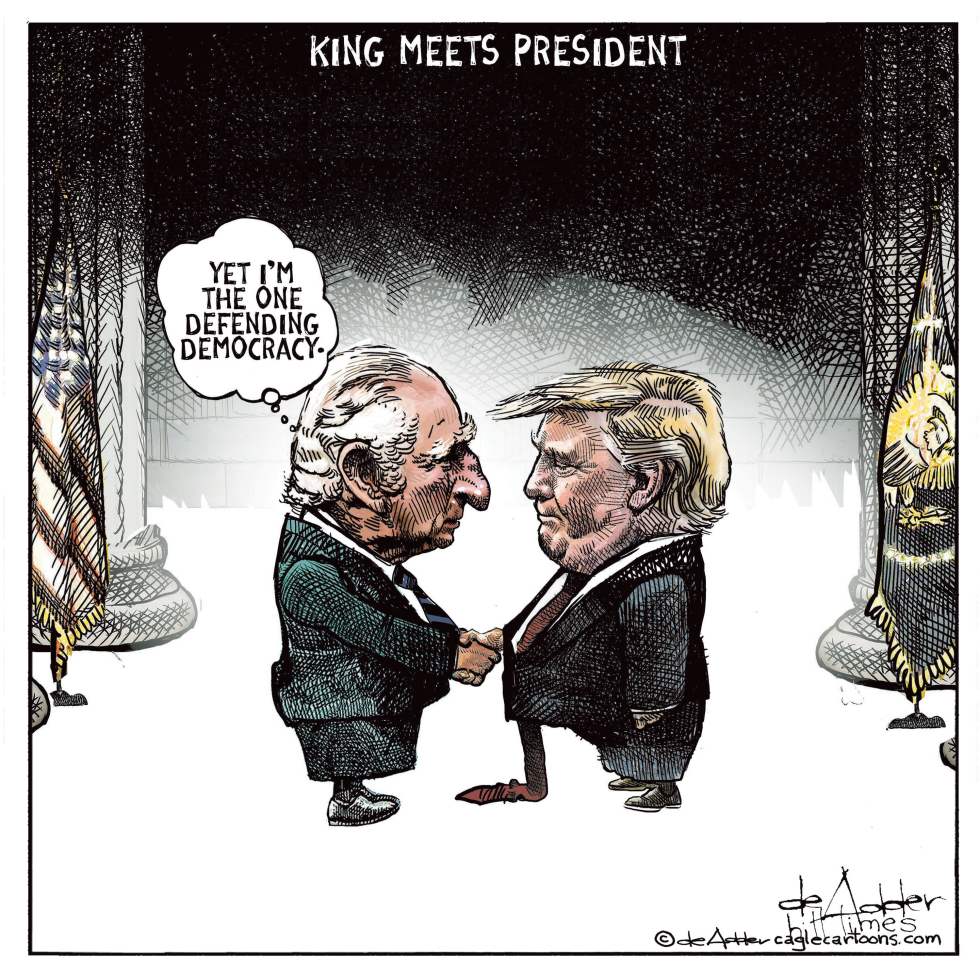
Michael de Adder's cartoon captures a handshake between King Charles and President Trump, set against American and implied British flags in a White House-like scene. The title 'KING MEETS PRESIDENT' tops the image, with Charles saying, 'Yet I'm the one defending democracy.' Tags like UK, United Kingdom, States, America, White House, Visit, State underscore the diplomatic theme. This satire touches on trade, tariffs, and economy without overreaching into unseen motives. The dry humor lies in the visual irony of two leaders in suits, one royal and one presidential, amid formal backdrops. Artistic style uses crosshatching for depth, keeping focus on the central exchange.
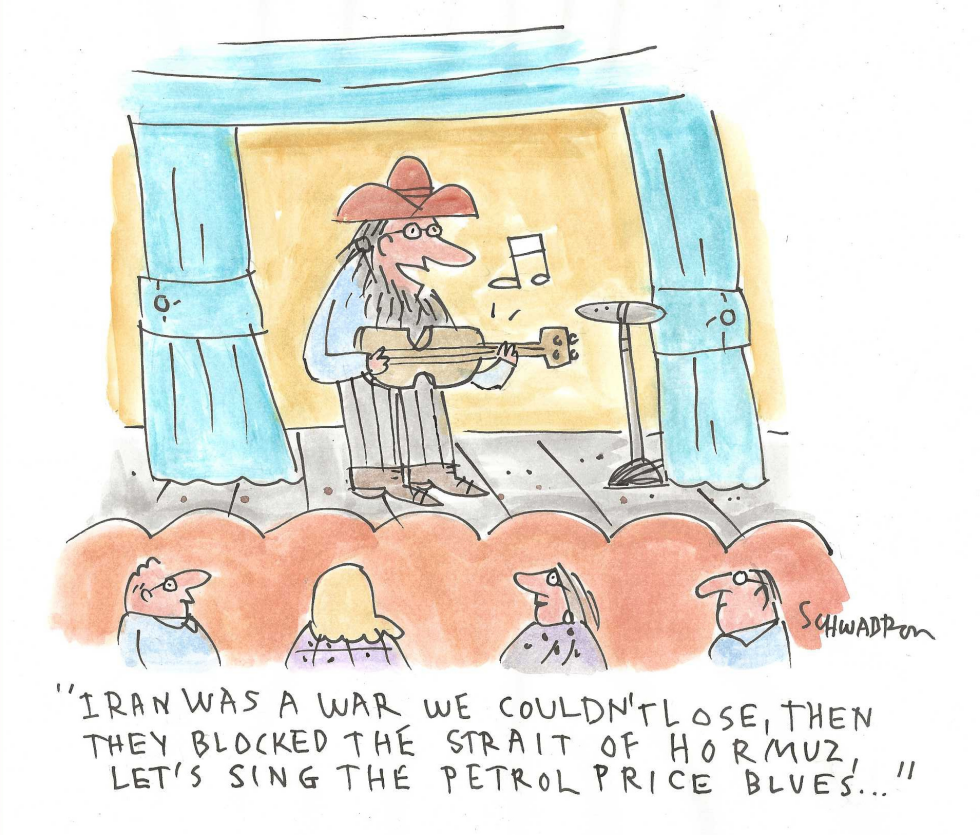
The cartoon depicts a guitarist on a stage with blue curtains and yellow backdrop singing about an unwinnable war with Iran followed by a blockade of the Strait of Hormuz that leads to higher petrol prices. Four audience members sit in the foreground. The scene uses simple lines and watercolor tones to show the performer with a music note floating nearby and a microphone stand to the side.
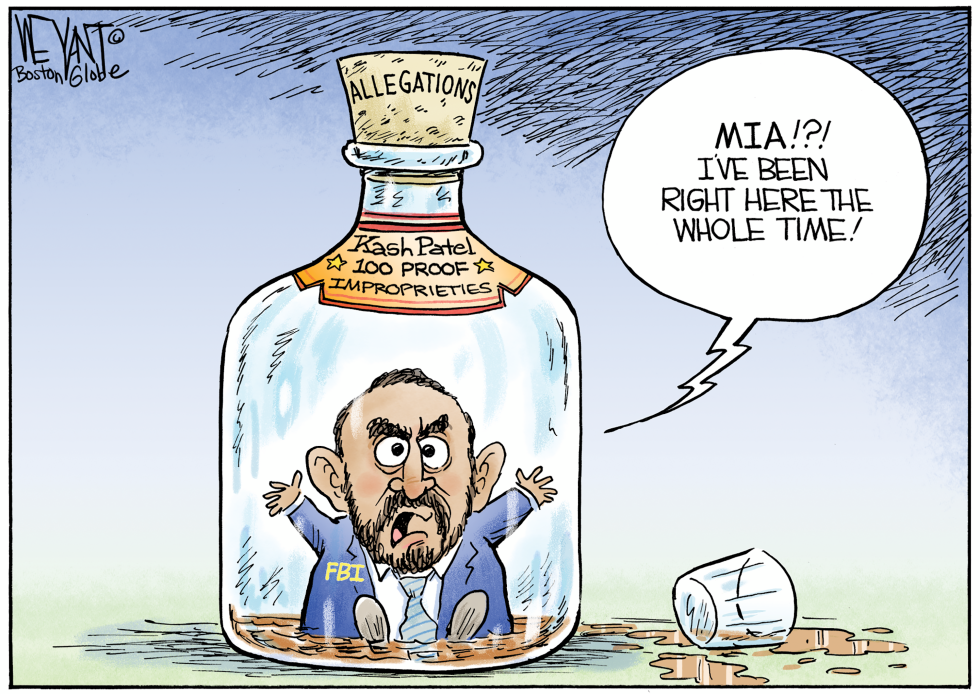
Christopher Weyant's cartoon captures Kash Patel trapped inside a large bottle labeled 'Kash Patel 100 Proof Improprieties,' with the cork marked 'Allegations.' The figure, dressed in a suit with 'FBI' on the sleeve, raises arms and shouts in a speech bubble: 'MIA!?! I've been right here the whole time!' A tipped-over glass spills liquid nearby. Tags like FBI, Kash Patel, alcoholic, allegations, bottle, and fail underscore the visual pun on being 'in the bottle,' tying into themes of inept leadership and ongoing controversies in domestic policy and criminal justice.
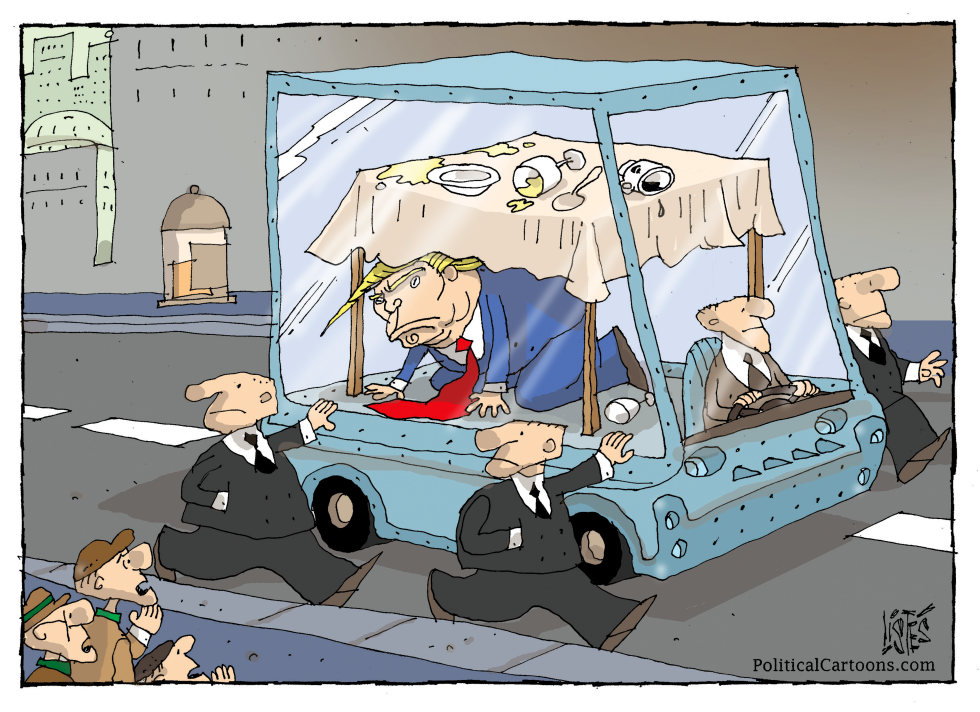
Nikola Listes captures President Trump in a satirical Trumpmobil, a blue armored vehicle with a glass dome enclosing a dinner table, plates and glasses spilling as Trump reaches out angrily. Suited agents push the vehicle on a city street, while onlookers react from the sidewalk. Tags like attack, Strait of Hormuz, war in Iran, terror frame the scene, blending humor with commentary on presidential security. The cartoon's composition highlights the absurdity of protection amid chaos, with Trump's exaggerated features driving the satire. Dry take on vulnerability in power, perfect for syndication.